
Research article · 2026 · Full text
International Journal of Biology SciencesEffect of nanoparticles on Seed quality and plant health status in groundnut (Arachis hypogaea L.)
Volume 8(5) · Pages 82–87 · DOI: 10.33545/26649926.2026.v8.i5b.831 ↗
Research areasNanoparticles: synthesis and applicationsFungal Plant Pathogen ControlMycotoxins in Agriculture and Food
Abstract
Author-writtenPlants are often tend to infected by various pathogens such as bacteria, fungi, viruses and nematodes inturn results in great loss to the producer. At present, farmers were adopting different conventional methods to control pathogens and each of these methods has one or other limitations viz., use of pesticides cause hazardous effect on the environment and human health. Thus, use of nanoparticles has been considered an alternate and effective approach which is eco-friendly and cost effective for the control of pathogenic microbes and these nanoparticles have a great potential in the management of plant diseases as compared to synthetic pesticides. In this view present study was taken up to investigate The incidence of seedborne mycoflora had more impact on physiological parameters observations recorded initial before inoculum treatment viz., after inoculum treatment parameters were seed germination (76%), root length (6.0 cm), shoot length (14.0 cm), seedling dry weight (14.92 cm), seedling vigour index -I (1218) and seedling vigour index-II (1143) of inoculum treated groundnut compare to control (84%, 10 cm, 18 cm, 17.12 cm,1352 and 1236). And the inhibitory effects of various concentrations of nanoparticles on growth and development of aflatoxin fungi in groundnut seeds with application of different working concentrations (5 ppm, 10 ppm, 25 ppm and 50 ppm) of nanoparticles (CaCO3, TiO2, CuO and ZnO) were prepared from stock solution (200 ppm) of nanoparticles. The synthetic fungicide, carbendazim used as positive control in this experiment at same concentrations (5 ppm, 10 ppm, 25 ppm and 50 ppm) Among the nanoparticles, the minimum disease severity (3.92 %) was recorded in the treatment Nano CuO which was followed by Nano CaCO3 (5.67 %) and Nano TiO2 (5.83 %) and showed significantly higher than the untreated control (8.00 %).
Summary
Source-checkedPlain-language reading of the full paper, prepared with AI and checked against the text. Each point links to the authors' own words.
Why it matters
- Plant infections caused by pathogens like fungi, bacteria, viruses, and nematodes lead to significant losses for producers. View evidence ↗
- Conventional pesticide use for pathogen control is limited by its hazardous effects on human health and the environment. View evidence ↗
- Nanoparticles are viewed as a cost-effective and eco-friendly alternative to synthetic pesticides for managing plant diseases. View evidence ↗
The question
- The study aimed to investigate how different types and concentrations of nanoparticles affect the seed quality attributes of groundnut. View evidence ↗
What they did
- The researchers used fresh groundnut seeds of the ICGV 91114 variety obtained from ICRISAT, Hyderabad. View evidence ↗
- Four types of nanoparticles (CaCO3, TiO2, CuO, and ZnO) were tested at concentrations of 5, 10, 25, and 50 ppm. View evidence ↗
- Pot experiments involved treating soil with nanoparticles and seeds with Aspergillus niger inoculum at various concentrations. View evidence ↗
- The study measured several health parameters, including germination, shoot and root length, chlorophyll content, dry weight, and disease incidence. View evidence ↗
What they found
- Nano CuO (N4) resulted in the lowest disease severity (3.83%) and the highest plant height (13.42 cm), leaf number (19.92), and chlorophyll content (29.42). View evidence ↗
- The 50 ppm concentration (C4) showed the lowest disease severity (3.83%) compared to the untreated control (8.00%). View evidence ↗
- The combination of Nano ZnO at 50 ppm (N1C4) achieved the lowest disease severity (3.00), followed by Nano CaCO3 at 50 ppm (4.00), both significantly lower than the control (8.00). View evidence ↗
What it means
- The authors conclude that Nano ZnO at 50 ppm is the most effective treatment for reducing disease severity in groundnut seeds. View evidence ↗
- The authors state that seedborne mycoflora reduce seed quality and germination capacity, which ultimately leads to lower crop yields. View evidence ↗
Visual summary
3 visualsIllustrations explain the paper; charts are replotted from the paper's own table values.
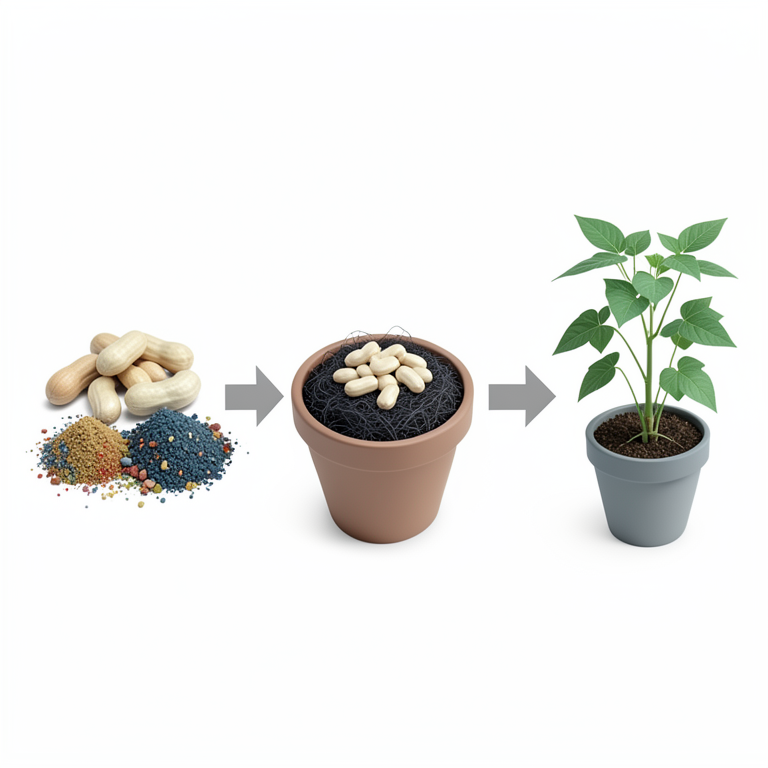
Experimental Setup Overview
AI-generated conceptual illustration (groundnut seeds and plants (Arachis hypogaea L.)). It explains the idea and does not show study data.
View source evidence ↗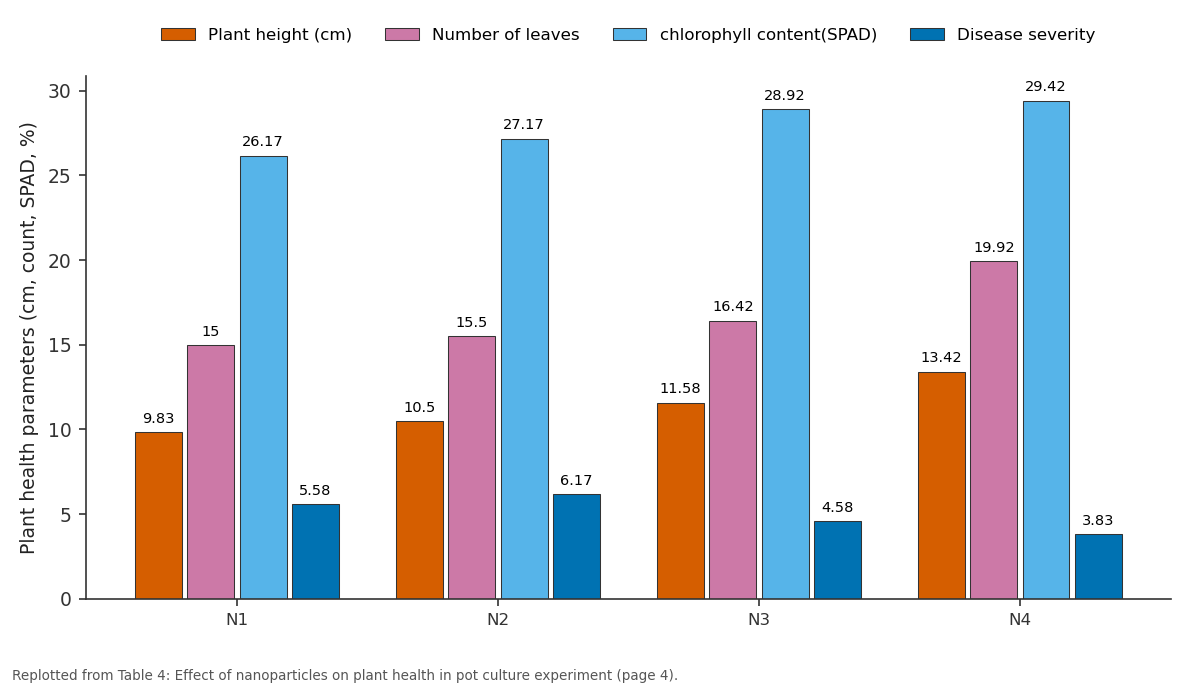
Plant height (cm) and Number of leaves and more: N1 vs N2 vs N3 vs N4
Replotted from Table 4 (page 4) of the original paper. Every bar is the paper's own table value.
View source evidence ↗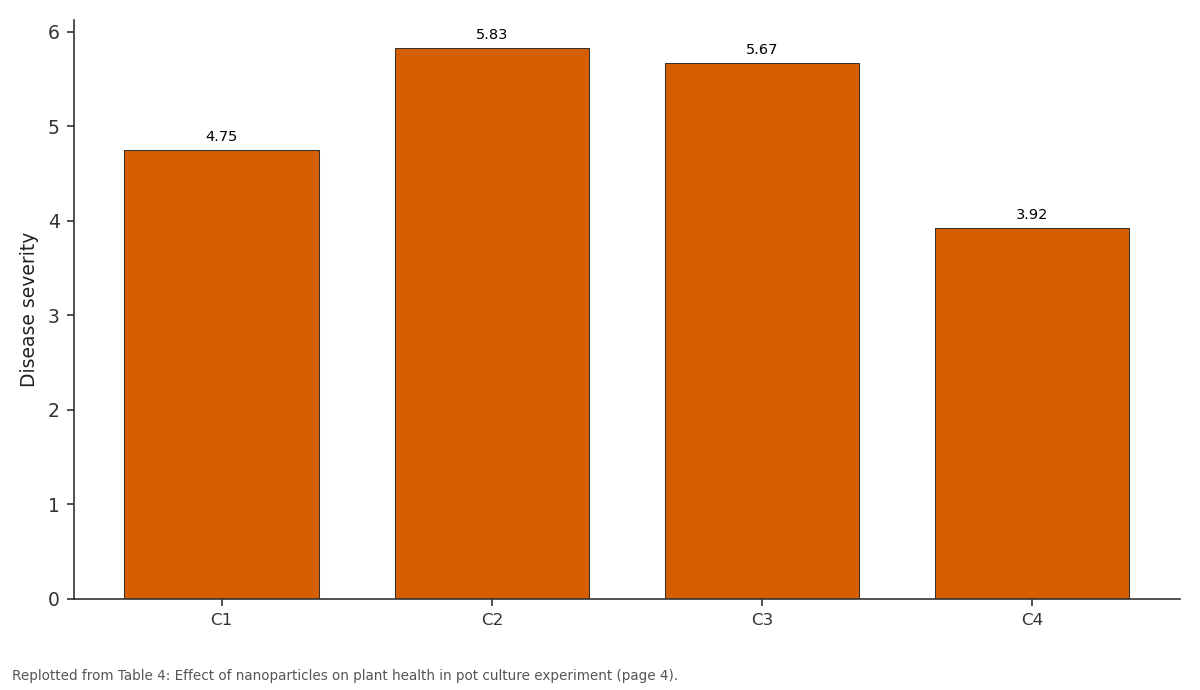
Disease severity: C1 vs C2 vs C3 vs C4
Replotted from Table 4 (page 4) of the original paper. Every bar is the paper's own table value.
View source evidence ↗Figures & tables
From the original paper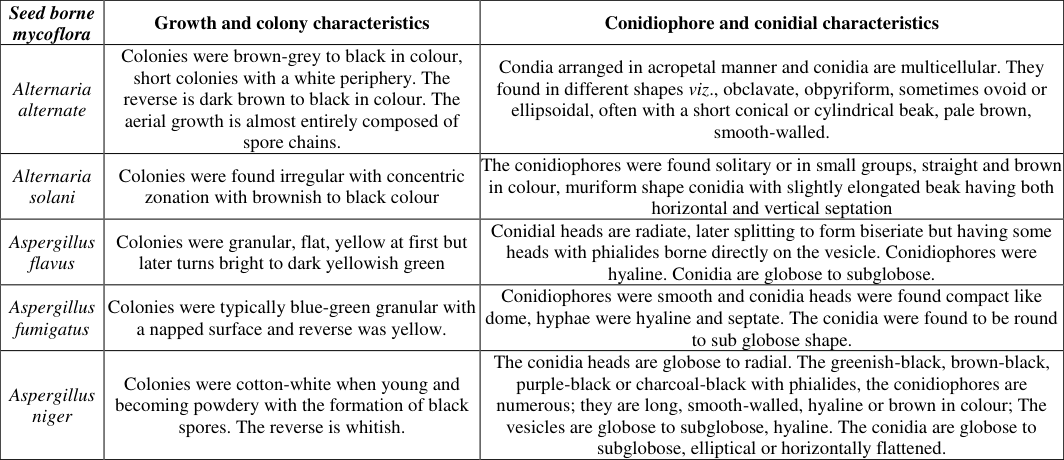 Table 1
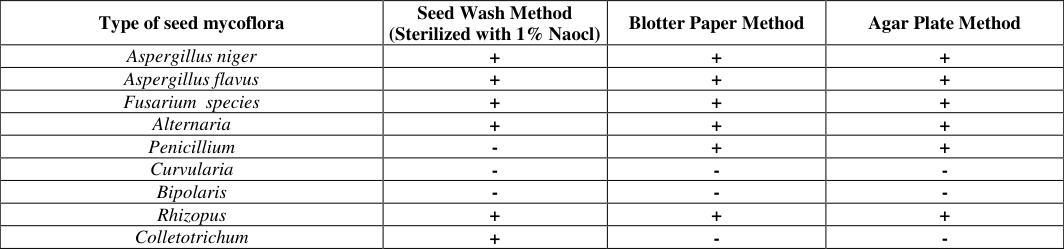 Table 2
 Table 3
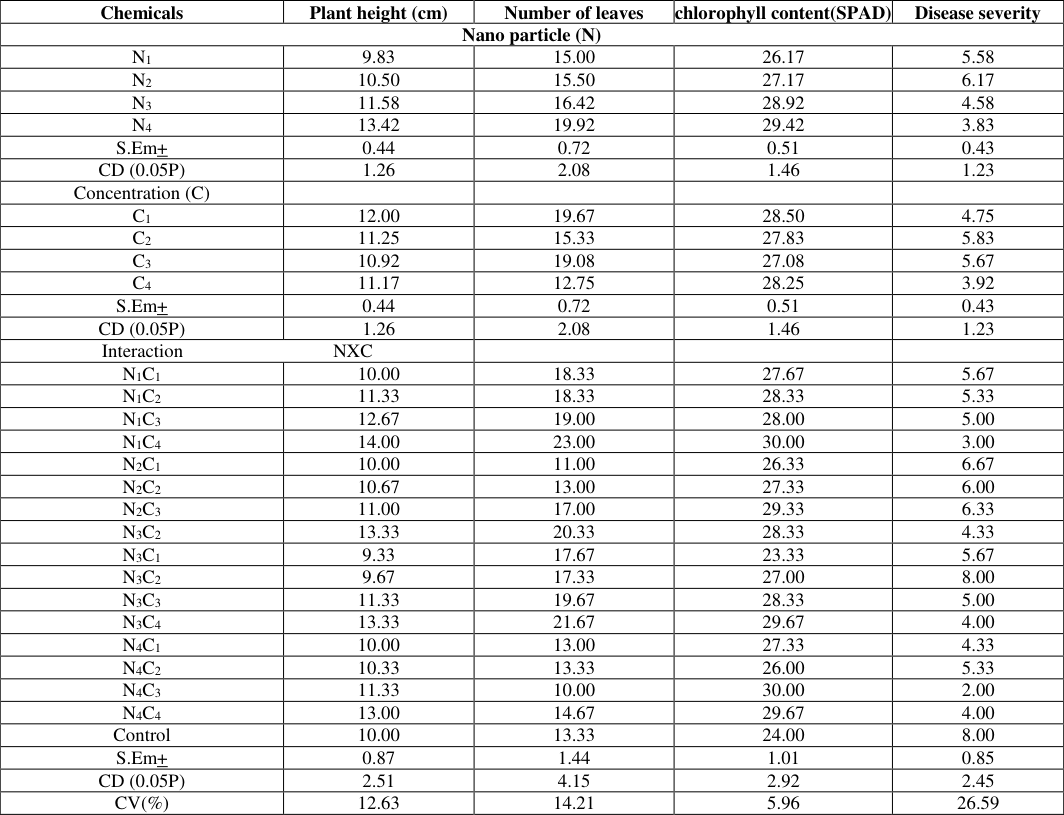 Table 4
 Figure 1
Introduction
Groundnut (Arachis hypogaea L.) productivity level in India is very low mainly because about 80 per cent of the crop is grown under rainfed conditions with minimal inputs. In many parts of India, groundnut seed is usually stored for a period of about 8 to 9 months before sowing. However, seed viability is getting lost quickly due to the production of free radicals by lipid peroxidation during storage. As the current technologies available to prolong the vigor and viability of groundnut seed on a large scale are not satisfactory alleviating the practical problem, an alternative simple and practicable seed treatment methodology/technique to control seed deterioration of groundnut seeds is the need of the hour. During the past decade, lot of work has been done in biological system to address a wide range of field problems deploying nanomaterials and nano-devices. Nanotechnology is a field of convergence among life sciences, material science and information technology which is capable of manipulating at the atom level and derives solutions to unresolved field problems. The nanoparticle measures a dimension of 10 -9 m. Nanotechnology is a broad and interdisciplinary area of research and developments on the best utilization of nanoparticles growing worldwide at a rapid pace in the past few years. Nanotechnology is the manipulation or self-assembly of individual atoms, molecules or molecular clusters into structures to create materials and devices with new or vastly different properties (Roco et al., 1999) [17] . Currently, the main thrust of research in nanotechnology focuses on applications in the field of electronics energy (Feiner, 2006, Hu et al., 2007) [16,15] . Globally, more than 40 countries have identified the potential of nanotechnology in agricultural sector and are investing significant amount of funds into nanotechnological research. Amongst them, USA is investing most of its funds in different fields of agriculture and food technology especially in the areas of biosensors, environmental protection, pathogen detection, plant and animal production, veterinary medicine, bio food and nanobio industrial products (Zelenovic et al., 2009) [14] . Nanotechnology in agricultural front has been more useful in improving the existing crop management techniques. Nano-encapsulated agrochemicals could be designed in such a way that they possess all necessary properties such as effective concentration (with high solubility, stability and effectiveness), time-controlled release in response to certain stimuli, enhanced targeted activity and less ecotoxicity with safe and easy mode of delivery thus avoiding repeated application (Tsuji, 2001; Boehm et al., 2003; Wang et al., 2007) [13,18,12] . Among the various factors responsible for low yield of crops (10 % reduction) is incurred due to seed associated microorganisms. Among these, seed mycoflora (fungi) are major constraints for quality seed production and storage. Mycoflora are universal microorganisms present all around seed and these are most deadly organisms associated with many of the crop plants. Since few decades, use of agrochemicals for seed treatment has certainly declined the incidence of seed mycoflora, but at the same time has contributed towards the development of resistant pathogens. Moreover, such chemicals can be lethal to beneficial microorganisms and useful soil insects in the rhizosphere, and they may also enter the food chain and accumulate in undesirable levels. Kumar and Yadav, 2009 reported the use of nanoparticles has been considered as an alternate and an effective approach which is eco-friendly and cost effective for the control of pathogenic microbes and these nanoparticles have a great potential in the management of plant diseases as compared to synthetic fungicides. Keeping the above all the constraints, the present experiment was designed to know the effect of different nono particles their concentrations on seed quality attributes of ground nut (Arachis hypogaea L.) under taken at different locations.
Materials and methods
The seed health status of groundnut seeds treated with nanoparticles was carried out in Seed technology lab, COA, Bawal and Seed quality parameter were conducted at UHS, Bagalkot, COH-Bidar, BCI, Laboratory and COF, Ponnempet during 2023-24.
Seeds: Fresh seed of ICGV 91114 variety seed samples were collected from ICRISAT, Hyderabad. These sample were packed in cloth bags and stored at room temperature (27± 1 0 C). They were used for dry seed examination and for isolation of mycoflora by using seed washing, agar plate and blotter techniques.
Nanoparticles:
The commercially available nanoparticles in the market (SRL Company Pvt. Ltd.) were used to study antimicrobial properties against selected seed mycoflora of Groundnut crop. The details of nanoparticles as given viz., Calcium carbonate (CaCO3) Nano powder, Zinc oxide (ZnO) Nano powder, Titanium dioxide (TiO2) Nano powder and Copper oxide nanoparticles.
Preparation of different concentrations of nanoparticles
Different working concentrations (5 ppm, 10 ppm, 25 ppm and 50 ppm) of nanoparticles (CaCO3, TiO2, CuO and ZnO) were prepared from stock solution solution (200 ppm) of nanoparticles. The same concentrations were used in spore germination and mycelial growth studies of selected seed borne mycoflora. The synthetic fungicide, carbendazim used as positive control in this experiment at same concentrations (5 ppm, 10 ppm, 25 ppm and 50 ppm).
Polyhouse experiment
Pot culture experiments were conducted at COH-Bidar and COF, Ponnempet by treating the soil with nanoparticles of the metal oxide CaCO3, TiO2, ZnO, CuO and Control at rates of 5, 10, 25 and 50 ppm and seeds with seed borne inoculum (Aspergilus niger) after that seeds were planted in sand at a depth of 10 cm in pots of three replication with Factorial Complete Random Design (FCRD) design. Physiological and seed health parameters Seedling germination, seedling shoot length, root length, chlorophyll content, dry weight and disease incidence were observed.
Result and discussion
Major seedborne mycoflora associated with groundnut seed After seven days of seed incubation in blotter paper method, agar method and from seed wash method, a total of nine major species of seed borne mycoflora were identified. The fungi identified based on colony and morphological characters. The morphological characteristics were clearly observed with the help sterio binocular microscope. The results are presented in the Table1& 2 and Figure. After 7 days of incubation during germination, seed samples varied for percent infection. The incidence of seedborne mycoflora had more impact on physiological parameters observations recorded initial before inoculum treatment viz., seed germination (84%), root length (10 cm), shoot length (18 cm), seedling dry weight (17.12 cm), seedling vigour index -I (1352) and seedling vigour index -II (1236) and after inoculum treatment parameters were seed germination (76%), root length (6.0 cm), shoot length (14.0 cm), seedling dry weight (14.92 cm), seedling vigour index -I (1218) and seedling vigour index-II (1143) of inoculum treated groundnut (Table 3). With increase in the incidence of seedborne mycoflora there was drastic reduction in rate of germination. It has long been noted that seed-borne mycoflora are responsible for reducing seed quality, reduction or elimination of germination capacity as well as seedling damage. Good seed must have a high germination rate and be free of seed-borne pathogens and these healthy seeds are recognized as an important input in any agricultural production system (Zida et al., 2008., Harish M.S et al 2017) [8,21] and disease transmission are important factors in groundnut seed production (Singh et [9,7,20,22] . The sterilized seeds showed a lesser population of seedborne fungi than did the unsterilized seeds and this is in agreement with the data of Limonard et al. (1968) [6] . The use of sodium hypochlorite helped in minimizing the incidence of superficial and fast-growing fungi as well as common seedborne fungi like Curvularia lunata, Penicillium Spp. and Rhizopus Spp., and similar results were also obtained by Dawar and Ghaffar (1991) [5] for sunflower seeds. Surface disinfection of seed with 1per cent NaOCl reduced the incidence of Aspergillus Spp. However, other slow growing deep-seated seedborne fungi like Colletotrichum Spp. Drechslera Spp. and Fusarium Spp., were detected at greater frequencies (Yago et al., 2011) [19] The details of colony growth and morphological observations are presented in the Table1The identified seedborne mycoflora were Aspergillus Spp., Alternaria Spp., Bipolaris Spp., Colletotrichum Spp., Curvularia Spp., Fusarium Spp., Penicillium Spp. and Rhizopus sp. The common storage fungi such as Aspergillus Spp., Alternaria Spp., Fusarium Spp. and Penicillium Spp. Among different seedborne mycoflora identified, only the major mycoflora species were taken into account in this experiment. Mycoflora analysis of seeds naturally infected groundnut crop seeds showed that several fungal species of seedborne fungi were observed and only eight major fungal species were isolated from the seeds of groundnut crops. The most dominant fungal species isolated were Aspergillus Spp., Alternaria sp, Bipolaris Spp., Colletotrichum Spp., Curvularia Spp., Fusarium Spp., Penicillium Spp. and Rhizopus Spp. and these mycoflora were heavily infected the groundnut seeds subsequently. The findings of this study were in accordance with (Girish et al., 2004; Sreenivasa et al., 2010) [1,3] .
| Initial Parameters | Observations | After inoculum treatment (Parameters) | Observations |
|---|---|---|---|
| Seed Germination % | 84 % | Seed Germination% | 76% |
| Root length (cm) | 10 cm | Root length(cm) | 6.00 cm |
| Shoot Length (cm) | 18 cm | Shoot Length(cm) | 14.00 cm |
| Seedling dry weight | 17.12 mg/seedling | Seedling dry weight | 14.92 mg/seedling |
| Seedling vigour index (SVI-1) | 1352 | Seedling vigour index (SVI-1) | 1218 |
| Seedling vigour index (SVI-II) | 1236 | Seedling vigour index (SVI-II) | 1143 |
Table text extracted from the original PDF; superscript letters are shown inline. The original table image is below.
View original table image
Effect of different nano particles on seed borne inoculum (Aspergilus niger) under pot culture experiment
Pot culture experiments were conducted by treating the soil with nanoparticles of the metal oxide NPs CaCO3, TiO2, ZnO and Control at rates of 5, 10, 25 and 50 ppm and seeds treated with seed borne inoculum (Aspergilus niger), disease severity results presented in Figure 1. Data presented in the Table 4 revealed that the disease severity in pot culture experiment of groundnut differed significantly due to application of nanoparticles and concentrations. Among the nanoparticles, the Plant height (13.42 cm), Number of leaves (19.92), highest chlorophyll content (29.42) and minimum disease severity (3.83 %) was recorded in the treatment N4 (Nano CuO) which was followed by N3 (Nano CaCO3) (5.67 %) and N2 (Nano TiO2) (5.83 %) and showed significantly higher than the untreated control (8.00 %). Among the various concentrations of nanoparticles, the C4 (50 ppm) (3.83 %) showed significantly lowest disease severity with C1 (5 ppm) (5.58 %) and C3 (25 ppm) (4.58 %) but significantly highest disease severity (8.00) was recorded in control. Among the interactions, N1C4 (Nano ZnO + 50 ppm) showed significantly lowest disease severity (3.00) which was followed by N3C4 (Nano CaCO3+ 50 ppm) (4.00) as compared to the control (8.00). Aspergilus nigera ffect most adversely the seedling emergence (40 %, control 90 %), shoot length (5 cm, control 14 cm) and root length (5 cm, control 10 cm) as reported by Sadhu, (2014) and Howlett (2006).
| Chemicals | Plant height (cm) | Number of leaves | chlorophyll content(SPAD) | Disease severity |
|---|---|---|---|---|
| Nano particle (N) | ||||
| N1 | 9.83 | 15.00 | 26.17 | 5.58 |
| N2 | 10.50 | 15.50 | 27.17 | 6.17 |
| N3 | 11.58 | 16.42 | 28.92 | 4.58 |
| N4 | 13.42 | 19.92 | 29.42 | 3.83 |
| S.Em+ | 0.44 | 0.72 | 0.51 | 0.43 |
| CD (0.05P) | 1.26 | 2.08 | 1.46 | 1.23 |
| Concentration (C) | ||||
| C1 | 12.00 | 19.67 | 28.50 | 4.75 |
| C2 | 11.25 | 15.33 | 27.83 | 5.83 |
| C3 | 10.92 | 19.08 | 27.08 | 5.67 |
| C4 | 11.17 | 12.75 | 28.25 | 3.92 |
| S.Em+ | 0.44 | 0.72 | 0.51 | 0.43 |
| CD (0.05P) | 1.26 | 2.08 | 1.46 | 1.23 |
| Interaction NXC | ||||
| N1C1 | 10.00 | 18.33 | 27.67 | 5.67 |
| N1C2 | 11.33 | 18.33 | 28.33 | 5.33 |
| N1C3 | 12.67 | 19.00 | 28.00 | 5.00 |
| N1C4 | 14.00 | 23.00 | 30.00 | 3.00 |
| N2C1 | 10.00 | 11.00 | 26.33 | 6.67 |
| N2C2 | 10.67 | 13.00 | 27.33 | 6.00 |
| N2C3 | 11.00 | 17.00 | 29.33 | 6.33 |
| N3C2 | 13.33 | 20.33 | 28.33 | 4.33 |
| N3C1 | 9.33 | 17.67 | 23.33 | 5.67 |
| N3C2 | 9.67 | 17.33 | 27.00 | 8.00 |
| N3C3 | 11.33 | 19.67 | 28.33 | 5.00 |
| N3C4 | 13.33 | 21.67 | 29.67 | 4.00 |
| N4C1 | 10.00 | 13.00 | 27.33 | 4.33 |
| N4C2 | 10.33 | 13.33 | 26.00 | 5.33 |
| N4C3 | 11.33 | 10.00 | 30.00 | 2.00 |
| N4C4 | 13.00 | 14.67 | 29.67 | 4.00 |
| Control | 10.00 | 13.33 | 24.00 | 8.00 |
| S.Em+ | 0.87 | 1.44 | 1.01 | 0.85 |
| CD (0.05P) | 2.51 | 4.15 | 2.92 | 2.45 |
| CV(%) | 12.63 | 14.21 | 5.96 | 26.59 |
Table text extracted from the original PDF; superscript letters are shown inline. The original table image is below.
View original table image
Table 1: Growth and microscopic observations of seed borne mycoflora of groundnut crop
Table 1: Growth and microscopic observations of seed borne mycoflora of groundnut crop
Seed borne mycoflora
Growth and colony characteristics Conidiophore and conidial characteristics
Alternaria alternate
Colonies were brown-grey to black in colour, short colonies with a white periphery. The reverse is dark brown to black in colour. The aerial growth is almost entirely composed of spore chains.
Condia arranged in acropetal manner and conidia are multicellular. They found in different shapes viz., obclavate, obpyriform, sometimes ovoid or ellipsoidal, often with a short conical or cylindrical beak, pale brown, smooth-walled.
Alternaria solani
Colonies were found irregular with concentric zonation with brownish to black colour
The conidiophores were found solitary or in small groups, straight and brown in colour, muriform shape conidia with slightly elongated beak having both horizontal and vertical septation
Aspergillus flavus
Colonies were granular, flat, yellow at first but later turns bright to dark yellowish green Conidial heads are radiate, later splitting to form biseriate but having some heads with phialides borne directly on the vesicle. Conidiophores were hyaline. Conidia are globose to subglobose.
Aspergillus fumigatus
Colonies were typically blue-green granular with a napped surface and reverse was yellow.
Conidiophores were smooth and conidia heads were found compact like dome, hyphae were hyaline and septate. The conidia were found to be round to sub globose shape.
Aspergillus niger
Colonies were cotton-white when young and becoming powdery with the formation of black spores. The reverse is whitish.
The conidia heads are globose to radial. The greenish-black, brown-black, purple-black or charcoal-black with phialides, the conidiophores are numerous; they are long, smooth-walled, hyaline or brown in colour; The vesicles are globose to subglobose, hyaline. The conidia are globose to subglobose, elliptical or horizontally flattened.
Conclusion
Seed health status groundnut exhibited that several fungal species of seed-borne fungi were observed and only nine major fungal species were isolated from the seeds. The most dominant fungal species were Aspergillus Spp., Alternaria Spp, Bipolaris Spp., Colletotrichum Spp., Curvularia Spp., Fusarium Spp., Penicillium Spp. and Rhizopus Spp. The incidence of seed borne mycoflora had more impact on germination rate of groundnut crop. With increase in the incidence of seedborne mycoflora there was a drastic reduction in rate of germination and its parameters like germination (76 %), root length (6 cm), shoot length (14 cm). It has been observed that seedborne mycoflora are mainly responsible for reducing seed quality like germination capacity as well as seedling damage which ultimately resulted in the reduction of crop yield. N1C4 (Nano ZnO + 50 ppm) showed significantly lowest disease severity (3.00) which was followed by N3C4 (Nano CaCO3+ 50 ppm) (4.00) as compared to the control (8.00).
Figures and tables from the paper
| Type of seed mycoflora | Seed Wash Method (Sterilized with 1% Naocl) | Blotter Paper Method | Agar Plate Method |
|---|---|---|---|
| Aspergillus niger | + | + | + |
| Aspergillus flavus | + | + | + |
| Fusarium species | + | + | + |
| Alternaria | + | + | + |
| Penicillium | - | + | + |
| Curvularia | - | - | - |
| Bipolaris | - | - | - |
| Rhizopus | + | + | + |
| Colletotrichum | + | - | - |
Table text extracted from the original PDF; superscript letters are shown inline. The original table image is below.
View original table image
References
22 in the original paper- Girish AG, Rao VP, Thakur RP. Diversity of grain mold fungi on selected sorghum genotypes. Indian Phytopathol. 2004;57:84-87.
- Sadhu KA. Seed-borne fungi and their effect on seed health of Green gram. J Biosci Discov. 2014;5(2):251255.
- Sreenivasa MY, Das RS, Janardhana GR. Survey of postharvest fungi associated with sorghum grains produced in Karnataka (India). J Plant Prot Res. 2010;50(3):335-339.
- Howlett BJ. Secondary metabolite toxins and nutrition of plant pathogenic fungi. Plant Biol. 2006;9(4):371375.
- Dawar S, Ghaffar A. Detection of the seed-borne mycoflora of sunflower. Pak J Bot. 1991;23:173-178.
- Limonard T. Ecological aspect of seed health testing. Proc Int Seed Test Assoc. 1968;33:343-513.
- Melchers LE. Sorghum kernel smut infection in relation to seed germination. Trans Kansas Acad Sci. 1956;59:320-326.
- Zida PE, Sérémé P, Leth V, Sankara P, Somda I, Néya A. Importance of seed-borne fungi of sorghum and pearl in Burkina Faso and their control using plant extracts. Pak J Biol Sci. 2008;11:321-331.
- Singh AL. Mineral nutrition of groundnut. In: Hemantha Rajan A, editor. Advances in Plant Physiology. Jodhpur: Scientific Publications; 2000. p. 161-200.
- Kumar V, Yadav SK. Plant-mediated synthesis of silver and gold nanoparticles and their applications. 2009;84(2):151-157.
- Esfahani MN. Present status of Fusarium dry rot of potato tubers in Isfahan (Iran). Indian Phytopathol. 2006;59(2):142-147.
- Wang L, Li X, Zhang G, Dong J, Eastoe J. Oil-in-water nano emulsions for pesticide formulations. J Colloid Interface Sci. 2007;314:230-235.
- Tsuji K. Microencapsulation of pesticides and their improved handling safety. J Microencapsul. 2001;18:137-147.
- Zelenovic LR, Spasojevic M, Dukic D, Vujic J. Modern agriculture and nanotechnology. Acta Agric Serbica. 2009;28:13-21.
- Hu L, Chen G. Analysis of optical absorption in silicon nanowire arrays for photovoltaic applications. Nano Lett. 2007;7:3249-3252.
- Feiner LF. Nanoelectronics: crossing boundaries and borders. Nat Nanotechnol. 2006;1:91-92.
- Roco MC, Williams RS, Alivasatos P. Nanotechnology Research Directions: IWGN Workshop Report. Norwell (MA): Kluwer Academic Publishers; 1999.
- Boehm AL, Martinon I, Zerrouk R, Rump E, Fessi H. Nanoprecipitation technique for the encapsulation of agrochemical active ingredients. J Microencapsul. 2003;20:433-441.
- Yago JI, Roh JH, Bae SD, Yoon YN, Kim HJ, Nam MH. The effect of seed-borne mycoflora from sorghum and foxtail millet seeds on germination and disease transmission. Mycobiology. 2011;39(3):206-218.
- Harish MS, Gowda R, Nethra N. Standardization of nano particles for enhancing groundnut seed quality Cv. ICGV-91114. Int J Pharmacogn Phytochem. 2019;8(1):2208-2212.
- Harish MS, Rame Gowda. Effect of nanoscale zinc oxide plant growth, seed yield and quality in groundnut. Mysore J Agric Sci. 2017;51(3):637-643.
- Chougala Parashivmurthy LD, Harish MS, Siddaraju R. Nanoparticles: an innovative seed quality enhancement technique in sweet pepper. Seed Res. 2024;52(2):124129.