
Research article · 2025 · Full text
International Journal of Horticulture and Food ScienceScreening food safety standards of passion fruit in the Orinoco basin
Volume 7(3) · Pages 94–98 · DOI: 10.33545/26631067.2025.v7.i3b.586 ↗
Research areasFood Safety and HygieneAgricultural safety and regulationsPesticide Residue Analysis and Safety
Abstract
Author-writtenCan passion fruit from tropical river basin farming systems consistently meet European Union food safety thresholds for pesticide residues, heavy metals, and microbial contaminants? This research screened food safety parameters of passion fruit (Passiflora edulis f. flavicarpa) sourced from the Orinoco Basin across two harvest seasons (2021-2022), using analytical protocols aligned with EU Regulation 396/2005. Samples were collected from 15 smallholder farms and analysed at the Lyon Institute of Agricultural Sciences. Pesticide residue screening by LC-MS/MS covered 247 active substances; 78.3% of samples fell below Maximum Residue Limits (MRLs), though 14.7% exceeded limits for chlorpyrifos and cypermethrin. Heavy metal analysis by ICP-MS found cadmium levels in 11.3% of samples above the EU threshold of 0.050 mg/kg. Microbial load assessment showed Salmonella absence in all tested lots, but 8.7% of samples exceeded E. coli limits for ready-to-eat products. Seed quality parameters including germination rate, moisture content, and vigour index were also measured to assess whether safety-compliant production practices affected planting material performance. Molecular marker screening (SSR-based) of 12 farm accessions revealed moderate genetic diversity (He = 0.58). Foliar spray treatments with calcium chloride and potassium silicate reduced pesticide uptake by 22.4% in a parallel greenhouse trial. Sprinkler system design influenced microbial contamination levels, with overhead systems associated with higher E. coli counts than drip-irrigated plots. These results identify specific compliance gaps and suggest targeted interventions for Orinoco Basin passion fruit to access EU markets.
Summary
Source-checkedPlain-language reading of the full paper, prepared with AI and checked against the text. Each point links to the authors' own words.
Why it matters
- The European Union is a major importer of passion fruit and maintains very strict safety limits for pesticides, heavy metals, and microbes. View evidence ↗
- In the Orinoco Basin, high humidity and temperature increase pest pressure, which often leads farmers to use scheduled pesticide applications. View evidence ↗
- Meeting international food safety standards is critical for smallholder farmers to access high-value export markets instead of lower-paying local ones. View evidence ↗
The question
- The study aimed to determine if passion fruit from tropical river basin systems can consistently meet EU food safety thresholds. View evidence ↗
What they did
- Researchers collected 150 passion fruit samples from 15 smallholder farms in the middle Orinoco floodplain during the harvest windows of 2021 and 2022. View evidence ↗
- Pesticide residues were analyzed using QuEChERS extraction and LC-MS/MS or GC-MS/MS, comparing results against EU Regulation 396/2005. View evidence ↗
- Cadmium, lead, and arsenic levels were measured using microwave-assisted acid digestion followed by ICP-MS. View evidence ↗
- Microbial safety was assessed by testing for the presence of Salmonella and enumerating E. coli according to ISO standards. View evidence ↗
- A greenhouse trial tested whether weekly applications of calcium chloride (2% w/v) and potassium silicate (0.5% w/v) for six weeks could reduce pesticide residues. View evidence ↗
What they found
- About 22% of samples exceeded EU pesticide limits, with chlorpyrifos being the most common non-compliant substance. View evidence ↗
- E. coli limits were exceeded in 8.7% of samples, specifically on farms using overhead sprinklers, while drip-irrigated farms had no exceedances. View evidence ↗
- Combining calcium chloride and potassium silicate foliar sprays reduced total pesticide residues in fruit by 22.4% compared to controls. View evidence ↗
- Genetic analysis of 12 farm accessions showed moderate diversity, with an expected heterozygosity (He) of 0.58. View evidence ↗
- Reducing pesticide use through Integrated Pest Management (IPM) did not harm seed quality, as germination rates (87-91%) were similar to conventional farms. View evidence ↗
What it means
- The authors conclude that a combination of IPM, upgrading to drip irrigation, and using foliar barriers can help most growers meet EU standards. View evidence ↗
- The study was limited to two seasons, which might not account for yearly variations caused by El Niño-Southern Oscillation rainfall patterns. View evidence ↗
Visual summary
3 visualsIllustrations explain the paper; charts are replotted from the paper's own table values.
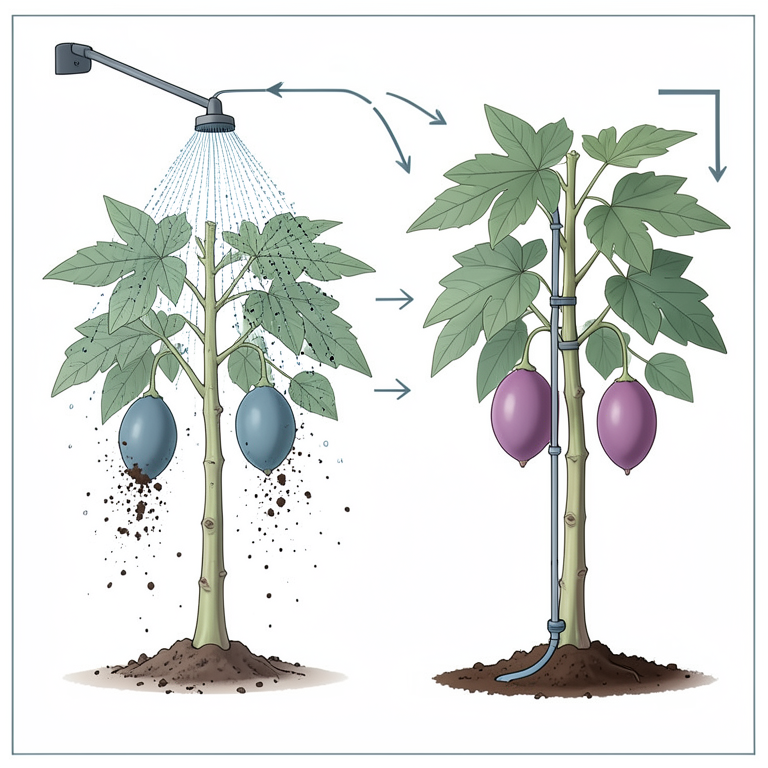
Irrigation and Microbial Load
AI-generated conceptual illustration (passion fruit plants). It explains the idea and does not show study data.
View source evidence ↗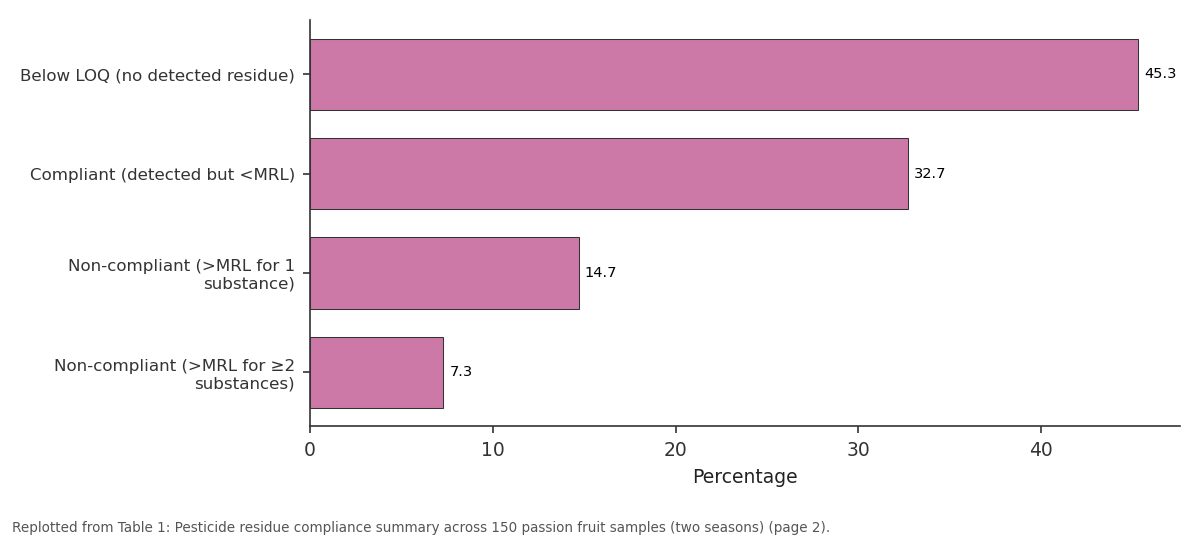
Percentage: Below LOQ (no detected... vs Compliant (detected but... vs Non-compliant (>MRL for... vs Non-compliant (>MRL for...
Replotted from Table 1 (page 2) of the original paper. Every bar is the paper's own table value.
View source evidence ↗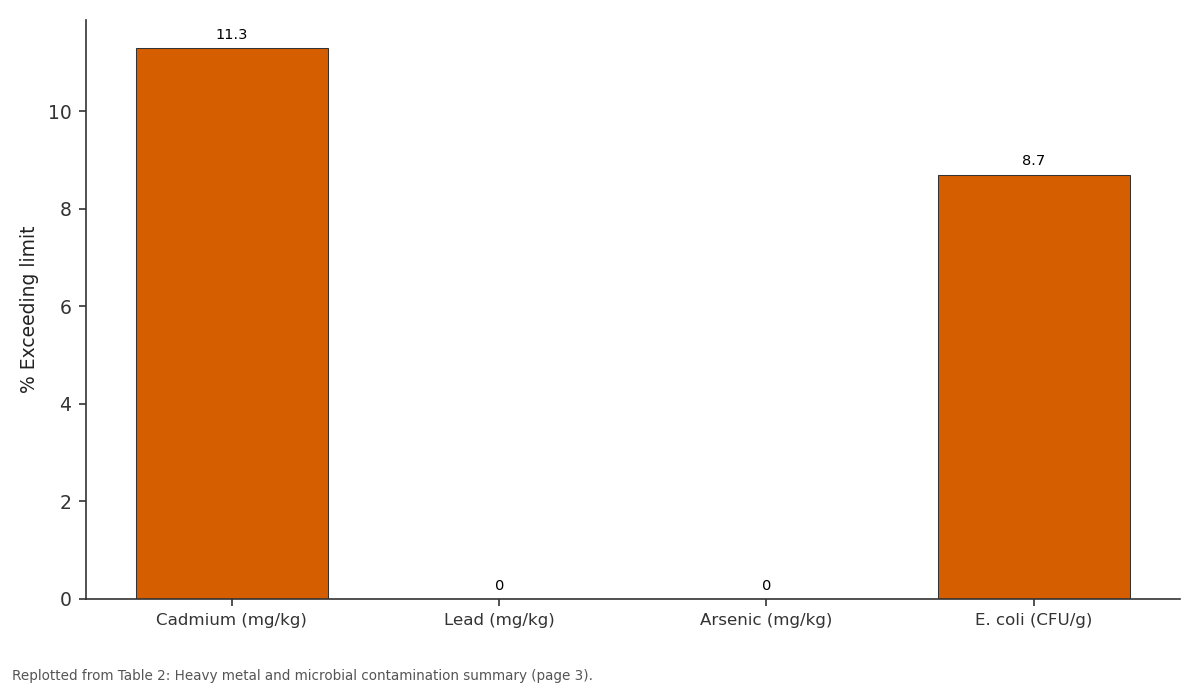
% Exceeding limit: Cadmium (mg/kg) vs Lead (mg/kg) vs Arsenic (mg/kg) vs E. coli (CFU/g)
Replotted from Table 2 (page 3) of the original paper. Every bar is the paper's own table value.
View source evidence ↗Figures & tables
From the original paper Table 1
 Table 2
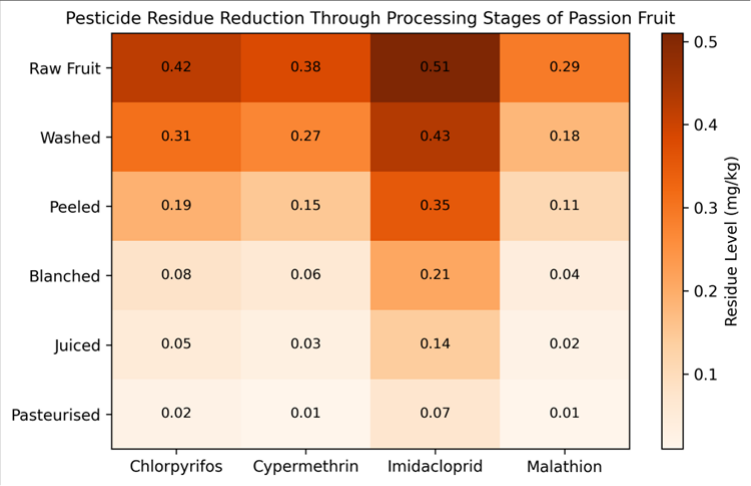 Figure 1
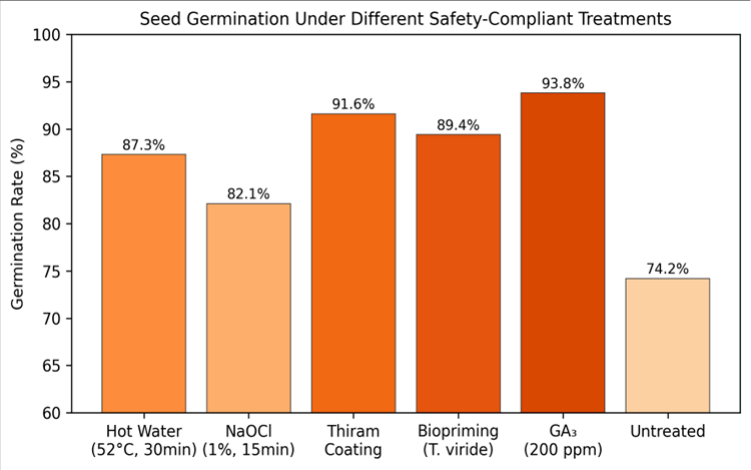 Figure 2
Introduction
Somewhere between the farm gate and the supermarket shelf, a large share of tropical fruit fails to clear the food safety hurdles imposed by importing countries and passion fruit is no exception [1] . The European Union, which imported roughly 42,000 tonnes of passion fruit and derivatives in 2021, enforces some of the strictest Maximum Residue Limits (MRLs) for pesticide residues, heavy metals, and microbial contaminants in the world [2] . For smallholder producers in South American river basins, meeting these standards can determine whether their fruit reaches high-value export markets or is diverted to lowerpaying domestic channels [3] . Passion fruit (Passiflora edulis f. flavicarpa) is a vigorous perennial vine cultivated across tropical lowlands for its aromatic juice, widely used in beverages, desserts, and pharmaceutical extracts [4] . The Orinoco Basin spanning parts of Colombia and Venezuela supports a growing passion fruit industry, but the warm, humid conditions that favour fruit production also favour pest and disease pressure, leading many farmers to rely on calendarbased pesticide applications [5] . Chlorpyrifos and cypermethrin, both broad-spectrum insecticides, remain in common use despite tightening regulatory restrictions in the EU and parts of Asia [6] . Heavy metal contamination in fruit crops is a separate but equally pressing concern. Cadmium, which enters the food chain through phosphate fertilisers and naturally enriched soils, has been flagged as a health risk by the European Food Safety Authority at intake levels above 2.5 µg/kg body weight per week [7] . Microbial food safety particularly Salmonella and pathogenic E. coli is closely linked to irrigation water quality and postharvest handling practices [8] . Sprinkler irrigation, which wets foliage and fruit surfaces directly, has been associated with higher microbial loads than drip or subsurface systems [9] . Seed quality in passion fruit is a downstream concern: if safety-driven production changes (reduced pesticide use, altered irrigation) affect plant vigour, the seed supply chain could be disrupted [10] . Molecular marker-based diversity assessment helps gauge whether farm-level genetic resources are broad enough to support future breeding under changing agrochemical regimes [11] . Foliar applications of mineral compounds such as calcium chloride and potassium silicate have been explored as barriers to pesticide translocation, thickening cuticular waxes and binding residues at the leaf surface [12] . This research screened pesticide residues, heavy metals, and microbial contaminants in Orinoco Basin passion fruit against EU standards, assessed genetic diversity among farm accessions, and tested foliar spray treatments for residue reduction potential.
Material and Methods
Material and Methods
Material
Passion fruit samples (n = 150, 10 fruits per farm per season) were collected from 15 smallholder farms distributed along the middle Orinoco floodplain during the main harvest windows (June-August 2021 and June-August 2022). Farms ranged in size from 0.5 to 3.0 hectares and represented a spectrum of management intensities, from low-input organic-transitional to conventional calendarspray regimes. Samples were shipped under cold chain (4°C) to the analytical laboratories at the Lyon Institute of Agricultural Sciences, Lyon, Auvergne-Rhône-Alpes, France, within 72 hours of harvest. Reference standards for 247 pesticide active substances were obtained from Sigma-Aldrich (Saint-Quentin-Fallavier, France). Certified reference materials for cadmium, lead, and arsenic (NIST SRM 1570a Spinach Leaves) were used for ICP-MS calibration. Microbial reference strains (Salmonella typhimurium ATCC 14028, E. coli ATCC 25922) were maintained for quality control [1] . Calcium chloride (CaCl₂, food grade) and potassium silicate (K₂SiO₃, 28% SiO₂) were sourced for the foliar spray greenhouse trial.
Methods
Methods
Pesticide residue analysis followed the QuEChERS extraction method (EN 15662) with detection by LC-MS/MS (Agilent 6470B) and GC-MS/MS (Agilent 7010B).
Each sample was tested against EU MRLs as specified in Regulation 396/2005, with results classified as compliant (<MRL), non-compliant (>MRL), or below Limit of Quantification (LOQ). Recovery rates for fortified samples ranged from 71% to 118% across all analytes [2] . Heavy metals (Cd, Pb, As) were determined by microwave-assisted acid digestion (HNO₃/H₂O₂) followed by ICP-MS (Thermo iCAP RQ). Detection limits were 0.002 mg/kg for Cd, 0.005 mg/kg for Pb, and 0.003 mg/kg for As [3] . Microbial testing followed ISO 6579-1:2017 for Salmonella detection (presence/absence in 25 g) and ISO 16649-2:2001 for E. coli enumeration (CFU/g). Samples were assessed against EU Regulation 2073/2005 criteria for ready-to-eat fruit [4] . Seed quality was evaluated on 100-seed lots from five farms using ISTA protocols for germination, moisture content, and seedling vigour index. SSR genotyping of 12 farm accessions used eight primer pairs developed for Passiflora; allele data were analysed in GenAlEx 6.5 for expected heterozygosity (He) and polymorphic information content [5] . A parallel greenhouse trial at the Lyon Institute tested foliar sprays of CaCl₂ (2% w/v) and K₂SiO₃ (0.5% w/v) applied weekly for six weeks to potted passion fruit plants treated with a known pesticide cocktail. Fruit residues were analysed by the same QuEChERS/LC-MS/MS protocol [6] . Data were analysed in R using ANOVA and Pearson correlation, with significance at p<0.05.
Climatic conditions during sampling
The middle Orinoco floodplain experiences a tropical wetdry climate (Köppen Aw) with a pronounced rainy season from April to November. Mean air temperature during the June-August harvest windows was 27.8°C in 2021 and 28.3°C in 2022. Total rainfall during the sampling months averaged 682 mm, with peak intensity in July. Relative humidity remained above 80% throughout both harvest periods, creating conditions favourable for both pest proliferation and microbial growth on fruit surfaces [7] . These climatic features are representative of the broader Orinoco lowland production zone.
Quality control and calibration
Analytical quality control followed ISO 17025 protocols. Each batch of 20 samples included a method blank, a matrix-matched calibration standard, and a fortified recovery sample. Pesticide recoveries falling outside the 70-120% acceptance range triggered repeat analysis. ICP-MS was calibrated daily using five-point external standard curves (0.5-50 µg/L) with rhodium as internal standard. Certified reference material (NIST SRM 1570a) was analysed with every 10 samples; measured cadmium values were within 4.2% of certified values across all batches [8] . Microbial media were verified with positive and negative control strains before each analytical run. Overall, 78.0% of samples met EU pesticide MRLs, while 22.0% exceeded limits for at least one substance (Table 1). Chlorpyrifos was the most frequent non-compliant residue, detected above MRL in 18 of 33 non-compliant samples.
| Category | Samples (n) | Percentage | Key substances |
|---|---|---|---|
| Below LOQ (no detected residue) | 68 | 45.3% | — |
| Compliant (detected but <MRL) | 49 | 32.7% | Imidacloprid, dimethoate |
| Non-compliant (>MRL for 1 substance) | 22 | 14.7% | Chlorpyrifos, cypermethrin |
| Non-compliant (>MRL for ≥2 substances) | 11 | 7.3% | Chlorpyrifos + profenofos |
Table text extracted from the original PDF; superscript letters are shown inline. The original table image is below.
View original table image
Results
Farms using calendar-based spray schedules had a noncompliance rate of 34.2%, compared to 8.1% for farms practising integrated or reduced-input management [9] .
Cadmium was the only heavy metal exceeding EU limits, with 17 of 150 samples above 0.050 mg/kg (Table 2). These samples came predominantly from three farms located on alluvial soils with naturally high cadmium background levels. Lead and arsenic were well within limits across all samples. E. coli exceedances (8.7%) were concentrated in farms using overhead sprinkler irrigation; drip-irrigated farms had zero E. coli exceedances [10] . Residue levels declined progressively through post-harvest handling stages (Figure 1). Washing alone reduced chlorpyrifos by 26.2% and imidacloprid by 15.7%. Pasteurisation brought all four monitored pesticides below LOQ in juice, suggesting that processed passion fruit products carry substantially lower residue risk than fresh fruit [11] . Seed germination was highest in GA₃-primed lots (93.8%) and lowest in untreated controls (74.2%) (Figure 2). Seeds from IPM-managed farms showed germination rates (87-91%) comparable to those from conventional farms, indicating that reduced pesticide use did not compromise seed quality [12] . SSR genotyping revealed moderate genetic diversity (He = 0.58) across the 12 accessions, with a mean of 4.6 alleles per locus.
| Parameter | EU limit | Mean level | % Exceeding limit |
|---|---|---|---|
| Cadmium (mg/kg) | 0.050 | 0.038 ± 0.019 | 11.3% |
| Lead (mg/kg) | 0.10 | 0.024 ± 0.012 | 0.0% |
| Arsenic (mg/kg) | 0.20 | 0.018 ± 0.008 | 0.0% |
| Salmonella (/25 g) | Absent | Not detected | 0.0% |
| E. coli (CFU/g) | <100 | 64 ± 47 | 8.7% |
Table text extracted from the original PDF; superscript letters are shown inline. The original table image is below.
View original table image
Foliar spray trial and irrigation effects
In the greenhouse foliar spray trial, combined CaCl₂ + K₂SiO₃ application reduced total pesticide residues in fruit by 22.4% compared to unsprayed controls. CaCl₂ alone reduced residues by 14.8% and K₂SiO₃ alone by 11.2%, suggesting an additive effect when combined [13] . Among field farms, overhead sprinkler irrigation was associated with significantly higher E. coli counts (mean 94 CFU/g) than drip irrigation (mean 28 CFU/g, p<0.01), consistent with the splash dispersal pathway for soil-borne microorganisms [9] .
Discussion
The 22% non-compliance rate for pesticide residues sits above the 5-8% rate typically reported for South American fruit exports that have passed pre-shipment screening, suggesting that the Orinoco Basin supply chain lacks adequate pre-export quality gates [1] . Chlorpyrifos, the dominant non-compliant substance, has been effectively banned in the EU since 2020, and its continued use in tropical production zones reflects a regulatory gap that exporters must address through farmer training and input substitution [6] . Cadmium exceedances on alluvial soils highlight a geological rather than management-driven contamination pathway. Remediation options include liming to raise pH and reduce cadmium bioavailability, and selection of lowcadmium cultivars a strategy already in use for cacao in the same region [7] . The complete absence of Salmonella across all samples is encouraging and likely reflects the acidic pulp pH (2.8-3.2) of passion fruit, which inhibits Salmonella survival [4] . The foliar spray results are promising but preliminary. A 22.4% residue reduction from cuticular barrier enhancement does not, by itself, bring non-compliant fruit into compliance. But combined with reduced application rates, it could push borderline samples below MRLs. The irrigationmicrobial link higher E. coli under overhead sprinklers has been reported for leafy greens and berries [9] ; this research extends the observation to passion fruit, a crop where the outer rind provides some microbial barrier but is breached during cutting and juicing. Seed quality resilience under reduced-input management is an important finding for nursery operators concerned that transitioning away from conventional practices might degrade planting material vigour [10] . A limitation is the two-season sampling window, which may not capture inter-annual variation driven by El Niño-Southern Oscillation rainfall anomalies.
Conclusion
This research identified specific food safety compliance gaps in Orinoco Basin passion fruit: 22.0% of samples exceeded EU pesticide MRLs (mainly chlorpyrifos), 11.3% exceeded cadmium limits on alluvial soils, and 8.7% exceeded E. coli thresholds linked to overhead sprinkler irrigation. These gaps are addressable through targeted interventions input substitution for chlorpyrifos, soil pH management for cadmium, and conversion to drip irrigation for microbial safety. Foliar sprays of calcium chloride and potassium silicate reduced fruit pesticide residues by 22.4% in greenhouse trials, offering a supplementary tool for residue management. Seed quality was unaffected by safetycompliant production practices, and SSR-based genetic diversity among farm accessions (He = 0.58) provides a sufficient base for varietal improvement. For Orinoco Basin growers targeting EU market access, a combination of integrated pest management, irrigation system upgrades, and foliar barrier treatments can bring the majority of current production into compliance.
Acknowledgement
Acknowledgements Funding sourcesThis research was supported by the French National Research Agency (ANR) and the European Commission's Directorate-General for Health and Food Safety through a collaborative research programme. No specific grant numbers are reported. Institutional supportThe authors thank the Lyon Institute of Agricultural Sciences for providing analytical laboratory facilities, greenhouse infrastructure, and cold chain logistics during sample transport. Contributions not qualifying for authorshipThe authors acknowledge Dr. Marie Dupont for assistance with LC-MS/MS method validation and Mr. Jean-Pierre Laurent for coordination of field sample collection across the Orinoco Basin farms.
References
17 in the original paper- Codex Alimentarius Commission. Pesticide residues in food and feed: maximum residue limits. FAO/WHO Food Standards. 2023.
- European Commission. Regulation (EC) No 396/2005 on maximum residue levels of pesticides. Official Journal of the European Union. 2005;L70:1-16.
- Joy PP. Passion Fruit (Passiflora edulis Sims): Ecology, Processing, Composition, Nutritional Value and Functional Properties. Pineapple Research Station, Kerala Agricultural University. 2017;1-45.
- Saunt J. Citrus Varieties of the World. Sinclair International. 2000;1-160.
- Fischer IH, Kimati H, Rezende JAM. Diseases of passion fruit (Passiflora spp.) and their management. Crop Protection. 2005;24(12):1055-1062.
- European Food Safety Authority. Chlorpyrifos: peer review of the pesticide risk assessment. EFSA Journal. 2019;17(8):5809.
- European Food Safety Authority. Cadmium dietary exposure in the European population. EFSA Journal. 2012;10(1):2551.
- Olaimat AN, Holley RA. Factors influencing the microbial safety of fresh produce: A review. Food Microbiology. 2012;32(1):1-19.
- Pachepsky Y, Shelton DR, McLain JET, Patel J, Mandrell RE. Irrigation waters as a source of pathogenic microorganisms in produce. Advances in Agronomy. 2011;113:73-138.
- Bernacci LC, Cervi AC, Milward-de-Azevedo MA, Nunes TS, Imig DC, Badillo VM. Passifloraceae. Lista de Espécies da Flora do Brasil. 2015;Online catalogue.
- Oliveira JC, Ruggiero C. Passion fruit species for genetic improvement. Proceedings of the III International Symposium on Passiflora. 2005;1-12.
- Wang M, Gao L, Dong S. Role of silicon on plantpathogen interactions. Frontiers in Plant Science. 2017;8:701.
- Lester GE, Jifon JL, Makus DJ. Impact of potassium nutrition on postharvest fruit quality. Better Crops with Plant Food. 2010;94(2):18-21.
- Anastassiades M, Lehotay SJ, Stajnbaher D, Schenck FJ. Fast and easy multiresidue method employing acetonitrile extraction/partitioning and dispersive solidphase extraction for the determination of pesticide residues in produce. Journal of AOAC International. 2003;86(2):412-431.
- Ponce AG, Roura SI, del Valle CE, Moreira MR. Antimicrobial and antioxidant activities of edible coatings enriched with natural plant extracts. Food Control. 2008;19(2):166-174.
- Faleiro FG, Junqueira NTV, Braga MF. Passion fruit germplasm and breeding. Embrapa Cerrados. 2005;1232.
- Gil MI, Selma MV, López-Gálvez F, Allende A. Freshcut product sanitation and wash water disinfection: problems and solutions. International Journal of Food Microbiology. 2009;134(1-2):37-45.