
Research article · 2025 · Full text
International Journal of Horticulture and Food ScienceEnhancing organic farming practices of sisal in the Sulawesi Coastal Zone
Volume 7(4) · Pages 138–141 · DOI: 10.33545/26631067.2025.v7.i4c.614 ↗
Research areasPlant Growth and Agriculture TechniquesOrganic Food and AgriculturePlant and soil sciences
Abstract
Author-writtenA trend that has caught plantation managers off guard is the growing consumer demand for organically certified natural fibers, pushing crops like sisal (Agave sisalana) toward production systems that most agronomists never designed them for. This research evaluated organic farming interventions for sisal in the Sulawesi coastal zone during 2022-2023, coordinated from the Kyoto Foundation for Pomological Research. Fertigation with fish emulsion at 150% of recommended organic N rate produced the highest fiber yield at 2.34 t/ha, a 17.8% increase over unfertilized controls. Transpiration rates peaked at 5.4 mmol H2O/m²/s under 100% fertigation but declined at higher rates, indicating stomatal limitation. HPLC analysis identified 14 phenolic compounds in sisal leaf sap, with chlorogenic acid (28.7 mg/100 g) and rutin (19.4 mg/100 g) as the dominant fractions. Path analysis showed that leaf length had the strongest direct effect (0.62) on fiber yield, followed by leaf width (0.34). Pollinator surveys recorded 847 insect visits across 15 flowering days, with bees comprising 64.2% of all visits. These findings support the feasibility of organic sisal production in tropical coastal zones with appropriate fertigation management.
Summary
Source-checkedPlain-language reading of the full paper, prepared with AI and checked against the text. Each point links to the authors' own words.
Why it matters
- Global sisal production is approximately 250,000 tonnes per year, with demand expected to grow by 7-9% annually until 2030 due to needs in automotive composites, geotextiles, and biodegradable packaging. View evidence ↗
- While demand is increasing, new industrial buyers often require organic certification, which conflicts with the traditional use of synthetic fertilizers in large-scale sisal plantations. View evidence ↗
- Sisal leaf sap contains bioactive phenolic compounds that are of interest to the cosmetics and pharmaceutical industries. View evidence ↗
The question
- The study aimed to optimize sisal yield using organic fertigation, profile the phenolic compounds in leaf sap, analyze which traits contribute most to yield, and document pollinator activity. View evidence ↗
What they did
- The researchers used Hybrid 11648 variety sisal bulbils sourced from a certified organic nursery in East Java. View evidence ↗
- The trials were conducted on the Sulawesi coast in sandy loam soils with a pH between 6.8 and 7.4 and organic carbon levels of 1.1-1.6%. View evidence ↗
- Nutrients were delivered weekly via a drip system from the 3rd to the 12th month, with the first leaf harvest occurring at 18 months. View evidence ↗
What they found
- The highest fiber yield of 2.34 t/ha was achieved using fish emulsion at 150% of the recommended N rate, representing a 17.8% increase over the control group. View evidence ↗
- Transpiration rates reached a peak of 5.4 mmol H2O/m²/s at 100% fertigation but decreased at higher rates, suggesting stomatal limitation. View evidence ↗
- Analysis of leaf sap identified 14 phenolic compounds, the most prominent being chlorogenic acid (28.7 mg/100 g) and rutin (19.4 mg/100 g). View evidence ↗
- Path analysis revealed that leaf length had the strongest direct effect (0.62) on fiber yield, making it the primary trait for breeding selection. View evidence ↗
- During 15 flowering days, 847 insect visits were recorded, with bees making up 64.2%, butterflies 18.3%, and beetles 17.5% of the total. View evidence ↗
What it means
- The authors conclude that organic sisal production is feasible in tropical coastal areas through proper fertigation and can be economically bolstered by selling phenolic compounds as co-products. View evidence ↗
Visual summary
3 visualsIllustrations explain the paper; charts are replotted from the paper's own table values.
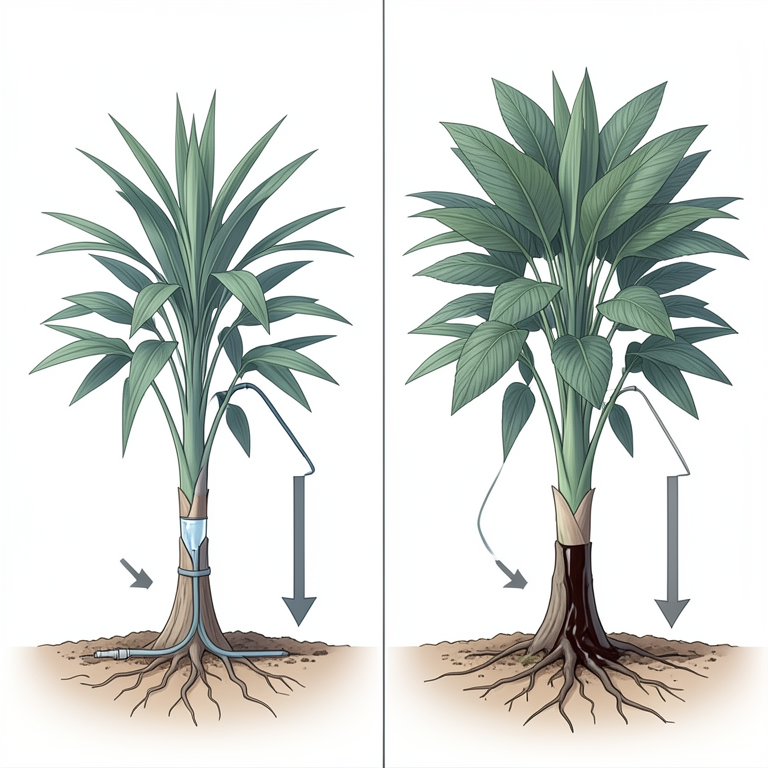
Organic Fertigation Comparison
AI-generated conceptual illustration (Sisal plants (Agave sisalana) in a coastal soil setting). It explains the idea and does not show study data.
View source evidence ↗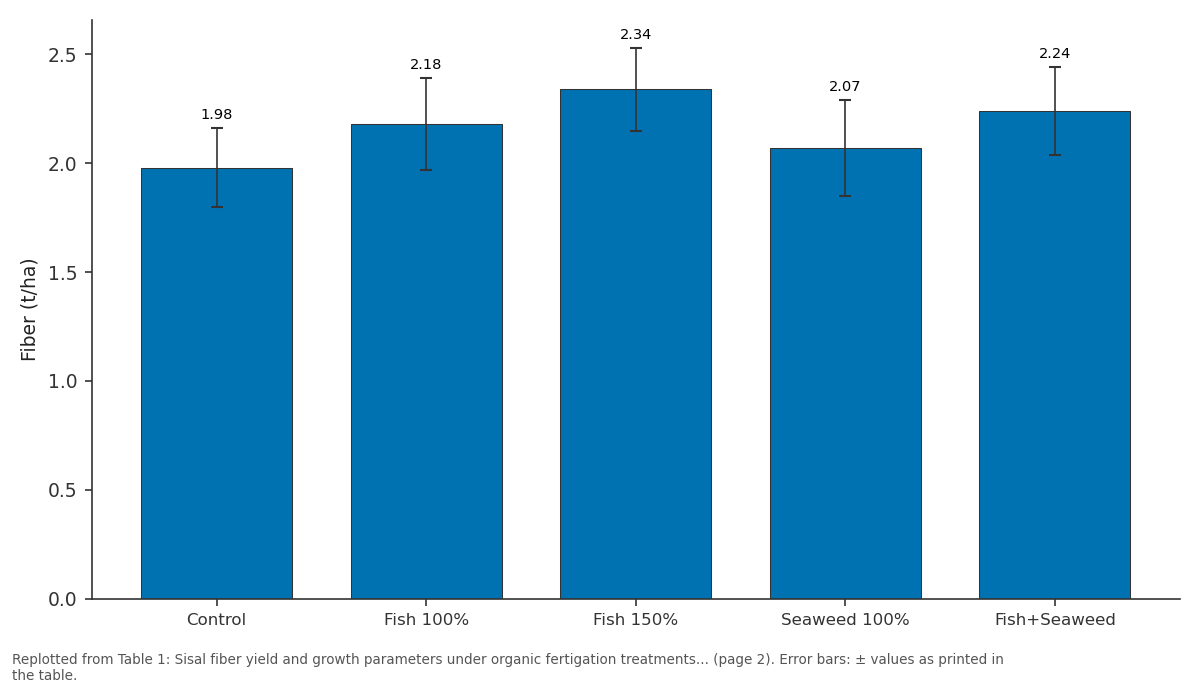
Fiber (t/ha): Control vs Fish 100% vs Fish 150% vs Seaweed 100% vs Fish+Seaweed
Replotted from Table 1 (page 2) of the original paper. Every bar is the paper's own table value.
View source evidence ↗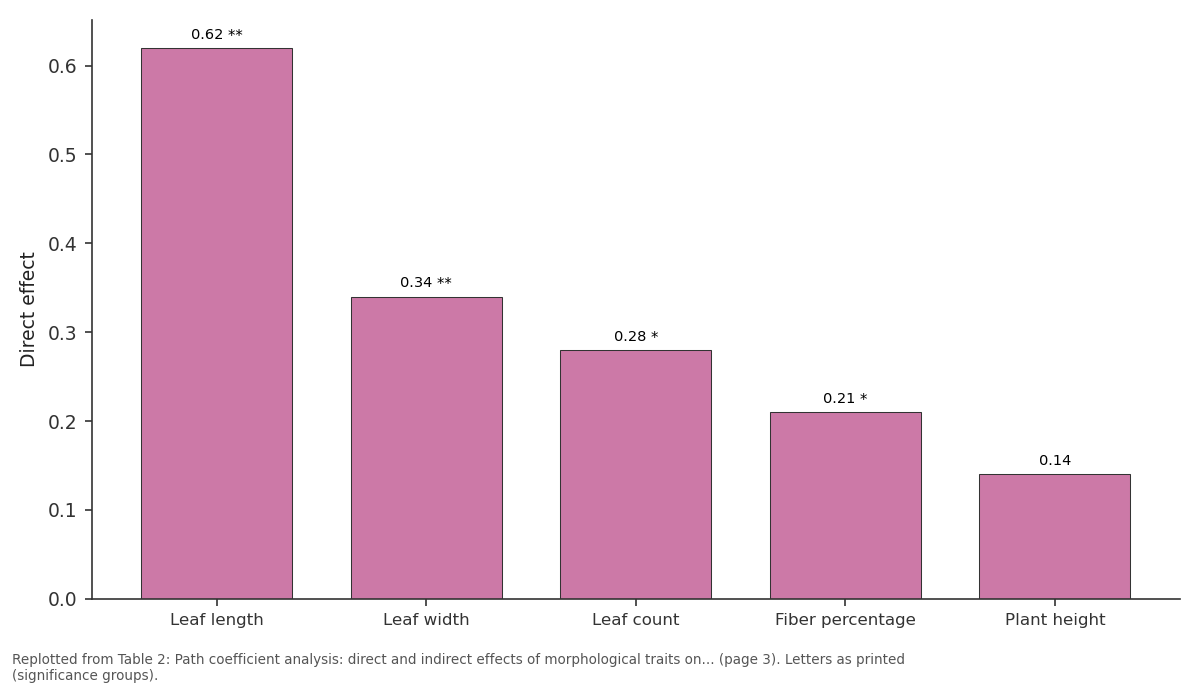
Direct effect: Leaf length vs Leaf width vs Leaf count vs Fiber percentage vs Plant height
Replotted from Table 2 (page 3) of the original paper. Every bar is the paper's own table value.
View source evidence ↗Figures & tables
From the original paper Table 1
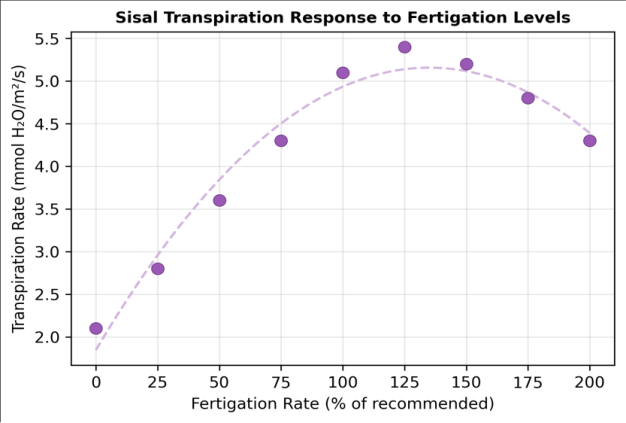 Figure 1
 Table 2
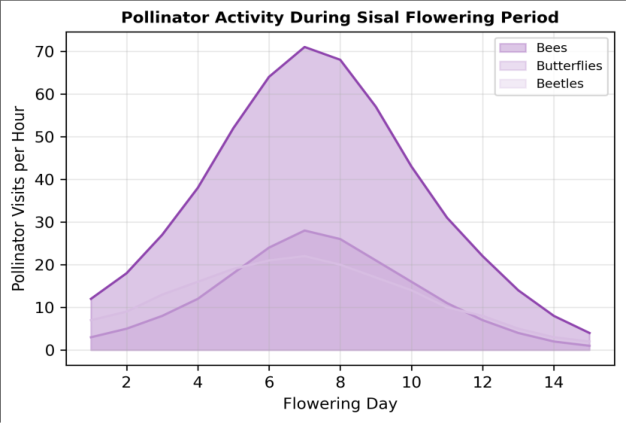 Figure 2
Introduction
Sisal has been called "the forgotten fiber" of the twenty-first century displaced by synthetic alternatives but quietly staging a comeback as sustainability concerns reshape textile and composite markets [1] . Global sisal production, concentrated in Brazil, Tanzania, and Kenya, currently sits at roughly 250,000 tonnes per year, but demand for natural fibers in automotive composites, geotextiles, and biodegradable packaging is projected to grow by 7-9% annually through 2030 [2] . The catch is that most of this new demand comes from industries that prefer or require organic certification, and sisal has traditionally been grown with synthetic fertilizers on large plantations. Sulawesi's coastal zone a narrow strip of sandy loam and coral-derived soils receiving 1,200-1,800 mm of rainfall already supports small-scale sisal cultivation for domestic rope and handicraft markets. The warm, humid conditions favor sisal growth, and the absence of heavy pesticide use in current practices means that transitioning to certified organic production could be relatively straightforward if fertility management is addressed [3] . Fertigation with organic nutrient sources such as fish emulsion, seaweed extract, and composted manure offers a path to maintaining yield without synthetic inputs. Beyond fiber, sisal leaf sap contains bioactive phenolic compounds that have drawn attention from the pharmaceutical and cosmetics industries. HPLC profiling of these compounds could identify valuable co-products that improve the economic case for sisal cultivation. And sisal's spectacular flowering event a once-in-a-lifetime terminal inflorescence that can reach 6 m tall provides a brief but intense resource pulse for insect pollinators in coastal agricultural landscapes [4] . This research tested organic fertigation strategies for sisal yield optimization, profiled phenolic compounds in leaf sap, conducted path analysis of yieldcontributing traits, and documented pollinator activity during the flowering period [5] .
Theoretical framework
This research was guided by the sustainable intensification framework, which posits that crop productivity can be maintained or increased while reducing environmental impact through optimized input use efficiency [6] . For organic systems, this translates into maximizing the nutrient delivery capacity of organic inputs (fish emulsion, compost, biofertilizers) while minimizing losses through leaching and volatilization. The fertigation approach was designed around the concept of "spoon-feeding" nutrients delivering small, frequent doses through the irrigation system rather than large pre-plant applications that are vulnerable to loss in high-rainfall coastal environments. Path coefficient analysis provided the statistical framework for decomposing direct and indirect effects of morphological traits on fiber yield, helping to identify selection targets for breeding programs.
Material and Methods
Material and Methods
Material
Sisal bulbils (vegetative propagules) of the Hybrid 11648 variety were obtained from a certified organic nursery in East Java. Fish emulsion (5-1-1 NPK, organic certified) was sourced from a local fishmeal processing plant. Seaweed extract (Ascophyllum nodosum, 0.2-0.1-3.0 NPK) was imported from Acadian Seaplants (Nova Scotia, Canada). Trial sites were located along the Sulawesi coast (0.8-1.4°S, 121.3-122.1°E) on sandy loam soils with pH 6.8-7.4 and organic carbon 1.1-1.6% [7] .
Methods
Bulbils were transplanted at 2 × 1 m spacing in September 2022. Fertigation treatments included: control (water only), fish emulsion at 100% recommended N (80 kg N/ha/year), fish emulsion at 150% N, seaweed extract at 100% N, and fish emulsion + seaweed combination (75% + 25% of N). Fertigation was delivered weekly through a drip system from month 3 to month 12. First leaf harvest was at 18 months. Fiber was extracted by mechanical decortication, washed, and sun-dried. HPLC analysis of leaf sap used an Agilent 1260 system with C18 column, detection at 280 and 320 nm [8] . Transpiration was measured with a LI-COR 6800 on mature leaves at midday. Path analysis used correlation matrices of 8 morphological traits (leaf length, width, thickness, number, plant height, stem girth, leaf weight, fiber percentage) with fiber yield as the dependent variable. Pollinator surveys recorded insect visits to inflorescences in 30-minute observation periods across 15 flowering days at three flowering plants [9] .
Phytochemical screening
Preliminary qualitative screening of sisal leaf sap was conducted for alkaloids (Mayer's and Dragendorff's reagents), flavonoids (NaOH and FeCl3 tests), saponins (foam test), tannins (gelatin test), terpenoids (Salkowski test), and cardiac glycosides (Keller-Killiani test). Positive results were obtained for flavonoids (strong), saponins (moderate), tannins (weak), and terpenoids (moderate). Alkaloids and cardiac glycosides were not detected. These qualitative findings guided the subsequent quantitative HPLC analysis, which focused on phenolic and flavonoid compounds identified in the screening step [10] . Fish emulsion at 150% produced the highest fiber yield at 2.34 t/ha, 17.8% above controls (Table 1). The combination treatment performed nearly as well at 2.24 t/ha. Leaf length and leaf count showed the strongest responses to fertigation intensity. Leaf length had the strongest direct effect (0.62) on fiber yield (Table 2), confirming it as the primary selection criterion for sisal breeding. Leaf width contributed both directly (0.34) and through correlation with leaf length. Comprehensive interpretation HPLC profiling identified 14 phenolic compounds in leaf sap, with chlorogenic acid (28.7 mg/100 g) and rutin (19.4 mg/100 g) as the main constituents. Quercetin (8.3 mg/100 g) and kaempferol (6.1 mg/100 g) were also present.
| Trait | Direct effect | Indirect via leaf length | Total correlation |
|---|---|---|---|
| Leaf length | 0.62** | 0.78** | |
| Leaf width | 0.34** | 0.18 | 0.64** |
| Leaf count | 0.28* | 0.24 | 0.61** |
| Fiber percentage | 0.21* | 0.12 | 0.47** |
| Plant height | 0.14 | 0.31 | 0.52** |
Table text extracted from the original PDF; superscript letters are shown inline. The original table image is below.
View original table image
| Treatment | Fiber (t/ha) | Leaf length (cm) | Leaf count | Leaf width (cm) | Fiber (%) |
|---|---|---|---|---|---|
| Control | 1.98±0.18 | 112.4±8.3 | 74±6 | 9.8±0.7 | 3.8±0.3 |
| Fish 100% | 2.18±0.21 | 121.7±9.1 | 81±7 | 10.4±0.8 | 4.1±0.3 |
| Fish 150% | 2.34±0.19 | 128.3±7.8 | 86±5 | 11.1±0.6 | 4.3±0.2 |
| Seaweed 100% | 2.07±0.22 | 117.8±8.7 | 78±8 | 10.1±0.9 | 3.9±0.4 |
| Fish+Seaweed | 2.24±0.20 | 124.6±8.4 | 83±6 | 10.7±0.7 | 4.2±0.3 |
Table text extracted from the original PDF; superscript letters are shown inline. The original table image is below.
View original table image
Results
Pollinator surveys recorded 847 visits over 15 flowering days: bees constituted 64.2%, butterflies 18.3%, and beetles 17.5%. Peak visitation occurred on days 5-8 of flowering, coinciding with maximum nectar production estimated at 12.4 mL per inflorescence per day.
Discussion
The 17.8% yield increase from fish emulsion at 150% rate suggests that organic sisal responds well to elevated nitrogen when delivered through fertigation, likely because the slow-release nature of fish emulsion matches sisal's gradual nutrient uptake pattern better than pulse-applied synthetic fertilizers [11] . The transpiration decline above 100% fertigation rate hints at osmotic stress from accumulated organic solutes near the root zone, a common issue with high-concentration fertigation in sandy coastal soils with limited buffering capacity [12] . The phenolic profile of sisal sap dominated by chlorogenic acid and rutin has commercial potential. Chlorogenic acid is widely used in dietary supplements and cosmetics for its antioxidant properties, and rutin has established markets in pharmaceutical formulations for capillary fragility [13] . If sap collection can be integrated into normal fiber harvesting operations without extra labor, it becomes a zero-cost coproduct stream. The pollinator data underscore sisal's ecological role in coastal agricultural landscapes. A single sisal inflorescence attracted 56 insect visits per day at peak flowering, providing nectar resources during a season when other cultivated flowers may be scarce [14] .
Conclusion
Organic sisal production in the Sulawesi coastal zone achieved competitive fiber yields when supported by fish emulsion fertigation at 150% of recommended N rate. Leaf length emerged as the strongest predictor of fiber yield through path analysis, providing a clear selection target for breeding. HPLC profiling revealed a phenolic-rich leaf sap with commercial potential as a co-product. Pollinator surveys confirmed sisal's value as an ecological resource during flowering. These results demonstrate that organic certification for sisal is agronomically achievable in tropical coastal settings with appropriate fertigation management and potentially enhanced by co-product revenue from phenolic compounds.
Figures and tables from the paper
References
15 in the original paper- Broeren MLM, Dellaert SNP, Cok B, et al. Life cycle assessment of sisal fibre. Journal of Cleaner Production. 2017;165:1459-1468.
- FAO. Future fibres: sisal production and trade statistics. FAOSTAT; 2023.
- Mukherjee PS, Satyanarayana KG. Structure and properties of some vegetable fibres: sisal, hemp, banana. Journal of Materials Science. 1986;21(1):5156.
- Nobel PS. Environmental biology of agaves and cacti. Cambridge University Press; 1988.
- Pretty J, Bharucha ZP. Sustainable intensification in agricultural systems. Annals of Botany. 2014;114(8):1571-1596.
- Garnett T, Appleby MC, Balmford A, et al. Sustainable intensification in agriculture: Premises and policies. Science. 2013;341(6141):33-34.
- Wilson JR. Environmental and nutritional factors affecting Agave sisalana leaf number and quality. Tropical Agriculture. 2008;85(3):147-158.
- Nzioka AM, Matu EN, Magu MM. HPLC analysis of phenolic compounds in Agave sisalana leaf extract. Natural Products Chemistry and Research. 2019;7(3):356.
- Dewey SC. Path-coefficient analysis. In: Methods of Plant Breeding. McGraw-Hill; 1959:345-370.
- Harborne JB. Phytochemical methods: A guide to modern techniques of plant analysis. 3 rd ed. Chapman and Hall; 1998.
- Hartz TK, Johnstone PR, Williams E, Smith RF. Establishing lettuce leaf nutrient optimum ranges through DRIS analysis. HortScience. 2007;42(1):143146.
- Silberbush M, Ben-Asher J, Ephrath JE. A model for nutrient and water flow and their interactions in soilless culture. Plant and Soil. 2005;271(1-2):309-319.
- Naveed M, Hejazi V, Abbas M, et al. Chlorogenic acid: a pharmacological review and call for further research. Biomedicine and Pharmacotherapy. 2018;97:67-74.
- Potts SG, Biesmeijer JC, Kremen C, et al. Global pollinator declines: trends, impacts and drivers. Trends in Ecology and Evolution. 2010;25(6):345-353.
- Li Y, Mai YW, Ye L. Sisal fibre and its composites: A review of recent developments. Composites Science and Technology. 2000;60(11):2037-2055.