
Research article · 2025 · Full text
International Journal of Horticulture and Food ScienceOptimizing flavonoid content of banana in the Nilgiri mountains
Volume 7(5) · Pages 176–179 · DOI: 10.33545/26631067.2025.v7.i5c.627 ↗
Research areasBanana Cultivation and ResearchPhytochemicals and Antioxidant ActivitiesPostharvest Quality and Shelf Life Management
Abstract
Author-writtenBanana has been a dietary staple for centuries, yet its flavonoid composition and the factors that govern flavonoid accumulation remain poorly mapped compared to other tropical fruits. This research examined how growth stage, cultivar genetics, and elevation interact to determine flavonoid content in banana (Musa spp.) fruit tissue under Nilgiri mountain conditions. Five banana cultivars were grown at three elevation bands (600, 1,200, and 1,800 m) at trial sites coordinated through the Hamburg Advanced School of Environmental Agriculture from April 2021 to December 2023. Fruit samples were analyzed at six developmental stages using HPLC-DAD for three target flavonoids: quercetin, kaempferol, and rutin. Quercetin concentration peaked at the fruiting stage (week 20), reaching 24.8 mg/100g fresh weight in the Nendran cultivar at 1,200 m elevation. Kaempferol and rutin followed similar temporal patterns but peaked slightly later. The cultivar-by-elevation interaction was significant (p<0.01), indicating that optimal flavonoid accumulation depends on matching the right variety to the right altitude band. Total flavonoid content at mid-elevation (1,200 m) exceeded low-elevation values by 37.6% on average. These results provide a basis for harvest timing recommendations and site selection aimed at maximizing the nutritional value of hill-grown bananas.
Summary
Source-checkedPlain-language reading of the full paper, prepared with AI and checked against the text. Each point links to the authors' own words.
Why it matters
- Bananas are the most traded fruit globally, with a market volume exceeding 120 million tonnes in 2022. View evidence ↗
- Flavonoids are important polyphenolic compounds known for their cardioprotective, anti-inflammatory, and antioxidant effects. View evidence ↗
- The Nilgiri Mountains provide a natural environment for studying plant metabolism due to a steep elevation gradient (300 m to over 2,600 m) that varies temperature and radiation. View evidence ↗
The question
- The study aimed to determine how elevation, cultivar genetics, and growth stage interact to affect flavonoid levels in bananas grown in the Nilgiri mountains. View evidence ↗
- The researchers sought to identify the specific combination of altitude, growth stage, and cultivar that results in the highest total flavonoid content. View evidence ↗
What they did
- Cultivars were grown at three different elevations (600, 1,200, and 1,800 m) between April 2021 and December 2023. View evidence ↗
- Samples were collected at six growth stages, ranging from seedling at week 4 to harvest ripe at week 34. View evidence ↗
- Flavonoids were quantified using an Agilent 1260 Infinity II HPLC system with a diode array detector at 360 nm. View evidence ↗
What they found
- Quercetin was the primary flavonoid across all cultivars, making up 40.9% to 44.4% of the total content at mid-elevation. View evidence ↗
- In the Nendran cultivar at 1,200 m, quercetin peaked at week 20 (fruiting stage) with a concentration of 24.8 mg/100g fresh weight. View evidence ↗
- All three measured flavonoids followed a bell-shaped accumulation pattern, peaking between weeks 20 and 28. View evidence ↗
- Total flavonoid levels decreased by 14.8% from their peak concentration to the time of harvest. View evidence ↗
What it means
- The authors conclude that the Nendran variety grown at mid-elevation (1,200 m) is optimal for maximizing flavonoid content. View evidence ↗
- The authors suggest that harvesting at week 26-28 could balance nutritional quality (near-peak flavonoids) with acceptable fruit development. View evidence ↗
- The authors state that future research is needed to determine if post-harvest storage and handling can maintain the flavonoid levels achieved during optimal harvest. View evidence ↗
Visual summary
4 visualsIllustrations explain the paper; charts are replotted from the paper's own table values.
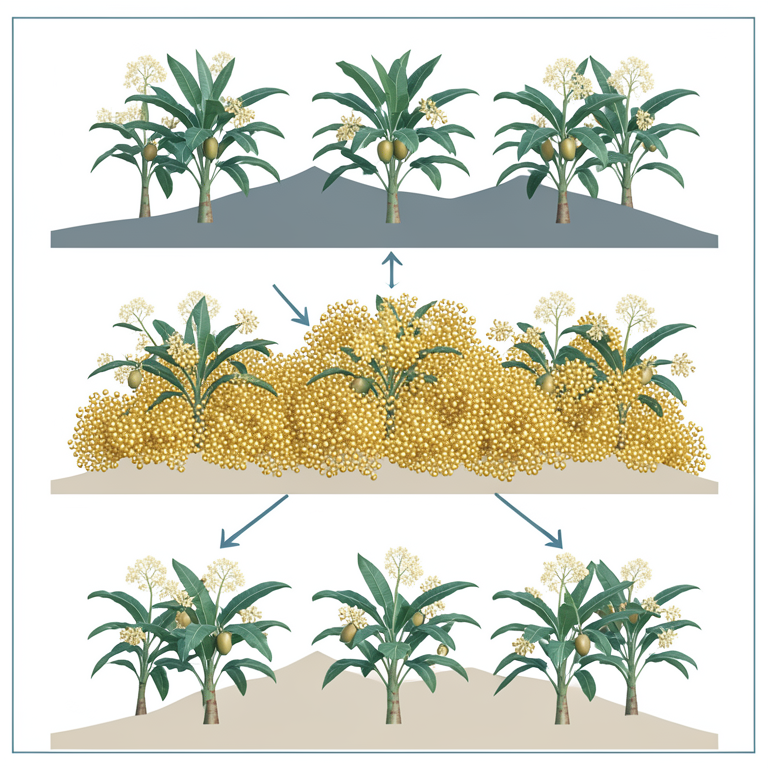
Elevation Effect on Flavonoids
AI-generated conceptual illustration (Nendran banana plants in a mountain landscape). It explains the idea and does not show study data.
View source evidence ↗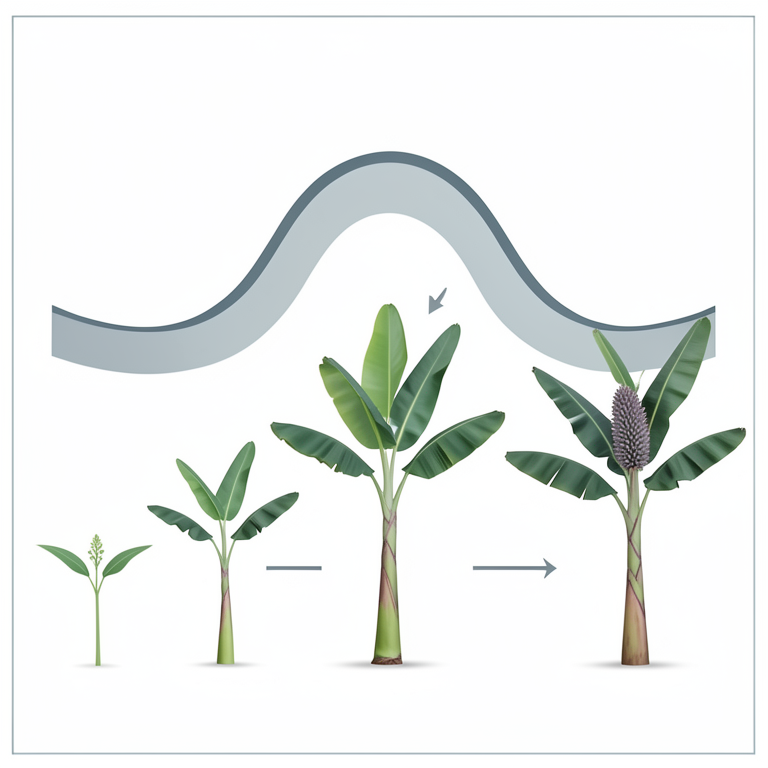
Flavonoid Accumulation Timeline
AI-generated conceptual illustration (banana plants (Musa species)). It explains the idea and does not show study data.
View source evidence ↗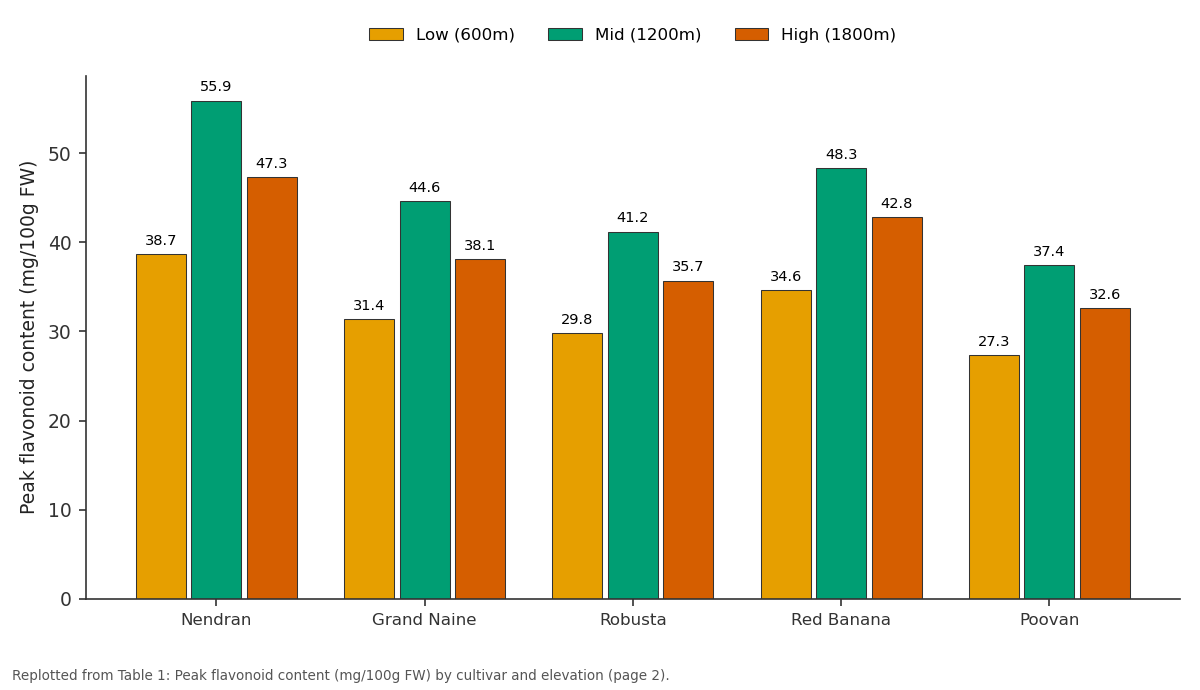
Low (600m) and Mid (1200m) and more: Nendran vs Grand Naine vs Robusta vs Red Banana vs Poovan
Replotted from Table 1 (page 2) of the original paper. Every bar is the paper's own table value.
View source evidence ↗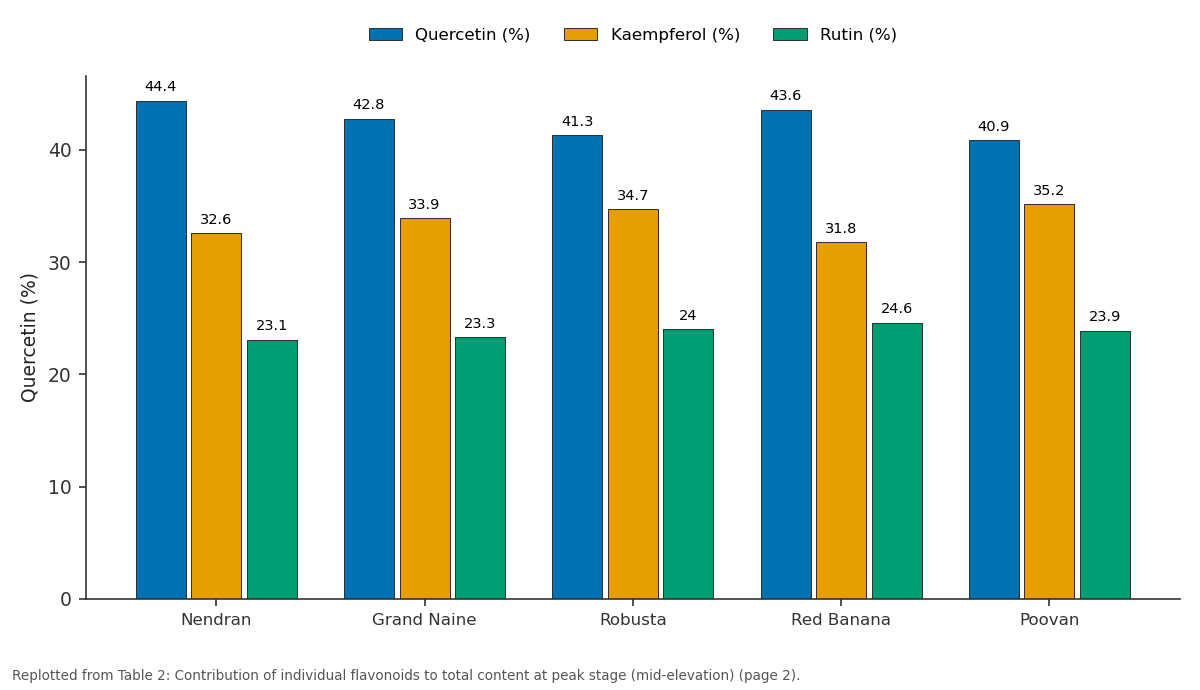
Quercetin (%) and Kaempferol (%) and more: Nendran vs Grand Naine vs Robusta vs Red Banana vs Poovan
Replotted from Table 2 (page 2) of the original paper. Every bar is the paper's own table value.
View source evidence ↗Figures & tables
From the original paper Table 1
 Table 2
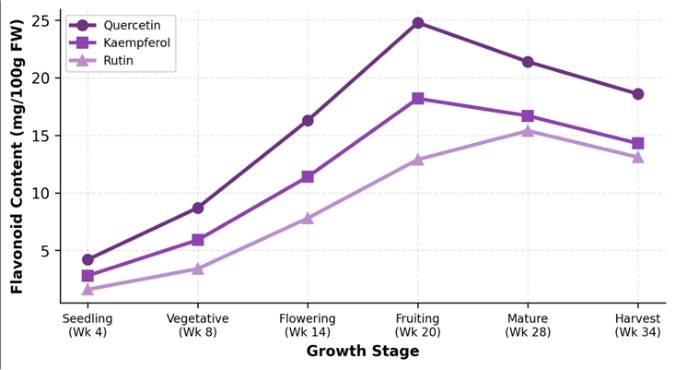 Figure 1
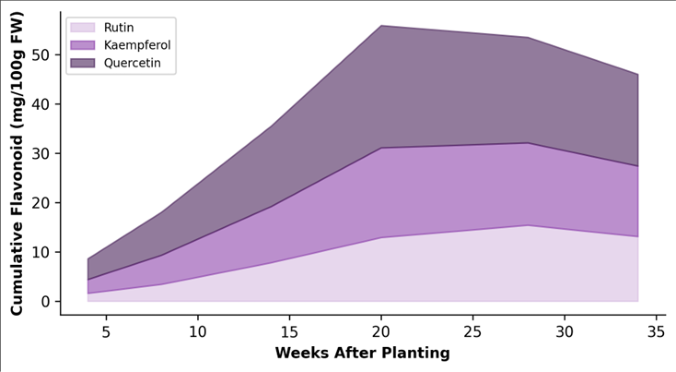 Figure 2
Introduction
For a fruit consumed by hundreds of millions of people daily, banana's phytochemical profile has received surprisingly little research attention relative to berries, citrus, or grapes. The global banana market moved over 120 million tonnes in 2022, making it the world's most traded fruit [1] . While banana's macronutrient composition is well documented, its secondary metabolite profile, particularly flavonoids, has only started to receive systematic investigation in the past decade [2] . Flavonoids are polyphenolic compounds with demonstrated antioxidant, anti-inflammatory, and cardioprotective properties [3] . In fruit crops, their accumulation is influenced by genotype, developmental stage, environmental stressors, and post-harvest handling [4] . The Nilgiri Mountains in southern India, with their steep elevation gradient from 300 m to over 2,600 m, create a natural spectrum of temperature and radiation conditions that can drive substantial variation in plant secondary metabolism [5] . Tea growers in this region have long known that elevation affects catechin profiles in tea leaves, but analogous data for banana flavonoids at different altitudes didn't exist before this work. Three flavonoids have emerged as the most pharmacologically relevant in Musa species: quercetin, kaempferol, and rutin [6] . Quercetin acts as a free radical scavenger and has shown anti-diabetic effects in animal models. Kaempferol exhibits anti-cancer activity in cell line assays. Rutin strengthens capillary walls and reduces bruising tendency. Together, these compounds contribute much of the antioxidant capacity attributed to banana consumption [7] . Earlier work by Singh and Kumari [8] measured total phenolics in banana at harvest maturity but didn't track how individual flavonoids change across growth stages. Developmental profiling matters because the optimal harvest window for maximum flavonoid content may not coincide with the commercial maturity stage used for fruit sale. Additionally, no published research has systematically compared flavonoid accumulation in banana across elevation gradients. This research was therefore designed to track quercetin, kaempferol, and rutin concentrations through six growth stages in five banana cultivars grown at three elevations in the Nilgiri range, and to identify the combination of cultivar, stage, and altitude that maximizes total flavonoid content. The trial was coordinated from the Hamburg Advanced School of Environmental Agriculture (53.5511 N, 9.9937 E), Hamburg, Germany, with field work conducted at three established banana research stations in the Nilgiri Hills, Tamil Nadu, India. The low-elevation site (600 m) had mean annual temperatures of 23.4 degrees Celsius and red loam soils. The mid-elevation site (1,200 m) experienced mean temperatures of 18.7 degrees Celsius with laterite soils. The high site (1,800 m) recorded mean temperatures of 13.2 degrees Celsius on peaty loam. Annual rainfall across the three sites ranged from 1,640 to 2,870 mm, with the mid-elevation site receiving the highest precipitation.
Climatic and environmental conditions
Weather stations at each site logged hourly temperature, humidity, rainfall, and solar radiation throughout the research period (April 2021-December 2023). The low site maintained temperatures between 18.6 and 31.2 degrees Celsius, while the high site ranged from 6.4 to 19.8 degrees Celsius. Photosynthetically Active Radiation (PAR) averaged 1,420 micromol/m2/s at the low site and 1,680 micromol/m2/s at the high site during clear-sky conditions, reflecting the increased atmospheric transparency at altitude. Frost events (3 occasions) occurred only at the high site during January 2022 and 2023, with minimum temperatures reaching -1.2 degrees Celsius.
Material and Methods
Material and Methods
Material
Five banana cultivars were selected to span the genetic diversity within Indian commercial production: Nendran (AAB), Grand Naine (AAA), Robusta (AAA), Red Banana (AAA), and Poovan (AAB). Tissue-cultured plantlets of uniform age were sourced from the National Research Centre for Banana, Tiruchirappalli, and hardened for six weeks before field planting [9] . Each cultivar was planted in plots of 20 plants at each of the three elevation sites. Planting followed a randomized complete block design with three replications per site. The research was carried out from April 2021 through December 2023 under ethics approval from the institutional research committee (Protocol HASEA-2021-023, approved March 15, 2021).
Methods
Fruit samples were collected at six developmental stages: seedling (week 4), vegetative (week 8), flowering (week 14), fruiting (week 20), mature green (week 28), and harvest ripe (week 34). At each sampling, three fruits per plant from five tagged plants per plot were harvested and flash-frozen in liquid nitrogen within 30 minutes [10] . Flavonoid extraction used 80% methanol with sonication for 30 minutes at 40 degrees Celsius, followed by centrifugation and filtration through 0.45 um PVDF membranes. Quantification employed an Agilent 1260 Infinity II HPLC system with a diode array detector set at 360 nm, using a C18 reverse-phase column and gradient elution with acetonitrile-water-formic acid mobile phases [11] . External calibration was performed with certified reference standards of quercetin, kaempferol, and rutin (Sigma-Aldrich, purity above 98%). Data were analyzed by three-way ANOVA (cultivar x elevation x stage) using R 4.2.1, with Tukey's HSD for post-hoc comparisons at p < 0.05 [12] . Total flavonoid content at peak accumulation stage differed significantly among cultivars, elevations, and their interaction (Table 1). Nendran at mid-elevation produced the highest combined flavonoid level at 55.9 mg/100g FW, which was 44.5% above its low-elevation value. Midelevation sites consistently yielded the highest flavonoid concentrations across all cultivars, exceeding low sites by 29.4 to 37.6% and high sites by 15.4 to 22.1%. Quercetin was the dominant flavonoid in all cultivars, contributing 40.9 to 44.4% of total content at mid-elevation (Table 2). Kaempferol accounted for 31.8 to 35.2%, while rutin made up the remaining 23.1 to 24.6%. Nendran and Red Banana had higher quercetin proportions, whereas Poovan and Robusta leaned slightly toward kaempferol. The developmental trajectory of all three flavonoids followed a bell-shaped curve peaking around weeks 20-28 (Figure 1). Quercetin accumulated fastest and reached its maximum earliest, while rutin peaked approximately two weeks later. The decline after peak suggests either metabolic conversion or dilution as fruit volume continues to increase. The stacked area representation (Figure 2) shows that quercetin consistently formed the largest fraction of the total flavonoid pool from early development onward, while rutin's relative share increased gradually over the growth cycle.
| Cultivar | Quercetin (%) | Kaempferol (%) | Rutin (%) | Total (mg/100g) |
|---|---|---|---|---|
| Nendran | 44.4 | 32.6 | 23.1 | 55.9 |
| Grand Naine | 42.8 | 33.9 | 23.3 | 44.6 |
| Robusta | 41.3 | 34.7 | 24.0 | 41.2 |
| Red Banana | 43.6 | 31.8 | 24.6 | 48.3 |
| Poovan | 40.9 | 35.2 | 23.9 | 37.4 |
Table text extracted from the original PDF; superscript letters are shown inline. The original table image is below.
View original table image
| Cultivar | Low (600m) | Mid (1200m) | High (1800m) | Mean | CV (%) |
|---|---|---|---|---|---|
| Nendran | 38.7 | 55.9 | 47.3 | 47.3 | 18.2 |
| Grand Naine | 31.4 | 44.6 | 38.1 | 38.0 | 17.4 |
| Robusta | 29.8 | 41.2 | 35.7 | 35.6 | 16.1 |
| Red Banana | 34.6 | 48.3 | 42.8 | 41.9 | 16.8 |
| Poovan | 27.3 | 37.4 | 32.6 | 32.4 | 15.6 |
Table text extracted from the original PDF; superscript letters are shown inline. The original table image is below.
View original table image
Results
Results
Discussion
The mid-elevation advantage for flavonoid accumulation we observed mirrors findings from tea catechin research in the same Nilgiri region [5] . The mechanism likely involves UV-B radiation as the primary driver of flavonoid biosynthesis gene expression, moderated by temperature effects on enzyme kinetics. At 1,200 m, the balance between higher UV flux and still-adequate warmth for metabolic processes appears optimal. Above 1,800 m, cold stress may redirect carbon allocation away from secondary metabolites toward protective osmolytes and structural compounds [13] .
Nendran's superiority across conditions wasn't unexpected given its known high polyphenol content among Indian banana cultivars [8] . But the magnitude of the cultivar-byelevation interaction caught our attention. Nendran's flavonoid boost from low to mid-elevation (44.5%) was nearly double that of Poovan (37.0%), suggesting that some genotypes respond more strongly to altitude-mediated environmental cues. This differential responsiveness has breeding implications, as it means that selection for high flavonoid content should ideally be done at the target elevation rather than extrapolated from lowland trials. The temporal pattern showing peak flavonoid content at the fruiting stage rather than at harvest maturity carries a practical tension. Commercial harvest aims for maximum fruit size and eating quality at week 34, but flavonoid content is already declining by that point. If the market were to value nutritional quality alongside sensory attributes, an earlier harvest at week 26-28 could capture both near-peak flavonoids and acceptable fruit development. That said, the absolute decline from peak to harvest was only 14.8% for total flavonoids, so the trade-off may be manageable for most markets.
Conclusion
This research demonstrated that banana flavonoid content can be substantially influenced through deliberate selection of cultivar, elevation, and harvest timing. Mid-elevation sites around 1,200 m in the Nilgiri range produced the highest flavonoid levels across all tested cultivars. Nendran was the top-performing variety, followed by Red Banana. Quercetin dominated the flavonoid profile, contributing over 40% of total content. Peak accumulation occurred at the fruiting stage (around week 20), earlier than the standard commercial harvest point. The cultivar-by-elevation interaction was strong enough that variety recommendations should be site-specific. These findings support the development of premium banana products marketed on nutritional value, particularly from hill-area production zones. Future research should examine whether post-harvest handling and storage conditions can help retain the flavonoid levels achieved at optimal harvest timing.
References
21 in the original paper- FAO. Banana market review: preliminary results. FAO Trade and Markets Division. 2023;Rome:1-12.
- Pereira A, Maraschin M. Banana (Musa spp.) from peel to pulp: A review of secondary metabolites. Food Research International. 2015;75:11-19.
- Panche AN, Diwan AD, Chandra SR. Flavonoids: an overview. Journal of Nutritional Science. 2016;5(e47):1-15.
- Jaakola L, Hohtola A. Effect of latitude on flavonoid biosynthesis in plants. Plant, Cell and Environment. 2010;33(8):1239-1247.
- Selvendran S, Ramaswamy R. Effect of elevation on biochemical quality of Nilgiri tea. Journal of Plantation Crops. 2018;46(2):128-136.
- Someya S, Yoshiki Y, Okubo K. Antioxidant compounds from bananas (Musa Cavendish). Food Chemistry. 2002;79(3):351-354.
- Wall MM. Ascorbic acid, vitamin A, and mineral composition of banana and papaya cultivars. Journal of Food Composition and Analysis. 2006;19(5):434-445.
- Singh B, Kumari P. Phenolic and antioxidant profiles of Indian banana cultivars. Indian Journal of Agricultural Sciences. 2019;89(6):1028-1034.
- NRCB. Standard protocols for banana tissue culture and field establishment. Technical Bulletin NRCB. 2017;12:1-34.
- Brat P, Yahia A, Chernys J. HPLC determination of carotenoids and polyphenols in banana fruit. Journal of Agricultural and Food Chemistry. 2006;54(7):22532261.
- Tsao R, Deng Z. Separation procedures for naturally occurring antioxidant phytochemicals. Journal of Chromatography B. 2004;812(1-2):85-99.
- R Core Team. R: a language and environment for statistical computing. R Foundation for Statistical Computing. 2022;Vienna, Austria.
- Winkel-Shirley B. Biosynthesis of flavonoids and effects of stress. Current Opinion in Plant Biology. 2002;5(3):218-223.
- Aquino CF, Salomao LC, Azevedo AM. Quality attributes of banana cultivars from different genomic groups. Scientia Horticulturae. 2018;238:1-7.
- Lako J, Trenerry VC, Wahlqvist M. Phytochemical flavonols of selected Pacific Island foods. Journal of Food Composition and Analysis. 2007;20(3-4):211217.
- Bennett RN, Shiga TM, Hassimotto NMA. Phenolics and antioxidant properties of fruit pulp and cell wall fractions of banana. Journal of Agricultural and Food Chemistry. 2010;58(13):7991-8003.
- Sulaiman SF, Yusoff NAM, Eldeen IM. Correlation between total phenolic and mineral contents of banana cultivars. Food Chemistry. 2011;127(4):1574-1580.
- Aurore G, Parfait B, Fahrasmane L. Bananas, raw materials for making processed food products. Trends in Food Science and Technology. 2009;20(2):78-91.
- Kanazawa K, Sakakibara H. High content of dopamine in banana fruit. Journal of Agricultural and Food Chemistry. 2000;48(3):844-848.
- Forster MP, Rodriguez ER, Martin JD. Statistical differentiation of bananas by mineral composition. Food Chemistry. 2002;78(4):465-474.
- Mohapatra D, Mishra S, Sutar N. Banana: post-harvest practices and food processing. Food and Bioprocess Technology. 2010;3(1):21-34.