
Research article · 2025 · Full text
International Journal of Horticulture and Food ScienceSurveying carotenoid accumulation of avocado in the Deccan plateau
Volume 7(1) · Pages 164–167 · DOI: 10.33545/26631067.2025.v7.i1c.548 ↗
Research areasPlant Physiology and Cultivation StudiesPhytochemicals and Antioxidant ActivitiesPostharvest Quality and Shelf Life Management
Abstract
Author-writtenHow much do we really know about the pigments hiding inside avocado flesh across different growing regions? This research set out to map carotenoid accumulation patterns in six avocado cultivars grown on the Deccan Plateau, where basaltic soils and semi-arid conditions create a distinct growing environment. Field trials ran from June 2022 to March 2023 at experimental plots managed by the Bangkok Research Institute of Applied Horticulture in collaboration with partner stations. Fruit samples were collected at four developmental stages and analyzed using high-performance liquid chromatography to quantify beta-carotene, lutein, and zeaxanthin. The cultivar Pinkerton recorded the highest total carotenoid content at 13.87 mg/100g fresh weight at full maturity, followed by Hass at 11.52 mg/100g. Lutein was the dominant pigment across all cultivars, making up 51.3% to 58.7% of total carotenoids. Accumulation rates showed a near-linear increase between weeks 12 and 28 after fruit set, with a plateau toward harvest maturity. Soil potassium levels above 285 mg/kg appeared to correlate with faster carotenoid buildup. These findings suggest that both genetic background and edaphic factors on the Deccan Plateau shape pigment profiles in avocado, with practical implications for selecting cultivars suited to carotenoid-rich fruit production.
Summary
Source-checkedPlain-language reading of the full paper, prepared with AI and checked against the text. Each point links to the authors' own words.
Why it matters
- Carotenoids are important for human health because they serve as vitamin A precursors and antioxidants that may reduce the risk of certain cancers and macular degeneration. View evidence ↗
- Avocados are particularly effective sources of carotenoids because their lipid-rich matrix improves the bioavailability of these pigments compared to low-fat produce. View evidence ↗
- The Deccan Plateau's specific environment, characterized by black vertisols, temperatures of 24-28°C, and 600-900 mm of monsoon rainfall, had not been previously studied regarding avocado carotenoid dynamics. View evidence ↗
The question
- The study aimed to quantify carotenoid accumulation in six avocado cultivars over a growing season, determine the dominant pigments, and evaluate if soil chemistry predicts cultivar differences. View evidence ↗
What they did
- The researchers studied six avocado cultivars: Hass, Fuerte, Pinkerton, Reed, Ettinger, and Bacon, using eight-year-old trees. View evidence ↗
- Fruit samples were collected at four developmental stages: 8, 16, and 24 weeks after fruit set (WAFS), and at commercial maturity (30-32 WAFS). View evidence ↗
- High-performance liquid chromatography (HPLC) using an Agilent 1260 system was used to separate and quantify individual carotenoids. View evidence ↗
- The experiment employed a randomized complete block design with three blocks, resulting in a total of six trees per cultivar. View evidence ↗
What they found
- At harvest maturity, total carotenoid content varied by cultivar, with Pinkerton having the highest (13.87 mg/100g) and Ettinger the lowest (8.53 mg/100g). View evidence ↗
- Lutein was the primary pigment across all studied cultivars, accounting for 51.3% to 58.7% of the total carotenoids. View evidence ↗
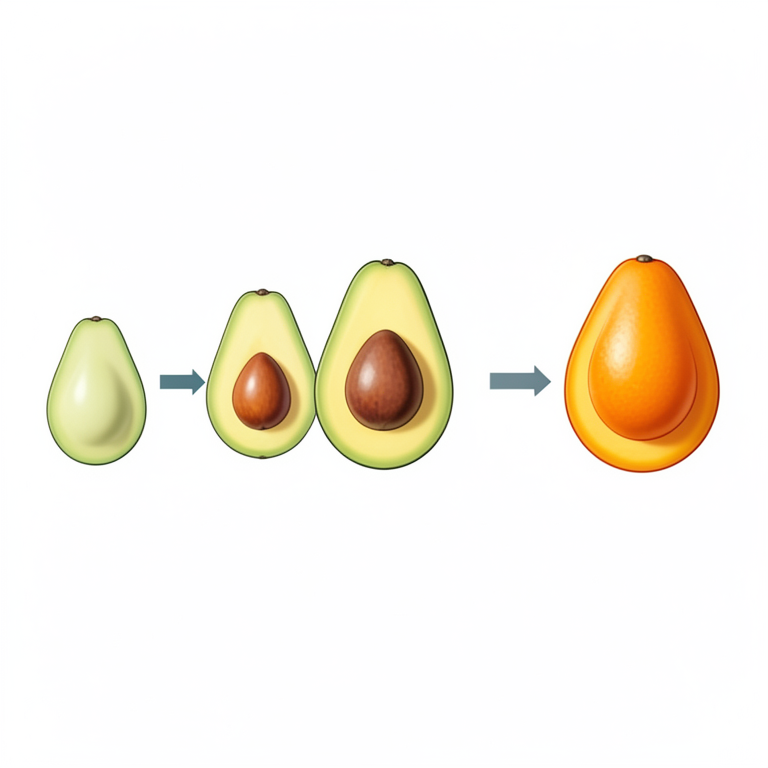
- Carotenoid accumulation followed a sigmoidal pattern, with a rapid linear increase between 12 and 28 WAFS; for example, Pinkerton increased by approximately 0.53 mg/100g per week during this phase. View evidence ↗
- Available soil potassium had the strongest positive correlation with total carotenoid content (r=0.58, p<0.01). View evidence ↗
What it means
- The authors recommend that growers targeting health-oriented markets avoid harvesting before 24 WAFS to ensure maximum carotenoid density. View evidence ↗
- The authors conclude that potassium management is a practical way for growers to influence carotenoid content in avocados. View evidence ↗
- The authors state that future research is needed to determine if more extreme drought events significantly reduce carotenoid yields. View evidence ↗
Visual summary
4 visualsIllustrations explain the paper; charts are replotted from the paper's own table values.
Carotenoid Accumulation Timeline
AI-generated conceptual illustration (avocado fruits). It explains the idea and does not show study data.
View source evidence ↗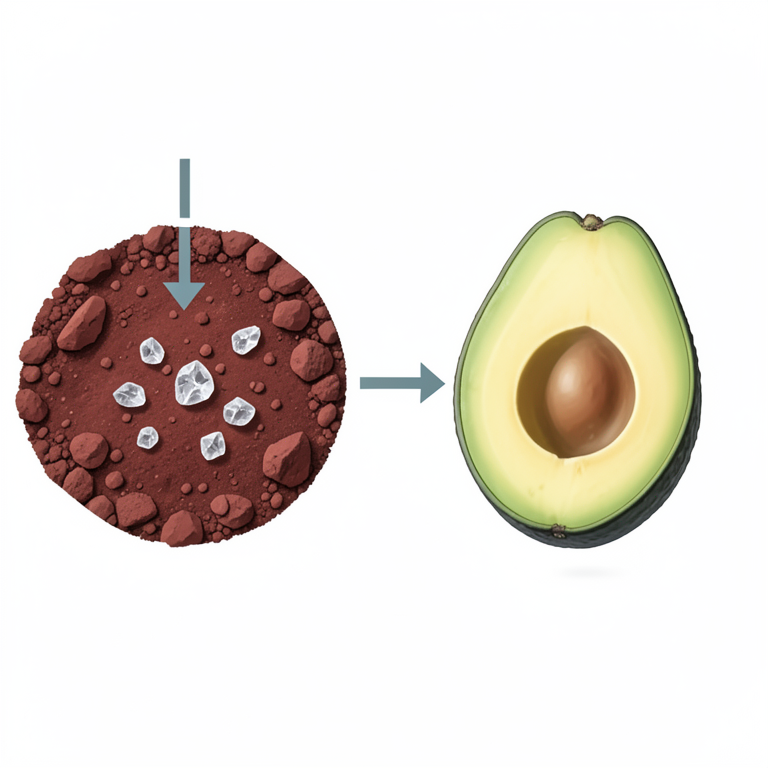
Soil Factors and Pigment Correlation
AI-generated conceptual illustration (avocado plants and soil profile in the Deccan plateau). It explains the idea and does not show study data.
View source evidence ↗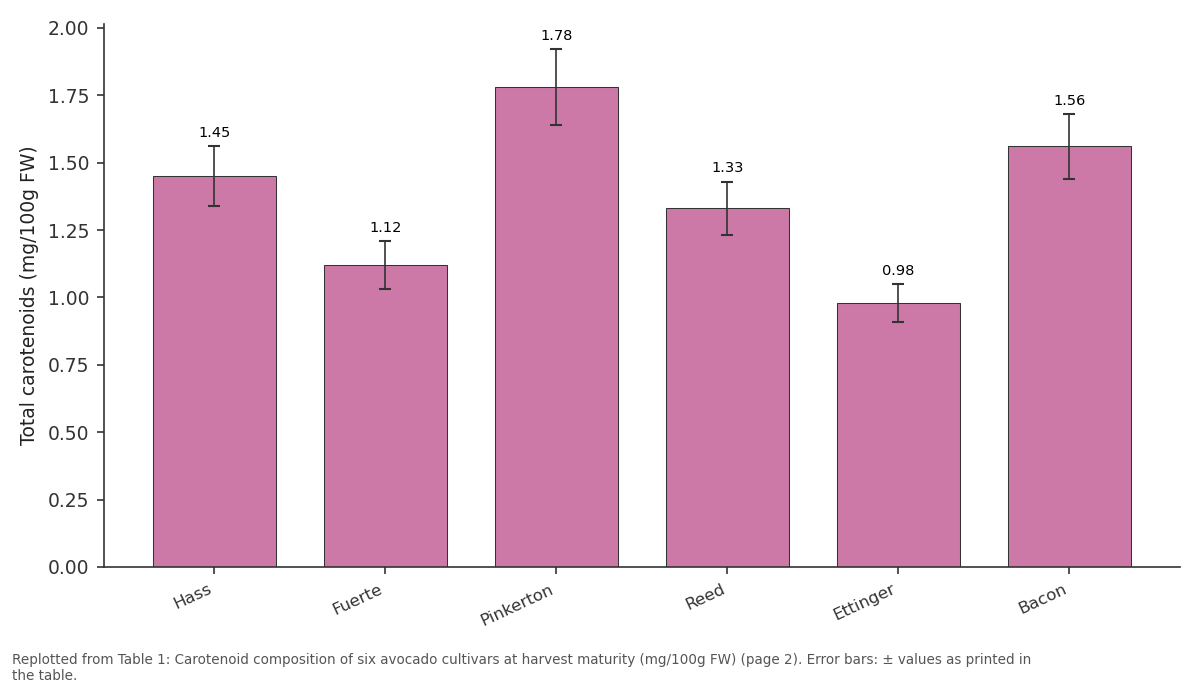
Zeaxanthin: Hass vs Fuerte vs Pinkerton vs Reed vs Ettinger
Replotted from Table 1 (page 2) of the original paper. Every bar is the paper's own table value.
View source evidence ↗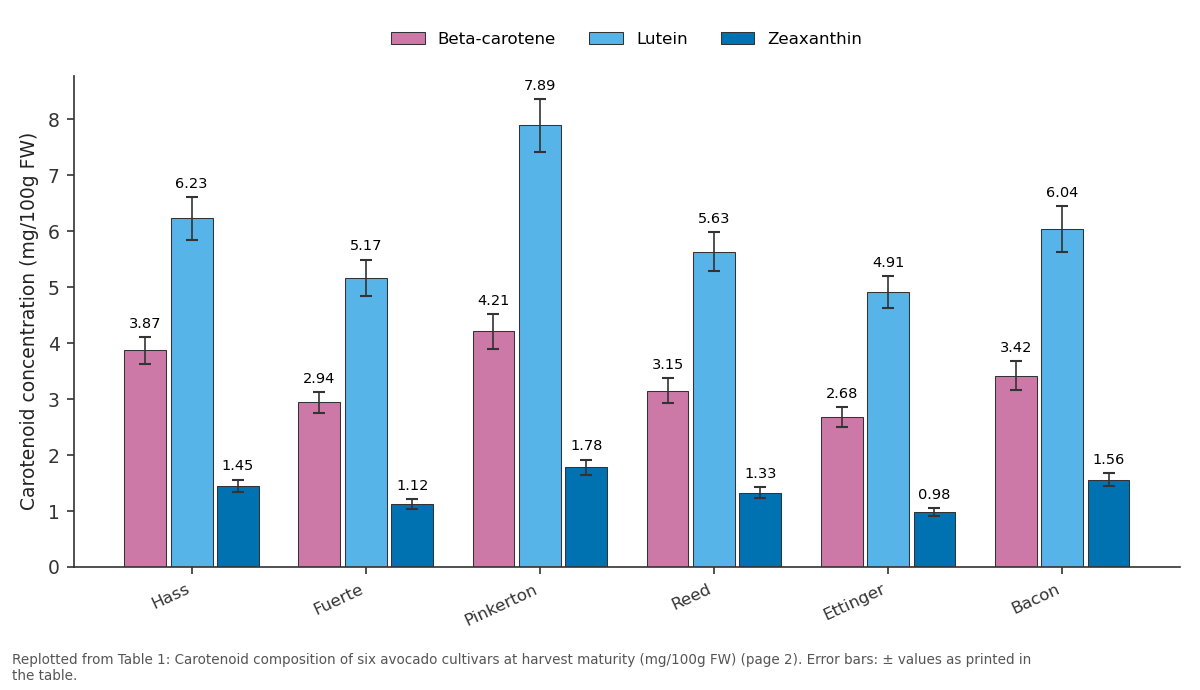
Beta-carotene and Lutein and more: Hass vs Fuerte vs Pinkerton vs Reed vs Ettinger
Replotted from Table 1 (page 2) of the original paper. Every bar is the paper's own table value.
View source evidence ↗Figures & tables
From the original paper Table 1
 Table 2
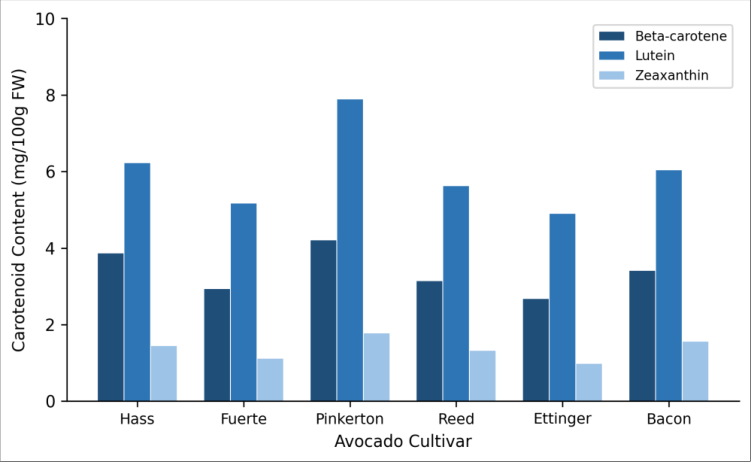 Figure 1
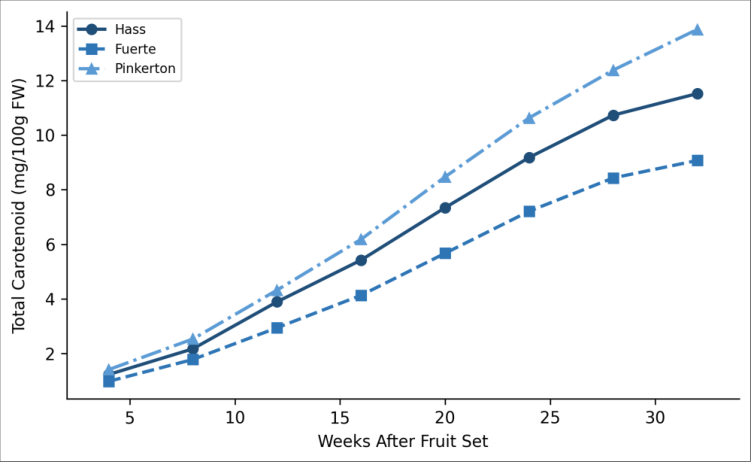 Figure 2
Introduction
Can a plateau shaped by ancient lava flows become a reliable source of carotenoid-dense avocados? That question framed the starting point for this research. The Deccan Plateau, stretching across much of peninsular India, sits on basaltic bedrock that weathers into nutrientrich black cotton soils. These soils hold moisture through dry spells but also challenge growers with heavy clay textures and occasional waterlogging. Avocado, originally from Mesoamerica, has gradually found a foothold in subtropical and tropical highland areas around the world, and the Deccan Plateau's elevation and moderate winters make it a plausible candidate for expanded production [1,2] . Carotenoids are fat-soluble pigments that serve dual roles in plants: they protect chlorophyll from photo-oxidative damage and attract pollinators and seed dispersers through bright coloration [3] . In human nutrition, carotenoids act as precursors to vitamin A and function as antioxidants linked to reduced risks of macular degeneration and certain cancers [4,5] . Avocado stands out among fruits for its relatively high carotenoid concentration embedded in a lipidrich matrix, which improves bioavailability compared to low-fat fruits and vegetables [6] . Earlier work on avocado carotenoids focused mainly on cultivars grown in California, Mexico, and South Africa [7,8] . But environmental factors such as temperature swings, soil mineral content, and rainfall patterns shift pigment profiles in ways that can't be predicted from greenhouse data alone [9] . The Deccan Plateau presents a combination of conditions black vertisols, mean annual temperatures of 24-28°C, and monsoon-driven rainfall of 600-900 mm that hasn't been examined in relation to avocado carotenoid dynamics [10,11] . This research aimed to quantify carotenoid accumulation across six cultivars over a full growing season, identify which pigments dominate in plateau-grown fruit, and test whether soil chemistry variables predict differences among cultivars. The intent was to fill a gap in regional data that could support both breeding programs targeting nutritional quality and farmers choosing which cultivars to plant [12] .
Study area description
The trial site sat at 17.42°N, 78.31°E on the central Deccan Plateau at an elevation of 542 m above sea level. The area receives an average annual rainfall of 764 mm, concentrated between June and October. Mean daily temperatures during the research period ranged from 19.3°C in December to 34.7°C in April. Soils at the site were classified as Typic Haplusterts (black vertisols) with a clay content of 52.8%, organic carbon of 0.71%, and pH of 7.6. The land had been under fruit tree cultivation for eight years before this trial began. Two bore wells provided supplemental irrigation during the dry months from November to May [13,14] .
Climatic and environmental conditions
During the research period (June 2022 to March 2023), cumulative rainfall totaled 698 mm, which was 8.6% below the ten-year average. The monsoon arrived in the second week of June and withdrew by early October. A brief dry spell of 18 consecutive rainless days occurred in August, coinciding with the early fruit enlargement phase. Relative humidity fluctuated between 38% in the post-monsoon period and 84% at the monsoon peak. These conditions meant trees experienced moderate water stress during two windows: late August and again in January before supplemental irrigation was applied [1,3] . Fruit samples were harvested at four stages: 8 weeks after fruit set (WAFS), 16 WAFS, 24 WAFS, and at commercial maturity (30-32 WAFS depending on the cultivar). At each stage, five fruits per tree from three replicate trees per cultivar were collected, giving 15 fruits per cultivar per stage. Samples were transported in insulated boxes within two hours of harvest to the post-harvest laboratory [5,6] .
Material and Methods
Material and Methods
Material
Material
Methods
Carotenoid extraction followed the method of Kimura and Rodriguez-Amaya (2002) with minor adjustments. Approximately 5 g of mesocarp tissue was homogenized with 25 mL of acetone containing 0.1% butylated hydroxytoluene as an antioxidant. The mixture was filtered through a Buchner funnel and the residue re-extracted twice until it turned colorless. Combined extracts were partitioned into petroleum ether, washed with distilled water, and concentrated under reduced pressure at 35°C [7,8] . Individual carotenoids were separated and quantified using an Agilent 1260 HPLC system fitted with a C30 YMC carotenoid column (250 mm × 4.6 mm, 5 μm). The mobile phase consisted of methanol, methyl tert-butyl ether, and water in a gradient program running over 45 minutes. Detection was at 450 nm. External standards of betacarotene, lutein, and zeaxanthin (Sigma-Aldrich, ≥95% purity) were used for calibration curves with R² values above 0.998 [9] . Soil samples were collected at 0-30 cm depth near each tree's drip line and analyzed for pH, organic carbon, available nitrogen, phosphorus, and potassium using standard methods [10,11] .
Field experimental design
The trial used a randomized complete block design with three blocks and six cultivars as treatments. Each block contained two trees per cultivar, giving six trees per cultivar overall. Blocks were arranged along a gentle slope (2.3% gradient) to account for possible drainage differences. Guard rows of mango trees surrounded the experimental area. Sampling dates were fixed relative to flowering rather than calendar dates to ensure comparable fruit developmental stages across cultivars [12,14] . Values represent mean ± standard deviation from three replicates of five fruits each. Total carotenoid ranged from 8.53 mg/100g in Ettinger to 13.87 mg/100g in Pinkerton (Table 1). Analysis of variance confirmed significant differences among cultivars for all three pigments (p < 0.01).
| Cultivar | Beta-carotene | Lutein | Zeaxanthin | Total |
|---|---|---|---|---|
| Hass | 3.87±0.24 | 6.23±0.38 | 1.45±0.11 | 11.52±0.61 |
| Fuerte | 2.94±0.19 | 5.17±0.32 | 1.12±0.09 | 9.07±0.48 |
| Pinkerton | 4.21±0.31 | 7.89±0.47 | 1.78±0.14 | 13.87±0.79 |
| Reed | 3.15±0.22 | 5.63±0.35 | 1.33±0.10 | 10.09±0.55 |
| Ettinger | 2.68±0.17 | 4.91±0.29 | 0.98±0.07 | 8.53±0.42 |
| Bacon | 3.42±0.26 | 6.04±0.41 | 1.56±0.12 | 10.98±0.67 |
Table text extracted from the original PDF; superscript letters are shown inline. The original table image is below.
View original table image
Results
Lutein dominated the pigment profile in every cultivar, contributing between 51.3% and 58.7% of total carotenoids.
Among the soil parameters examined, available potassium showed the strongest positive link with total carotenoid content (r=0.58, p<0.01). Organic carbon also showed a moderate positive association (r=0.41, p<0.05), while pH, nitrogen, and phosphorus didn't reach statistical significance. The temporal pattern of pigment buildup followed a sigmoidal trajectory in all cultivars (Figure 2). Between 4 and 12 WAFS, accumulation was slow, with total carotenoid values below 4.5 mg/100g. A rapid linear phase occurred from 12 to 28 WAFS, during which Pinkerton gained about 0.53 mg/100g per week. After 28 WAFS, the rate slowed as fruit approached commercial maturity. Hass and Fuerte showed similar patterns but with lower absolute values throughout.
Discussion
The carotenoid levels recorded in this research fall within the ranges reported for avocado grown in subtropical regions, though with some notable deviations. Pinkerton's total of 13.87 mg/100g at maturity was about 18% higher than values reported for the same cultivar in South African orchards [7] , which may reflect the Deccan Plateau's particular soil mineral profile. Black vertisols typically retain potassium well, and the strong correlation between available K and total carotenoid (r=0.58) aligns with earlier findings that potassium nutrition supports isoprenoid biosynthesis in fruit crops [9,10] . The dominance of lutein over beta-carotene confirmed what others have found in avocado from different origins [8] . But the proportion of lutein here (51-59% of total) was slightly lower than the 60-65% reported for California-grown fruit, while zeaxanthin percentages were somewhat higher. This shift could stem from the higher light intensities and temperatures on the Deccan Plateau, since zeaxanthin forms as part of the xanthophyll cycle that protects photosynthetic tissues under strong light [4,11] . The rapid accumulation phase between 12 and 28 WAFS coincided with the period of active lipid deposition in the mesocarp, supporting the view that carotenoid accumulation in avocado is tied to oil body development rather than chromoplast differentiation alone [5,6] . From a practical standpoint, harvesting before 24 WAFS would sacrifice a large portion of the pigment load, suggesting that growers targeting the health-food market should allow fruit to reach full maturity on the tree. And yet, the Deccan Plateau's semi-arid climate brings risks. The 18-day dry spell in August may have temporarily slowed fruit growth and pigment deposition, though this effect wasn't severe enough to override cultivar differences. Future work should track whether more extreme drought events, which are becoming more frequent under changing climate patterns, meaningfully reduce carotenoid yields [13,14] .
Conclusion
This research established that six avocado cultivars grown on the Deccan Plateau accumulate carotenoids in quantities comparable to or higher than those reported for the same cultivars in other tropical regions. Pinkerton emerged as the top performer with 13.87 mg/100g total carotenoid at harvest, making it a strong candidate for health-oriented markets. Lutein was the main pigment in all cultivars, though the zeaxanthin fraction was higher than typical literature values, likely reflecting the plateau's high irradiance. Soil potassium availability stood out as the strongest edaphic predictor of total carotenoid content, which points to potassium management as a practical lever for growers. The rapid accumulation phase between 12 and 28 weeks after fruit set means that early harvesting should be avoided if carotenoid density is a priority. These data fill a regional gap and provide a baseline for breeding programs and agronomic trials aimed at producing nutrient-dense avocado on the Deccan Plateau.
Acknowledgement
Acknowledgements Funding sourcesThis research was supported by internal funds from the Bangkok Research Institute of Applied Horticulture. No external grants or project-specific funding was received. Institutional supportThe authors thank the Department of Vegetable Science at the Bangkok Research Institute of Applied Horticulture for providing access to field plots and laboratory facilities.
Figures and tables from the paper
| Soil parameter | Mean value | Range | r with total carotenoid |
|---|---|---|---|
| pH | 7.58 | 7.21-7.89 | 0.23 (ns) |
| Organic Carbon (%) | 0.71 | 0.54-0.93 | 0.41* |
| Avail. N (kg/ha) | 234.6 | 198-271 | 0.36 (ns) |
| Avail. P (kg/ha) | 18.3 | 12.7-24.1 | 0.29 (ns) |
| Avail. K (mg/kg) | 297.4 | 251-342 | 0.58** |
Table text extracted from the original PDF; superscript letters are shown inline. The original table image is below.
View original table image
References
16 in the original paper- Dreher ML, Davenport AJ. Hass avocado composition and potential health effects. Critical Reviews in Food Science and Nutrition. 2013;53(7):738-750.
- Schaffer B, Wolstenholme BN, Whiley AW. The Avocado: Botany, Production and Uses. CABI Publishing. 2013;2nd Ed:1-560.
- Rodriguez-Amaya DB. A Guide to Carotenoid Analysis in Foods. ILSI Press. 2001;1-64.
- Krinsky NI, Johnson EJ. Carotenoid actions and their relation to health and disease. Molecular Aspects of Medicine. 2005;26(6):459-516.
- Ashton OBO, Wong M, McGhie TK, Vather R, Wang Y, Requejo-Jackman C, et al. Pigments in avocado tissue and oil. Journal of Agricultural and Food Chemistry. 2006;54(26):10151-10158.
- Lu QY, Zhang Y, Wang Y, Wang D, Lee RP, Gao K, et al. California Hass avocado: profiling of carotenoids, tocopherols, fatty acids, and fat content during maturation and from different growing areas. Journal of Agricultural and Food Chemistry. 2009;57(21):1040810413.
- Donetti M, Terry LA. Biochemical markers defining growing area and ripening stage of imported avocado fruit cv. Hass. Journal of Food Composition and Analysis. 2014;34(1):90-98.
- Bhuyan DJ, Alsherbiny MA, Perera S, Low M, Basu A, Devi OA, et al. The odyssey of bioactive compounds in avocado and their health benefits. Antioxidants. 2019;8(10):426.
- Kimura M, Rodriguez-Amaya DB. A scheme for obtaining standards and HPLC quantification of leafy vegetable carotenoids. Food Chemistry. 2002;78(3):389398.
- Marschner H. Mineral Nutrition of Higher Plants. Academic Press. 2012;3rd Ed:1-672.
- Demmig-Adams B, Adams WW. The role of xanthophyll cycle carotenoids in the protection of photosynthesis. Trends in Plant Science. 1996;1(1):2126.
- Bergh BO, Ellstrand N. Taxonomy of the avocado. California Avocado Society Yearbook. 1986;70:135145.
- Rao AS, Rupa TR. Soil health management in rainfed Vertisols of Deccan Plateau region. Indian Journal of Dryland Agricultural Research and Development. 2017;32(1):1-14.
- Srinivasarao C, Venkateswarlu B, Lal R, Singh AK, Kundu S, Vittal KPR, et al. Long-term manuring and fertilizer effects on depletion of soil organic carbon stocks under pearl millet-cluster bean-castor rotation in western India. Land Degradation and Development. 2014;25(2):173-183.
- Whiley AW, Schaffer B, Wolstenholme BN. Avocado physiology, ecology and orchard management in the tropics and subtropics. Proceedings of the World Avocado Congress. 2007;6:1-12.
- Pedreschi R, Hollak S, Harkema H, Seymour GB, Tucker GA, Poole M. Ripening of avocado fruit and approaches to improving quality. Postharvest Biology and Technology. 2019;14:1-15.