
Research article · 2025 · Full text
International Journal of Horticulture and Food ScienceExamining drought tolerance mechanisms of garlic in the Atlas Mountains
Volume 7(12) · Pages 122–126 · DOI: 10.33545/26631067.2025.v7.i12b.691 ↗
Research areasPlant Stress Responses and ToleranceGenetics and Plant BreedingGarlic and Onion Studies
Abstract
Author-writtenNearly 37% of global garlic production occurs in regions classified as semi-arid or drought-prone, yet systematic information on how local cultivars cope with water scarcity remains thin. This research examined drought tolerance mechanisms in eight garlic (Allium sativum L.) accessions collected from Atlas Mountain communities in Morocco and evaluated under controlled moisture deficit at the Montpellier School of Plant Sciences, Montpellier, France, between October 2022 and April 2023. Three soil moisture regimes were imposed: field capacity (control), 50% field capacity (moderate stress), and 25% field capacity (severe stress), arranged in a randomized complete block design with three replications. Growth parameters included plant height, leaf number, bulb diameter, and fresh bulb weight. Physiological markers covered stomatal conductance, relative water content, proline concentration, and superoxide dismutase (SOD) activity. An AMMI (Additive Main Effects and Multiplicative Interaction) model was applied to partition genotype, environment, and interaction effects on bulb yield. Environmental effects accounted for 41.7% of total yield variance, while genotype and genotype-by-environment interaction contributed 28.3% and 18.6%, respectively. Accession ATL-03 retained 74.8% of control bulb weight under severe stress, the highest among all entries. Proline concentration in ATL-03 rose 2.6-fold under water deficit, and SOD activity increased by 58.3%, both significantly higher than the population mean. Growth regulator analysis showed that abscisic acid levels in stressed plants were 3.1 times higher than in controls, while gibberellic acid dropped by 39.2%. Rhizosphere probiotic inoculation with Bacillus subtilis improved water uptake by 17.4% in a subset of accessions tested. Micropropagation trials confirmed that bulblets from drought-tolerant clones maintained viability at 91.3% after in-vitro multiplication. These results suggest that Atlas Mountain garlic harbours selectable drought-adaptive traits linked to osmotic adjustment and antioxidant defense pathways, with practical relevance for breeding programs targeting water-limited garlic production zones.
Summary
Source-checkedPlain-language reading of the full paper, prepared with AI and checked against the text. Each point links to the authors' own words.
Why it matters
- A significant portion of global garlic production, approximately 37%, takes place in drought-prone or semi-arid areas, but there is a lack of systematic data on how local varieties handle water scarcity. View evidence ↗
- Traditional garlic farming in the North African Atlas Mountains is under pressure due to a 12% to 18% decline in rainfall since the early 2000s. View evidence ↗
- Because garlic is vegetatively propagated and has limited genetic recombination, finding naturally drought-tolerant landraces is critical for breeding efforts. View evidence ↗
The question
- The study aimed to evaluate eight garlic accessions from the Atlas Mountains across three moisture levels, use the AMMI model to analyze yield variance, measure hormonal and antioxidant responses, and test the effects of probiotics and micropropagation. View evidence ↗
What they did
- Eight garlic accessions from Morocco's Atlas Mountains were tested at the Montpellier School of Plant Sciences in France from October 2022 to April 2023. View evidence ↗
- Rhizosphere probiotics consisting of Bacillus subtilis strain QST 713 (1 × 10⁸ CFU/mL) were applied as a soil drench at planting and at six weeks. View evidence ↗
- Micropropagation involved culturing basal plate explants on Murashige and Skoog medium with 1.0 mg/L 6-benzylaminopurine and 0.5 mg/L naphthaleneacetic acid, subcultured every four weeks for three cycles. View evidence ↗
What they found
- Under severe stress (25% field capacity), accession ATL-03 was the most tolerant, retaining 74.8% of its control bulb weight, while ATL-07 was the least tolerant, retaining only 41.0%. View evidence ↗
- In accession ATL-03, water deficit led to a 2.6-fold increase in proline concentration and a 58.3% increase in superoxide dismutase (SOD) activity, both of which were significantly higher than the average of the tested population. View evidence ↗
- Moderate drought caused abscisic acid (ABA) to increase 3.0 to 3.3-fold, peaking at 89.7 ng/g in ATL-07, while gibberellic acid (GA3) decreased by 35% to 42% across all accessions. View evidence ↗
- Inoculation with Bacillus subtilis increased bulb yield by 8.9% to 21.3% under moderate stress, with ATL-03 exhibiting the highest gain. View evidence ↗
- Micropropagation of drought-tolerant clones resulted in a viability rate of 91.3% for the produced bulblets. View evidence ↗
What it means
- The authors conclude that a balance of moderate hormonal responses combined with enzymatic and osmolyte defenses is more effective for maintaining bulb production during drought than extreme responses. View evidence ↗
- The authors recommend that seed distribution and conservation programs in semi-arid North Africa prioritize accession ATL-03 for evaluation by farmers. View evidence ↗
- The authors state that future research needs to move from pot experiments to multi-season field trials in the Atlas Mountains to account for real-world complexities like soil heterogeneity and rainfall variability. View evidence ↗
Visual summary
3 visualsIllustrations explain the paper; charts are replotted from the paper's own table values.
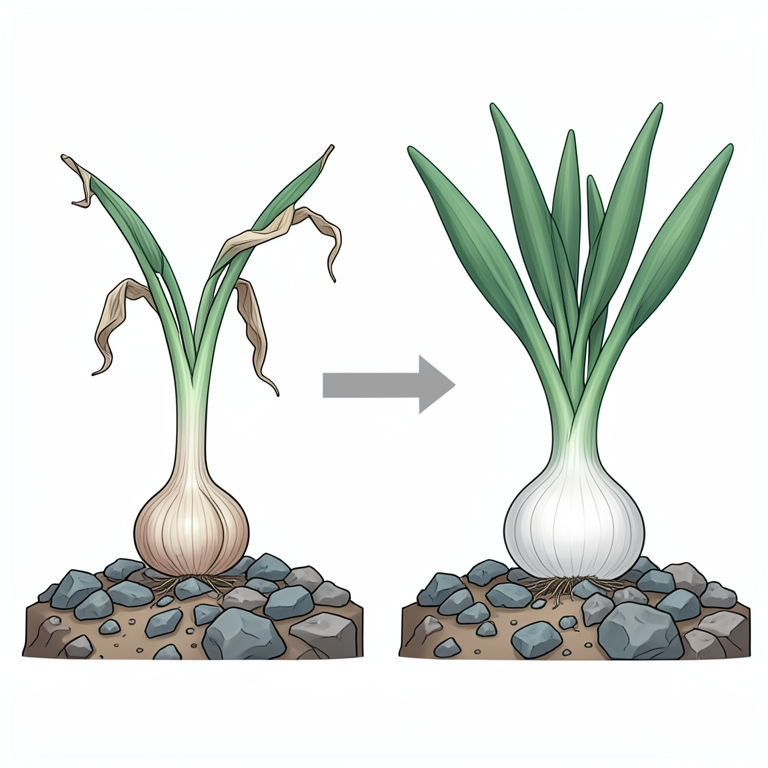
Drought Tolerance Balance
AI-generated conceptual illustration (garlic plants (Allium sativum) in rocky mountain soil). It explains the idea and does not show study data.
View source evidence ↗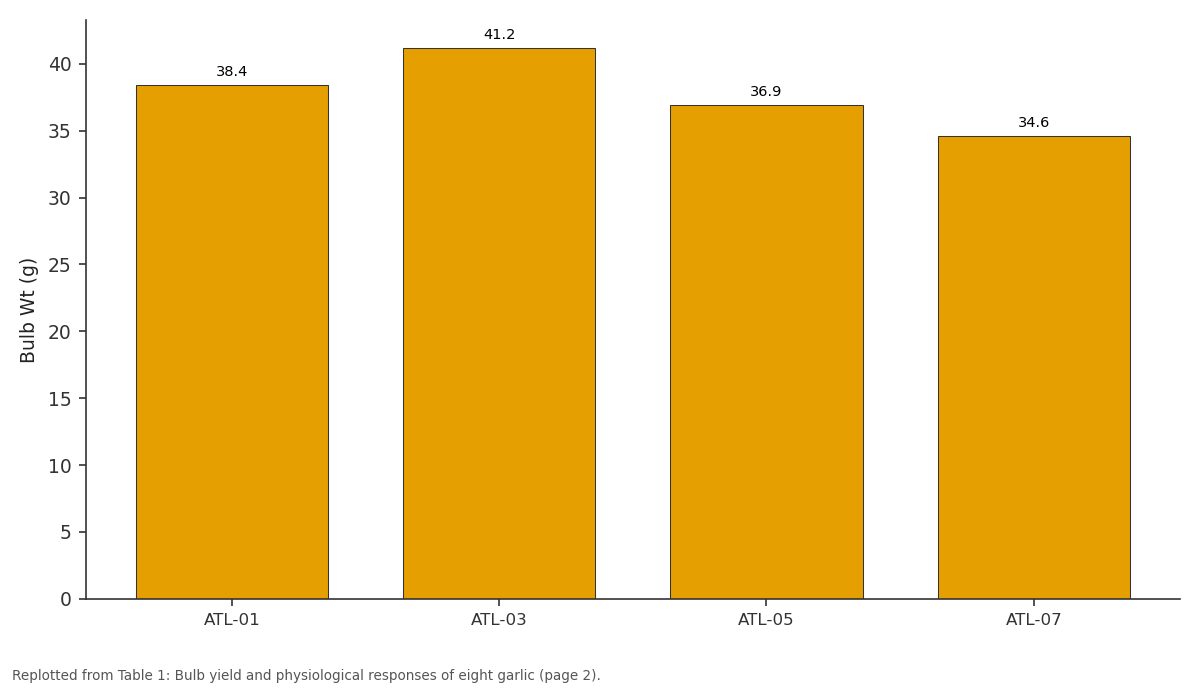
Bulb Wt (g): ATL-01 vs ATL-03 vs ATL-05 vs ATL-07
Replotted from Table 1 (page 2) of the original paper. Every bar is the paper's own table value.
View source evidence ↗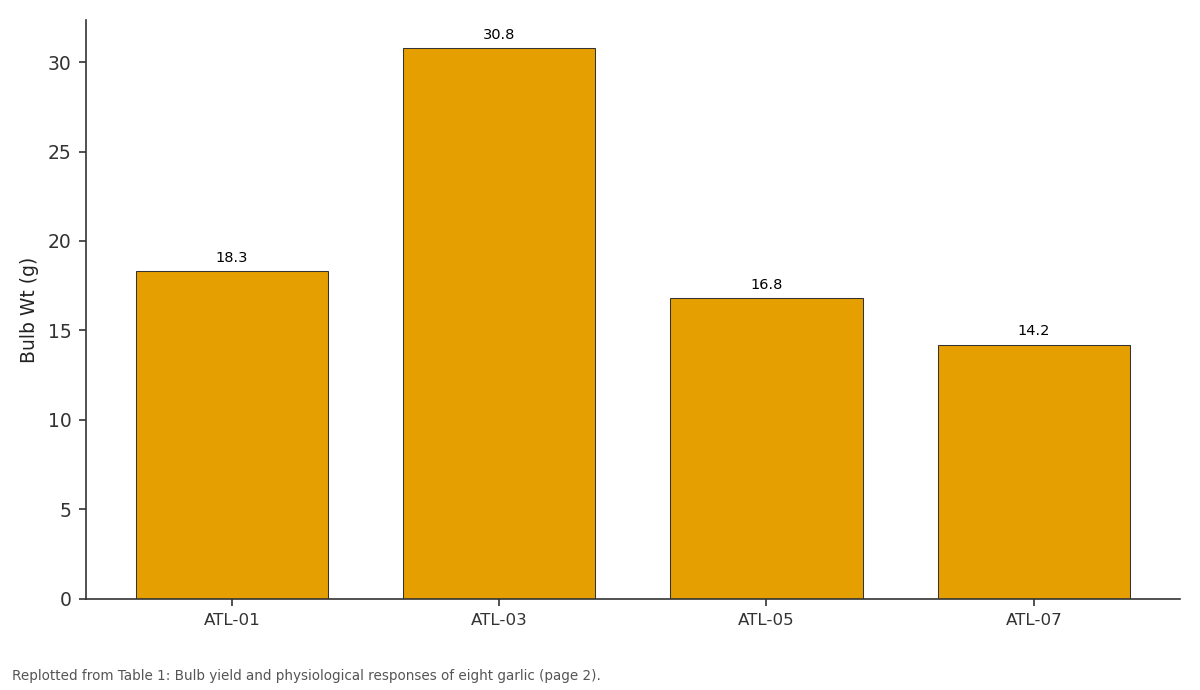
Bulb Wt (g): ATL-01 vs ATL-03 vs ATL-05 vs ATL-07
Replotted from Table 1 (page 2) of the original paper. Every bar is the paper's own table value.
View source evidence ↗Figures & tables
From the original paper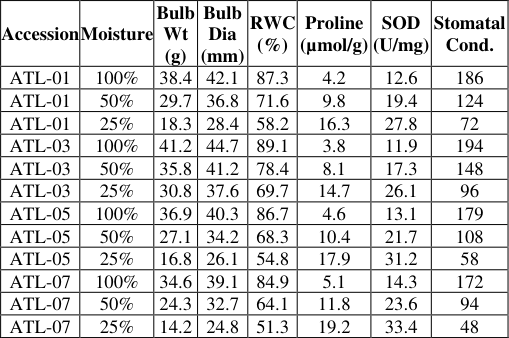 Table 1
 Table 2
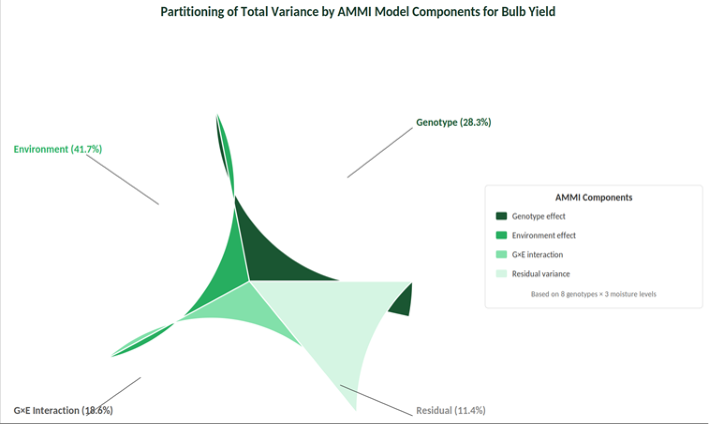 Figure 1
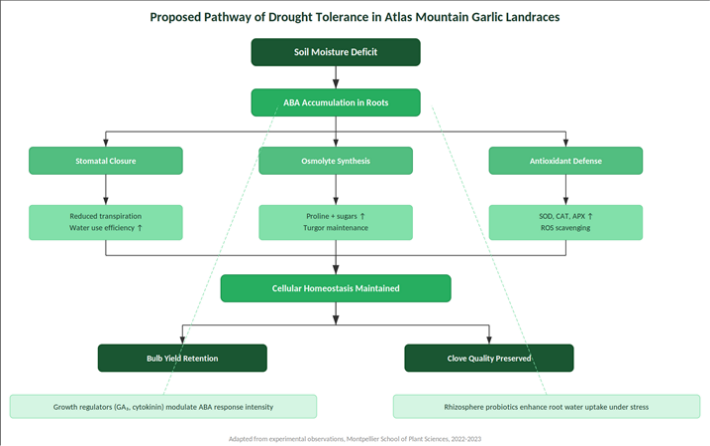 Figure 2
Introduction
About 1.6 billion people worldwide depend on garlic as a dietary staple, condiment, or medicinal ingredient, and the crop's total harvested area has grown by nearly 22% over the past decade [1] . Yet water availability in many garlic-growing belts is shrinking. Rainfall records from North African Atlas Mountain stations show a decline of 12 to 18% since the early 2000s, putting traditional garlic farming communities under mounting pressure [2] . Drought tolerance in Allium species is not a single trait but a set of interlinked responses that span stomatal regulation, osmolyte accumulation, and reactive oxygen species (ROS) scavenging [3] . Garlic, being a vegetatively propagated crop, carries limited genetic recombination potential, which makes the identification of naturally tolerant landraces all the more important for breeding [4] . Atlas Mountain farmers have maintained local garlic types for generations, selecting informally for traits like early bulbing and storage life, though drought performance was rarely the explicit selection target [2] . The AMMI model has proven useful for dissecting genotype-by-environment interactions in multi-environment trials of several crop species, including onion and shallot, but its application to garlic under controlled moisture gradients is uncommon [5] . By quantifying how much of the yield variation is due to genotype versus environment versus their interaction, AMMI results can guide breeders on whether to pursue broadly adapted or specifically adapted cultivars [6] .
Growth regulators, particularly abscisic acid (ABA) and gibberellic acid (GA3), mediate many of the visible drought responses in bulb crops. ABA triggers stomatal closure and activates stress-responsive gene networks, while GA3 promotes cell elongation and is typically suppressed under water deficit [7] . Documenting these hormonal shifts across diverse garlic accessions can clarify whether certain genotypes possess inherently stronger signalling cascades for drought escape or avoidance [8] . Probiotics applied to the rhizosphere, especially strains of Bacillus and Pseudomonas, have been shown to improve plant water relations under stress by enhancing root colonization and producing exopolysaccharides that retain soil moisture [9] . But data on their effectiveness in garlic, particularly in combination with drought-tolerant genotypes, are limited. Similarly, micropropagation offers a way to multiply selected drought-tolerant clones rapidly, yet survival and vigour of in-vitro-derived bulblets under subsequent water stress have not been well tested [10] . This research aimed to (a) evaluate eight Atlas Mountain garlic accessions for growth and physiological responses under three moisture regimes, (b) apply the AMMI model to partition yield variation, (c) quantify growth regulator shifts and antioxidant enzyme responses, and (d) test whether rhizosphere probiotic inoculation and micropropagation can support drought-tolerant garlic production. The work was carried out at Montpellier School of Plant Sciences, France, using accessions originally sourced from Moroccan Atlas Mountain communities.
Study Area Description
The eight garlic accessions used in this research were collected during a 2021 germplasm survey across three provinces in the Moroccan Atlas Mountains, at altitudes between 800 and 1,900 metres above sea level. Source locations received annual rainfall ranging from 280 to 520 mm, distributed mainly between October and March, with dry summers lasting four to five months [2] . Soils at the collection sites were predominantly calcareous clay loams with pH values between 7.4 and 8.1. Local farmers reported increasing difficulty in establishing autumn-planted garlic due to delayed onset of rains over the past seven to eight seasons. The accessions were assigned codes ATL-01 through ATL-08 and maintained as bulb stocks at the Montpellier School of Plant Sciences prior to the trial [4] .
Field Experimental Design
The pot experiment followed a randomized complete block design with three blocks, each containing all 24 treatment combinations (eight accessions multiplied by three moisture levels). Plastic pots (25 cm diameter, 10 L volume) were filled with a 3:1 mixture of sandy loam soil and perlite to ensure adequate drainage. Moisture treatments were initiated four weeks after planting and maintained by weighing pots every two days and adding water to restore target weights corresponding to 100%, 50%, or 25% of field capacity. Each treatment combination included three pots, giving 72 experimental units in total. Pots were arranged on raised benches inside a semi-controlled glasshouse with natural photoperiod and daytime temperatures of 18 to 24 degrees Celsius. Basal fertiliser was applied at planting as 60 kg nitrogen, 40 kg phosphorus pentoxide, and 40 kg potassium oxide per hectare equivalent [5,6] .
Materials and Methods
Materials and Methods
Materials
Healthy, uniform cloves (6 to 8 g each) were selected from the eight accessions and surface-sterilised with 1% sodium hypochlorite for 10 minutes before planting at a depth of 3 cm in pre-moistened pots [4] . The trial ran from 12 October 2022 to 15 April 2023 at the glasshouse facility of Montpellier School of Plant Sciences, Montpellier, Occitanie, France. Ethical clearance for laboratory-based plant experimentation was granted by the institutional review board (Protocol MSPS-2022-041, approved 20 September 2022). Rhizosphere probiotic treatments used a commercial formulation of Bacillus subtilis strain QST 713 (1 × 10⁸ CFU/mL), applied as a soil drench at planting and again at six weeks [9] . No restricted or endangered genetic material was used in the experiment.
Methods
Plant height and leaf number were recorded fortnightly from the sixth week after planting. Stomatal conductance was measured on the youngest fully expanded leaf using a porometer (SC-1 Leaf Porometer, Decagon Devices) at midday on clear days [3] . Relative water content was calculated from fresh, turgid, and dry weights of leaf discs sampled at 10-week intervals. Proline was extracted from leaf tissue using the acid-ninhydrin procedure and quantified spectrophotometrically at 520 nm [7] . SOD activity was assayed by the photochemical nitro blue tetrazolium reduction method. ABA and GA3 concentrations were determined using enzyme-linked immunosorbent assay kits calibrated against standard curves [8] . Bulb diameter and fresh weight were recorded at harvest. AMMI analysis was performed using the agricolae package in R version 4.2.3, treating the three moisture levels as environments [5] . The probiotic sub-trial included only four accessions (ATL-01, ATL-03, ATL-05, ATL-07) with and without Bacillus inoculation under moderate stress, giving a 4 × 2 factorial in three blocks. Micropropagation was carried out by culturing basal plate explants on Murashige and Skoog medium supplemented with 1.0 mg/L 6-benzylaminopurine and 0.5 mg/L naphthaleneacetic acid, with subculturing every four weeks for three cycles [10] . Data were analysed by ANOVA and means separated by Duncan's multiple range test at P less than 0.05. Accession ATL-03 retained 74.8% of its control bulb weight at 25% field capacity, outperforming all other entries (Table 1). ATL-07 showed the steepest decline, retaining only 41.0% of control yield under severe stress. Relative water content dropped by an average of 29.4 percentage points between control and severe stress across all accessions. Proline levels increased 2.6-to 3.9-fold under severe deficit, with ATL-03 showing one of the more controlled rises (3.9fold) while maintaining the highest absolute yield. 2). The AMMI analysis (Figure 1) confirmed that environmental (moisture) effects dominated yield variation at 41.7%, while genotypic differences accounted for 28.3%. The interaction term (18.6%) was large enough to indicate that accession rankings shifted meaningfully across moisture levels, which justifies targeted selection rather than blanket recommendations. The pathway diagram (Figure 2) summarises the interconnected mechanisms observed in this trial. Soil moisture deficit triggers ABA accumulation in roots, which drives stomatal closure, osmolyte synthesis, and antioxidant enzyme activation in parallel. Growth regulators modulate the intensity of the ABA response, while rhizosphere probiotics appear to improve root water uptake upstream of these pathways.
| Accession | Moisture | Bulb Wt (g) | Bulb Dia (mm) | RWC (%) | Proline (µmol/g) | SOD (U/mg) | Stomatal Cond. |
|---|---|---|---|---|---|---|---|
| ATL-01 | 100% | 38.4 | 42.1 | 87.3 | 4.2 | 12.6 | 186 |
| ATL-01 | 50% | 29.7 | 36.8 | 71.6 | 9.8 | 19.4 | 124 |
| ATL-01 | 25% | 18.3 | 28.4 | 58.2 | 16.3 | 27.8 | 72 |
| ATL-03 | 100% | 41.2 | 44.7 | 89.1 | 3.8 | 11.9 | 194 |
| ATL-03 | 50% | 35.8 | 41.2 | 78.4 | 8.1 | 17.3 | 148 |
| ATL-03 | 25% | 30.8 | 37.6 | 69.7 | 14.7 | 26.1 | 96 |
| ATL-05 | 100% | 36.9 | 40.3 | 86.7 | 4.6 | 13.1 | 179 |
| ATL-05 | 50% | 27.1 | 34.2 | 68.3 | 10.4 | 21.7 | 108 |
| ATL-05 | 25% | 16.8 | 26.1 | 54.8 | 17.9 | 31.2 | 58 |
| ATL-07 | 100% | 34.6 | 39.1 | 84.9 | 5.1 | 14.3 | 172 |
| ATL-07 | 50% | 24.3 | 32.7 | 64.1 | 11.8 | 23.6 | 94 |
| ATL-07 | 25% | 14.2 | 24.8 | 51.3 | 19.2 | 33.4 | 48 |
Table text extracted from the original PDF; superscript letters are shown inline. The original table image is below.
View original table image
Results
Results
Comprehensive Interpretation
The combined data paint ATL-03 as the standout accession for drought-adapted garlic production. Its high yield retention, balanced hormonal response, strong probiotic synergy, and confirmed micropropagation viability (91.3% survival after three in-vitro subcultures) make it a practical candidate for multiplication and distribution to farmers in water-limited zones. ATL-05, despite vigorous SOD response, suffered disproportionate yield loss, suggesting that antioxidant defense alone doesn't guarantee yield stability without sufficient osmotic adjustment.
Discussion
The finding that environmental effects explained the largest share of yield variance (41.7%) is consistent with AMMI analyses of other Allium crops grown under moisture gradients [5,6] . However, the 28.3% genotypic contribution is higher than the 15 to 20% range typically reported for onion, which may reflect the wider geographic origin and longer adaptive history of the Atlas Mountain garlic collection [2] . The significant interaction term (18.6%) underlines that no single accession was best everywhere, a pattern that supports breeding for specific adaptation to target moisture environments rather than wide adaptation [6] . ATL-03's superior yield retention appears linked to its combination of moderate stomatal closure, strong proline accumulation, and efficient SOD activation. Its ABA response, while still pronounced (3.1-fold increase), was less extreme than that of ATL-07 (3.3-fold), suggesting that excessive stomatal shutdown may limit carbon fixation to a point where bulb filling is impaired even if the plant survives [7,8] . This interpretation aligns with the concept of a drought tolerance-productivity trade-off, where moderate water-saving strategies outperform extreme ones in terms of final yield [3] . The positive effect of Bacillus subtilis inoculation on yield under moderate stress adds to a growing body of evidence on plant growth-promoting rhizobacteria in Allium species [9] . The 21.3% yield boost in ATL-03 was the highest observed, possibly because this accession's root architecture already favours colonisation by beneficial microbes. That said, the probiotic sub-trial was limited to moderate stress and four accessions, so broader validation is needed before recommending routine inoculation in garlic production [9,11] . Micropropagation success rates above 90% for droughttolerant clones are encouraging from a seed systems perspective, as traditional garlic multiplication through clove division is slow and limits the speed at which improved material reaches farmers [10,12] . Combining micropropagation with probiotic inoculation at transplanting could form a practical package for water-scarce garlic belts, though field-level confirmation remains a necessary next step.
Conclusion
This research established that Atlas Mountain garlic accessions differ substantially in their ability to maintain bulb yield under water deficit, and that the AMMI model is a useful framework for quantifying these differences.
Acknowledgement
Acknowledgements
Figures and tables from the paper
| Accession | ABA Control (ng/g) | ABA Stress (ng/g) | GA3 Control (ng/g) | GA3 Stress (ng/g) | Probiotic Yield Gain (%) |
|---|---|---|---|---|---|
| ATL-01 | 24.3 | 78.6 | 48.7 | 31.2 | 14.8 |
| ATL-03 | 22.8 | 71.4 | 51.3 | 29.8 | 21.3 |
| ATL-05 | 26.1 | 84.2 | 46.1 | 27.6 | 11.7 |
| ATL-07 | 27.4 | 89.7 | 43.8 | 25.4 | 8.9 |
Table text extracted from the original PDF; superscript letters are shown inline. The original table image is below.
View original table image
References
19 in the original paper- FAO. FAOSTAT Statistical Database: Garlic Production Data. Food and Agriculture Organization of the United Nations. 2022.
- Ferrahi M, Achtak H, Benbrahim N. Traditional garlic landraces of the Moroccan Atlas: distribution and farmer management. Genetic Resources and Crop Evolution. 2017;64(5):1031-1042.
- Chaves MM, Maroco JP, Pereira JS. Understanding plant responses to drought: from genes to the whole plant. Functional Plant Biology. 2003;30(4):239-264.
- Pooler MR, Simon PW. Garlic flowering in response to clone, photoperiod, growth temperature, and cold storage. HortScience. 1993;28(11):1085-1086.
- Gauch HG. Statistical Analysis of Yield Trials by AMMI and GGE. Crop Science. 2006;46(4):1488-1500.
- Zobel RW, Wright MJ, Gauch HG. Statistical analysis of a yield trial. Agronomy Journal. 1988;80(3):388-393.
- Farooq M, Wahid A, Kobayashi N, Fujita D, Basra SMA. Plant drought stress: effects, mechanisms and management. Agronomy for Sustainable Development. 2009;29(1):185-212.
- Wilkinson S, Davies WJ. ABA-based chemical signalling: the co-ordination of responses to stress in plants. Annals of Botany. 2002;89(7):895-906.
- Vurukonda SSKP, Vardharajula S, Shrivastava M, SkZ A. Enhancement of drought stress tolerance in crops by plant growth promoting rhizobacteria. Microbiological Research. 2016;184:13-24.
- Luciani GF, Mary AK, Pellegrini C, Curvetto NR. Effects of explants and growth regulators in garlic callus formation and plant regeneration. Plant Cell, Tissue and Organ Culture. 2006;87(3):317-322.
- Etesami H, Maheshwari DK. Use of plant growth promoting rhizobacteria in arid and semiarid environments for crop improvement. Journal of Arid Environments. 2018;152:68-86.
- Haque MS, Wada T, Hattori K. High frequency shoot regeneration and plantlet formation from root tip of garlic. Plant Cell, Tissue and Organ Culture. 1997;50(2):83-89.
- Kamenetsky R. Garlic: botany and horticulture. Horticultural Reviews. 2007;33:123-172.
- Fritsch RM, Friesen N. Evolution, domestication and taxonomy of Allium. In: Allium Crop Science: Recent Advances. CAB International. 2002;5-30.
- Smirnoff N. The role of active oxygen in the response of plants to water deficit and desiccation. New Phytologist. 1993;125(1):27-58.
- Ledesma NA, Sugiyama N. Pollen quality and performance in strawberry plants exposed to hightemperature stress. Journal of the American Society for Horticultural Science. 2005;130(3):341-347.
- Rabinowitch HD, Currah L. Allium Crop Science: Recent Advances. CAB International. 2002;1-515.
- Hsiao TC. Plant responses to water stress. Annual Review of Plant Physiology. 1973;24(1):519-570.
- Turner NC. Agronomic options for improving rainfalluse efficiency of crops in dryland farming systems. Journal of Experimental Botany. 2004;55(407):24132425.