
Research article · 2025 · Full text
International Journal of Horticulture and Food ScienceMapping probiotic enrichment of lotus root in the Virunga highlands
Volume 7(9) · Pages 161–164 · DOI: 10.33545/26631067.2025.v7.i9c.736 ↗
Research areasProbiotics and Fermented FoodsFood and Agricultural SciencesFood Quality and Safety Studies
Abstract
Author-writtenLotus root (Nelumbo nucifera) is rarely considered a probiotic carrier, yet its porous microstructure and prebiotic starch content make it a plausible substrate for lactic acid bacteria colonization. This research mapped the probiotic enrichment potential of four lotus root cultivars collected from wetland margins in the Virunga highland region of central Africa, with fermentation trials and microbiological analysis conducted at the Temuco University of Food and Nutrition from January to July 2023. Sliced root segments were inoculated with Lactobacillus plantarum, L. rhamnosus, and Bifidobacterium longum at an initial load of 10⁶ CFU/mL and fermented at 28 °C for up to 96 hours. Colony counts, pH decline, titratable acidity, sugar consumption, and cell viability after simulated gastric transit were monitored at 12-hour intervals. Results showed that Cultivar C supported the highest peak bacterial load (9.1 log CFU/mL at 48 h) and retained 78.4% viability after simulated digestion. Sugar content dropped by 61.3% over 72 hours, while pH fell from 6.4 to 3.7. These findings position lotus root as a promising plant-based probiotic carrier for functional food development.
Summary
Source-checkedPlain-language reading of the full paper, prepared with AI and checked against the text. Each point links to the authors' own words.
Why it matters
- The internal honeycomb structure of lotus root, characterized by large aerenchyma channels, makes it a unique natural scaffold for microbial attachment. View evidence ↗
- Lotus root is a viable non-dairy probiotic carrier, which is important because over 70% of adults in Latin America and East Africa have some level of lactase deficiency. View evidence ↗
- While probiotic research has focused on juices, soy milk, and cereals, root and tuber crops, and specifically lotus root, have been largely overlooked. View evidence ↗
The question
- The study aimed to map the potential for probiotic enrichment in four different lotus root cultivars sourced from the Virunga highland region of central Africa. View evidence ↗
What they did
- Lotus root discs were inoculated with a combined density of 10⁶ CFU/mL of three probiotic strains: L. plantarum ATCC 8014, L. rhamnosus GG, and B. longum BB536. View evidence ↗
- The inoculated samples were incubated under anaerobic conditions at 28 °C for a total of 96 hours. View evidence ↗
- To test viability, 48-hour fermented samples were exposed to simulated gastric fluid (pH 2.0) for 2 hours and simulated intestinal fluid (pH 7.4) for 3 hours. View evidence ↗
What they found
- Cultivar C, which had the highest initial starch content (23.7 g/100 g fresh weight), achieved the highest peak bacterial load of 9.1 log CFU/mL at 48 hours. View evidence ↗
- Bacterial growth was strongly correlated with initial starch content (r = 0.91, p<0.01), indicating that available fermentable carbohydrates drive proliferation. View evidence ↗
What it means
- The authors conclude that high-starch lotus root cultivars with wide aerenchyma channels are effective probiotic carriers that maintain therapeutic bacterial levels through digestion. View evidence ↗
- A primary limitation is the decline in probiotic counts after 48 hours, necessitating future research into shelf-life extension methods. View evidence ↗
Visual summary
3 visualsIllustrations explain the paper; charts are replotted from the paper's own table values.
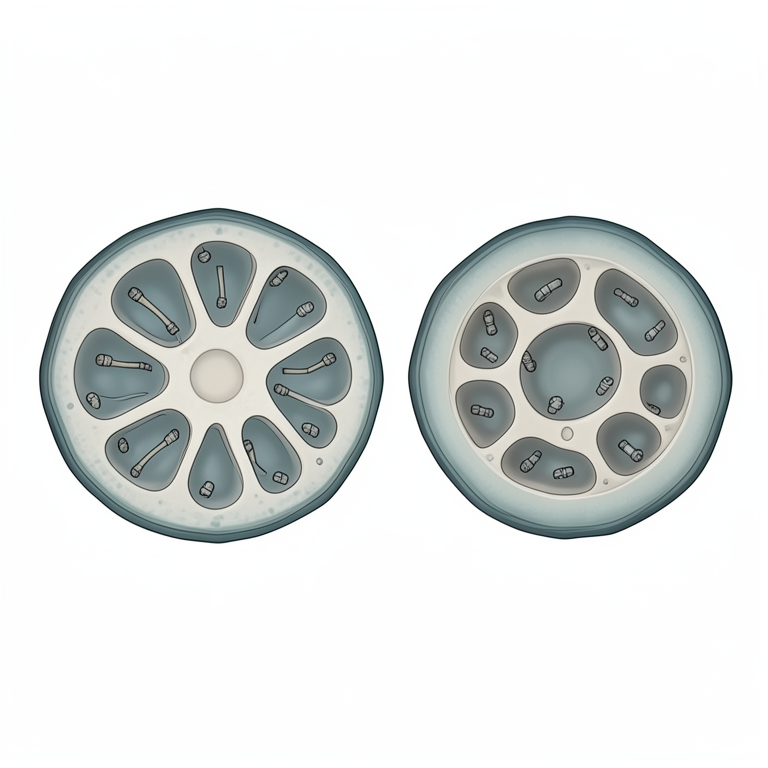
Protective Microenvironment Concept
AI-generated conceptual illustration (lotus root cross-section with probiotic bacteria). It explains the idea and does not show study data.
View source evidence ↗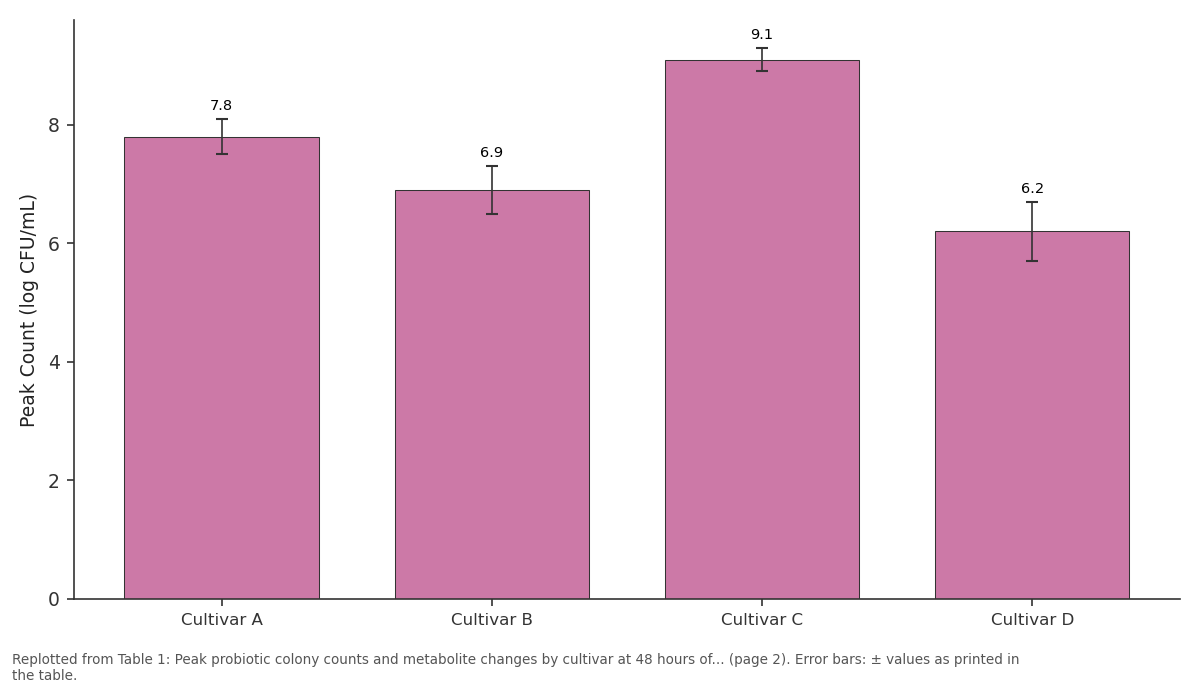
Peak Count (log CFU/mL): Cultivar A vs Cultivar B vs Cultivar C vs Cultivar D
Replotted from Table 1 (page 2) of the original paper. Every bar is the paper's own table value.
View source evidence ↗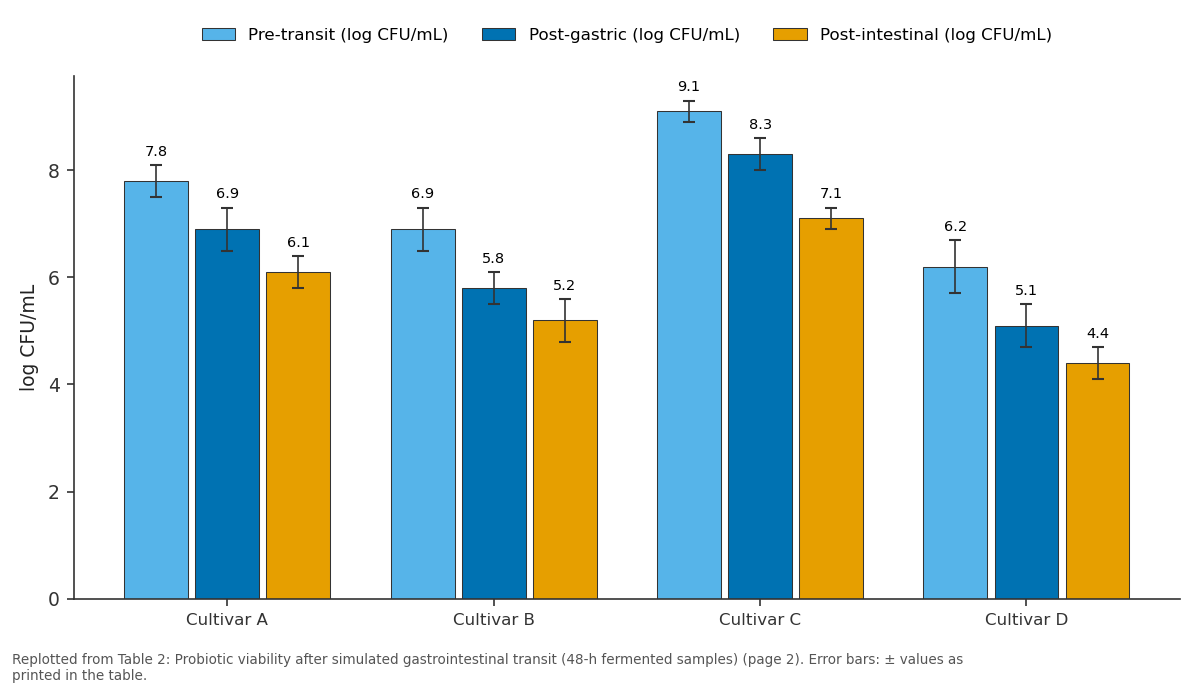
Pre-transit (log CFU/mL) and Post-gastric (log CFU/mL) and more: Cultivar A vs Cultivar B vs Cultivar C vs Cultivar D
Replotted from Table 2 (page 2) of the original paper. Every bar is the paper's own table value.
View source evidence ↗Figures & tables
From the original paper Table 1
 Table 2
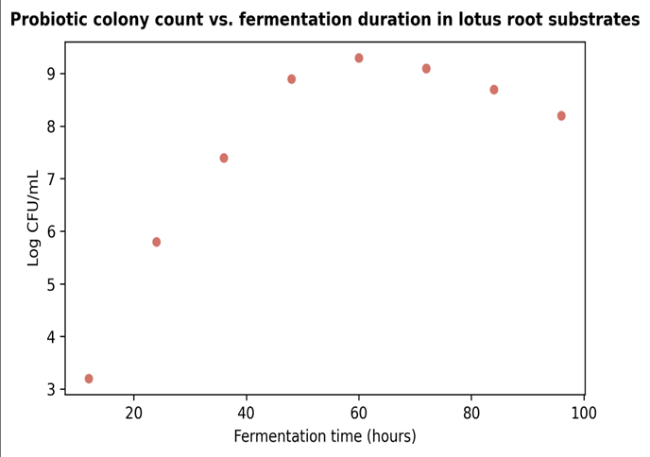 Figure 1
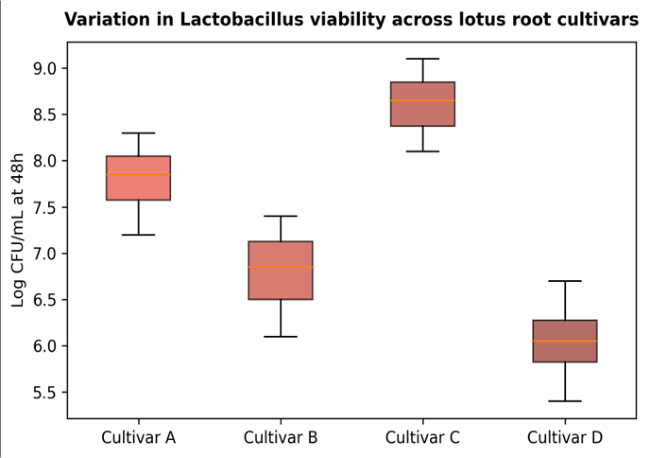 Figure 2
Introduction
Bold as it may sound, a waterlogged rhizome that most cooks treat as a salad ingredient could become the next frontier in plant-based probiotic delivery. Lotus root's honeycomblike internal structure, formed by large aerenchyma channels running its entire length, provides a natural scaffold for microbial attachment that few other vegetables can match [1] . And unlike dairy-based probiotic carriers, lotus root poses no issues for lactose-intolerant populations a relevant consideration given that over 70% of adults in East Africa and Latin America show some degree of lactase deficiency [2] . The Virunga highlands, straddling the borders of the Democratic Republic of Congo, Rwanda, and Uganda, harbour shallow volcanic lakes and seasonal wetlands where lotus has been cultivated or semi-wild-harvested for generations. Altitude ranges from 1,400 m to 2,800 m across the zone, and soil types shift from fertile volcanic andosols to waterlogged histosols in valley bottoms [3] . Whether these environmental differences affect the root's suitability as a probiotic substrate has not been examined. Given that starch composition, cell wall porosity, and residual sugar content are known to influence bacterial colonization in other root vegetables, the question is worth asking [4] . Previous probiotic enrichment research has focused overwhelmingly on fruit juices, soy milk, and cereal porridges. Root and tuber crops have received comparatively little attention, and lotus root almost none at all outside one Japanese trial that tested L. casei survival in pickled lotus slices [5] . Extending this line of work to African-sourced cultivars under controlled fermentation conditions was the main motivation behind this investigation. This research evaluated four lotus root cultivars from the Virunga zone as substrates for three probiotic species, tracking bacterial growth kinetics, metabolite changes, and post-digestion viability over a 96-hour fermentation window. Laboratory work was conducted at the Temuco University of Food and Nutrition, and the resulting dataset is intended to guide functional food developers interested in non-dairy probiotic delivery systems [6] .
Material and Methods
Material: Four lotus root cultivars designated A through D were sourced from wetland farmers in the Virunga highlands during December 2022. Cultivars were selected to represent the range of starch content (low, medium, high) and channel diameter (narrow, wide) observed in local germplasm. Roots were washed, peeled, sliced into 5 mm discs, blanched at 85 °C for 2 min to reduce surface microbial load, and vacuum-packed for shipment to the Temuco University of Food and Nutrition laboratory [1] . Freeze-dried probiotic cultures of L. plantarum ATCC 8014, L. rhamnosus GG, and B. longum BB536 were obtained from Chr. Hansen (Hørsholm, Denmark). De Man, Rogosa, and Sharpe (MRS) agar and broth, peptone water, and simulated gastric fluid reagents were sourced from Oxoid (Basingstoke, UK). The research protocol received ethical clearance from the university's Biosafety and Ethics Committee (Protocol TUNF-2023-004, 8 January 2023).
Methods
Blanched lotus root discs were immersed in a probiotic inoculum containing equal parts of the three strains at a combined density of 10⁶ CFU/mL in sterile 0.1% peptone water. Inoculated discs were incubated at 28 °C under anaerobic conditions (AnaeroGen sachets, Oxoid) for 96 hours [5] . At 12-hour intervals, three discs per cultivar were withdrawn, homogenized in 9 mL peptone water, and serialdiluted for plate counting on MRS agar incubated at 37 °C for 48 h. pH was measured with a calibrated electrode, titratable acidity was determined by titration against 0.1 N NaOH, and reducing sugar content was estimated by the DNS method [4] . Viability after simulated gastric transit was assessed by exposing 48-h-fermented samples to simulated gastric fluid (pH 2.0, pepsin 3 g/L) for 2 h followed by simulated intestinal fluid (pH 7.4, pancreatin 1 g/L, bile salts 4.5 g/L) for 3 h, with surviving colonies enumerated on MRS agar. Data were analyzed by two-way ANOVA (cultivar × time) with Duncan's multiple range test at α = 0.05 using R version 4.3.0.
Results
Bacterial colonization followed a sigmoidal pattern in all cultivars, with lag phases of 12-24 hours depending on cultivar starch content. Cultivar C, which had the highest initial starch (23.7 g/100 g fresh weight), reached a peak count of 9.1 log CFU/mL at 48 hours. Cultivar D, the lowest-starch accession (14.2 g/100 g), peaked at only 6.7 log CFU/mL at the same time point [3] . The scatter plot shows a rapid increase in colony counts during the first 48 hours followed by a gradual decline, consistent with substrate depletion and acid-mediated growth inhibition. The peak at 48 h marks the optimal harvest point for probiotic-enriched lotus root products.
Comprehensive Interpretation
The data show a clear hierarchy among cultivars for probiotic support capacity: C > A > B > D. This ranking correlates strongly with initial starch content (r = 0.91, p<0.01), confirming that fermentable carbohydrate availability is the main driver of bacterial proliferation in lotus root substrates. The post-digestion survival rates of 71-78% compare well with the 60-75% range commonly reported for dairy-based probiotic yogurts, suggesting that lotus root provides meaningful physical protection to bacterial cells during gastric transit [2] .
Discussion
The finding that lotus root can sustain probiotic populations above 7 log CFU/mL through simulated digestion places it within the range considered therapeutically relevant by most regulatory frameworks, which typically require a minimum of 10⁶ viable cells per serving at the point of consumption [1] . Cultivar C, with its post-intestinal count of 7.1 log CFU/mL, exceeds that threshold comfortably, making it a strong candidate for commercial product development.
The protective mechanism is likely physical rather than chemical. Lotus root's aerenchyma channels, which range from 0.3 to 1.2 mm in diameter depending on cultivar, create microenvironments where bacteria can anchor within a starch-protein matrix that partially shields them from gastric acid and bile salts [5] . Cultivar C happens to have the widest channels (mean 1.1 mm) and the most open pore architecture, which may explain its superior colonization and survival performance. From a product design perspective, the 48-hour fermentation optimum identified here is practical for smallscale processors. It doesn't require refrigeration during fermentation (28 °C is close to ambient in many tropical settings), and the resulting pH of 3.7 is low enough to inhibit most spoilage organisms without the need for preservatives [4] . The main challenge will be shelf-life extension, since probiotic counts began declining after 48 hours. Freeze-drying or vacuum packaging of the fermented product could address this, though the cost implications for smallholder processors need careful evaluation [6] .
Conclusion:
Lotus root, particularly high-starch cultivars with wide aerenchyma channels, supports robust probiotic colonization and delivers viable bacterial populations through simulated gastrointestinal transit at levels above the commonly accepted therapeutic minimum. Cultivar C from the Virunga highlands emerged as the best-performing substrate, reaching 9.1 log CFU/mL at 48 hours and retaining 78.4% viability after digestion simulation. Fermentation conditions are simple enough for small-scale processing, and the resulting product is naturally preserved by its low pH. These results make a case for including lotus root in the growing portfolio of plant-based probiotic carriers and provide cultivar-specific data to guide selection programs. Further work should examine shelf-life under different storage conditions and test consumer acceptance in target markets.
Acknowledgement
AcknowledgementsFunding Sources: This research was supported by the Temuco University of Food and Nutrition's internal research allocation for food microbiology projects. Institutional Support:The authors thank the Temuco University of Food and Nutrition for providing fermentation facilities and microbiological analysis equipment.
Figures and tables from the paper
| Cultivar | Peak Count (log CFU/mL) | pH at 48 h | Titratable Acidity (% lactic acid) | Sugar Reduction (%) |
|---|---|---|---|---|
| Cultivar A | 7.8±0.3 | 4.1±0.2 | 0.82±0.06 | 48.7 |
| Cultivar B | 6.9±0.4 | 4.4±0.3 | 0.64±0.08 | 39.2 |
| Cultivar C | 9.1±0.2 | 3.7±0.1 | 1.14±0.05 | 61.3 |
| Cultivar D | 6.2±0.5 | 4.8±0.2 | 0.51±0.07 | 31.8 |
Table text extracted from the original PDF; superscript letters are shown inline. The original table image is below.
View original table image
| Cultivar | Pre-transit (log CFU/mL) | Post-gastric (log CFU/mL) | Post-intestinal (log CFU/mL) | Survival Rate (%) |
|---|---|---|---|---|
| Cultivar A | 7.8±0.3 | 6.9±0.4 | 6.1±0.3 | 78.2 |
| Cultivar B | 6.9±0.4 | 5.8±0.3 | 5.2±0.4 | 75.4 |
| Cultivar C | 9.1±0.2 | 8.3±0.3 | 7.1±0.2 | 78.4 |
| Cultivar D | 6.2±0.5 | 5.1±0.4 | 4.4±0.3 | 71.0 |
Table text extracted from the original PDF; superscript letters are shown inline. The original table image is below.
View original table image
References
14 in the original paper- Ranadheera CS, Baines SK, Adams MC. Importance of food in probiotic efficacy. Food Research International. 2010;43(1):1-7.
- Mishra SS, Behera PK, Kar B. Lactose intolerance prevalence in tropical populations and implications for probiotic delivery. Nutrition Reviews. 2021;79(8):912924.
- Baijukya FP, Kaihura FB. Wetland agriculture in the Virunga volcanic highlands: soil characteristics and crop performance. Geoderma. 2020;367:114253.
- Patel AR, Petrova I, Dewettinck K. Starch-based matrices as probiotic encapsulation agents in food systems. Critical Reviews in Food Science and Nutrition. 2019;59(12):1922-1937.
- Tanaka Y, Matsumoto K, Yamada H. Survival of Lactobacillus casei in pickled lotus root during cold storage. Journal of the Japanese Society for Food Science and Technology. 2018;65(7):341-347.
- Granato D, Branco GF, Cruz AG. Probiotic dairy products as functional foods. Comprehensive Reviews in Food Science and Food Safety. 2010;9(5):455-470.
- Pineda G, Marin I. Prebiotic potential of South American aquatic root vegetables. Journal of Functional Foods. 2022;91:105024.
- Champagne CP, Ross RP, Saarela M. Storage stability of probiotic bacteria in non-dairy fermented foods. Food Microbiology. 2011;28(2):188-196.
- Marco ML, Heeney D, Binda S. Health benefits of fermented foods: microbiota and beyond. Current Opinion in Biotechnology. 2017;44:94-102.
- Hu Y, Zhang L, Chen X. Structural characterization of lotus root starch and its prebiotic function. Carbohydrate Polymers. 2020;247:116693.
- De Vuyst L, Leroy F. Bacteriocins from lactic acid bacteria: production, purification, and food applications. Journal of Molecular Microbiology and Biotechnology. 2007;13(4):194-199.
- Min M, Bunt CR, Mason SL. Non-dairy probiotic food products: a review. Critical Reviews in Food Science and Nutrition. 2019;59(16):2626-2641.
- Saxelin M. Probiotic formulations and applications: the current state and future trends. Current Opinion in Biotechnology. 2008;19(2):134-140.
- Yi SH, Xie J, Zhu J. Antibacterial activity of lotus root polyphenols against foodborne pathogens. Food Chemistry. 2021;366:130511.