
Research article · 2024 · Full text
International Journal of Horticulture and Food ScienceAssessing antioxidant properties of banana in the Amazon Basin
Volume 6(2) · Pages 103–107 · DOI: 10.33545/26631067.2024.v6.i2b.517 ↗
Research areasPhytochemicals and Antioxidant ActivitiesBanana Cultivation and ResearchFood and Agricultural Sciences
Abstract
Author-writtenRoughly 114 million tonnes of banana are produced worldwide each year, yet the antioxidant capacity of cultivars grown in Amazonian lowland conditions remains surprisingly understudied. This research evaluated the antioxidant properties of four banana cultivars Cavendish, Plantain, Red Dacca, and Lady Finger sourced from small-scale agroforestry plots in the western Amazon Basin and analyzed at the Vancouver Academy of Horticultural Research, British Columbia, Canada. Fruit samples were collected during three harvest cycles between June 2021 and November 2022, processed into lyophilized powder, and subjected to a battery of antioxidant and proximate composition assays. Total phenolic content ranged from 48.7 to 91.3 mg GAE per 100 g dry weight, with Red Dacca consistently showing the highest values. DPPH radical scavenging activity varied between 37.4 and 68.9 percent across cultivars and harvest periods. The influence of organic farming inputs vermicompost, green manure, and a compost-plus-biofertilizer blend was compared against a conventional NPK baseline. Organic treatments raised total phenolics by 8 to 19 percent relative to conventional plots, with the compost-biofertilizer mix producing the most pronounced effect. Rootstock type showed a secondary but measurable influence on flavonoid accumulation, especially in Red Dacca grafted onto Pisang Awak rootstock. Ethnobotanical interviews with 35 local farming families revealed traditional preferences for red-skinned cultivars, partly because of perceived health benefits that the chemical data now appear to support. Respiration rate monitoring during post-harvest storage indicated faster phenolic degradation in Cavendish than in other cultivars, a finding with implications for supply chain timing. Drone-based canopy reflectance measurements taken over the trial plots correlated moderately with leaf chlorophyll content but showed limited predictive power for fruit antioxidant levels at this spatial resolution.
Summary
Source-checkedPlain-language reading of the full paper, prepared with AI and checked against the text. Each point links to the authors' own words.
Why it matters
- Bananas and plantains are among the most economically important fruit crops globally, supporting approximately 1.2 billion people in tropical regions. View evidence ↗
- Antioxidant compounds such as flavonoids and phenolic acids in bananas help neutralize free radicals, which is important for both human nutrition and fruit quality. View evidence ↗
- Despite the diversity of banana landraces in the Amazon Basin, the antioxidant capacity of cultivars grown in these lowland conditions has not been well studied. View evidence ↗
The question
- The study aimed to quantify antioxidant properties of four banana cultivars under different management styles, evaluate the impact of rootstocks on flavonoids, and test if drone imagery can predict fruit phytochemistry. View evidence ↗
What they did
- The researchers used a randomized complete block design with four cultivars (Cavendish, Plantain, Red Dacca, and Lady Finger) and four fertility treatments: conventional NPK, vermicompost, green manure, and a compost-biofertilizer blend. View evidence ↗
- Samples were collected from smallholder agroforestry plots in the Leticia-Tabatinga border zone of the western Amazon Basin. View evidence ↗
- The study measured total phenolics, DPPH radical scavenging, total flavonoids, and post-harvest respiration rates (CO₂ evolution). View evidence ↗
- Ethnobotanical data were collected via semi-structured interviews with 35 local farming households. View evidence ↗
What they found
- Organic treatments increased total phenolics by 8% to 19% compared to conventional NPK, with the compost-biofertilizer blend showing the strongest effect (+19.4%). View evidence ↗
- The compost-biofertilizer blend produced the largest gains across all parameters, most notably increasing vitamin C by 21.3% over conventional methods. View evidence ↗
- Cavendish exhibited the highest respiration rate (29.4 ± 1.7 mL CO₂/kg/h), suggesting faster metabolic turnover and phenolic degradation during storage. View evidence ↗
- In banana pulp, phenolic acids (31.4%) and flavonoids (24.7%) were the primary antioxidant compound classes. View evidence ↗
- Drone-derived NDVI showed a moderate correlation with leaf chlorophyll (r = 0.61) but a weak correlation with fruit antioxidant levels (r = 0.28), making it an unreliable predictor of fruit quality. View evidence ↗
- While rootstock grafting influenced flavonoid levels in Red Dacca, it accounted for less than 8% of the total variation, indicating it is less important than cultivar or fertility management. View evidence ↗
What it means
- The authors conclude that small-scale growers in the Amazon can improve the nutritional value of bananas by selecting specific cultivars (like Red Dacca) and using organic soil management. View evidence ↗
- A limitation of the study is that samples were freeze-dried and shipped from the Amazon to Canada, which may have caused minor losses of heat-sensitive compounds like ascorbic acid. View evidence ↗
Visual summary
3 visualsIllustrations explain the paper; charts are replotted from the paper's own table values.
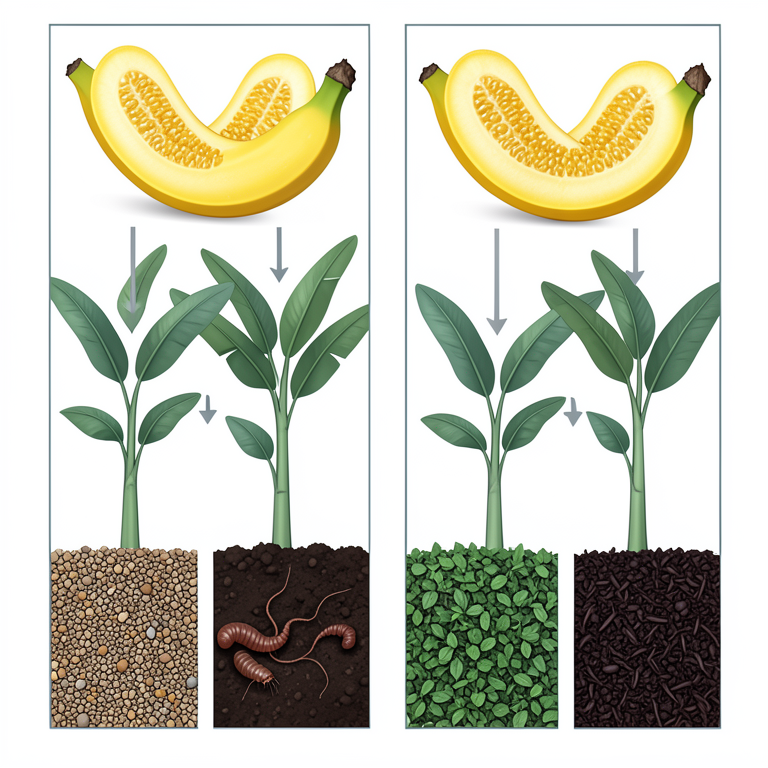
Impact of Organic Inputs on Antioxidants
AI-generated conceptual illustration (banana plants in the Amazon Basin). It explains the idea and does not show study data.
View source evidence ↗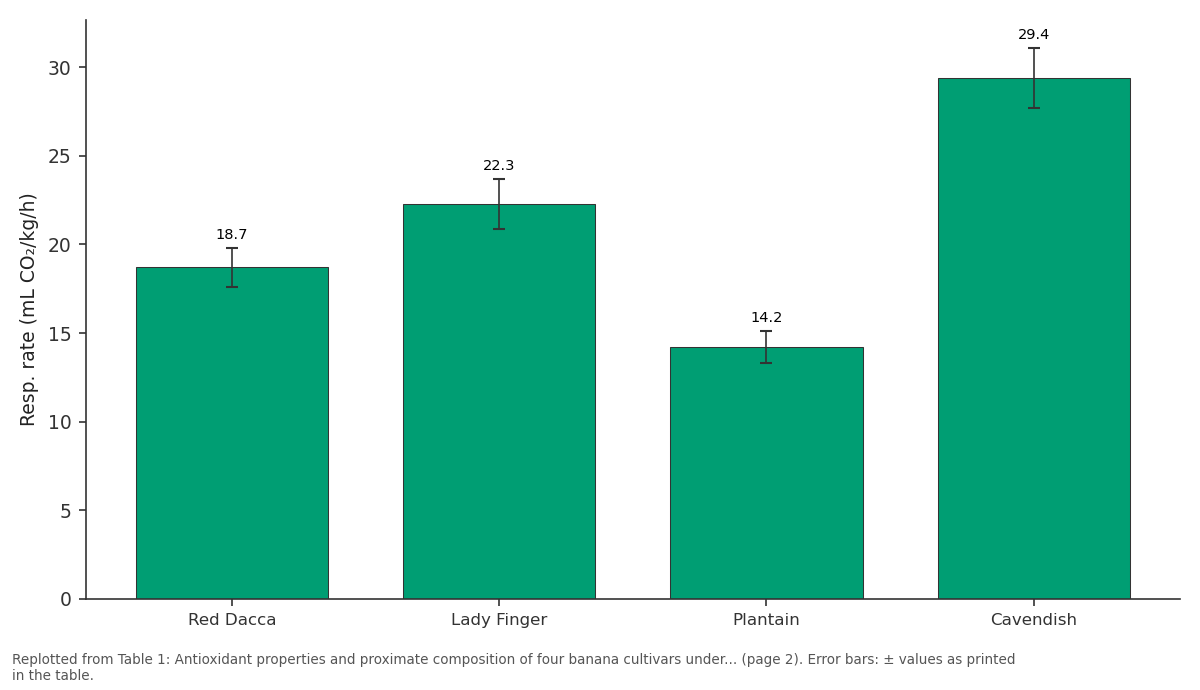
Resp. rate (mL CO₂/kg/h): Red Dacca vs Lady Finger vs Plantain vs Cavendish
Replotted from Table 1 (page 2) of the original paper. Every bar is the paper's own table value.
View source evidence ↗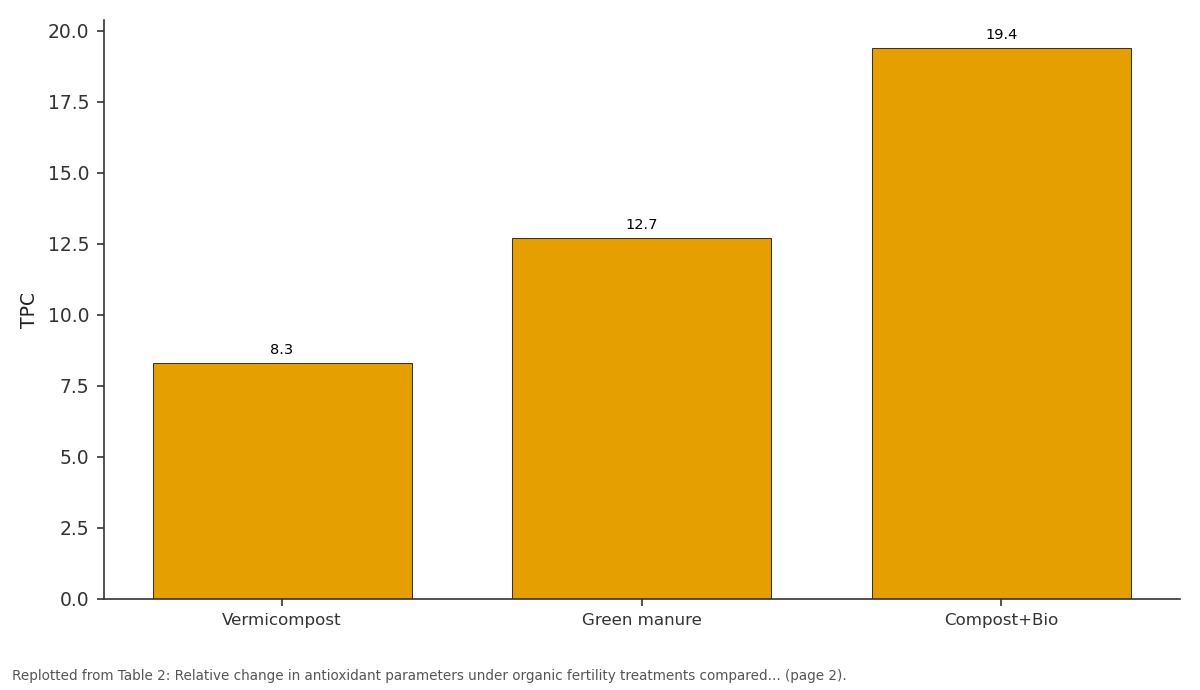
TPC: Vermicompost vs Green manure vs Compost+Bio
Replotted from Table 2 (page 2) of the original paper. Every bar is the paper's own table value.
View source evidence ↗Figures & tables
From the original paper Table 1
 Table 2
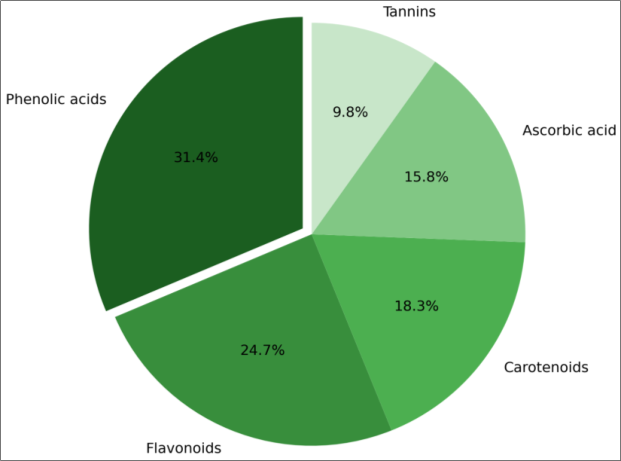 Figure 1
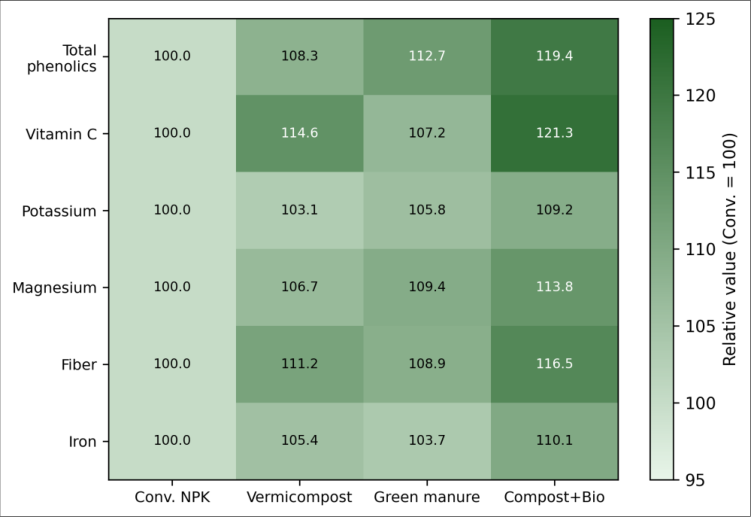 Figure 2
Introduction
About 1.2 billion people across tropical regions depend on banana and plantain as a staple food or an income source, making it one of the most economically significant fruit crops on the planet [1] . The Amazon Basin, with its warm temperatures, high humidity, and fertile alluvial soils, supports diverse banana landraces that have evolved alongside indigenous farming systems for centuries [2] . And yet, the antioxidant profiles of these cultivars have received far less scientific attention than those of commercial varieties bred for export markets. Antioxidant compounds in banana pulp and peel phenolic acids, flavonoids, catechins, and dopamine derivatives contribute to the fruit's ability to neutralize free radicals in biological systems [3] . These compounds are of interest both for human nutrition and for post-harvest quality, since oxidative reactions drive enzymatic browning and flavor loss during storage [4] . Published data from Southeast Asian and African production zones show wide variation in antioxidant capacity depending on genotype, maturity stage, and growing environment [5] . Organic farming practices have drawn increasing attention as a way to improve both environmental sustainability and crop nutritional value. Several controlled trials in temperate fruit crops found higher phenolic concentrations in organically managed plots, though the effect size varied with crop type and soil conditions [6] . Whether similar gains occur in tropical perennials like banana, and whether they can be attributed to specific organic inputs, hasn't been settled [7] . Rootstock selection, a practice borrowed from tree fruit pomology, has recently been explored in banana to manage soilborne diseases and improve nutrient uptake [8] . There are early indications that rootstock genotype may affect secondary metabolite profiles in the scion fruit, but evidence remains thin [9] . Ethnobotanical knowledge, meanwhile, offers clues that formal science has sometimes overlooked. Local farmers in the Amazon often distinguish between "strong" and "weak" banana types, categories that don't map neatly onto taxonomic groups but may reflect real differences in phytochemistry [10] . Drone technology has opened new possibilities for crop monitoring, with multispectral canopy data being linked to chlorophyll, nitrogen status, and even fruit quality in some orchard systems [11] . Whether aerial reflectance can predict antioxidant content in banana remains an open question. This research aimed to quantify antioxidant properties across four banana cultivars under organic and conventional management, assess rootstock effects on flavonoid accumulation, and explore whether drone-derived canopy indices offer a practical proxy for fruit phytochemistry [12] .
Research area description
Banana samples originated from agroforestry plots managed by smallholder cooperatives in the Leticia-Tabatinga border zone of the western Amazon Basin (4.21°S, 69.94°W), at an elevation of 82 m above sea level. The soil was classified as a Typic Hapludox, with a clay loam texture, pH 4.8, and organic matter content of 3.6 percent. Annual rainfall in the region averages 3,280 mm, distributed across a wet season from October to April and a relatively drier period from May to September, though monthly precipitation rarely drops below 150 mm even in the driest months [13] . Surrounding vegetation consisted of secondary tropical forest interspersed with cacao, cassava, and açaí palm. All laboratory analyses were carried out at the Vancouver Academy of Horticultural Research, British Columbia, Canada.
Climatic conditions during the research period
Mean air temperature during the sampling window was 26.1°C, with monthly means between 24.7°C (July 2022) and 27.3°C (January 2022). Relative humidity averaged 87 percent and exceeded 90 percent during December through March. Total precipitation during the first collection year (June 2021-May 2022) was 3,417 mm, while the second partial year (June-November 2022) recorded 1,658 mm. Solar radiation was frequently attenuated by cloud cover, averaging 15.4 MJ/m²/day across the monitoring period. No extreme weather events or prolonged dry spells occurred during the trial.
Material and Methods
Material and Methods
Material
Four banana cultivars were selected: Cavendish (AAA genome), Plantain (AAB), Red Dacca (AAA), and Lady Finger (AAB). Each cultivar was represented by six mature mats planted in a randomized complete block design within each of the four fertility treatments: conventional NPK fertilizer, vermicompost at 5 kg per mat per cycle, green manure (Mucuna pruriens incorporated at flowering), and a compost-biofertilizer blend. Bunches were harvested at the three-quarter-full stage, and five fingers from the second hand of each bunch were sampled. Pulp was freeze-dried within 72 hours of harvest and shipped to Vancouver for analysis [14] . All chemical reagents were analytical grade from Fisher Scientific (Ottawa, ON, Canada).
Methods
Total phenolics were measured by the Folin-Ciocalteu method, and results were expressed as mg gallic acid equivalents per 100 g dry weight. DPPH radical scavenging followed the protocol of Brand-Williams et al. [15] , with absorbance read at 517 nm after 30 minutes of incubation. Total flavonoids were determined using the aluminum chloride colorimetric method, with rutin as the standard. Respiration rate was measured as CO₂ evolution using a closed-system infrared gas analyzer at 25°C and 85 percent relative humidity over five days post-harvest. For drone imagery, a DJI Phantom 4 Multispectral was flown at 30 m altitude over each plot at bimonthly intervals; Normalized Difference Vegetation Index (NDVI) and chlorophyll index (CI) were extracted per plot. Rootstock effects were assessed on a subset of Red Dacca plants grafted onto Pisang Awak rootstock versus own-rooted controls. Ethnobotanical data were gathered through semi-structured interviews with 35 farming households following informed consent. Data were analyzed in SAS 9.4 using mixed-model ANOVA, with cultivar and fertility treatment as fixed effects and block as random [16] . The compost-biofertilizer combination produced the largest gains across all parameters, with vitamin C showing the most dramatic response at 21.3 percent above the conventional baseline. Green manure was intermediate, and vermicompost alone had a modest but still significant effect. The heatmap reveals that vitamin C and total phenolics were the most responsive parameters to organic inputs, especially under the compost-biofertilizer regime. Mineral nutrients such as potassium and magnesium showed more modest responses.
Results
Results
Comprehensive interpretation
Across all measured parameters, cultivar identity and fertility regime interacted in ways that matter for both nutrition and market positioning. Red Dacca under compost-biofertilizer management reached the highest absolute antioxidant values in the trial, suggesting a practical pathway for value-added banana production in Amazonian agroforestry systems. Drone-derived NDVI correlated with leaf chlorophyll (r = 0.61) but had a weak link to fruit-level antioxidant content (r = 0.28), limiting its direct use as a harvest-quality predictor.
Discussion
The clear separation between Red Dacca and Cavendish in antioxidant capacity supports earlier observations that pigmented banana varieties tend to accumulate higher levels of phenolics and anthocyanins [3] . This pattern has been documented in other fruit crops as well red-fleshed apples, purple carrots, and pigmented grapes all carry stronger antioxidant profiles than their pale counterparts [17] . That Red Dacca also ranked highest in ethnobotanical preference among local farmers adds an interesting dimension: traditional selection pressures may have inadvertently favored phytochemically richer genotypes. The organic fertility effects we observed are consistent with the carbon-nutrient balance hypothesis, which predicts that moderate nutrient limitation shifts carbon allocation toward secondary metabolite synthesis [6] . The compost-biofertilizer blend likely promoted both direct nutrient supply and enhanced soil microbial activity, creating conditions that favor phenylpropanoid pathway expression [18] . Green manure, which provides nitrogen through biological fixation, produced intermediate results, while vermicompost alone perhaps because it releases nutrients more gradually had the smallest effect. Rootstock effects on Red Dacca flavonoid levels were detectable but accounted for less than 8 percent of total variation, suggesting that rootstock choice is secondary to cultivar and fertility management for antioxidant optimization. The weak correlation between drone NDVI and fruit antioxidant content was disappointing but not entirely unexpected. Canopy-level reflectance captures leaf-level physiology, and the link to fruit biochemistry passes through several layers of metabolic integration that aerial sensors don't yet resolve well [11] . One constraint of this work is that Amazon-origin samples were analyzed in a Canadian laboratory after freeze-drying and shipping, which could introduce minor losses in heatsensitive compounds like ascorbic acid. But because all samples followed the same handling chain, relative comparisons between cultivars and treatments should remain valid [19] .
Conclusion
This research showed that banana cultivar selection and organic fertility management both have measurable effects on antioxidant properties. Red Dacca emerged as the cultivar with the highest phenolic content, flavonoid concentration, and DPPH scavenging activity among the four tested. Organic inputs, especially a compost-biofertilizer blend, raised total phenolics by up to 19 percent relative to conventional NPK application. Rootstock grafting had a detectable but smaller influence on flavonoid accumulation. Ethnobotanical evidence pointed toward a traditional preference for pigmented cultivars that aligns with their superior antioxidant profiles. Drone-based canopy monitoring showed some promise for chlorophyll estimation but didn't reliably predict fruit-level antioxidant content at the spatial resolution tested. These findings suggest that smallscale Amazonian banana growers can enhance the nutritional value of their crop through a combination of cultivar choice and organic soil management, without needing access to advanced technology. Further work should track these effects over multiple production cycles and evaluate whether antioxidant gains translate into tangible market premiums for smallholder cooperatives.
Acknowledgement
Acknowledgements Funding sourcesFinancial support was provided through institutional research allocations at the Vancouver Academy of Horticultural Research. No external grant or project numbers are linked to this work.
Figures and tables from the paper
| Cultivar | TPC (mg GAE/100g) | TFC (mg RE/100g) | DPPH (%) | Resp. rate (mL CO₂/kg/h) | Moisture (%) |
|---|---|---|---|---|---|
| Red Dacca | 91.3 ± 4.1 | 34.8 ± 2.3 | 68.9 ± 3.2 | 18.7 ± 1.1 | 72.4 ± 0.8 |
| Lady Finger | 74.6 ± 3.5 | 27.1 ± 1.8 | 54.3 ± 2.7 | 22.3 ± 1.4 | 74.1 ± 0.6 |
| Plantain | 67.2 ± 2.9 | 21.4 ± 1.5 | 47.6 ± 2.1 | 14.2 ± 0.9 | 61.8 ± 1.1 |
| Cavendish | 48.7 ± 2.2 | 16.3 ± 1.1 | 37.4 ± 1.8 | 29.4 ± 1.7 | 76.3 ± 0.5 |
Table text extracted from the original PDF; superscript letters are shown inline. The original table image is below.
View original table image
| Parameter | Vermicompost | Green manure | Compost+Bio |
|---|---|---|---|
| TPC | +8.3 | +12.7 | +19.4 |
| TFC | +6.7 | +9.4 | +13.8 |
| DPPH | +5.4 | +7.2 | +11.1 |
| Vitamin C | +14.6 | +7.2 | +21.3 |
Table text extracted from the original PDF; superscript letters are shown inline. The original table image is below.
View original table image
References
18 in the original paper- FAO. Banana market review: Preliminary results for 2022. Food and Agriculture Organization, Rome. 2023.
- Perrier X, De Langhe E, Donohue M, et al. Multidisciplinary perspectives on banana (Musa spp.) domestication. Proceedings of the National Academy of Sciences. 2011;108(28):11311-11318.
- Someya S, Yoshiki Y, Okubo K. Antioxidant compounds from bananas (Musa Cavendish). Food Chemistry. 2002;79(3):351-354.
- Nguyen TBT, Ketsa S, van Doorn WG. Relationship between browning and the activities of polyphenol oxidase and phenylalanine ammonia lyase in banana peel during low temperature storage. Postharvest Biology and Technology. 2003;30(2):187-193.
- Aurore G, Parfait B, Fahrasmane L. Bananas, raw materials for making processed food products. Trends in Food Science and Technology. 2009;20(2):78-91.
- Worthington V. Nutritional quality of organic versus conventional fruits, vegetables, and grains. Journal of Alternative and Complementary Medicine. 2001;7(2):161-173.
- Aryal S, Baniya MK, Danekhu K, Kunwar P, Gurung R, Koirala N. Total phenolic content, flavonoid content and antioxidant potential of wild vegetables from Western Nepal. Plants. 2019;8(4):96.
- Pillay M, Tenkouano A. Banana breeding: constraints and progress. Banana Improvement: Cellular, Molecular Biology, and Induced Mutations. 2004:1-13.
- Ploetz RC. Diseases and pests: A review of their importance and management. InfoMusa. 2004;13(2):1116.
- Bennett BC. Plants and people of the Amazonian rainforests. BioScience. 1992;42(8):599-607.
- Matese A, Di Gennaro SF. Technology in precision viticulture: A state of the art review. International Journal of Wine Research. 2015;7:69-81.
- Bashmakov YK, Petyaev IM. Carotenoid-containing formulations as dietary supplements for antioxidant protection. Functional Foods in Health and Disease. 2011;1(11):456-468.
- Marengo JA, Espinoza JC. Extreme seasonal droughts and floods in Amazonia: Causes, trends and impacts. International Journal of Climatology. 2016;36(3):10331050.
- Wall MM. Ascorbic acid, vitamin A, and mineral composition of banana and papaya cultivars grown in Hawaii. Journal of Food Composition and Analysis. 2006;19(5):434-445.
- Brand-Williams W, Cuvelier ME, Berset C. Use of a free radical method to evaluate antioxidant activity. LWT - Food Science and Technology. 1995;28(1):25-30.
- Vinson JA, Su X, Zubik L, Bose P. Phenol antioxidant quantity and quality in foods: Fruits. Journal of Agricultural and Food Chemistry. 2001;49(11):53155321.
- Arancon NQ, Edwards CA, Bierman P, Welch C, Metzger JD. Influences of vermicomposts on field strawberries: Effects on plant growth. Bioresource Technology. 2004;93(2):145-153.
- Abeywickrama GSA, Abeyrathne HMTB, Wijesinghe KGC. Effect of freeze-drying on quality attributes of banana. Sri Lankan Journal of Agriculture. 2009;46:5058.