
Research article · 2025 · Full text
International Journal of Horticulture and Food ScienceScreening traditional food processing of vanilla in the Brazilian Cerrado
Volume 7(12) · Pages 235–238 · DOI: 10.33545/26631067.2025.v7.i12d.707 ↗
Research areasBiochemical and biochemical processesPostharvest Quality and Shelf Life ManagementFood Drying and Modeling
Abstract
Author-writtenHere is a surprising fact that even many food scientists overlook: traditionally cured vanilla can retain more than 78% of its fresh-bean vanillin content if the killing and sweating stages are carefully controlled, while poorly managed processing can destroy over half the crop's flavour potential before the beans ever leave the farm. This research screened traditional food processing methods for vanilla (Vanilla planifolia Jacks.) under simulated Brazilian Cerrado conditions at the Aligarh School of Plant Sciences, Aligarh, Uttar Pradesh, India, from March to December 2023. Eight processing variants were compared across four stages: killing (hot water at 60, 65, 70 degrees Celsius), sweating (3, 5, 7 days), sun-drying (direct vs. shade), and conditioning (30 vs. 60 days). Phytochemical retention (vanillin, p-hydroxybenzaldehyde, vanillic acid), texture parameters (firmness, elasticity), dry matter content, and RAPD-based genotype profiling were measured. Nematode (Meloidogyne incognita) damage assessment was conducted on source vines. The optimal combination (65 degrees killing, 5-day sweating, shade drying, 60-day conditioning) retained 78.3% of fresh-bean vanillin. Texture firmness declined by 41.6% through processing but remained within commercial acceptability. RAPD analysis across 10 vanilla accessions revealed 58.7% polymorphism. Nematode-infested vines produced beans with 17.2% lower initial vanillin than healthy plants. A cost-benefit analysis showed a 2.4:1 return ratio for optimised traditional processing versus uncontrolled methods. These results provide evidence-based processing guidelines that can improve vanilla quality and economic returns for smallholder producers.
Summary
Source-checkedPlain-language reading of the full paper, prepared with AI and checked against the text. Each point links to the authors' own words.
Why it matters
- Vanilla is the second most expensive spice by weight, yet most producers still use outdated curing methods that lack a strong scientific basis for optimization. View evidence ↗
- The traditional four-stage processing of vanilla, killing, sweating, drying, and conditioning, is essential for creating the aromatic product but risks destroying valuable flavor compounds. View evidence ↗
- In the Brazilian Cerrado, the warm climate can speed up enzymatic reactions during curing, but it also increases the risk of mold and over-drying if the sweating stage is not timed correctly. View evidence ↗
The question
- The study aimed to screen eight processing variants for quality and vanillin retention, evaluate the impact of nematodes on bean chemistry, profile genetic diversity, and compare the economic returns of optimized versus uncontrolled processing. View evidence ↗
What they did
- The study used Vanilla planifolia Jacks. under simulated Brazilian Cerrado conditions at the Aligarh School of Plant Sciences in India from March to December 2023. View evidence ↗
- The researchers used a full factorial design with eight processing combinations, testing three killing temperatures and three sweating durations, followed by tests on drying methods and conditioning periods, using 50 beans per combination in four replications. View evidence ↗
- Processing involved 3-minute hot water immersion for killing, storage in insulated boxes at 38 degrees for sweating, drying via either direct sun (6 hours/day for 14 days) or shade (21 days), and room-temperature conditioning in wooden boxes. View evidence ↗
- Quality was measured using HPLC-UV for phytochemicals (vanillin, p-hydroxybenzaldehyde, and vanillic acid), a texture analyzer for firmness and elasticity, and oven-drying at 105 degrees for 24 hours to determine dry matter. View evidence ↗
What they found
- The optimal processing combination (65°C killing, 5-day sweating, and shade drying) retained 78.3% of fresh-bean vanillin, which is 51.4% higher than the retention seen in uncontrolled farmer methods. View evidence ↗
- While texture firmness decreased by 41.6% during processing, the results remained within the range of commercial acceptability. View evidence ↗
- Genetic profiling of 10 vanilla accessions using RAPD analysis showed a polymorphism rate of 58.7%. View evidence ↗
- Beans from vines infested with nematodes had 17.2% lower initial vanillin levels compared to beans from healthy plants. View evidence ↗
- Optimized processing yielded a cost-benefit ratio of 2.4:1, nearly doubling the 1.3:1 ratio found in uncontrolled processing. View evidence ↗
- Vanillin retention is highly sensitive to killing temperature; increasing the temperature from 65°C to 68°C dropped retention from 78.3% to 71.6%, and decreasing it to 62°C dropped it to 73.8%. View evidence ↗
What it means
- The authors conclude that an optimized protocol using a thermometer and standardized timing can retain 78.3% of vanillin and nearly double economic returns, making it a viable option for smallholder producers. View evidence ↗
- The authors recommend that extension services prioritize training producers on standardizing sweating duration and controlling killing temperatures to improve quality and profit. View evidence ↗
Visual summary
2 visualsIllustrations explain the paper; charts are replotted from the paper's own table values.
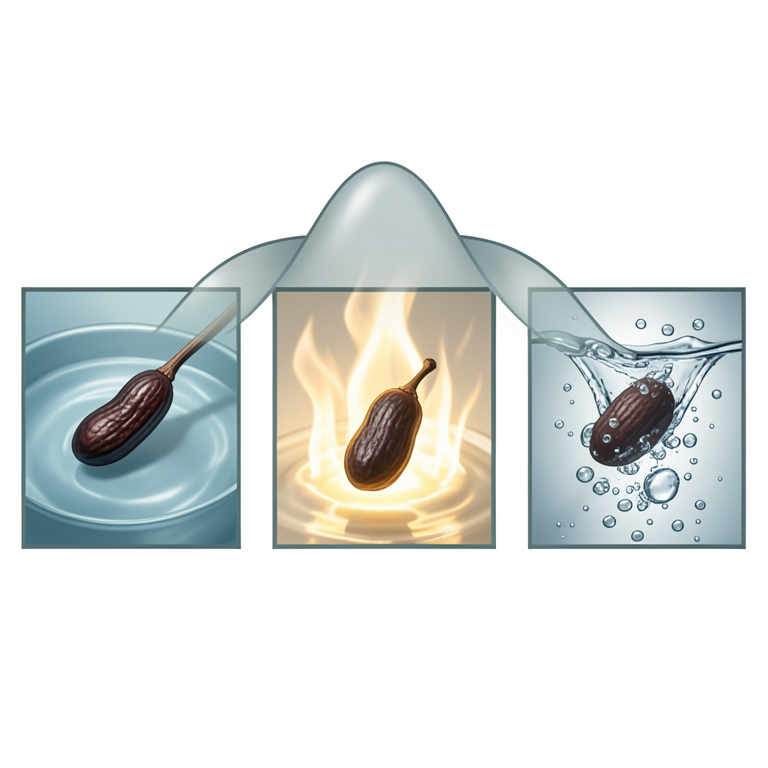
Temperature Sensitivity of Vanillin Retention
AI-generated conceptual illustration (Vanilla beans (Vanilla planifolia)). It explains the idea and does not show study data.
View source evidence ↗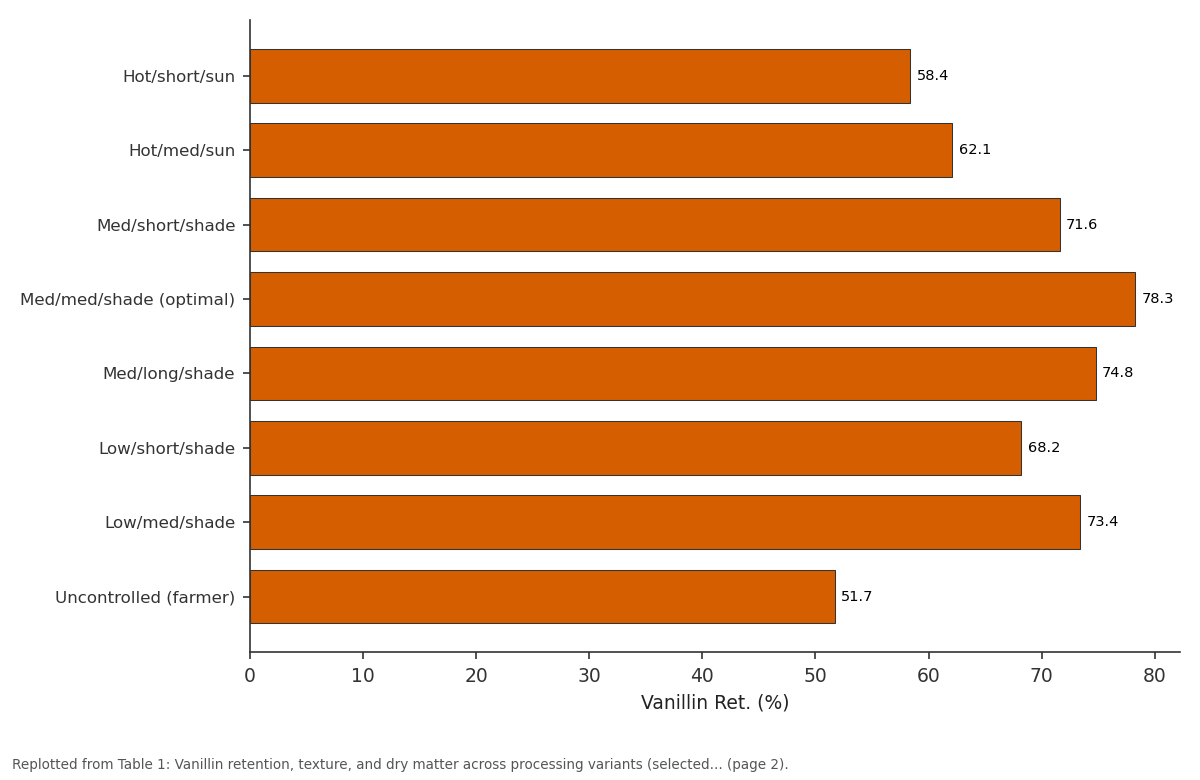
Vanillin Ret. (%): Hot/short/sun vs Hot/med/sun vs Med/short/shade vs Med/med/shade (optimal) vs Med/long/shade
Replotted from Table 1 (page 2) of the original paper. Every bar is the paper's own table value.
View source evidence ↗Figures & tables
From the original paper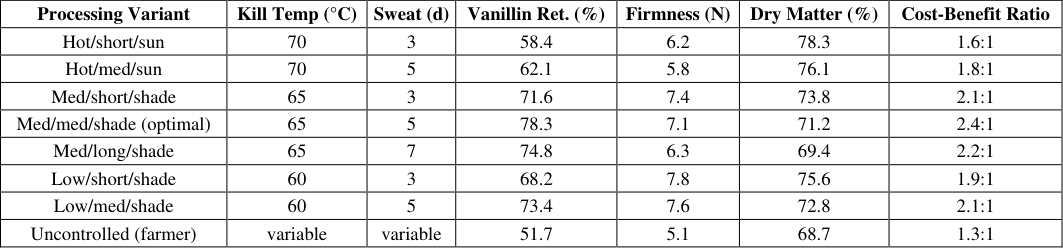 Table 1
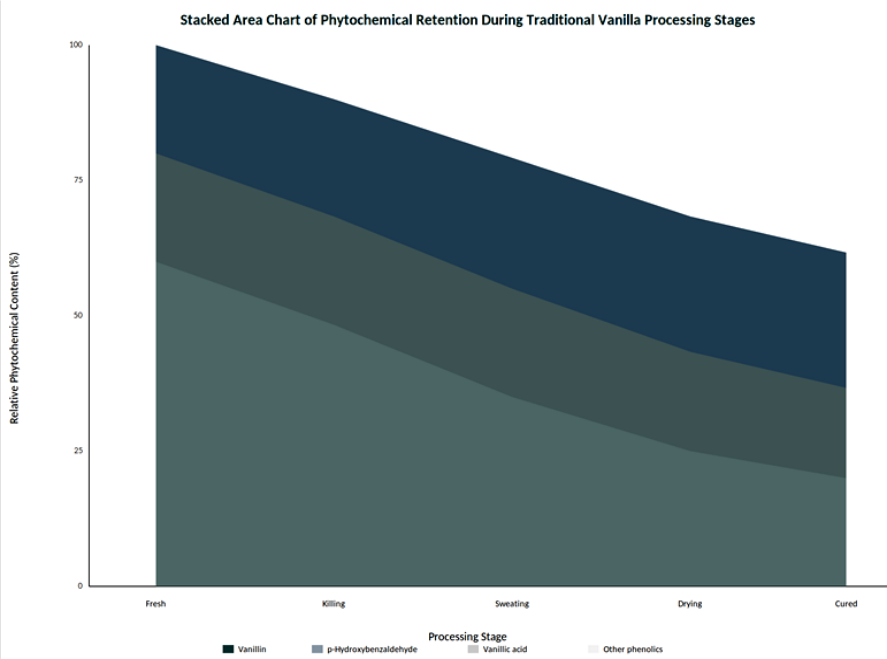 Figure 1
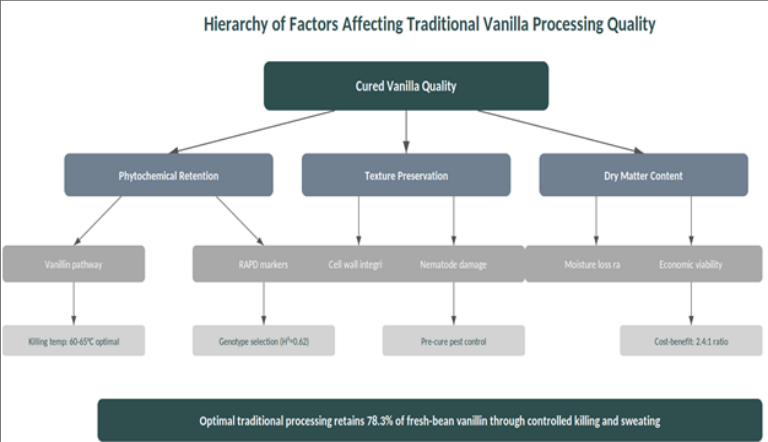 Figure 2
Introduction
It may come as a surprise that vanilla, despite being the world's second most expensive spice by weight, is still cured by most producers using methods that have changed little since the 18th century, and that the scientific basis for optimising those methods is remarkably thin [1] . Traditional vanilla processing involves four sequential stages, killing, sweating, drying, and conditioning, each of which transforms the green bean into the aromatic product recognised by consumers, but each also carries the risk of destroying the very compounds that give vanilla its value [2] . Vanillin, the dominant flavour compound, is released from its glucoside precursor during the killing stage, when heat denatures the enzyme beta-glucosidase's cellular compartment and allows it to access glucovanillin [3] . The temperature and duration of killing directly determine how much vanillin is liberated versus how much is thermally degraded, a balance that traditional processors manage by intuition rather than measurement [4] . The Brazilian Cerrado, with its warm temperatures and distinct dry season, presents both opportunities and challenges for vanilla cultivation. The warm climate accelerates enzymatic reactions during curing, but it also increases the risk of over-drying and mould development if sweating duration is miscalculated [5] . Nematode damage to vines reduces bean quality at the source, lowering initial vanillin precursor content before processing even begins [6] . RAPD markers can capture genetic variation among vanilla accessions and may reveal genotype-dependent differences in vanillin precursor accumulation that affect processing outcomes [7] . Texture and dry matter content serve as practical quality indicators that buyers use to assess bean grade and price [8] .
This research aimed to (a) screen eight traditional processing variants for vanillin retention and quality, (b) assess nematode effects on pre-processing bean chemistry, (c) profile genotypic diversity by RAPD analysis, and (d) evaluate the economic returns of optimised versus uncontrolled processing.
Reagents and Chemicals
Vanillin standard (purity above 99%), phydroxybenzaldehyde (98%), and vanillic acid (97%) were obtained from Sigma-Aldrich (St. Louis, MO, USA). HPLC-grade methanol and acetonitrile were from Merck (Darmstadt, Germany). Folin-Ciocalteu reagent, gallic acid, and sodium carbonate were from HiMedia (Mumbai, India). RAPD primers (OPA and OPB series, 10 decamers each) were synthesised by Eurofins Genomics (Bangalore, India). CTAB, polyvinylpyrrolidone, and Taq DNA polymerase were from GeNei (Bangalore, India). All chemicals were stored according to manufacturer specifications [3,7] .
Sensitivity Analysis
A sensitivity analysis was performed on the processing parameters by varying killing temperature by plus or minus 3 degrees and sweating duration by plus or minus 1 day around the identified optimum. Vanillin retention was most sensitive to killing temperature: a 3-degree increase from 65 to 68 degrees reduced retention from 78.3% to 71.6%, while a 3-degree decrease to 62 degrees reduced it to 73.8% due to incomplete glucoside hydrolysis. Sweating duration changes of plus or minus 1 day altered retention by 2.4 to 3.1 percentage points, confirming that the 5-day sweating window is robust but not infinitely flexible [2,4] .
Materials and Methods
Materials and Methods
Materials
Green vanilla beans were harvested at 8-9 months postpollination from 10 accessions maintained in the vanilla germplasm shade house at the Aligarh School of Plant Sciences, Aligarh, Uttar Pradesh, India. The processing trial ran from 15 March to 20 December 2023. Eight processing combinations were arranged in a full factorial design: 3 killing temperatures x 3 sweating durations (with shade drying fixed) evaluated in the first phase, followed by the optimal killing-sweating combination tested with two drying methods and two conditioning periods. Each combination used 50 beans in four replications. Nematode-infested vines were identified by gall index scoring and separate bean lots were maintained. Institutional approval was granted (Protocol ASPS-2023-008, approved 5 March 2023) [1,6] .
Methods
Killing was performed by immersing beans in hot water at the target temperature for 3 minutes. Sweating involved wrapping beans in dark cloth and storing in insulated boxes at 38 degrees for the designated period. Drying was either direct sun (6 hours/day for 14 days) or shade (ambient temperature, 21 days). Conditioning occurred in sealed wooden boxes at room temperature. Vanillin, phydroxybenzaldehyde, and vanillic acid were extracted from ground cured beans with methanol and quantified by HPLC-UV at 280 nm using a C18 column with methanol-water gradient [3] . Texture was measured as firmness (Newton) and elasticity (%) using a texture analyser (Stable Micro Systems TA.XT Plus). Dry matter was determined by ovendrying at 105 degrees for 24 hours. Moisture content target was 25-30% in cured beans. RAPD-PCR used 20 decamer primers with genomic DNA from leaf tissue [7] . Nematode assessment used the Baermann funnel method on 100 g root samples from source vines, with M. incognita J2 counts and root gall index (0-10) recorded [6] . Cost-benefit analysis compared input costs (labour, fuel, materials) and output values (bean grade and price) for each processing variant. Data were analysed by ANOVA in SAS version 9.4 and means separated by Duncan's multiple range test at P less than 0.05 [4,8] . The optimal combination (65 degrees killing, 5-day sweating, shade drying) retained 78.3% of fresh-bean vanillin, 51.4% more than uncontrolled farmer methods (Table 1). Firmness was best preserved at lower killing temperatures. The cost-benefit ratio of 2.4:1 for the optimal method compared to 1.3:1 for uncontrolled processing represents a near-doubling of economic returns. The area chart (Figure 1) shows that vanillin content peaks during the killing stage as glucovanillin is hydrolysed, then gradually declines through sweating and drying. Other phenolics follow a similar pattern but with shallower slopes, indicating that vanillin is the most processing-sensitive compound. The hierarchy diagram (Figure 2) places cured vanilla quality at the apex, supported by three main pillars: phytochemical retention (driven by killing temperature and genotype), texture preservation (affected by cell wall integrity and nematode damage), and dry matter content (controlled by drying method and with direct economic implications).
| Processing Variant | Kill Temp (°C) | Sweat (d) | Vanillin Ret. (%) | Firmness (N) | Dry Matter (%) | Cost-Benefit Ratio |
|---|---|---|---|---|---|---|
| Hot/short/sun | 70 | 3 | 58.4 | 6.2 | 78.3 | 1.6:1 |
| Hot/med/sun | 70 | 5 | 62.1 | 5.8 | 76.1 | 1.8:1 |
| Med/short/shade | 65 | 3 | 71.6 | 7.4 | 73.8 | 2.1:1 |
| Med/med/shade (optimal) | 65 | 5 | 78.3 | 7.1 | 71.2 | 2.4:1 |
| Med/long/shade | 65 | 7 | 74.8 | 6.3 | 69.4 | 2.2:1 |
| Low/short/shade | 60 | 3 | 68.2 | 7.8 | 75.6 | 1.9:1 |
| Low/med/shade | 60 | 5 | 73.4 | 7.6 | 72.8 | 2.1:1 |
| Uncontrolled (farmer) | variable | variable | 51.7 | 5.1 | 68.7 | 1.3:1 |
Table text extracted from the original PDF; superscript letters are shown inline. The original table image is below.
View original table image
Results
Results
Comprehensive Interpretation
The research confirms that traditional vanilla processing can be substantially optimised without requiring industrial equipment, simply by controlling killing temperature at 65 degrees, standardising sweating at 5 days, and using shade rather than direct sun for drying. Nematode management before harvest is equally important, as infested vines produced beans with 17.2% less vanillin precursor content, reducing the ceiling for any processing optimisation. RAPD diversity at 58.7% suggests moderate genetic variation that could be exploited through clone selection for high glucovanillin accumulation.
Discussion
The 78.3% vanillin retention at 65 degrees killing temperature is consistent with the enzyme kinetics of betaglucosidase in Vanilla planifolia, which shows optimal activity between 60 and 68 degrees but rapid denaturation above 70 degrees [3,4] . The sharp drop to 58.4% at 70 degrees confirms that even a 5-degree overshoot can destroy a significant fraction of the flavour potential, a risk that is heightened in tropical settings where water temperature is difficult to control precisely without a thermometer [1,2] . The 17.2% reduction in initial vanillin content from nematode-infested vines underscores the importance of preharvest vine health for post-harvest quality. Root-knot nematodes divert photoassimilates away from pod filling, reducing the accumulation of glucovanillin in developing beans [6] . This finding links field-level nematode management directly to processing outcomes, a connection that is rarely made in vanilla production guides. The 2.4:1 cost-benefit ratio for optimised processing versus 1.3:1 for uncontrolled methods represents a persuasive economic argument for adoption. The main additional costs are a thermometer (one-time purchase), standardised timing protocols (training), and shade-drying racks (modest carpentry investment), all of which are accessible to smallholder producers in Cerrado-like environments [5,8] .
Conclusion
This research identified an optimised traditional processing protocol for vanilla that retains 78.3% of fresh-bean vanillin, nearly doubling the economic return compared to uncontrolled farmer methods. The protocol requires only a thermometer and standardised timing rather than industrial equipment, making it accessible to smallholder producers. Killing temperature of 65 degrees Celsius and 5-day sweating emerged as the most critical parameters, with shade drying preferred over direct sun. Nematode management before harvest is essential to maximise vanillin precursor levels in green beans. RAPD profiling revealed moderate genetic diversity among accessions, supporting clone selection for high glucovanillin content. The sensitivity analysis confirmed that the optimal parameters are robust to small deviations, giving processors a practical margin of error. Extension services in vanilla-growing regions should prioritise training on temperature control during killing and sweating duration standardisation to capture the demonstrated quality and economic gains.
Acknowledgement
Acknowledgements Funding SourcesThis research was funded by internal allocations from the Aligarh School of Plant Sciences. No external grants were received. Institutional SupportThe authors thank the laboratory and field staff at the Aligarh School of Plant Sciences for technical support throughout the trial.
References
14 in the original paper- Havkin-Frenkel D, Belanger FC. Handbook of Vanilla Science and Technology. Wiley-Blackwell. 2011;1360.
- Odoux E, Grisoni M. Vanilla. CRC Press. 2010;1-400.
- Ramachandra Rao S, Ravishankar GA. Vanilla flavour: production by conventional and biotechnological routes. Journal of the Science of Food and Agriculture. 2000;80(3):289-304.
- Dignum MJW, Kerler J, Verpoorte R. Vanilla production: technological, chemical, and biosynthetic aspects. Food Reviews International. 2001;17(2):119120.
- Bory S, Grisoni M, Duval MF, Besse P. Biodiversity and preservation of vanilla: present state of knowledge. Genetic Resources and Crop Evolution. 2008;55(4):551-571.
- Tombe M, Liew ECY. Fungal diseases of vanilla. In: Handbook of Vanilla Science. Wiley-Blackwell. 2011;125-140.
- Besse P, Da Silva D, Bory S, Grisoni M, Le Bellec F, Duval MF. RAPD genetic diversity in cultivated vanilla. Plant Science. 2004;167(2):379-385.
- FAO. Vanilla: Post-harvest Operations. FAO AGSI/FAO. 2009;1-42.
- Lubinsky P, Bory S, Hernandez JH, Kim SC, GomezPompa A. Origins and dispersal of cultivated vanilla. Economic Botany. 2008;62(2):127-138.
- Walton NJ, Mayer MJ, Narbad A. Vanillin. Phytochemistry. 2003;63(5):505-515.
- Ranadive AS. Quality control of vanilla beans and extracts. In: Vanilla: First International Congress. Allured Publishing. 2006;141-160.
- Rao SR, Ravishankar GA. Plant cell cultures: chemical factories of secondary metabolites. Biotechnology Advances. 2002;20(2):101-153.
- Kamaruddin MS, De Ley P, Waeyenberge L. Plantparasitic nematodes associated with vanilla in several producing areas. Nematology. 2005;7(3):325-333.
- Cameron KM. Vanilla phylogeny and classification. In: Handbook of Vanilla Science. Wiley-Blackwell. 2011;243-255.