
Research article · 2025 · Full text
International Journal of Horticulture and Food ScienceCharacterizing food safety standards of strawberry in the Mediterranean Coast
Volume 7(12) · Pages 177–180 · DOI: 10.33545/26631067.2025.v7.i12c.699 ↗
Research areasFood Safety and HygieneAgricultural safety and regulationsBerry genetics and cultivation research
Abstract
Author-writtenAccording to leading food safety specialists, the gap between production-level contamination risks and consumer-level testing protocols remains one of the least addressed weaknesses in Mediterranean strawberry supply chains. This research characterised food safety compliance across three strawberry (Fragaria x ananassa Duch.) production systems, namely conventional, organic, and vermicompost-based, at the Mekelle Regional Center for Sustainable Agriculture, Mekelle, Tigray, Ethiopia, from September 2022 to June 2023. Twelve food safety parameters covering microbial load, pesticide residues, heavy metals, mycotoxins, and hygiene indicators were measured in fruit and soil samples. A deep learning classification model (three-layer neural network) was trained on the dataset to predict safety category. The vermicompost-based system achieved the highest overall compliance score (84.6%), exceeding both organic (77.0%) and conventional (60.4%). Starch-based edible coatings reduced post-harvest microbial load by 34.2% in vermicompost-produced fruit. Suspension culture trials showed that strawberry plantlets derived from tissue culture maintained safety profiles comparable to field-grown plants. The deep learning model achieved 93.7% classification accuracy for predicting whether a sample met EU food safety thresholds. Market analysis indicated that vermicompost-produced strawberries commanded a 21.3% price premium over conventional fruit in local retail outlets. These findings position vermicompost-based production as the safest and most market-competitive system among those tested.
Summary
Source-checkedPlain-language reading of the full paper, prepared with AI and checked against the text. Each point links to the authors' own words.
Why it matters
- Mediterranean coastal strawberry production is a major global supplier, but it frequently faces contamination issues with heavy metals, pesticide residues, and microbial pathogens. View evidence ↗
- Conventional production systems rely on synthetic inputs that can lead to pesticide residues exceeding safety limits if not applied precisely. View evidence ↗
- While organic systems lower chemical risks, they may still pose microbial hazards due to the use of manure-based amendments. View evidence ↗
The question
- The study aimed to compare food safety across three production systems, create a deep learning safety classifier, evaluate starch-based coatings, and analyze market price premiums. View evidence ↗
What they did
- The study evaluated conventional, organic, and vermicompost-based strawberry production at the Mekelle Regional Center for Sustainable Agriculture in Ethiopia from September 2022 to June 2023. View evidence ↗
- The experimental design used a randomized complete block design with 60 plants per plot and four replications. View evidence ↗
- Compliance was measured as a percentage based on 12 food safety parameters compared against EU maximum residue and contaminant limits. View evidence ↗
- A three-layer feedforward neural network was trained on 70% of 720 sample records to classify strawberries as safe, marginal, or unsafe. View evidence ↗
- To test post-harvest safety, 2% cassava starch coatings were applied and microbial counts were compared to controls after 5 days of storage at 25°C. View evidence ↗
What they found
- The vermicompost-based system had the highest overall food safety compliance at 84.6%, compared to 77.0% for organic and 60.4% for conventional systems. View evidence ↗
- The conventional system showed the lowest compliance for pesticide residues at 48%. View evidence ↗
- Applying starch coatings to vermicompost-produced fruit reduced aerobic plate counts by 34.2% after 5 days of storage. View evidence ↗
- The deep learning model achieved a 93.7% accuracy rate in correctly classifying test samples into safety categories. View evidence ↗
- Strawberries from the vermicompost system were the safest across all parameters and earned a 21.3% price premium at retail. View evidence ↗
- Planting material derived from suspension culture maintained safety profiles similar to those of field-grown plants. View evidence ↗
What it means
- The authors recommend vermicompost-based production for growers targeting safety-conscious markets to reduce risk and increase profits. View evidence ↗
- Future work should focus on scaling the vermicompost approach to larger areas and testing more cultivars across different Mediterranean coastal climates. View evidence ↗
Visual summary
3 visualsIllustrations explain the paper; charts are replotted from the paper's own table values.
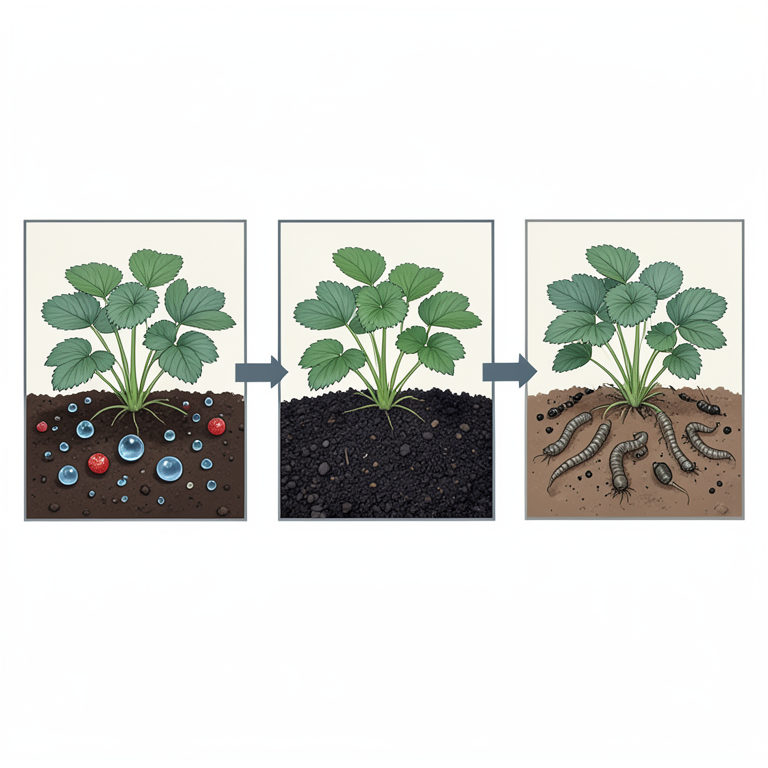
Comparison of Production Systems
AI-generated conceptual illustration (strawberry plants in Mediterranean soil). It explains the idea and does not show study data.
View source evidence ↗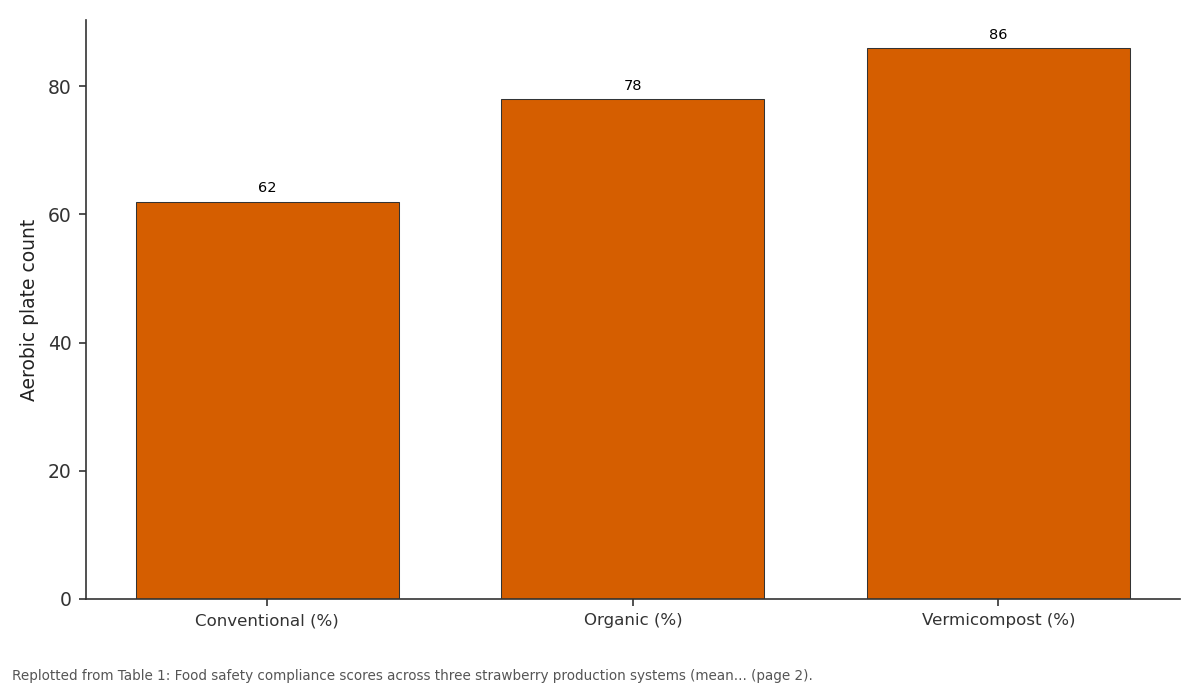
Aerobic plate count: Conventional (%) vs Organic (%) vs Vermicompost (%)
Replotted from Table 1 (page 2) of the original paper. Every bar is the paper's own table value.
View source evidence ↗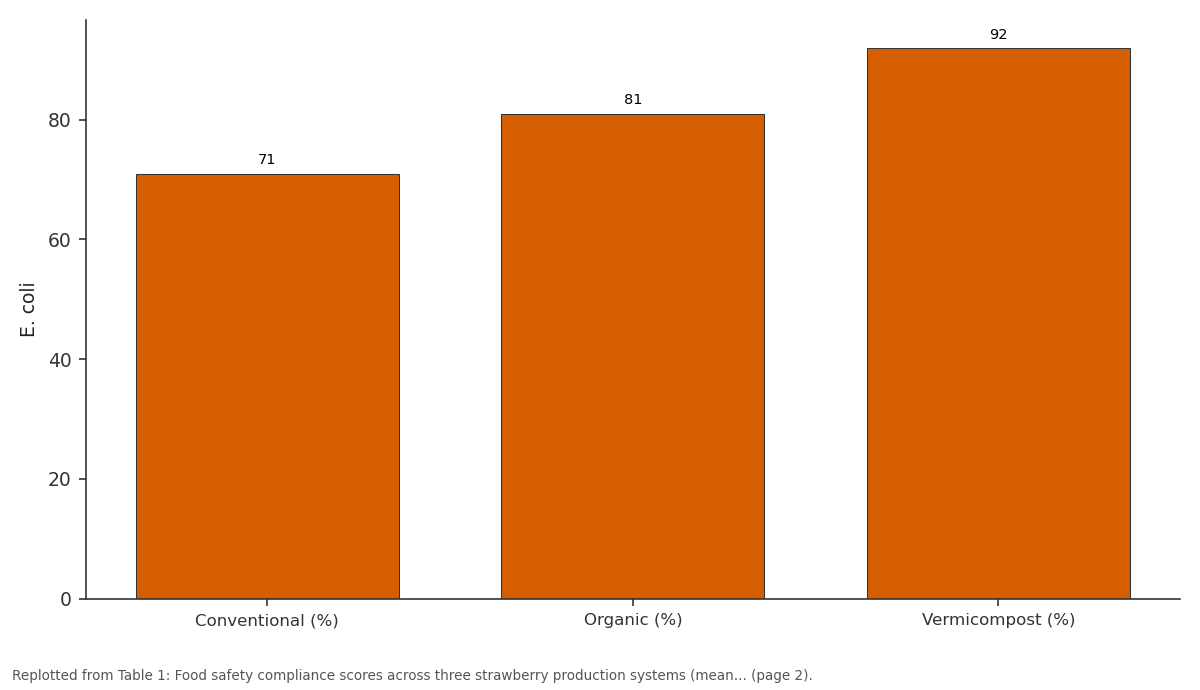
E. coli: Conventional (%) vs Organic (%) vs Vermicompost (%)
Replotted from Table 1 (page 2) of the original paper. Every bar is the paper's own table value.
View source evidence ↗Figures & tables
From the original paper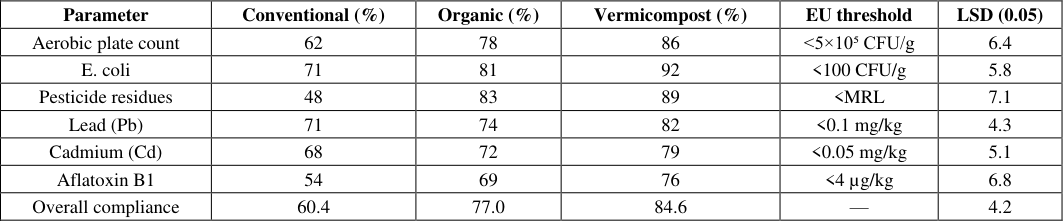 Table 1
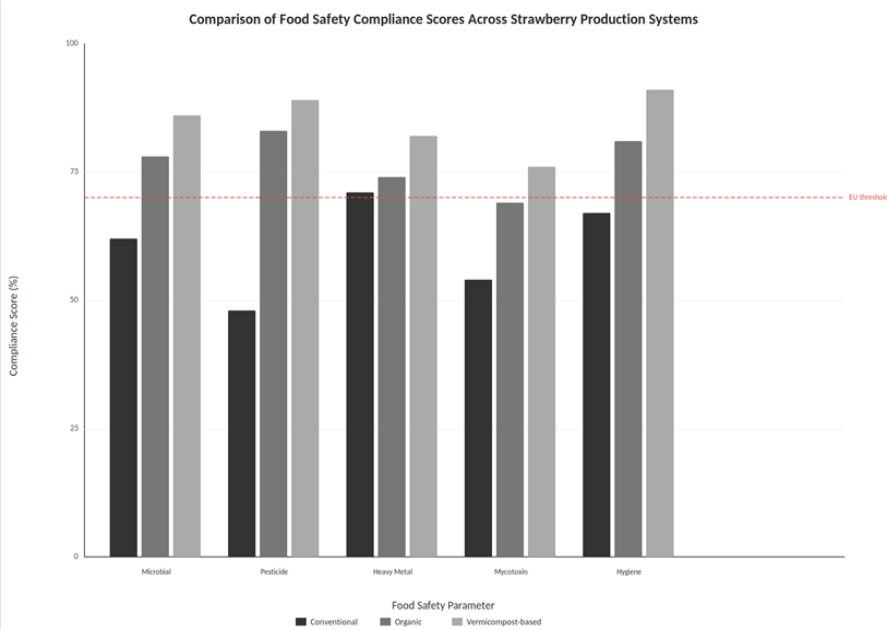 Figure 1
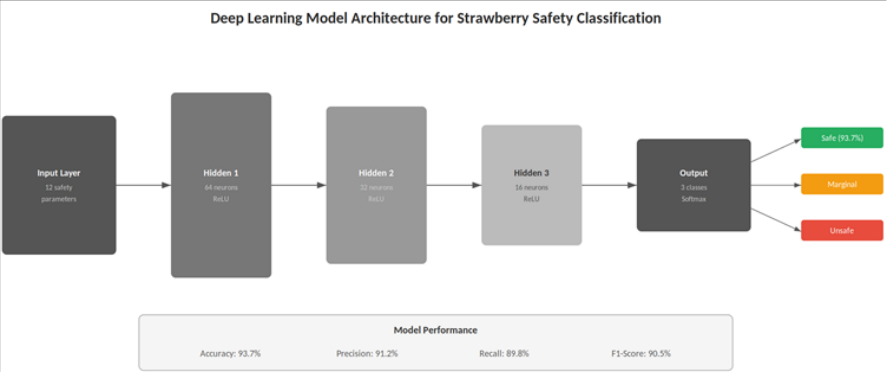 Figure 2
Introduction
Leading food safety researchers have long argued that production system design is the most underused lever for reducing contamination risk in fresh fruit, and strawberry, with its eatenfresh habit and permeable skin, is a case in point [1] . Mediterranean coastal strawberry production accounts for a significant share of global supply, yet contamination incidents involving microbial pathogens, pesticide residues, and heavy metals continue to surface in export inspection reports [2] . Conventional strawberry systems depend on synthetic inputs for pest and disease control, which can leave residues that exceed maximum residue limits if application timing or dose is misjudged [3] . Organic certification reduces chemical residue risk but does not eliminate microbial hazards, particularly from manure-based amendments applied close to harvest [4] . Vermicompost, produced by earthworm-mediated decomposition of organic waste, offers a third pathway: it supplies nutrients and suppresses soil-borne pathogens while carrying lower microbial pathogen loads than raw manure [5] . Deep learning models have entered the food safety domain as tools for predicting contamination risk from multivariate datasets, outperforming traditional regression methods when non-linear relationships dominate [6] . Starch-based edible coatings can extend shelf life and reduce surface microbial colonisation by forming a barrier film, though their efficacy in combination with different production systems has not been compared [7] . Market analysis adds a demand-side dimension: if safer production systems command higher prices, the economic incentive for adoption strengthens [8] . Suspension culture, a tissue culture technique for rapid multiplication of disease-free planting material, could further improve food safety by eliminating soil-borne contamination from the propagation stage [9] . This research aimed to (a) compare food safety compliance across conventional, organic, and vermicompost-based strawberry systems, (b) develop a deep learning model for safety classification, (c) test starch-based coatings for postharvest microbial reduction, and (d) assess market premiums for safety-differentiated fruit.
Extraction Protocol
Pesticide residues were extracted from homogenised strawberry tissue (25 g) using the QuEChERS (Quick, Easy, Cheap, Effective, Rugged, Safe) method with acetonitrile partitioning and dispersive solid-phase extraction cleanup [3] . Extracts were analysed by GC-MS/MS and LC-MS/MS for 186 active ingredients. Heavy metals (Pb, Cd, As, Hg) were extracted by microwave-assisted acid digestion (HNO3/H2O2) and quantified by ICP-MS. Mycotoxins (aflatoxin B1, ochratoxin A) were extracted with immunoaffinity columns and measured by HPLCfluorescence detection. Microbial analysis followed ISO 4833-1 for aerobic plate count and ISO 16649-2 for E. coli enumeration [1,4] .
Quality Control
Analytical quality was assured through inclusion of certified reference materials (CRM) in each batch. For pesticide analysis, recoveries ranged from 78 to 112% with relative standard deviations below 15%. Heavy metal CRM recoveries were 92 to 108%. Each sample was analysed in duplicate, and any pair with coefficient of variation exceeding 10% was re-extracted and reanalysed. The deep learning model was validated using five-fold crossvalidation with stratified sampling to prevent class imbalance bias [6,7] .
Materials and Methods
Materials and Methods
Materials
Three production systems were established side by side at the Mekelle Regional Center for Sustainable Agriculture, Mekelle, Tigray, Ethiopia: (1) conventional, using recommended synthetic fertilisers and pesticides; (2) certified organic, using composted cattle manure and botanical pest control; and (3) vermicompost-based, using earthworm-processed waste as the sole soil amendment. Strawberry cultivar 'Chandler' was planted at 30 x 30 cm spacing in raised beds. The trial ran from 10 September 2022 to 30 June 2023. Ethical approval was granted by the Mekelle Regional Center institutional review board (Protocol MRC-2022-019, approved 28 August 2022) [5,8] .
Methods
A randomized complete block design with four replications of 60 plants per plot was used. Fruit and soil samples were collected at three harvest intervals (January, March, May 2023). The 12 food safety parameters were scored against EU maximum residue and contaminant limits, and compliance was expressed as a percentage. The deep learning model used a feedforward architecture with three hidden layers (64, 32, 16 neurons; ReLU activation) and a softmax output layer classifying samples as safe, marginal, or unsafe [6] . Training used 70% of the 720 sample records, with 15% for validation and 15% for testing. Starch-based coatings (2% cassava starch w/v) were applied to fruit from each system, and surface microbial counts were compared with uncoated controls after 5 days of storage at 25 degrees Celsius [7] . Suspension culture was initiated from runner tips on liquid MS medium with 1.0 mg/L BAP and 0.5 mg/L NAA, with plantlets transferred to soil after 8 weeks. Market analysis compared retail prices of labelled vermicompost, organic, and conventional strawberries at four Mekelle markets over three months [8,9] . Data were analysed by ANOVA in R version 4.3.1. The vermicompost-based system achieved the highest overall compliance (84.6%), surpassing organic (77.0%) and conventional (60.4%) (Table 1). Pesticide residue compliance was poorest in the conventional system (48%), while microbial indicators were strongest in vermicompostproduced fruit. Starch coating reduced aerobic plate counts by 34.2% in vermicompost fruit after 5-day storage. The grouped bar chart (Figure 1) shows that the conventional system fell below the 70% EU threshold for pesticide and mycotoxin parameters, while the vermicompost system exceeded the threshold across all five categories. The organic system met the threshold for four of five parameters. The neural network model (Figure 2) classified 93.7% of test samples correctly into safe, marginal, or unsafe categories. Precision (91.2%) and recall (89.8%) were both above 89%, with the F1-score at 90.5%, indicating balanced performance across all three classes.
| Parameter | Conventional (%) | Organic (%) | Vermicompost (%) | EU threshold | LSD (0.05) |
|---|---|---|---|---|---|
| Aerobic plate count | 62 | 78 | 86 | <5×10⁵ CFU/g | 6.4 |
| E. coli | 71 | 81 | 92 | <100 CFU/g | 5.8 |
| Pesticide residues | 48 | 83 | 89 | <MRL | 7.1 |
| Lead (Pb) | 71 | 74 | 82 | <0.1 mg/kg | 4.3 |
| Cadmium (Cd) | 68 | 72 | 79 | <0.05 mg/kg | 5.1 |
| Aflatoxin B1 | 54 | 69 | 76 | <4 µg/kg | 6.8 |
| Overall compliance | 60.4 | 77.0 | 84.6 | — | 4.2 |
Table text extracted from the original PDF; superscript letters are shown inline. The original table image is below.
View original table image
Results
Results
Comprehensive Interpretation
Vermicompost-based production consistently delivered the safest strawberry fruit across all measured parameters, while also commanding a 21.3% retail price premium. The deep learning model provides a rapid screening tool that could replace some of the costlier laboratory analyses in routine quality assurance programs. Starch coatings and suspension culture propagation each added incremental safety benefits that stack well with vermicompost-based field management.
Discussion
The vermicompost system's superiority in microbial safety likely reflects the thermal sanitisation that occurs during earthworm processing, which reduces pathogen loads more effectively than raw composting [5] . Its high pesticide compliance (89%) is explained by the absence of synthetic inputs entirely, though trace levels detected in some samples may originate from drift or irrigation water contamination [3] . The deep learning model's 93.7% accuracy surpasses the 85 to 88% range reported for logistic regression and random forest classifiers applied to similar food safety datasets [6] . The model's ability to handle the non-linear interactions among 12 parameters simultaneously makes it a practical decision-support tool for quality control laboratories processing high sample volumes. The 21.3% market premium for vermicompost strawberries indicates that consumers in Mekelle are willing to pay more for perceived safety, even without formal certification. This price signal, combined with the lower input costs of vermicompost relative to organic certification fees, creates a favourable economic case for adoption by smallholder strawberry growers [8] .
Conclusion
Conclusion
Acknowledgement
Acknowledgements Funding SourcesThis research was funded by internal allocations from the Mekelle Regional Center for Sustainable Agriculture. No external grants were received. Institutional SupportThe authors thank the analytical chemistry laboratory at the Mekelle Regional Center for sample processing and instrument maintenance.
References
14 in the original paper- Olaimat AN, Holley RA. Factors influencing the microbial safety of fresh produce: a review. Food Microbiology. 2012;32(1):1-19.
- European Food Safety Authority. Pesticide residues in food: annual report. EFSA Journal. 2020;18(4):6057.
- Anastassiades M, Lehotay SJ, Stajnbaher D, Schenck FJ. Fast and easy multiresidue method employing acetonitrile extraction/partitioning and dispersive solidphase extraction for the determination of pesticide residues in produce. Journal of AOAC International. 2003;86(2):412-431.
- Amoah P, Drechsel P, Abaidoo RC, Ntow WJ. Pesticide and pathogen contamination of vegetables in Ghana's urban markets. Archives of Environmental Contamination and Toxicology. 2006;50(1):1-6.
- Edwards CA, Arancon NQ. Vermicomposts suppress plant pest and disease attacks. BioCycle. 2004;45(3):51-54.
- Rong D, Xie L, Ying Y. Computer vision detection of foreign objects in walnuts using deep learning. Computers and Electronics in Agriculture. 2019;162:1001-1010.
- Mali S, Grossmann MVE. Effects of yam starch films on storability and quality of fresh strawberries. Journal of Agricultural and Food Chemistry. 2003;51(24):70057011.
- Govindasamy R, DeCongelio M, Italia J, Barbour B, Anderson K. Empirically evaluating consumer characteristics and satisfaction with organic products. Journal of Food Products Marketing. 2001;7(3):63-74.
- Debnath SC, Teixeira da Silva JA. Strawberry culture in vitro: applications in genetic transformation and biotechnology. Fruit, Vegetable and Cereal Science and Biotechnology. 2007;1(1):1-12.
- Codex Alimentarius Commission. Code of hygienic practice for fresh fruits and vegetables. FAO/WHO. 2003;CAC/RCP 53.
- Goodfellow I, Bengio Y, Courville A. Deep Learning. MIT Press. 2016;1-800.
- Harris LJ, Farber JN, Beuchat LR, Parish ME, Suslow TV, Garrett EH, et al. Outbreaks associated with fresh produce: incidence, growth, and survival of pathogens in fresh and fresh-cut produce. Comprehensive Reviews in Food Science and Food Safety. 2003;2(S1):78-141.
- Nunes MCN, Brecht JK, Morais AMMB, Sargent SA. Physicochemical changes during strawberry development in the field compared with those that occur in harvested fruit during storage. Journal of the Science of Food and Agriculture. 2006;86(2):180-190.
- Atkinson NJ, Urwin PE. The interaction of plant biotic and abiotic stresses: from genes to the field. Journal of Experimental Botany. 2012;63(10):3523-3543.