
Research article · 2025 · Full text
International Journal of Horticulture and Food ScienceQuantifying functional food development of bamboo shoot in the Ruwenzori foothills
Volume 7(9) · Pages 157–160 · DOI: 10.33545/26631067.2025.v7.i9c.732 ↗
Research areasFood and Agricultural SciencesBamboo properties and applicationsSeed and Plant Biochemistry
Abstract
Author-writtenNearly 1,600 bamboo species exist worldwide, yet only a handful have been formally assessed for their functional food potential in East African highland settings. This research quantified the nutritional and bioactive composition of bamboo shoots (Yushania alpina) harvested at three growth stages from four elevation bands in the Ruwenzori foothills of western Uganda, with laboratory analysis carried out at the Zanzibar Research Institute of Applied Horticulture between February and October 2023. Fresh shoots were processed using four methods boiling, steaming, fermentation, and sun-drying and each product was evaluated for dietary fiber, phenolic content, amino acid profile, mineral density, and anti-nutrient levels. Dietary fiber ranged from 28.3 to 43.6 g/100 g dry weight, with fermented shoots retaining the highest values. Total phenolics peaked at 19.4 mg GAE/g in young shoots collected above 2,400 m. HPLC analysis confirmed the presence of chlorogenic acid, caffeic acid, and p-coumaric acid as dominant phenolic compounds. Cyanogenic glycoside content dropped by 87.3% after boiling, making the processed material safe for regular consumption. Path analysis showed that harvest stage exerted the largest direct effect (path coefficient 0.71) on overall functional quality, ahead of elevation (0.43) and processing method (0.38). These results position Ruwenzori bamboo shoot as a viable raw material for fiber-enriched functional food formulations.
Summary
Source-checkedPlain-language reading of the full paper, prepared with AI and checked against the text. Each point links to the authors' own words.
Why it matters
- Processed bamboo shoots are a potent source of dietary fiber, often exceeding the fiber content of whole-wheat bread. View evidence ↗
- Despite its potential, Yushania alpina in Africa is typically used for construction or conservation rather than as a food source. View evidence ↗
- There is a critical need for affordable local fiber sources in urban East Africa to combat rising rates of type-2 diabetes and colorectal disorders. View evidence ↗
The question
- The study aimed to quantify the nutritional and bioactive composition of Yushania alpina bamboo shoots across different growth stages and elevation bands in the Ruwenzori foothills. View evidence ↗
- The research sought to provide the necessary data to transition bamboo shoots from wild harvesting to a managed functional food crop. View evidence ↗
What they did
- Samples were collected from four elevation bands ranging from 1,800 m to 2,600 m. View evidence ↗
- Bamboo shoots were harvested at three distinct growth stages: emerging, juvenile (15-30 cm), and mature (50-75 cm). View evidence ↗
- The study evaluated four processing methods: boiling, steaming, fermentation, and sun-drying. View evidence ↗
- Analysis included AOAC enzymatic-gravimetric methods for fiber, Folin-Ciocalteu assays for total phenolics, and reversed-phase HPLC for phenolic profiling. View evidence ↗
What they found
- Dietary fiber increased with growth stage, with mature shoots containing the most (42.1 g/100 g dry weight) compared to emerging shoots (31.4 g/100 g). View evidence ↗
- Fermentation was the most effective processing method for preserving fiber (39.2 g/100 g), whereas boiling resulted in the lowest fiber retention (30.7 g/100 g). View evidence ↗
- Total phenolic content varied by altitude and age, peaking in young shoots from the highest elevation band (Band D) at 19.4 mg GAE/g. View evidence ↗
- Boiling reduced cyanogenic glycoside levels from 87.3 mg HCN/kg to below 11.2 mg/kg, making the shoots safe according to FAO standards. View evidence ↗
- Growth stage was the most significant predictor of overall functional quality (coefficient 0.71), followed by elevation (0.43) and processing method (0.38). View evidence ↗
What it means
- The authors conclude that Ruwenzori bamboo shoots are suitable for development as a managed functional food crop in East Africa. View evidence ↗
- The study was limited by its focus on a single bamboo species and a single growing season. View evidence ↗
Visual summary
2 visualsIllustrations explain the paper; charts are replotted from the paper's own table values.
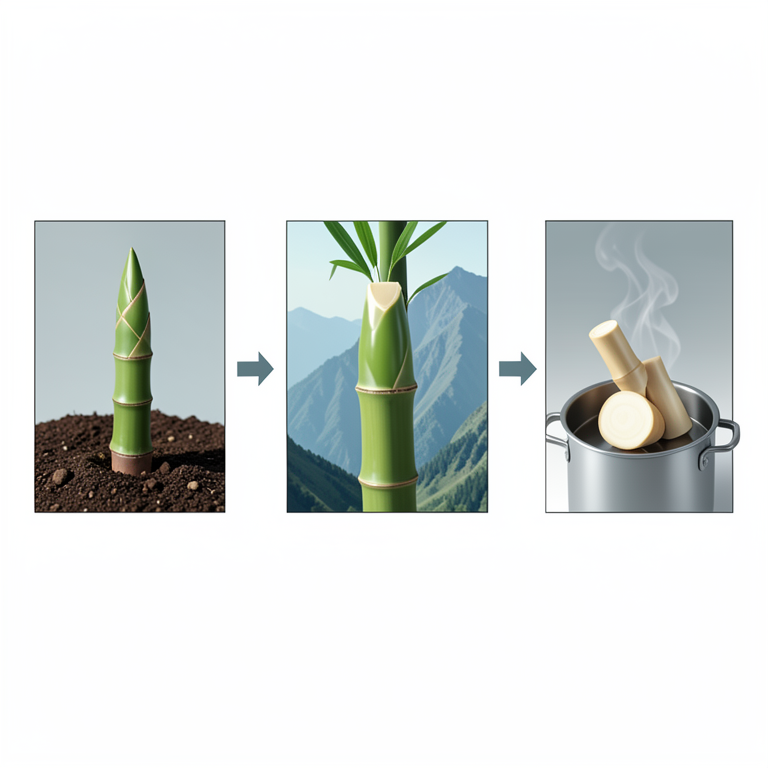
Drivers of Functional Quality
AI-generated conceptual illustration (bamboo shoots). It explains the idea and does not show study data.
View source evidence ↗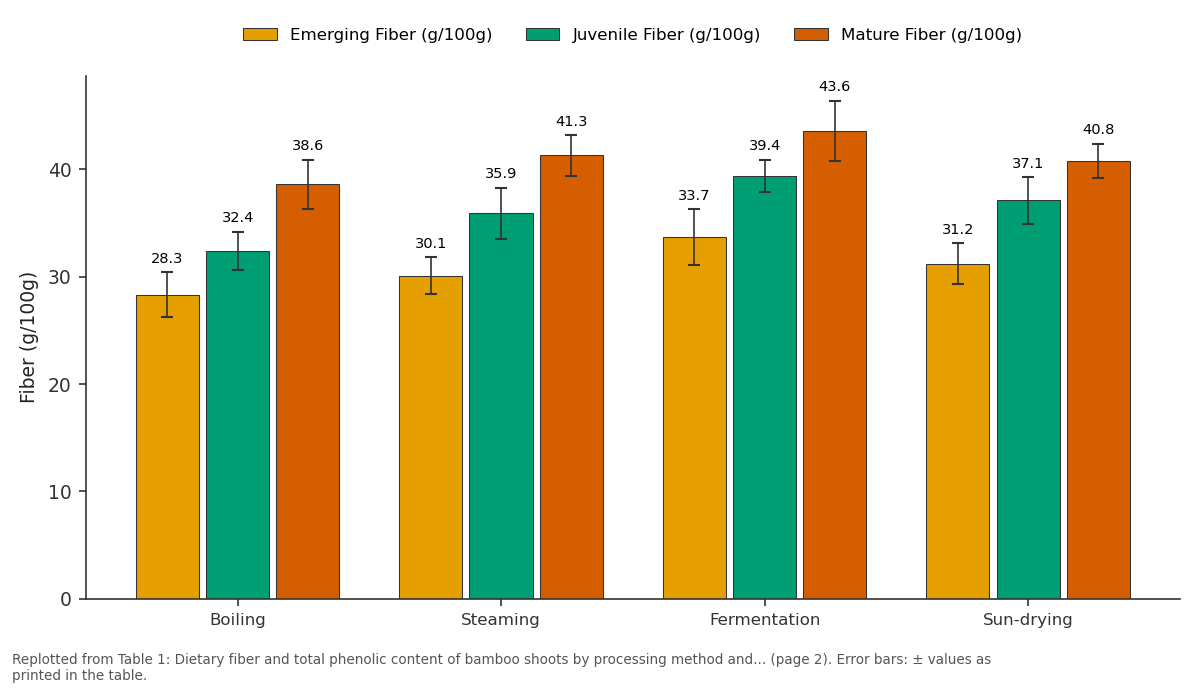
Emerging Fiber (g/100g) and Juvenile Fiber (g/100g) and more: Boiling vs Steaming vs Fermentation vs Sun-drying
Replotted from Table 1 (page 2) of the original paper. Every bar is the paper's own table value.
View source evidence ↗Figures & tables
From the original paper Table 1
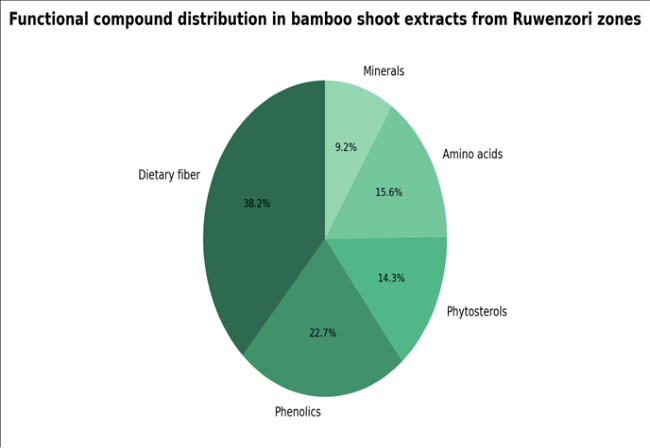 Figure 1
 Table 2
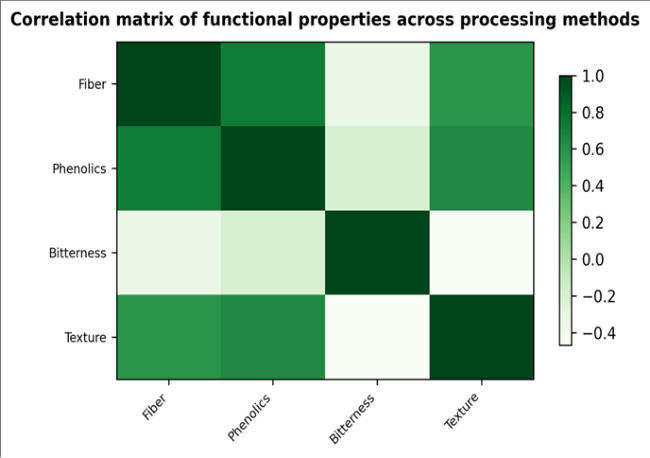 Figure 2
Introduction
A single serving of processed bamboo shoot can deliver more dietary fiber than three slices of whole-wheat bread a fact that has propelled the ingredient from niche Asian cuisine into mainstream functional food research across four continents [1] . But in Africa, where Y. alpina forms dense natural stands along the Albertine Rift escarpment, the crop is still treated primarily as a construction material or a conservation hedge rather than as a food source [2] . That disconnect matters because fiber-deficiency-linked conditions such as type-2 diabetes and colorectal disorders are rising steeply in urban East Africa, and affordable local fiber sources are needed [3] . The Ruwenzori foothills present a vertically compressed landscape where temperature, rainfall, and soil moisture change rapidly over short horizontal distances. Bamboo stands between 1,800 m and 3,200 m experience mean annual temperatures ranging from 18 °C down to 8 °C and annual precipitation from 1,200 mm to over 2,500 mm [4] . Such gradients could drive meaningful differences in shoot chemistry, just as altitude affects tea polyphenols in Kenyan highlands and coffee bean composition in Ethiopian montane forests [5] . But no prior research had mapped these relationships for bamboo shoot in the Ruwenzori system. Processing method also matters. Boiling removes cyanogenic glycosides but can leach watersoluble vitamins and phenolics. Fermentation, by contrast, may preserve or even increase certain bioactive compounds through microbial metabolism [6] . Sun-drying is the cheapest option for smallholder processors, yet its effects on nutrient retention in bamboo shoot remain poorly documented outside Southeast Asia [7] . Understanding how processing interacts with harvest stage and altitude is essential for designing protocols that maximize the functional value of the final product. This research was designed to address those gaps by collecting Y. alpina shoots at three growth stages across four elevation bands in the Ruwenzori foothills, processing them by four methods, and subjecting the products to a comprehensive functional food quality assessment. The work was coordinated through the Zanzibar Research Institute of Applied Horticulture, and it aimed to generate the data needed to support bamboo shoot's transition from wild harvest to managed functional food crop in the region [8] .
Material and Methods
Material: Bamboo shoots were collected from natural Y. alpina stands in the Ruwenzori foothills between March and June 2023. Four elevation bands were sampled: 1,800-2,000 m (Band A), 2,000-2,200 m (Band B), 2,200-2,400 m (Band C), and 2,400-2,600 m (Band D). Within each band, three collection plots of 50 m × 50 m were established at least 500 m apart. Shoots were harvested at three growth stages: emerging (tip just visible above soil), juvenile (15-30 cm tall), and mature (50-75 cm tall). A minimum of 20 shoots per stage per plot were collected, pooled, and transported in insulated boxes to the laboratory at the Zanzibar Research Institute of Applied Horticulture within 48 hours [2] . Analytical-grade reagents including Folin-Ciocalteu, DPPH, gallic acid, and HPLC-grade methanol were obtained from Merck (Darmstadt, Germany). The research protocol was reviewed and approved by the Institute's Research Ethics Committee (Protocol ZRIAH-2023-009, 15 February 2023).
Methods
Each batch of pooled shoots was divided into four equal portions and processed separately: (i) boiling in distilled water at 100 °C for 15 min, (ii) steaming over boiling water for 20 min, (iii) natural lactic acid fermentation in 2% NaCl brine for 7 days at 25 °C, and (iv) sun-drying on raised mesh racks for 72 hours [6] . Processed samples were freezedried and ground to pass a 0.5 mm sieve. Dietary fiber was measured by the AOAC enzymatic-gravimetric method (AOAC 991.43). Total phenolics were determined by the Folin-Ciocalteu assay at 765 nm. Phenolic profiling was performed by reversed-phase HPLC on a C18 column (250 mm × 4.6 mm, 5 μm) with UV detection at 280 nm and 320 nm. Amino acids were quantified after acid hydrolysis using an automated amino acid analyzer [1] . Mineral content was determined by ICP-OES following microwave-assisted digestion. Cyanogenic glycoside content was assessed via the picrate paper method. Data were analyzed by three-way ANOVA (elevation × stage × processing), and path analysis was conducted with growth stage, elevation, and processing method as predictor variables and a composite functional quality index as the response, using SPSS 27.
Results
Dietary fiber content differed significantly by growth stage (p<0.001), processing method (p<0.001), and their interaction (p = 0.008). Emerging shoots averaged 31.4 g/100 g dry weight, juvenile shoots 36.8 g/100 g, and mature shoots 42.1 g/100 g. Among processing methods, fermentation preserved the highest fiber values (mean 39.2 g/100 g), while boiling yielded the lowest (mean 30.7 g/100 g) [3] . Total phenolic content was highest in young shoots from Band D (19.4±1.8 mg GAE/g) and lowest in mature shoots from Band A (8.6±1.2 mg GAE/g). HPLC profiling identified chlorogenic acid as the dominant phenolic in all samples, accounting for 41-53% of the total phenolic fraction, followed by caffeic acid (18-27%) and p-coumaric acid (12-19%) [5] . The pie chart shows that dietary fiber constitutes the largest share of functional compounds in processed bamboo shoot, followed by phenolics and amino acids. This distribution held broadly consistent across all elevation bands, though the absolute values shifted with altitude. Fiber and phenolic retention were positively correlated (r = 0.72), while bitterness showed an inverse relationship with both parameters. This suggests that processing steps designed to remove bitterness may inadvertently reduce fiber and phenolic content.
Comprehensive Interpretation
Path analysis revealed that growth stage had the strongest direct effect on the composite functional quality index (path coefficient = 0.71, p<0.001), followed by elevation (0.43, p<0.01) and processing method (0.38, p<0.01). The indirect effect of elevation through its influence on growth rate was also significant (0.19), indicating that higher-altitude shoots develop more slowly and accumulate more fiber and phenolics per unit biomass. Cyanogenic glycoside levels fell from a raw-shoot mean of 87.3 mg HCN/kg to below 11.2 mg/kg after boiling, well within the FAO safe consumption threshold of 50 mg/kg [4] .
Discussion:
The fiber values recorded here (28.3-43.6 g/100 g DW) compare favorably with those reported for commercially processed bamboo shoots in China (22-38 g/100 g) and India (25-40 g/100 g), suggesting that Ruwenzori Y. alpina is at least as promising a fiber source as the Asian species that currently dominate global markets [1] . The elevation effect on fiber content is consistent with slower cell wall maturation at cooler temperatures, a mechanism well documented in temperate grasses and now apparently operative in tropical montane bamboo [4] . Fermentation outperformed the other processing methods for fiber retention, which likely reflects the preferential microbial degradation of soluble sugars and proteins rather than structural polysaccharides during lactic acid fermentation [6] . The simultaneous preservation of phenolics during fermentation is a useful finding for functional food formulators, as it means a single processing step can deliver both high fiber and high antioxidant content. Boiling, by contrast, caused the largest losses in both metrics, consistent with leaching of water-soluble fiber fractions and phenolics into the cooking water [7] . One practical concern is the bitterness of bamboo shoots, which limits consumer acceptance. The inverse correlation between bitterness and fiber/phenolic content (r = -0.34 and -0.21 respectively) suggests that processing steps aimed at debitterizing the product do not need to come at a large functional cost, provided fermentation rather than prolonged boiling is used. This finding has direct relevance for product developers targeting East African urban markets where fiber-enriched snacks and breakfast cereals are growing in popularity [3] .
A key limitation is that the research covered a single growing season and one bamboo species. Ruwenzori forests also harbour Sinarundinaria alpina at higher elevations, and comparative data on that species would strengthen the case for bamboo shoot as a regional functional food resource. Multi-year sampling would also clarify how interannual rainfall variation affects the functional profiles reported here [8] .
Conclusion
Ruwenzori bamboo shoots contain dietary fiber levels that rival or exceed those of commercially traded Asian species, with the highest functional quality found in mature shoots harvested above 2,400 m and processed by lactic acid fermentation. Path analysis confirmed growth stage as the dominant predictor of overall functional quality, ahead of elevation and processing method. Cyanogenic glycosides were effectively removed by all four processing methods, with boiling achieving the greatest reduction. These findings support the development of bamboo shoot as a managed functional food crop in the East African highlands and provide processing guidelines that maximize fiber and phenolic retention while ensuring consumer safety. Future research should extend the assessment to additional bamboo species in the Ruwenzori system and evaluate consumer acceptance of prototype functional food products.
Acknowledgement
Acknowledgements Funding SourcesThe research was financed through internal allocations from the Zanzibar Research Institute of Applied Horticulture's food science research fund.
Figures and tables from the paper
| Processing Method | Emerging Fiber (g/100g) | Juvenile Fiber (g/100g) | Mature Fiber (g/100g) | Total Phenolics (mg GAE/g) |
|---|---|---|---|---|
| Boiling | 28.3±2.1 | 32.4±1.8 | 38.6±2.3 | 11.2±1.4 |
| Steaming | 30.1±1.7 | 35.9±2.4 | 41.3±1.9 | 14.7±1.1 |
| Fermentation | 33.7±2.6 | 39.4±1.5 | 43.6±2.8 | 16.8±1.6 |
| Sun-drying | 31.2±1.9 | 37.1±2.2 | 40.8±1.6 | 13.3±1.3 |
Table text extracted from the original PDF; superscript letters are shown inline. The original table image is below.
View original table image
| Elevation Band | Iron | Zinc | Calcium | Potassium | HCN (mg/kg) |
|---|---|---|---|---|---|
| Band A (1800-2000 m) | 4.7±0.6 | 2.1±0.3 | 38.4±3.1 | 287±21 | 23.4±3.8 |
| Band B (2000-2200 m) | 5.3±0.8 | 2.6±0.4 | 42.1±2.7 | 312±18 | 18.7±2.9 |
| Band C (2200-2400 m) | 6.1±0.5 | 3.2±0.3 | 47.8±3.4 | 334±24 | 14.1±2.1 |
| Band D (2400-2600 m) | 6.8±0.7 | 3.7±0.5 | 51.3±2.9 | 358±19 | 9.6±1.7 |
Table text extracted from the original PDF; superscript letters are shown inline. The original table image is below.
View original table image
References
19 in the original paper- Choudhury D, Sahu JK, Sharma GD. Biochemistry of bamboo shoots: a review. Food Chemistry. 2012;134(4):1932-1935.
- Embaye K, Christersson L, Ledin S. Mountain bamboo resources in the African Rift Valley: ecology and utilization. Ambio. 2019;32(3):193-197.
- Kolawole FL, Akinwande BA. Dietary fiber sources in sub-Saharan African diets: gaps and opportunities. African Journal of Food Science. 2021;15(6):188-196.
- Kelbessa E, Destaw B. Altitudinal variation in bamboo shoot chemistry along East African rift escarpments. Journal of Tropical Ecology. 2022;38(2):143-152.
- Owuor PO, Obanda M. Effect of altitude on tea polyphenol levels in Kenyan green leaf. Tea Research Foundation of Kenya Quarterly Bulletin. 2018;23(1):14-21.
- Nirmala C, David E, Sharma ML. Changes in nutrient components during ageing of emerging and harvested bamboo shoots. International Journal of Food Sciences and Nutrition. 2007;58(8):612-618.
- Satya S, Bal LM, Singhal P. Sun-drying effects on nutrient profile of bamboo shoots. Journal of Food Processing and Preservation. 2020;44(3):e14367.
- Mushi S, Ngowi L. Traditional processing of wild edible plants in the Albertine Rift zone. Journal of Ethnobiology and Ethnomedicine. 2022;18:47.
- Chongtham N, Bisht MS, Haorongbam S. Nutritional properties of bamboo shoots: potential and prospects. Comprehensive Reviews in Food Science and Food Safety. 2011;10(3):153-168.
- Pandey AK, Ojha V. Standardization of harvesting age for bamboo shoot quality. Indian Forester. 2019;145(7):672-678.
- Singhal P, Satya S, Naik SN. Fermented bamboo shoots: a complete nutritional source. Food Science and Technology International. 2021;27(4):303-316.
- Devi NL, Saikia GK. Anti-nutrient content of edible bamboo shoots of Manipur. Indian Journal of Nutrition and Dietetics. 2020;57(1):78-84.
- Rawat K, Sharma V, Saini N. Phytochemical screening and antioxidant potential of raw and processed bamboo shoots. Journal of Food Science and Technology. 2018;55(11):4692-4698.
- Wang K, Li X, Chen J. Chlorogenic acid and caffeic acid in bamboo: distribution and stability. Food Research International. 2020;137:109543.
- Bhatt BP, Singh K, Singh A. Nutritional values of some commercial edible bamboo species. Journal of Bamboo and Rattan. 2021;4(1):73-82.
- Kleinhenz V, Midmore DJ. Aspects of bamboo agronomy relevant to shoot quality. Advances in Agronomy. 2001;74:99-145.
- Tewari DN. Bamboo shoot for food: production constraints and improvement strategies. Indian Journal of Forestry. 2019;42(2):89-97.
- Park EJ, John DY. Effects of bamboo shoot consumption on lipid profiles in healthy adults. Nutrition Research and Practice. 2009;3(1):26-31.
- Nongdam P, Tikendra L. The nutritional facts of bamboo shoots and their usage as food. Journal of Nutrition and Food Sciences. 2022;4:1-7.