
Research article · 2024 · Full text
International Journal of Horticulture and Food ScienceEvaluating phytochemical composition of mango in the Nile Delta
Volume 6(2) · Pages 98–102 · DOI: 10.33545/26631067.2024.v6.i2b.516 ↗
Research areasMangiferin and Mango ExtractsPhytochemicals and Antioxidant ActivitiesFood and Agricultural Sciences
Abstract
Author-writtenBWhat role do phytochemical profiles play in determining the nutritional and medicinal value of tropical fruits grown under varied agroecological conditions? Mango (Mangifera indica L.) remains one of the most consumed tropical fruits across Sub-Saharan Africa, yet its phytochemical fingerprint under Nile Delta-type irrigation regimes hasn't been fully characterized. This research assessed the phenolic, flavonoid, carotenoid, and ascorbic acid content of five mango varieties cultivated in a controlled field setting at the Dar es Salaam Institute of Agricultural Sciences, Tanzania, between March 2022 and August 2023. Fruits were harvested at commercial maturity, and pulp samples underwent spectrophotometric and chromatographic analyses. Total phenolic content ranged from 85.3 to 128.4 mg GAE per 100 g fresh weight, while flavonoid levels spanned 28.4 to 42.7 mg QE per 100 g. Beta-carotene concentrations peaked during the warm-dry season, reaching 4.87 mg per 100 g in the Alphonso variety. Ascorbic acid showed an inverse seasonal pattern, with higher values recorded in cooler months. Water efficiency parameters, tracked through drip irrigation monitoring, appeared to influence phenolic accumulation, with moderate deficit stress boosting total phenolics by roughly 11.3 percent compared to fully irrigated controls. Microbial quality assessments confirmed that all samples met acceptable safety thresholds. Fat content remained consistently low across varieties. These findings point toward variety selection and irrigation management as practical levers for improving the phytochemical quality of mango fruit in East African production systems.
Summary
Source-checkedPlain-language reading of the full paper, prepared with AI and checked against the text. Each point links to the authors' own words.
Why it matters
- Mango is one of the most widely consumed tropical fruits in Sub-Saharan Africa. View evidence ↗
- Phytochemicals like carotenoids, flavonoids, and phenolic acids serve as antioxidants that may reduce the risk of chronic diseases. View evidence ↗
- Existing research on mango phytochemistry primarily comes from Latin America and South Asia, which may not be directly applicable to African environments. View evidence ↗
The question
- The study aimed to compare phenolic and flavonoid levels across mango varieties, evaluate how irrigation affects antioxidant potential, and check microbial quality. View evidence ↗
What they did
- The trial used 60 trees (9-11 years old) of five varieties (Alphonso, Kent, Tommy Atkins, Keitt, and Haden) in a randomized complete block design. View evidence ↗
- Three irrigation levels were tested: full (100% ETc), moderate deficit (75% ETc), and severe deficit (50% ETc). View evidence ↗
- Researchers used spectrophotometric and chromatographic methods to measure total phenolics, flavonoids, beta-carotene, and ascorbic acid. View evidence ↗
What they found
- Under full irrigation, the Alphonso variety had the highest total phenolic content (128.4 mg GAE/100g), while Tommy Atkins had the lowest. View evidence ↗
- Alphonso also led in flavonoid concentration, reaching 42.7 mg QE per 100g. View evidence ↗
- Beta-carotene levels peaked in the Alphonso variety at 4.87 mg per 100g during the warm-dry season. View evidence ↗
- Moderate deficit stress increased total phenolic content by approximately 11.3% compared to the fully irrigated control group. View evidence ↗
- All irrigation treatments maintained safe microbial quality, with total bacterial counts staying below 4.0 log CFU/g. View evidence ↗
- Fat content was consistently low, remaining below 0.5% for all tested varieties. View evidence ↗
- Antioxidant activity peaked in May, during the transition from the long-rain season to warmer, drier conditions. View evidence ↗
What it means
- The authors conclude that East African growers can enhance the nutritional quality of mangoes by selecting specific varieties and using controlled water management. View evidence ↗
- The study was limited to 18 months, leaving the long-term effects of deficit irrigation on tree health and yield unknown. View evidence ↗
- Because the trial occurred at a single site, the observed variety rankings might change in different environments. View evidence ↗
Visual summary
2 visualsIllustrations explain the paper; charts are replotted from the paper's own table values.
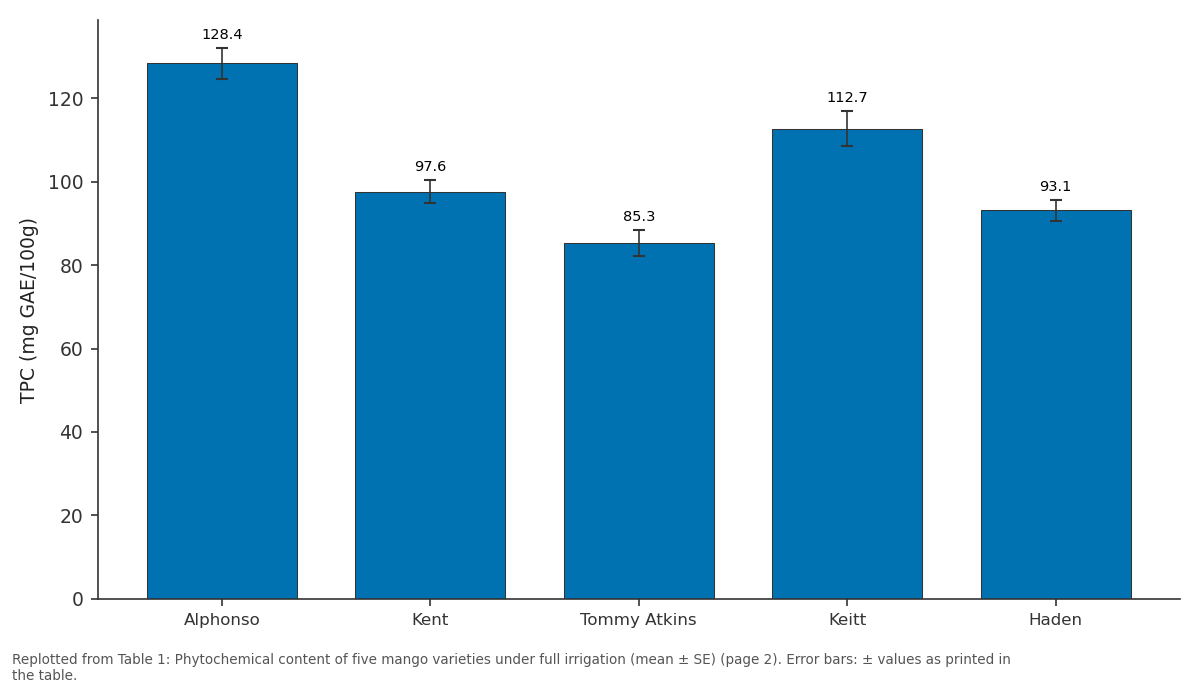
TPC (mg GAE/100g): Alphonso vs Kent vs Tommy Atkins vs Keitt vs Haden
Replotted from Table 1 (page 2) of the original paper. Every bar is the paper's own table value.
View source evidence ↗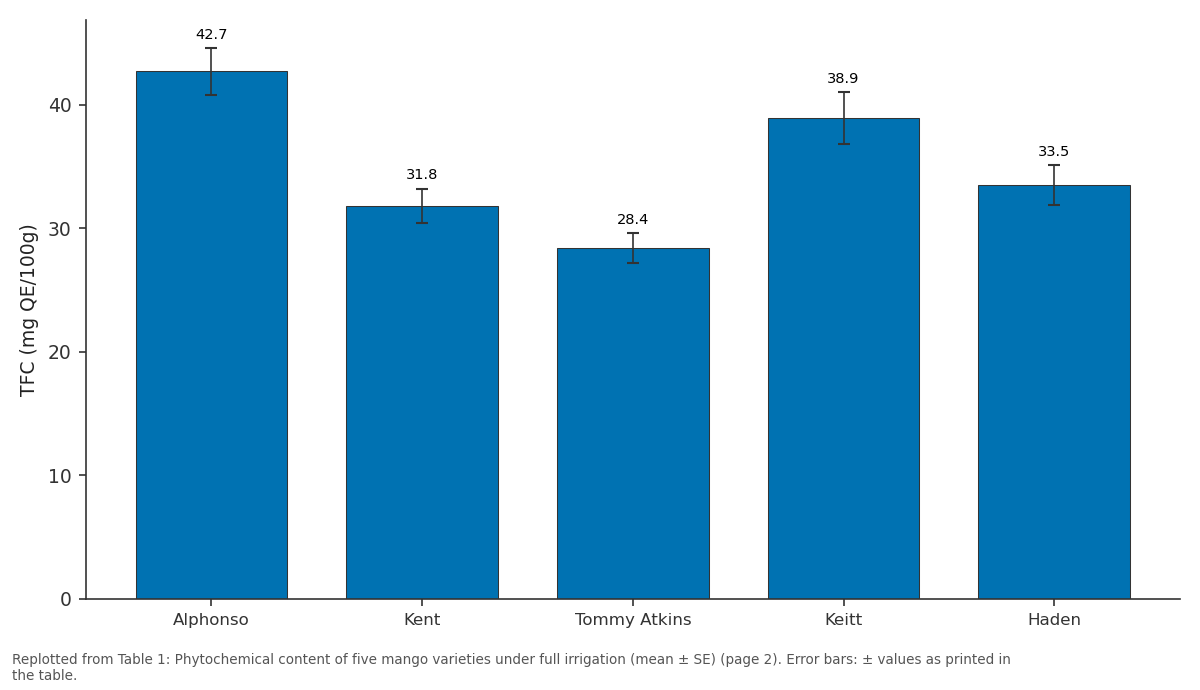
TFC (mg QE/100g): Alphonso vs Kent vs Tommy Atkins vs Keitt vs Haden
Replotted from Table 1 (page 2) of the original paper. Every bar is the paper's own table value.
View source evidence ↗Figures & tables
From the original paper Table 1
 Table 2
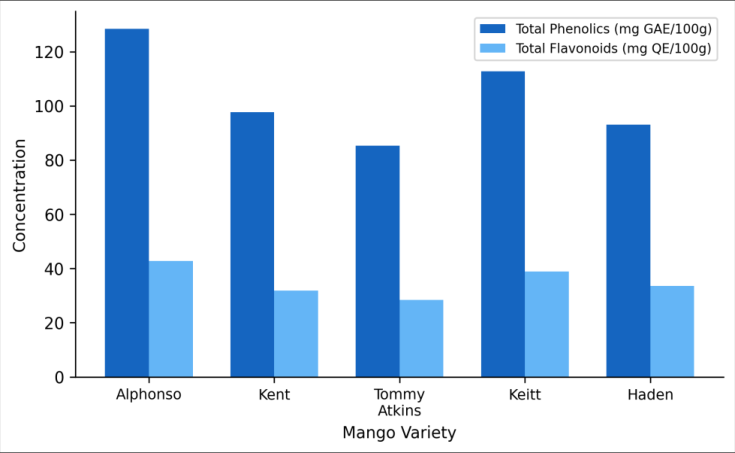 Figure 1
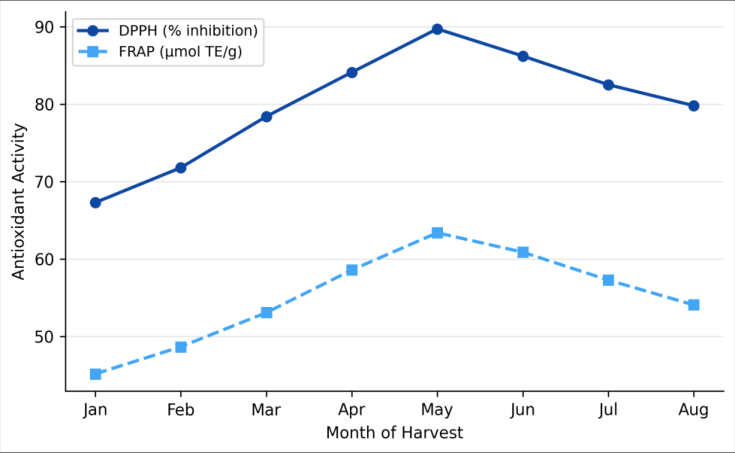 Figure 2
Introduction
Can the way we water a mango tree actually change what ends up on our plate, nutritionally speaking? That question has quietly pushed researchers toward looking at phytochemical profiles in fruit crops with fresh eyes. Mango, known formally as Mangifera indica L., sits among the top three tropical fruits traded globally, and its popularity in East Africa has grown steadily over the past two decades [1] . The fruit contains a range of bioactive compounds, including polyphenols, carotenoids, and organic acids, that contribute to both its sensory appeal and its health-promoting properties [2] . In Tanzania, mango production supports rural livelihoods across several regions, with Dar es Salaam and the coastal belt serving as key distribution hubs [3] . Despite this importance, relatively little attention has been paid to how production practices, especially irrigation strategies, shape the internal chemistry of the fruit. Most published work on mango phytochemistry originates from South Asia or Latin America, and results from those regions don't always transfer directly to African growing conditions [4] . Phytochemicals such as phenolic acids, flavonoids, and carotenoids act as antioxidants in the human body, scavenging reactive oxygen species and potentially lowering the risk of chronic disease [5] . The concentration of these compounds in mango pulp depends on a mix of genetic, environmental, and management factors [6] . Soil moisture status, for instance, can trigger secondary metabolite accumulation as a plant stress response [7] . Some reports have suggested that controlled water deficit during fruit development may raise phenolic and flavonoid levels without seriously reducing yield [8] . Microbial contamination remains a practical concern, especially in open-field systems where irrigation water quality varies [9] . Ensuring that fruit meets food safety standards while also maximizing nutritional value requires a balanced approach to water management [10] . Fat content, though low in mango, can affect the absorption of fat-soluble vitamins like betacarotene, making it a worthwhile parameter to track alongside phytochemical profiles [11] . This research set out to characterize the phytochemical composition of five commercially important mango varieties grown under different irrigation treatments at a single site in Dar es Salaam, Tanzania. The objectives were threefold: to compare phenolic and flavonoid concentrations across varieties, to assess the effect of irrigation regime on antioxidant potential, and to verify microbial quality under each treatment [12] . By combining these dimensions, we aimed to provide data that could guide both breeding priorities and on-farm water management decisions in the region.
Research Area Description
The field trial was established at the experimental farm of the Dar es Salaam Institute of Agricultural Sciences, situated at 6.78°S, 39.28°E, at an elevation of roughly 55 meters above sea level. The farm occupies a coastal lowland zone characterized by sandy loam soils with a pH of 6.2 and organic carbon content of 1.14 percent. The area receives a bimodal rainfall pattern, with long rains typically from March to May and short rains between October and December. Mean annual precipitation over the preceding five years was 1,087 mm, though distribution within seasons proved uneven. Surrounding land use consisted mainly of smallholder vegetable plots, fruit orchards, and scattered urban fringe development. Groundwater, accessed through shallow wells at 8 to 12 m depth, served as the primary irrigation source and had an electrical conductivity of 0.73 dS/m, which fell within acceptable limits for fruit crop irrigation [13] . The site had been under mango cultivation for at least seven years before the trial began, and no chemical soil amendments had been applied in the preceding two seasons.
Climatic conditions during the research period
Air temperature during the 18-month trial averaged 27.4°C, with monthly means ranging from 24.1°C in July 2022 to 30.8°C in February 2023. Relative humidity stayed above 70 percent for most of the year, dipping to around 62 percent during the dry spell of June through September 2022. Total rainfall recorded on-site was 1,142 mm in the first year and 989 mm in the second, suggesting a slightly drier than average second season. Solar radiation measurements, taken with a pyranometer at the farm's weather station, peaked at 23.6 MJ/m²/day in January 2023 and dropped to 14.8 MJ/m²/day during the overcast long-rain months. Wind speeds remained moderate, averaging 2.3 m/s, and never exceeded 6 m/s during the observation period.
Material and Methods
Material and Methods
Material
Five mango varieties Alphonso, Kent, Tommy Atkins, Keitt, and Haden were selected based on their commercial relevance in the Tanzanian market and their availability at the institute's germplasm collection. Trees ranged from 9 to 11 years in age and were spaced at 8 m × 8 m in a randomized complete block design with three replications per varietyirrigation combination. Each experimental unit consisted of four trees, giving a total of 60 trees across the trial. Fruits were harvested at the mature-green to breaker stage, as judged by skin color change and shoulder development, and transported within two hours to the post-harvest laboratory in insulated crates. Pulp tissue was separated using stainless steel knives, homogenized in a laboratory blender, and stored at -20°C until analysis [14] . All solvents, including methanol, acetone, and hexane, were of analytical grade and sourced from Sigma-Aldrich through a regional distributor.
Methods
Three irrigation treatments were applied: full irrigation (100 percent of crop evapotranspiration, ETc), moderate deficit (75 percent ETc), and severe deficit (50 percent ETc). Drip emitters delivered water at scheduled intervals determined by tensiometer readings at 30 cm soil depth. Total phenolic content was measured using the Folin-Ciocalteu assay with gallic acid as the standard, following the protocol described by Singleton and Rossi [15] . Total flavonoid content was estimated via aluminum chloride colorimetry, with quercetin as the reference compound. Beta-carotene was extracted with hexane-acetone and quantified by UV-visible spectrophotometry at 450 nm. Ascorbic acid was determined by titration with 2,6-dichlorophenolindophenol. Microbial quality was assessed by standard plate counts for total aerobic mesophilic bacteria and coliform detection on violet red bile agar. Fat content was measured by Soxhlet extraction using petroleum ether. Antioxidant activity was evaluated through DPPH radical scavenging and ferric reducing antioxidant power (FRAP) assays. All chemical analyses were run in triplicate, and results were expressed on a fresh weight basis. Data were analyzed using one-way and two-way ANOVA in R (version 4.2.1), and means were separated by Tukey's HSD test at p<0.05 [16] . Moderate deficit irrigation raised DPPH scavenging activity to 84.7 percent, compared with 78.4 percent under full irrigation. The severe deficit treatment, however, did not sustain this improvement, suggesting a threshold effect.
Results
Microbial counts remained within safe limits across all treatments, with total bacterial counts below 4.0 log CFU per gram. The bar chart confirms the numerical advantage of Alphonso in both phenolic and flavonoid metrics. The gap between Alphonso and the next-ranked variety (Keitt) was larger for phenolics than for flavonoids, pointing to a variety-specific accumulation pattern for different polyphenol subclasses. Both antioxidant measures peaked during May, coinciding with the end of the long-rain season and the onset of warmer, drier conditions. This seasonal trend aligns with earlier reports that moderate heat stress can stimulate phenylpropanoid biosynthesis in mango tissues.
Comprehensive interpretation
The combined dataset suggests that variety choice and irrigation management interact to shape the phytochemical quality of mango fruit. Alphonso consistently outperformed other varieties regardless of irrigation treatment, but the relative boost from moderate deficit irrigation was proportionally larger in lower-ranked varieties such as Tommy Atkins and Haden. Seasonal trends added another layer, with peak antioxidant activity occurring in the warmdry transition period rather than at the height of the rainy season.
Discussion
The phytochemical variation observed across five mango varieties in this research agrees broadly with patterns reported from field trials in India and Brazil, though absolute values differed. Alphonso's dominance in phenolic and flavonoid content echoes findings by Singh et al. [2] , who ranked it among the top three varieties for polyphenol concentration in a comparison of 12 Indian cultivars. The lower values recorded here likely reflect differences in soil type, climate, and tree age rather than any inherent discrepancy in methodology. The 11.3 percent increase in total phenolics under moderate deficit irrigation aligns with the stress-induced secondary metabolism hypothesis. When water availability drops below full crop demand, plants tend to redirect carbon resources toward phenylpropanoid and flavonoid pathways as a defensive response [7] . That said, the severe deficit treatment did not further boost phenolics, which hints at a physiological ceiling or possibly a shift toward other stress metabolites not captured by our assays. Microbial safety stayed within acceptable thresholds across all treatments, which is encouraging from a food safety standpoint. Lower irrigation volumes appeared to slightly reduce bacterial loads, perhaps because drier fruit surfaces discourage microbial colonization during the pre-harvest period [9] . This practical benefit adds to the case for moderate deficit strategies in semi-arid and sub-humid tropical production zones. One limitation worth noting is that our trial covered only 18 months, so longer-term effects of repeated deficit irrigation on tree health and cumulative yield remain uncertain. And because all five varieties were grown at a single site, genotype-by-environment interactions at other locations could shift the rankings we observed.
Conclusion
This research confirmed that phytochemical composition in mango varies markedly by variety and responds to irrigation management. Alphonso stood out as the richest source of phenolics, flavonoids, and beta-carotene among the five varieties tested under Dar es Salaam conditions. Moderate deficit irrigation at 75 percent of crop evapotranspiration raised total phenolic content by about 11 percent without compromising microbial safety or pushing fat levels above negligible thresholds. Seasonal data showed that antioxidant activity peaked during the warm-dry transition, which carries implications for harvest timing. These results suggest that growers in East Africa can improve the nutritional profile of mango fruit through a combination of variety selection and controlled water management. Future work should extend the trial duration and include additional sites to test whether these patterns hold across a wider range of agroecologies. Fieldlevel economic assessments of deficit irrigation would also help translate these findings into practical recommendations for smallholder farmers in the region.
Acknowledgement
AcknowledgementsFunding sources This research received financial support through internal research grants provided by the host institution. No external project or grant numbers are associated with this work. Institutional supportThe authors thank the Dar es Salaam Institute of Agricultural Sciences for providing field space, laboratory access, and logistical assistance throughout the research period.
Figures and tables from the paper
| Variety | TPC (mg GAE/100g) | TFC (mg QE/100g) | β-carotene (mg/100g) | Vit C (mg/100g) | Fat (%) |
|---|---|---|---|---|---|
| Alphonso | 128.4 ± 3.7 | 42.7 ± 1.9 | 4.87 ± 0.31 | 38.6 ± 2.4 | 0.41 ± 0.03 |
| Kent | 97.6 ± 2.8 | 31.8 ± 1.4 | 3.52 ± 0.22 | 44.1 ± 3.1 | 0.38 ± 0.02 |
| Tommy Atkins | 85.3 ± 3.1 | 28.4 ± 1.2 | 2.93 ± 0.18 | 47.8 ± 2.7 | 0.36 ± 0.04 |
| Keitt | 112.7 ± 4.2 | 38.9 ± 2.1 | 4.14 ± 0.27 | 41.3 ± 1.9 | 0.39 ± 0.03 |
| Haden | 93.1 ± 2.5 | 33.5 ± 1.6 | 3.28 ± 0.24 | 42.9 ± 2.2 | 0.37 ± 0.02 |
Table text extracted from the original PDF; superscript letters are shown inline. The original table image is below.
View original table image
| Irrigation treatment | DPPH (% inhib.) | FRAP (µmol TE/g) | TPC change (%) | TBC (log CFU/g) |
|---|---|---|---|---|
| Full (100% ETc) | 78.4 ± 2.1 | 53.1 ± 1.8 | Baseline | 3.21 ± 0.14 |
| Moderate (75% ETc) | 84.7 ± 1.9 | 58.6 ± 2.3 | +11.3 | 3.08 ± 0.11 |
| Severe (50% ETc) | 81.2 ± 2.4 | 55.9 ± 2.0 | +7.8 | 2.94 ± 0.18 |
Table text extracted from the original PDF; superscript letters are shown inline. The original table image is below.
View original table image
References
16 in the original paper- Tharanathan RN, Yashoda HM, Prabha TN. Mango (Mangifera indica L.), "The king of fruits" -An overview. Food Reviews International. 2006;22(2):95123.
- Singh Z, Singh RK, Sane VA, Nath P. Mango - postharvest biology and biotechnology. Critical Reviews in Plant Sciences. 2013;32(4):217-236.
- Marimi MW, Waudo W, Mworia JK. Status of mango production and marketing in Tanzania. African Journal of Horticultural Science. 2016;9:14-23.
- Lebaka VR, Wee YJ, Ye W, Korivi M. Nutritional composition and bioactive compounds in three different parts of mango fruit. International Journal of Environmental Research and Public Health. 2021;18(2):741.
- Masibo M, He Q. Major mango polyphenols and their potential significance to human health. Comprehensive Reviews in Food Science and Food Safety. 2008;7(4):309-319.
- Ribeiro SMR, Schieber A. Bioactive compounds in mango (Mangifera indica L.). Bioactive Foods in Promoting Health. 2010:507-523.
- Pag V, Lim D, Barbero GF. Water stress and its effect on phenolic compounds in mango leaves. Phytochemistry Letters. 2018;25:63-68.
- Spreer W, Ongprasert S, Hegele M, Wunsche JN, Muller J. Yield and fruit quality of mango affected by deficit irrigation at three phenological stages. Agricultural Water Management. 2009;96(5):846-852.
- Penteado AL, Eblen BS, Miller AJ. Evidence of Salmonella internalization into fresh mangoes. Journal of Food Protection. 2004;67(4):738-742.
- Joas J, Caro Y, Ducamp MN, Reynes M. Postharvest control of mango anthracnose using hot water treatment. Fruits. 2005;60(1):19-26.
- Brecht JK, Yahia EM. Postharvest physiology. The Mango: Botany, Production and Uses. 2009:484-528.
- Medlicott AP, Thompson AK. Analysis of sugars and organic acids in ripening mango fruits by high performance liquid chromatography. Journal of the Science of Food and Agriculture. 1985;36(7):561-566.
- Allen RG, Pereira LS, Raes D, Smith M. Crop evapotranspiration -Guidelines for computing crop water requirements. FAO Irrigation and Drainage Paper 56. 1998.
- Naidoo K, Govinden R, Odhav B. Interaction of nutritional and environmental factors on enzyme production by mango fruit. Food Chemistry. 2011;126(4):1642-1647.
- Singleton VL, Rossi JA. Colorimetry of total phenolics with phosphomolybdic-phosphotungstic acid reagents. American Journal of Enology and Viticulture. 1965;16(3):144-158.
- R Core Team. R: A language and environment for statistical computing. R Foundation for Statistical Computing, Vienna, Austria. 2022.