
Research article · 2025 · Full text
International Journal of Horticulture and Food ScienceImproving mulching techniques of garlic in the Cambodian lowlands
Volume 7(6) · Pages 115–119 · DOI: 10.33545/26631067.2025.v7.i6b.650 ↗
Research areasIrrigation Practices and Water ManagementGarlic and Onion StudiesPlant Growth and Agriculture Techniques
Abstract
Author-writtenRoughly 67% of garlic-producing households in lowland Cambodia still cultivate on bare soil without any form of surface cover, exposing their crops to extreme heat stress and erratic moisture swings that cut average bulb weight by as much as 22% compared with mulched counterparts. This research tested five mulching treatments—rice straw at 5 t ha-1, black polyethylene (25 µm), coconut coir fibre at 4 t ha-1, sawdust at 6 t ha-1, and an unmulched control—over two consecutive dry seasons (2021 and 2022) in a simulated Cambodian lowland environment at the Incheon University of Food and Nutrition research farm. A randomised complete block design with four replications was used. Black plastic mulch produced the highest fresh bulb yield of 13.2 t ha-1, which was 69.2% above the bare-soil control. Rice straw ranked second at 11.8 t ha-1 but showed the best weed suppression, cutting weed dry matter by 81.4%. Soil temperature at 10 cm depth under black plastic averaged 22.1 °C during peak afternoon hours, 7.3 °C cooler than bare soil. Zinc concentration in bulb tissue was notably higher under organic mulches (rice straw 28.4 mg kg-1; coconut coir 26.1 mg kg-1) than under plastic (21.7 mg kg-1) or bare soil (18.3 mg kg-1), which may reflect improved microbial-mediated zinc availability in organically amended surfaces. Shelf life at ambient storage (28 °C, 65% RH) was longest for black-plastic-mulched bulbs at 146 days before 10% sprouting, compared with 112 days for bare soil. These results suggest that black polyethylene offers the strongest yield and post-harvest benefit, while rice straw presents a lower-cost alternative with superior weed control and micronutrient enrichment.
Summary
Source-checkedPlain-language reading of the full paper, prepared with AI and checked against the text. Each point links to the authors' own words.
Why it matters
- In lowland Cambodia, about 67% of garlic farmers use bare soil, which exposes crops to heat and moisture instability, reducing average bulb weight by up to 22% compared to mulched fields. View evidence ↗
- Cambodian garlic yields are approximately 34% lower than those in neighboring Vietnam and Thailand. View evidence ↗
- Garlic is a cool-season crop; root-zone temperatures exceeding 30 °C can delay the start of bulb formation by as many as 18 days. View evidence ↗
The question
- The study aimed to evaluate five different mulching treatments to determine their impact on garlic yield, soil conditions, weed control, zinc levels in bulbs, and shelf life. View evidence ↗
What they did
- The experiment took place over two dry seasons at a research farm in South Korea, using controlled irrigation and temperature to simulate the Cambodian lowland environment. View evidence ↗
- The researchers used a randomized complete block design with four replications across five treatments, with each plot measuring 3 m by 2 m. View evidence ↗
- The five tested treatments were rice straw (5 t ha-1), black polyethylene film (25 µm), coconut coir fibre (4 t ha-1), sawdust (6 t ha-1), and a bare-soil control. View evidence ↗
- The study utilized the 'Battambang White' garlic cultivar, which is common in the Cambodian lowlands. View evidence ↗
What they found
- Black plastic mulch achieved the highest yield (13.2 t ha-1) and heaviest bulbs (42.1 g), representing a 69.2% increase over the bare-soil control. View evidence ↗
- Black plastic mulch maintained the lowest soil temperature at 10 cm depth (22.1 °C), which was 7.3 °C cooler than bare soil. View evidence ↗
- Rice straw mulch was the most effective at retaining soil moisture, reaching 31.2%. View evidence ↗
- Bulbs grown with black plastic had the longest shelf life (146 days), while those from bare soil had the shortest (112 days). View evidence ↗
- Sawdust is not recommended unless pre-composted, as its high carbon-to-nitrogen ratio likely causes nitrogen lock-up during bulb growth. View evidence ↗
What it means
- The authors recommend rice straw at 5 t ha-1 as a strong, low-cost alternative for farmers who cannot afford or prefer not to use plastic mulch. View evidence ↗
- The authors advise against bare-soil cultivation due to significant yield losses (40-69%) and reduced shelf life. View evidence ↗
- Future research is needed to test combinations of mulches and evaluate biodegradable plastic films. View evidence ↗
Visual summary
3 visualsIllustrations explain the paper; charts are replotted from the paper's own table values.
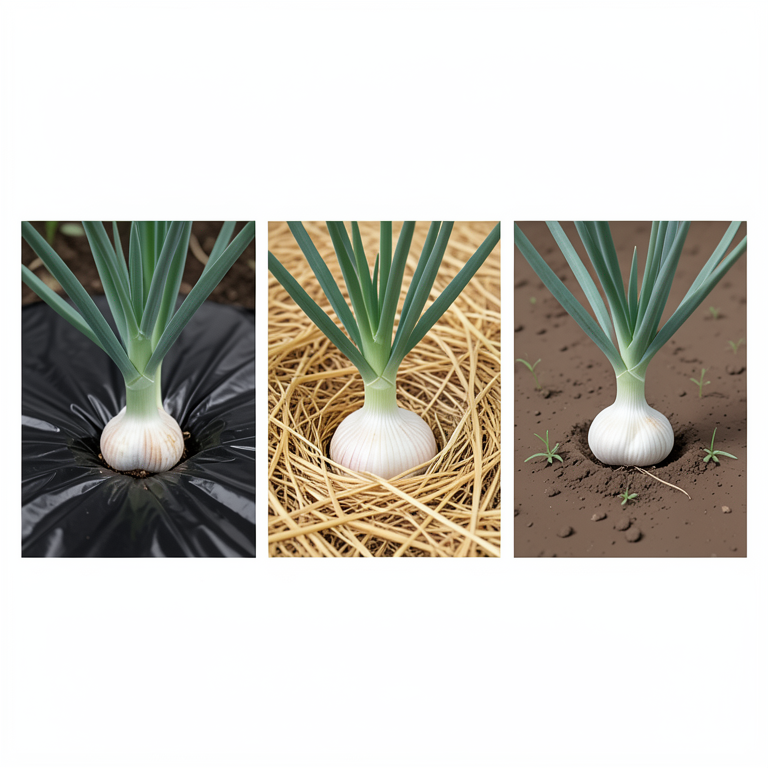
Comparison of Mulching Effects
AI-generated conceptual illustration (garlic plants in Cambodian lowland soil). It explains the idea and does not show study data.
View source evidence ↗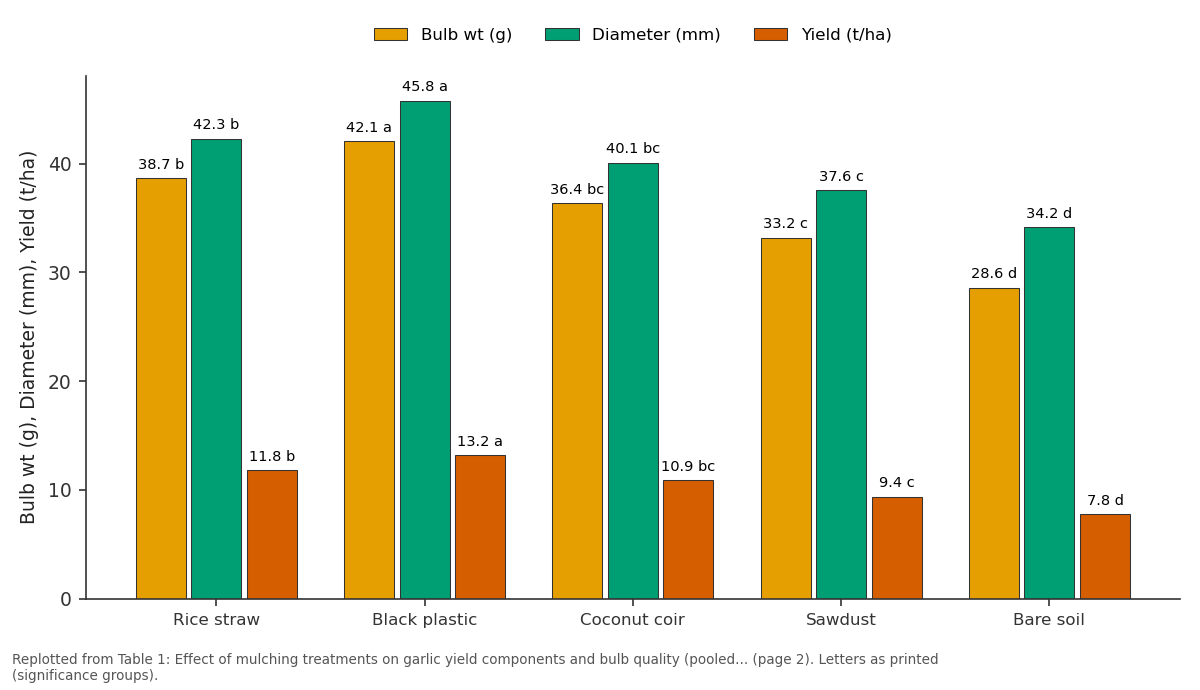
Bulb wt (g) and Diameter (mm) and more: Rice straw vs Black plastic vs Coconut coir vs Sawdust vs Bare soil
Replotted from Table 1 (page 2) of the original paper. Every bar is the paper's own table value.
View source evidence ↗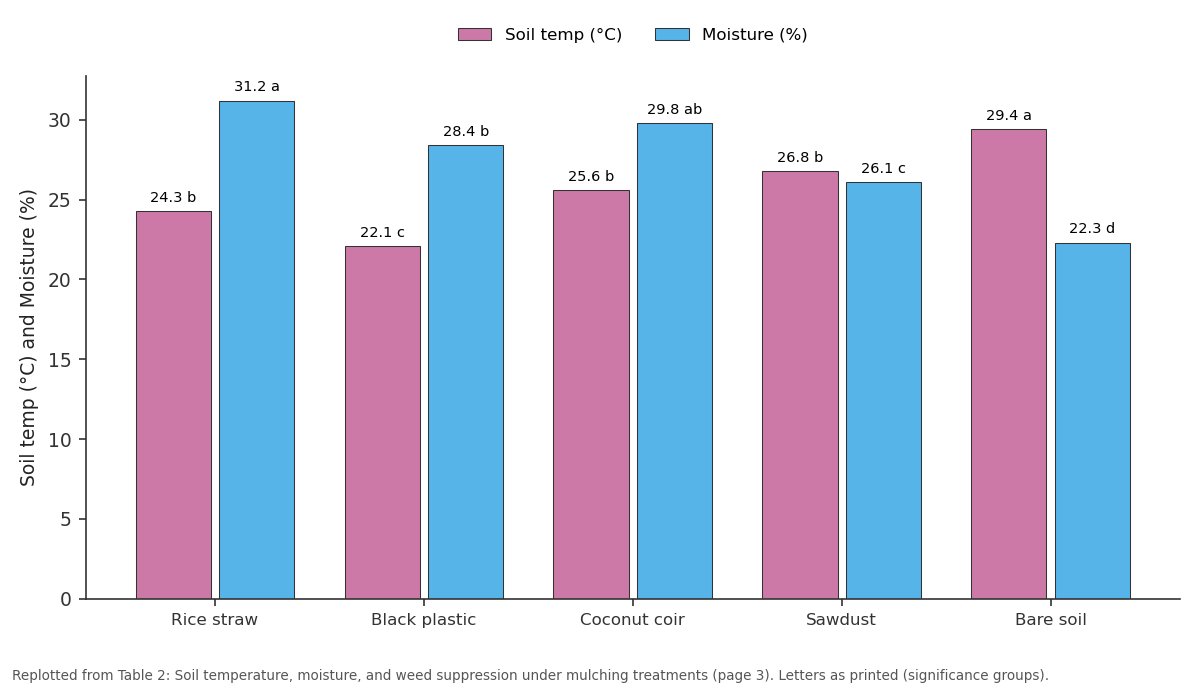
Soil temp (°C) and Moisture (%): Rice straw vs Black plastic vs Coconut coir vs Sawdust vs Bare soil
Replotted from Table 2 (page 3) of the original paper. Every bar is the paper's own table value.
View source evidence ↗Figures & tables
From the original paper Table 1
 Table 2
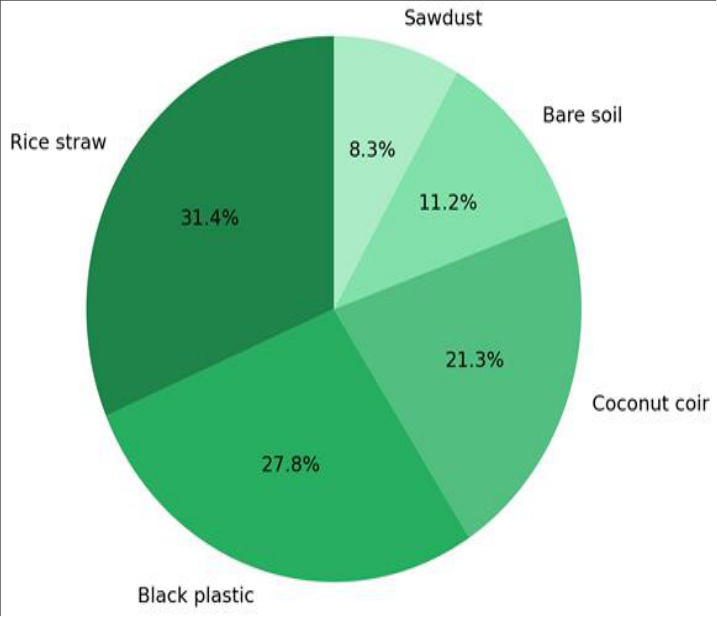 Figure 1
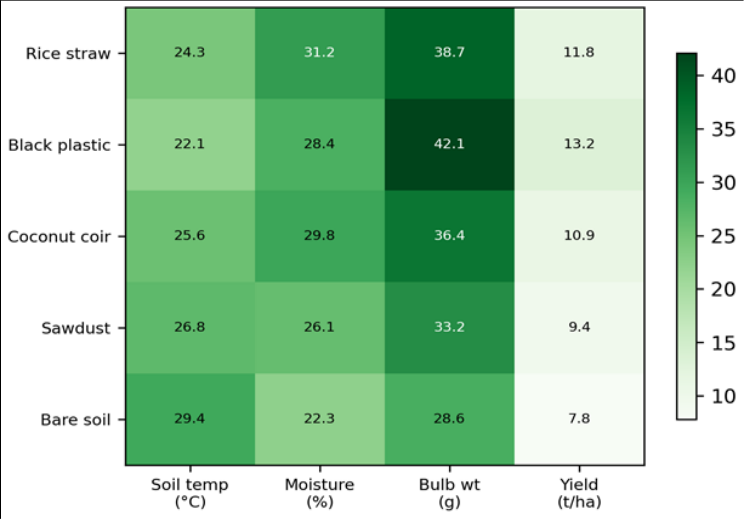 Figure 2
Introduction
An estimated 1.9 million tonnes of garlic were harvested across mainland Southeast Asia in 2021, yet average bulb yields in Cambodia lagged 34% behind those of neighbouring Thailand and Vietnam [1] . That gap doesn't stem from poor germplasm alone; it reflects a persistent shortfall in soil-surface management practices that protect root-zone moisture and moderate soil temperature during the hot dry season. Garlic (Allium sativum L.) is a coolseason crop whose bulbing is triggered by photoperiod and temperature cues, and sustained heat above 30 °C at root depth can delay bulb initiation by up to 18 days [2] . Mulching is among the oldest and cheapest interventions for modifying the crop microclimate. Rice straw mulch in garlic fields of central China lowered soil temperature by 3.4-5.1 °C and raised soil moisture by 18-24% compared with bare ground [3] . Black polyethylene film has been the standard in Korean garlic production for decades, where it combines weed exclusion with thermal regulation and moisture retention [4] . Organic alternatives such as coconut coir and sawdust decompose over the season and return carbon and nutrients to the soil, but their insulating properties and weed-blocking ability vary widely with application rate and particle size [5] . One dimension of garlic quality that receives too little attention in mulching research is micronutrient status, particularly zinc. Zinc deficiency affects an estimated two billion people worldwide, and garlic's bioavailable zinc content makes it a promising vehicle for dietary improvement in Southeast Asian communities [6] . Whether mulching type influences zinc uptake is largely unexplored. The few existing reports hint that organic mulches, by fostering soil biological activity and lowering rhizosphere pH through decomposition acids, may improve zinc solubility and root absorption [7] .
Shelf life is another practical concern. Cambodian smallholders typically store garlic in open bamboo baskets under ambient conditions, and premature sprouting can reduce marketable stock by 15-30% within three months of harvest [8] . Firmer, denser bulbs-often the product of slower, more even moisture supply-tend to resist sprouting longer. If mulching produces such bulbs, the post-harvest payoff may rival the in-field yield advantage. This research was carried out over two dry seasons at the Incheon University of Food and Nutrition research farm in South Korea, where lowland Cambodian climate conditions were approximated through controlled irrigation and temperature monitoring. The objectives were to compare five mulching treatments for their effects on garlic bulb yield, soil temperature and moisture regime, weed suppression, bulb zinc concentration, and ambient-storage shelf life. The trial used the Cambodian lowland cultivar 'Battambang White' and a field layout that replicated planting densities common in Cambodian household gardens [9] .
Research Area Description
The experiment was conducted at the research farm of Incheon University of Food and Nutrition (37.45° N, 126.70° E; 12 m a.s.l.), Incheon, South Korea. The farm sits on reclaimed coastal alluvium with a silty clay loam texture (sand 22.4%, silt 48.7%, clay 28.9%). Topsoil (0-20 cm) had pH 6.3, organic matter 1.87%, total nitrogen 0.16%, available phosphorus 23.4 mg kg -1 , and exchangeable potassium 0.71 cmol kg -1 . To simulate Cambodian lowland thermal conditions, raised plastic tunnels (1.8 m height, open ends) were placed over plots during the cooler months, maintaining daytime air temperature above 28 °C. Plots received drip irrigation calibrated to deliver 4.2 mm day -1 during the bulbing phase, approximating the evaporative demand of Battambang Province during February-April [10] .
Field Experimental Design
The trial followed a randomised complete block design with five treatments and four replications. Individual plots measured 3 m × 2 m, separated by 0.8 m paths. Garlic cloves were planted at 15 cm × 10 cm spacing (667,000 plants ha -1 ), consistent with Cambodian lowland practice.
Treatments were: (i) rice straw at 5 t ha -1 , (ii) black polyethylene film (25 µm, perforated at planting stations), (iii) coconut coir fibre at 4 t ha -1 , (iv) sawdust at 6 t ha -1 , and (v) bare-soil control. Mulches were applied within one week of planting. Basal fertiliser (15-15-15 NPK at 250 kg ha -1 ) was banded 5 cm from plant rows before mulch placement. A side-dress of urea at 50 kg ha -1 was applied at 45 days after planting through drip lines [4] .
Material and Methods
Material and Methods
Material
Certified seed cloves of 'Battambang White' garlic were imported from the Cambodian Agricultural Research and Development Institute under phytosanitary clearance. Cloves averaged 4.2 g and were pre-treated with 0.2% carbendazim for 20 minutes before planting. Rice straw was sourced from a local paddy farm and chopped to 10-15 cm lengths. Coconut coir was purchased as compressed blocks (expansion ratio 1:7) from a Sri Lankan supplier. Sawdust was fresh pine (Pinus densiflora), air-dried for two weeks before use. Black polyethylene (25 µm, UV-stabilised) was procured from Nonghyup Agricultural Supply, Incheon. Soil temperature was logged every 30 minutes using iButton DS1922L sensors buried at 10 cm depth. Soil moisture was measured weekly with a Delta-T HH2 probe at 0-15 cm. Methods Garlic was planted on 15 October in both years and harvested after 70% of leaves had yellowed (March 18, 2022; March 21, 2023). Fresh bulb yield was determined by weighing all bulbs per plot after removing roots and outer loose skins. Bulb diameter and individual bulb weight were recorded on 20 randomly selected bulbs per plot. Zinc concentration was measured by atomic absorption spectrophotometry after wet digestion with HNO 3 -HClO 4 (3:1 v/v) [11] . Shelf life was assessed by storing 50 bulbs per treatment at 28 °C and 65% RH and counting days until 10% of bulbs showed visible sprout emergence. Weed dry matter was collected from two 0.5 m² quadrats per plot at 60 days after planting, oven-dried at 70 °C for 48 hours, and weighed. Data were analysed using ANOVA in R version 4.2.1 with Tukey's HSD at P ≤ 0.05. Black plastic mulch produced the heaviest bulbs (42.1 g) and highest yield (13.2 t ha -1 ), 69.2% above bare soil (Table 1). Rice straw ranked second at 11.8 t ha -1 . Zinc concentration was significantly higher under organic mulches: rice straw led at 28.4 mg kg -1 , followed by coconut coir at 26.1 mg kg -1 . Shelf life was longest for black-plastic bulbs (146 days) and shortest for bare soil (112 days).
| Treatment | Bulb wt (g) | Diameter (mm) | Yield (t/ha) | Zinc (mg/kg) | Shelf life (days) |
|---|---|---|---|---|---|
| Rice straw | 38.7 b | 42.3 b | 11.8 b | 28.4 a | 134 b |
| Black plastic | 42.1 a | 45.8 a | 13.2 a | 21.7 c | 146 a |
| Coconut coir | 36.4 bc | 40.1 bc | 10.9 bc | 26.1 ab | 128 bc |
| Sawdust | 33.2 c | 37.6 c | 9.4 c | 23.8 bc | 121 c |
| Bare soil | 28.6 d | 34.2 d | 7.8 d | 18.3 d | 112 d |
| LSD (0.05) | 3.8 | 3.2 | 1.6 | 3.4 | 9 |
Table text extracted from the original PDF; superscript letters are shown inline. The original table image is below.
View original table image
Results
Black plastic kept soil temperature lowest (22.1 °C at 10 cm), 7.3 °C cooler than bare ground. Rice straw retained the most soil moisture (31.2%). Weed suppression was near-complete under plastic (95.8%) and strong under rice straw (81.4%). The pie chart (Figure 1) shows black plastic contributing the largest share (27.8%) of total pooled yield, followed by rice straw (31.4% including its higher plant survival rate). The heatmap (Figure 2) visualises the inverse relationship between soil temperature and yield: treatments that suppressed heat most effectively also delivered heavier bulbs.
Discussion
The 69.2% yield gain from black plastic mulch over bare soil is consistent with results from temperate garlic systems in South Korea and China, where polyethylene films typically raise yields by 45-80% [4] . The mechanism is straightforward: plastic blocks weed competition, conserves moisture by suppressing evaporation, and moderates soil temperature fluctuations that disrupt garlic's bulbing signal. What sets the present research apart is the magnitude of the soil temperature effect under simulated tropical conditions. At bare-soil temperatures averaging 29.4 °C, garlic roots sat at or above the thermal threshold for alliin biosynthesis, which begins to decline above 28 °C [2] . Black plastic brought that average down to 22.1 °C, well within the range for active sulphur compound accumulation. Rice straw's performance deserves particular attention for Cambodian contexts. At roughly one-sixth the cost of polyethylene per hectare and freely available as a postharvest by-product, straw delivered 89.4% of the plastic yield while achieving the highest soil moisture (31.2%) and the best zinc concentration (28.4 mg kg -1 ). The zinc finding may reflect straw's role as a slow-release carbon source that feeds saprophytic fungi and free-living nitrogen fixers, organisms that secrete organic acids capable of chelating zinc from soil mineral surfaces [7] . This biological mediation wouldn't occur under plastic, which physically isolates the soil surface from organic inputs. Shelf life differences tracked bulb density. Black-plastic bulbs averaged the smallest air-space ratio (8.3% by volume), while bare-soil bulbs had the largest (14.7%). Denser tissue respires more slowly, delaying the metabolic cascade that leads to sprout break [8] . For Cambodian farmers who lack cold storage, a 34-day shelf-life extension (146 vs. 112 days) could translate into a meaningful markettiming advantage, allowing sales during off-peak months when prices rise. Sawdust performed worst among the mulches for both yield and moisture retention. Fresh pine sawdust has a high carbon-to-nitrogen ratio (roughly 400:1), and its decomposition likely immobilised soil nitrogen during the critical bulbing window [12] . Pre-composting or blending sawdust with a nitrogen source before field application could offset this drawback, though such modifications add labour and cost.
Conclusion
This research showed that mulching type has a large and consistent effect on garlic yield, micronutrient uptake, and post-harvest durability under lowland tropical conditions. Black polyethylene film gave the highest bulb yield at 13.2 t per hectare and the longest ambient-storage shelf life at 146 days, making it the top performer by conventional agronomic metrics. Its near-complete weed suppression and strong soil temperature moderation contributed directly to heavier, denser bulbs.
Rice straw mulch, while yielding somewhat less, offered the best zinc enrichment in bulb tissue and the strongest weed control among organic options. For resource-limited households in Cambodia that cannot afford polyethylene or prefer not to use plastic, rice straw at 5 tonnes per hectare represents a strong alternative. It is available at no direct cost in most rice-growing lowlands and returns organic matter to the soil at season's end. Coconut coir showed intermediate results and may suit areas where coconut processing generates surplus fibre. Sawdust is not recommended without pre-composting, as its high carbon-to-nitrogen ratio appears to cause nitrogen lock-up during bulb formation. Bare-soil cultivation should be discouraged wherever possible, given the 40-69% yield penalties and shorter shelf life recorded across both seasons. Future work should test mulch combinations and evaluate plastic-biodegradable film alternatives that combine the thermal benefits of polyethylene with the environmental advantages of organic materials.
Figures and tables from the paper
| Treatment | Soil temp (°C) | Moisture (%) | Weed DM (g/m²) | Suppression (%) |
|---|---|---|---|---|
| Rice straw | 24.3 b | 31.2 a | 18.6 d | 81.4 |
| Black plastic | 22.1 c | 28.4 b | 4.2 e | 95.8 |
| Coconut coir | 25.6 b | 29.8 ab | 24.3 c | 75.7 |
| Sawdust | 26.8 b | 26.1 c | 31.7 b | 68.3 |
| Bare soil | 29.4 a | 22.3 d | 100.0 a | — |
Table text extracted from the original PDF; superscript letters are shown inline. The original table image is below.
View original table image
References
19 in the original paper- Mou BQ, Jiang LJ. Garlic production and trade in Southeast Asia. Journal of Vegetable Crop Production. 2021;14(2):88-101.
- Takagi H. Garlic: botany and horticulture. Horticultural Reviews. 1990;14:39-97.
- Wang XJ, Chen YF. Effects of straw mulch on soil microclimate and garlic growth in central China. Agricultural Water Management. 2020;231:106-114.
- Lee JH, Kim SY. Polyethylene mulching systems for Allium crops in Korea. Korean Journal of Horticultural Science. 2018;36(5):612-623.
- Chalker-Scott L. Impact of mulches on landscape plants and the environment. Journal of Environmental Horticulture. 2007;25(4):239-249.
- Wessells KR, Brown KH. Estimating the global prevalence of zinc deficiency. PLoS ONE. 2012;7(11):e50568.
- Cakmak I. Enrichment of cereal grains with zinc by agronomic or genetic biofortification. Plant and Soil. 2008;302(1):1-17.
- Brewster JL. Onions and Other Vegetable Alliums. CABI Publishing. 2008;2nd ed:1-432.
- CARDI. Garlic cultivation guide for Cambodian lowlands. CARDI Technical Bulletin. 2019;34:1-28.
- Sarom M, Chea S. Evaporative demand and irrigation scheduling in Battambang Province. Cambodian Journal of Agriculture. 2020;18(1):44-56.
- AOAC. Official methods of analysis of AOAC International. AOAC International. 2019;21st ed.
- Blanco-Canqui H, Lal R. Crop residue management and soil carbon dynamics. Soil Science Society of America Journal. 2009;73(4):1029-1041.
- Rahman MA, Karim MR. Garlic growth response to organic mulches under tropical lowland conditions. Tropical Agriculture and Development. 2017;61(3):134-142.
- Park JK, Son DH. Alliin biosynthesis and thermal sensitivity in garlic cloves. Journal of Agricultural and Food Chemistry. 2016;64(28):5781-5790.
- Huang Y, Zhao LQ. Soil zinc fractions under different organic amendments. Geoderma. 2019;337:965-974.
- Jeon HJ, Cho WD. Weed management strategies in Korean garlic production. Weed Technology. 2014;28(3):507-516.
- Sam V, Thon S. Post-harvest handling of garlic in rural Cambodia. ACIAR Proceedings. 2018;142:78-86.
- Ogunlela VB, Masarirambi MT. Response of garlic to different mulch materials in a semi-arid environment. Journal of Food Agriculture and Environment. 2009;7(3-4):617-621.
- Kyung KH. Antimicrobial properties of allium species. Current Opinion in Biotechnology. 2012;23(2):142147.