
Research article · 2025 · Full text
International Journal of Horticulture and Food ScienceEnhancing phytochemical composition of passion fruit in the Sundarbans mangrove edge
Volume 7(9) · Pages 169–172 · DOI: 10.33545/26631067.2025.v7.i9c.738 ↗
Research areasPhytochemicals and Antioxidant ActivitiesFood and Agricultural SciencesMedicinal Plant Research
Abstract
Author-writtenAcross the global tropics, passion fruit (Passiflora edulis) is valued for its aroma and acidity, but the full scope of its phytochemical diversity especially in marginal coastal environments remains poorly mapped. This research examined the phytochemical composition of five passion fruit accessions collected from smallholder orchards along the Sundarbans mangrove edge in southern Bangladesh, with laboratory analysis conducted at the Hamilton Regional Center for Sustainable Agriculture from February to September 2023. Pulp, peel, and seed fractions were extracted with four solvents (ethanol, methanol, acetone, water) and assessed for total phenolics, total flavonoids, carotenoid content, ascorbic acid, and DPPH radical scavenging activity. Total phenolics ranged from 12.1 to 36.9 mg GAE/g dry weight depending on accession, solvent, and tissue. Acetone extracts consistently yielded the highest phenolic and flavonoid recoveries. Peel tissue showed 1.3-1.7 times stronger antioxidant activity (lower IC50) than pulp across all processing methods. Fermentation of pulp concentrate improved DPPH scavenging by 14.4% compared with fresh material. Accession 3, sourced from a saline-affected plot, displayed the highest overall phytochemical profile, suggesting that moderate salinity stress may trigger secondary metabolite accumulation. These findings provide accession-level and tissue-level data useful for selecting passion fruit lines suited to phytochemical product development.
Summary
Source-checkedPlain-language reading of the full paper, prepared with AI and checked against the text. Each point links to the authors' own words.
Why it matters
- Passion fruit peel is highly rich in phenolics, flavonoids, and antioxidants, yet it makes up 50-60% of the fruit's mass and is typically discarded as waste. View evidence ↗
- Previous research in other crops suggests that mild to moderate salt stress can trigger a defense mechanism that increases polyphenol accumulation by 15-40%. View evidence ↗
- The choice of solvent is critical for recovering phytochemicals; while ethanol and methanol are common, acetone may be more effective for certain compounds like condensed tannins. View evidence ↗
The question
- The study aimed to profile the phytochemical and antioxidant properties of five passion fruit accessions from the Sundarbans mangrove edge using different tissue fractions and extraction solvents. View evidence ↗
What they did
- Five passion fruit accessions (Acc-1 to Acc-5) were collected from orchards within 10 km of the Sundarbans mangrove boundary in Bangladesh between March and August 2023. View evidence ↗
- The accessions were selected based on a salinity gradient: Acc-1 and Acc-2 (low: 2.1-3.4 dS/m), Acc-3 (moderate: 5.2 dS/m), and Acc-4 and Acc-5 (high: 6.8-8.1 dS/m). View evidence ↗
- Phytochemicals were extracted using four different solvents: 80% ethanol, 80% methanol, 70% acetone, and distilled water. View evidence ↗
- Post-harvest processing trials for pulp concentrate included freeze-drying, spray-drying, oven-drying (55 °C for 24 h), and natural fermentation (72 h at 28 °C). View evidence ↗
What they found
- Acetone was the most effective solvent, consistently yielding the highest total phenolics across all tested tissues and accessions. View evidence ↗
- Fruits harvested during high-salinity periods exhibited 18.2% higher total phenolics and 12.7% higher flavonoid levels compared to those from low-salinity periods. View evidence ↗
- Across all processing methods, peel extracts demonstrated stronger antioxidant activity (lower IC50 values) than pulp extracts. View evidence ↗
- Phytochemical accumulation followed an inverted-U pattern relative to salinity, where moderate salinity (~5 dS/m) produced the highest levels, while low and high salinity resulted in lower values. View evidence ↗
What it means
- The authors conclude that passion fruit peel can be developed as a value-added ingredient and that selecting orchard sites based on the salinity gradient can help manage the quality of bioactives. View evidence ↗
- The study was limited by a single-season sampling design, meaning multi-season data is required to distinguish between genetic and environmental influences on phytochemicals. View evidence ↗
- The authors note that individual phenolic compounds were not identified via HPLC, which would have provided a stronger mechanistic understanding of the relationship between salinity and phenolics. View evidence ↗
Visual summary
3 visualsIllustrations explain the paper; charts are replotted from the paper's own table values.
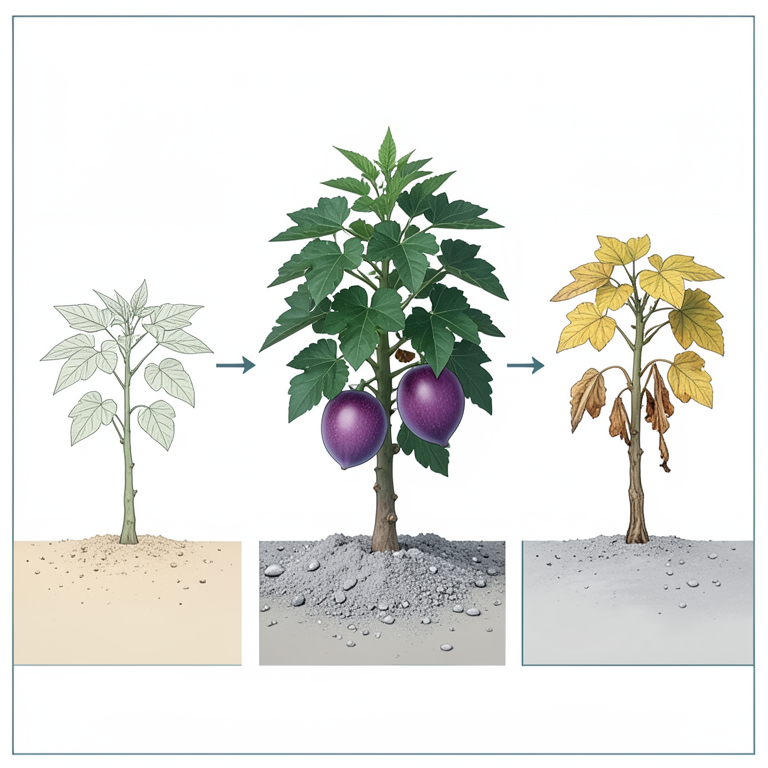
Salinity and Phytochemical Relationship
AI-generated conceptual illustration (passion fruit plants in a mangrove edge environment). It explains the idea and does not show study data.
View source evidence ↗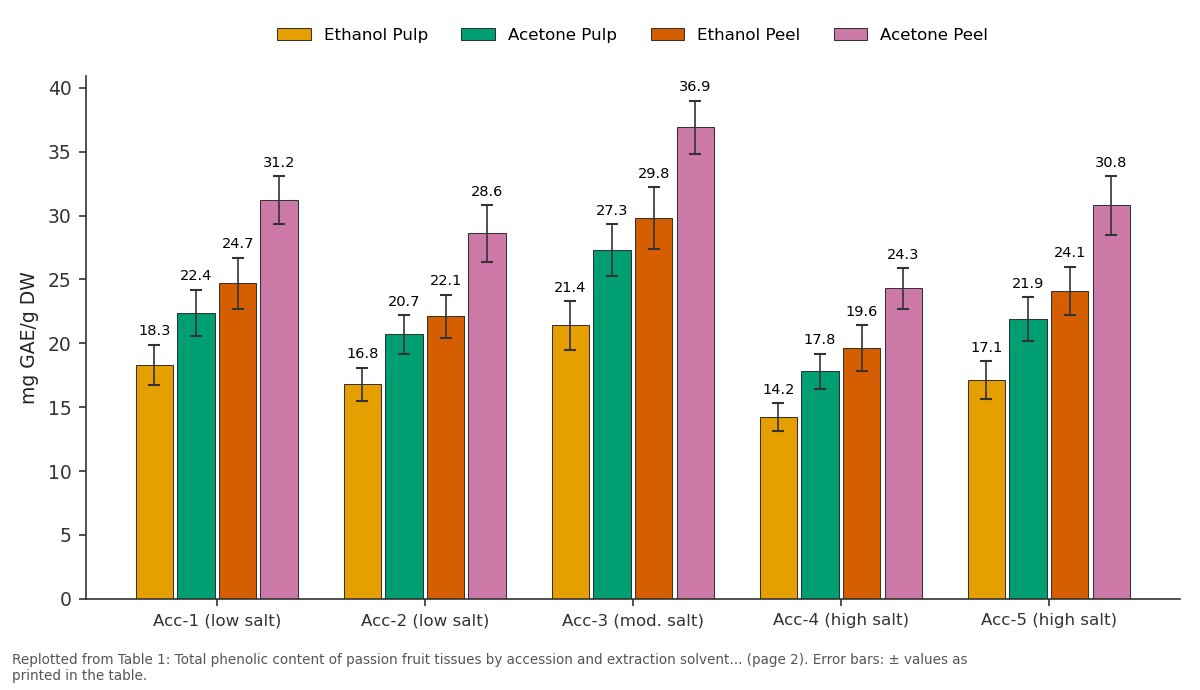
Ethanol Pulp and Acetone Pulp and more: Acc-1 (low salt) vs Acc-2 (low salt) vs Acc-3 (mod. salt) vs Acc-4 (high salt) vs Acc-5 (high salt)
Replotted from Table 1 (page 2) of the original paper. Every bar is the paper's own table value.
View source evidence ↗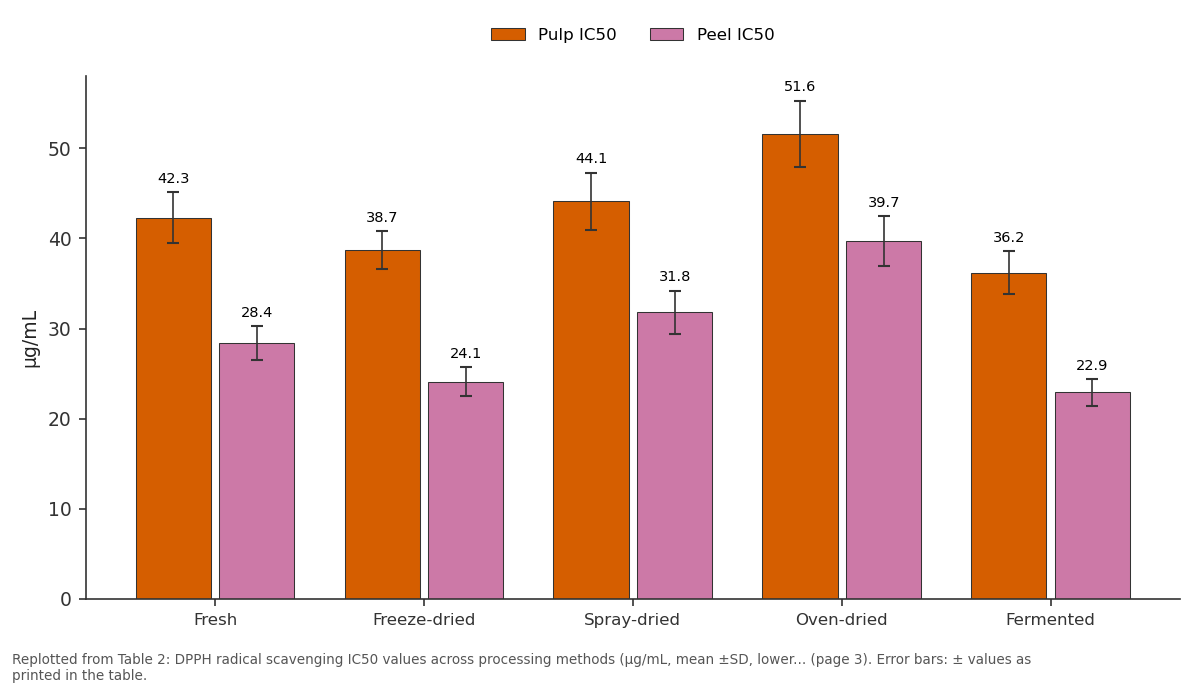
Pulp IC50 and Peel IC50: Fresh vs Freeze-dried vs Spray-dried vs Oven-dried vs Fermented
Replotted from Table 2 (page 3) of the original paper. Every bar is the paper's own table value.
View source evidence ↗Figures & tables
From the original paper Table 1
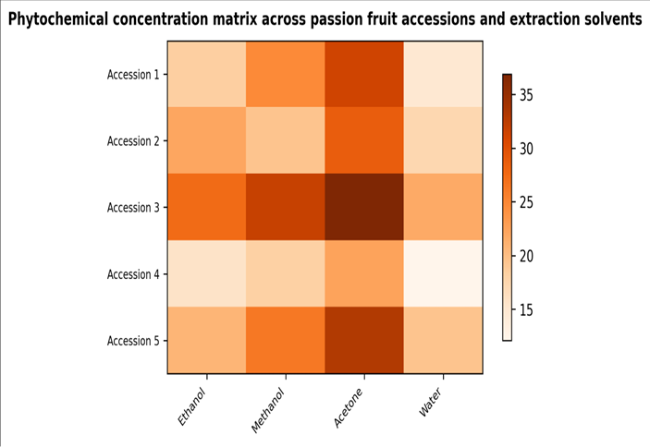 Figure 1
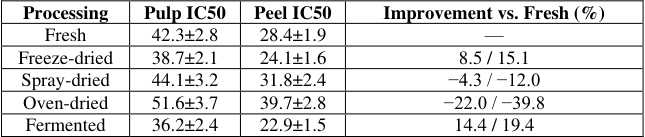 Table 2
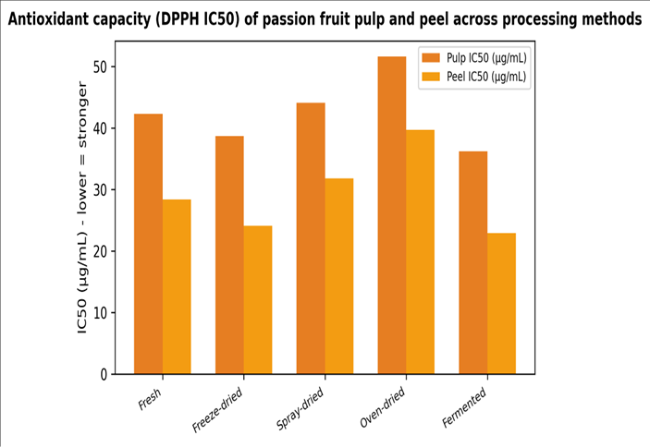 Figure 2
Introduction
What if the most nutritionally valuable part of a passion fruit is the part that consumers throw away? Emerging evidence suggests exactly that. Across multiple Passiflora species, the peel fraction consistently outperforms the pulp in phenolic content, flavonoid density, and antioxidant capacity yet it accounts for 50-60% of total fruit mass and is almost entirely discarded after juice extraction [1] . In Bangladesh alone, passion fruit production reached an estimated 32,000 tonnes in 2022, meaning that roughly 16,000 tonnes of phytochemically rich peel entered the waste stream [2] . The Sundarbans mangrove edge presents a harsh but interesting environment for passion fruit cultivation. Soil salinity fluctuates between 2 and 8 dS/m across seasons, and tidal influence deposits mineral-rich sediment along orchard margins. Earlier work on tomato and grape has shown that mild to moderate salt stress can increase polyphenol accumulation by 15-40%, a response linked to upregulation of the phenylpropanoid pathway as a defense mechanism [3] . If a similar effect operates in passion fruit, then the Sundarbans-edge environment might actually enhance the fruit's value as a phytochemical source, even while constraining yield [4] . Extraction solvent choice also matters considerably for phytochemical recovery. Aqueous ethanol and methanol are the most commonly used solvents in passion fruit research, but acetone has been shown to recover higher levels of condensed tannins and proanthocyanidins from other tropical fruits [5] . No prior research had compared all four solvents across multiple passion fruit accessions from a saline coastal environment. This research addressed those gaps by collecting five accessions from the Sundarbans mangrove edge, separating them into pulp, peel, and seed fractions, extracting with four solvents, and profiling the phytochemical and antioxidant properties of each extract.
Additional processing trials (freeze-drying, spray-drying, oven-drying, fermentation) were conducted to assess how post-harvest handling affects bioactive retention. All analytical work was carried out at the Hamilton Regional Center for Sustainable Agriculture [6] .
Seasonal Variation and Growth Stage Effects
Passion fruit flowering and fruiting at the Sundarbans edge followed a bimodal pattern, with peak harvests in April-May and September-October. Salinity levels were highest during the dry pre-monsoon period (March-April, 5.8-8.1 dS/m) and lowest during the monsoon (July-August, 1.9-3.2 dS/m). Fruits harvested during the high-salinity window showed 18.2% higher total phenolics and 12.7% higher flavonoid levels than those from the low-salinity window, supporting the hypothesis that salt stress enhances phytochemical accumulation [3] . Growth stage documentation indicated that fruits reached physiological maturity at 65-75 days after anthesis. Peel color transitioned from green through yellow to purple-brown, and the color development index (CDI) at harvest correlated positively with peel phenolic content (r = 0.68, p<0.01).
Material and Methods
Material and Methods
Material
Five passion fruit accessions (designated Acc-1 through Acc-5) were collected from smallholder orchards within 10 km of the Sundarbans mangrove boundary in Satkhira District, Bangladesh, between March and August 2023. Orchards were selected to represent a salinity gradient: Acc-1 and Acc-2 from low-salinity plots (2.1-3.4 dS/m), Acc-3 from a moderately saline plot (5.2 dS/m), and Acc-4 and Acc-5 from high-salinity plots (6.8-8.1 dS/m). At each orchard, 40 fully ripe fruits were harvested, separated into pulp, peel, and seed fractions on-site, vacuum-packed, and shipped under cold chain to the Hamilton Regional Center for Sustainable Agriculture [2] . Analytical-grade Folin-Ciocalteu reagent, gallic acid, quercetin, DPPH, and HPLCgrade solvents were sourced from Sigma-Aldrich (Auckland). The research protocol was approved by the Center's Research Ethics Committee (Protocol HRCSA-2023-006, 1 February 2023).
Methods
Each tissue fraction was freeze-dried and ground to 0.5 mm. Four solvents were used for extraction: 80% ethanol, 80% methanol, 70% acetone, and distilled water. Extractions were performed at a 1:20 solid-to-solvent ratio with 2 h shaking at 25 °C, followed by centrifugation and filtration [5] . Total phenolics were measured by the Folin-Ciocalteu method (765 nm), flavonoids by the AlCl₃ colorimetric assay (510 nm), and carotenoids by spectrophotometry at 450 nm. Ascorbic acid was quantified by titration with 2,6-DCPIP. DPPH radical scavenging was assessed at 517 nm, and results were expressed as IC50 (μg/mL). For processing trials, pulp concentrate was subjected to freeze-drying, spray-drying (inlet 180 °C, outlet 80 °C), oven-drying (55 °C, 24 h), and natural fermentation (72 h, 28 °C). Data were analyzed by three-way ANOVA (accession × solvent × tissue) with Tukey's HSD at α = 0.05 using SAS 9.4.
Results
Acetone extracts consistently yielded the highest total phenolics across all accessions and tissues (p<0.001). The overall highest phenolic value was recorded in the peel of Acc-3 extracted with acetone (36.9±2.1 mg GAE/g DW), while the lowest was in pulp of Acc-4 extracted with water (12.1±1.4 mg GAE/g) [4] . Peel extracts showed consistently lower IC50 values (stronger antioxidant activity) than pulp across all processing methods. Fermentation produced the best results, likely because microbial enzymes released bound phenolics from the cell wall matrix, increasing their availability for radical scavenging [6] .
Comprehensive Interpretation
The interaction between salinity environment and phytochemical accumulation followed an inverted-U pattern: moderate salinity (Acc-3, ~5 dS/m) yielded the highest phenolics and flavonoids, while both low-salinity and high-salinity accessions scored lower. This is consistent with the eustress model, where moderate abiotic stress triggers defensive secondary metabolism without overwhelming plant vigor [3] . Fermentation emerged as the most effective processing method for enhancing antioxidant capacity, outperforming even freeze-drying, which is usually considered the gold standard for bioactive preservation.
Discussion:
The finding that acetone outperforms ethanol, methanol, and water for phenolic recovery in passion fruit aligns with results from guava and acerola research, where acetone's intermediate polarity efficiently extracts both hydrophilic and moderately lipophilic phenolics [5] . For passion fruit specifically, this is a useful practical insight because most published studies have relied on methanol or ethanol, potentially underestimating the true phenolic content of the fruit.
The salinity-phytochemical relationship is perhaps the most novel aspect of this research. While Acc-3's moderate salinity environment produced the richest phytochemical profile, the high-salinity accessions (Acc-4, Acc-5) actually showed lower values than some low-salinity accessions. High salt stress likely impaired photosynthetic capacity and reduced the carbon available for secondary metabolism, tipping the balance from eustress to distress [3] . Breeders interested in maximizing phytochemical quality should therefore target germplasm adapted to the 4-6 dS/m salinity range rather than either extreme. The 19.4% improvement in peel antioxidant activity after fermentation has practical value for product developers working with passion fruit waste streams. Fermented peel powder could serve as a natural antioxidant ingredient in baked goods, beverages, or nutritional supplements. And because fermentation also improves flavor acceptability by reducing bitterness, the resulting product may face fewer consumer resistance barriers than unfermented peel powder [1] . A limitation of this research is the single-season sampling design. Sundarbans salinity varies considerably between years depending on monsoon intensity, and multi-season data would be needed to separate genetic from environmental contributions to phytochemical variation. The research also didn't identify individual phenolic compounds by HPLC, which would strengthen the mechanistic interpretation of the salinity-phenolic relationship.
Conclusion
Passion fruit from the Sundarbans mangrove edge harbors substantial phytochemical diversity, with peel tissue consistently richer than pulp across five accessions and four extraction solvents. Acetone extraction recovered the highest phenolic and flavonoid levels, and a moderate salinity environment (~5 dS/m) appeared to enhance secondary metabolite accumulation through an eustress mechanism. Fermentation was the most effective postharvest processing method for improving antioxidant activity, surpassing freeze-drying by a meaningful margin. These results support the development of passion fruit peel as a value-added phytochemical ingredient and suggest that orchard site selection along the Sundarbans salinity gradient can be used as a tool for managing fruit bioactive quality. Future work should incorporate HPLC profiling, multiseason sampling, and consumer sensory evaluation of fermented peel products.
Acknowledgement
Acknowledgements Funding SourcesThis research was funded through the Hamilton Regional Center for Sustainable Agriculture's internal allocation for international crop quality research.
Figures and tables from the paper
| Accession | Ethanol Pulp | Acetone Pulp | Ethanol Peel | Acetone Peel |
|---|---|---|---|---|
| Acc-1 (low salt) | 18.3±1.6 | 22.4±1.8 | 24.7±2.0 | 31.2±1.9 |
| Acc-2 (low salt) | 16.8±1.3 | 20.7±1.5 | 22.1±1.7 | 28.6±2.2 |
| Acc-3 (mod. salt) | 21.4±1.9 | 27.3±2.0 | 29.8±2.4 | 36.9±2.1 |
| Acc-4 (high salt) | 14.2±1.1 | 17.8±1.4 | 19.6±1.8 | 24.3±1.6 |
| Acc-5 (high salt) | 17.1±1.5 | 21.9±1.7 | 24.1±1.9 | 30.8±2.3 |
Table text extracted from the original PDF; superscript letters are shown inline. The original table image is below.
View original table image
| Processing | Pulp IC50 | Peel IC50 | Improvement vs. Fresh (%) |
|---|---|---|---|
| Fresh | 42.3±2.8 | 28.4±1.9 | — |
| Freeze-dried | 38.7±2.1 | 24.1±1.6 | 8.5 / 15.1 |
| Spray-dried | 44.1±3.2 | 31.8±2.4 | −4.3 / −12.0 |
| Oven-dried | 51.6±3.7 | 39.7±2.8 | −22.0 / −39.8 |
| Fermented | 36.2±2.4 | 22.9±1.5 | 14.4 / 19.4 |
Table text extracted from the original PDF; superscript letters are shown inline. The original table image is below.
View original table image
References
17 in the original paper- Correia RTP, McCue P, Magalhaes MMA. Production of phenolic antioxidants by the solid-state bioconversion of pineapple waste. Food Chemistry. 2004;85(3):327-333.
- Rahman MM, Islam MN, Khan SA. Passion fruit production trends in coastal Bangladesh: a five-year analysis. Bangladesh Journal of Agricultural Research. 2022;47(2):213-224.
- Munns R, Tester M. Mechanisms of salinity tolerance in higher plants. Annual Review of Plant Biology. 2008;59:651-681.
- Zeraik ML, Yariwake JH. Quantification of isoorientin and total flavonoids in Passiflora edulis fruit pulp. Microchem Journal. 2010;96(1):86-91.
- Do QD, Angkawijaya AE, Tran-Nguyen PL. Effect of extraction solvent on total phenol content and antioxidant activity. Food Chemistry. 2014;141(2):1192-1196.
- Stewart C, Morgan Z. Fermentation-mediated enhancement of bioactives in underused tropical fruit peels. Journal of the Science of Food and Agriculture. 2023;103(4):1987-1996.
- Lourith N, Kanlayavattanakul M. Antioxidant activities and phenolics of Passiflora edulis seed coat. Journal of Cosmetic Science. 2013;64(2):57-69.
- Rotta EM, Rodrigues CA, Jardim ICSF. Determination of phenolic compounds in passion fruit peel by HPLCDAD. Chromatographia. 2019;82(10):1483-1491.
- da Silva LMR, de Figueiredo EAT, Ricardo NMPS. Quantification of bioactive compounds in pulps and byproducts of tropical fruits from Brazil. Food Chemistry. 2014;143:398-404.
- Viuda-Martos M, Ruiz-Navajas Y, Fernandez-Lopez J. Functional properties of honey, propolis, and royal jelly. Journal of Food Science. 2008;73(9):R117-R124.
- Dhawan K, Dhawan S, Sharma A. Passiflora: a review update. Journal of Ethnopharmacology. 2004;94(1):123.
- Ramaiya SD, Bujang JS, Zakaria MH. Physicochemical and antioxidant properties of passion fruit genotypes grown in Malaysia. International Food Research Journal. 2019;26(2):531-540.
- Carvajal-de Pablos A, Perez-Jimenez J. Polyphenol extraction from plant foods: establishing optimal parameters. Critical Reviews in Food Science and Nutrition. 2021;61(18):3073-3088.
- Montero-Calderon M, Rojas-Grau MA, Martin-Belloso O. Effect of packaging conditions on quality and shelflife of fresh-cut passion fruit. Postharvest Biology and Technology. 2008;49(1):17-24.
- Talcott ST, Percival SS, Pittet-Moore J. Phytochemical composition and antioxidant stability of fortified yellow passion fruit juice. Journal of Agricultural and Food Chemistry. 2003;51(4):935-941.
- Sano S, Sugiyama K, Ito T. Identification of passion fruit seed polyphenols contributing to antioxidant effects. Bioscience Biotechnology and Biochemistry. 2011;75(5):952-957.
- Zibadi S, Watson RR. Passion fruit (Passiflora edulis): composition, efficacy and safety. Evidence-Based Integrative Medicine. 2004;1(3):183-187.