
Research article · 2026 · Full text
International Journal of Geography Geology and EnvironmentDevelopment and evaluation of a solar-powered sensor-based automated drip irrigation system for tomato crop
Volume 8(4) · Pages 38–43 · DOI: 10.22271/27067483.2026.v8.i4a.509 ↗
Research areasSmart Agriculture and AIIrrigation Practices and Water ManagementEngineering and Agricultural Innovations
Abstract
Author-writtenWater scarcity and the need for sustainable agricultural practices have driven the development of efficient irrigation systems. This study presents the development and field evaluation of a solar-powered automated drip irrigation system integrated with soil moisture sensors and environmental monitoring capabilities. The system was designed to optimize water usage while maintaining crop productivity through precision irrigation scheduling. The automated system consists of a solar photovoltaic panel, microcontroller-based control unit, soil moisture sensors, and a drip irrigation network. Field trails were conducted to evaluate the system’s performance in terms of water use efficiency, crop yield, energy consumption, and cost-effectiveness. Results demonstrated that the automated system achieved significant water savings compared to conventional irrigation methods while maintaining comparable crop yields. The economic analysis revealed favorable payback periods and operational cost reductions. This solar-powered automated irrigation system offers a sustainable solution for precision agriculture, particularly in regions with limited access to grid electricity and water resources.
Summary
Source-checkedPlain-language reading of the full paper, prepared with AI and checked against the text. Each point links to the authors' own words.
Why it matters
- Agriculture is the primary global consumer of fresh water, utilizing about 70% of all water withdrawals. View evidence ↗
- Conventional irrigation methods like flood and furrow irrigation are inefficient, typically losing 40-60% of water to runoff, evaporation, and percolation. View evidence ↗
- Solar-powered systems offer a sustainable alternative for irrigation by reducing carbon emissions and operational costs, especially in areas without reliable grid electricity. View evidence ↗
The question
- The study aims to develop and evaluate a solar-powered automated drip irrigation system that uses soil moisture sensors to optimize water use for tomato crops. View evidence ↗
What they did
- The system was built using a 100W solar panel, a 12V 100Ah battery for energy storage, and an Arduino Mega 2560 microcontroller for control. View evidence ↗
- The irrigation hardware included a 12V DC pump (4L/min) and 16mm drip tubing with emitters spaced every 30 cm, each discharging 2L/h. View evidence ↗
- Tomato crops were tested using a randomized complete block design with three treatments: automated drip irrigation, manual drip irrigation, and conventional furrow irrigation. View evidence ↗
What they found
- The solar system was energy-sufficient, generating an average of 0.38 kWh/day against a system consumption of 0.32 kWh/day. View evidence ↗
- The automated system used 420 mm of water, saving 18% compared to manual drip irrigation (510 mm) and 42% compared to furrow irrigation (720 mm). View evidence ↗
- Crop yield for the automated system was 62,500 kg/ha, which outperformed furrow irrigation (45,600 kg/ha) and was statistically similar to manual drip irrigation (58,400 kg/ha). View evidence ↗
- Water use efficiency was highest in the automated system at 14.8 kg/m³, a 29% improvement over manual drip and a 57% improvement over furrow irrigation. View evidence ↗
- The system is economically viable with a benefit-cost ratio (BCR) of 2.05, a net present value (NPV) of INR 168,000, and a payback period of 3.6 years. View evidence ↗
What it means
- The authors conclude that their modular, open-source design provides a cost-effective alternative to commercial automated irrigation systems. View evidence ↗
Visual summary
3 visualsIllustrations explain the paper; charts are replotted from the paper's own table values.
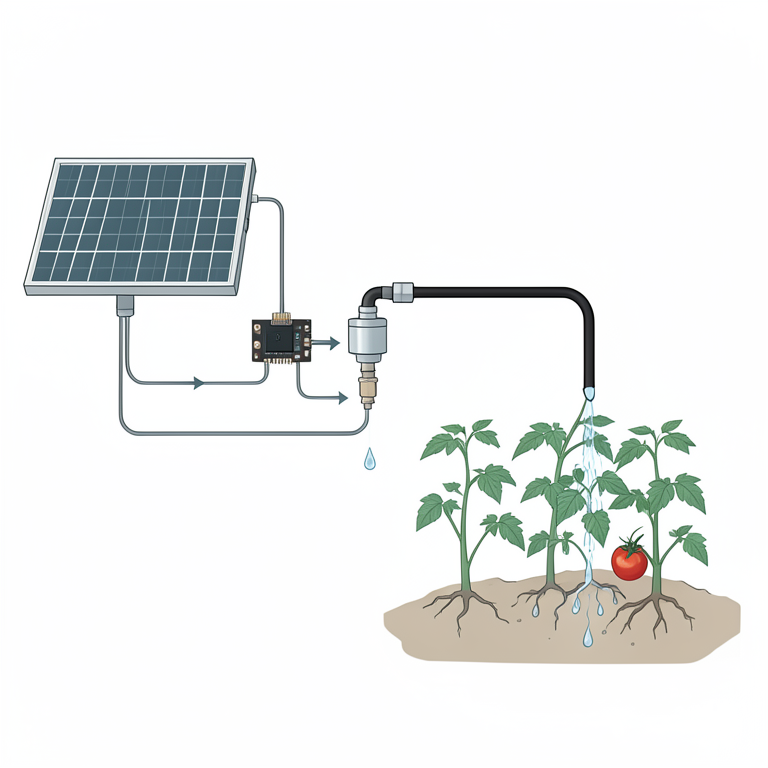
System Architecture
AI-generated conceptual illustration (tomato plants in a field with a solar-powered drip irrigation system). It explains the idea and does not show study data.
View source evidence ↗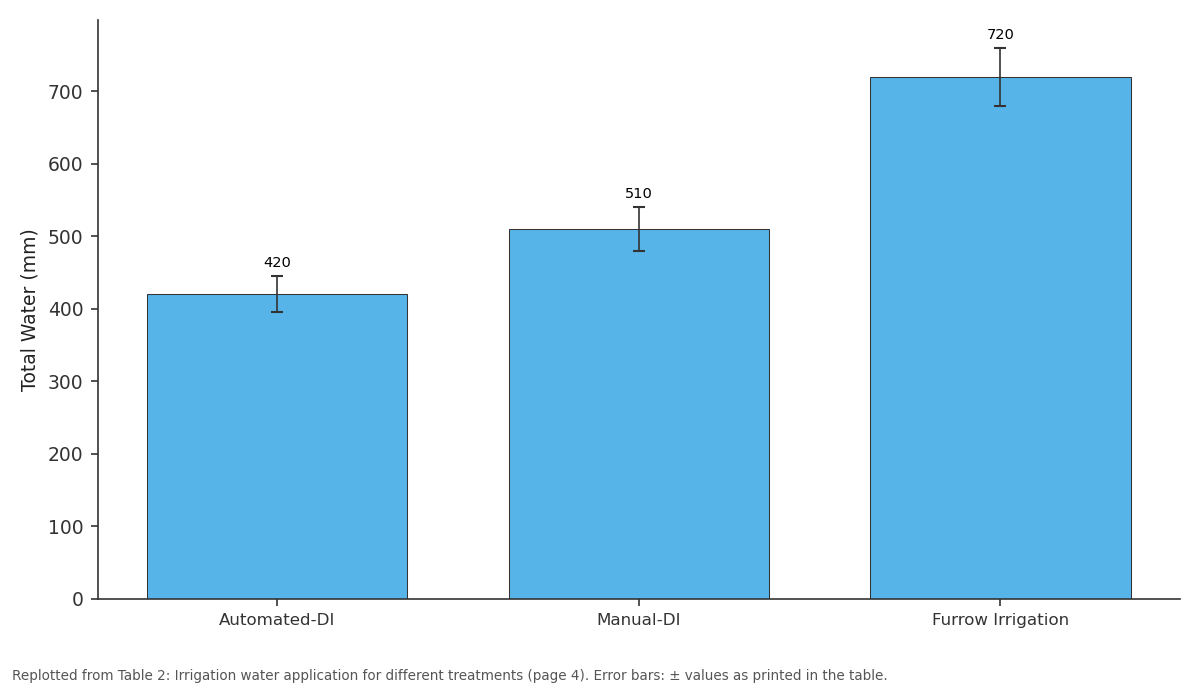
Total Water (mm): Automated-DI vs Manual-DI vs Furrow Irrigation
Replotted from Table 2 (page 4) of the original paper. Every bar is the paper's own table value.
View source evidence ↗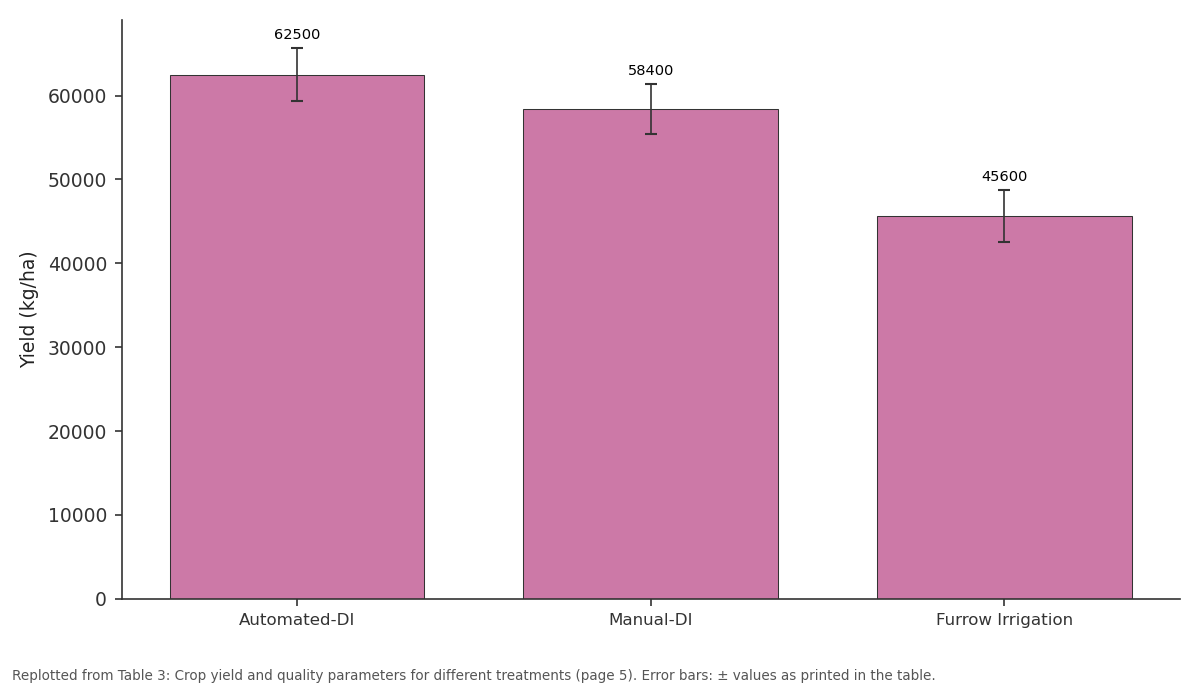
Yield (kg/ha): Automated-DI vs Manual-DI vs Furrow Irrigation
Replotted from Table 3 (page 5) of the original paper. Every bar is the paper's own table value.
View source evidence ↗Figures & tables
From the original paper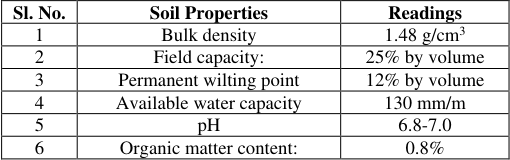 Table 1
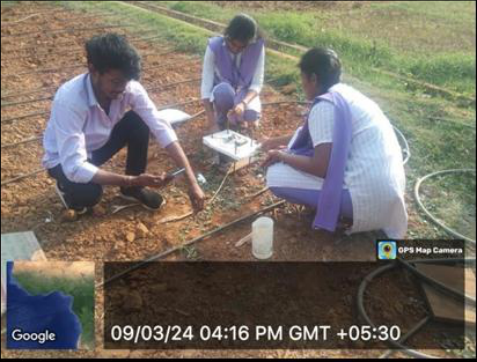 Plate 1
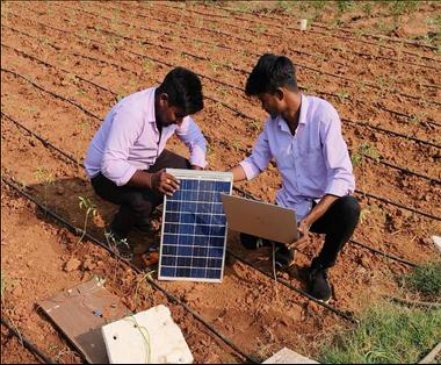 Plate 2
 Table 2
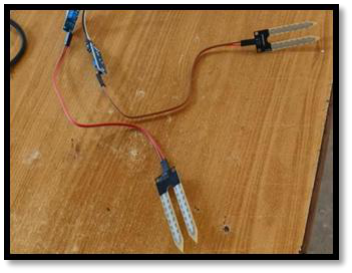 Plate 7
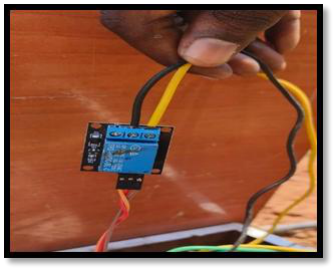 Plate 8
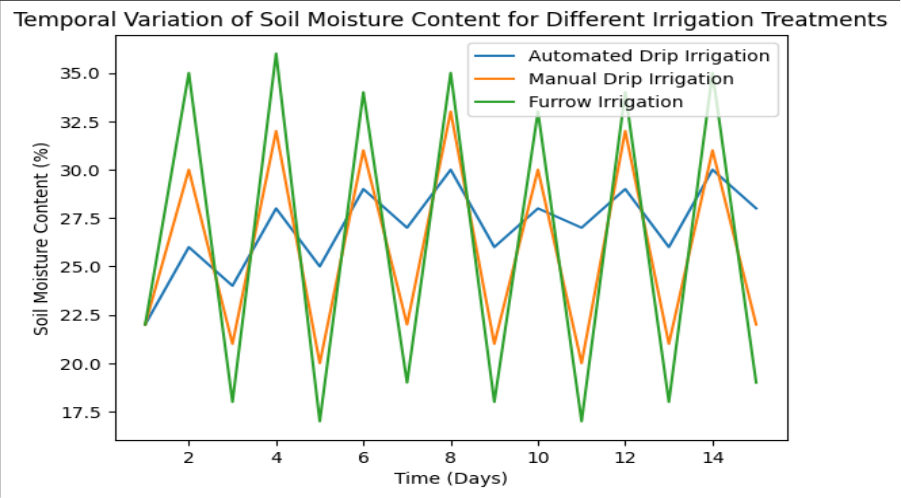 Fig. 1
 Table 3
 Table 4
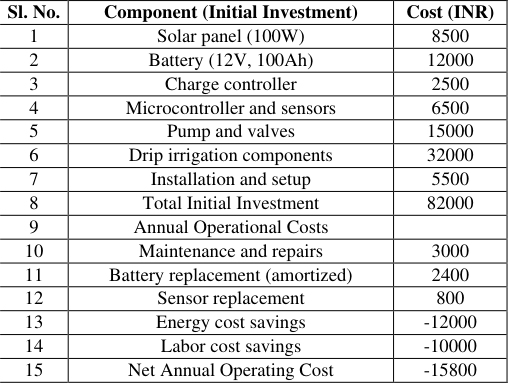 Table 5
Introduction
Agriculture is the largest consumer of fresh water resources globally, accounting for approximately 70% of total water withdrawals [1] . With increasing population pressure, climate change, and declining water availability, there is an urgent need to develop waterefficient irrigation technologies that can sustain agricultural productivity while minimizing environmental impacts [2] . Traditional irrigation methods, such as flood and furrow irrigation, often result in significant water losses through evaporation, deep percolation, and surface runoff, with typical application efficiencies ranging from 40-60% [3] . Drip irrigation has emerged as one of the most efficient irrigation methods, delivering water directly to the root zone of plants through a network of pipes, valves, and emitters [4] . Studies have shown that drip irrigation can achieve application efficiencies exceeding 90%, resulting in water savings of 30-70% compared to conventional methods [5,16] . However, the effectiveness of drip irrigation systems depends largely on proper scheduling and management, which requires regular monitoring of soil moisture conditions and crop water requirements [6] . The integration of automation and sensor technologies with drip irrigation systems offers significant potentials for further improving water use efficiency and reducing labor requirements [7] . Automated irrigation systems can monitor soil moisture levels in real-time and adjust irrigation schedules dynamically based on actual crop needs, eliminating the guesswork associated with manual irrigation management [8] . Recent advances in microcontroller technology, wireless sensor networks, and Internet of Things (IoT) platforms have made it increasingly feasible to develop cost-effective automated irrigation systems for smallholder farmers [9] . Solar photovoltaic (PV) technology provides an attractive power source for automated irrigation systems, particularly in remote agricultural areas where grid electricity is unreliable or unavailable [10] . Solar-powered irrigation systems can operate independently of the electrical grid, reducing operational costs and carbon emissions while providing a sustainable energy solution [11] . The declining costs of solar PV panels and advances in battery storage technology have further improved the economic viability of solar-powered agricultural applications [12] . Despite the potential benefits, the adoption of automated drip irrigation systems remains limited, particularly among smallholder farmers in developing countries. Key barriers include high initial investment costs, lack of technical knowledge, and limited access to appropriate technologies [13] . There is a need of affordable, user-friendly automated irrigation systems that can be easily installed and maintained by farmers with minimal technical expertise.
Methodology
The automated drip irrigation system was designed to operate autonomously using solar power and soil moisture feedback. The system architecture consists of the following main components:
Solar Power System
A polycrystalline solar panel with 100W capacity and 12V output was selected to power the system. The panel dimensions were 1200mm×540mm×35mm. A 12V/24V PWM solar charge controller (20A capacity) was used to regulate the charging of the battery and prevent overcharging. A 12V, 100Ah deep-cycle lead-acid battery was used to store solar energy and ensure continuous operation during night time and cloudy conditions.
Control System
An Arduino Mega 2560 microcontroller board was selected as the central processing unit due to its multiple analogs and digital I/O pins, ease of programming, and low cost. Capacitive soil moisture sensors (operating range: 0-100% volumetric water content) were deployed at multiple locations in the field to monitor soil water status. These sensors were preferred over resistive sensors due to their better durability and resistance to corrosion. A DHT22 digital sensor was integrated to monitor ambient temperature and relative humidity for reference evapotranspiration estimation. A DS3231 RTC module was incorporated to maintain accurate timekeeping for irrigation scheduling. A 20x4 Character LCD display with I2C interface was used to show system status, sensor readings, and operational parameters.
Irrigation Components
A 12V DC submersible pump with a flow rate of 4L/min and maximum head of 8m was used to deliver water from the source to the drip irrigation network. A 12V DC normally-closed solenoid valve was installed to control water flow to different irrigation zones. Inline drip tubing with 16mm diameter and emitter spacing of 30 cm was used, with each emitter having a discharge rate of 2L/h at 1 bar pressure. A 120-mesh screen filter was installed at the pump outlet to prevent clogging of emitters. Appropriate pipes, connectors, and fittings were used to assemble the irrigation network.
Experimental Setup
The field experiment was conducted during the growing season at the experimental farm of agriculture field, Aditya University, Surampalem. The climate of the region is characterized as hot and dry weather, with an average annual rainfall of 1040 mm and mean temperature ranging from 24 o C to 34 o C. The soil texture was classified as Sandy loam soils with the following properties as shown in the Table 1.
| Sl. No. | Soil Properties | Readings |
|---|---|---|
| 1 | Bulk density | 1.48 g/cm3 |
| 2 | Field capacity: | 25% by volume |
| 3 | Permanent wilting point | 12% by volume |
| 4 | Available water capacity | 130 mm/m |
| 5 | pH | 6.8-7.0 |
| 6 | Organic matter content: | 0.8% |
Table text extracted from the original PDF; superscript letters are shown inline. The original table image is below.
View original table image
Data Collection and Measurements 3.1 Irrigation Water Applied
The volume of water applied in each irrigation event was measured using a water meter installed in the irrigation line for the automated and manual drip irrigation treatments. For furrow irrigation, water application was measured using a calibrated flow meter at the field inlet. Soil moisture content was monitored continuously in the automated treatment using the installed sensors. For the other treatments, gravimetric soil sampling was conducted weekly to determine soil water content at different depths.
Crop Growth and Yield Parameters
The following crop parameters were measured; (i) Plant height (measured weekly from 5 randomly selected plants per plot), (ii) Leaf area index (LAI) using a plant canopy analyzer (iii) Biomass accumulation (sampled at different growth stages), (iv) Final crop yield (measured at harvest from the net plot area).
Water Use Efficiency
Water use efficiency (WUE) was calculated using the following equation:
Where Y is the crop yield (kg/ha) and W is the total water applied (mm or m 3 /ha). Irrigation water use efficiency (IWUE) was calculated as:
Where I is the irrigation water applied (mm or m 3 /ha)
Energy Consumption
The energy consumption of the solar-powered automated system was monitored using a power meter connected between the battery and the load. Daily energy consumption was recorded, and the solar panel's energy generation was also measured.
Economic Analysis
A comprehensive cost-benefit analysis was conducted to assess the economic viability of the automated drip irrigation system by considering initial investment costs, operational expenses, and key economic indicators. The initial investment included all capital expenditures such as the solar panel with mounting structure, battery and charge controller, microcontroller and sensors, pump and solenoid valves, drip irrigation components (pipes, emitters, and filters), as well as installation and commissioning costs. Annual operational and maintenance costs were also estimated, covering maintenance and repairs, periodic battery replacement (with a lifespan of 3-5 years), sensor calibration and replacement, and routine filter cleaning and emitter replacement.
Results and Discussion
The automated drip irrigation system operated successfully throughout the growing season with minimal technical issues. The solar power system provided adequate energy for continuous operation, with the battery maintaining sufficient charge even during consecutive cloudy days. The average daily energy generation from the 100W solar panel was 0.38 kWh/day, while the average daily energy consumption of the automated system was 0.32 kWh/day. The battery storage capacity was sufficient to maintain system operation for up to 2-3 days without solar charging, providing a safety margin for extended cloudy periods. The soil moisture sensors demonstrated good accuracy when compared with gravimetric measurements, with a mean absolute error of 4.5% and R 2 value of 0.91. The sensors maintained stable performance throughout the season with minimal drift or calibration issues.
Irrigation Water Application
The automated drip irrigation system applied significantly less water (420 mm) compared to manual drip drip irrigation (510 mm) and furrow irrigation (720 mm), representing water savings of 18% and 42%, respectively. The automated system achieved these savings by precisely matching water application to crop requirements based on real-time soil moisture feedback. The total water applied and the number of irrigation events for each treatment during the growing season is given in Table 2. The temporal variation of soil moisture content in the root zone for different irrigation treatments is given in Fig, 1.
| Treatment | Total Water (mm) | No. of Events | Water Saved (%) |
|---|---|---|---|
| Automated-DI | 420±25 | 38 | - |
| Manual-DI | 510±30 | 30 | 17.6% |
| Furrow Irrigation | 720±40 | 12 | 41.7% |
Table text extracted from the original PDF; superscript letters are shown inline. The original table image is below.
View original table image
The automated system-maintained soil moisture within the optimal range (between field capacity and management allowed depletion) more consistently than the other treatments.
Fig. 1: Soil Moisture Dynamics
Crop Growth and Development:
Plant height increased progressively throughout the growing season in all treatments, with no significant differences observed between the automated and manual drip irrigation treatments at most growth stages. However, furrow irrigation showed slightly reduced plant height during the mid-season due to water stress periods between irrigation events. The leaf area index (LAI) reached maximum values of 4.2, 3.8, and 3.1 for automated DI, manual-DI, and furrow irrigation treatments, respectively. The automated treatment maintained higher LAI values during critical growth stages, indicating better plant water status. Table 3 depicts the crop yield and quality parameters for different irrigation treatments. The automated drip irrigation system achieved a crop yield of 62500 kg/ha, which was statistically similar to manual drip irrigation (58400 kg/ha) but significantly higher than furrow irrigation (45600 kg/ha). the yield increase in drip irrigation treatments was attributed to better water management and reduced water stress during critical growth stages. The automated drip irrigation system achieved the highest water use efficiency (14.8 kg/m 3 ), representing improvements of 29% and 57% over manual drip irrigation and furrow irrigation, respectively. This improvement was primarily due to the reduced water application while maintaining comparable yields. Water use efficiency metrics for different irrigation treatments are presented in Table 4. The automated drip irrigation system demonstrated significant water savings while maintaining crop productivity, consistent with findings from previous studies on sensor-based irrigation management [7,17] . The 42% water savings achieved compared to conventional furrow irrigation align with reported ranges of 30-70% for drip irrigation systems [5] . The additional 18% savings compared to manual drip irrigation highlight the value of automated, sensor based scheduling in eliminating over-irrigation and improving precision. The ability to maintain soil moisture within optimal ranges throughout the growing season prevented both water stress and waterlogging conditions, which are common issues with fixed schedule irrigation. This precise water management contributed to the observed improvements in water use efficiency and crop quality. Similar benefits of automated irrigation systems have been reported in various crops, including vegetables [9] , tree crops [14] , and field crops [15] . The solar photovoltaic system successfully powered the automated irrigation system throughout the evaluation period, demonstrating the viability of solar energy for agricultural automation in off-grid locations. The 100W panel provided sufficient energy for continuous operation, with battery storage ensuring uninterrupted function during nighttime and cloudy periods. This finding supports the growing body of literature on solar-powered irrigation system [10,11] . The elimination of grid electricity dependence not only reduced operational costs but also improved system reliability in areas with unstable power supply. The environmental benefits of using renewable energy for irrigation align with global sustainability goals and carbon emission reduction targets [12] .
| Treatment | WUE (kg/m3) | IWUE (kg/m3) | Improvement (%) |
|---|---|---|---|
| Automated-DI | 14.8 ± 1.2 | 15.2 ± 1.1 | - |
| Manual-DI | 11.4 ± 1.0 | 11.8 ± 0.9 | 29% |
| Furrow Irrigation | 6.3 ± 0.8 | 6.7 ± 0.7 | 57% |
Table text extracted from the original PDF; superscript letters are shown inline. The original table image is below.
View original table image
| Parameter | Automated-DI | Manual-DI | Furrow Irrigation |
|---|---|---|---|
| Yield (kg/ha) | 62500 ± 3200 | 58400 ± 2950 | 45600 ± 3100 |
| Marketable yield (%) | 91.5 ± 2.4 | 88.2 ± 2.8 | 76.3 ± 3.5 |
| Quality parameter | 5.8 ± 0.4 | 5.5 ± 0.5 | 4.7 ± 0.6 |
Table text extracted from the original PDF; superscript letters are shown inline. The original table image is below.
View original table image
Economic Analysis
The economic analysis revealed a payback period of 3.6 years, which is favorable compared to many agricultural investments [18] . The positive NPV and BCR greater than 1 indicate that the system is economically viable for farmers with adequate access to capital or financing options. The primary economic benefits stem from water savings, labor reduction, and potential yield improvements [19] . Table 5 presents a detailed breakdown of the initial investment and annual operational costs for the automated drip irrigation system. Hence, Economic analysis revealed favorable indicators with a payback period of 3.6 years, positive NPV of INR 1,68,000, and BCR of 2.05, demonstrating economic viability for farmers.
| Sl. No. | Component (Initial Investment) | Cost (INR) |
|---|---|---|
| 1 | Solar panel (100W) | 8500 |
| 2 | Battery (12V, 100Ah) | 12000 |
| 3 | Charge controller | 2500 |
| 4 | Microcontroller and sensors | 6500 |
| 5 | Pump and valves | 15000 |
| 6 | Drip irrigation components | 32000 |
| 7 | Installation and setup | 5500 |
| 8 | Total Initial Investment | 82000 |
| 9 | Annual Operational Costs | |
| 10 | Maintenance and repairs | 3000 |
| 11 | Battery replacement (amortized) | 2400 |
| 12 | Sensor replacement | 800 |
| 13 | Energy cost savings | -12000 |
| 14 | Labor cost savings | -10000 |
| 15 | Net Annual Operating Cost | -15800 |
Table text extracted from the original PDF; superscript letters are shown inline. The original table image is below.
View original table image
Conclusions
This study successfully developed and evaluated a solarpowered automated drip irrigation system integrated with soil moisture sensors for precision water management. The system demonstrated significant water savings of 42% compared to conventional furrow irrigation and 18% compared to manual drip irrigation, while maintaining comparable or improved crop yields. Water use efficiency was markedly enhanced, reaching 14.8 kg/m³, which represents a 29% improvement over manual drip irrigation and 57% over furrow irrigation. The solar photovoltaic system ensured reliable and continuous autonomous operation, eliminating dependence on grid electricity and thereby reducing operational costs. Economic analysis indicated strong feasibility, with a payback period of 3.6 years, a positive Net Present Value (NPV) of INR 1,68,000, and a Benefit-Cost Ratio (BCR) of 2.05. Additionally, the system effectively maintained soil moisture within optimal levels throughout the growing season, preventing water stress and improving crop performance. The modular design, based on open-source microcontroller platforms and standard components, offers a cost-effective alternative to commercial systems while delivering comparable functionality.
Acknowledgement
AcknowledgmentsThe author acknowledges Aditya University, Surampalem for providing the experimental facilities for this research. We also appreciate the cooperation of local farmers who provided valuable insights during system development.
Figures and tables from the paper
References
19 in the original paper- FAO. The state of food and agriculture 2020: Overcoming water challenges in agriculture. Food and Agriculture Organization of the United Nations; 2020.
- Molden D, Oweis T, Steduto P, Bindraban P, Hanjra MA, Kijne J. Improving agricultural water productivity: Between optimism and caution. Agricultural Water Management. 2010;97(4):528-535.
- Burt CM, Clemmens AJ, Strelkoff TS, Solomon KH, Bliesner RD, Hardy LA, et al. Irrigation performance measures: Efficiency and uniformity. Journal of Irrigation and Drainage Engineering. 1997;123(6):423442.
- Lamm FR, Ayars JE, Nakayama FS. Microirrigation for crop production: Design, operation, and management. Developments in Agricultural Engineering. 2007;13:1618.
- Narayanamoorthy A. Impact assessment of drip irrigation in India: The case of sugarcane. Development Policy Review. 2004;22(4):443-462.
- Allen RG, Pereira LS, Raes D, Smith M. Crop evapotranspiration: Guidelines for computing crop water requirements. FAO Irrigation and Drainage Paper No. 56. Food and Agriculture Organization; 1998.
- Evans RG, Sadler EJ. Methods and technologies to improve efficiency of water use. Water Resources Research. 2008;44(7):W00E04.
- Vellidis G, Tucker M, Perry C, Kvien C, Bednarz C. A real-time wireless smart sensor array for scheduling irrigation. Computers and Electronics in Agriculture. 2008;61(1):44-50.
- Gutiérrez J, Villa-Medina JF, Nieto-Garibay A, PortaGándara MÁ. Automated irrigation system using a wireless sensor network and GPRS module. IEEE Transactions on Instrumentation and Measurement. 2014;63(1):166-176.
- Chandel SS, Naik MN, Chandel R. Review of solar photovoltaic water pumping system technology for irrigation and community drinking water supplies. Renewable and Sustainable Energy Reviews. 2015;49:1084-1099.
- Gopal C, Mohanraj M, Chandramohan P, Chandrasekar P. Renewable energy source water pumping systemsA literature review. Renewable and Sustainable Energy Reviews. 2013;25:351-370.
- Mekhilef S, Saidur R, Safari A. Comparative study of different fuel cell technologies. Renewable and Sustainable Energy Reviews. 2012;16(1):981-989.
- Dhawan V. Water and agriculture in India. Background paper for the South Asia Expert Panel during the Global Forum for Food and Agriculture. 2017:1-28.
- Fernández JE, Palomo MJ, Díaz-Espejo A, Girón IF. Influence of partial soil wetting on water relation parameters of the olive tree. Agronomie. 2003;23(4):545-552.
- Coates RW, Delwiche MJ, Brown PH. Control of precision irrigation with soil water potential. Agricultural Water Management. 2006;88(1-3):196206.
- Sujatha G, Sai Krishna V. Assessment of mulch practices with drip irrigation on soil physical quality and weed regulation. International Journal of Biological Sciences. 2025;7(12):25-28.
- Sujatha G, Krishna Kanth B, Sinha J, Kalyani MS, Lakshmi TV, Srinu M. Comparative study of the impact of saline water irrigation on tomato yield, quality and growth in Andhra Pradesh, India. International Journal of Plant and Soil Science. 2023;35(20):1076-1085.
- Krishna VS, Jain SK, Panwar NL, Wadhawan N. Emergence of IoT in the field of food and agricultural sector. Journal of Food Process Engineering. 2024;47(8):e14698.
- Krishna VS, Jain SK, Panwar NL, Rama Sree. An overview on phase change material incorporated in convective solar dryers. Journal of Energy Storage. 2025;