
Research article · 2025 · Full text
International Journal of Agriculture and NutritionMorpho-agronomic characterization and diversity assessment of indigenous finger millet landraces
Volume 7(5) · Pages 135–138 · DOI: 10.33545/26646064.2025.v7.i5c.567 ↗
Research areasAgricultural Productivity and Crop ImprovementNatural Products and ApplicationsSeed and Plant Biochemistry
Abstract
Author-writtenWhile finger millet breeders in Africa and India work with hundreds of improved lines, a largely untapped reservoir of genetic diversity sits in island landraces that have never been systematically characterized. This research assessed 60 indigenous finger millet (Eleusine coracana L. Gaertn.) landraces collected from smallholder farms across Jeju Island, South Korea, for 12 qualitative and 8 quantitative morpho-agronomic traits at the Jeju College of Agriculture and Life Sciences during 2022-23. A randomized complete block design with two replications was used. Substantial variation was observed: plant height ranged from 42.3 to 118.6 cm, days to maturity from 86 to 148, ear length from 3.1 to 11.4 cm, and grain yield from 4.6 to 24.8 g plant⁻¹. Principal component analysis grouped landraces into three clusters-early, medium, and late maturity-with the first two PCs explaining 56.1% of total variation. Shannon diversity index (H′) was 2.34, indicating high phenotypic diversity. Eight landraces combining high yield (≥18 g), high calcium (≥340 mg/100 g), and early maturity (≤105 days) were identified as priority accessions for breeding and conservation.
Summary
Source-checkedPlain-language reading of the full paper, prepared with AI and checked against the text. Each point links to the authors' own words.
Why it matters
- Finger millet is a climate-resilient and nutritionally dense cereal that is particularly valued for its high calcium content and ability to grow in marginal environments. View evidence ↗
- On Jeju Island in South Korea, finger millet was historically a staple crop grown in volcanic soils. View evidence ↗
- Jeju landraces are unique genetic resources because they adapted to a cool maritime climate and volcanic soils, differing from the crop's tropical centers of diversity. View evidence ↗
The question
- The study aimed to characterize 60 Jeju finger millet landraces, assess their phenotypic diversity, and identify priority accessions for conservation and breeding. View evidence ↗
What they did
- The experiment used a randomized complete block design with two replications, with plots consisting of two 3-meter rows. View evidence ↗
- Nutritional screening for all 60 landraces measured calcium and iron using atomic absorption spectrophotometry (AAS) and protein via the Kjeldahl method. View evidence ↗
What they found
- Significant variation was found in quantitative traits, including plant height (42.3–118.6 cm), maturity (86–148 days), ear length (3.1–11.4 cm), and yield (4.6–24.8 g/plant). View evidence ↗
- Nutritional analysis showed calcium levels between 286 and 412 mg/100 g and iron levels between 3.1 and 6.8 mg/100 g. View evidence ↗
- PCA grouped the landraces into three maturity clusters (early, medium, and late), with the first two principal components explaining 56.1% of the total variation. View evidence ↗
- The Shannon diversity index was 2.34, which indicates a high level of phenotypic diversity among the landraces. View evidence ↗
- Eight landraces were identified as priority accessions because they met thresholds for high yield (≥18 g), high calcium (≥340 mg/100 g), and early maturity (≤105 days). View evidence ↗
What it means
- The authors conclude that the Jeju finger millet collection is a valuable, previously uncharacterized genetic resource for global crop improvement. View evidence ↗
- The authors note that the use of only two replications provides moderate precision and might overlook small differences between genotypes. View evidence ↗
- Future work should include multi-environment testing on the mainland and molecular characterization using SSR or SNP markers. View evidence ↗
Visual summary
3 visualsIllustrations explain the paper; charts are replotted from the paper's own table values.
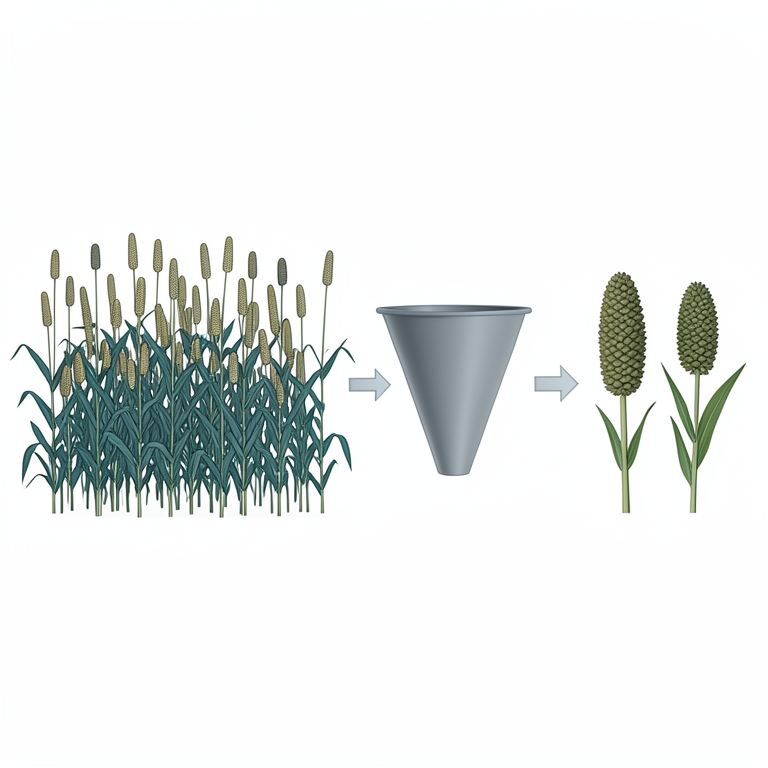
Selection Workflow
AI-generated conceptual illustration (Finger millet plants (Eleusine coracana)). It explains the idea and does not show study data.
View source evidence ↗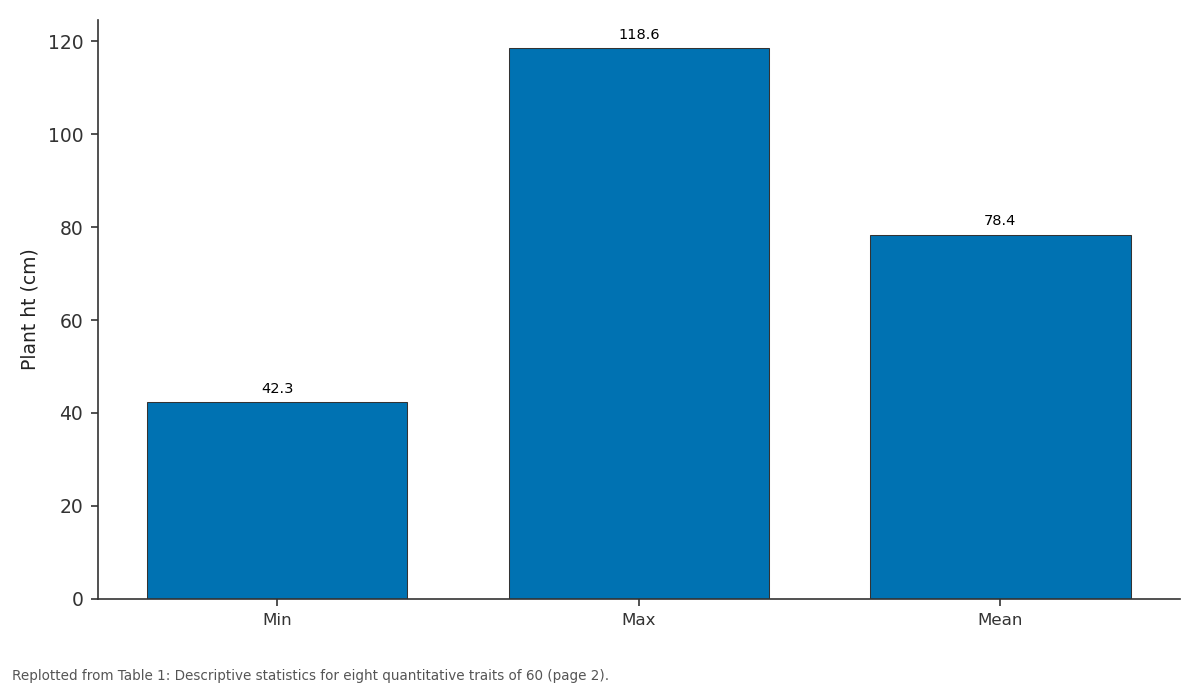
Plant ht (cm): Min vs Max vs Mean
Replotted from Table 1 (page 2) of the original paper. Every bar is the paper's own table value.
View source evidence ↗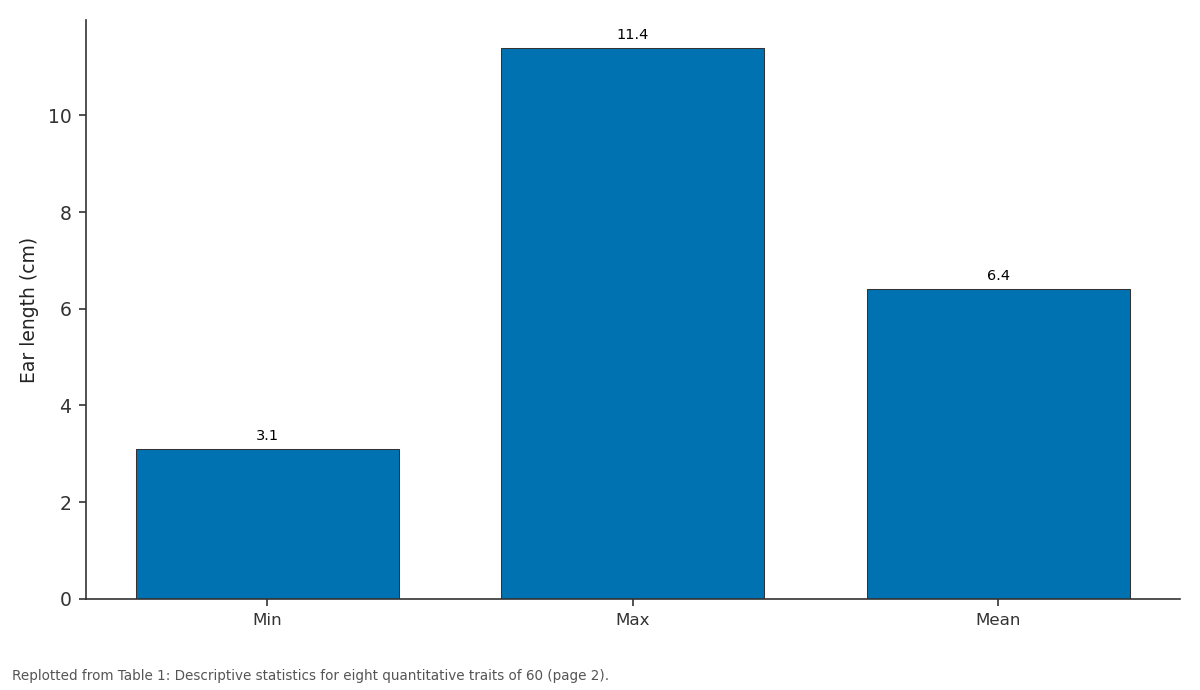
Ear length (cm): Min vs Max vs Mean
Replotted from Table 1 (page 2) of the original paper. Every bar is the paper's own table value.
View source evidence ↗Figures & tables
From the original paper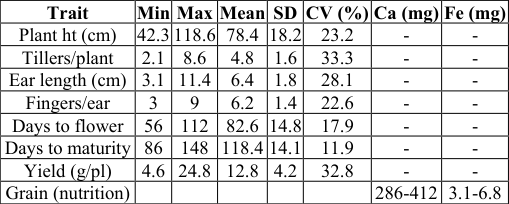 Table 1
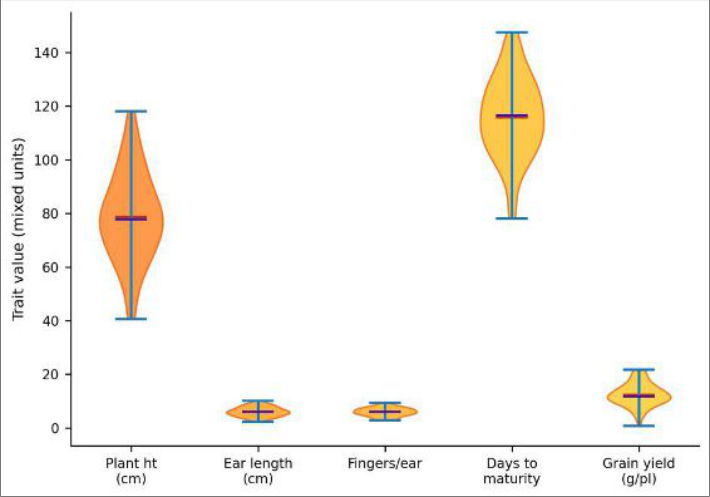 Figure 1
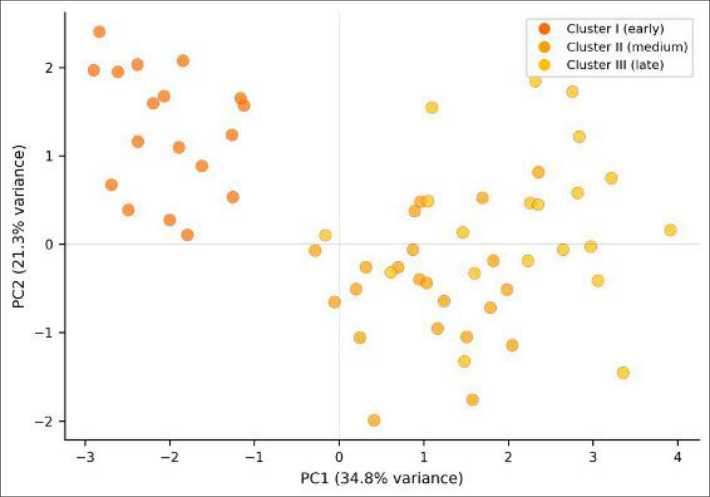 Figure 2
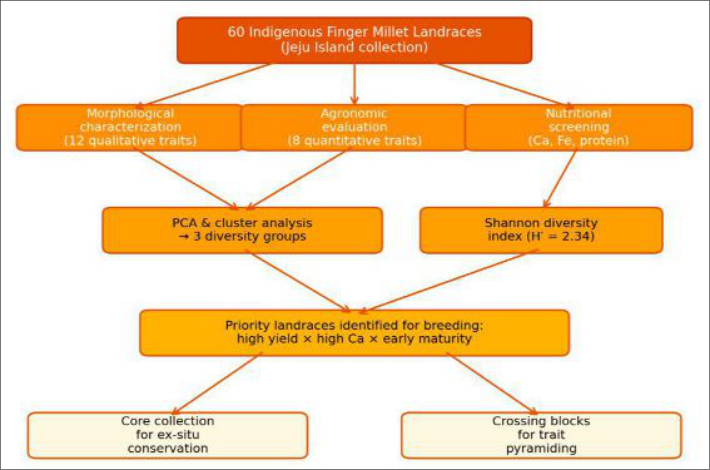 Figure 3
Introduction
Compared with rice, wheat, and maize, finger millet has received a fraction of the breeding investment-yet it feeds millions of people in eastern Africa and South Asia and is attracting growing interest as a climate-resilient, nutritionally dense cereal for marginal environments [1, 2] . Finger millet tolerates drought, thrives on poor soils, and its grain is exceptionally rich in calcium (300-400 mg/100 g), making it one of the best non-dairy sources of this mineral [3] . In South Korea, finger millet was historically cultivated in the volcanic soils of Jeju Island, where it served as a staple crop before rice cultivation expanded in the mid-20th century [4] . Today, only scattered patches of traditional finger millet persist on Jeju, maintained by elderly farmers as home garden crops. These landraces represent a unique genetic resource shaped by centuries of island-specific adaptation-cool maritime climate, volcanic Andisols, and typhoon exposure-conditions quite different from the tropical African and Indian centers of diversity [5] . But this germplasm has never been formally characterized or evaluated for breeding utility. Morpho-agronomic characterization is the first step in any germplasm utilization program. It reveals the range of available variation, identifies trait correlations, and allows grouping of accessions into diversity clusters that guide crossing strategies [6,7] . This research aimed to (a) characterize 60 Jeju finger millet landraces for morphological and agronomic traits, (b) assess the extent and pattern of phenotypic diversity, and (c) identify priority accessions for breeding and ex-situ conservation.
Germplasm Collection and Origin
Seeds of 60 landraces were collected during September-November 2021 from 34 villages across all four administrative areas of Jeju Island (33°24′N, 126°34′E
Material and Methods
Material and Methods
Material
Sixty landraces plus two reference varieties (GPU-28 from India and KNE-741 from Kenya) were evaluated at the experimental field of Jeju College of Agriculture and Life Sciences during the 2022 and 2023 growing seasons (May-October). The field soil was a Typic Melanudand (volcanic ash-derived, pH 5.8, organic matter 6.4%, available P 32.7 mg kg⁻¹). Calcium and iron content of grain were analyzed by atomic absorption spectrophotometry after dry-ashing. Protein content was determined by Kjeldahl N × 6.25.
Methods
A randomized complete block design with two replications was used. Each plot consisted of two 3 m rows at 30 cm × 10 cm spacing. Standard agronomic practices followed Jeju extension recommendations. Twelve qualitative traits (growth habit, leaf blade color, inflorescence shape, grain color, etc.) were scored using IBPGR/IPGRI finger millet descriptors [8] . Eight quantitative traits were measured: plant height, tiller number, flag leaf length, ear length, fingers per ear, days to 50% flowering, days to maturity, and grain yield per plant. Principal component analysis and hierarchical cluster analysis (Ward's method, Euclidean distance) were performed on standardized quantitative data using PAST v.4.0. Shannon diversity index (H′) was calculated across all qualitative trait categories.
Nutritional Screening Protocol
Grain samples from all 60 landraces were analyzed for calcium (mg/100 g) by AAS, iron (mg/100 g) by AAS, and crude protein (%) by Kjeldahl method. Analyses were performed in triplicate on composite samples from both replications. These nutritional data were used alongside agronomic performance to identify priority accessions meeting combined yield and quality thresholds. Wide variation was observed across all traits (Table 1). Grain yield showed the highest CV (32.8%), followed by tiller number (33.3%) and ear length (28.1%). Calcium ranged from 286 to 412 mg/100 g, and iron from 3.1 to 6.8 mg/100 g. Eight landraces met the combined selection threshold of yield ≥18 g, calcium ≥340 mg, and maturity ≤105 days.
| Trait | Min | Max | Mean | SD | CV (%) | Ca (mg) | Fe (mg) |
|---|---|---|---|---|---|---|---|
| Plant ht (cm) | 42.3 | 118.6 | 78.4 | 18.2 | 23.2 | - | - |
| Tillers/plant | 2.1 | 8.6 | 4.8 | 1.6 | 33.3 | - | - |
| Ear length (cm) | 3.1 | 11.4 | 6.4 | 1.8 | 28.1 | - | - |
| Fingers/ear | 3 | 9 | 6.2 | 1.4 | 22.6 | - | - |
| Days to flower | 56 | 112 | 82.6 | 14.8 | 17.9 | - | - |
| Days to maturity | 86 | 148 | 118.4 | 14.1 | 11.9 | - | - |
| Yield (g/pl) | 4.6 | 24.8 | 12.8 | 4.2 | 32.8 | - | - |
| Grain (nutrition) | 286-412 | 3.1-6.8 |
Table text extracted from the original PDF; superscript letters are shown inline. The original table image is below.
View original table image
Results
Results
Comprehensive Interpretation
The PCA (Figure 2) cleanly separated the three maturity groups, with PC1 driven primarily by days to maturity and plant height, and PC2 by yield and ear morphology. The workflow diagram (Figure 3) shows how morphological, agronomic, and nutritional data were integrated to identify eight priority accessions out of the original 60.
Discussion
The Shannon diversity index of 2.34 for qualitative traits is comparable to values reported for Ethiopian and Nepalese finger millet collections (2.1-2.6) [5,7] , which is remarkable for an island population that has been geographically isolated for centuries. This high diversity may be maintained by the varied microclimates on Jeju-from coastal lowlands to Hallasan's mid-slopes-selecting for different maturity and morphological types across short distances.
The calcium range (286-412 mg/100 g) exceeds that of most cereal grains and confirms finger millet's unique nutritional niche [3] . Five of the eight priority accessions had calcium above 370 mg-values that could contribute meaningfully to dietary calcium intake in populations with limited dairy access. The high CV for yield (32.8%) indicates strong scope for selection, and crosses between high-yield Cluster II accessions and high-calcium Cluster I types could pyramid both traits.
A limitation is the two-replication design, which provides moderate precision but may miss small genotype differences. Multi-environment testing across mainland Korean sites would clarify genotype × environment interaction. Molecular characterization using SSR or SNP markers would complement these morpho-agronomic data and enable construction of a core collection.
Conclusion
The 60 Jeju finger millet landraces displayed high phenotypic diversity (H′ = 2.34), with grain yield ranging from 4.6 to 24.8 g plant⁻¹ and calcium from 286 to 412 mg/100 g. PCA grouped accessions into three distinct maturity clusters. Eight priority landraces combining early maturity, high yield, and high calcium were identified for both breeding and ex-situ conservation. This collection represents a valuable and previously uncharacterized genetic resource for finger millet improvement globally.
Acknowledgement
Acknowledgements Funding SourcesThis research was supported by the Jeju College of Agriculture and Life Sciences crop genetics research fund. Institutional SupportThe Department of Crop Genetics provided field and laboratory facilities, and the Jeju Provincial Agricultural Research Centre assisted with nutritional analyses. Contributions Not Qualifying for AuthorshipFarmers across Jeju Island who shared seed material and traditional knowledge are gratefully acknowledged.
Figures and tables from the paper
References
18 in the original paper- Upadhyaya HD, Gowda CLL, Reddy VG. Morphological diversity in finger millet germplasm introduced from Southern and Eastern Africa. Journal of SAT Agricultural Research. 2007;3(1):1-3.
- Dida MM, Devos KM. Finger millet: genomics and breeding. Cereals and Millets. 2006;Springer:333-343.
- Shobana S, Krishnaswamy K, Sudha V, Malleshi NG. Finger millet: nutritional value and health benefits. Journal of the Science of Food and Agriculture. 2013;93(7):1517-1530.
- Lee JR, Raveendar S, Park JH, Kim SH. Korean genetic resources of minor cereals and conservation. Genetic Resources and Crop Evolution. 2019;66(1):201-218.
- Dagnachew L, De Villiers S, Sewalem T, Dida M. Genetic diversity and population structure of finger millet in Ethiopia and East Africa. Crop Science. 2014;54(6):2427-2440.
- Bezaweletaw K, Sripichitt P, Wongyai W, Hongtrakul V. Genetic variation, heritability and path-analysis in Ethiopian finger millet landraces. Kasetsart Journal Natural Science. 2006;40(2):322-334.
- Ayana A, Bekele E. Geographical patterns of morphological variation in sorghum germplasm from Ethiopia and Eritrea. Hereditas. 2000;132(3):249-254.
- IBPGR. Descriptors for finger millet. International Board for Plant Genetic Resources. 1985;Rome.
- Hilu KW, de Wet JMJ. Domestication of Eleusine coracana. Economic Botany. 1976;30(3):199-208.
- Werth CR, Hilu KW, Langner CA. Isozymes of Eleusine and the origin of finger millet. American Journal of Botany. 1994;81(9):1186-1197.
- Ceasar SA, Maharajan T, Ajeesh Krishna TP, Ramakrishnan M. Finger millet calcium transporters: identification and functional characterization. Frontiers in Plant Science. 2018;9:1856.
- Kumar A, Metwal M, Kaur S, Gupta AK, Puranik S, Singh S. Nutraceutical value of finger millet: a review. Journal of Food Science and Technology. 2016;53(10):3507-3516.
- Goron TL, Raizada MN. Genetic diversity and genomic resources available for the small millet crops to accelerate a new green revolution. Frontiers in Plant Science. 2015;6:157.
- Babu BK, Dinesh P, Agrawal PK, Sood S, Chandrashekara C, Bhatt JC. Comparative genomics and association mapping approaches for blast resistant genes in finger millet using SSRs. PLoS ONE. 2014;9(6):e99182.
- Ramakrishnan M, Ceasar SA, Duraipandiyan V, AlDhabi NA, Ignacimuthu S. Assessment of genetic diversity in finger millet by SSR markers. Plant Systematics and Evolution. 2016;302(10):1395-1406.
- Gupta SM, Arora S, Mirza N, Pande A, Lata C, Puranik S. Finger millet: a new generation nutricereal for combating malnutrition. Food Science and Human Wellness. 2017;6(1):9-16.
- Vetriventhan M, Upadhyaya HD, Anitha S, Giridhar K. Variability in nutritional content of finger millet mini core collection. Food and Energy Security. 2019;8(4):e00184.
- Joshi BK, Tiwari RK, Baniya BK. Diversity assessment of finger millet landraces in Nepal. Nepal Agriculture Research Journal. 2018;8:47-56.