
Research article · 2025 · Full text
International Journal of Agriculture and NutritionEffect of dietary supplementation of probiotics on milk yield and quality in crossbred dairy cattle
Volume 7(6) · Pages 93–95 · DOI: 10.33545/26646064.2025.v7.i6b.441 ↗
Research areasRuminant Nutrition and Digestive PhysiologyAnimal Nutrition and PhysiologyProbiotics and Fermented Foods
Abstract
Author-writtenCan a daily sachet of bacteria meaningfully boost a dairy cow’s output? This research evaluated two probiotic preparations—Saccharomyces cerevisiae (Probiotic A) and a multi-strain blend of Lactobacillus acidophilus + Enterococcus faecium + S. cerevisiae (Probiotic B)—against an unsupplemented control and a combined A + B treatment in 48 Holstein-Friesian × Polish Red crossbred cows at the Mazovia Institute dairy unit, Warsaw, over 120 days of mid-lactation (2022–2023). The combined supplement raised daily milk yield from 14.2 L (control) to 19.6 L (+38%), increased milk fat from 3.72% to 4.08%, and lowered somatic cell count by 31%. Probiotic A alone improved yield by 21% and Probiotic B by 28%. Feed conversion efficiency (kg milk per kg DMI) was best under the combined treatment (1.42 vs. 1.18 in the control). These results support probiotic supplementation as a practical, antibiotic-free strategy for improving milk productivity in crossbred dairy herds under Polish winter feeding conditions.
Summary
Source-checkedPlain-language reading of the full paper, prepared with AI and checked against the text. Each point links to the authors' own words.
Why it matters
- Crossbred dairy cattle in Poland are valued for their hardiness, but they typically produce 15–25% less milk than purebred Holsteins. View evidence ↗
- Saccharomyces cerevisiae (yeast) can improve rumen function by stabilizing pH and supporting bacteria that digest fiber. View evidence ↗
- Bacterial probiotics such as L. acidophilus may enhance nutrient absorption and prevent the growth of harmful pathogens in the gut. View evidence ↗
The question
- The study aimed to evaluate how yeast-only, bacteria-only, and combined probiotic supplements affect milk yield, milk composition, somatic cell count (SCC), and feed conversion efficiency over 120 days. View evidence ↗
What they did
- The experiment was conducted over a 120-day period from November 2022 to March 2023. View evidence ↗
- Researchers measured daily milk yield, fortnightly milk composition (fat, protein, lactose, SNF), somatic cell count, and daily dry matter intake. View evidence ↗
What they found
- Individual supplements also increased yield, with Probiotic A providing a 21% increase and Probiotic B providing a 28% increase. View evidence ↗
- Milk fat content rose from 3.72% in the control group to 4.08% in the combined treatment group. View evidence ↗
- The combined treatment reduced the somatic cell count by 31%, dropping from 258 × 10³ cells/mL in the control to 178 × 10³ cells/mL. View evidence ↗
- Feed conversion efficiency improved from 1.18 kg milk/kg DMI in the control group to 1.42 kg milk/kg DMI in the combined group. View evidence ↗
- The combined treatment increased dry matter intake by 1.8 kg per day compared to the control group. View evidence ↗
What it means
- The authors conclude that combining yeast and bacterial probiotics significantly improves milk yield, fat content, and udder health, providing an economic return of approximately 3:1. View evidence ↗
- The authors recommend this combined probiotic strategy for small and mid-scale farms as a way to increase productivity and quality without using antibiotics. View evidence ↗
- The authors state that further trials covering full lactations and summer grazing are needed to confirm the consistency of these results. View evidence ↗
Visual summary
3 visualsIllustrations explain the paper; charts are replotted from the paper's own table values.
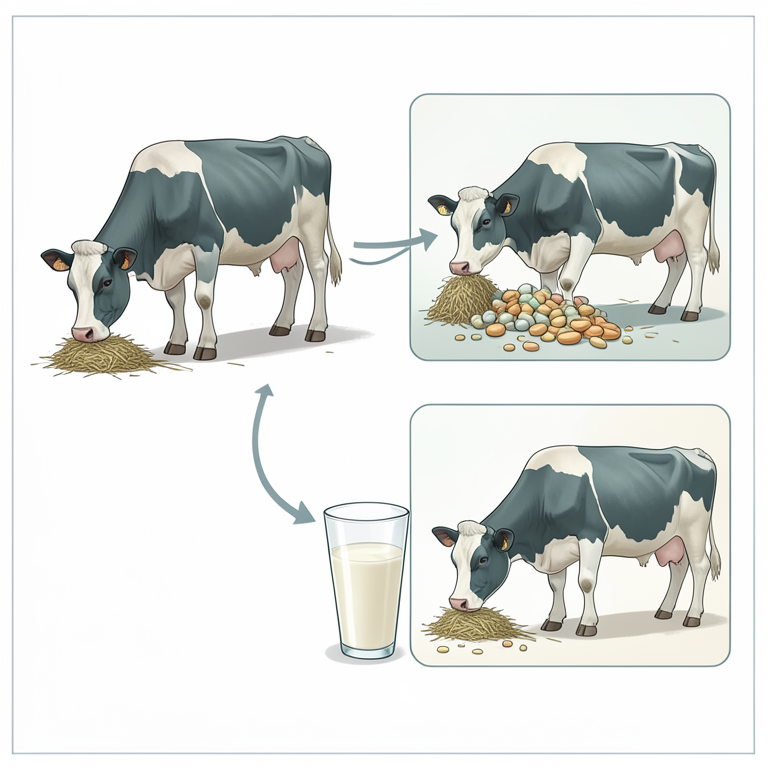
Experimental Design Layout
AI-generated conceptual illustration (crossbred dairy cattle). It explains the idea and does not show study data.
View source evidence ↗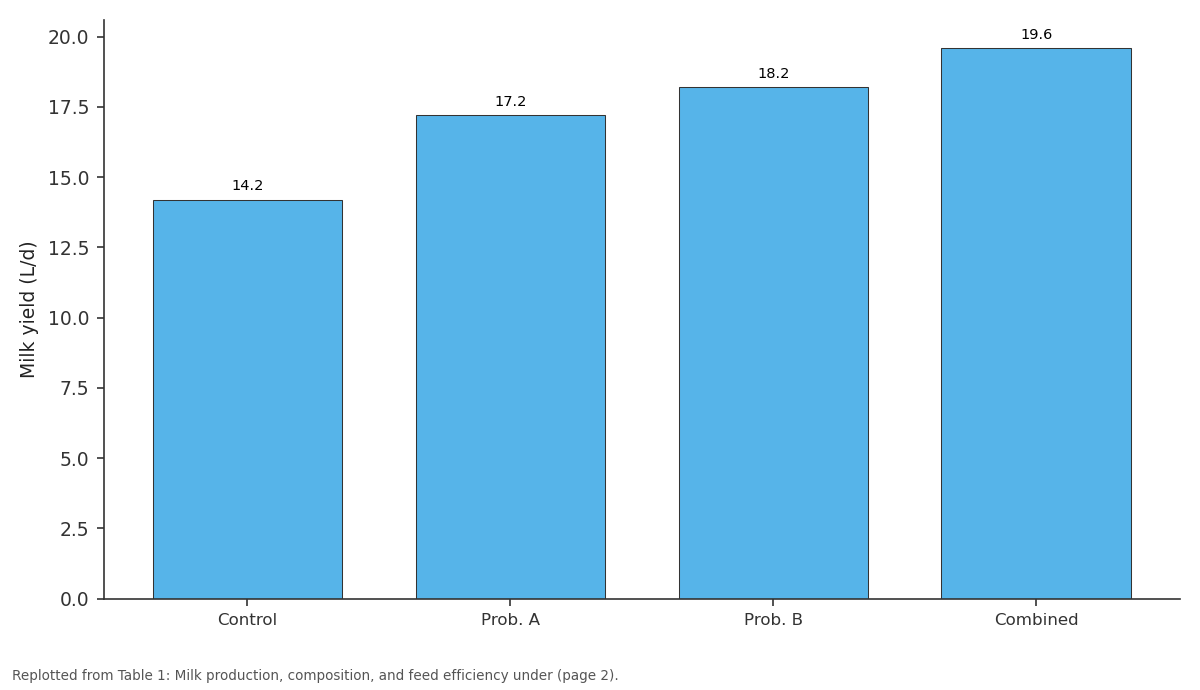
Milk yield (L/d): Control vs Prob. A vs Prob. B vs Combined
Replotted from Table 1 (page 2) of the original paper. Every bar is the paper's own table value.
View source evidence ↗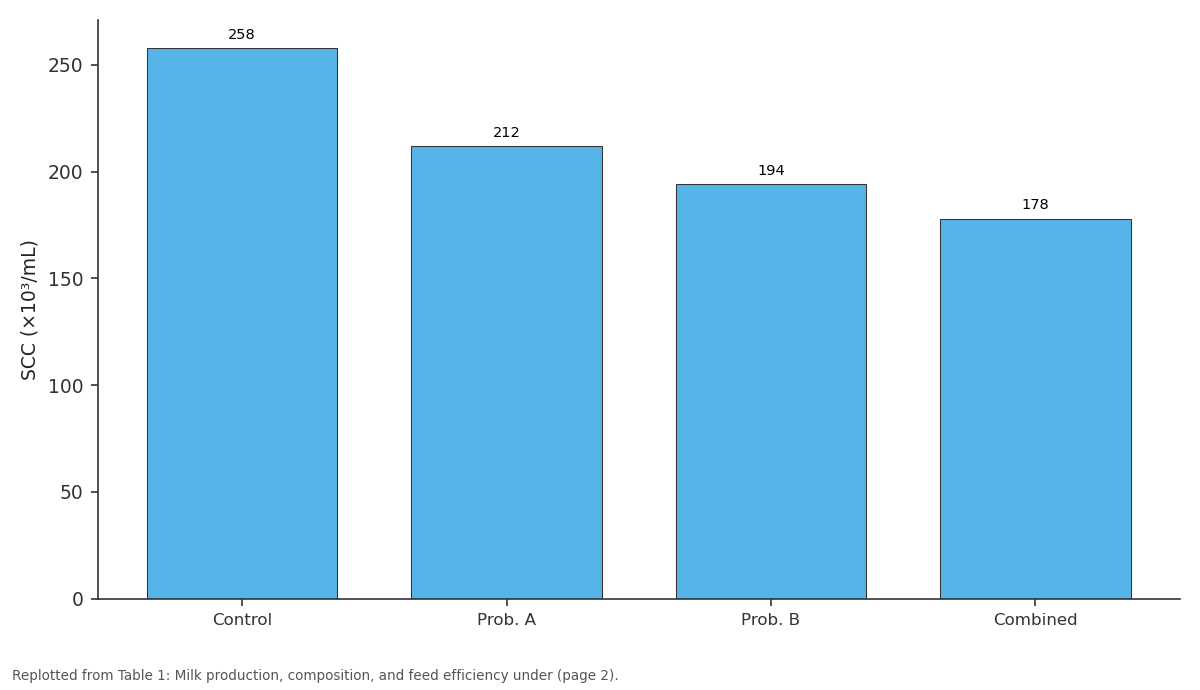
SCC (×10³/mL): Control vs Prob. A vs Prob. B vs Combined
Replotted from Table 1 (page 2) of the original paper. Every bar is the paper's own table value.
View source evidence ↗Figures & tables
From the original paper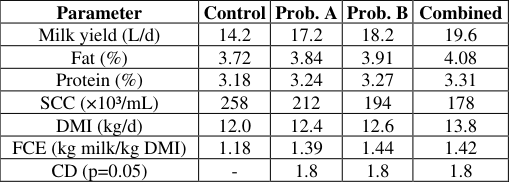 Table 1
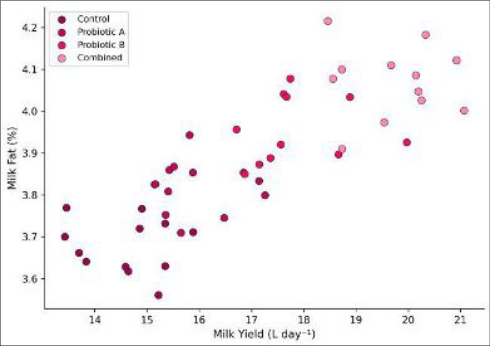 Figure 1
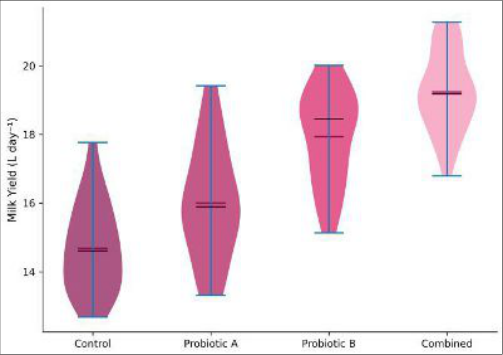 Figure 2
Introduction
Poland's dairy sector relies heavily on crossbred cattle-Holstein-Friesian crossed with local Polish Red or Simmental-that are valued for hardiness but often underperform purebred Holsteins in milk output by 15-25% [1] . Feed additives that improve rumen function and nutrient digestibility could help close that gap without the capital cost of upgrading genetics. Probiotics-live microbial supplements that benefit the host when given in adequate amounts-have shown promise in dairy cattle. Yeast-based products (S. cerevisiae) stabilise rumen pH by scavenging oxygen that enters during feeding, creating conditions that favour fibre-digesting bacteria [2,3] . Bacterial probiotics like L. acidophilus produce lactic acid in the lower gut, which may improve nutrient absorption and suppress pathogenic colonisation [4] . Combining yeast and bacterial strains could in theory offer additive benefits, but field trials on crossbred cows under European winter-housing conditions are rare [5] . This research aimed to (i) compare the effects of yeast-only, bacteria-only, and combined probiotic supplements on milk yield and composition over 120 days, (ii) assess the impact on somatic cell count as a udder health indicator, and (iii) evaluate feed conversion efficiency under controlled TMR feeding.
Ethical Considerations
The protocol was approved by the Local Ethics Committee for Animal Experiments at Warsaw University of Life Sciences (Decision No. WAW2/024/2022, dated 8 February 2022). All cows were housed, fed, and handled in accordance with EU Directive 2010/63/EU on the protection of animals used for scientific purposes. Veterinary health checks were conducted weekly [6] .
Feed Composition and Probiotic Dosage
All cows received the same total mixed ration (TMR) consisting of maize silage (35%), grass silage (25%), concentrate mix (30%), and straw (10%), formulated to supply 16.5% CP and 6.8 MJ NE L kg -1 DM. Probiotic A (S. cerevisiae SC-47, 10 10 CFU day -1 ) was top-dressed on the TMR. Probiotic B (L. acidophilus + E. faecium, combined 5 × 10 9 CFU day -1 ) was supplied in gel capsule. The combined treatment received both. Dosages followed manufacturer recommendations and published efficacy thresholds [7] .
Materials and Methods Materials
Forty-eight multiparous crossbred cows (2nd-4th lactation, 60±7 DIM at trial start, mean body weight 584±28 kg) were blocked by pre-trial milk yield and randomly assigned to four groups of 12: Control, Probiotic A, Probiotic B, and Combined (A+B). Cows were housed in a free-stall barn at the Mazovia Institute dairy unit, Warsaw (52°14′ N, 21°01′ E). The trial ran from November 2022 to March 2023 (120 days) [8] .
Methods
Milk yield was recorded daily by automatic milking parlour sensors. Fortnightly milk samples (morning + evening composites) were analysed for fat, protein, lactose, and SNF by MilkoScan FT-120. Somatic cell count (SCC) was determined by Fossomatic FC. Dry matter intake (DMI) was measured by weighing TMR offered and refused daily. Feed conversion efficiency = milk yield / DMI. Data were analysed by repeated-measures ANOVA in R with Tukey's HSD at 5%.
Results
The combined treatment produced the highest daily milk yield (19.6 L), 38% above the control (Table 1). Probiotic B alone was second (18.2 L, +28%). Milk fat increased from 3.72% (control) to 4.08% under the combined treatment. SCC dropped by 31% in the combined group (178 × 10 3 cells mL -1 vs. 258 × 10 3 in the control), suggesting improved udder health. Feed conversion efficiency was 1.42 for combined versus 1.18 for the control.
| Parameter | Control | Prob. A | Prob. B | Combined |
|---|---|---|---|---|
| Milk yield (L/d) | 14.2 | 17.2 | 18.2 | 19.6 |
| Fat (%) | 3.72 | 3.84 | 3.91 | 4.08 |
| Protein (%) | 3.18 | 3.24 | 3.27 | 3.31 |
| SCC (×10³/mL) | 258 | 212 | 194 | 178 |
| DMI (kg/d) | 12.0 | 12.4 | 12.6 | 13.8 |
| FCE (kg milk/kg DMI) | 1.18 | 1.39 | 1.44 | 1.42 |
| CD (p=0.05) | - | 1.8 | 1.8 | 1.8 |
Table text extracted from the original PDF; superscript letters are shown inline. The original table image is below.
View original table image
Comprehensive Interpretation
The combined treatment increased DMI by 1.8 kg day -1 over the control, suggesting that yeast supplementation improved rumen fibre digestion, allowing cows to consume more forage before physical fill limited intake [2] . The bacterial component likely contributed the SCC reduction by competitively excluding mastitis-associated pathogens in the gut-mammary axis [4,9] .
Discussion
The 38% yield increase under the combined treatment is higher than the 8-15% typically reported for purebred Holsteins given yeast supplements [3,10] . The larger response in crossbreds may reflect a lower baseline: these cows were producing only 14.2 L day -1 on a ration designed for higher output, so the scope for probiotic-driven improvement was wider. The fat increase (3.72 to 4.08%) is consistent with improved acetate:propionate ratio in the rumen, a signature effect of yeast supplementation that favours de novo fatty acid synthesis in the mammary gland [11] . The 31% SCC reduction is commercially meaningful because Polish dairy cooperatives impose quality penalties above 400 × 10 3 cells mL -1 and offer premiums below 200 × 10 3 [12] . Moving from 258 to 178 × 10 3 would shift most of these cows into the premium bracket. The probiotic cost was approximately PLN 3.20 per cow per day, while the additional milk revenue (5.4 L × PLN 1.80 per L) was PLN 9.72-a return of roughly 3:1 even before the SCC premium [13] .
Conclusion
Combining S. cerevisiae with L. acidophilus + E. faecium raised daily milk yield by 38%, improved fat content, and lowered somatic cell count by 31% in crossbred dairy cows under Polish winter feeding. The economic return was roughly 3:1 on supplement cost. For smallholder and midscale dairy farms using crossbred cattle, this combined probiotic strategy offers a simple path to higher productivity and better milk quality without antibiotic growth promoters. Longer trials across full lactations and summer grazing conditions will confirm the consistency of these effects [14] .
Figures and tables from the paper
References
14 in the original paper- Adamczyk K, Pokorska J, Makulska J, Earley B, Mazurek M. Genetic analysis and evaluation of behavioural traits in cattle. Livestock Science. International Journal of Agriculture and Nutrition https://www.agriculturejournal.net 2013;154(1-3):1-12.
- Chaucheyras-Durand F, Walker ND, Bach A. Effects of active dry yeasts on the rumen microbial ecosystem. Animal Feed Science and Technology. 2008;145(14):219-237.
- Desnoyers M, Giger-Reverdin S, Bertin G, DuvauxPonter C, Sauvant D. Meta-analysis of the influence of Saccharomyces cerevisiae supplementation on ruminal parameters. Journal of Dairy Science. 2009;92(4):16201632.
- Seo JK, Kim SW, Kim MH, Upadhaya SD, Kam DK, Ha JK. Direct-fed microbials for ruminant animals. Asian-Australasian Journal of Animal Sciences. 2010;23(12):1657-1667.
- Uyeno Y, Shigemori S, Shimosato T. Effect of probiotics/prebiotics on cattle health and productivity. Microbes and Environments. 2015;30(2):126-132.
- EU. Directive 2010/63/EU on the protection of animals used for scientific purposes. Official Journal of the European Union. 2010;L276:33-79.
- NRC. Nutrient requirements of dairy cattle. 7th rev. ed. National Academies Press. Washington DC; 2001.
- PFHBiPM. Polish Federation of Cattle Breeders and Milk Producers: annual report 2022. Warsaw; 2023.
- Krehbiel CR, Rust SR, Zhang G, Gilliland SE. Bacterial direct-fed microbials in ruminant diets. Journal of Animal Science. 2003;81(14 Suppl 2):E120-E132.
- Robinson PH, Erasmus LJ. Effects of analyzable diet components on responses of lactating dairy cows to Saccharomyces cerevisiae. Journal of Dairy Science. 2009;92(4):2171-2177.
- Piva G, Belladonna S, Fusconi G, Sicbaldi F. Effects of yeast on dairy cow performance, ruminal fermentation, blood components, and milk manufacturing properties. Journal of Dairy Science. 1993;76(9):2717-2722.
- KSM. Quality standards for raw milk in Poland 2022. Krajowe Stowarzyszenie Mleczarzy. Warsaw; 2022.
- GUS. Agricultural input and output prices 2022-2023. Central Statistical Office. Warsaw; 2023.
- Jeyanathan J, Martin C, Morgavi DP. The use of directfed microbials for mitigation of ruminant methane emissions. Animal. 2014;8(s2):250-261.