
Research article · 2026 · Full text
International Journal of Agriculture and NutritionA holistic overview of research on the impact of farming techniques and processing steps on the nutritional quality of food crops.
Volume 8(4) · Pages 46–51 · DOI: 10.33545/26646064.2026.v8.i4a.438 ↗
Research areasFood and Agricultural SciencesPlant Growth and Agriculture TechniquesAgricultural Science and Fertilization
Abstract
Author-writtenCrop nutritional quality can be impacted by a number of factors, either directly or indirectly. These include the crop and cultivar; postharvest handling and storage; fertilizer applications and cultural practices; weather and climatic factors, such as temperature, rainfall, and light intensity; soil characteristics, such as pH, available nutrients, texture, organic matter content, and soil-water relationships. In order to assess how farming systems, processing, and post-harvest methods affect the nutritional quality of food crops, this paper examines many studies. The nutritional value of field crops, fruits, and vegetables is influenced by fertilizer, cultural management techniques, and specific environmental conditions. The nutritional quality of crops cultivated using organic or chemical fertilizers is examined in earlier studies. These studies have frequently produced conflicting findings about agricultural yields as well as the mineral and vitamin contents of crops. Regarding food safety and quality and their effects on human and animal health, additional elements are examined, including ripeness at harvest, postharvest handling and storage, anti-nutritive components, and residues of chemical fertilizers and pesticides. Although production and other quality characteristics may differ, research indicates that organic farming frequently increases bioactive substances like phenolics and antioxidants. Nutrient availability is also greatly impacted by processing techniques like milling and storage. In order to guarantee food security and quality, the assessment emphasizes the necessity of integrated strategies that combine ecological farming with efficient processing.
Summary
Source-checkedPlain-language reading of the full paper, prepared with AI and checked against the text. Each point links to the authors' own words.
Why it matters
- Plants are the primary source of essential nutrients for humans, making the nutritional quality of crops vital for health. View evidence ↗
- Sustainable farming must focus on improving the levels of vitamins, minerals, and bioactive substances in food to prevent malnutrition and chronic illness. View evidence ↗
- While the Green Revolution increased food quantity, it negatively impacted the diversity of crop types and contributed to widespread micronutrient deficiencies. View evidence ↗
The question
- The paper aims to evaluate how different farming systems, processing techniques, and post-harvest methods influence the nutritional quality of food crops. View evidence ↗
What they did
- The authors conducted a holistic review of existing research studies to synthesize findings on crop nutrition. View evidence ↗
- The review specifically compares the effects of organic versus chemical fertilizer systems on crop composition. View evidence ↗
- The analysis considers various factors including growing techniques, harvest timing, storage, and transportation. View evidence ↗
What they found
- Organic farming is frequently associated with higher levels of antioxidants and phenolic compounds compared to conventional methods. View evidence ↗
- Many organic crops show higher concentrations of minerals (Ca, Mg, P, Zn, Fe), sugars, and flavonoids than those grown conventionally. View evidence ↗
- Excessive nitrogen fertilization in crops like teff can reduce carbohydrate content by at least 15% due to a shift toward protein synthesis. View evidence ↗
- High levels of phosphorus treatment can decrease the bioavailability of zinc by more than 18%. View evidence ↗
- Processing steps such as milling reduce the nutritional value of flour by removing the nutrient-dense outer layers of the grain. View evidence ↗
- Organic wheat flours may have lower protein, Ca, Mn, and Fe, but higher levels of K, Zn, and Mo compared to conventional flours. View evidence ↗
- Organically grown carrots, fenugreek leaves, garlic, okra, and tomatoes exhibited significantly higher magnesium levels than conventional or inorganic versions. View evidence ↗
What it means
- The authors conclude that an integrated approach combining both organic and inorganic inputs is the most effective way to ensure sustainable production and high nutritional quality. View evidence ↗
- The authors note that results vary by crop and environment, and conventional systems may be superior for certain specific nutrients. View evidence ↗
Visual summary
1 visualsIllustrations explain the paper; they do not show study data.
Integrated Farming Model
AI-generated conceptual illustration (maize plants). It explains the idea and does not show study data.
View source evidence ↗Figures & tables
From the original paper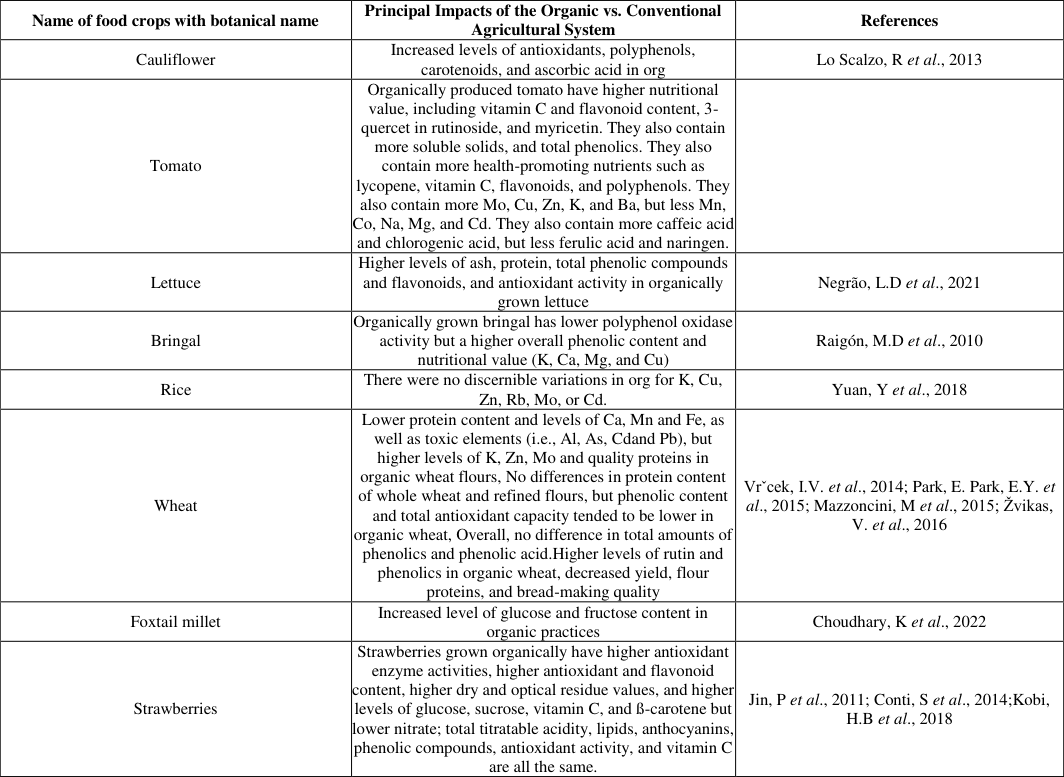 Table 1
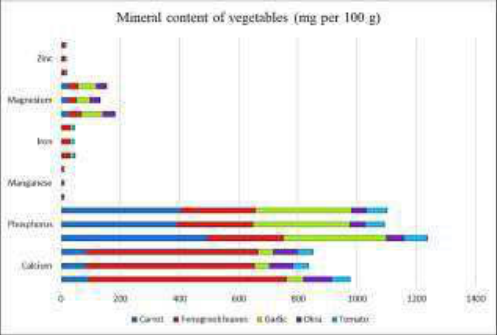 Figure 1
Introduction
A better and healthier lifestyle for everyone requires more nutrition and complicated components like proteins and amino acids. They are essential to the development of both adults and children. Since plants are the main source of the nutrients that humans require, people rely on them to supply these elements. A human's diet must have a variety of nutrients in order for the body to function properly and for him to live a healthy life. Protein, fat, carbohydrates, vitamins, and minerals are some of these nutrients. The body needs a certain amount of each nutrient in order to develop, maintain, and perform different tasks. Directly and indirectly, a number of these nutrients are provided by plants. Because of this, a plant that is high in nutrients is more important for human consumption in regular meals. The entire regional and national food supply, as well as any gaps between supply and demand, are referred to as "food security." Given that agriculture is the primary source of income and has the capacity to significantly increase food and nutritional security (Foster, 1992). Currently, Indian farmers have placed less emphasis on improving nutrition outcomes in favor of increasing crop and animal resource production, productivity, and profitability. However, the issue of malnutrition cannot be solved by merely increasing agricultural output. Therefore, it is necessary to implement the nutrition-enriched agriculture intervention with a sufficient feeding system for the people. Improving food's nutritional quality, which includes essential nutrients like vitamins A, C, and E, minerals like iron, zinc, and calcium, and bioactive substances like antioxidants, is a critical component of sustainable farming. By preventing malnutrition, increasing immunity, and lowering the risk of chronic illnesses, nutrient-dense foods are essential for advancing public health (Mason et al., 2019) [29] .
Addressing the twin issues of satisfying dietary demands and preserving environmental health requires an understanding of how various farming strategies affect the nutrient content of crops and animal products. Crop rotation, organic farming, and agroecology are examples of sustainable agricultural methods that present viable approaches to improve the nutrient density of food, hence promoting public health and food security. In this regard, a relevant topic that emerges is how India's population's nutritional consumption has been affected by the country's shifting dietary patterns. The nutritional status of the rural poor has been reported to have deteriorated due to the decrease in per-capita consumption of cereals, especially coarse cereals (Kumar et al., 2007b;Chand and Kumar, 2002) [23 10] . This suggests that, overall, increased consumption of calories from milk, fruits, vegetables, meat, etc. has somewhat offset the decrease in calorie intake from cereals. The National Family Health Survey (NFHS) III (2005-06) provided important information about the nation's sample families' nutritional and health conditions. Based on estimates, approximately 40.4% of children under three are underweight and 44.9% are stunted; 36% of adult women and 34% of adult men have chronic energy deficiency; and 56% of women and 79% of children are anemic (IIPS and Macro International, 2007). Between 2000 and 2016, the percentage of undernourished people decreased from 17% to 15.2%, the percentage of wasted children over the age of five decreased from 17.1 to 15.1%, the percentage of stunted children under the age of five decreased from 54.2 to 38.7%, and the percentage of under-five deaths decreased from 9.1 to 4.8%. However, among the 118 nations included in the 2016 Global Hunger Index, India's ranking fell from 83 to 97 over the previous 15 years. India's rating is now worse than it was fifteen years ago, and the country's food security situation has reached a concerning level. The goal of the Green Revolution was to increase food availability, and following it, India was able to satisfy its own food demands. However, it had a negative effect on conventional food crop kinds, leading to widespread issues with micronutrient deficiencies, such as those found in Indian soils and around the world. Due to a change in the grain mineral density of staple foods, the increase in calorie intake was followed by a decrease in dietary diversity, which had detrimental effects on human health, including obesity and chronic diseases. In fact, diet-related illnesses are non-communicable diseases (NCDs) that are made worse by undernutrition and malnutrition, both of which are brought on by soil degradation and its consequences. Additionally, the proportion of all food grain imports has dropped. Agricultural methods and food production systems have changed significantly since the 1950s. In order to meet the demands of a fast growing global population, agriculture has been intensified in industrialized countries and expanded in emerging regions during this period (Valenzuela, 2016, Wolff, 2004). Therefore, a key feature of contemporary agriculture is its focus on particular results, including maximizing crop quantity to guarantee food supply and using biofortification to address pervasive nutrient deficiencies (Dhaliwal et al., 2022, Reeve et al., 2016, Valenzuela, 2016). Nevertheless, the systemic and environmental effects of this strategy have become a major worry despite the observable advancements made. There is substantial evidence that current agricultural systems are a major cause of climate change and biodiversity loss, posing a serious threat to the health of the planet (Maitima et al., 2009, Perrings and Halkos, 2015, Raven and Wagner, 2021). As a result, long-term global food security and agricultural sustainability are gravely threatened by this environmental degradation. However, Swaminathan realized that the Green Revolution would only offer a temporary fix and that, in order to achieve productivity indefinitely without causing ecological and social harm, the cultivation system needed to be changed into an eco-friendly resourcepoor small and marginal farmer-friendly, sustainable system (Swaminathan, 2008). The nutritional value of crops is also greatly impacted by contemporary agriculture methods. Changes Growing techniques, harvesting time and type, postharvest treatment, storage management, and transportation methods are some of the aspects that influence the overall quality of grain (Brooker et al., 1992). The type or variety of grain that a farmer chooses can affect the quality of the grain. Climate and soil conditions during the growth season, cultivation methods, harvest weather, and harvesting methods will all have an impact. Grain producers can use their produce for a variety of purposes, such as selling it, using it as seed, or feeding their family or livestock. Grain trading can encompass a wide range of final applications. The uniformity of supply that comes with using grain standards would be advantageous to a number of end users, including the commercial producers of food products including beverages, baked goods, and animal feed, as well as the purchasers of food security reserves. Therefore, from the perspective of the consumer, grain quality is crucial. Therefore, when choosing plants to separate generations, grain quality characteristics must be taken into consideration. By removing the grain's nutrient-rich outer layers, milling lowers the flour's nutritious content (Oghbaei and Prakash, 2016). The protein content, particularly the amount of gluten proteins and the characteristics of the starch granules, are influenced by the size and quality of the grain during harvest, which in turn affects the flour yield and quality (Angelidis et al., 2016;Baasandorj et al., 2015). Therefore, in order to overcome yield-restricting biotic and abiotic factors and produce high-quality, sufficient amounts of nutrient-rich foods to meet the demand for nutrient-rich foods, it is imperative that the agricultural and related sectors adopt improved cultivation practices. Additionally, technological intervention is required to minimize postharvest losses.
Effect of chemical fertilizer application on composition
Effect of chemical fertilizer application on composition
Comparative effect of conventional and organic practices on composition
Organic agriculture is a special kind of production management that supports and improves the health of the agroecosystem, including soil biological activity, biological cycles, and biodiversity. By definition, organic agriculture does not utilize conventional fertilizers, synthetic pesticides, pharmaceuticals, or genetically modified plants or animals (Roitner-Schobesberger et al., 2008). The heavy reliance on nonrenewable resources, decreased biodiversity, contaminated water resources, chemical residues in food, soil degradation, and health risks to farm workers handling pesticides are all consequences of conventional agriculture's use of chemical fertilizers, synthetic pesticides, growth regulators, etc. These factors raise concerns about the sustainability of the conventional farming system (Zhu et al., 2000;Reganold et al., 2006). Because they included more total phenolic compounds, organic cultures of lettuce, arugula, and common chicory crops had higher antioxidant activity, according to a study by Arbos et al. (2010). Consuming more polyphenols and antioxidants has been linked to a lower chance of developing chronic illnesses like heart disease, neurological disorders, and some forms of cancer (Baudry et al., 2018). Similarly, the organic fruit farming approach promoted a rise in postharvest quality, resulting in fruits with greater amounts of sugars, total carotenoids, ascorbic acid, and folates, according to studies by Maciel et al. (2011) and Kohn et al. (2015) with mango and melon, respectively. Additionally, the fruits had superior phytochemical quality and were more balanced. Polyphenol, flavonol, and lutein levels were found to be greater in organic food when wheat, barley, potatoes, carrots, and onions grown in conventional systems were compared. These substances belong to a class of metabolites that have been linked to antioxidant qualities as well as neuroprotective, cardioprotective, and chemopreventive effects. They have also been linked to lower rates of cancer, gastrointestinal disorders, liver diseases, atherosclerosis, obesity, and allergies (Skwarlo-Sonta et al., 2011; Rodríguezrednicka-Tober et al., 2013). The majority of organically grown crops have higher dry matter, sugar content, titratable acidity, protective substances, antioxidant potential, flavonoid and total phenol levels, and content of elements like Ca, Mg, P, Zn, and Fe than conventionally grown crops, according to a number of earlier studies [Brandt, K et al., 2011;Hallmann, E et al., 2017; Gill, B.S & Kaur, K., 2020]. Acetic acid, alanine, arginine, histidine, glutamine, fumaric acid, lactic acid, isoleucine, leucine, malic acid, galactose, mannose, methionine, phenylalanine, threonine, tyrosine, proline, sucrose, valine, and trigonelline were all found to be higher in organic pomegranate juices than in their conventionally grown counterparts [Villa-Ruano, N et al., 2020]. Conventional-grown butternut squash had higher levels of folic acid and β-carotene, whereas organic squash had higher levels of tocopherol, K, Mg, Na, and Mn (Armesto, J et al., 2020).Higher Ca, Mg, Na, K, and P contents were found in organically cultivated parsley root, celery, and potatoes than in conventionally grown ones (Gałowska, M. & Krawczyk, J., 2019). On the basis of several comparison studies, organic agricultural products have a higher ratio of vitamin C and Fe, Mg, Zn, Cu, and P than conventional crops (Yu, X.F et al., 2018; Datta, P. & Das, K., 2017). In the meantime, starch is higher than in conventional potatoes (Lombardo, S et al., 2017) and vitamin C is equal or higher in organic potatoes (Foods 2023, 12, 351 6 of 19) (Kazimierczak, R et al., 2019). Because of their quality and nutritional characteristics, micronutrient levels in conventional and organic goods have been the subject of several research (Table 1). It was found that all of the organically cultivated vegetables-carrots, fenugreek leaves, garlic, okra, and tomatoes-had much greater magnesium values than their conventionally and inorganically grown equivalents. The magnesium content of garlic cultivated conventionally was much higher (58.67 mg/100g) than that of garlic grown inorganically (42.33 mg/100g). Only the manganese content of garlic and fenugreek leaves grown under organic conditions differed significantly from that of garlic and fenugreek leaves grown under inorganic conditions. The manganese content of organically grown carrots, okra, and tomatoes was significantly higher than that of inorganically grown carrots, okra, and tomatoes and conventionally grown carrots, okra, and tomatoes. When the mean zinc content values of fenugreek leaves, okra, and tomatoes grown organically and inorganically were compared, it was found that all of these vegetables had substantially higher zinc contents when grown organically than when grown conventionally or inorganically. Zinc is frequently found in animal feed supplements. The application of manures, which is more common in organic farming, may serve as an extra source of zinc for the soil and plants, which could account for the higher concentrations of zinc in the organic samples (Bolan et al., 2003;Zhao et al., 2005).
Conclusion
By providing vital nutrients like nitrogen, phosphorous, and potassium, the use of chemical fertilizers is necessary for increasing crop development and output. However, their effects on crop composition are complicated and heavily reliant on the kind, amount, and balance of nutrients used. While using fertilizer appropriately can increase the accumulation of proteins, vitamins, and minerals, applying it excessively or unevenly can have detrimental effects on nutritional quality, such as lowering the amount of carbohydrates or decreasing the bioavailability of micronutrients because of nutrient antagonism. On the other hand, crops grown in organic farming systems typically have higher amounts of antioxidants, polyphenols, vitamins, and vital minerals, as well as better nutritional quality and phytochemical composition. The use of natural nutrient sources, increased biological activity, and better soil health are the main causes of these advantages. However, there are differences based on the kind of crop and the growing environment, and in certain situations, conventional systems might be superior in terms of particular nutrients. In general, crop composition is greatly influenced by farming methods and fertilizer management. The best method for attaining sustainable crop production while preserving or enhancing nutritional quality seems to be a balanced and integrated approach that combines organic and inorganic inputs.
Figures and tables from the paper
References
45 in the original paper- Angelidis G, Protonotariou S, Mandala I, Rosell CM. Jet milling effect on wheat flour characteristics and starch hydrolysis. Journal of Food Science and Technology. 2016;53:784-791.
- Anton D, Matt D, Pedastsaar P, Bender I, Kazimierczak R, Roasto M, et al. Three-year comparative study of polyphenol contents and antioxidant capacities in tomato cultivars grown under organic and conventional conditions. Journal of Agricultural and Food Chemistry. 2014;62:5173-5180.
- Arbos KA, et al. Atividade antioxidante e teor de fenólicos totais em hortaliças orgânicas e convencionais. Ciência e Tecnologia de Alimentos. 2010;30(2):501-506.
- Baasandorj T, Ohm JB, Manthey F, Simsek S. Effect of kernel size and mill type on protein, milling yield, and baking quality of hard red spring wheat. Cereal Chemistry. 2015;92:81-87.
- Bajpai P, Punia D. Effect of cultivation practices on nutritional composition of vegetables. Agricultural Research Communication Centre. 2015;34(2):164-167.
- Baudry J, et al. Association of frequency of organic food consumption with cancer risk: Findings from the NutriNet-Santé prospective cohort study. JAMA Internal Medicine. 2018;178(12):1597-1606.
- Bolan NS, Khan MA, Donaldson J, Adriano DC, Matthew C. Distribution and bioavailability of copper in farm effluent. Science of the Total Environment. 2003;309(1-3):225-236.
- Brandt K, Leifert C, Sanderson C, Seal CJ. Agroecosystem management and nutritional quality of plant foods: The case of organic fruits and vegetables. Critical Reviews in Plant Sciences. 2011;30:177-197.
- Brooker DB, Bakker-Arkema FW, Hall CW. Drying and storage of grain and oilseeds. New York: Van Nostrand Reinhold; 1992.
- Chand R, Kumar P. Long-term changes in coarse cereal consumption in India: Causes and implications. Indian Journal of Agricultural Economics. 2002;57(3):316325.
- Choudhary K, Mishra P, Dayanand, Patni V. Influence of organic farming on volatile compounds in methanolic fruit extracts of chili (Capsicum annuum L.). Journal of Microbiology, Biotechnology and Food Sciences. 2022;12:e3545.
- Conti S, Villari G, Faugno S, Melchionna G, Somma S, Caruso G. Effects of organic vs conventional farming system on yield and quality of strawberry. Scientia Horticulturae. 2014;180:63-71.
- Datta P, Das K. Vitamin C content of guava in conventional versus organic farming system. Journal of Ecofriendly Agriculture. 2017;12:17-18.
- Gill BS, Kaur K. Functional and antioxidant properties of organically and conventionally grown rice. Agricultural Research Journal. 2020;57:235-244.
- Głodowska M, Krawczyk J. Differences in macro element concentration between organically and conventionally grown vegetables. Agricultural Sciences. 2019;10:267-277.
- Hallmann E. Influence of organic and conventional cultivation systems on nutritional value of tomatoes. Journal of the Science of Food and Agriculture. 2012;92:2840-2848.
- Hallmann E, Kazimierczak R, Marszałek K, Drela N, Kiernozek E, Toomik P, et al. Nutritive value of organic and conventional cabbage. Journal of Agricultural and Food Chemistry. 2017;65:8171-8183.
- Jin P, Wang SY, Wang CY, Zheng Y. Effect of cultural system and storage temperature on strawberries. Food Chemistry. 2011;124:262-270.
- Karaat FE. Organic vs conventional almond quality and composition. Applied Ecology and Environmental Research. 2019;17:7783-7793.
- Kazimierczak R, Srednicka-Tober D, Hallmann E, Kopczyńska K, Zarzyńska K. Impact of organic vs conventional practices on potato quality. Agronomy. 2019;9:799.
- Kobi HB, et al. Organic and conventional strawberries: Nutritional quality and pesticide residues. Fruits. 2018;73:39-47.
- Kohn RAG, et al. Physical and chemical characteristics of melon in organic farming. Revista Brasileira de Engenharia Agrícola e Ambiental. 2015;19(7):656-662.
- Kumar P, Mruthyunjaya, Birthal PS. Changing consumption pattern in South Asia. In: Joshi PK, et al., editors. Agricultural diversification and smallholders in South Asia. New Delhi: Academic Foundation; 2007. p. 151-187.
- Liñero O, Cidad M, Carrero JA, Nguyen C, de Diego A. Element accumulation in tomato plants. Journal of Agricultural and Food Chemistry. 2015;63:9461-9470.
- Lo Scalzo R, Picchi V, Migliori CA, Campanelli G, Leteo F, Ferrari V, et al. Phytochemical variations in cauliflower. Journal of Agricultural and Food Chemistry. 2013;61:10335-10344.
- Lombardo S, Pandino G, Mauromicale G. Effect of organic vs conventional cultivation on potato quality. Journal of Food Composition and Analysis. 2017;62:189-196.
- Maciel LF, et al. Antioxidant activity and phenolics in mangoes. British Food Journal. 2011;113(9):11031113.
- Martí R, Leiva-Brondo M, Lahoz I, Campillo C, Cebolla-Cornejo J, Roselló S. Polyphenol and ascorbic acid in tomato. Food Chemistry. 2018;239:148-156.
- Mason RE, Johnson AR, Vail D. Nutritional advantages of sustainably grown crops. Food and Nutrition Research. 2019;63:3400.
- Mazzoncini M, Antichi D, Silvestri N, Ciantelli G, Sgherri C. Organic vs conventional wheat quality. Food Chemistry. 2015;175:445-451.
- Negrão LD, et al. Bioactive compounds in lettuce under different cultivation systems. Food Science and Technology. 2021;41:365-370.
- Oghbaei M, Prakash J. Effect of primary processing on nutritional quality. Cogent Food and Agriculture. 2016;2:1-14.
- Oliveira AB, et al. Impact of organic farming on tomato quality. PLoS One. 2013;8:e56354.
- Park EY, Baik BK, Miller PR, Burke IC, Wegner EA, Tautges NE, et al. Functional characteristics of wheat. Cereal Chemistry. 2015;92:504-512.
- Raigón MD, Rodríguez-Burruezo A, Prohens J. Effects of cultivation methods on eggplant composition. Journal of Agricultural and Food Chemistry. 2010;58:6833-6840.
- Roitner-Schobesberger B, Darnhofer I, Somsook S, Vogl C. Consumer perceptions of organic foods. Food Policy. 2008;33:112-121.
- Srednicka-Tober D, et al. Effect of production systems on feed composition. Journal of Agricultural and Food Chemistry. 2013;61:1017-1029.
- Skwarło-Sonta K, et al. Animal physiology response to organic vs conventional food. NJAS Wageningen Journal of Life Sciences. 2011;58:89-96.
- Villa-Ruano N, et al. Nutritional quality of pomegranate juice. LWT Food Science and Technology. 2020;134:110222.
- Vrček IV, et al. Nutritional value and safety of wheat flours. Food Chemistry. 2014;143:522-529.
- Yuan Y, et al. Differentiating organic rice using isotopes. Journal of Agricultural and Food Chemistry. 2018;66:2607-2615.
- Yu XF, Guo L, Jiang G, Song Y, Muminov MA. Advances of organic products over conventional. Acta Ecologica Sinica. 2018;38:53-60.
- Zhao X, Matta Z, Loughin TM, Carey EE. Consumer sensory analysis of vegetables. Journal of Food Science. 2005;72(2):87-91.
- Zhu Y, Chen H, Fan J, Wang Y, Li Y, Chen J, et al. Genetic diversity and disease control in rice. Nature. 2000;406:718-722.
- Žvikas V, Pukelevičienė V, Ivanauskas L, Pukalskas A, Ražukas A, Jakštas V. Phenolic content in buckwheat. Food Chemistry. 2016;213:660-667.
Cited by 3
From OpenAlex, OpenCitations and reference lists read by Scinovex
- Comparative analysis of natural and inorganic farming systems in India: Implications for crop diversity, sustainability, and productivity
Md. Hedayetullah, Sabyasachi Patra, Asikur Rahaman, GaganMudi ., Sanchita Roy, Syed ShujatHussain · International Journal of Research in Agronomy · 2026
We hereby present a case series of and epidemiological study on benign breast diseases among rural population of North Maharashtra. Breast health awareness has resulted in increasing detection of early breast cancer and corresponding decrease in breast cancer morbidity. About 80% of breast biopsies result in a benign pathology. Women with a benign disorder, require treatment at some time in their lives. The concept of ANDI – Abberations of Normal Development and Involution is gaining acceptance. This study highlights the spectrum of epidemiology of benign breast diseases in rural population.
- Future scope of chia (Salvia hispanica L.) accommodation under rice-based cropping systems through crop diversification in a changing climate scenario
Md. Hedayetullah, Sabyasachi Patra, Md Sahanowaz Hoque, Rohan Sharma, Mohammad Ilyas Khatibi, Uday Layek · International Journal of Research in Agronomy · 2026
Climate change is one of the major problems threatening the sustainability of agriculture globally. Rising temperatures, erratic rainfall, frequent droughts, floods, and depleting natural resources have all had a negative effect on the productivity and profitability of traditional rice-based agricultural systems. Crop diversification is becoming more widely acknowledged as a successful tactic to boost farm income, increase resilience, and guarantee nutritional security. Chia (Salvia hispanica L.), one of the newest climate-resilient crops, has garnered a lot of interest due to its outstanding
- Evaluating the efficacy of human and cow urine as fertilizers on the growth of fenugreek, tomato, and okra plants ↗
Helly Mehta, Manoj J. Gundalia · Journal of Environmental Science and Health Part B · 2026
The increasing demand for sustainable agricultural practices has intensified interest in alternative nutrient sources capable of reducing reliance on synthetic fertilizers. This study evaluated the fertilizer potential of human urine, cow urine, conventional NPK fertilizer, and a water-only control on the growth performance of fenugreek (Trigonella foenum-graecum), tomato (Solanum lycopersicum), and okra (Abelmoschus esculentus) under controlled greenhouse conditions. A randomized…
❝ 0