
Research article · 2026 · Full text
International Journal of Advanced Chemistry ResearchAdvances in research on chemical constituents of Zingiber officinale Roscoe
Volume 8(4) · Pages 15–21 · DOI: 10.33545/26646781.2026.v8.i4a.642 ↗
Research areasGinger and Zingiberaceae researchGarlic and Onion StudiesGinseng Biological Effects and Applications
Abstract
Author-writtenGinger (Zingiber officinale Roscoe), a rhizome native to China and India, is widely recognized as both a culinary spice and a medicinal plant with significant pharmacological potential. Its therapeutic efficacy is attributed to a diverse spectrum of bioactive constituents, including phenolic compounds (notably gingerols and shogaols), terpenoids, polysaccharides, lipids, organic acids, and dietary fibers. These compounds exhibit multiple biological activities, such as anti-inflammatory, antimicrobial, antioxidant, cardioprotective, neuroprotective, respiratory, anticancer, anti-obesity, anti-nausea, antidiabetic, and antiemetic effects. This systematic review synthesizes current scientific evidence regarding the phyto-chemical profile of ginger, the mechanisms underlying its biological activities, and the therapeutic relevance of its bioactive constituents. Emerging findings highlight its potential incorporation into functional foods and nutraceutical formulations aimed at preventing or managing chronic diseases. Increasing clinical attention underscores ginger’s promise in achieving measurable therapeutic outcomes across diverse medical domains. This review aims to provide a comprehensive evaluation of the clinical effects of ginger and identify future research directions to support its translational and therapeutic applications.
Summary
Source-checkedPlain-language reading of the full paper, prepared with AI and checked against the text. Each point links to the authors' own words.
Why it matters
- Ginger (Zingiber officinale Roscoe) is a rhizome native to China and India used globally as both a culinary spice and a medicinal plant. View evidence ↗
- The therapeutic effects of ginger are linked to its diverse bioactive components, specifically phenolic compounds like gingerols and shogaols, as well as terpenoids and polysaccharides. View evidence ↗
- Ginger's bioactive compounds provide a wide range of health benefits, including anti-inflammatory, antioxidant, and anticancer activities. View evidence ↗
The question
- The objective of this review is to comprehensively evaluate the clinical effects of ginger and determine future research directions for its therapeutic use. View evidence ↗
What they did
- The authors conducted a systematic review synthesizing scientific evidence on ginger's phytochemical profile and the mechanisms of its biological activities. View evidence ↗
- The review specifically evaluates evidence from Randomized Clinical Trials (RCTs) across six domains, including pain, inflammation, and gastrointestinal function. View evidence ↗
What they found
- Among the phenolic compounds, gingerols (23-25%) and shogaols (18-25%) are present in the highest quantities. View evidence ↗
- In animal models, ginger oil (33 mg/kg for 26 days) reduced joint swelling in arthritic mice, and ginger extract (100 mg/kg) lowered TNF-α levels. View evidence ↗
- Ethanolic ginger extract demonstrated antifungal activity with minimum inhibitory concentrations of 5-10 mg/mL against Candida albicans and Candida krusei. View evidence ↗
- Ginger essential oils and extracts can inhibit the growth of spoilage fungi and phytopathogens like Penicillium microspora at concentrations of approximately 0.3% v/v. View evidence ↗
- Clinical evidence indicates that ginger is safe and effective for treating pregnancy-related nausea (especially in the first trimester) and reducing symptoms of motion sickness. View evidence ↗
- Regular intake of ginger has been clinically reported to significantly reduce HbA1c levels, fasting blood glucose, and insulin resistance. View evidence ↗
- Ginger extracts improve liver function and reduce hepatocellular damage by significantly lowering liver enzyme levels, including ALT, AST, and ALP. View evidence ↗
What it means
- The authors conclude that ginger generally shows favorable outcomes, especially for modulating inflammation, reducing pregnancy-related nausea, and improving colorectal cancer risk biomarkers. View evidence ↗
- The authors state that large-scale, standardized RCTs with clearly defined outcome measures are still needed to conclusively establish the therapeutic efficacy of ginger. View evidence ↗
Figures & tables
From the original paper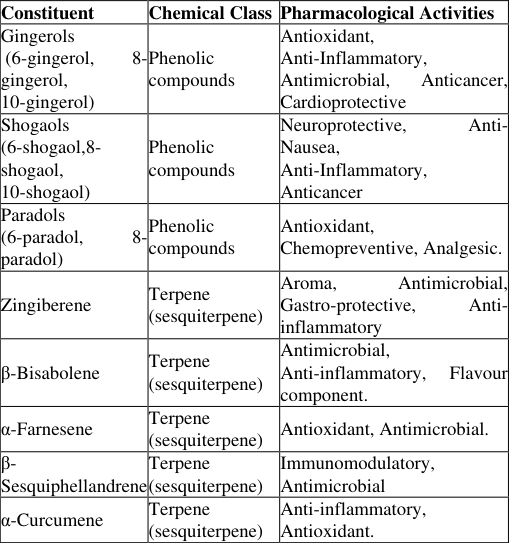 Table 1
Introduction
Zingiber officinale Roscoe (ginger) is a perennial herb belonging to the family Zingiberaceae and has been extensively utilized worldwide as a culinary spice as well as in traditional medicinal systems for its therapeutic properties [1,4] . The family of Zingiberaceae includes about 53 genera with more than 1200 species [5,6] . Zingiberaceae is distributed across south and south-east Asia [7,8] . Ginger has been widely used to alleviate common ailments such as headaches, colds, nausea, and vomiting. Ginger contains numerous bioactive compounds, primarily terpenes and phenolics, among which gingerols, shogaols, and paradols are the most significant contributors to its pharmacological activities [9,10] . Recent research has demonstrated that ginger possesses a wide range of biological properties, including anti-inflammatory [11] , antimicrobial [12,13] , antioxidant [14] , and anti-cancer [15,16] effects. Moreover, accumulating evidence suggests that ginger may play a preventive and therapeutic role in several chronic and acute conditions, including neurological disorders [17] , obesity [18] , diabetes mellitus [19] , and chemo therapy-induced nausea and vomiting, and respiratory illnesses [20] . This review focuses on the bioactive constituents of ginger and their associated bioactivities, with special emphasis on the underlying mechanisms of action. The number of studies investigating the health benefits of ginger has increased considerably due to its diverse pharmacological and physiological effects.
leaves measuring approximately 15-30 cm in length with entire margins. The reproductive axis emerges directly from the rhizome as a compact spike bearing greenish-yellow, bilaterally symmetrical flowers distinguished by a purple labellum with yellow markings. Owing to the infrequent development of viable seeds, propagation is predominantly achieved through vegetative multiplication using rhizome segments [21,22] . Ecological Distribution and Cultivation Practices: Ginger is native to South and Southeast Asia, with India as a primary diversity centre. It thrives in warm, humid climates (1500-3000 mm rainfall, 20-30 °C temperature) and well-drained loamy soils, though lateritic and sandy soils are also suitable. Major producers include India, China, Nigeria, Nepal, Indonesia, and Thailand [2] . Cultivation involves planting rhizome sections with viable buds, often under partial shade or intercropped with coconut, areca nut, or coffee. Mulching, weeding, and irrigation are essential, and harvesting is done at 6-8 months for fresh use or 8-10 months for dried spice/medicinal purposes, followed by cleaning, curing, and drying to maintain quality [23] .
Chemical constituents
Ginger (Zingiber officinale) is chemically complex, containing over 400 compounds in its rhizomes. Its primary constituents are carbohydrates (50-70%), lipids (3-8%), phenolic compounds, and terpenes [11] . The key phenolic constituents are gingerols, shogaols, and paradols. Fresh ginger mainly c ontains gingerols (notably 6-gingerol, 8-gingerol, and 10-gingerol), which are responsible for its pungency and biological activities [1] . During heat processing or prolonged storage, gingerols are converted to shogaols, and further hydrogenation yields paradols. Shogaol (18-25%) and gingerols (23-25%) are found in higher quantities compared to other compounds. Besides these, water, raw fiber, protein, ash, phytosterols, minerals and some vitamins are also present [24,25] .
These compounds exhibit diverse pharmacological properties: gingerols act as potent antioxidants, antiinflammatory agents, and have anticancer potential; shogaols show strong anti-inflammatory, neuroprotective, and anti-nausea effects; while paradols possess antioxidant and chemopreventive activities. Ginger contains a wide variety of additional phenolic compounds, including 6-dehydrogingerdione, zingerone, quercetin and gingerenne-A. Alongside phenolics, ginger is rich in terpene constituents, mainly present in its essential oils [10] . The most abundant is zingiberene, followed by βbisabolene, α-farnesene, β-sesquiphellandrene, and αcurcumene. These terpenes contribute to ginger's characteristic aroma and flavor, and they exhibit significant antimicrobial, anti-inflammatory, gastroprotective, and immunomodulatory activities. Terpenes, together with phenolic compounds, enhance ginger's therapeutic potential by acting synergistically against oxidative stress, infections, and chronic inflammatory conditions. Besides these, ginger also includes lipids, organic acids, polysaccharides, and dietary fibers, contributing to its nutritional value and functional properties [26] . Overall, these phytochemicals produced as secondary metabolites in various plant parts serve not only as the plant's defense system but also as valuable agents for human health, offering protection against multiple diseases and stress conditions. They help neutralize free radicals, reduce inflammation, enhance immune function, and support the prevention of chronic illnesses such as cardiovascular diseases, diabetes, cancer, and neurodegenerative disorders. By working synergistically with nutrients and dietary fibres, these bioactive compounds make ginger a potent functional food with both nutritional and therapeutic benefits [27] .
Biological activities of ginger 1. Anti-inflammatory activity
Ginger (Zingiber officinale) contains several bioactive compounds, including gingerols, shogaols, and paradols, which are well known for their anti-inflammatory properties. Due to these compounds, ginger has long been used to relieve conditions such as arthritis, swelling, and muscle pain. Over the past 25 years, scientific research has validated these traditional claims by demonstrating that ginger inhibits key inflammatory pathways. In the early 1970s, studies revealed that ginger suppresses the production of prostaglandins chemical mediators responsible for pain and inflammation through inhibition of cyclooxygenase enzymes (COX-1 and COX-2), a mechanism similar to that of non-steroidal antiinflammatory drugs (NSAIDs). Subsequent research further showed that ginger also inhibits 5-lipoxygenase (5-LOX), an enzyme involved in leukotriene synthesis, thereby providing a dual inhibitory action on both COX and LOX pathways. This distinctive mechanism differentiates ginger from conventional NSAIDs and may result in improved therapeutic efficacy with fewer side effects. Experimental studies support these findings, as ginger oil (33 mg/kg for 26 days) significantly reduced joint swelling in mice with chronic arthritis [28] while ginger extract (100 mg/kg) lowered elevated levels of the inflammatory marker TNF-α. Overall, ginger's ability to modulate multiple inflammatory mediators highlights its potential as a natural and effective agent for managing inflammation and inflammation-related disorder [29] .
Antioxidant activity
Auto-oxidation of fats is a serious concern because it leads to deterioration in food quality and a reduction in nutritional value [30] . In the human body, oxidation of polyunsaturated fatty acids present in cell membranes can result in severe health problems [31] , including coronary atherosclerosis, emphysema, cancer, and liver cirrhosis. To prevent such damage, fats are commonly protected by limiting their exposure to oxygen or by the addition of antioxidants. However, the safety of widely used synthetic antioxidants such as butylated hydroxyanisole (BHA) and butylated hydroxytoluene (BHT) remains uncertain [32] . Due to these safety concerns, scientific interest has increasingly shifted toward natural antioxidants, particularly polyphenols, which are widely distributed in all parts of plants, including bark, stems, leaves, fruits, roots, flowers, pods, and seeds [33] . Ginger (Zingiber officinale (L.) Rosc), which has been used as a spice for more than 2000 years, is rich in polyphenolic compounds such as 6-gingerol and its related constituents, which exhibit strong antioxidant activity [34] . Traditionally, ginger has been known to stimulate digestion; however, later studies have demonstrated that it also enhances the secretion of digestive juices, including gastric juice, bile, pancreatic enzymes, and intestinal enzymes. Bile acids play a crucial role in fat absorption, and any disturbance in fat metabolism can negatively affect the overall digestive process, as undigested fat may coat other nutrients and prevent digestive enzymes from acting on them. Lipase is another essential enzyme involved in fat breakdown. Studies have shown that the inclusion of ginger in animal diets significantly increases pancreatic and intestinal lipase activity [35] thereby improving fat digestion. Ginger contains potent antioxidant compounds that protect cells from oxidative damage caused by free radicals. By reducing cellular damage, ginger helps slow premature aging and lowers the risk of chronic diseases such as cardiovascular disorders, diabetes, and certain types of cancer. These antioxidant effects support overall health and contribute to the long-term protective benefits of ginger. Among different forms, dried ginger exhibits the highest antioxidant activity, primarily due to its high phenolic content, while this activity decreases with processing (dried > stir-fried > carbonized > fresh) as gingerols are converted into shogaols. The type of solvent used for extraction also influences antioxidant efficacy, with aqueous and ethyl acetate solvents being more effective than others. The antioxidant mechanisms of ginger include the reduction of reactive oxygen species (ROS), activation of the NRF2 signalling pathway leading to up regulation of antioxidant enzymes such as HO-1 and GCLC, and inhibition of nitric oxide (NO) production by compounds like 6-shogaol. The bioavailability of ginger's bioactive compounds may vary depending on dose, lifestyle, and other individual factors [36] .
Digestive stimulant and gastroprotective effects
Ginger (Zingiber officinale Roscoe) exhibits significant gastroprotective activity, making it an important therapeutic agent for maintaining gastrointestinal health. Traditionally used as a digestive aid, ginger is scientifically proven to enhance digestion, relieve flatulence, reduce gastric acidity, and alleviate bloating. These effects are largely attributed to its bioactive constituents such as gingerols, shogaols, zingerone, and volatile oils, which stimulate salivary and gastric secretions and promote efficient digestion [37] . Ginger also protects the gastrointestinal (GI) mucosa and enhances intestinal absorption of nutrients such as zinc, iron, β-carotene, and calcium by increasing microvilli length, membrane fluidity, and the activity of digestive enzymes, including amylase, proteases, lipase, and disaccharidases. It stimulates salivary secretion, bile secretion, and intestinal motility, thereby reducing gastrointestinal transit time. Additionally, ginger helps prevent gastric ulcers by exerting inhibitory effects on Helicobacter pylori and gastric ATPase [38] .
Antimicrobial & antifungal activity
Ginger contains potent antimicrobial and antifungal properties due to bioactive compounds such as gingerols, shogaols, and essential oils, which disrupt microbial cell membranes, inhibit growth, and prevent biofilm formation. Contemporary in vitro studies have demonstrated that ginger extracts and essential oils exhibit significant inhibitory effects against a wide range of pathogenic bacteria and fungi. For example, ethanolic ginger extract showed minimum inhibitory concentrations (MICs) as low as 5-10 mg/mL against Candida albicans and Candida krusei, and also effectively inhibited biofilm formation, indicating both direct antifungal activity and disruption of microbial colonization mechanisms [39] . In addition, solvent-based ginger extracts displayed strong antimicrobial activity against Staphylococcus aureus, Escherichia coli, and Candida albicans, with notable inhibition zones observed in agar diffusion assays, suggesting that the choice of extraction solvent can influence antimicrobial potency [40] . Essential oils derived from ginger rhizomes have also been reported to exert broad-spectrum antifungal effects. Recent in vitro assessments showed that even low concentrations of ginger essential oil completely inhibited the growth and spore germination of several phytopathogenic fungi, highlighting the fungicidal potential of volatile compounds such as citral and zingiberene. Mechanistic studies further suggest that these bioactive constituents disrupt microbial cell membrane integrity, interfere with enzymatic activities, and reduce virulence factors such as biofilm formation. Collectively, findings from contemporary research reinforce ginger's role as a natural antimicrobial and antifungal agent with promising applications in pharmaceutical, clinical, agricultural, and food preservation contexts. Moreover, ginger essential oils and extracts have been shown to inhibit fungal growth, including phytopathogens such as Penicillium microspora and common spoilage fungi, at low concentrations (approximately 0.3% v/v) by altering membrane permeability and enzyme activity. Studies also indicate that processing methods and plant genotypes influence antimicrobial efficacy, with ethanolic extracts from certain ginger varieties exhibiting superior inhibitory effects.
Antiemetic activity (Relief from Nausea)
Ginger (Zingiber officinale Roscoe) is well known for its strong antiemetic activity and has been widely used as a natural remedy to prevent and treat nausea and vomiting. It is effective in conditions such as motion sickness, pregnancy-related morning sickness, chemotherapy-induced nausea, and post-operative nausea and vomiting (PONV). These effects are mainly attributed to its bioactive compounds, including [6] -gingerol, [8] -gingerol, [10] -gingerol, shogaols, and zingerone, which act on both the gastrointestinal tract and the nervous system. Ginger stimulates salivary and gastric secretions, enhances gastric emptying, and improves gastrointestinal motility, thereby reducing gastric stasis, one of the major causes of nausea [41] . Mechanistically, ginger exerts its antiemetic action by modulating gastrointestinal motility and inhibiting serotonin (5-hydroxytryptamine, 5-HT₃) receptors in the gut and central nervous system, which are key mediators of the emetic reflex. Clinical studies have shown that ginger significantly reduces nausea, vomiting, cold sweating, and vertigo in motion sickness, and is safe and effective in pregnancy-related nausea, particularly during the first trimester. It has also demonstrated beneficial effects in reducing the incidence and severity of post-operative nausea and vomiting when administered preoperatively. Overall, ginger's multifactorial antiemetic mechanism, combined with its good safety profile and additional antioxidant and anti-inflammatory properties, makes it a valuable natural alternative or adjunct to conventional antiemetic therapies [41] .
Analgesic (Pain-relieving) activity
Ginger (Zingiber officinale Roscoe) possesses strong analgesic and anti-inflammatory properties, making it effective in relieving various types of pain such as menstrual cramps (dysmenorrhea), muscle pain, and joint pain. Its pain-relieving effects are mainly attributed to bioactive compounds including gingerols, shogaols, paradols, and zingerone, which regulate inflammatory pathways and pain signaling mechanisms. Ginger inhibits cyclooxygenase (COX-1 and COX-2) and Lipoxygenase (LOX) enzymes, thereby reducing the production of pro-inflammatory mediators like prostaglandins and leukotrienes. In addition, it suppresses inflammatory cytokines such as tumor necrosis factor-α (TNF-α) and interleukins, and downregulates NF-κB signaling, collectively contributing to reduced inflammation and pain [42] . Clinical studies have shown that ginger is particularly effective in alleviating menstrual pain by lowering uterine prostaglandin levels, which decreases the intensity and duration of cramps. Ginger supplementation has also been reported to reduce muscle soreness and pain, especially after physical exercise, by minimizing inflammation and oxidative stress. Furthermore, in conditions such as osteoarthritis and rheumatoid arthritis, ginger provides symptomatic relief by reducing joint pain, stiffness, and improving mobility, without the gastrointestinal side effects commonly associated with Non-Steroidal Anti-Inflammatory Drugs (NSAIDs). Overall, ginger's multitarget anti-inflammatory, antioxidant, and neuromodulatory actions support its use as a safe and effective natural option for managing both acute and chronic pain.
Anti-diabetic activity
Ginger (Zingiber officinale Roscoe) has gained significant scientific attention for its anti-diabetic potential, particularly in improving glycemic control and enhancing insulin sensitivity. Experimental and clinical studies suggest that ginger supplementation is beneficial in the management of diabetes mellitus, especially type-2 diabetes. These effects are mainly attributed to its bioactive compounds such as gingerols, shogaols, zingerone, and flavonoids, which exert regulatory actions on metabolic and cellular pathways. Ginger improves insulin receptor signaling and promotes glucose uptake in peripheral tissues like skeletal muscle and adipose tissue by stimulating the translocation of glucose transporter-4 (GLUT-4) to the cell membrane, thereby reducing insulin resistance. In addition, ginger inhibits carbohydrate-digesting enzymes such as α-amylase and α-glucosidase, resulting in decreased intestinal glucose absorption and reduced postprandial hyperglycemia. It also lowers blood glucose levels by suppressing hepatic gluconeogenesis and enhancing glycogen storage in the liver. The antioxidant and antiinflammatory properties of ginger protect pancreatic β-cells from oxidative stress and inflammation, helping to maintain insulin secretion. Clinical studies have reported significant reductions in fasting blood glucose, HbA1c levels, and insulin resistance indices following regular ginger intake. Overall, ginger exhibits a multifaceted anti-diabetic mechanism, supporting its use as a safe and effective natural adjunct therapy alongside conventional diabetes treatments [43] .
Cardioprotective activity
Ginger (Zingiber officinale Roscoe) exhibits significant cardioprotective properties and plays an important role in maintaining cardiovascular health. Studies have shown that ginger helps reduce total cholesterol, Low-Density Lipoprotein (LDL), and triglyceride levels, while maintaining or increasing High-Density Lipoprotein (HDL). These lipid-lowering effects are mainly attributed to ginger's ability to inhibit cholesterol biosynthesis and enhance its conversion into bile acids, thereby reducing lipid accumulation and plaque formation in blood vessels [44] . In addition, ginger prevents abnormal blood clot formation by inhibiting platelet aggregation and reducing thromboxane synthesis, which lowers the risk of thrombosis and atherosclerosis. It also contributes to blood pressure regulation by improving endothelial function, promoting vasodilation, and modulating calcium channel activity. Collectively, these actions support overall heart function and help reduce the risk of cardiovascular disorders such as hypertension, coronary artery disease, and stroke [45] .
Anti-obesity activity
Ginger has demonstrated significant anti-obesity potential, primarily through its effects on energy metabolism and lipid regulation. Bioactive compounds such as gingerols and shogaols stimulate thermogenesis and metabolic rate, leading to increased energy expenditure. Ginger also enhances fat oxidation and reduces lipid accumulation by modulating adipocyte differentiation and inhibiting fat storage. Furthermore, ginger aids in weight management by improving insulin sensitivity, reducing appetite, and regulating lipid metabolism. Its anti-inflammatory properties help counteract chronic low-grade inflammation associated with obesity, while its digestive benefits promote efficient nutrient metabolism. Collectively, these actions make ginger a promising natural agent for obesity prevention and management [46] .
Hepatoprotective activity
Ginger demonstrates strong hepatoprotective activity, offering protection to the liver against chemical toxins, drugs, and oxidative stress. Studies indicate that ginger extracts significantly reduce liver enzyme levels such as ALT, AST, and ALP, reflecting improved liver function and reduced hepatocellular damage. This protective effect is largely mediated by ginger's antioxidant compounds, which neutralize free radicals and prevent lipid peroxidation in hepatic tissues. Moreover, ginger enhances the liver's detoxification capacity by improving antioxidant enzyme activity, including superoxide dismutase, catalase, and glutathione peroxidase. Its anti-inflammatory properties further prevent liver inflammation and fibrosis, thereby supporting overall liver health. These findings highlight ginger's therapeutic potential in preventing liver disorders and maintaining hepatic integrity [47] .
Conclusion
Ginger (Zingiber officinale) is a widely used natural spice appreciated not only for its distinctive flavor but also for its long-standing role in traditional medicine for managing common health ailments. In recent years, scientific interest has increasingly focused on its therapeutic potential through Randomized Clinical Trials (RCTs). This systematic review compiles and evaluates RCT-based evidence on ginger's clinical effects across six major domains: gastrointestinal function, pain, inflammation, metabolic syndromes, nausea and vomiting, and related symptoms. Most studies report favorable outcomes, particularly in reducing pregnancyrelated nausea and vomiting, modulating inflammatory responses, and improving biomarkers linked to colorectal cancer risk. Additional trials indicate benefits in other physiological functions, although some results remain inconsistent due to variations in study design, sample size, dosage, formulation, and assessment methods. Despite these promising findings, significant gaps remain, emphasizing the need for large-scale, well-designed RCTs with standardized methodologies and clearly defined outcome measures to conclusively establish ginger's therapeutic efficacy. Emerging evidence also highlights its anticancer potential against several gastrointestinal malignancies, including cholangiocarcinoma, gastric, pancreatic, liver, and colorectal cancers. However, its effects on pancreatic islet cell tumors and other gastrointestinal cancers, such as duodenal, esophageal, anal, and gastrointestinal carcinoid tumors, are insufficiently studied. Further rigorous clinical and mechanistic research is essential to fully validate ginger as a safe, effective, and evidence-based therapeutic agent in human health.
Figures and tables from the paper
| Constituent | Chemical Class | Pharmacological Activities |
|---|---|---|
| Gingerols (6-gingerol, 8- gingerol, 10-gingerol) | Phenolic compounds | Antioxidant, Anti-Inflammatory, Antimicrobial, Anticancer, Cardioprotective |
| Shogaols (6-shogaol,8- shogaol, 10-shogaol) | Phenolic compounds | Neuroprotective, Anti- Nausea, Anti-Inflammatory, Anticancer |
| Paradols (6-paradol, 8- paradol) | Phenolic compounds | Antioxidant, Chemopreventive, Analgesic. |
| Zingiberene | Terpene (sesquiterpene) | Aroma, Antimicrobial, Gastro-protective, Anti- inflammatory |
| β-Bisabolene | Terpene (sesquiterpene) | Antimicrobial, Anti-inflammatory, Flavour component. |
| α-Farnesene | Terpene (sesquiterpene) | Antioxidant, Antimicrobial. |
| β- Sesquiphellandrene | Terpene (sesquiterpene) | Immunomodulatory, Antimicrobial |
| α-Curcumene | Terpene (sesquiterpene) | Anti-inflammatory, Antioxidant. |
Table text extracted from the original PDF; superscript letters are shown inline. The original table image is below.
View original table image
References
44 in the original paper- Benzie IFF, Wachtel-Galor S. The amazing and mighty ginger. In: Bode AM, Dong Z, editors. Herbal Medicine: Biomolecular and Clinical Aspects. 2nd ed. United Kingdom: CRC Press/Taylor & Francis; 2011.
- Ali BH, Blunden G, Tanira MO, Nemmar A. Some phytochemical, pharmacological and toxicological properties of ginger (Zingiber officinale Roscoe): A review of recent research. Food and Chemical Toxicology. 2008;46(2):409-420.
- Grzanna R, Lindmark L, Frondoza CG. Ginger: An herbal medicinal product with broad anti-inflammatory actions. Journal of Medicinal Food. 2005;8(2):125-132.
- Kochhar KP. Dietary spices in health and diseases (II). Indian Journal of Physiology and Pharmacology. 2008;52(4):327-354.
- World Health Organization. WHO monographs on selected medicinal plants. Vol. 1. Geneva: World Health Organization; 1999.
- Srinivasan K. Ginger rhizomes (Zingiber officinale): A spice with multiple health beneficial potentials. PharmaNutrition. 2017;5(1):18-28.
- Kress WJ, Prince LM, Hahn WJ, Zimmer EA. Unraveling the evolutionary radiation of the families of the Zingiberales using morphological and molecular evidence. Systematic Biology. 2002;51(6):926-944.
- Larsen K, Lock JM, Maas H, Maas PJM. Zingiberaceae. In: Kubitzki K, editor. The Families and Genera of Vascular Plants. Vol. 4. Berlin: Springer; 1998. p.474-495.
- Raina VK, Kumar A, Aggarwal KK. Essential oil composition of ginger (Zingiber officinale Roscoe) rhizomes from different places in India. Journal of Essential Oil Bearing Plants. 2005;8(2):187-191.
- Liu Y, Liu J, Zhang Y. Research progress on chemical constituents of Zingiber officinale Roscoe. Biomed Research International. 2019;2019:5370823.
- Bhargava S, Dhabhai K, Batra A, Sharma A, Malhotra B. Zingiber officinale: Chemical and phytochemical screening and evaluation of its antimicrobial activities. Journal of Chemical and Pharmaceutical Research. 2012;4(1):360-364.
- Park M, Bae J, Lee DS. Antibacterial activity of [6] - gingerol and [10]-gingerol isolated from ginger rhizome against periodontal bacteria. Phytotherapy Research. 2008;22(11):1446-1449.
- Stoilova I, Krastanov A, Stoyanova A, Denev P, Gargova S. Antioxidant activity of a ginger extract (Zingiber officinale). Food Chemistry. 2007;102(3):764-770.
- Shukla Y, Singh M. Cancer preventive properties of ginger: A brief review. Food and Chemical Toxicology. 2007;45(5):683-690.
- Prasad S, Tyagi AK. Ginger and its constituents: Role in prevention and treatment of gastrointestinal cancer. Gastroenterology Research and Practice. 2015;2015:142979.
- Walstab J, Krueger D, Stark T, Hofmann T, Demir IE, Ceyhan GO, et al. Ginger and its pungent constituents non-competitively inhibit activation of human recombinant and native 5-HT3 receptors of enteric neurons. Neurogastroenterology and Motility. 2013;25:439-447.
- Suk S, Kwon GT, Lee E, Jang WJ, Yang H, Kim JH, et al. Gingerenone A suppresses obesity and adipose tissue inflammation in high-fat diet-fed mice. Molecular Nutrition and Food Research. 2017;61:1700139.
- Wei C, Tsai Y, Korinek M, Hung P, El-Shazly M, Cheng Y, et al. 6-Paradol and 6-shogaol promote glucose utilization in adipocytes and myotubes. International Journal of Molecular Sciences. 2017;18:168.
- Townsend EA, Siviski ME, Zhang Y, Xu C, Hoonjan B, Emala CW, et al. Effects of ginger and its constituents on airway smooth muscle relaxation and calcium regulation. American Journal of Respiratory Cell and Molecular Biology. 2013;48:157-163.
- Ravindran PN, Babu KN. Ginger: The Genus Zingiber. Boca Raton: CRC Press; 2005.
- Zadeh JB, Kor NM. Physiological and pharmaceutical effects of ginger (Zingiber officinale Roscoe) as a valuable medicinal plant. European Journal of Experimental Biology. 2014;4(1):87-90.
- Verma RS, Padalia RC. Chemical composition of ginger (Zingiber officinale Roscoe) essential oil from the north western Himalayas. Indian Journal of Pharmaceutical Sciences. 2014;76(3):266-268.
- Bhatt P, Dhyani P. Qualitative phytochemical screening of ginger rhizome extracts. International Journal of Research in Pharmaceutical Sciences. 2020;11(1):292296.
- Mao Q, Xu XY, Cao SY, Gan RY, Corke H, Li HB. Bioactive compounds and bioactivities of ginger (Zingiber officinale Roscoe). Foods. 2019;8(6):1-21.
- Sharma JN, Srivastava KC, Gan EK. Suppressive effects of eugenol and ginger oil on arthritic rats. Pharmacology. 1994;49(5):314-318.
- Rahmani AH, Shabrmi FM, Aly SM. Active ingredients of ginger as potential candidates in prevention and treatment of diseases. International Journal of Physiology, Pathophysiology and Pharmacology. 2014;6(2):125-136.
- Esterbauer H. Cytotoxicity and genotoxicity of lipid oxidation products. American Journal of Clinical Nutrition. 1993;57:779S-786S.
- Aruoma OI. Nutrition and health aspects of free radicals and antioxidants. Food and Chemical Toxicology. 1994;32(7):671-683.
- Imaida K, Fukushima S, Shirai T, Ohtani M, Nakanishi K, Ito N. Promoting activities of butylated hydroxyanisole and butylated hydroxytoluene. Carcinogenesis. 1983;4(7):895-899.
- Halliwell B, Aeschbach R, Löliger J, Aruoma OI. The characterization of antioxidants. Food and Chemical Toxicology. 1995;33(7):601-617.
- Bartley JP, Jacobs AL. Effects of drying on flavour compounds in Australian-grown ginger (Zingiber officinale). Journal of the Science of Food and Agriculture. 2000;80:209-215.
- Platel K, Srinivasan K. Influence of dietary spices on digestive enzymes of small intestinal mucosa in rats. International Journal of Food Sciences and Nutrition. 1996;47(1):55-59.
- Ishfaq M, Hu W, Hu Z, Guan Y, Zhang R. Nutritional implications of bioactive compounds of ginger (Zingiber officinale Roscoe). Italian Journal of Food Science. 2022;34(3):1-12.
- Ajagun EJ, Angalapele JA, Nwaiwu PN, Alabi MA, Oladimeji-Salami JA, Amba U. Phytochemical screening of Zingiber officinale Roscoe. Biotechnology Journal International. 2017;18(3):1-7.
- Sharma S, Kumar R. Antioxidant activity and phytochemical analysis of ginger rhizome. Plant Archives. 2017;18:210-214.
- Abdullahi A, Khairulmazmi A, Yasmeen S, et al. Phytochemical profiling and antimicrobial activity of ginger (Zingiber officinale) essential oils. Arabian Journal of Chemistry. 2020;13(11):8012-8025.
- Chang JS, Wang KC, Yeh CF, Shieh DE, Chiang LC. Fresh ginger (Zingiber officinale) has antiviral activity against respiratory syncytial virus. Journal of Ethnopharmacology. 2013;145(1):146-151.
- Ernst E, Pittler MH. Efficacy of ginger for nausea and vomiting: A systematic review. British Journal of Anaesthesia. 2000;84(3):367-371.
- Rahnama P, Montazeri A, Huseini HF, Kianbakht S, Naseri M. Effect of Zingiber officinale on pain relief in dysmenorrhea. BMC Complementary and Alternative Medicine. 2012;12(1):92.
- Mozaffari-Khosravi H, Talaei B, Jalali MT, Akhavan M. Effect of ginger powder supplementation on insulin resistance. Complementary Therapies in Medicine. 2014;22(4):735-739.
- Mahmoud AM, Khorasani M. Ginger (Zingiber officinale) supplementation and cardiovascular biomarkers. Phytotherapy Research. 2022;36(2):423442.
- Ganjikunta VS, Maddula RR, Bhasha S, Sahukari R, Kondeti Ramudu S, Chenji V, et al. Cardioprotective effects of 6-gingerol. Molecules. 2022;27(23):86068621.
- Kiyama R. Nutritional implications of ginger: Chemistry and biological activities. Journal of Nutritional Biochemistry. 2020;86:108486.
- Motawi TK, Hamed MA, Shabana MH, Hashem RM, Aboul-Naser AF. Zingiber officinale as a nutraceutical agent against liver fibrosis. Nutrition and Metabolism. 2011;8:40-46.