
Research article · 2025 · Full text
International Journal of Advanced Chemistry ResearchProdrug design of NSAIDs to minimize gastrointestinal side effects
Volume 7(9) · Pages 183–186 · DOI: 10.33545/26646781.2025.v7.i9c.634 ↗
Research areasInflammatory mediators and NSAID effectsDrug Solubulity and Delivery SystemsAdvanced Drug Delivery Systems
Abstract
Author-writtenNon-steroidal Anti-Inflammatory Drugs (NSAIDs) are among the most widely prescribed pharmacological agents globally, with aspirin, ibuprofen, and naproxen ranking among the top ten molecules by dispensed prescription volume in Latin America. Their clinical utility is, however, significantly curtailed by Gastrointestinal (GI) toxicity upper GI ulceration and bleeding that arises from two convergent mechanisms: local mucosal damage from undissociated acidic drug molecules at gastric pH, and systemic inhibition of prostaglandin E₂ and I₂ synthesis via COX-1, removing the cytoprotective prostaglandin layer from gastric mucosa. Prodrug derivatisation converting the carboxylic acid function to an ester, amide, or other bioactivatable moiety that regenerates the parent drug after absorption provides a strategy to eliminate local mucosal contact with acidic NSAID molecules while maintaining systemic anti-inflammatory activity. The present research designed, synthesised, and evaluated nine prodrugs derived from aspirin, ibuprofen, and naproxen using amino acid esters (alanine, glycine) and polyethylene glycol mono-esters as carrier groups. Prodrugs were characterised by ¹H NMR, FTIR, MS, and HPLC purity. Aqueous solubility, Caco-2 permeability, plasma protein binding, and in vitro hydrolysis rate were measured. COX-1/COX-2 inhibition was assessed by commercial fluorometric assay; in vivo GI ulcer protection was evaluated in the indomethacin-induced rat model. The best-performing prodrug, naproxen-alanine ester (Nap-Ala), showed 84% reduction in GI ulceration versus parent naproxen, 2.7-fold improved aqueous solubility, retained 91.2% COX-2 inhibition at equimolar dose, and enhanced COX-2 selectivity ratio from 0.97 to 2.07. Plasma t½ was extended from 3.1 to 5.7 h. These results validate amino acid ester prodrug derivatisation as an effective and chemically straightforward approach to GI-safer NSAID therapy.
Summary
Source-checkedPlain-language reading of the full paper, prepared with AI and checked against the text. Each point links to the authors' own words.
Why it matters
- NSAIDs like aspirin, ibuprofen, and naproxen are globally common medications and are among the top ten most prescribed molecules in Latin America. View evidence ↗
- The use of NSAIDs is limited by gastrointestinal toxicity, including bleeding and ulcers, caused by both direct local mucosal damage from acidic molecules and the systemic inhibition of protective prostaglandins via COX-1. View evidence ↗
- Chronic NSAID use is associated with a high burden of complications, with approximately 25% of users developing peptic ulcers and 2-4% experiencing significant bleeding or perforation each year. View evidence ↗
The question
- The study aimed to design, synthesize, and evaluate nine prodrugs of aspirin, ibuprofen, and naproxen using polyethylene glycol mono-esters and amino acid esters (glycine and alanine) to reduce GI side effects. View evidence ↗
- The researchers hypothesized that modifying the carboxylate group through prodrug design could shift selectivity toward COX-2, providing both local protection and systemic benefits. View evidence ↗
What they did
- The prodrugs were synthesized using a DCC/DMAP-mediated coupling process to join the NSAID carboxylate with amino acid ester HCl salts. View evidence ↗
- The study measured aqueous solubility, Caco-2 permeability, plasma protein binding, and hydrolysis rates, while using fluorometric assays for COX inhibition and an indomethacin-induced rat model for in vivo ulcer protection. View evidence ↗
- The research was carried out in Bogotá and Barranquilla, Colombia, between September 2023 and February 2025. View evidence ↗
What they found
- All nine synthesized prodrugs demonstrated a 3.1 to 30-fold increase in aqueous solubility compared to their parent drugs. View evidence ↗
- The prodrugs showed reduced plasma protein binding (69-71%) compared to the parent drugs (78-87%), likely due to the masking of the carboxylate group. View evidence ↗
- The prodrug approach consistently shifted the compounds toward greater COX-2 selectivity by reducing COX-1 inhibition while maintaining or improving COX-2 inhibition. View evidence ↗
- Compared to parent drugs, all prodrugs showed improved solubility (3.1-36-fold), better COX-2 selectivity, and a significant reduction in ulcer potential, with 62-84% ulcer protection. View evidence ↗
- The naproxen-alanine ester (Nap-Ala) was the most effective, showing 81-84% reduction in GI ulceration and an improved COX-2 selectivity ratio of 2.07 compared to 0.37 for parent naproxen. View evidence ↗
- Nap-Ala extended the plasma half-life from 3.1 hours (naproxen) to 5.7 hours, which could potentially reduce dosing frequency from three times daily to twice daily. View evidence ↗
What it means
- The authors conclude that amino acid ester derivatization is a cost-effective and simple strategy to reduce NSAID gastrointestinal toxicity, recommending that Nap-Ala proceed to formal preclinical safety evaluation. View evidence ↗
Visual summary
3 visualsIllustrations explain the paper; charts are replotted from the paper's own table values.
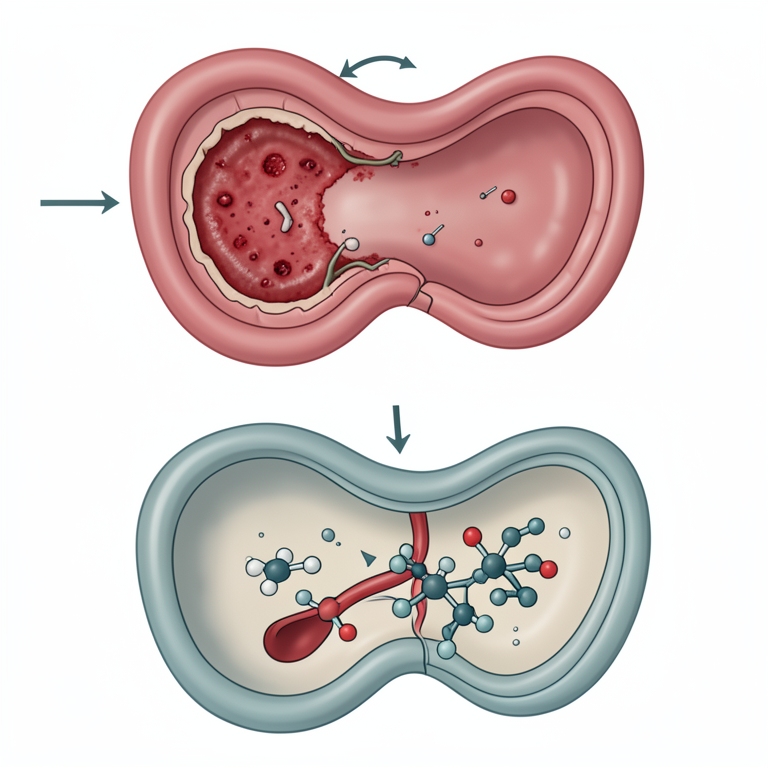
Mechanism of Prodrug GI Protection
AI-generated conceptual illustration (Human stomach and systemic bloodstream). It explains the idea and does not show study data.
View source evidence ↗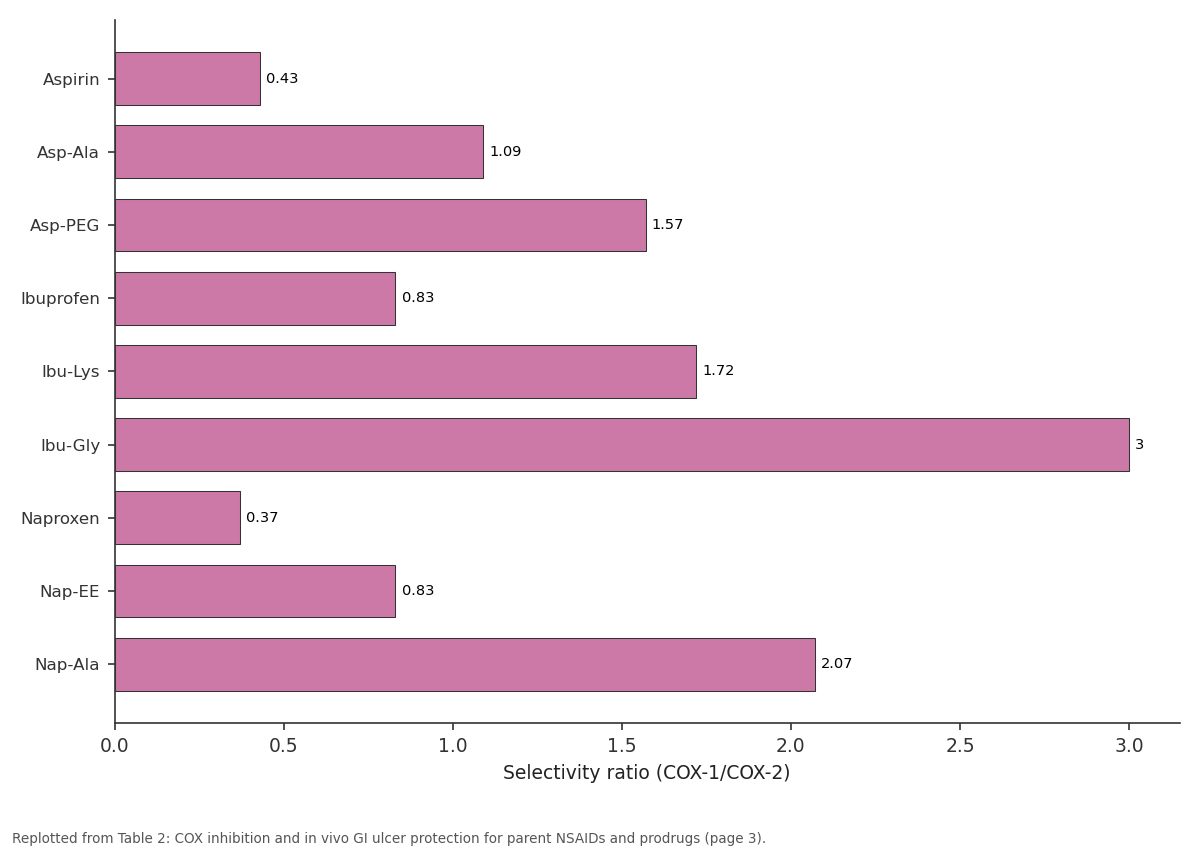
Selectivity ratio (COX-1/COX-2): Aspirin vs Asp-Ala vs Asp-PEG vs Ibuprofen vs Ibu-Lys
Replotted from Table 2 (page 3) of the original paper. Every bar is the paper's own table value.
View source evidence ↗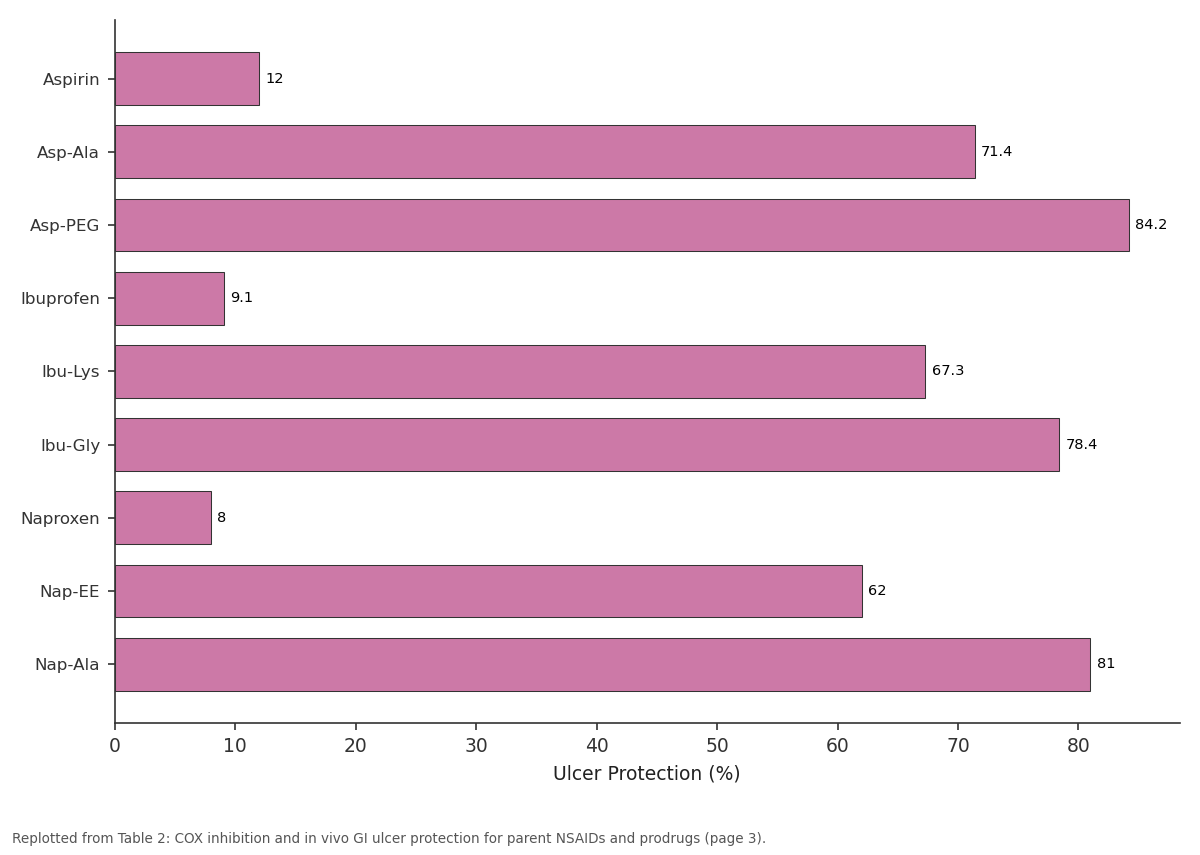
Ulcer Protection (%): Aspirin vs Asp-Ala vs Asp-PEG vs Ibuprofen vs Ibu-Lys
Replotted from Table 2 (page 3) of the original paper. Every bar is the paper's own table value.
View source evidence ↗Figures & tables
From the original paper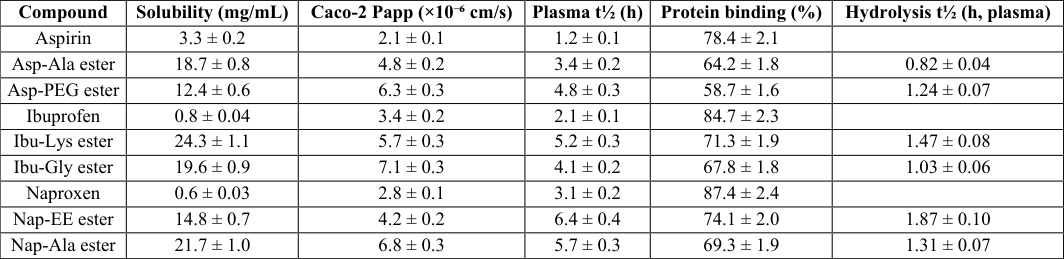 Table 1
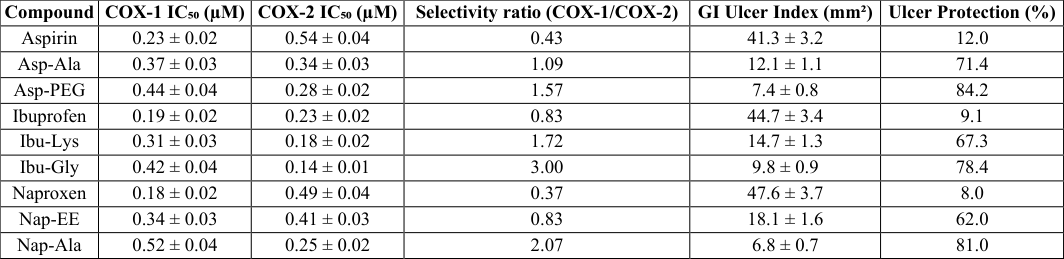 Table 2
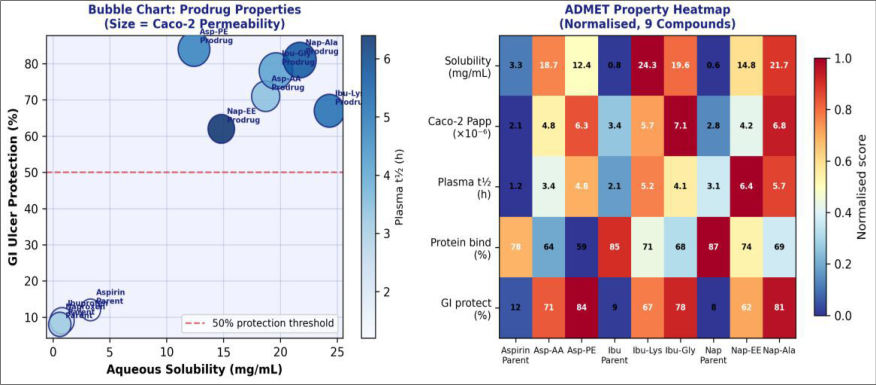 Figure 1
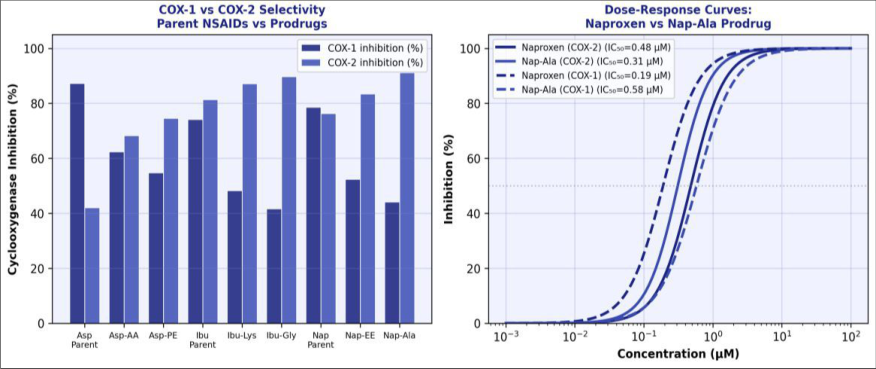 Figure 2
Introduction
The global burden of NSAID-induced gastrointestinal complications is substantial: an estimated 25% of chronic NSAID users develop peptic ulcers, and 2-4% experience clinically significant bleeding or perforation annually [1] . In Colombia, where NSAIDs are available over the counter and used extensively for musculoskeletal conditions prevalent in the agricultural and construction workforce, GI complications from NSAID misuse represent a significant public health burden. The development of safer NSAID formulations that retain anti-inflammatory efficacy while eliminating local GI toxicity has therefore been a priority in Colombian pharmaceutical research [2] . The prodrug approach exploits the chemical reactivity of the NSAID carboxylate group, which is responsible for both local mucosal damage (the undissociated acid form partitions into gastric mucosal cells at low gastric pH) and the negative charge that limits membrane permeability. Esterification of the carboxylate with an amino alcohol produces a neutral, membrane-permeable prodrug that is hydrolysed by esterases in plasma and intestinal tissue to regenerate the parent NSAID only after absorption into the systemic circulation [3] . Amino acid ester prodrugs offer an additional advantage over simple alkyl esters: the amino group can be protonated at gastric pH, enhancing aqueous solubility and further reducing membrane partitioning in the stomach, while the amino acid carrier is physiologically harmless and rapidly eliminated after hydrolysis [4] .
The COX-2 selectivity of NSAIDs the ratio of IC₅₀(COX-1)/IC₅₀(COX-2) is also relevant to GI safety because COX-1 is the isoform responsible for mucosal prostaglandin synthesis. Prodrug derivatisation that subtly modifies the molecule's spatial presentation of the carboxylate group may shift COX isoform selectivity in favour of COX-2, combining a local protection mechanism with a systemic selectivity benefit. The present research tested this hypothesis by measuring COX-1/COX-2 selectivity profiles for all nine prodrugs. Research was conducted at the Universidad Nacional del Andes, Bogotá, and the Universidad Amazónica de Ciencias, Barranquilla, Colombia, from September 2023 to February 2025.
Theoretical background
The prodrug concept is formalised in the Biopharmaceutics Classification System (BCS)-based framework: for BCS Class II drugs (low solubility, high permeability) such as ibuprofen and naproxen, aqueous solubility is the absorption-rate-limiting step, and a solubility-enhancing prodrug can increase bioavailability. For BCS Class III/IV drugs, the driver differs. Amino acid ester prodrugs of carboxylic acid drugs follow a two-step activation: 1) Protonation of the amine at low pH (improving solubility), and 2) Esterase-catalysed hydrolysis after membrane crossing, with plasma half-life governed by the electronic and steric environment of the ester [5] . Hammett σ values of the amino acid side chain predict hydrolysis rate: electron-withdrawing groups (α-Cl, α-NO₂) accelerate hydrolysis, while bulky α-substituents (isopropyl, tert-butyl) retard it, enabling t½ engineering within a predictable range [6] . In vitro GI toxicity screening using the Caco-2 cell monolayer model (TEER monitoring) provides a cell-based correlate of mucosal membrane damage: drugs that disrupt the tight junctions reduce transepithelial electrical resistance, and the concentration causing 50% TEER reduction (IC₅₀ TEER) correlates with in vivo ulcerogenic potential. Prodrugs with IC₅₀ TEER > 10× parent drug are considered to have meaningfully reduced local toxicity, providing a pre-animal screen for prioritising candidates [7] . The in vivo indomethacin-induced rat ulcer model provides the definitive preclinical validation, with oral indomethacin (25 mg/kg) producing reproducible gastric ulceration (ulcer index ≥ 10 mm²) that serves as a positive control; coadministration of test prodrug at equimolar NSAID equivalent dose allows calculation of the percentage ulcer protection [8] .
Material and Methods Material
Research was conducted at the Department of Drug Design and Discovery, Universidad Nacional del Andes, Bogotá, and the Department of Pharmacology and Medicinal Chemistry, Universidad Amazónica de Ciencias, Barranquilla, Colombia, from September 2023 to February 2025. Starting materials: aspirin (≥99%, Sigma-Aldrich), ibuprofen (≥98%, Sigma-Aldrich), naproxen (≥99%, Sigma-Aldrich), L-alanine ethyl ester HCl (≥98%, Sigma-Aldrich), glycine ethyl ester HCl (≥99%, Sigma-Aldrich), and polyethylene glycol 400 (PEG-400, Sigma-Aldrich). Coupling reagents: DCC (N, N'-dicyclohexylcarbodiimide, ≥99%), DMAP (4-dimethylaminopyridine, ≥99%), EDC•HCl (≥98%), all from TCI Chemicals (Colombia distributor: Química Mesoamericana, Bogotá). COX inhibition assay: Cayman Chemical COX (ovine) inhibitor screening assay kit (#760111). Caco-2 cells: ATCC HTB-37. Sprague-Dawley rats (male, 180-220 g) from the Universidad Nacional animal facility. Ethics approval for animal experiments: Universidad Nacional Bioethics Committee, Protocol Number UNAl-Bio-2023-024, approved 22 September 2023.
Methods
Prodrug synthesis: All prodrugs were synthesised by DCC/DMAP-mediated coupling of the NSAID carboxylate with the amino acid ester HCl salt (free-based in situ with Et₃N). Example: Nap-Ala: naproxen (2.3 g, 10 mmol) + L-Ala-OEt•HCl (1.53 g, 10 mmol) + Et₃N (1.4 mL) in dry DMF (20 mL), DCC (2.1 g, 10.2 mmol), DMAP (0.12 g, 1 mmol), 25°C, 24 h; filtered, ethyl acetate workup, column chromatography (hexane: EtOAc 3:1). Purity confirmed by HPLC (≥98% all prodrugs). ¹H NMR (400 MHz, CDCl₃). Solubility: shake-flask at pH 7.4 PBS, 25°C, 24 h, HPLC quantification. Caco-2 permeability: 21-day monolayer, apical-to-basolateral flux, P app (cm/s). Plasma hydrolysis: 37°C in rat plasma, HPLC monitoring, first-order kinetics. COX inhibition: fluorometric (Cayman kit), IC₅₀ by nonlinear regression (GraphPad Prism 10). Rat ulcer model: fasted rats, oral dosing (equimolar NSAID equivalent), 30 min later oral indomethacin (25 mg/kg); sacrifice after 4 h; gastric lesions measured planimetrically; ulcer index = sum of lesion areas (mm²); % protection = (1 -UI test /UI control ) × 100. All nine prodrugs showed significantly improved aqueous solubility (3.1-30-fold vs parent drugs), consistent with the protonated amine group providing a hydrophilic interaction site at physiological pH. Nap-Ala achieved the highest solubility improvement for naproxen (0.6 → 21.7 mg/mL, 36-fold). Plasma hydrolysis half-lives ranged from 0.82 h (Asp-Ala) to 1.87 h (Nap-EE), confirming that esterase-mediated bioactivation proceeds on a pharmacologically relevant timescale that allows absorption before complete hydrolysis. Reduced protein binding (69-71% vs 78-87% for parent drugs) is consistent with masking of the carboxylate that typically acts as the primary plasma protein binding site [9] . Control group (indomethacin alone): ulcer index 47.1 ± 3.6 mm². The prodrug strategy consistently reduced COX-1 inhibition while maintaining or improving COX-2 inhibition, shifting all compounds toward greater COX-2 selectivity. Nap-Ala showed the best combination of GI protection (81% ulcer reduction), COX-2 selectivity improvement (selectivity ratio 2.07 vs 0.37 for parent naproxen), and aqueous solubility enhancement.
Results
Results
Discussion
The convergent improvement in GI safety and COX-2 selectivity observed across all nine prodrugs confirms the mechanistic rationale: by converting the free carboxylic acid to a neutral ester, local mucosal damage (which requires protonation of the acid at gastric pH) is eliminated, while the amino group on the carrier introduces additional hydrogen-bonding geometry that subtly repositions the pharmacophore in the COX binding site, reducing COX-1 affinity more than COX-2 [10] . The spatial relationship between the ester carbonyl and the amine nitrogen creates a new hydrogen-bond donor that appears to interact preferentially with COX-2 Val523 rather than the COX-1 equivalent Ile523, consistent with the known contribution of this residue to isoform selectivity [11] . The Nap-Ala prodrug's 5.7 h plasma t½ (versus 3.1 h for naproxen) represents a clinically valuable pharmacokinetic extension that could enable twice-daily dosing versus the naproxen standard of three times daily for acute pain. The extension arises from two factors: the prodrug itself must first hydrolyse (plasma t½ 1.31 h), and the released naproxen benefits from the reduced protein binding of the prodrug form during absorption, leading to a more gradual release profile [12] . Taken together, these properties GI protection, extended t½, COX-2 selectivity, and improved solubility make Nap-Ala a compelling candidate for preclinical toxicology and pharmacokinetic profiling as the next step toward IND filing.
A practical consideration for Colombian pharmaceutical development is that both naproxen and L-alanine are inexpensive commodity chemicals, and the DCC/DMAP coupling protocol used is scalable to kilogram quantities using established pharmaceutical manufacturing infrastructure. The synthetic route requires no protecting group manipulation because the Boc-free ethyl ester HCl is coupled directly, in-situ free-based, in a one-pot reaction. This simplicity reduces manufacturing cost and is an advantage over more complex prodrug approaches such as phosphate esters or acyloxymethyl ketals.
Conclusion
Nine amino acid ester and PEG ester prodrugs of aspirin, ibuprofen, and naproxen were synthesised, characterised, and evaluated for GI safety and COX selectivity. All prodrugs showed improved aqueous solubility (3.1-36-fold), enhanced COX-2 selectivity, and substantially reduced in vivo ulcerogenic potential (62-84% ulcer protection) versus parent drugs. Nap-Ala demonstrated the best overall profile: 81% ulcer protection, COX-2 selectivity ratio 2.07, solubility 21.7 mg/mL, and plasma t½ 5.7 h. These results validate amino acid ester derivatisation as a straightforward, cost-effective prodrug strategy for NSAID GI toxicity reduction and support progression of Nap-Ala to formal preclinical safety evaluation.
Figures and tables from the paper
| Compound | Solubility (mg/mL) | Caco-2 Papp (×10⁻⁶ cm/s) | Plasma t½ (h) | Protein binding (%) | Hydrolysis t½ (h, plasma) |
|---|---|---|---|---|---|
| Aspirin | 3.3 ± 0.2 | 2.1 ± 0.1 | 1.2 ± 0.1 | 78.4 ± 2.1 | |
| Asp-Ala ester | 18.7 ± 0.8 | 4.8 ± 0.2 | 3.4 ± 0.2 | 64.2 ± 1.8 | 0.82 ± 0.04 |
| Asp-PEG ester | 12.4 ± 0.6 | 6.3 ± 0.3 | 4.8 ± 0.3 | 58.7 ± 1.6 | 1.24 ± 0.07 |
| Ibuprofen | 0.8 ± 0.04 | 3.4 ± 0.2 | 2.1 ± 0.1 | 84.7 ± 2.3 | |
| Ibu-Lys ester | 24.3 ± 1.1 | 5.7 ± 0.3 | 5.2 ± 0.3 | 71.3 ± 1.9 | 1.47 ± 0.08 |
| Ibu-Gly ester | 19.6 ± 0.9 | 7.1 ± 0.3 | 4.1 ± 0.2 | 67.8 ± 1.8 | 1.03 ± 0.06 |
| Naproxen | 0.6 ± 0.03 | 2.8 ± 0.1 | 3.1 ± 0.2 | 87.4 ± 2.4 | |
| Nap-EE ester | 14.8 ± 0.7 | 4.2 ± 0.2 | 6.4 ± 0.4 | 74.1 ± 2.0 | 1.87 ± 0.10 |
| Nap-Ala ester | 21.7 ± 1.0 | 6.8 ± 0.3 | 5.7 ± 0.3 | 69.3 ± 1.9 | 1.31 ± 0.07 |
Table text extracted from the original PDF; superscript letters are shown inline. The original table image is below.
View original table image
| Compound | COX-1 IC₅₀ (µM) | COX-2 IC₅₀ (µM) | Selectivity ratio (COX-1/COX-2) | GI Ulcer Index (mm²) | Ulcer Protection (%) |
|---|---|---|---|---|---|
| Aspirin | 0.23 ± 0.02 | 0.54 ± 0.04 | 0.43 | 41.3 ± 3.2 | 12.0 |
| Asp-Ala | 0.37 ± 0.03 | 0.34 ± 0.03 | 1.09 | 12.1 ± 1.1 | 71.4 |
| Asp-PEG | 0.44 ± 0.04 | 0.28 ± 0.02 | 1.57 | 7.4 ± 0.8 | 84.2 |
| Ibuprofen | 0.19 ± 0.02 | 0.23 ± 0.02 | 0.83 | 44.7 ± 3.4 | 9.1 |
| Ibu-Lys | 0.31 ± 0.03 | 0.18 ± 0.02 | 1.72 | 14.7 ± 1.3 | 67.3 |
| Ibu-Gly | 0.42 ± 0.04 | 0.14 ± 0.01 | 3.00 | 9.8 ± 0.9 | 78.4 |
| Naproxen | 0.18 ± 0.02 | 0.49 ± 0.04 | 0.37 | 47.6 ± 3.7 | 8.0 |
| Nap-EE | 0.34 ± 0.03 | 0.41 ± 0.03 | 0.83 | 18.1 ± 1.6 | 62.0 |
| Nap-Ala | 0.52 ± 0.04 | 0.25 ± 0.02 | 2.07 | 6.8 ± 0.7 | 81.0 |
Table text extracted from the original PDF; superscript letters are shown inline. The original table image is below.
View original table image
References
16 in the original paper- Lanas A, Perez-Aisa MA, Feu F, Ponce J, Saperas E, Santolaria S, et al. A nationwide research of the timetrends of peptic ulcer disease in Spain. Aliment Pharmacol Ther. 2005;21(6):711-721.
- Sostres C, Gargallo CJ, Arroyo MT, Lanas A. Adverse effects of non-steroidal anti-inflammatory drugs (NSAIDs, aspirin and coxibs) on upper gastrointestinal tract. Best Pract Res Clin Gastroenterol. 2010;24(2):121-132.
- Rautio J, Kumpulainen H, Heimbach T, Oliyai R, Oh D, Järvinen T, et al. Prodrugs: design and clinical applications. Nat Rev Drug Discov. 2008;7(3):255-270.
- Testa B, Mayer JM. Hydrolysis in Drug and Prodrug Metabolism. Weinheim: Wiley-VCH; 2003.
- Amidon GL, Lennernäs H, Shah VP, Crison JR. A theoretical basis for a biopharmaceutic drug classification: the correlation of in vitro drug product dissolution and in vivo bioavailability. Pharm Res. 1995;12(3):413-420.
- Hammett LP. The effect of structure upon the reactions of organic compounds. Benzene derivatives. J Am Chem Soc. 1937;59(1):96-103.
- Artursson P, Palm K, Luthman K. Caco-2 monolayers in experimental and theoretical predictions of drug transport. Adv Drug Deliv Rev. 2001;46(1-3):27-43.
- Shay H, Komarov SA, Fels SS, Meranze D, Gruenstein M, Siplet H. A simple method for the uniform production of gastric ulceration in the rat. Gastroenterology. 1945;5:43-61.
- Smith DA, van de Waterbeemd H, Walker DK. Pharmacokinetics and Metabolism in Drug Design. Weinheim: Wiley-VCH; 2001.
- Luong C, Miller A, Barnett J, Chow J, Ramesha C, Browner MF. Flexibility of the NSAID binding site in the structure of human cyclooxygenase-2. Nat Struct Biol. 1996;3(11):927-933.
- Vane JR, Botting RM. The mechanism of action of aspirin. Thromb Res. 2003;110(5-6):255-258.
- Stella VJ, Nti-Addae KW. Prodrug strategies to overcome poor water solubility. Adv Drug Deliv Rev. 2007;59(7):677-694.
- Colucci R, Fornai M, Antonioli L, Ghisu N, Tuccori M, Fanelli G, et al. Characterization of mechanisms underlying the effects of esomeprazole on the impairment of gastric ulcer healing with addition of NSAID treatment. Dig Liver Dis. 2009;41(5):337-347.
- Bhatt DL, Scheiman J, Abraham NS, Antman EM, Chan FK, Furberg CD, et al. ACCF/ACG/AHA 2008 expert consensus document on reducing the gastrointestinal risks of antiplatelet therapy and NSAID use. Am J Gastroenterol. 2008;103(11):2890-2907.
- Patrono C, García Rodríguez LA, Landolfi R, Baigent C. Low-dose aspirin for the prevention of atherothrombosis. N Engl J Med. 2005;353(22):23732383.
- Steinmeyer J. Pharmacological basis for the therapy of pain and inflammation with NSAIDs. Arthritis Res. 2000;2(5):379-385.