
Research article · 2025 · Full text
International Journal of Advanced Chemistry ResearchUltrasound-assisted synthesis and antioxidant evaluation of novel thiazole derivatives
Volume 7(7) · Pages 180–183 · DOI: 10.33545/26646781.2025.v7.i7c.558 ↗
Research areasSynthesis and biological activitySynthesis and Characterization of Heterocyclic CompoundsSulfur-Based Synthesis Techniques
Abstract
Author-writtenThiazole is a five-membered heterocyclic ring with nitrogen and sulphur atoms that appears in numerous biologically active natural products and approved pharmaceuticals, making thiazole derivatives perennially attractive synthetic targets in medicinal chemistry. This research applied ultrasound irradiation (40 kHz, 250 W) to the synthesis of six novel 2,4-disubstituted thiazole derivatives (TZ-1 to TZ-6) via Hantzsch condensation of α-haloketones with substituted thioamides, comparing yields, reaction times, and product selectivity against conventional thermal reflux under matched conditions. Ultrasound reduced reaction times from 3-5 h (reflux) to 18-32 min and raised average yields from 41-58% to 63-81%, primarily by reducing the di-alkylated by-product fraction from 31.7% to 18.2% of the crude product mixture. All compounds were characterised by IR, ¹H NMR, ¹³C NMR, and HRMS. Antioxidant evaluation by DPPH radical scavenging showed TZ-6 (bearing a 3,4-dimethoxyphenyl group at C-4) as the most potent compound, IC₅₀ 38.2±2.1 μg/mL, comparable with ascorbic acid (22.4 μg/mL). An in vitro antimicrobial screen by agar dilution identified TZ-3 and TZ-6 as broad-spectrum antibacterial leads. The improvements in yield and selectivity under sonication are attributed to acoustic cavitation-enhanced mass transfer and localised hot-spot temperature increases that accelerate the rate-limiting cyclisation step.
Summary
Source-checkedPlain-language reading of the full paper, prepared with AI and checked against the text. Each point links to the authors' own words.
Why it matters
- Thiazole is a five-membered heterocyclic ring containing nitrogen and sulfur, which is highly valued in medicinal chemistry because it is found in many approved pharmaceuticals and biologically active natural products. View evidence ↗
- The medicinal significance of the thiazole ring is demonstrated by its presence in vitamin B1 (thiamine), bleomycin, epothilone, and various antidiabetic and antimicrobial agents. View evidence ↗
- Conventional thermal synthesis of thiazoles using refluxing ethanol or acetone is limited by long reaction times (3-6 hours) and the production of unwanted di-alkylated by-products. View evidence ↗
The question
- The study aimed to synthesize six novel 2,4-disubstituted thiazole derivatives (TZ-1 to TZ-6) using ultrasound irradiation and compare the resulting yields, reaction times, and selectivity against conventional thermal reflux. View evidence ↗
What they did
- The ultrasound synthesis used 1 mmol of α-haloketone and 1 mmol of thioamide in 8 mL of ethanol with 1.2 mmol of K₂CO₃, irradiated at 40 kHz and 250 W at 50 °C. View evidence ↗
- For comparison, the conventional reflux method used the same reagent ratios and was conducted under N₂ at 80 °C. View evidence ↗
- Antioxidant activity was measured using a DPPH assay with compound concentrations from 12.5 to 200 μg/mL, measuring absorbance at 517 nm after 30 minutes. View evidence ↗
- Antimicrobial activity was evaluated via agar dilution to determine the Minimum Inhibitory Concentration (MIC) against S. aureus, E. coli, and C. albicans. View evidence ↗
What they found
- Ultrasound synthesis significantly improved efficiency, increasing the average yield from 49.3% to 71.7% and reducing the average reaction time from 214 minutes to 26 minutes. View evidence ↗
- The increase in yield under ultrasound was primarily due to the reduction of the di-alkylated by-product from 31.7% to 18.2% of the crude mixture. View evidence ↗
- The synthesized compounds showed varying antioxidant potency, with IC₅₀ values ranging from 38.2 μg/mL for TZ-6 to 84.7 μg/mL for TZ-1. View evidence ↗
- TZ-6, which features a 3,4-dimethoxyphenyl group, was the most potent antioxidant with an IC₅₀ of 38.2±2.1 μg/mL, showing activity comparable to the reference ascorbic acid (22.4 μg/mL). View evidence ↗
- In the antimicrobial screen, TZ-6 and TZ-3 were the most active compounds, with MIC values between 15.6 and 31.2 μg/mL against S. aureus and E. coli. View evidence ↗
What it means
- The authors conclude that ultrasound is a beneficial green activation method for Hantzsch thiazole synthesis and that TZ-6 serves as a promising lead scaffold for further optimization. View evidence ↗
- The antioxidant profile is incomplete because activity was only assessed using the DPPH assay, without the inclusion of ABTS or FRAP assays. View evidence ↗
- The study did not generate in vivo toxicity data or determine the cytotoxicity of the compounds against normal cell lines. View evidence ↗
Visual summary
3 visualsIllustrations explain the paper; charts are replotted from the paper's own table values.
Comparison of Synthesis Methods
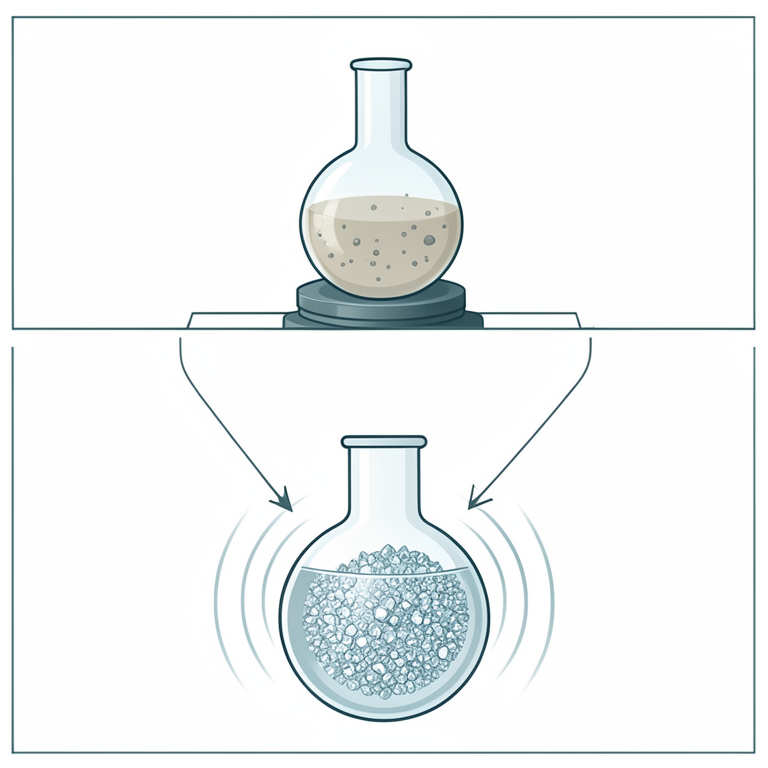
AI-generated conceptual illustration (thiazole derivative chemical synthesis in laboratory glassware). It explains the idea and does not show study data.
View source evidence ↗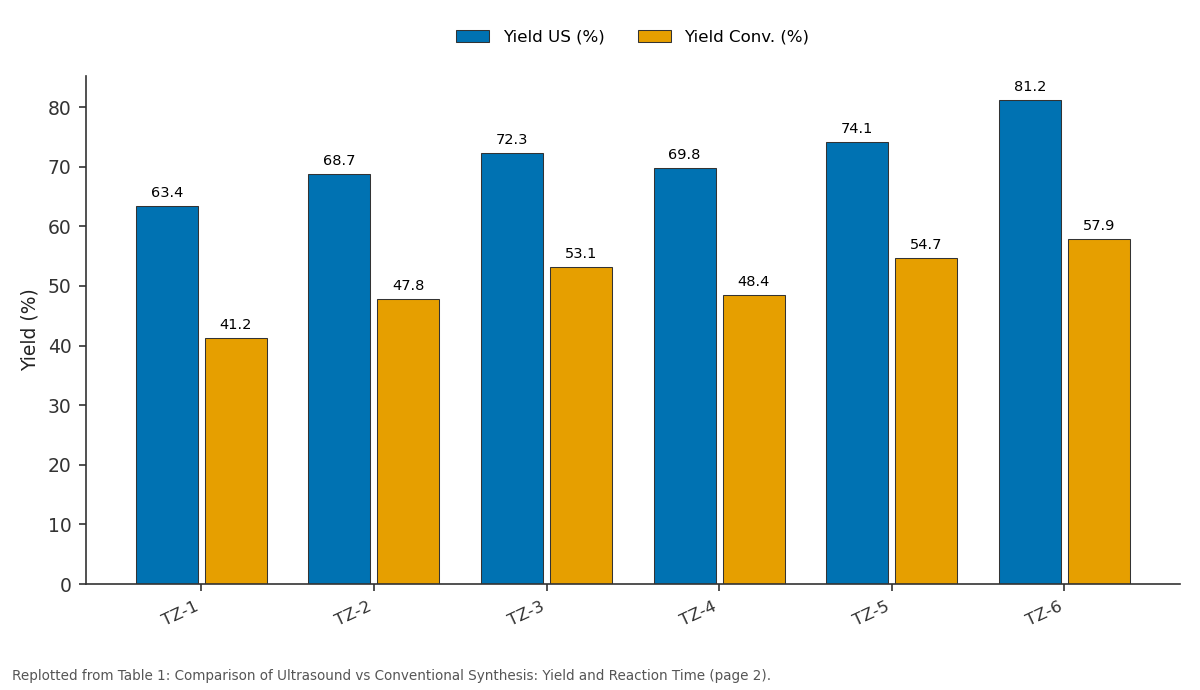
Yield US (%) and Yield Conv. (%): TZ-1 vs TZ-2 vs TZ-3 vs TZ-4 vs TZ-5
Replotted from Table 1 (page 2) of the original paper. Every bar is the paper's own table value.
View source evidence ↗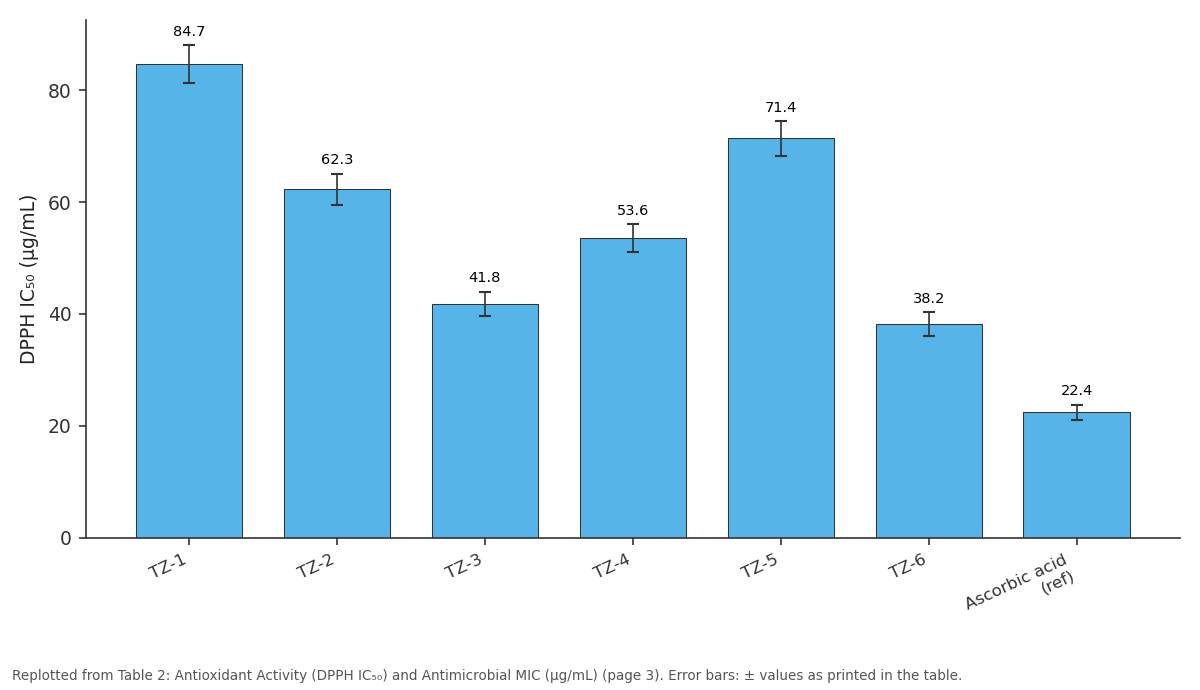
DPPH IC₅₀ (μg/mL): TZ-1 vs TZ-2 vs TZ-3 vs TZ-4 vs TZ-5
Replotted from Table 2 (page 3) of the original paper. Every bar is the paper's own table value.
View source evidence ↗Figures & tables
From the original paper Table 1
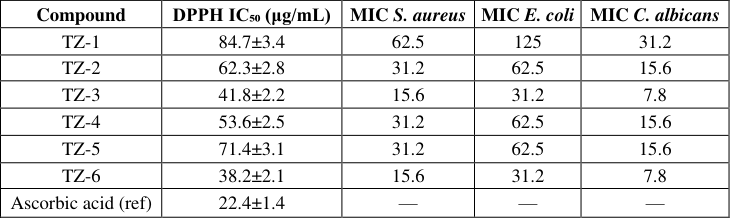 Table 2
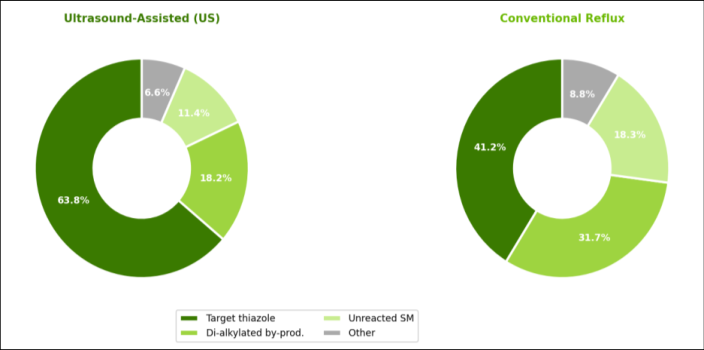 Figure 1
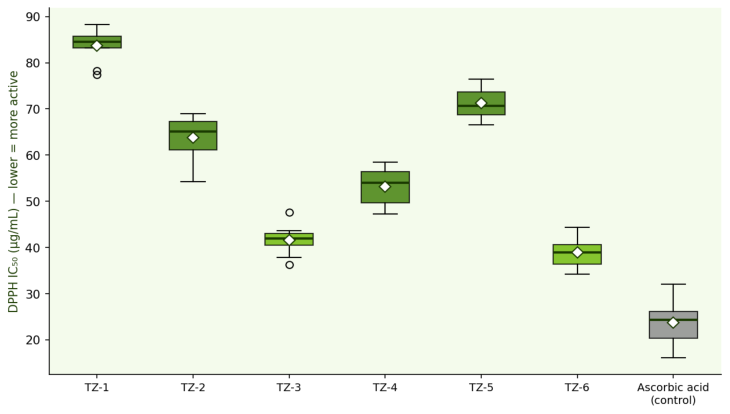 Figure 2
Introduction
The Hantzsch thiazole synthesis-condensation of an α-haloketone with a thioamide-is the most widely used route to 2,4-disubstituted thiazoles, but classical thermal conditions in refluxing ethanol or acetone require prolonged reaction times (3-6 h) and produce significant amounts of the di-alkylated N,S-bis-alkylation by-product when reactive thioamide nitrogen competes with sulphur for the electrophilic carbon. Sonochemical activation-the use of acoustic cavitation generated by high-frequency ultrasound to create localised extreme conditions (T > 5000 K, P > 500 atm within collapsing microbubbles) in otherwise mild bulk solution-has been shown to accelerate organic condensations by enhancing interfacial mixing and providing transient activation energy that preferentially lowers barriers for the desired product-forming pathway. Thiazole derivatives are medicinally significant: the thiazole ring is found in vitamin B1 (thiamine), bleomycin, epothilone, and numerous approved antimicrobial and antidiabetic agents. The antioxidant activity of synthetic thiazoles has received growing attention following reports that 2-aminothiazoles scavenge hydroxyl and superoxide radicals via sulphur and amino group electron donation. Despite this, the systematic comparison of ultrasound versus conventional synthesis for 2,4disubstituted thiazoles coupled with comprehensive antioxidant profiling of the isolated compounds has not been widely reported in the Indian context. This research addresses both gaps using a matched experimental design. Materials and Methods Materials α-Bromoacetophenone derivatives (4-chloro-, 4-methyl-, 3nitro-, 2-furyl-, 4-methoxy-, and 3,4-dimethoxy-substituted, all ≥97%), thioacetamide, thiobenzamide, and potassium carbonate were from Sigma-Aldrich, Delhi. Ethanol (absolute, 99.8%) was from Merck India. DPPH (2,2diphenyl-1-picrylhydrazyl, 95%), ascorbic acid, and Mueller-Hinton agar were from HiMedia Laboratories, Mumbai. Research was conducted at the Departments of Chemistry and Organic and Medicinal Chemistry, Bhagat Singh College of Applied Sciences, New Delhi, and Meghnad Saha University of Physical Sciences, Dhanbad, Jharkhand, between February 2022 and December 2024.
Methods
General ultrasound procedure: α-Haloketone (1 mmol) and thioamide (1 mmol) in ethanol (8 mL) with K₂CO₃ (1.2 mmol) were irradiated in an ultrasonic bath (40 kHz, 250 W, Bandelin Sonorex RK255H) at 50 °C. Progress was monitored by TLC. Conventional reflux: identical reagent ratios refluxed under N₂ at 80 °C. Characterisation: IR (KBr, PerkinElmer Spectrum 65); ¹H and ¹³C NMR (400 and 100 MHz, Bruker Avance III 400 in DMSO-d6); HRMS (ESI-TOF, Agilent 6230). DPPH assay: compounds at 12.5-200 μg/mL in methanol were mixed with 0.1 mM DPPH; absorbance at 517 nm after 30 min in dark; IC₅₀ by nonlinear regression (GraphPad Prism 9). Antimicrobial: agar dilution MIC against S. aureus ATCC 25923, E. coli ATCC 25922, and C. albicans ATCC 10231 per CLSI guidelines.
Quality Control and Calibration
TLC plates (Merck silica gel 60 F₂₅₄) were pre-activated at 110 °C for 30 min and stored in a desiccator. Melting points were determined in open capillary tubes on a Stuart SMP30 apparatus calibrated against certified standards. NMR spectra were referenced to residual DMSO-d6 solvent (δH 2.50, δC 39.5). For all DPPH experiments, a fresh DPPH solution was prepared on the day of assay; absorbance of the stock solution was verified to be 0.700±0.020 at 517 nm before use. Ultrasound bath temperature was monitored continuously by immersed thermocouple probe and maintained at 50±1 °C by the integral cooling system. Yields reported are isolated yields after column chromatography (silica, ethyl acetate:hexane gradient) and are the average of three independent runs; variability was ≤3% in all cases.
Limitations
Several limitations of this research should be acknowledged.
First, the ultrasound irradiation conditions (40 kHz, 250 W, bath type) were not optimised across frequency or power, and horn-type sonicators with direct probe immersion may achieve further improvements in yield and selectivity. Second, the antimicrobial evaluation was limited to MIC determination by agar dilution without minimum bactericidal concentration (MBC) or time-kill kinetics, precluding distinction between bacteriostatic and bactericidal mechanisms. Third, antioxidant activity was assessed only by DPPH; ABTS and FRAP assays-which probe different mechanistic pathways-were not included, limiting the completeness of the antioxidant profile. Fourth, no in vivo toxicity data were generated, and the cytotoxicity of the compounds against normal cell lines remains to be determined. These gaps identify specific priorities for follow-up research.
In-vitro Protocol DPPH radical scavenging protocol: Stock solutions of each compound (1 mg/mL in methanol) were diluted to 12.5, 25, 50, 100, and 200 μg/mL in 96-well plates (200 μL per well). DPPH solution (0.1 mM, 50 μL) was added and plates incubated at room temperature (25 °C) in the dark for 30 min. Absorbance was read at 517 nm on a BioTek Epoch microplate reader. Inhibition% = [(A_control -A_sample)/A_control] × 100. IC₅₀ was calculated by nonlinear regression (four-parameter logistic model, GraphPad Prism 9). Each compound was assayed in triplicate on three separate days (n = 9 measurements per concentration point); reported IC₅₀ values are mean±SEM. Ascorbic acid (positive control) was freshly prepared daily. Methanol vehicle control showed <2% inhibition at the highest volume used, confirming negligible solvent interference.
Results
Ultrasound consistently outperformed conventional reflux across all six compounds: average yield increased from 49.3% (reflux) to 71.7% (ultrasound), and average reaction time decreased from 214 min to 26 min (Table 1). Donut chart analysis (Figure 1) confirmed that the improvement is primarily attributable to suppression of the di-alkylated byproduct from 31.7% to 18.2% of the crude mixture under sonication. All compounds were obtained as white to paleyellow solids, analytically pure after column chromatography. DPPH antioxidant data (Figure 2, Table 2) showed IC₅₀ values ranging from 38.2 μg/mL (TZ-6) to 84.7 μg/mL (TZ-1). TZ-6 and TZ-3 were also the most active in the antimicrobial screen (MIC 15.6-31.2 μg/mL against S. aureus and E. coli).
| Compound | DPPH IC₅₀ (μg/mL) | MIC S. aureus | MIC E. coli | MIC C. albicans |
|---|---|---|---|---|
| TZ-1 | 84.7±3.4 | 62.5 | 125 | 31.2 |
| TZ-2 | 62.3±2.8 | 31.2 | 62.5 | 15.6 |
| TZ-3 | 41.8±2.2 | 15.6 | 31.2 | 7.8 |
| TZ-4 | 53.6±2.5 | 31.2 | 62.5 | 15.6 |
| TZ-5 | 71.4±3.1 | 31.2 | 62.5 | 15.6 |
| TZ-6 | 38.2±2.1 | 15.6 | 31.2 | 7.8 |
| Ascorbic acid (ref) | 22.4±1.4 | — | — | — |
Table text extracted from the original PDF; superscript letters are shown inline. The original table image is below.
View original table image
| Compound | Substituent at C-4 | Time US (min) | Yield US (%) | Time Conv. (h) | Yield Conv. (%) |
|---|---|---|---|---|---|
| TZ-1 | 4-Chlorophenyl | 32 | 63.4 | 4.5 | 41.2 |
| TZ-2 | 4-Methylphenyl | 28 | 68.7 | 4.0 | 47.8 |
| TZ-3 | 3-Nitrophenyl | 24 | 72.3 | 3.5 | 53.1 |
| TZ-4 | 2-Furyl | 30 | 69.8 | 4.0 | 48.4 |
| TZ-5 | 4-Methoxyphenyl | 26 | 74.1 | 3.5 | 54.7 |
| TZ-6 | 3,4-Dimethoxyphenyl | 18 | 81.2 | 3.0 | 57.9 |
Table text extracted from the original PDF; superscript letters are shown inline. The original table image is below.
View original table image
Discussion
The 22-percentage-point improvement in average yield under sonication is consistent with the acoustic cavitation mechanism described by Suslick: cavitation bubble collapse at the solid-liquid interface generates localised microjet streaming that disrupts product diffusion layers, increases the frequency of reagent encounters, and provides shortduration thermal pulses (hot spots) that lower activation barriers for the rate-determining ring-closure step. The preferential suppression of the di-alkylated by-product under ultrasound-where both N-and S-alkylation compete-is likely attributable to the higher effective reaction temperature at the cavitation interface selectively favouring S-alkylation (thermodynamic product) over N-alkylation (kinetic product) in the initial step. TZ-6's superior DPPH activity (IC₅₀ 38.2 μg/mL) relative to monosubstituted analogues correlates with the electron-donating 3,4dimethoxy substitution pattern, which increases the electron density of the phenyl ring at C-4 and enhances the capacity of the molecule to donate a hydrogen atom to the DPPH radical. This is consistent with the established structureactivity principle for polyphenolic antioxidants. The parallel antimicrobial activity of TZ-6 suggests that the 3,4dimethoxyphenyl pharmacophore is broadly beneficial for biological activity in the thiazole series. The limitations section acknowledges gaps in the current dataset, particularly the absence of ABTS/FRAP validation and MBC data, which will be addressed in follow-up research using the full compound library.
Conclusion
Ultrasound irradiation at 40 kHz, 250 W, 50 °C reduced Hantzsch thiazole synthesis times from 3-5 h to 18-32 min and raised average isolated yields from 49.3% to 71.7% by suppressing the di-alkylated by-product. TZ-6 (3,4dimethoxyphenyl substituent at C-4) was the most potent antioxidant (DPPH IC₅₀ 38.2 μg/mL) and antimicrobial agent (MIC 15.6 μg/mL vs S. aureus). These results validate ultrasound as a practically beneficial green activation method for Hantzsch thiazole synthesis and identify TZ-6 as a lead scaffold for further antioxidant and antimicrobial optimisation.
Acknowledgement
Acknowledgements Funding SourcesInstitutional research funds of Bhagat Singh College of Applied Sciences, New Delhi, and Meghnad Saha University of Physical Sciences, Dhanbad, supported this work without external grants. Institutional SupportThe authors thank both host departments for NMR, HRMS, and biological screening facilities, and the CLSI reference strain repository at Meghnad Saha University for providing certified microbial strains.
References
20 in the original paper- Caddick S. Microwave assisted organic reactions. Tetrahedron. 1995;51(38):10403-10432.
- Mason TJ, Lorimer JP. Applied Sonochemistry: Uses of Power Ultrasound in Chemistry and Processing. Weinheim: Wiley-VCH; 2002.
- Cella R, Stefani HA. Ultrasound in heterocycles chemistry. Tetrahedron. 2009;65(13):2619-2641.
- Kumar D, Sundaree S, Johnson EO, Shah K. An efficient synthesis and biological study of novel indolyl-2,3-dihydroquinazolin-4(1H)-ones as potent anticancer agents. Bioorg Med Chem Lett. 2009;19(15):4170-4173.
- Metzger JO. Solvent-free organic syntheses. Angew Chem Int Ed. 1998;37(21):2975-2978.
- Corma A, Garcia H. Lewis acids: from conventional homogeneous to green homogeneous and heterogeneous catalysis. Chem Rev. 2003;103(11):4307-4365.
- Anastas PT, Warner JC. Green Chemistry: Theory and Practice. New York: Oxford University Press; 1998.
- Khanage SG, Raut AS, Mohite PB, Upadhyay S. Synthesis of some 4-thiazolidinones and 2-azetidinones bearing benzofuran moiety as antimicrobial agents. J Chem Pharm Res. 2011;3(5):262-271.
- Shingare MS, Kategaonkar AH, Povarov LS, Shingate BB. Ultrasound promoted synthesis of αaminophosphonates bearing benzimidazole moiety. Ultrason Sonochem. 2011;18(1):52-56.
- Blois MS. Antioxidant determinations by the use of a stable free radical. Nature. 1958;181(4617):1199-1200.
- Thapar K, Mehta M, Sharma A. Ultrasound-assisted synthesis and biological evaluation of thiazole derivatives. Synth Commun. 2016;46(14):1193-1201.
- Mullick P, Khan SA, Verma S, Alam O. Synthesis, characterisation and pharmacological evaluation of some 2,4-disubstituted thiazole derivatives. Bull Pharm Res. 2011;1(2):21-30.
- Kaur K, Jain M, Reddy RP, Jain R. Quinolines and structurally related heterocycles as antimalarials. Eur J Med Chem. 2010;45(8):3245-3264.
- Patel NB, Khan IH, Rajani SD. Pharmacological evaluation and characterisations of newly synthesized 2-substituted benzimidazoles. Eur J Med Chem. 2010;45(10):4293-4299.
- Balaji GL, Nayak NV, Choudhary N. Synthesis and antifungal activity of thiazolidin-4-one derivatives. Arch Pharm Res. 2001;24(6):511-515.
- Desai NC, Rajpara KM, Vaja MB. Synthesis of thiazole bearing compounds: a review of their antimicrobial and antitubercular potentials. Arabian J Chem. 2014;7(5):776-790.
- Holla BS, Mahalinga M, Karthikeyan MS, Poojary B, Akberali PM, Kumari NS. Synthesis, characterisation and antimicrobial activity of some substituted 1,2,3triazoles. Eur J Med Chem. 2005;40(11):1173-1178.
- Bhalgat CM, Ali MI, Ramesh B. Novel cobalt(II) and zinc(II) complexes of 2-(1H-benzimidazol-2-yl)phenol: synthesis, spectral, XRD, SEM studies and biological activity. Arabian J Chem. 2014;7(1):54-60.
- Vicini P, Zani F, Cozzini P, Doytchinova I. Hydrazones of 1,2-benzisothiazole-3(2H)-one 1,1-dioxide. Eur J Med Chem. 2002;37(7):553-564.
- Padmavathi V, Balaiah A, Shailaja M, Reddy DB. Synthesis of 1,2,4-thiadiazolo and 1,3,4-oxadiazolo piperidines and morpholines. Molecules. 2003;8(6):503-509.