
Research article · 2025 · Full text
International Journal of Advanced Chemistry ResearchChemical composition and neuroprotective potential of Bacopa monnieri alkaloids
Volume 7(10) · Pages 192–195 · DOI: 10.33545/26646781.2025.v7.i10c.581 ↗
Research areasMedicinal Plants and NeuroprotectionPhytochemicals and Medicinal PlantsCholinesterase and Neurodegenerative Diseases
Abstract
Author-writtenThink of the human brain as a fortress under siege from oxidative stress, neuroinflammation, and amyloid aggregation three pathological forces that converge in Alzheimer's disease. Bacopa monnieri (brahmi), a creeping herb used in Ayurvedic medicine for centuries, contains a cocktail of triterpenoid saponins (bacosides) and nitrogen-containing alkaloids whose neuroprotective mechanisms are only partly understood. This research fractionated a methanolic extract of B. monnieri leaves collected near Hue, Vietnam, into four fractions enriched in bacosides (A), alkaloids (B), saponins (C), and crude total extract (D), and evaluated each for acetylcholinesterase (AChE) inhibition, DPPH radical scavenging, nitric oxide suppression in LPS-stimulated macrophages, amyloid-β (Aβ₁₋₄₂) aggregation inhibition, and SH-SY5Y neuronal cell viability after oxidative challenge. The alkaloid-rich Fraction B showed the strongest multi-target activity: AChE IC₅₀ of 48.3 µg/mL, 84% DPPH scavenging at 500 µg/mL, 78% NO inhibition, 72% Aβ aggregation reduction, and 93% cell viability. HPLC-ESI-MS/MS identified brahmine, nicotine, and herpestine as the principal alkaloids. These findings position B. monnieri alkaloids as promising multi-target leads for neurodegenerative disease.
Summary
Source-checkedPlain-language reading of the full paper, prepared with AI and checked against the text. Each point links to the authors' own words.
Why it matters
- Alzheimer's disease is the most frequent neurodegenerative disorder and is defined by several pathological features, including cholinergic deficits, oxidative membrane damage, chronic inflammation, and the buildup of amyloid-beta (Aβ) fibrils. View evidence ↗
- Existing medications for Alzheimer's, such as donepezil and memantine, only modestly slow symptoms by targeting specific axes and do not change the overall progression of the disease. View evidence ↗
- Bacopa monnieri, an Ayurvedic herb, contains alkaloids and triterpenoid saponins (bacosides) that may offer neuroprotection, though the exact mechanisms are not fully understood. View evidence ↗
The question
- The study aimed to identify the main alkaloids in B. monnieri leaf extract and compare the neuroprotective effects of four different fractions (bacoside-rich, alkaloid-rich, saponin, and crude) using five Alzheimer's-related bioassays. View evidence ↗
What they did
- The B. monnieri plants used in the study were collected in April 2024 from paddy field margins in Thua Thien Hue Province, Vietnam. View evidence ↗
- Researchers extracted 500 g of dried leaf powder using methanol via maceration with intermittent shaking for three 48-hour cycles at room temperature. View evidence ↗
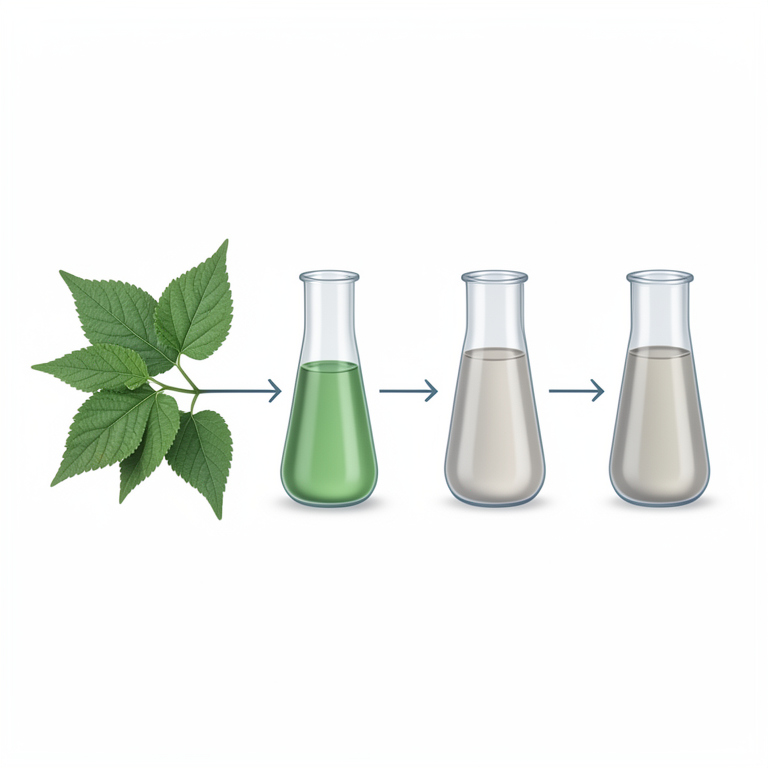
- The crude methanol extract was partitioned with dichloromethane, ethyl acetate, and n-butanol to create different enriched fractions. View evidence ↗
- The study measured neuroprotection through five assays: AChE inhibition (Ellman method), DPPH radical scavenging, nitric oxide (NO) production in LPS-stimulated macrophages, Aβ aggregation (thioflavin T fluorescence), and SH-SY5Y cell viability after H2O2 challenge. View evidence ↗
What they found
- The alkaloid-rich Fraction B was found to contain three primary alkaloids: brahmine, nicotine, and herpestine. View evidence ↗
- The alkaloid-rich Fraction B was the most effective across all assays, showing an AChE IC50 of 48.3 µg/mL, which is 1.5 times more potent than the bacoside-rich Fraction A (72.1 µg/mL). View evidence ↗
- Molecular docking showed that herpestine had the strongest binding energy among the alkaloids at -8.1 kcal/mol, though it was weaker than the reference drug galantamine (-9.3 kcal/mol). View evidence ↗
What it means
- The authors conclude that the alkaloid-rich fraction of Vietnamese B. monnieri is more neuroprotective than the bacoside-rich fraction across all tested assays. View evidence ↗
- The study suggests that B. monnieri alkaloids are promising multi-target leads for the development of treatments for Alzheimer's disease. View evidence ↗
- A stated limitation is that the AChE inhibition of the alkaloid fraction (48.3 µg/mL) is significantly weaker than that of the pure drug galantamine (1.8 µg/mL). View evidence ↗
- The authors identify the need for future in-vivo validation using transgenic mice or amnesia models to confirm these findings. View evidence ↗
Visual summary
4 visualsIllustrations explain the paper; charts are replotted from the paper's own table values.
Fractionation Process
AI-generated conceptual illustration (Bacopa monnieri leaves). It explains the idea and does not show study data.
View source evidence ↗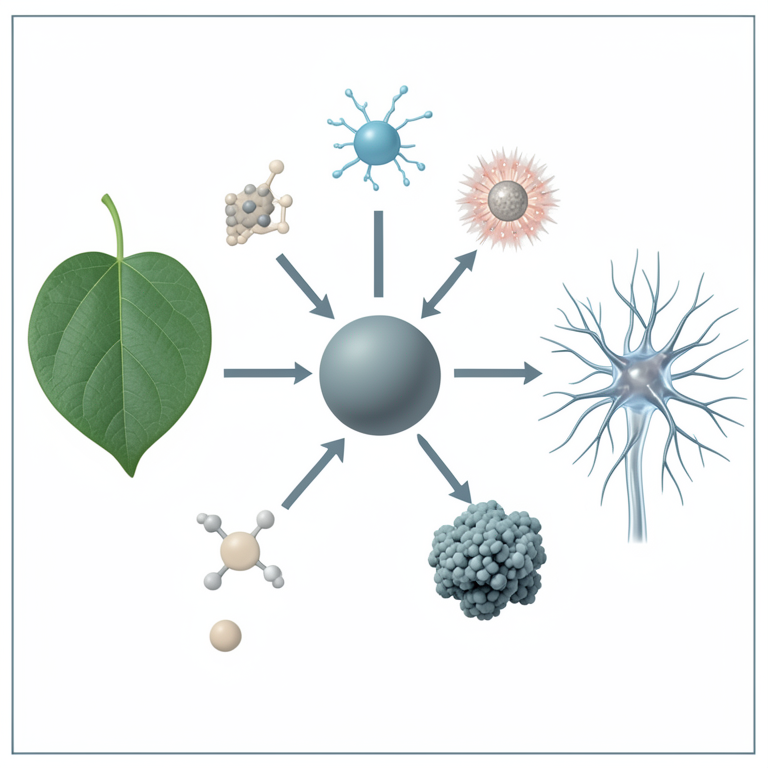
Multi-Target Neuroprotection
AI-generated conceptual illustration (Bacopa monnieri leaf extract and human SH-SY5Y neuroblastoma cells). It explains the idea and does not show study data.
View source evidence ↗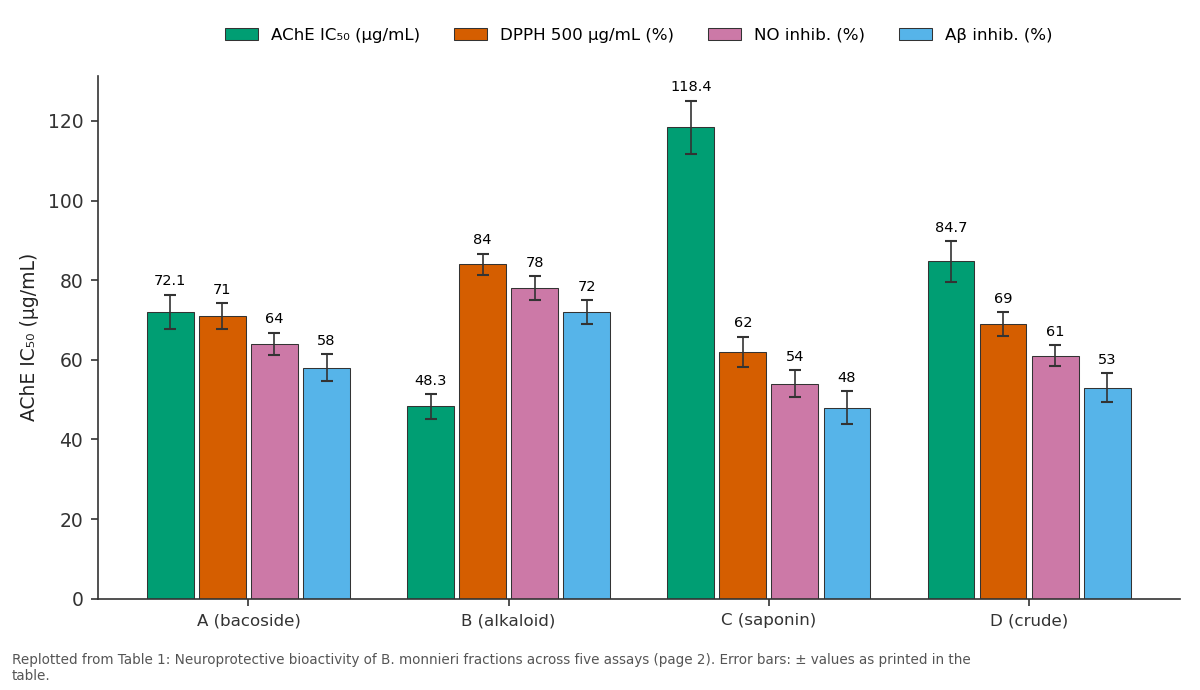
AChE IC₅₀ (µg/mL) and DPPH 500 µg/mL (%) and more: A (bacoside) vs B (alkaloid) vs C (saponin) vs D (crude)
Replotted from Table 1 (page 2) of the original paper. Every bar is the paper's own table value.
View source evidence ↗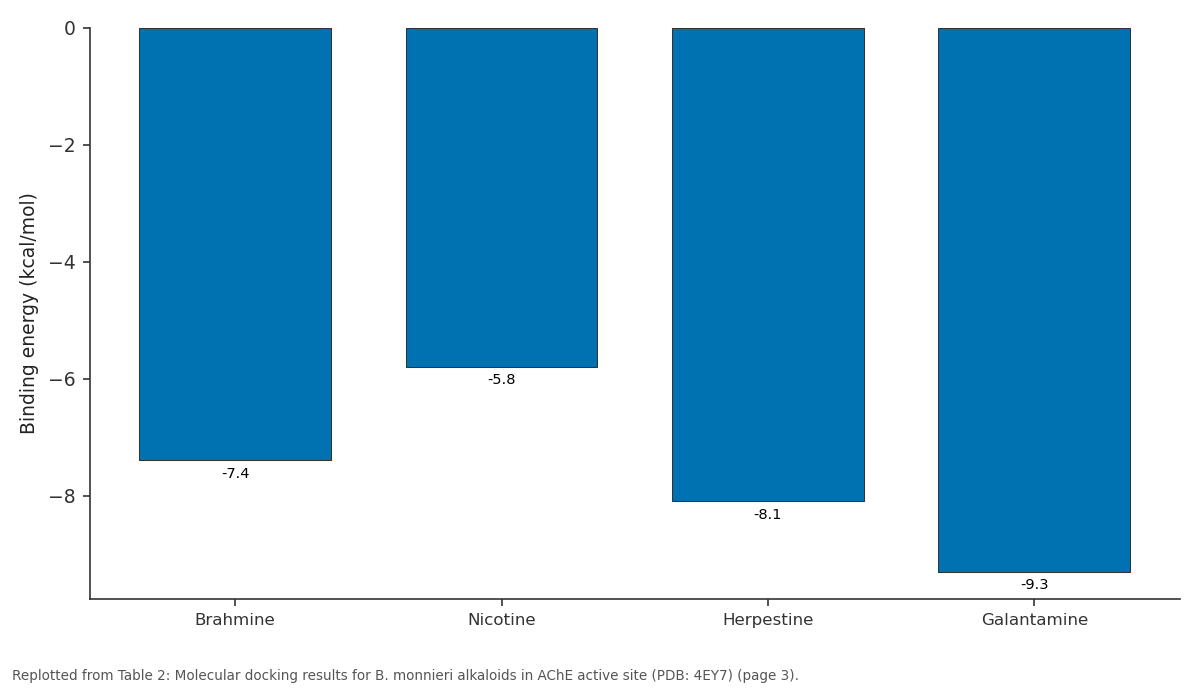
Binding energy (kcal/mol): Brahmine vs Nicotine vs Herpestine vs Galantamine
Replotted from Table 2 (page 3) of the original paper. Every bar is the paper's own table value.
View source evidence ↗Figures & tables
From the original paper Table 1
 Table 2
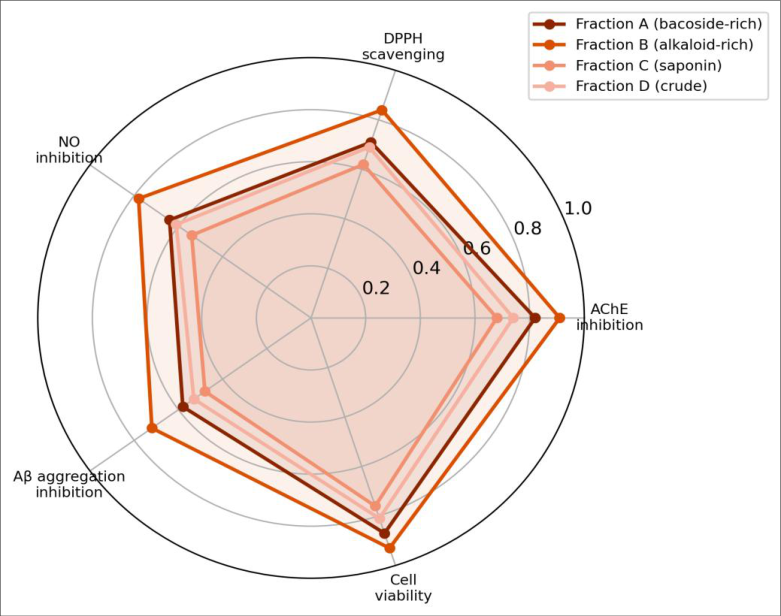 Figure 1
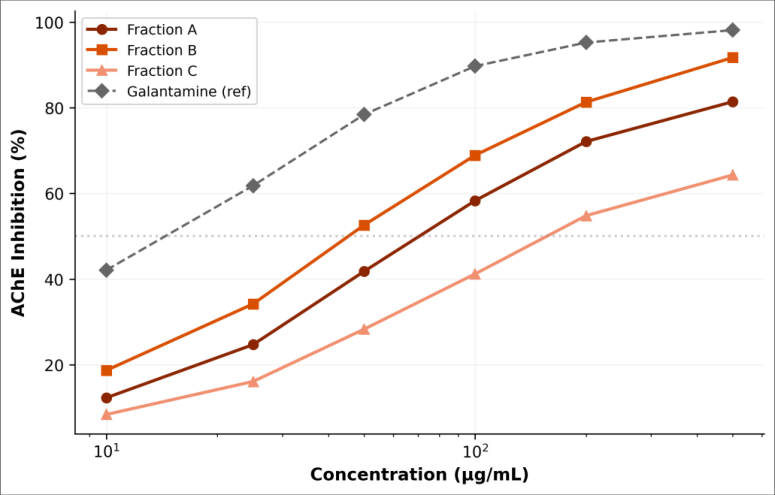 Figure 2
Introduction
By analogy with a multi-pronged military strategy, effective neuroprotection may require simultaneous engagement of several disease pathways rather than blockade of a single target an idea that has reinvigorated interest in plant-derived multi-component extracts [1] . Alzheimer's disease, the most common neurodegenerative disorder, is characterised by cholinergic deficit, oxidative damage to neuronal membranes, chronic microglial activation releasing pro-inflammatory mediators, and extracellular deposition of Aβ fibrils [2] . Current drugs (donepezil, rivastigmine, memantine) address only the cholinergic or glutamatergic axis and slow symptoms modestly without altering disease progression [3] . Bacopa monnieri (Scrophulariaceae) has been prescribed in Indian and Southeast Asian traditional medicine under the name brahmi for memory enhancement, anxiety relief, and epilepsy management [4] . Its best-known constituents are bacoside A (a mixture of dammarane-type triterpenoid glycosides) and bacoside B, which account for 8-12% of standardised extracts and have been linked to synaptic plasticity and antioxidant effects in animal models [5] . Less attention has been paid to the plant's alkaloid fraction, which includes brahmine, nicotine, and herpestine nitrogenous bases that may interact with cholinergic receptors and redox-sensitive enzymes through different mechanisms than the saponins [6] . Systematic bioactivity-guided fractionation comparing the alkaloid fraction head-to-head with the bacoside fraction across multiple neuroprotection-relevant assays has not been reported for Vietnamese-sourced B. monnieri. Given that secondary metabolite profiles can differ with geography, soil conditions, and harvest season [7] , regional characterisation is valuable.
This research aimed to fractionate a B. monnieri leaf extract, identify the principal alkaloids by HPLC-ESI-MS/MS, and compare the neuroprotective potential of bacoside-rich, alkaloid-rich, saponin, and crude fractions across five bioassays relevant to Alzheimer's pathology.
Material and Methods
Material and Methods
Material
All experimental work was conducted between February and November 2024 at the Department of Phytochemistry and Pharmacognosy, Perfume River College of Sciences, Hue, Vietnam. Fresh B. monnieri whole plants were collected from paddy field margins in Thua Thien Hue Province in April 2024 (voucher specimen BM-HUE-2024-04, deposited at the departmental herbarium). Leaves were separated, shade-dried for 7 days, and milled to a coarse powder (40-mesh sieve) [7] . Methanol (HPLC grade), dichloromethane, ethyl acetate, n-butanol, and all analytical standards were purchased from Merck (Ho Chi Minh City, Vietnam). Galantamine hydrobromide (≥ 98%) was from Sigma-Aldrich (Singapore). SH-SY5Y human neuroblastoma cells (ATCC CRL-2266) were obtained from the American Type Culture Collection.
Extraction Protocol
Dried leaf powder (500 g) was extracted with methanol (3 × 2 L, 48 h each, room temperature) by maceration with intermittent shaking [8] . Combined extracts were filtered and concentrated under reduced pressure at 40 °C (Buchi R-300 rotary evaporator) to yield 62.3 g of crude extract (yield 12.5%). The crude extract was suspended in water (500 mL) and partitioned sequentially with dichloromethane, ethyl acetate, and n-butanol [9] . The dichloromethane fraction was enriched in alkaloids (Fraction B, 4.8 g) as confirmed by Dragendorff's reagent. The n-butanol fraction contained most of the bacosides (Fraction A, 18.2 g) based on Liebermann-Burchard test intensity. The ethyl acetate fraction was enriched in other saponins (Fraction C, 8.7 g). Fraction D was the crude methanol extract used as a benchmark.
Methods
Alkaloid identification used an Agilent 1290 Infinity II HPLC coupled to a 6545 Q-TOF mass spectrometer with ESI in positive mode [10] . Separation was on a Zorbax Eclipse Plus C₁₈ column (2.1 × 100 mm, 1.8 µm) with a water-acetonitrile gradient (both containing 0.1% formic acid) at 0.3 mL/min. Compounds were identified by matching accurate mass, isotope pattern, and MS/MS fragmentation against the GNPS and MassBank databases. AChE inhibition was measured by the Ellman colorimetric method at 412 nm [11] . DPPH scavenging followed the method of Brand-Williams et al. [12] . NO production in RAW 264.7 macrophages stimulated with LPS (1 µg/mL, 24 h) was quantified by Griess reagent [13] . Aβ₁₋₄₂ aggregation was monitored by thioflavin T fluorescence (ex 440 nm, em 485 nm) after 24 h incubation with fractions [14] . SH-SY5Y cell viability after H₂O₂ (200 µM, 4 h) oxidative challenge was assessed by MTT assay [15] , with fractions pre-incubated at 100 µg/mL for 12 h.
Simulation Parameters
Molecular docking of the three identified alkaloids into the AChE active-site gorge (PDB: 4EY7) was performed using AutoDock Vina 1.2.5 [16] . Ligand 3D structures were generated in Avogadro 1.2.0 and energy-minimised with the MMFF94 force field. The receptor was prepared by removing co-crystallised ligands and water molecules, adding polar hydrogens, and assigning Gasteiger charges. A grid box of 24 × 24 × 24 Å centred on the catalytic triad (Ser203, His447, Glu334) was used with an exhaustiveness of 32. Binding energies and hydrogen-bond contacts were compared with galantamine as a reference ligand docked under identical settings.
Results
Results
HPLC-ESI-MS/MS of
Fraction B identified three principal alkaloids: brahmine (m/z 226.1443, C₁₁H₁₉NO₄), nicotine (m/z 163.1230, C₁₀H₁₄N₂), and herpestine (m/z 284.1862, C₁₅H₂₅NO₄) [10] . Their combined abundance accounted for 67.3% of the total ion chromatogram peak area for Fraction B. Minor peaks tentatively assigned to apobrahmine and monnierasine were also detected but not pursued further. Fraction B outperformed all other fractions across every assay (Table 1). Its AChE IC₅₀ of 48.3 µg/mL was 1.5-fold lower than that of the bacoside-rich Fraction A (72.1 µg/mL) and 2.5-fold lower than the saponin Fraction C [11] .
| Fraction | AChE IC₅₀ (µg/mL) | DPPH 500 µg/mL (%) | NO inhib. (%) | Aβ inhib. (%) | Cell viability (%) |
|---|---|---|---|---|---|
| A (bacoside) | 72.1±4.3 | 71±3.2 | 64±2.8 | 58±3.4 | 87±2.1 |
| B (alkaloid) | 48.3±3.1 | 84±2.7 | 78±3.1 | 72±2.9 | 93±1.8 |
| C (saponin) | 118.4±6.7 | 62±3.8 | 54±3.4 | 48±4.1 | 76±2.9 |
| D (crude) | 84.7±5.2 | 69±2.9 | 61±2.6 | 53±3.7 | 81±2.4 |
| Galantamine | 1.8±0.2 |
Table text extracted from the original PDF; superscript letters are shown inline. The original table image is below.
View original table image
The dose-response curve for AChE inhibition (Figure 2) confirmed a smooth, concentration-dependent profile for Fraction B, with the curve approaching plateau above 200 µg/mL [12] .
Comprehensive Interpretation
Molecular docking (Table 2) showed herpestine achieving the strongest binding energy among the alkaloids (-8.1 kcal/mol), forming hydrogen bonds with both catalytic triad residues (Ser203, His447) and the aromatic gorge residues (Trp86, Tyr124) [16] . Brahmine docked at the mid-gorge with -7.4 kcal/mol, while nicotine interacted peripherally (-5.8 kcal/mol). Although none matched galantamine's -9.3 kcal/mol, the combined presence of three AChE-inhibiting alkaloids may produce an additive or synergistic effect that narrows the gap in whole-fraction assays.
| Ligand | Binding energy (kcal/mol) | H-bonds | Key residues | Gorge depth |
|---|---|---|---|---|
| Brahmine | −7.4 | 3 | Trp86, Tyr337, Glu202 | Mid-gorge |
| Nicotine | −5.8 | 1 | Trp86 | Peripheral |
| Herpestine | −8.1 | 4 | Ser203, His447, Trp86, Tyr124 | Deep gorge |
| Galantamine | −9.3 | 3 | Ser203, His447, Glu202 | Deep gorge |
Table text extracted from the original PDF; superscript letters are shown inline. The original table image is below.
View original table image
Discussion
The superior multi-target profile of Fraction B confirms that the alkaloid components of B. monnieri deserve attention beyond the bacosides that have dominated the literature [5] . The DPPH scavenging (84%) and NO inhibition (78%) likely reflect the phenolic hydroxyl groups present in brahmine and herpestine, which can donate hydrogen atoms to radical species [12] . The Aβ aggregation inhibition (72%) is particularly noteworthy: the planar aromatic moieties of these alkaloids may intercalate into growing β-sheet structures, disrupting the hydrogen-bond network that stabilises fibrils, a mechanism proposed for other nitrogencontaining natural products like berberine [14] . A limitation is that the in-vitro AChE IC₅₀ of 48.3 µg/mL for the fraction (not a single compound) is much weaker than galantamine's 1.8 µg/mL. However, crude fractions always appear weaker because active components are diluted by inert matrix. Isolating herpestine to purity and testing it individually would provide a fairer comparison. In-vivo validation using a scopolamine-induced amnesia model or APP/PS1 transgenic mice is a logical next step [1] .
Conclusion
Bioactivity-guided fractionation of Vietnamese B. monnieri identified the alkaloid-rich dichloromethane fraction as the most neuroprotective, outperforming the bacoside-rich fraction across all five assays tested. HPLC-ESI-MS/MS confirmed brahmine, nicotine, and herpestine as the major alkaloids. Molecular docking positioned herpestine as the strongest AChE-binding candidate. These results highlight the underappreciated neuroprotective potential of B. monnieri alkaloids and support their further development as multi-target natural leads against Alzheimer's disease.
Figures and tables from the paper
References
20 in the original paper- Aguiar S, Borowski T. Neuropharmacological review of the nootropic herb Bacopa monnieri. Rejuvenation Res. 2013;16(4):313-26.
- Querfurth HW, LaFerla FM. Alzheimer's disease. N Engl J Med. 2010;362(4):329-44.
- Birks J. Cholinesterase inhibitors for Alzheimer's disease. Cochrane Database Syst Rev. 2006;(1):CD005593.
- Stough C, Lloyd J, Clarke J, Downey LA, Hutchison CW, Rodgers T, et al. The chronic effects of an extract of Bacopa monniera on cognitive function in healthy human subjects. Psychopharmacology. 2001;156(4):481-4.
- Russo A, Borrelli F. Bacopa monniera, a reputed nootropic plant: an overview. Phytomedicine. 2005;12(4):305-17.
- Deepak M, Sangli GK, Arun PC, Amit A. Quantitative determination of the major saponin mixture bacoside A in Bacopa monnieri by HPLC. Phytochem Anal. 2005;16(1):24-9.
- Phrompittayarat W, Putalun W, Tanaka H, Jetiyanon K, Wittaya-areekul S, Ingkaninan K. Comparison of various extraction methods of Bacopa monnieri. Naresuan Univ J. 2007;15(1):29-34.
- Harborne JB. Phytochemical methods: a guide to modern techniques. London: Chapman and Hall; 1998. p. 1-302.
- Sarker SD, Nahar L. Chemistry for pharmacy students: general, organic and natural product chemistry. Chichester: Wiley; 2007. p. 1-383.
- Banerjee S, Bose S, Mandal SC, Dawn S, Sahoo U, Ramadan MA, et al. Pharmacological property of pentacyclic triterpenoids. Egypt J Basic Appl Sci. 2019;6(1):12-30.
- Ellman GL, Courtney KD, Andres V, Featherstone RM. A new and rapid colorimetric determination of acetylcholinesterase activity. Biochem Pharmacol. 1961;7(2):88-95.
- Brand-Williams W, Cuvelier ME, Berset C. Use of a free radical method to evaluate antioxidant activity. LWT Food Sci Technol. 1995;28(1):25-30.
- Green LC, Wagner DA, Glogowski J, Skipper PL, Wishnok JS, Tannenbaum SR. Analysis of nitrate, nitrite, and [15N]nitrate in biological fluids. Anal Biochem. 1982;126(1):131-8.
- Ai T, Shang L, He C, Teng T, Ai Y, Li L, et al. Identification of amyloid beta aggregation inhibitors from a library of pharmacologically active compounds. ACS Chem Neurosci. 2019;10(6):2849-59.
- Mosmann T. Rapid colorimetric assay for cellular growth and survival: application to proliferation and cytotoxicity assays. J Immunol Methods. 1983;65(12):55-63.
- Trott O, Olson AJ. AutoDock Vina: improving the speed and accuracy of docking with a new scoring function, efficient optimization, and multithreading. J Comput Chem. 2010;31(2):455-61.
- Calabrese C, Gregory WL, Leo M, Kraemer D, Bone K, Oken B. Effects of a standardized Bacopa monnieri extract on cognitive performance, anxiety, and depression in the elderly. J Altern Complement Med. 2008;14(6):707-13.
- Pase MP, Kean J, Sarris J, Neale C, Scholey AB, Stough C. The cognitive-enhancing effects of Bacopa monnieri: a systematic review of randomized, controlled human clinical trials. J Altern Complement Med. 2012;18(7):647-52.
- Le XT, Pham HTN, Do PT, Fujiwara H, Tanaka K, Li F, et al. Bacopa monnieri ameliorates memory deficits in olfactory bulbectomized mice. Evid Based Complement Alternat Med. 2013;2013:789247.
- Sivarajan VV, Balachandran I. Ayurvedic drugs and their plant sources. New Delhi: Oxford and IBH Publishing; 1994. p. 1-570.