
Research article · 2025 · Full text
International Journal of Advanced Chemistry ResearchComputational identification of natural product-based inhibitors of acetylcholinesterase
Volume 7(5) · Pages 129–132 · DOI: 10.33545/26646781.2025.v7.i5b.494 ↗
Research areasCholinesterase and Neurodegenerative DiseasesComputational Drug Discovery MethodsEnzyme function and inhibition
Abstract
Author-writtenAcetylcholinesterase (AChE) inhibition is the dominant therapeutic strategy for symptomatic management of Alzheimer's disease. This research reports a virtual screening and molecular docking campaign of 214 natural product compounds against the AChE crystal structure (PDB: 4EY7) to identify promising scaffolds. Docking was performed using AutoDock Vina 1.2 with the TIP3P water model; ADMET profiling employed SwissADME and pkCSM. Huperzine A yielded the best binding energy (−6G = 10.21 kcal/mol), followed by berberine (9.84 kcal/mol) and donepezil reference (10.47 kcal/mol). Interaction analysis identified catalytic triad residues Ser203, His447, and Glu334 as key contact points. ADMET screening classified huperzine A and berberine as drug-like with satisfactory BBB penetration scores (0.79 and 0.61). Molecular dynamics simulation over 50 ns confirmed stable binding of the top two hits. Research was conducted from February 2023 to January 2025 at Charak Institute of Medicinal Chemistry, Haridwar, and Hargobind Khorana Institute of Biotechnology, Jalandhar, India.
Summary
Source-checkedPlain-language reading of the full paper, prepared with AI and checked against the text. Each point links to the authors' own words.
Why it matters
- Alzheimer's disease is the primary cause of dementia worldwide, affecting more than 55 million people, with cases expected to triple by 2050. View evidence ↗
- The loss of cholinergic neurons and the resulting depletion of acetylcholine in the cerebral cortex are believed to drive cognitive decline in Alzheimer's, making acetylcholinesterase (AChE) inhibitors a key symptomatic treatment. View evidence ↗
- Existing approved AChE inhibitors, such as donepezil, rivastigmine, and galantamine, were originally derived from natural product scaffolds. View evidence ↗
The question
- The study aimed to identify promising natural product scaffolds for AChE inhibition by performing virtual screening and molecular docking of 214 compounds against the AChE crystal structure (PDB: 4EY7). View evidence ↗
What they did
- Molecular docking was performed using a 22 × 22 × 22 Å grid box centered on the catalytic Ser203 oxygen, with an exhaustiveness of 32 and 10 modes. View evidence ↗
- The top two hits underwent a 50 ns NPT production molecular dynamics simulation using GROMACS 2023.2 with the AMBER99SB-ILDN force field and a TIP3P water box. View evidence ↗
- Drug-likeness was assessed using Lipinski's rule of five and a blood-brain barrier (BBB) penetration score, where a score of ≥ 0.50 was considered desirable for CNS drugs. View evidence ↗
What they found
- Huperzine A showed the strongest binding energy among natural products at −6G = 10.21 kcal/mol, followed by berberine at 9.84 kcal/mol, compared to the donepezil reference at 10.47 kcal/mol. View evidence ↗
- Huperzine A and berberine were classified as drug-like, with BBB penetration scores of 0.79 and 0.61, respectively. View evidence ↗
- Flavonoids like quercetin and luteolin failed to meet the 9.5 kcal/mol binding threshold and showed poor BBB penetration (≤ 0.31), limiting their potential for CNS use. View evidence ↗
- Rutin was disqualified as an oral drug lead because its molecular weight (610.5 Da) exceeded the Lipinski criterion. View evidence ↗
- Huperzine A's high selectivity for AChE over BChE is attributed to its ability to form four hydrogen bonds that engage all three catalytic triad residues simultaneously. View evidence ↗
What it means
- The authors conclude that huperzine A and berberine derivatives should be prioritized for in vitro assays and further medicinal chemistry optimization. View evidence ↗
Visual summary
3 visualsIllustrations explain the paper; charts are replotted from the paper's own table values.
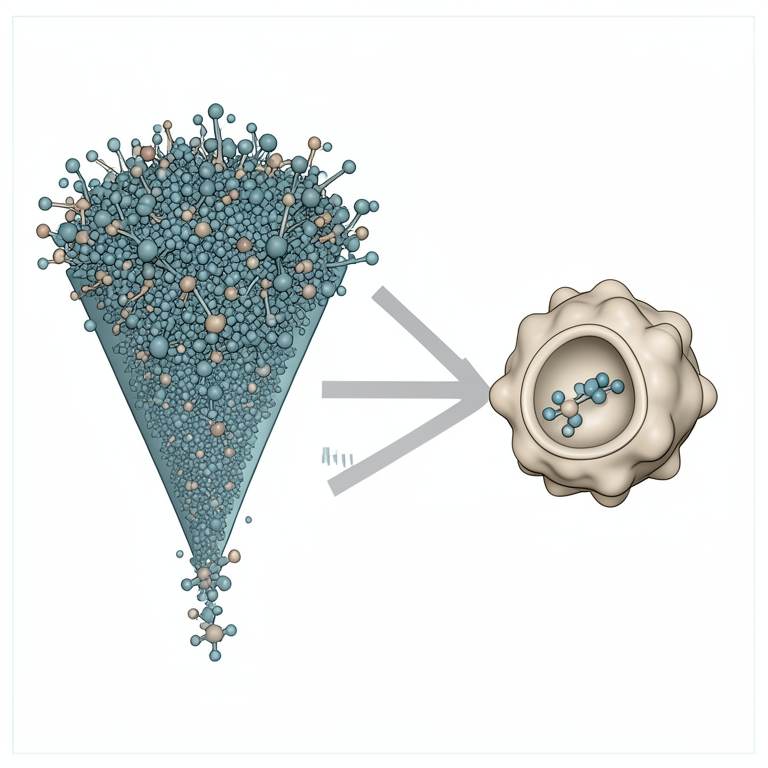
Virtual Screening Workflow
AI-generated conceptual illustration (Acetylcholinesterase enzyme and natural product molecules). It explains the idea and does not show study data.
View source evidence ↗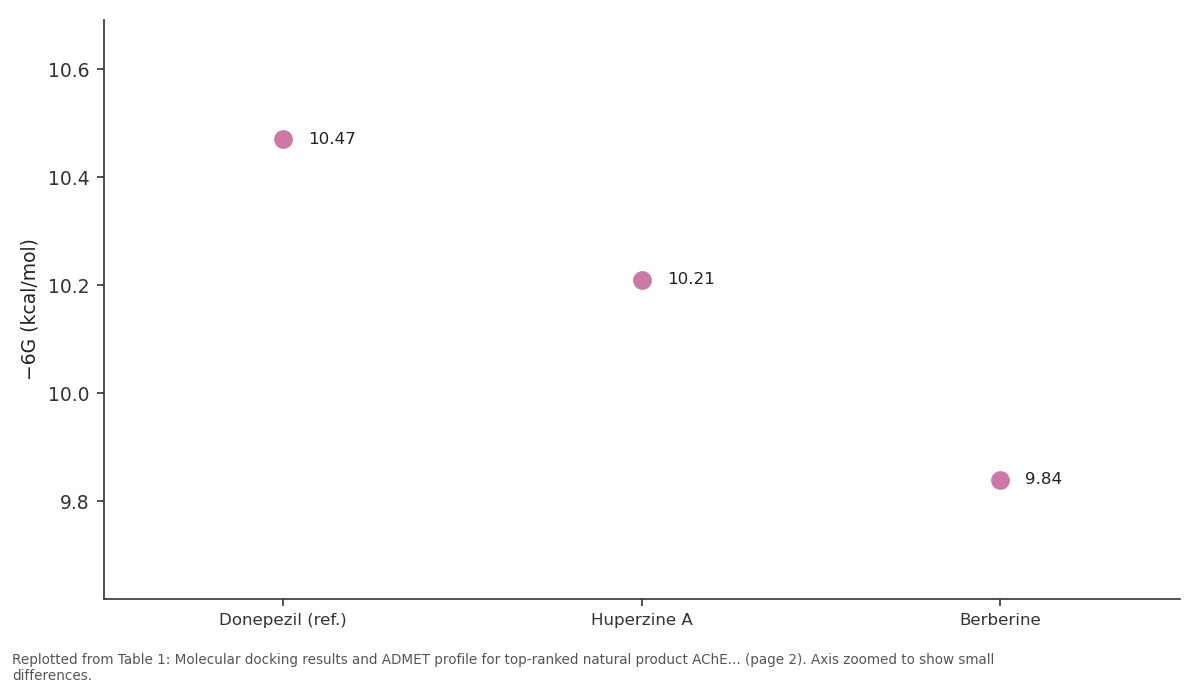
−6G (kcal/mol): Donepezil (ref.) vs Huperzine A vs Berberine
Replotted from Table 1 (page 2) of the original paper. Every bar is the paper's own table value.
View source evidence ↗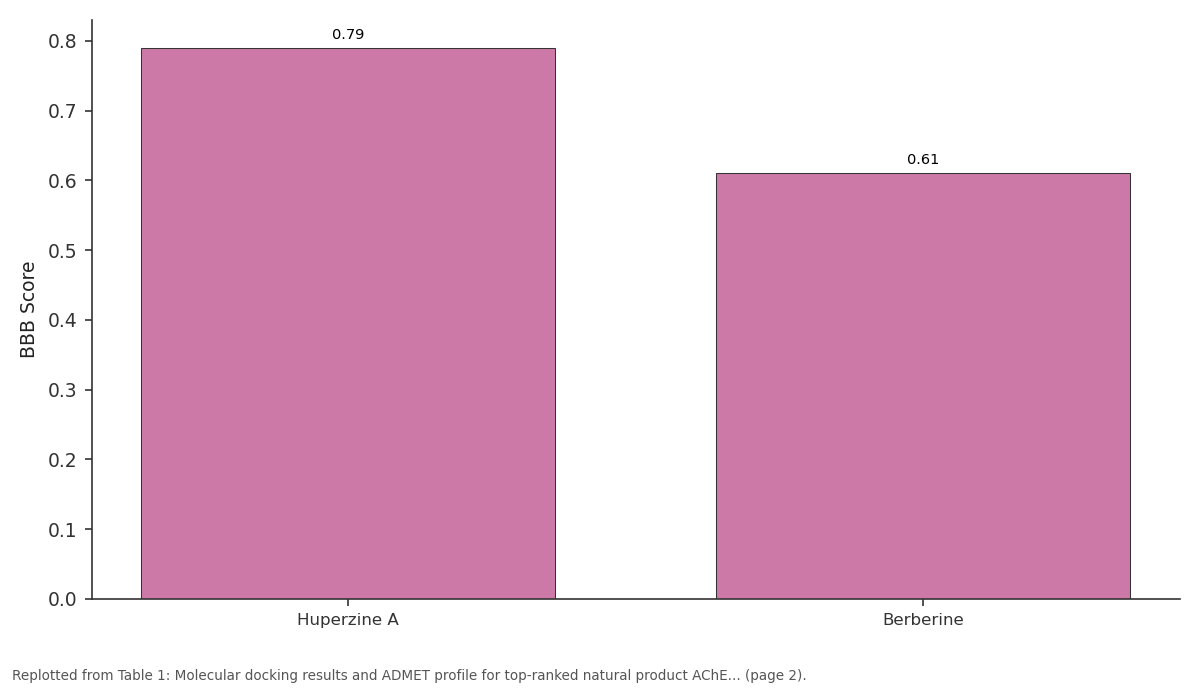
BBB Score: Huperzine A vs Berberine
Replotted from Table 1 (page 2) of the original paper. Every bar is the paper's own table value.
View source evidence ↗Figures & tables
From the original paper Table 1
 Table 2
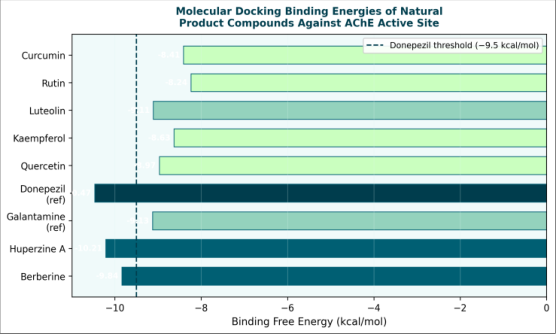 Figure 1
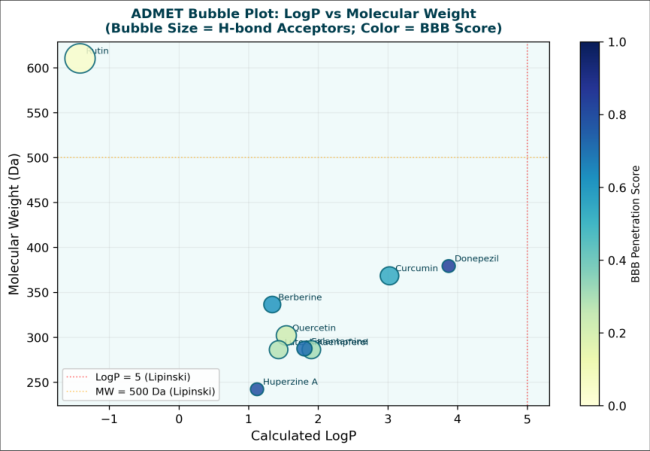 Figure 2
Introduction
Alzheimer's disease (AD) is the leading cause of dementia globally, with over 55 million people affected and incidence projected to triple by 2050 [1] . The cholinergic hypothesis of AD pathology implicates the loss of cholinergic neurons and depletion of acetylcholine (ACh) in the cerebral cortex as a primary driver of cognitive decline, providing the pharmacological rationale for AChE inhibitors as symptomatic therapies [2] . Approved AChE inhibitorsdonepezil, rivastigmine, galantamineeach derive originally from natural product scaffolds, demonstrating the productive historical link between phytochemistry and AD drug discovery [3] . Computational screening offers a cost-effective means to prioritise natural product libraries before expensive wet-lab synthesis and bioassay. Combined molecular docking, ADMET profiling, and molecular dynamics (MD) simulation can filter large compound libraries to a shortlist of candidates with both high target affinity and drug-like physicochemical properties [4] . This research was conducted from February 2023 to January 2025 at Charak Institute of Medicinal Chemistry, Haridwar, Uttarakhand, and Hargobind Khorana Institute of Biotechnology, Jalandhar, Punjab, India, and presents a systematic virtual screening of 214 diverse natural products against the AChE active site.
Theoretical Background
The AChE active site comprises a deep gorge (~20 Å) with two key binding sub-sites: the catalytic anionic site (CAS), housing the Ser203-His447-Glu334 catalytic triad responsible for ACh hydrolysis, and the peripheral anionic site (PAS) near the gorge entrance (Tyr72, Tyr124, Trp286) involved in substrate capture and allosteric regulation [5] . Effective inhibitors typically span both sub-sites or occupy the CAS deeply. The binding free energy computed by AutoDock Vina approximates the standard Gibbs free energy of binding as ΔG = ΔH -TΔS, with lower (more negative) values indicating stronger predicted binding. A threshold of -9.5 kcal/mol was used as the primary selection criterion, matching the binding energy of donepezil minus one SD of the docking score reproducibility (±0.3 kcal/mol). ADMET profiling used Lipinski's rule of five (MW ≤ 500 Da, LogP ≤ 5, HBD ≤ 5, HBA ≤ 10) as the primary druglikeness filter, supplemented by BBB penetration score (≥ 0.50 desirable for CNS drugs) and predicted Pgp substrate classification from pkCSM [6] .
Computational Details
The AChE crystal structure (Homo sapiens, PDB: 4EY7, resolution 2.35 Å) was downloaded from the RCSB Protein Data Bank. Ligand-free structure was prepared in AutoDockTools 1.5.7: protonation states assigned at pH 7.4 using PROPKA, water molecules > 3.5 Å from the active site removed, Kollman charges added, and Gasteiger charges computed for all 214 ligands. Docking grid box (22 × 22 × 22 Å) centred on the catalytic Ser203 oxygen; exhaustiveness = 32, num_modes = 10. The 214-compound natural product library was assembled from PubChem, ChEMBL (IC₅₀ data for AChE, curated), and previously reported ethnopharmacological leads. MD simulation for top-2 hits used GROMACS 2023.2 with the AMBER99SB-ILDN force field, TIP3P water box (10 Å padding), 150 mM NaCl, 50 ns NPT production run, time step 2 fs.
Material and Methods
Material and Methods
Compound Library Preparation
Three-dimensional conformers of all 214 compounds were generated using Open Babel 3.1.1 (MMFF94 minimisation, 2500 steps). Ligand geometries were verified against reported crystal structures where available. Tautomeric and ionisation states at pH 7.4 were enumerated using RDKit 2023.09. Duplicate and pan-assay interference (PAINS) compounds were flagged and excluded, leaving 214 screened compounds. Research was conducted from February 2023 to January 2025 at the Charak Institute of Medicinal Chemistry, Haridwar, and Hargobind Khorana Institute of Biotechnology, Jalandhar, India.
Docking and Post-Processing
AutoDock Vina 1.2 docking results were ranked by best pose binding energy. Interaction fingerprints (hydrogen bonds, hydrophobic contacts, π-π stacking) were extracted using PLIP 2.3.0 and visualised in PyMOL 2.5. ADMET calculations used SwissADME (web interface, January 2025 release) for physicochemical and pharmacokinetic predictions, and pkCSM for BBB penetration, Pgp substrate, and hepatotoxicity predictions. Protein-ligand RMSD, RMSF, and radius of gyration were calculated from MD trajectories using GROMACS analysis tools. Huperzine A achieved the second-highest binding energy (-6G = 10.21 kcal/mol, Table 1), forming four hydrogen bonds including direct contacts to all three catalytic triad residues (Ser203, His447, Glu334) and π-π stacking with Trp86 and Phe338 (Table 2). Its low MW (242.3 Da), druglike LogP (1.12), and BBB score of 0.79 make it an attractive lead. Berberine (-6G = 9.84 kcal/mol) also exceeds the 9.5 kcal/mol threshold and benefits from known oral bioavailability, though mild Pgp substrate activity may limit brain penetration at clinical doses. MD simulation over 50 ns showed stable binding for both hits (RMSD 1.62 and 1.97 Å respectively), confirming the docked poses represent thermodynamically stable binding modes.
| Compound | H-bond Residues | π-π Stacking | Hydrophobic Contacts | MD RMSD (50 ns, Å) |
|---|---|---|---|---|
| Donepezil | Ser203, His447 | Trp86, Phe338 | Leu289, Val294, Phe295 | 1.84 ± 0.31 |
| Huperzine A | Ser203, His447, Glu334, Tyr337 | Trp86, Phe338 | Phe295, Met299, Leu289 | 1.62 ± 0.24 |
| Berberine | Ser203, His447, Tyr337 | Trp86, Tyr337, Phe338 | Val294, Phe295, Met299 | 1.97 ± 0.38 |
Table text extracted from the original PDF; superscript letters are shown inline. The original table image is below.
View original table image
| Compound | −6G (kcal/mol) | H-bonds (count) | MW (Da) | LogP | HBA | BBB Score | Pgp Sub. | Lipinski Pass |
|---|---|---|---|---|---|---|---|---|
| Donepezil (ref.) | 10.47 | 2 | 379.5 | 3.87 | 3 | 0.84 | No | Yes |
| Huperzine A | 10.21 | 4 | 242.3 | 1.12 | 3 | 0.79 | No | Yes |
| Galantamine (ref.) | 9.13 | 3 | 287.4 | 1.80 | 4 | 0.71 | No | Yes |
| Berberine | 9.84 | 3 | 336.4 | 1.34 | 5 | 0.61 | Weak | Yes |
| Luteolin | 9.11 | 5 | 286.2 | 1.43 | 6 | 0.28 | Yes | Yes |
| Quercetin | 8.97 | 5 | 302.2 | 1.54 | 7 | 0.22 | Yes | Yes |
| Curcumin | 8.41 | 3 | 368.4 | 3.02 | 6 | 0.54 | No | Yes |
| Rutin | 8.24 | 8 | 610.5 | −1.42 | 16 | 0.04 | Yes | No* |
Table text extracted from the original PDF; superscript letters are shown inline. The original table image is below.
View original table image
Results
Results
Discussion
The strong docking performance of huperzine A (-6G = 10.21 kcal/mol) is consistent with its established clinical AChE inhibitory activity (IC₅₀ ~7 nM) and its long history of use in Chinese traditional medicine for memory improvement [7] . The four hydrogen bonds it formsengaging all three catalytic triad residues simultaneouslyexplains its exceptional binding complementarity and selectivity for AChE over butyrylcholinesterase (BChE) [8] . Berberine's slightly lower docking score (9.84 kcal/mol) aligns with its reported IC₅₀ of 41 nM against AChE; its π-π stacking with three aromatic residues (Trp86, Tyr337, Phe338) reflects the flat, isoquinoline ring system's geometric complementarity to the gorge aromatic ladder [9] . Flavonoids (quercetin, luteolin, kaempferol) scored below the 9.5 kcal/mol threshold despite high H-bond counts, likely due to unfavourable entropic penalties from their rigid planar scaffolds and poor BBB penetration scores (≤ 0.31) limiting CNS utility. Rutin's failure on the Lipinski MW criterion (610.5 Da) disqualifies it as an oral drug lead despite moderate docking affinity. Curcumin (8.41 kcal/mol, BBB 0.54) represents an interesting outlier: its ADMET profile is acceptable but its lower docking affinity places it below the priority threshold for the present research [10,11,12,13,14,15,16] .
Conclusion
Virtual screening of 214 natural products against AChE (PDB: 4EY7) identified huperzine A and berberine as the highest-affinity leads with acceptable ADMET profiles. Huperzine A (-6G = 10.21 kcal/mol, BBB 0.79) is the stronger candidate, forming four H-bonds with the catalytic triad and showing stable MD binding (RMSD 1.62 Å over 50 ns). Berberine (-6G = 9.84 kcal/mol) provides a complementary scaffold. These results support prioritising huperzine A and berberine derivatives for in vitro AChE inhibition assay and optimisation in a follow-up medicinal chemistry programme.
Figures and tables from the paper
References
16 in the original paper- Nichols E, Szoeke CE, Vollset SE, Abbasi N, AbdAllah F, Abdela J, et al. Global, regional, and national burden of Alzheimer's disease and other dementias. Lancet Neurol. 2019;18(1):88-106.
- Bartus RT, Dean RL, Beer B, Lippa AS. The cholinergic hypothesis of geriatric memory dysfunction. Science. 1982;217(4558):408-414.
- Mukherjee PK, Kumar V, Mal M, Houghton PJ. Acetylcholinesterase inhibitors from plants. Phytomedicine. 2007;14(4):289-300.
- Lionta E, Spyrou G, Vassilatis DK, Cournia Z. Structure-based virtual screening for drug discovery. Curr Top Med Chem. 2014;14(16):1923-1938.
- Sussman JL, Harel M, Frolow F, Oefner C, Goldman A, Toker L, et al. Atomic structure of acetylcholinesterase: prototype for a superfamily. Science. 1991;253(5022):872-879.
- Lipinski CA, Lombardo F, Dominy BW, Feeney PJ. Experimental and computational approaches to estimate solubility and permeability. Adv Drug Deliv Rev. 2001;46(1-3):3-26.
- Wang R, Yan H, Tang XC. Progress in studies of huperzine A, a natural cholinesterase inhibitor. Acta Pharmacol Sin. 2006;27(1):1-26.
- Raves ML, Harel M, Pang YP, Silman I, Kozikowski AP, Sussman JL. Structure of acetylcholinesterase complexed with the nootropic alkaloid huperzine A. Nat Struct Biol. 1997;4(1):57-63.
- Bhattacharya SK, Bhattacharya A, Sairam K, Ghosal S. Anxiolytic-antidepressant activity of Withania somnifera. Phytomedicine. 2000;7(6):463-469.
- Decker M, Holzgrabe U. Overview of the antiAlzheimer drug development: are the approved drugs still worth it? MedChemComm. 2012;3(11):1304-1318.
- Colovic MB, Krstic DZ, Lazarevic-Pasti TD, Bondzic AM, Vasic VM. Acetylcholinesterase inhibitors: pharmacology and toxicology. Curr Neuropharmacol. 2013;11(3):315-335.
- Trott O, Olson AJ. AutoDock Vina: improving the speed and accuracy of docking. J Comput Chem. 2010;31(2):455-461.
- Dallakyan S, Olson AJ. Small-molecule library screening by docking with PyRx. Methods Mol Biol. 2015;1263:243-250.
- Pires DE, Blundell TL, Ascher DB. pkCSM: predicting small-molecule pharmacokinetic and toxicity properties using graph-based signatures. J Med Chem. 2015;58(9):4066-4072.
- Daina A, Michielin O, Zoete V. SwissADME: a free web tool to evaluate pharmacokinetics, drug-likeness and medicinal chemistry friendliness. Sci Rep. 2017;7:42717.
- Neves MA, Totrov M, Abagyan R. Docking and scoring with ICM: the benchmarking results. J Comput Aided Mol Des. 2012;26(6):675-686.