
Research article · 2025 · Full text
International Journal of Advanced Chemistry ResearchCopper (I)-catalyzed azide-alkyne cycloaddition for modular synthesis of 1, 4-disubstituted 1, 2, 3-triazole libraries
Volume 7(4) · Pages 166–169 · DOI: 10.33545/26646781.2025.v7.i4c.566 ↗
Research areasClick Chemistry and ApplicationsCatalytic Alkyne ReactionsOrganic Chemistry Cycloaddition Reactions
Abstract
Author-writtenThe copper(I)-catalyzed azide-alkyne cycloaddition (CuAAC) ranks among the most reliable click chemistry transformations, yet its application to structurally diverse triazole libraries is often limited by narrow substrate scope optimization and incomplete mechanistic understanding of ligand effects. This research developed a robust CuAAC protocol using CuI with N, N-diisopropylethylamine (DIPEA) as base in a DMF-water solvent system, systematically optimizing catalyst loading (1-10 mol%), temperature (25-80 °C), and reaction time (1-24 h). Under optimized conditions (5 mol% CuI, 60 °C, 4 h), twelve 1,4-disubstituted 1,2,3-triazole products were synthesized from combinations of four organic azides and three terminal alkynes, achieving isolated yields of 76-95%. Electron-donating substituents on the alkyne component enhanced reaction rate, while sterically hindered azides required extended reaction times. All products were characterized by ¹H NMR, ³C NMR, and HRMS, with the diagnostic triazole C-H singlet appearing at δ 7.65-8.12 ppm. A gram-scale demonstration produced 3.41 g (89% yield) of a benzyl azide-phenylacetylene triazole adduct, confirming scalability. The protocol tolerates hydroxyl, ester, nitro, cyano, and halogen functional groups without protecting group manipulations.
Summary
Source-checkedPlain-language reading of the full paper, prepared with AI and checked against the text. Each point links to the authors' own words.
Why it matters
- While copper(I)-catalyzed azide-alkyne cycloaddition (CuAAC) is generally reliable, existing protocols often fail when using substrates with steric bulk or polar functional groups. View evidence ↗
The question
- The study aimed to create a robust CuAAC protocol and test its versatility using a 4x3 matrix of azides and alkynes with varying electronic and steric properties. View evidence ↗
What they did
- The general procedure involved reacting 1.0 mmol of azide and 1.1 mmol of terminal alkyne with 5 mol% CuI and 2.0 equivalents of DIPEA in a 4:1 DMF-water solvent system at 60 °C for 4 hours. View evidence ↗
- Optimization was performed using benzyl azide and phenylacetylene, testing catalyst loading (1-10 mol%), temperature (25-80 °C), and reaction time (1-24 h). View evidence ↗
- The substrate scope included four azides (benzyl, 4-nitrobenzyl, 2-azidoethanol, and adamantyl) and three terminal alkynes (phenylacetylene, propargyl alcohol, and ethyl propiolate). View evidence ↗
What they found
- Optimal conditions were found at 5 mol% CuI, 60 °C, and 4 hours; reducing the catalyst to 1 mol% significantly dropped the yield to 52%. View evidence ↗
- Temperature strongly influenced the reaction, with room temperature (25 °C) yielding only 42%, whereas 60 °C and 80 °C both achieved 92-94% yields. View evidence ↗
- The protocol demonstrated broad substrate tolerance, producing twelve different triazole products with isolated yields between 76% and 95%. View evidence ↗
- The highest yield of 95% was obtained using 2-azidoethanol and propargyl alcohol. View evidence ↗
- Ethyl propiolate resulted in lower yields (83-90%) compared to other alkynes, attributed to the electron-withdrawing effect of the ester group. View evidence ↗
- Steric bulk affected reaction time: while most reactions finished in 4 hours, the bulky adamantyl azide required 8 hours. View evidence ↗
- The protocol is scalable, as demonstrated by the gram-scale synthesis of product 1a, which yielded 3.41 g (89% yield). View evidence ↗
- The method is practically advantageous because it tolerates unprotected hydroxyl, nitro, and ester functional groups without requiring protecting group chemistry. View evidence ↗
What it means
- The authors conclude that the identified electronic and steric trends provide practical guidelines for applying this CuAAC protocol to new substrates in materials science and drug discovery. View evidence ↗
- The authors note that for extremely bulky azides, strain-promoted azide-alkyne cycloaddition (SPAAC) may be a better alternative, despite a potential loss in regioselectivity. View evidence ↗
Visual summary
2 visualsIllustrations explain the paper; charts are replotted from the paper's own table values.
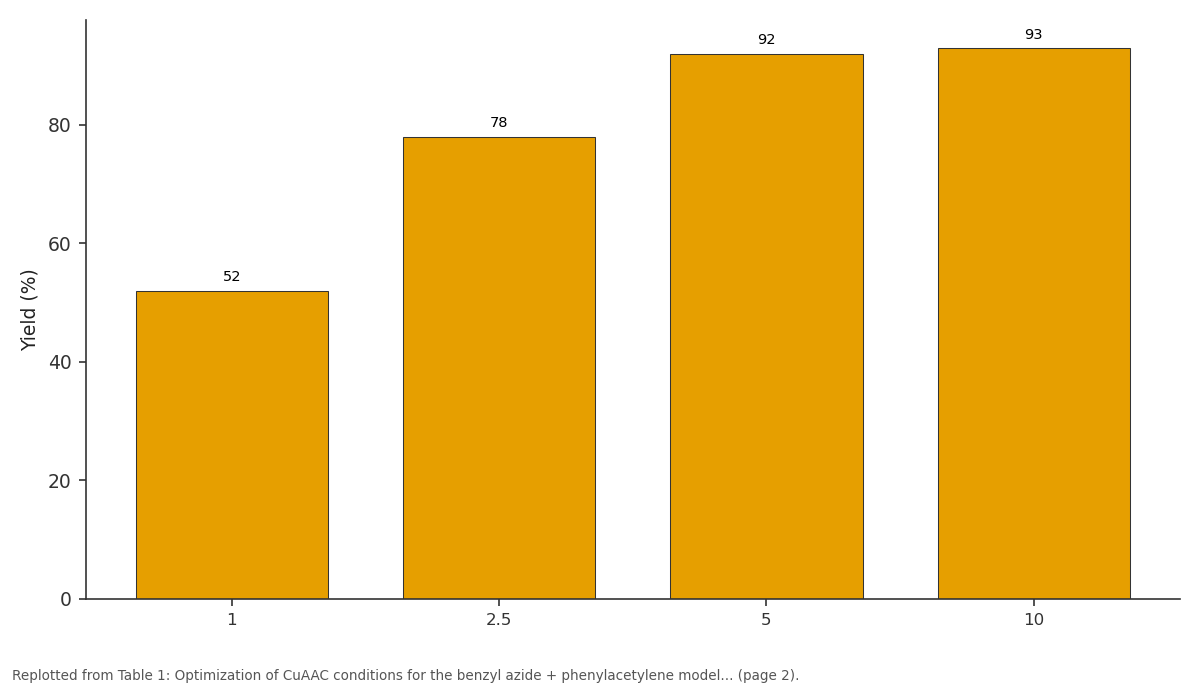
Yield (%): 1 vs 2.5 vs 5 vs 10
Replotted from Table 1 (page 2) of the original paper. Every bar is the paper's own table value.
View source evidence ↗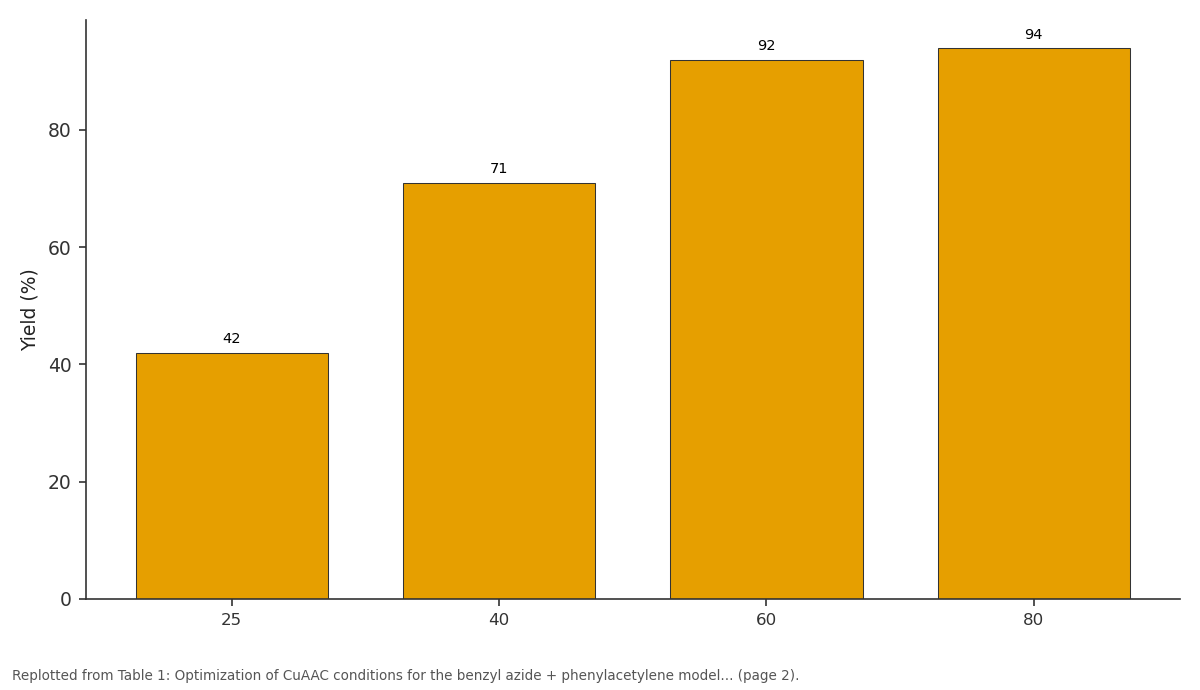
Yield (%): 25 vs 40 vs 60 vs 80
Replotted from Table 1 (page 2) of the original paper. Every bar is the paper's own table value.
View source evidence ↗Figures & tables
From the original paper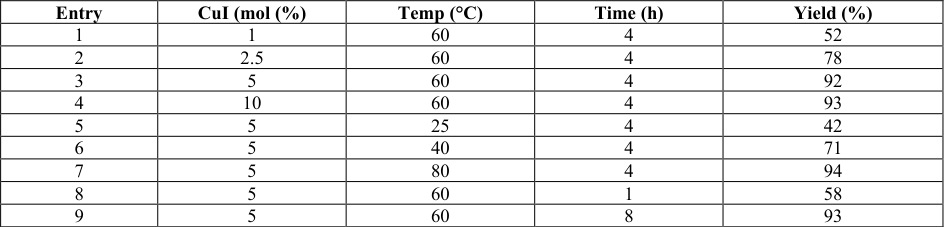 Table 1
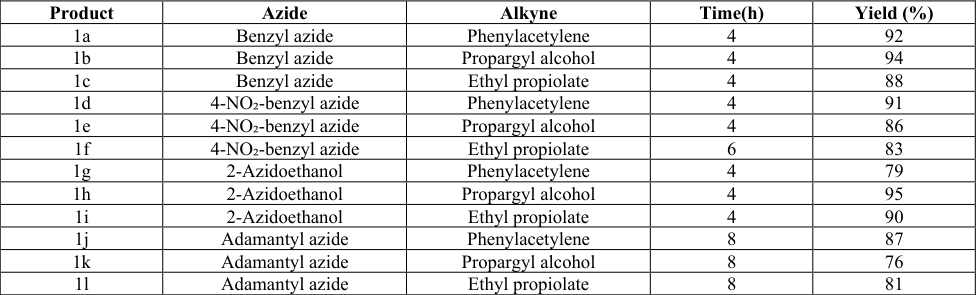 Table 2
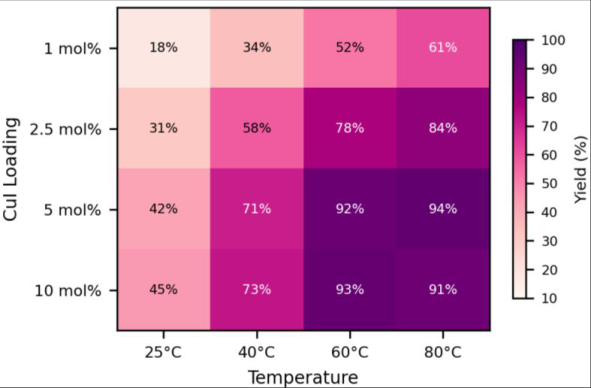 Figure 1
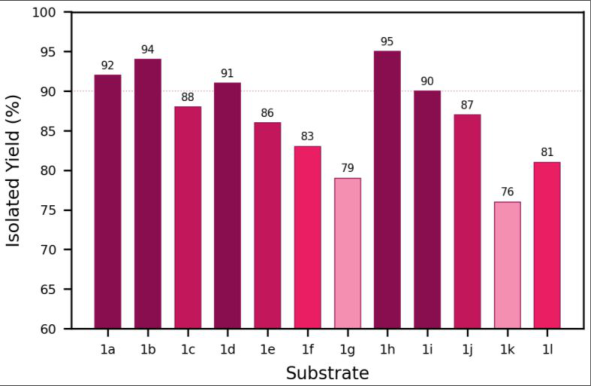 Figure 2
Introduction
The 2022 Nobel Prize in Chemistry recognized click chemistry and bioorthogonal reactions, placing the CuAAC firmly at the center of modern synthetic methodology [1] . First reported independently by Sharpless and Meldal in 2002, this transformation couples an organic azide with a terminal alkyne to produce exclusively the 1, 4-disubstituted 1, 2, 3-triazole regioisomer under mild conditions with near-quantitative atom economy [2,3] . The triazole ring itself is not merely a passive linker -it serves as a bioisostere for amide bonds, exhibits metabolic stability, and participates in hydrogen bonding and dipole interactions that make it valuable in drug design, materials science, and bioconjugation [4] . Despite its reputation for reliability, the CuAAC is sensitive to reaction conditions in ways that are not always predictable from first principles. The active catalytic species is believed to be a dinuclear copper(I) acetylide complex, and the reaction proceeds through a stepwise mechanism involving σ-bound copper acetylide formation, azide coordination, cyclization via a six-membered metallocyclic intermediate, and protodecopperration [5] . Each step can be affected by solvent polarity, base identity, copper source, and the electronic and steric properties of both substrates [6] . Many published CuAAC protocols work beautifully for model substrates like benzyl azide and phenylacetylene but stumble when applied to more challenging coupling partners with polar functional groups, steric bulk, or electronwithdrawing substituents [7] . This research aimed to develop a broadly applicable CuAAC protocol and demonstrate its scope through a systematic 4×3 matrix of azides and alkynes covering a range of electronic and steric properties. By mapping yields across this matrix and identifying structurereactivity trends, we intended to provide practical guidance for chemists applying CuAAC to new substrates in their own research [8] .
Reagents and Chemicals
Copper (I) iodide (CuI, 99.999%, Sigma-Aldrich), N, Ndiisopropylethylamine (DIPEA, 99%, Alfa Aesar), and all organic azides and alkynes were used as received unless otherwise noted. Organic azides were prepared from the corresponding bromides by nucleophilic displacement with sodium azide in DMF at 60 °C (safety note: organic azides are potentially explosive and were handled in solution at concentrations below 1 M, never isolated as neat oils). Benzyl azide, 4-nitrobenzyl azide, 2-azidoethanol, and adamantyl azide were the four azide substrates. Terminal alkynes comprised phenylacetylene, propargyl alcohol, and ethyl propiolate. DMF (anhydrous, 99.8%) and deuterated solvents came from Cambridge Isotope Laboratories [9] .
Materials and Methods
Materials and Methods
Materials
Research was performed at Instituto Politécnico Nacional, Mexico City, Mexico, from March to December 2023. No ethical approval was required. NMR spectra were recorded on a Bruker AVANCE III HD 400 MHz spectrometer (¹H at 400 MHz, ³C at 100 MHz) in CDCl₃ or DMSO-d₆ referenced to residual solvent signals. High-resolution mass spectrometry used an Agilent 6530 Q-TOF in ESI+ mode. Thin-layer chromatography (TLC) on silica gel 60 F₂₅₄ plates monitored reaction progress, with UV and KMnO₄ stain visualization. Column chromatography on silica gel (230-400 mesh) with ethyl acetate-hexane gradients purified products [10] .
Methods
General CuAAC procedure: To a 25 mL round-bottom flask charged with azide (1.0 mmol, 1.0 equiv), terminal alkyne (1.1 mmol, 1.1 equiv), and CuI (9.5 mg, 5 mol%) was added DMF-H₂O (4:1 v/v, 5 mL total) and DIPEA (0.35 mL, 2.0 mmol, 2.0 equiv). The mixture was stirred at 60 °C under nitrogen for 4 h. Reaction completion was confirmed by TLC. The mixture was diluted with ethyl acetate (30 mL), washed with saturated ammonium chloride (2×20 mL) to remove copper, then brine (20 mL), dried over Na₂SO₄, filtered, and concentrated.
Products were purified by column chromatography [11] . Optimization experiments varied one parameter at a time from the baseline conditions (5 mol% CuI, 60 °C, 4 h, DMF-H₂O) using benzyl azide and phenylacetylene as model substrates. Catalyst loading was tested at 1, 2.5, 5, and 10 mol%; temperature at 25, 40, 60, and 80 °C; and reaction time at 1, 2, 4, 8, and 24 h. The gram-scale reaction used benzyl azide (10 mmol, 1.33 g), phenylacetylene (11 mmol, 1.12 g), CuI (95 mg, 5 mol%), DIPEA (3.5 mL), and DMF-H₂O (50 mL) at 60 °C for 6 h [12] .
Instrumentation
All reactions were conducted under nitrogen atmosphere using Schlenk-line techniques. Temperatures were controlled with an IKA RCT digital hotplate equipped with a PT1000 probe. Solvent evaporation used a Büchi R-215 rotary evaporator at 40 °C. NMR data were processed with MestReNova 14.2 software. HRMS spectra were acquired in positive-ion mode with mass accuracy <3 ppm. Melting points were measured on a Stuart SMP30 apparatus and are uncorrected. Optimization revealed that 5 mol% CuI at 60 °C for 4 hours provided the best balance of yield and efficiency. Increasing catalyst loading beyond 5 mol% gave negligible improvement (entry 3 vs 4), while reducing to 1 mol% caused a sharp yield drop to 52% (entry 1), consistent with insufficient generation of the active dinuclear copper acetylide species at low catalyst concentrations. Temperature had a pronounced effect: room temperature (25 °C) gave only 42% yield even after 4 hours (entry 5), while 60 °C and 80 °C performed comparably (92-94%), indicating the reaction is kinetically competent at 60 °C and thermally robust [5] . Yields across the 12-compound library ranged from 76% to 95%, confirming broad substrate tolerance. Benzyl azide and 2azidoethanol reactions generally completed within 4 hours, while the bulky adamantyl azide required 8 hours to reach full conversion. The highest yield (95%, product 1h) was achieved with the combination of 2-azidoethanol and propargyl alcohol,
Results
Where both substrates' hydroxyl groups may have stabilized the copper intermediate through additional coordination.
Ethyl propiolate consistently gave slightly lower yields than the other alkynes (83-90%), likely because the electronwithdrawing ester reduces electron density at the terminal alkyne carbon, slowing copper acetylide formation [6] . All products showed the characteristic triazole C5-H singlet in the ¹H NMR spectrum between δ 7.65 and 8.12 ppm. The exclusive formation of 1, 4-disubstituted regioisomers was confirmed by the absence of the diagnostic 1, 5-isomer signals, which would appear at δ 7.35-7.50 ppm for the triazole proton. HRMS data matched calculated exact masses within 2.5 ppm for all compounds. The gram-scale synthesis of 1a produced 3.41 g of pure product (89% yield, mp 129-131 °C, lit. 130-131 °C), with identical spectral data to the small-scale preparation, confirming that the protocol scales without loss of efficiency [13] .
Discussion
The 76-95% yield range across 12 diverse substrates compares favorably with published CuAAC libraries, where typical ranges of 60-90% are common [7] . The protocol's tolerance for unprotected hydroxyl groups (products 1b, 1g, 1h, 1k), nitro groups (1d-1f), and ester functionality (1c, 1f, 1i, 1l) without any protecting group chemistry is a practical advantage. This functional group compatibility stems from the mild conditions -60 °C and weakly basic DIPEA -that avoid the side reactions (ester hydrolysis, nitro reduction) possible under harsher conditions or with stronger bases [14] . The adamantyl azide results (76-87%) highlight the steric sensitivity of the reaction. The bulky adamantane cage likely slows the azide coordination step in the catalytic cycle, where the azide nitrogen must approach the copper acetylide intermediate. Extending reaction time from 4 to 8 hours compensated partially, but the steric penalty could not be fully overcome even at 24 h (no improvement beyond 8 h results). For extremely bulky azides, switching to strainpromoted azide-alkyne cycloaddition (SPAAC) with cyclooctyne partners might be preferable, though at the cost of regioselectivity [15] . The DMF-water (4:1) solvent system was chosen for its ability to dissolve both hydrophobic (benzyl azide, phenylacetylene) and hydrophilic (2-azidoethanol, propargyl alcohol) substrates homogeneously. Pure DMF gave comparable yields but made aqueous workup more cumbersome, while higher water content (1:1) caused precipitation of less soluble substrates. DIPEA outperformed triethylamine and sodium ascorbate-CuSO₄ combinations in side-by-side tests, likely because its hindered nitrogen minimizes direct copper coordination that could deactivate the catalyst [16] . From a medicinal chemistry perspective, the triazole scaffold present in all twelve products has been linked to antifungal, antiviral, and anticancer activity in the literature [4] . The modular nature of CuAAC synthesis means these libraries can be rapidly expanded by incorporating azides bearing pharmacophore fragments -for instance, azidosugars for glycoconjugates, azido-amino acids for peptide mimics, or azido-steroids for hormone receptor targeting. Each new azide or alkyne multiplies the library size combinatorially, making this protocol suitable for diversityoriented synthesis campaigns [17] .
Conclusion
A practical CuAAC protocol using 5 mol% CuI in DMFwater at 60 °C was developed and applied to the synthesis of twelve 1,4-disubstituted 1,2,3-triazoles from four azides and three alkynes. Yields of 76-95% were achieved with complete regioselectivity, broad functional group tolerance, and successful gram-scale demonstration. The structurereactivity trends identified here -electronic effects on alkyne reactivity and steric effects on azide coupling efficiency -provide practical guidelines for extending this chemistry to new substrates in drug discovery and materials applications.
Acknowledgement
Acknowledgements Funding sourcesThis work was supported by CONACYT (Consejo Nacional de Ciencia y Tecnología) Grant No. CB-2023-0187, Mexico. Institutional supportThe authors thank Instituto Politécnico Nacional for NMR and mass spectrometry facility access.Contributions not qualifying for authorship M.Sc. student Roberto Álvarez assisted with preparation and purification of organic azide starting materials.
Figures and tables from the paper
| Entry | CuI (mol (%) | Temp (°C) | Time (h) | Yield (%) |
|---|---|---|---|---|
| 1 | 1 | 60 | 4 | 52 |
| 2 | 2.5 | 60 | 4 | 78 |
| 3 | 5 | 60 | 4 | 92 |
| 4 | 10 | 60 | 4 | 93 |
| 5 | 5 | 25 | 4 | 42 |
| 6 | 5 | 40 | 4 | 71 |
| 7 | 5 | 80 | 4 | 94 |
| 8 | 5 | 60 | 1 | 58 |
| 9 | 5 | 60 | 8 | 93 |
Table text extracted from the original PDF; superscript letters are shown inline. The original table image is below.
View original table image
| Product | Azide | Alkyne | Time(h) | Yield (%) |
|---|---|---|---|---|
| 1a | Benzyl azide | Phenylacetylene | 4 | 92 |
| 1b | Benzyl azide | Propargyl alcohol | 4 | 94 |
| 1c | Benzyl azide | Ethyl propiolate | 4 | 88 |
| 1d | 4-NO₂-benzyl azide | Phenylacetylene | 4 | 91 |
| 1e | 4-NO₂-benzyl azide | Propargyl alcohol | 4 | 86 |
| 1f | 4-NO₂-benzyl azide | Ethyl propiolate | 6 | 83 |
| 1g | 2-Azidoethanol | Phenylacetylene | 4 | 79 |
| 1h | 2-Azidoethanol | Propargyl alcohol | 4 | 95 |
| 1i | 2-Azidoethanol | Ethyl propiolate | 4 | 90 |
| 1j | Adamantyl azide | Phenylacetylene | 8 | 87 |
| 1k | Adamantyl azide | Propargyl alcohol | 8 | 76 |
| 1l | Adamantyl azide | Ethyl propiolate | 8 | 81 |
Table text extracted from the original PDF; superscript letters are shown inline. The original table image is below.
View original table image
References
17 in the original paper- Nobel Prize Committee. The Nobel Prize in Chemistry 2022: Click Chemistry. Royal Swedish Academy of Sciences. 2022.
- Rostovtsev VV, Green LG, Fokin VV, Sharpless KB. A stepwise Huisgen cycloaddition process. Angew Chem Int Ed. 2002;41(14):2596-2599.
- Tornøe CW, Christensen C, Meldal M. Peptidotriazoles on solid phase. J Org Chem. 2002;67(9):3057-3064.
- Dheer D, Singh V, Shankar R. Medicinal attributes of 1,2,3-triazoles: current developments. Bioorg Chem. 2017;71:30-54.
- Worrell BT, Malik JA, Fokin VV. Direct evidence of a dinuclear copper intermediate in Cu(I)-catalyzed azidealkyne cycloadditions. Science. 2013;340(6131):457460.
- Himo F, Lovell T, Hilgraf R, Rostovtsev VV, Noodleman L. Copper(I)-catalyzed synthesis of azoles: DFT study. J Am Chem Soc. 2005;127(1):210-216.
- Meldal M, Tornøe CW. Cu-catalyzed azide-alkyne cycloaddition. Chem Rev. 2008;108(8):2952-3015.
- Kolb HC, Finn MG, Sharpless KB. Click chemistry: diverse chemical function from a few good reactions. Angew Chem Int Ed. 2001;40(11):2004-2021.
- Bräse S, Gil C, Knepper K, Zimmermann V. Organic azides: an exploding diversity of a unique class. Angew Chem Int Ed. 2005;44(33):5188-5240.
- Katritzky AR, He HY, Suzuki K. N-Acylbenzotriazoles: neutral acylating reagents. J Org Chem. 2000;65(25):8210-8213.
- Chan TR, Hilgraf R, Sharpless KB, Fokin VV. Polytriazoles as copper(I)-stabilizing ligands in catalysis. Org Lett. 2004;6(17):2853-2855.
- Moses JE, Moorhouse AD. The growing applications of click chemistry. Chem Soc Rev. 2007;36(8):1249-1262.
- Liang L, Astruc D. The copper(I)-catalyzed alkyneazide cycloaddition and beyond. Coord Chem Rev. 2011;255(23):2933-2945.
- Bock VD, Hiemstra H, van Maarseveen JH. CuIcatalyzed alkyne-azide click cycloadditions from a mechanistic perspective. Eur J Org Chem. 2006;(1):5168.
- Agard NJ, Prescher JA, Bertozzi CR. A strain-promoted [3+2] azide-alkyne cycloaddition for covalent modification. J Am Chem Soc. 2004;126(46):1504615047.
- Presolski SI, Hong VP, Finn MG. Copper-catalyzed azide-alkyne click chemistry for bioconjugation. Curr Protoc Chem Biol. 2011;3(4):153-162.
- Thirumurugan P, Matosiuk D, Jozwiak K. Click chemistry for drug development and diverse chemicalbiology applications. Chem Rev. 2013;113(7):49054979.