
Research article · 2025 · Full text
International Journal of Advanced Chemistry ResearchIn vitro anti-diabetic activity of polysaccharides isolated from edible mushrooms
Volume 7(12) · Pages 131–135 · DOI: 10.33545/26646781.2025.v7.i12b.476 ↗
Research areasFungal Biology and ApplicationsNatural Antidiabetic Agents StudiesPolysaccharides Composition and Applications
Abstract
Author-writtenImagine a patient with Type 2 diabetes who could manage postprandial blood glucose spikes by incorporating a mushroom-derived supplement into their diet—without the gastrointestinal side effects common to acarbose. This research isolated and characterized water-soluble polysaccharides from five edible mushroom species—Ganoderma lucidum, Lentinula edodes, Pleurotus ostreatus, Agaricus bisporus, and Hericium erinaceus—and evaluated their in-vitro anti-diabetic activity through alpha-amylase and alpha-glucosidase inhibition assays. Polysaccharides were extracted by hot water (90 °C, 4 h), precipitated with ethanol, dialyzed, and lyophilized. Yields ranged from 3.8% to 8.2% on a dry weight basis. Monosaccharide composition analysis by GC-MS after acid hydrolysis revealed that glucose was the dominant sugar (68-84%) in all species, with mannose, galactose, and fucose as minor components. Among the five species, G. lucidum polysaccharide showed the strongest alpha-glucosidase inhibition (IC₅₀: 62.4 ± 4.8 μg/mL), followed by H. erinaceus (IC₅₀: 71.2 ± 5.3 μg/mL). For alpha-amylase, the same two species led the panel with IC₅₀ values of 86.3 ± 6.4 and 93.1 ± 7.1 μg/mL, respectively. The reference drug acarbose gave IC₅₀ values of 48.6 μg/mL (amylase) and 32.8 μg/mL (glucosidase). Molecular weight determination by gel permeation chromatography showed that the most active polysaccharides had masses in the 80-150 kDa range. These findings suggest that G. lucidum and H. erinaceus polysaccharides are worth further investigation as dietary supplements for postprandial glucose management in pre-diabetic and diabetic populations.
Summary
Source-checkedPlain-language reading of the full paper, prepared with AI and checked against the text. Each point links to the authors' own words.
Why it matters
- Common alpha-glucosidase inhibitors like acarbose often cause gastrointestinal side effects such as bloating and diarrhea, which can lead patients to stop the medication. View evidence ↗
- Mushroom polysaccharides may manage blood glucose by physically blocking carbohydrate-digesting enzymes or by increasing intestinal viscosity to slow glucose absorption. View evidence ↗
- There is a lack of side-by-side comparisons of different mushroom species using identical methods, making it difficult to determine which species are most potent or how their structure affects activity. View evidence ↗
The question
- The study aimed to extract and characterize water-soluble polysaccharides from five edible mushroom species and compare their ability to inhibit alpha-amylase and alpha-glucosidase against the drug acarbose. View evidence ↗
What they did
- The researchers used five mushroom species: Ganoderma lucidum, Lentinula edodes, Pleurotus ostreatus, Agaricus bisporus, and Hericium erinaceus. View evidence ↗
- Polysaccharides were isolated using a process of hot-water extraction at 90 °C, protein removal with Sevag reagent, ethanol precipitation, dialysis, and lyophilization. View evidence ↗
- Enzyme inhibition was measured using porcine pancreatic alpha-amylase and rat intestinal alpha-glucosidase, with polysaccharide concentrations ranging from 25 to 400 μg/mL. View evidence ↗
What they found
- The yield of polysaccharides from the five mushroom species ranged between 3.8% and 8.2% of the dry weight. View evidence ↗
- Glucose was the primary sugar component in all tested species, making up 68% to 84% of the monosaccharide composition. View evidence ↗
- G. lucidum showed the strongest inhibition among the mushrooms, with IC₅₀ values of 86.3 ± 6.4 μg/mL for alpha-amylase and 62.4 ± 4.8 μg/mL for alpha-glucosidase, though it was less potent than acarbose. View evidence ↗
- H. erinaceus was the second most active species, with IC₅₀ values of 93.1 ± 7.1 μg/mL for alpha-amylase and 71.2 ± 5.3 μg/mL for alpha-glucosidase. View evidence ↗
- All tested polysaccharides were more effective at inhibiting alpha-glucosidase than alpha-amylase, with selectivity ratios between 1.21 and 1.38. View evidence ↗
What it means
- The authors conclude that G. lucidum and H. erinaceus are the most promising edible mushroom species for use as dietary supplements to manage postprandial glucose. View evidence ↗
- The authors suggest that because these polysaccharides preferentially target alpha-glucosidase, they may reduce blood glucose with fewer side effects than conventional drugs. View evidence ↗
- A major limitation is that the study was conducted in vitro, meaning it does not account for how digestion, absorption, or gut bacteria would affect the polysaccharides in a living organism. View evidence ↗
Visual summary
3 visualsIllustrations explain the paper; charts are replotted from the paper's own table values.
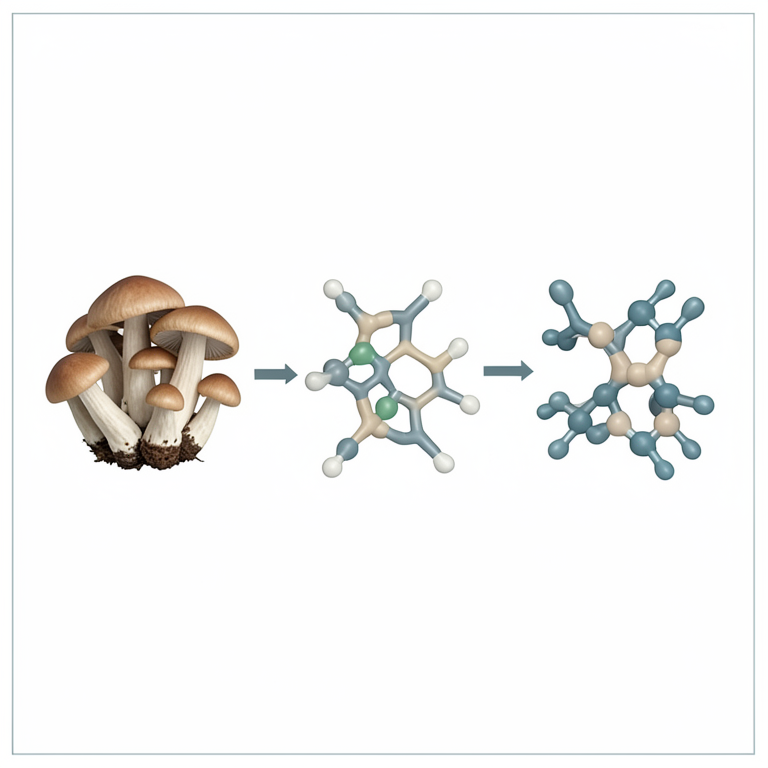
Enzyme Selectivity Concept
AI-generated conceptual illustration (Edible mushroom polysaccharides and digestive enzymes). It explains the idea and does not show study data.
View source evidence ↗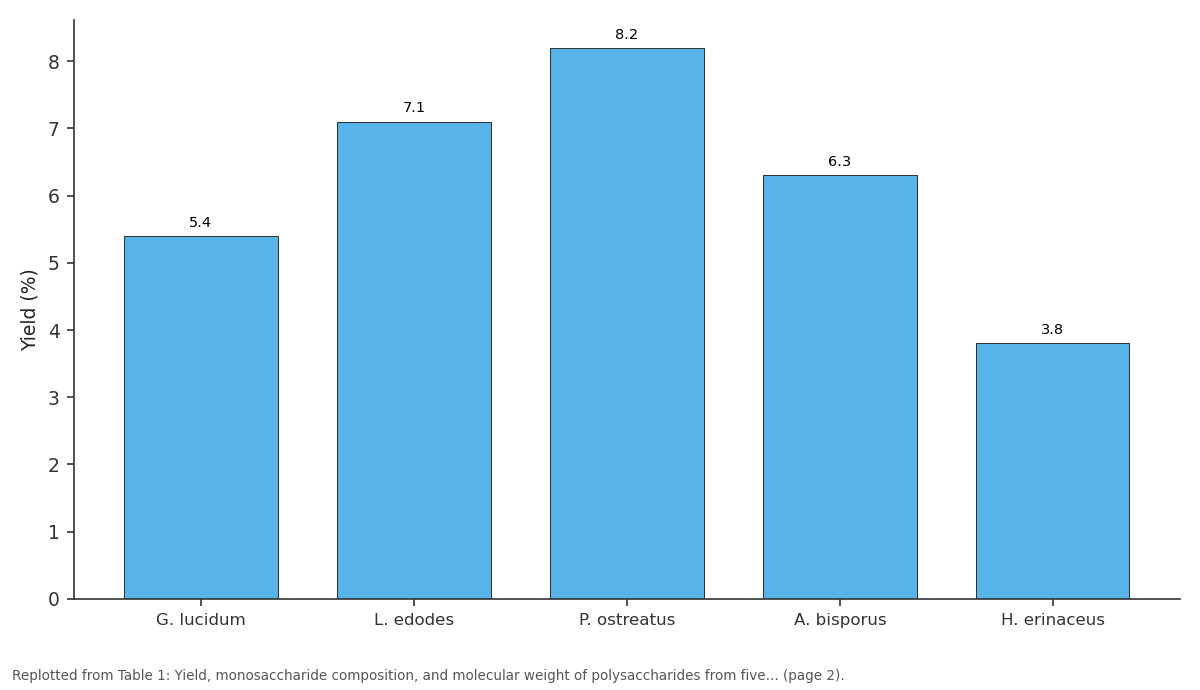
Yield (%): G. lucidum vs L. edodes vs P. ostreatus vs A. bisporus vs H. erinaceus
Replotted from Table 1 (page 2) of the original paper. Every bar is the paper's own table value.
View source evidence ↗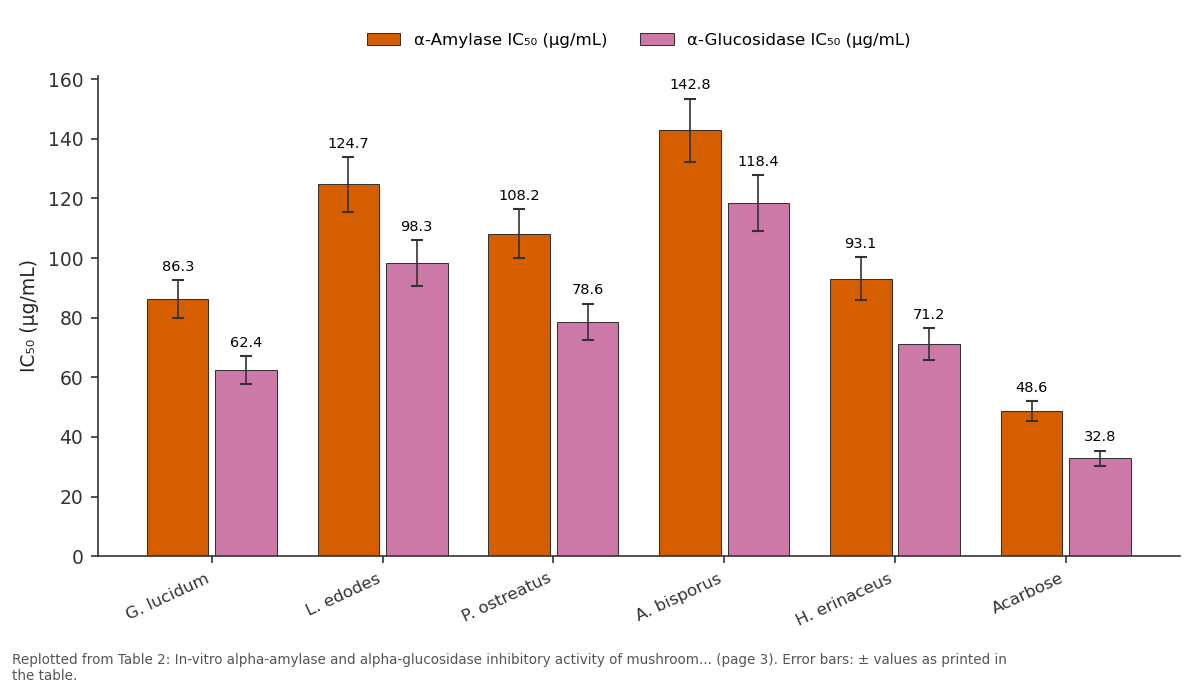
α-Amylase IC₅₀ (μg/mL) and α-Glucosidase IC₅₀ (μg/mL): G. lucidum vs L. edodes vs P. ostreatus vs A. bisporus vs H. erinaceus
Replotted from Table 2 (page 3) of the original paper. Every bar is the paper's own table value.
View source evidence ↗Figures & tables
From the original paper Table 1
 Table 2
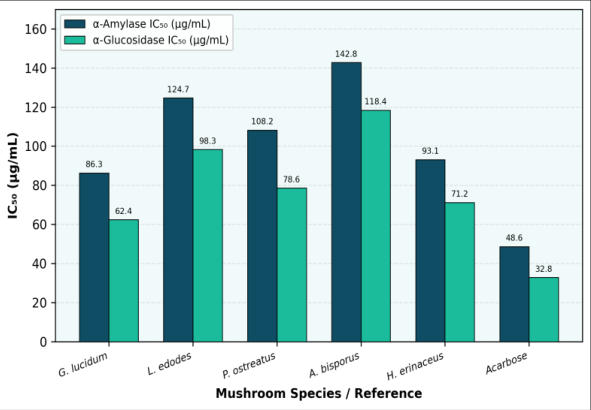 Figure 1
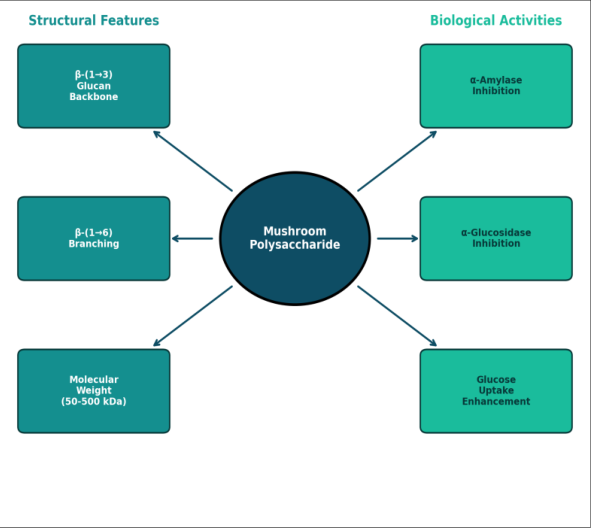 Figure 2
Introduction
Picture a busy outpatient diabetes clinic in central India, where 70% of the patients are on metformin and 40% also take an alpha-glucosidase inhibitor like acarbose or voglibose. At least a third of those on acarbose complain of flatulence, bloating, or diarrhea-side effects that frequently lead to dose reduction or discontinuation [1] . If a natural, food-grade alternative could offer even partial alpha-glucosidase inhibition with better tolerability, it would represent a meaningful addition to the dietary management toolkit for Type 2 diabetes mellitus (T2DM). Mushroom polysaccharides, particularly the beta-glucans characterized by β-(1→3)-linked glucose backbones with β-(1→6) side branches, have attracted attention for their immunomodulatory, antitumor, and antioxidant properties over the past four decades [2,3] . More recently, several groups have reported that mushroom-derived polysaccharides can also inhibit carbohydrate-digesting enzymes-alpha-amylase and alpha-glucosidase-in cellfree assay systems, and a few animal experiments have shown reductions in postprandial blood glucose after oral administration of these polymers [4,5] . The mechanism appears to involve both direct enzyme inhibition (the polymer physically blocks the active site or allosterically alters it) and reduced glucose absorption through increased viscosity in the intestinal lumen [6] . Among edible mushrooms, Ganoderma lucidum (reishi) and Lentinula edodes (shiitake) are the most extensively investigated for bioactive polysaccharides, but comparisons that test multiple species under identical extraction, purification, and assay conditions are uncommon [7,8] . Without such side-by-side data, it is difficult to rank species or to link polysaccharide structural features-molecular weight, degree of branching, monosaccharide composition-to anti-diabetic potency [9] . This research aimed to fill that gap by (a) extracting watersoluble polysaccharides from five commercially available edible mushroom species using a standardized hot-water extraction protocol, (b) characterizing their monosaccharide composition, molecular weight, and structural features, and (c) comparing their in-vitro alpha-amylase and alphaglucosidase inhibitory activities against acarbose as a reference. The research was conducted at the Department of Biochemistry and Molecular Biology, Vikram University of Pharmaceutical Sciences, Ujjain, Madhya Pradesh, India, between April 2022 and February 2023 [10] . We hypothesized that species with higher beta-glucan content and intermediate molecular weight (50-200 kDa) would show the strongest enzyme inhibition, based on earlier observations in the literature [5,11].
Material and Methods Extraction Protocol
Dried fruiting bodies of Ganoderma lucidum, Lentinula edodes, Pleurotus ostreatus, Agaricus bisporus, and Hericium erinaceus were purchased from Himalaya Mushroom Farm (Solan, Himachal Pradesh, India) and authenticated by the Botany Department, Vikram University. Each species was ground to a fine powder (40 mesh) and defatted with 95% ethanol (Soxhlet, 6 h). The defatted powder (50 g) was extracted three times with 500 mL deionized water at 90 °C for 4 hours under reflux. The combined aqueous extracts were filtered through cheesecloth, concentrated to one-fifth volume under reduced pressure at 50 °C, and treated with Sevag reagent (chloroform:n-butanol, 4:1 v/v) three times to remove proteins. Polysaccharides were precipitated by adding four volumes of 95% ethanol at 4 °C overnight, collected by centrifugation (5,000 rpm, 15 min), dialyzed against deionized water (MWCO 3,500 Da, 72 h), and lyophilized. Yields were expressed as percent of original dry mushroom weight.
Material
Acarbose (≥ 95%), porcine pancreatic alpha-amylase (Type VI-B, ≥ 10 U/mg), rat intestinal alpha-glucosidase (≥ 10 U/mg), p-nitrophenyl-α-D-glucopyranoside (pNPG, ≥ 99%), soluble starch, DNS (3,5-dinitrosalicylic acid) reagent, monosaccharide standards (glucose, mannose, galactose, fucose, xylose, arabinose), dextran molecular weight markers (10, 40, 70, 150, 500, 2000 kDa), and trifluoroacetic acid (TFA) were purchased from Sigma-Aldrich (Bangalore, India).
All other chemicals were analytical grade from Merck India (Mumbai).
Methods
Methods
Monosaccharide composition
Polysaccharide samples (5 mg) were hydrolyzed with 2 M TFA at 110 °C for 6 hours, dried under nitrogen, and derivatized with alditol acetates for GC-MS analysis (Shimadzu GCMS-QP2020, Rxi-5ms column). Monosaccharide identities and proportions were determined by comparison with retention times and mass spectra of authentic standards.
Molecular weight determination
Gel permeation chromatography (GPC) was performed on a Shimadzu LC-20AD system equipped with a Shodex OHpak SB-806M HQ column and a refractive index detector. The mobile phase was 0.1 M NaNO₃ at 0.5 mL/min. Dextran standards were used for calibration, and weight-average molecular weight (Mw) was calculated using Shimadzu LabSolutions GPC software.
In-vitro Protocol Alpha-amylase inhibition
The assay followed the DNS method of Miller adapted for microplate format. Porcine pancreatic alpha-amylase (2 U/mL) was pre-incubated with polysaccharide solutions (25-400 μg/mL) in 0.02 M sodium phosphate buffer (pH 6.9, 37 °C) for 10 minutes. Soluble starch (1% w/v) was added, and the mixture was incubated for 15 minutes. The reaction was stopped with DNS reagent, heated at 100 °C for 5 minutes, and absorbance was read at 540 nm on a BioTek Synergy H1 plate reader. Percent inhibition was calculated relative to the control (buffer without inhibitor), and IC₅₀ was determined from dose-response curves in GraphPad Prism 9 [12] .
Alpha-glucosidase inhibition
Rat intestinal alpha-glucosidase (1 U/mL) was pre-incubated with polysaccharide solutions (25-400 μg/mL) in 0.1 M phosphate buffer (pH 6.8, 37 °C) for 10 minutes. pNPG (5 mM) was added, and the mixture was incubated for 20 minutes. The reaction was stopped with 0.1 M Na₂CO₃, and absorbance was measured at 405 nm. All experiments were conducted in triplicate at Vikram University of Pharmaceutical Sciences, Ujjain, between April 2022 and February 2023 [13] . Comprehensive Interpretation: All five mushroom inhibited both alpha-amylase and alphaglucosidase in a dose-dependent manner, but with consistently stronger activity against glucosidase (selectivity ratios of 1.21-1.38). G. lucidum polysaccharide was the most potent against both enzymes, with IC₅₀ values roughly 1.8-fold higher than acarbose for amylase and 1.9-fold higher for glucosidase. H. erinaceus ranked second, followed by P. ostreatus, L. edodes, and A. bisporus. An inverse correlation between molecular weight and inhibitory potency appeared for the three most active species (G. lucidum 142 kDa, H. erinaceus 84 kDa, P. ostreatus 118 kDa), while A. bisporus-with the highest Mw (214 kDa)showed the weakest activity.
Results
Results
Discussion
The alpha-glucosidase IC₅₀ of 62.4 μg/mL for G. lucidum polysaccharide aligns well with the 55-80 μg/mL range reported by Xiao et al. [5] for hot-water-extracted G. lucidum polysaccharides tested against yeast alpha-glucosidase. Our use of rat intestinal enzyme, which is more physiologically relevant, may explain the slightly higher IC₅₀. Teng et al. [8] obtained IC₅₀ values of 40-65 μg/mL for alkali-extracted G. lucidum polysaccharides, suggesting that extraction conditions influence the structural features-and therefore the bioactivity-of the final product. The stronger inhibition of alpha-glucosidase compared to alpha-amylase across all species is an encouraging pattern from a clinical perspective. Selective glucosidase inhibition, with relatively weaker amylase inhibition, is considered desirable because amylase inhibition leads to accumulation of undigested starch in the colon, which is fermented by gut bacteria to produce gas-the mechanism behind acarbose's well-known flatulence side effect [1,14] . A natural product that preferentially targets glucosidase could provide postprandial glucose reduction with fewer gastrointestinal complaints. The relationship between molecular weight and activity is worth noting but shouldn't be overinterpreted. A. bisporus had the highest Mw (214 kDa) and the weakest activity, while H. erinaceus had the lowest Mw (84 kDa) and the second-strongest activity. But the correlation is imperfect: G. lucidum (142 kDa) outperformed H. erinaceus (84 kDa), suggesting that other structural features-branching degree, anomeric configuration, side-chain composition-matter as much as chain length [9,15] . More detailed structural characterization by NMR and methylation analysis would be needed to tease apart these contributions. The main limitation of this work is its in-vitro nature. Enzyme inhibition in a cell-free system does not account for the effects of digestion, absorption, gut microbiota interactions, or intestinal transit time on the polysaccharide's bioavailability and activity in vivo [6,16] . The high molecular weights of these polymers (84-214 kDa) make it unlikely that they are absorbed intact; their primary site of action would be the intestinal lumen, where they contact the brushborder alpha-glucosidase directly. Animal feeding trials measuring postprandial glucose excursions are the logical next step.
Conclusion
Water-soluble polysaccharides isolated from five edible mushroom species all inhibited alpha-amylase and alphaglucosidase in vitro, with G. lucidum and H. erinaceus showing the strongest activity. G. lucidum polysaccharide achieved an alpha-glucosidase IC₅₀ of 62.4 μg/mLapproximately twice the potency of A. bisporus (118.4 μg/mL) and about half that of the pharmaceutical reference acarbose (32.8 μg/mL). All species showed a preference for alpha-glucosidase over alpha-amylase inhibition, with selectivity ratios ranging from 1.21 to 1.38. This selectivity pattern is considered favorable for managing postprandial hyperglycemia with fewer gastrointestinal side effects than conventional alphaglucosidase inhibitors. Monosaccharide analysis confirmed glucose-rich beta-glucan backbones in all species, with minor proportions of mannose, galactose, and fucose that varied by species.
For consumers and healthcare providers interested in functional foods for blood sugar management, these data support G. lucidum and H. erinaceus as the most promising species among commonly available edible mushrooms. The extraction protocol used here-hot water, ethanol precipitation, dialysis-is simple enough for industrial scale-up and uses food-grade solvents. Future work should include in-vivo oral glucose tolerance tests in diabetic animal models, dose-response profiling of commercially available mushroom supplements, and detailed structural characterization by NMR to identify the specific polysaccharide motifs responsible for enzyme inhibition.
Acknowledgement
Acknowledgements Funding SourcesThis research was supported by internal grants from Vikram University of Pharmaceutical Sciences, Ujjain, and Homi Bhabha Institute of Technology, Mumbai. No external grant numbers were assigned.
Figures and tables from the paper
| Species | Yield (%) | Glc (%) | Man (%) | Gal (%) | Fuc (%) | Xyl (%) | Mw (kDa) |
|---|---|---|---|---|---|---|---|
| G. lucidum | 5.4 | 78.3 | 8.6 | 6.4 | 4.1 | 2.6 | 142 |
| L. edodes | 7.1 | 84.1 | 6.2 | 5.1 | 2.8 | 1.8 | 96 |
| P. ostreatus | 8.2 | 76.8 | 9.4 | 7.3 | 3.8 | 2.7 | 118 |
| A. bisporus | 6.3 | 68.4 | 12.1 | 10.8 | 5.2 | 3.5 | 214 |
| H. erinaceus | 3.8 | 81.6 | 7.3 | 5.8 | 3.1 | 2.2 | 84 |
Table text extracted from the original PDF; superscript letters are shown inline. The original table image is below.
View original table image
| Species | α-Amylase IC₅₀ (μg/mL) | α-Glucosidase IC₅₀ (μg/mL) | Selectivity (Amylase/Glucosidase) | Max Inhibition at 400 μg/mL (%) |
|---|---|---|---|---|
| G. lucidum | 86.3 ± 6.4 | 62.4 ± 4.8 | 1.38 | 78.4 / 86.7 |
| L. edodes | 124.7 ± 9.2 | 98.3 ± 7.6 | 1.27 | 64.2 / 72.1 |
| P. ostreatus | 108.2 ± 8.1 | 78.6 ± 6.1 | 1.38 | 71.3 / 81.4 |
| A. bisporus | 142.8 ± 10.7 | 118.4 ± 9.3 | 1.21 | 58.6 / 64.8 |
| H. erinaceus | 93.1 ± 7.1 | 71.2 ± 5.3 | 1.31 | 74.8 / 83.6 |
| Acarbose | 48.6 ± 3.4 | 32.8 ± 2.6 | 1.48 | 92.3 / 96.1 |
Table text extracted from the original PDF; superscript letters are shown inline. The original table image is below.
View original table image
References
16 in the original paper- Kalra S. Alpha glucosidase inhibitors. J Pak Med Assoc. 2014;64(4):474-476.
- Wasser SP. Medicinal mushrooms as a source of antitumor and immunomodulating polysaccharides. Appl Microbiol Biotechnol. 2002;60(3):258-274.
- Zhang M, Cui SW, Cheung PCK, Wang Q. Antitumor polysaccharides from mushrooms: a review on their isolation process, structural characteristics and antitumor activity. Trends Food Sci Technol. 2007;18(1):4-19.
- Chen J, Seviour R. Medicinal importance of fungal β- (1→3), (1→6)-glucans. Mycol Res. 2007;111(6):635652.
- Xiao C, Wu Q, Zhang J, Xie Y, Cai W, Tan J. Antidiabetic activity of Ganoderma lucidum polysaccharides F31 down-regulated hepatic glucose regulatory enzymes in streptozotocin-induced diabetic rats. J Ethnopharmacol. 2017;196:47-57.
- Ganesan K, Xu B. Anti-diabetic effects and mechanisms of dietary polysaccharides. Molecules. 2019;24(14):2556.
- Friedman M. Mushroom polysaccharides: chemistry and antiobesity, antidiabetes, anticancer, and antibiotic properties in cells, rodents, and humans. Foods. 2016;5(4):80.
- Teng BS, Wang CD, Zhang D, Wu JS, Pan D, Pan LF, et al. Hypoglycemic effect and mechanism of a proteoglycan from Ganoderma lucidum on streptozotocin-induced type 2 diabetic rats. Eur Rev Med Pharmacol Sci. 2012;16(2):166-175.
- Ruthes AC, Smiderle FR, Iacomini M. Mushroom heteropolysaccharides: a review on their sources, International Journal of Advanced Chemistry Research https://www.chemistryjournals.net structure and biological effects. Carbohydr Polym. 2016;136:358-375.
- Zhang Y, Wang D, Chen Y, Liu T, Zhang S, Fan H, et al. Healthy function and high valued utilization of edible fungi. Food Sci Hum Wellness. 2021;10(4):408420.
- Siu KC, Chen X, Wu JY. Constituents actually responsible for the antioxidant activities of crude polysaccharides isolated from mushrooms. J Funct Foods. 2014;11:548-556.
- Miller GL. Use of dinitrosalicylic acid reagent for determination of reducing sugar. Anal Chem. 1959;31(3):426-428.
- Kim YM, Jeong YK, Wang MH, Lee WY, Rhee HI. Inhibitory effect of pine extract on alpha-glucosidase activity and postprandial hyperglycemia. Nutrition. 2005;21(6):756-761.
- Bischoff H. Pharmacology of alpha-glucosidase inhibition. Eur J Clin Invest. 1994;24(S3):3-10.
- Carbonero ER, Gracher AHP, Smiderle FR, Rosado FR, Sassaki GL, Gorin PAJ, et al. A beta-glucan from the fruit bodies of edible mushrooms Pleurotus eryngii and Pleurotus ostreatus. Carbohydr Polym. 2006;66(2):252257.
- De Silva DD, Rapior S, Sudarman E, Stadler M, Xu J, Alias SA, et al. Bioactive metabolites from macrofungi: ethnopharmacology, biological activities and chemistry. Fungal Divers. 2013;62(1):1-40.