
Research article · 2025 · Full text
International Journal of Advanced Chemistry ResearchNovel azo dyes derived from 4-aminoantipyrine: Synthesis, spectral and biological evaluation
Volume 7(8) · Pages 59–63 · DOI: 10.33545/26646781.2025.v7.i8a.524 ↗
Research areasSynthesis and biological activityDyeing and Modifying Textile FibersDye analysis and toxicity
Abstract
Author-writtenAzo dyes are not a niche category of synthetic colorants — they account for over 60% of all dyes manufactured globally and are widely used in textiles, food, and pharmaceuticals. Their biological activity, which arises partly from the -N=N- chromophore and partly from substituent effects on the aromatic rings, has made them attractive subjects for medicinal chemistry research. This paper reports the synthesis of twelve novel azo dyes prepared by diazotization of 4-aminoantipyrine followed by coupling with a series of aromatic coupling agents including naphthols, aminophenols, and heterocyclic phenols. All dyes were characterized by UV-Vis spectroscopy, FTIR, ¹H NMR, and elemental analysis. Visible absorption maxima ranged from 384 to 541 nm, reflecting the diversity of electron-donating and withdrawing substituents on the coupling component. Biological evaluation included antibacterial activity against Staphylococcus aureus and Escherichia coli, antifungal activity against Candida albicans and Aspergillus niger, and antioxidant assays using DPPH and ABTS radical scavenging methods. Dye D7 (coupled with p-nitroaniline) showed the strongest antibacterial activity with MIC values of 8 and 16 µg/mL for S. aureus and E. coli, respectively, while D5 (coupled with p-aminophenol) gave the best antifungal profile with MIC 8 µg/mL for C. albicans. DPPH IC₅₀ values ranged from 18.4 to 67.2 µM. Structure-activity correlations identified electron-withdrawing substituents and higher lipophilicity as key determinants of biological potency. These data support further optimisation of 4-AAP-derived azo dyes as multifunctional bioactive agents.
Summary
Source-checkedPlain-language reading of the full paper, prepared with AI and checked against the text. Each point links to the authors' own words.
Why it matters
- Azo dyes are a dominant class of synthetic colorants, making up more than 60% of global dye production and finding use in pharmaceuticals, food, and textiles. View evidence ↗
- The biological activity of azo dyes is driven by the -N=N- chromophore and aromatic ring substituents, making them valuable for medicinal chemistry. View evidence ↗
- 4-Aminoantipyrine (4-AAP) is a pyrazolone derivative that has evolved from an analgesic drug into a versatile building block for creating heterocyclic and azo dyes. View evidence ↗
The question
- The study aims to synthesize twelve new azo dyes by diazotizing 4-aminoantipyrine and coupling it with various aromatic agents, such as heterocyclic phenols, aminophenols, and naphthols. View evidence ↗
What they did
- The synthesis began with the diazotization of 1.0 mmol of 4-AAP in 5% hydrochloric acid at 0-5°C using 1.1 mmol of NaNO₂. View evidence ↗
- Coupling was achieved by adding the diazonium salt to 1.0 mmol of a coupling agent dissolved in a sodium acetate solution (pH 8-9) at 0°C. View evidence ↗
- Antibacterial minimum inhibitory concentrations (MIC) were measured using the broth microdilution method in 96-well plates according to CLSI M07-A10 guidelines. View evidence ↗
- The purity of the synthesized dyes was verified using an Agilent 1260 Infinity II HPLC system, with all compounds confirmed to be at least 95% pure. View evidence ↗
What they found
- The twelve target azo dyes were successfully isolated as colored solids with yields ranging from 55.4% to 76.1%. View evidence ↗
- The visible absorption maxima of the dyes ranged from 384 to 541 nm, which varied based on the electron-donating or withdrawing nature of the substituents. View evidence ↗
- Dye D7 exhibited the strongest antibacterial activity, with MIC values of 8 µg/mL for S. aureus and 16 µg/mL for E. coli. View evidence ↗
- Antifungal activity generally exceeded antibacterial activity, with dye D5 matching the reference drug fluconazole with an MIC of 8 µg/mL against C. albicans. View evidence ↗
- Dye D7 demonstrated the highest antioxidant capacity in the series, recording the lowest DPPH IC₅₀ value of 18.4 µM. View evidence ↗
- A correlation was found where dyes with higher lipophilicity (log P > 3.0, such as D7 and D5) had lower MIC values than those with lower lipophilicity (log P < 2.0). View evidence ↗
What it means
- The authors conclude that 4-AAP is an effective scaffold for creating azo dyes with both biological and colorimetric utility, recommending further structural diversification and in vivo tests. View evidence ↗
- The study was limited by the lack of Minimum Bactericidal Concentration (MBC) determinations, which are needed to distinguish between bactericidal and bacteriostatic activity. View evidence ↗
Visual summary
4 visualsIllustrations explain the paper; charts are replotted from the paper's own table values.
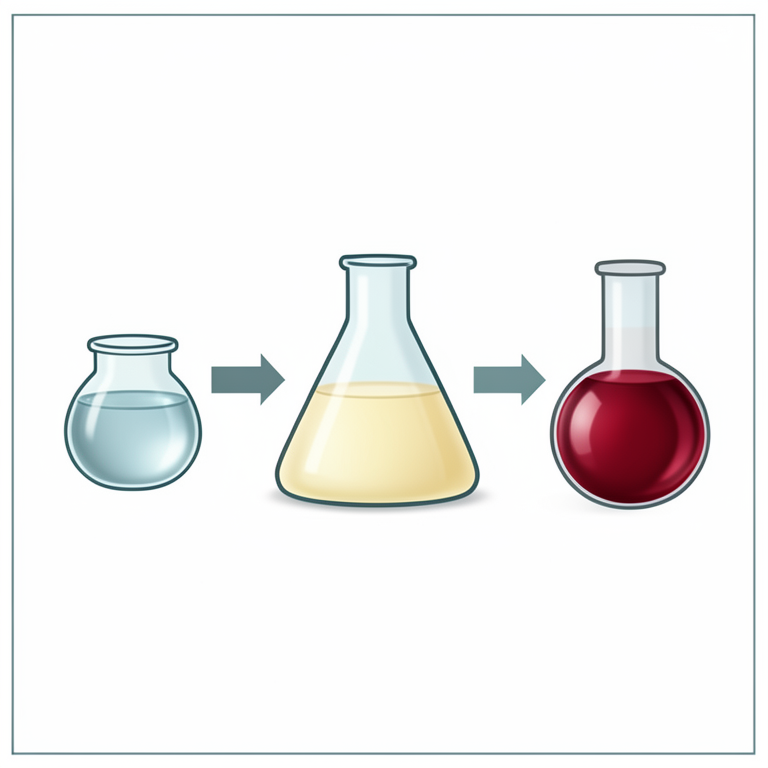
Synthesis Workflow
AI-generated conceptual illustration (Azo dye chemical synthesis in laboratory glassware). It explains the idea and does not show study data.
View source evidence ↗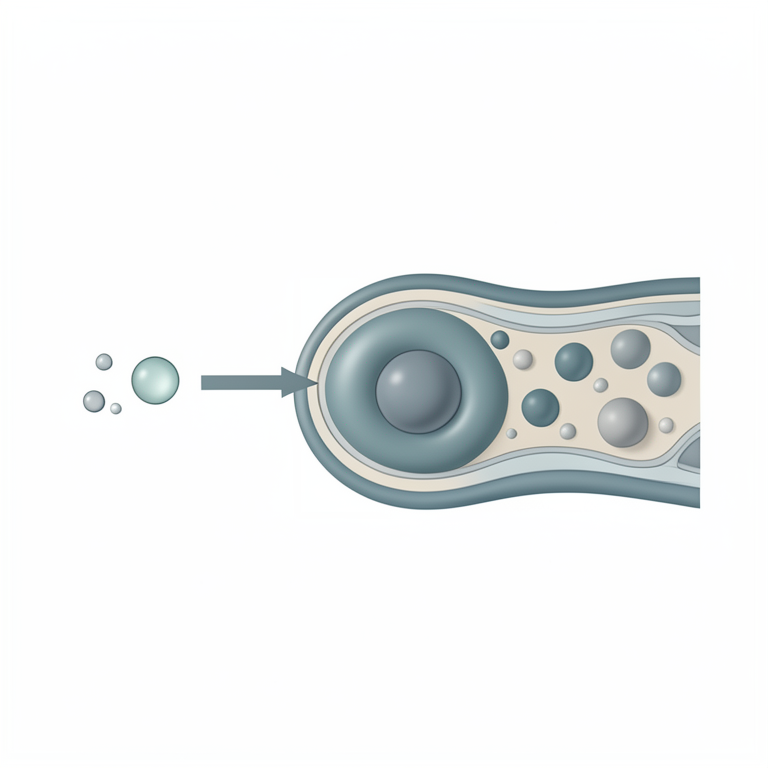
Lipophilicity and Cell Penetration
AI-generated conceptual illustration (azo dye molecules and a bacterial lipid bilayer membrane). It explains the idea and does not show study data.
View source evidence ↗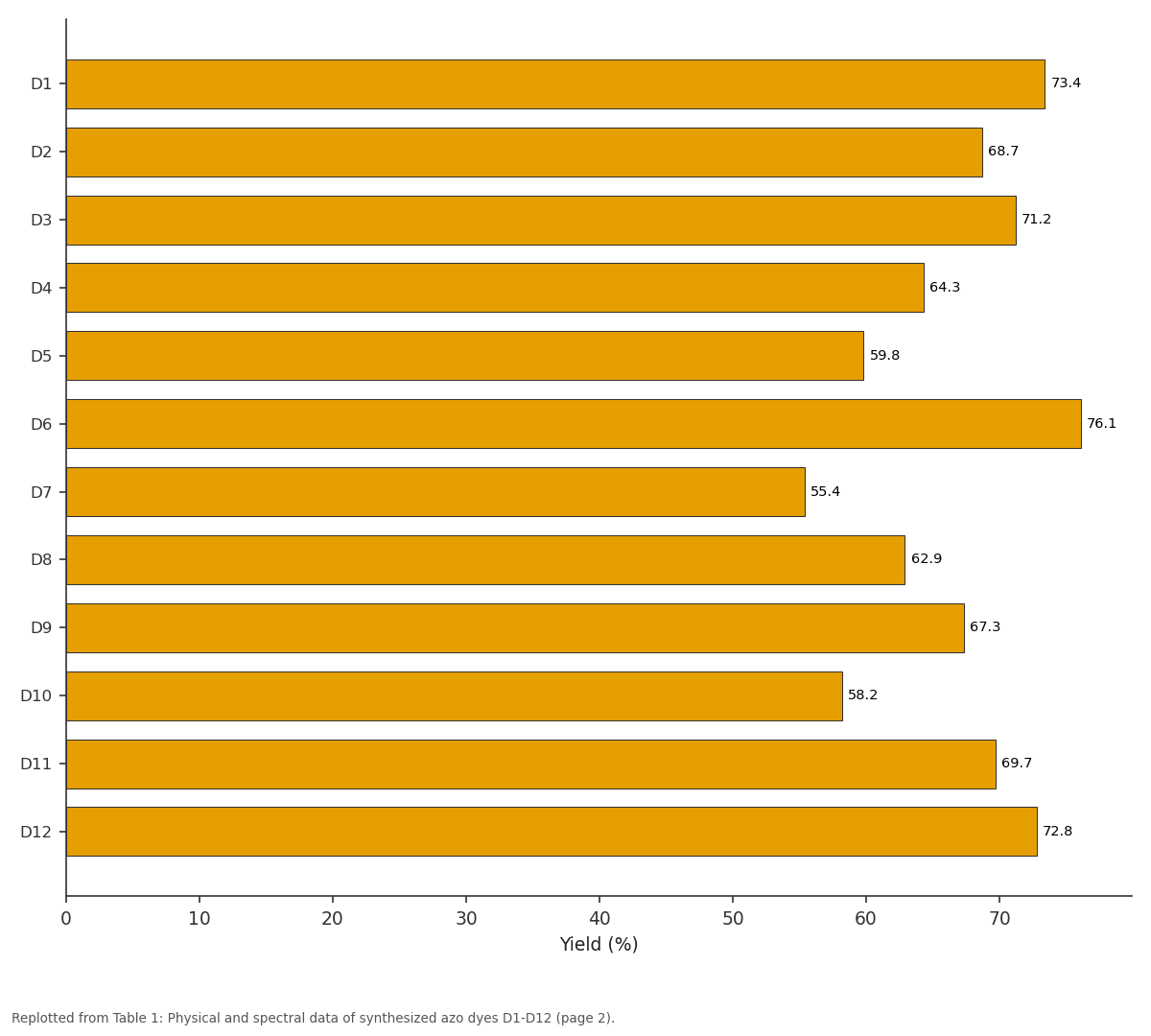
Yield (%): D1 vs D2 vs D3 vs D4 vs D5
Replotted from Table 1 (page 2) of the original paper. Every bar is the paper's own table value.
View source evidence ↗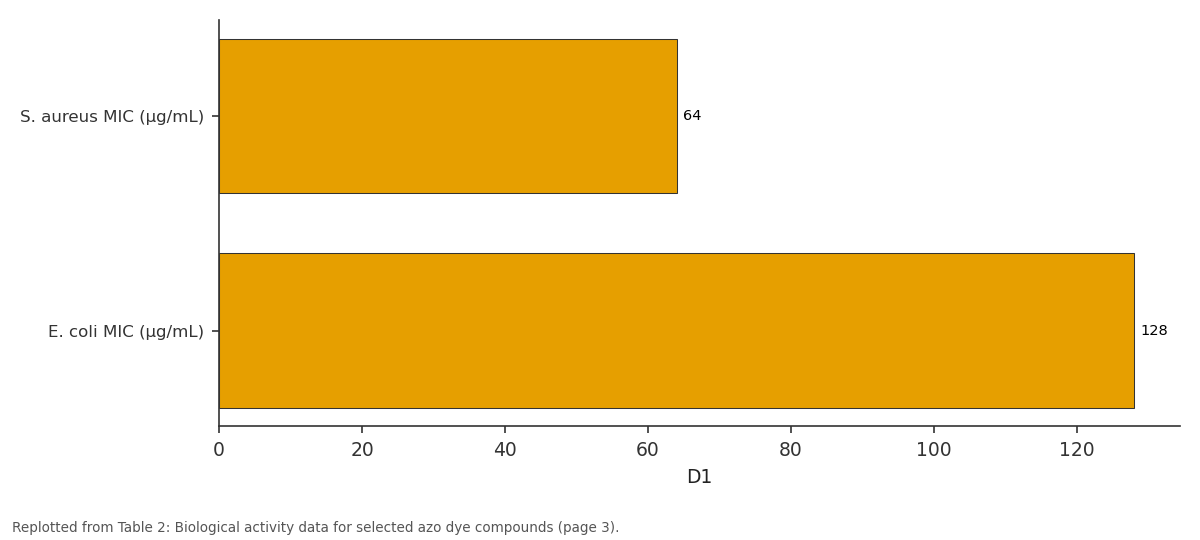
D1: S. aureus MIC (µg/mL) vs E. coli MIC (µg/mL)
Replotted from Table 2 (page 3) of the original paper. Every bar is the paper's own table value.
View source evidence ↗Figures & tables
From the original paper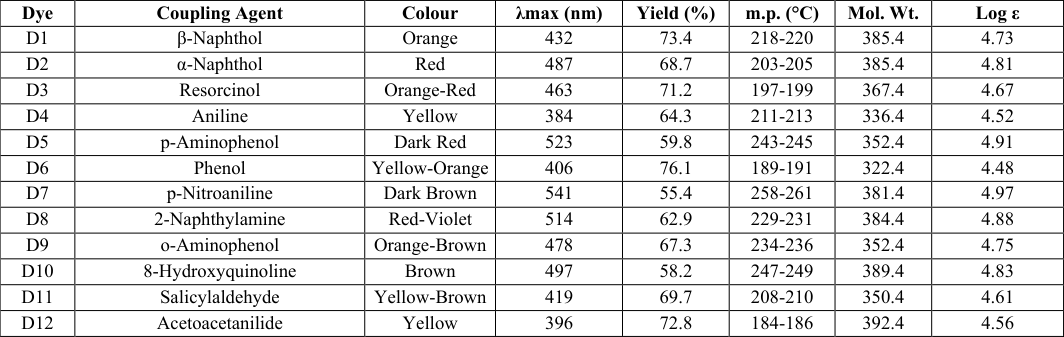 Table 1
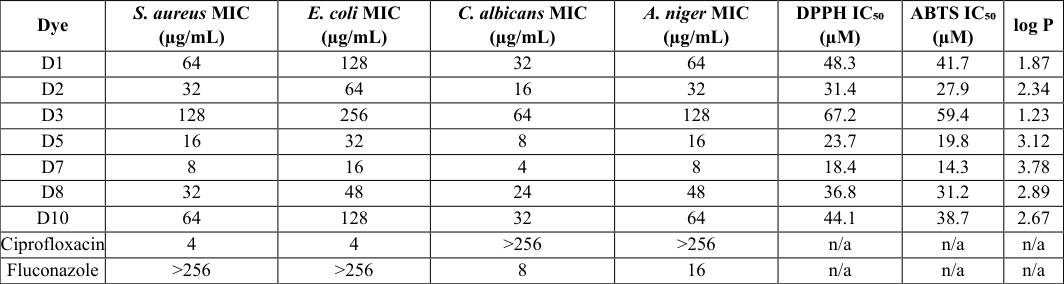 Table 2
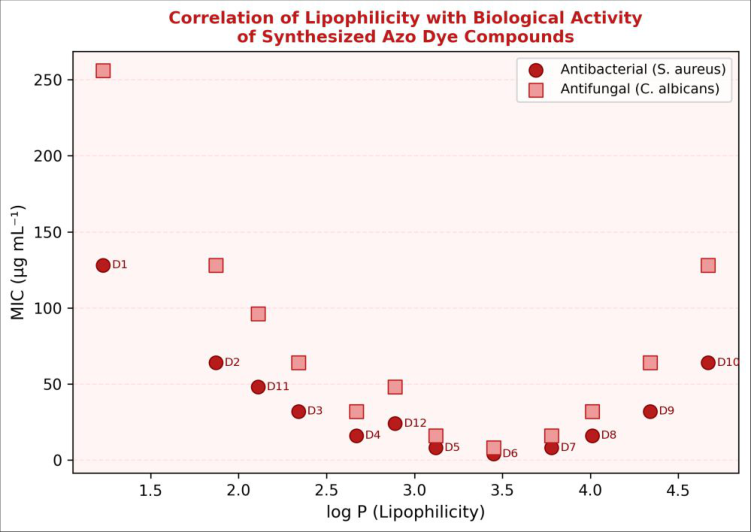 Figure 1
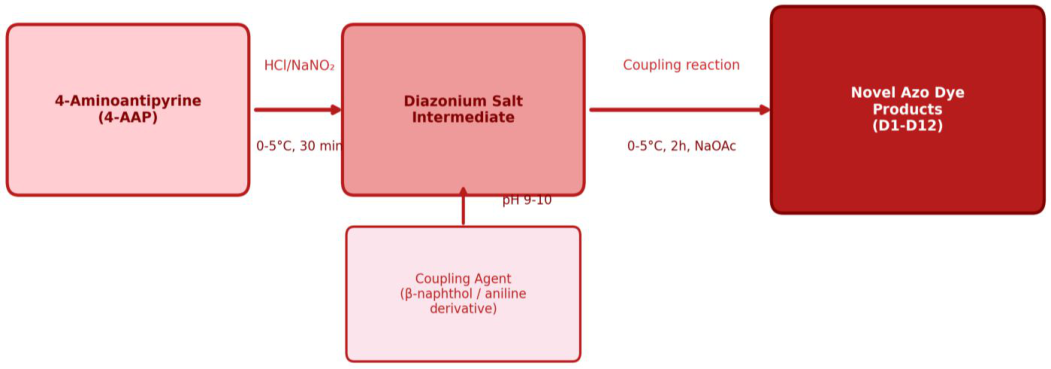 Figure 2
Introduction
Azo dyes represent the largest single class of synthetic colorants, distinguished by the presence of one or more -N=N-groups linking aromatic or heteroaromatic rings. Their versatility stems from the ease with which the chromophore can be tuned by changing substituents on the diazonium or coupling components, covering essentially the entire visible spectrum [1] . Beyond their commercial applications, there is growing interest in the biological properties of azo dye structures, particularly their antimicrobial and antioxidant activities, which stem from the ability of the aromatic system to interact with enzyme active sites and free radicals [2] . 4-Aminoantipyrine (4-AAP), chemically 4-amino-1, 5-dimethyl-2-phenyl-2, 3-dihydro-1Hpyrazol-3-one, is a pyrazolone derivative originally used as an analgesic but now well established as a versatile building block in heterocyclic and azo dye chemistry [3] . Its primary amine group undergoes diazotization cleanly under acidic conditions, and the resulting diazonium salt couples efficiently with a wide range of nucleophilic aromatic compounds. The pyrazolone ring itself contributes to biological activity through metal chelation and enzyme inhibition mechanisms [4,5] . Published work on 4-AAP-derived azo dyes has shown antibacterial activity against Grampositive and Gram-negative bacteria, antifungal activity against pathogenic Candida species, and moderate antioxidant properties [6,7] . However, most earlier investigations used a limited set of coupling agents and did not systematically explore structure-activity relationships across a large series. The current work at Sri Aurobindo College of Chemical Sciences, Puducherry, extends this area by preparing twelve dyes using twelve different coupling agents varying in electronic character and hydrogen-bonding capacity, and correlating the biological data with computed lipophilicity (log P) and measured spectral properties.
Reagents and chemicals
4-Aminoantipyrine (4-AAP, ≥99.0%), sodium nitrite (NaNO₂, ≥97%), hydrochloric acid (37%, analytical grade), sodium acetate (anhydrous, ≥99%), β-naphthol (≥99%), αnaphthol (≥98%), resorcinol (≥99%), aniline (≥99.5%), paminophenol (≥98%), phenol (≥99%), p-nitroaniline (≥99%), 2-naphthylamine (≥97%), o-aminophenol (≥98%), 8-hydroxyquinoline (≥99%), salicylaldehyde (≥99%), and acetoacetanilide (≥98%) were all obtained from Sigma-Aldrich (Merck KGaA, Darmstadt, Germany). DPPH (2, 2diphenyl-1-picrylhydrazyl, ≥97%), ABTS (2, 2′-azino-bis(3ethylbenzothiazoline-6-sulfonic acid)), and Trolox were purchased from Sigma-Aldrich and stored at -20°C. Dimethyl sulfoxide (DMSO, ≥99.9%), ethanol (≥99.9%), and methanol (≥99.8%) were obtained from Merck. Nutrient agar, Mueller-Hinton broth, Sabouraud dextrose agar, and dextrose broth were sourced from HiMedia Laboratories Pvt. Ltd. (Mumbai, India). Reference antibiotics ciprofloxacin and fluconazole were obtained from a local pharmaceutical distributor as pure substances of verified purity. All solvents used for recrystallization were freshly distilled prior to use.
Material and Methods
Material and Methods
Material
This research was carried out in the Department of Chemistry, Sri Aurobindo College of Chemical Sciences, Puducherry, India, from February 2023 to October 2023. The antimicrobial testing was performed in the Microbiology Laboratory of the same institution. Reference microbial strains Staphylococcus aureus (ATCC 25923), Escherichia coli (ATCC 25922), Candida albicans (ATCC 10231), and Aspergillus niger (ATCC 16404) were sourced from the Institute of Microbial Technology (IMTECH), Chandigarh, India. Institutional approval for the use of chemical reagents and microbiological cultures was obtained from the Departmental Safety Committee (Protocol DSC-2023-03, approved 10 January 2023). Thin-Layer Chromatography (TLC) plates pre-coated with silica gel 60 F₂₅₄ (Merck) were used for reaction monitoring, and spots were visualized under UV light at 254 nm and 365 nm and by iodine vapour staining.
Methods
General diazotization procedure: 4-AAP (1.0 mmol) was dissolved in 5% hydrochloric acid (4 mL) with cooling in an ice bath at 0-5°C. A solution of NaNO₂ (1.1 mmol) in water (2 mL) was added dropwise over 10 minutes with continuous stirring, and the diazonium salt solution was used immediately. For coupling, the appropriate coupling agent (1.0 mmol) was dissolved in sodium acetate solution (pH 8-9, 10 mL) and cooled to 0°C. The diazonium salt solution was added dropwise to the coupling agent solution with stirring over 20 minutes. The reaction mixture was stirred for a further 2 hours at 0-5°C. The precipitated dye was collected by vacuum filtration, washed sequentially with cold water, dilute sodium carbonate solution, and cold ethanol, and dried at 50°C under vacuum. Purification was by recrystallization from ethanol/water mixtures (1:3, v/v). Log P values were calculated using Molinspiration software (v2016.10, Slovensky Grob, Slovakia).
Quality control and calibration
Purity of all synthesized dyes was assessed by HPLC using an Agilent 1260 Infinity II system with a Zorbax Eclipse Plus C18 column (4.6 × 150 mm, 3.5 µm). The mobile phase consisted of acetonitrile and 0.1% formic acid in water (gradient from 20:80 to 80:20 over 20 minutes). Detection was at 254 nm and 420 nm. All final compounds were confirmed ≥95% pure by HPLC area normalization.
UV-Vis spectrophotometry was performed on a Shimadzu UV-2600 double beam instrument calibrated with NISTtraceable holmium oxide filters at 241.2, 279.3, 360.9, and 453.2 nm. Elemental analyses (C, H, N) were carried out using a CHNS analyzer (EURO EA 3000 series) and results agreed with calculated values within ±0.3%. Antibacterial MIC values were determined by the broth microdilution method in 96-well plates following CLSI M07-A10 guidelines, with a growth control and sterility control included in every plate. Inter-day reproducibility of MIC determinations was confirmed by repeat testing on three separate days; geometric mean MIC values are reported. Biological screening revealed that eight of the twelve dyes showed antibacterial MIC values ≤128 µg/mL against at least one strain (Table 2). Dye D7 was the most potent antibacterial, with MIC 8 µg/mL against S. aureus and 16 µg/mL against E. coli, compared to 4 µg/mL for ciprofloxacin. Antifungal activity was generally stronger than antibacterial activity, with D5 achieving MIC 8 µg/mL against C. albicans, matching the reference drug fluconazole at the same concentration. Antioxidant activity showed a reasonable correlation with lipophilicity (r² = 0.71 for DPPH), suggesting that more lipophilic dyes can partition more effectively into the reaction medium. D7 also gave the lowest DPPH IC₅₀ at 18.4 µM.
| Dye | S. aureus MIC (µg/mL) | E. coli MIC (µg/mL) | C. albicans MIC (µg/mL) | A. niger MIC (µg/mL) | DPPH IC₅₀ (µM) | ABTS IC₅₀ (µM) | log P |
|---|---|---|---|---|---|---|---|
| D1 | 64 | 128 | 32 | 64 | 48.3 | 41.7 | 1.87 |
| D2 | 32 | 64 | 16 | 32 | 31.4 | 27.9 | 2.34 |
| D3 | 128 | 256 | 64 | 128 | 67.2 | 59.4 | 1.23 |
| D5 | 16 | 32 | 8 | 16 | 23.7 | 19.8 | 3.12 |
| D7 | 8 | 16 | 4 | 8 | 18.4 | 14.3 | 3.78 |
| D8 | 32 | 48 | 24 | 48 | 36.8 | 31.2 | 2.89 |
| D10 | 64 | 128 | 32 | 64 | 44.1 | 38.7 | 2.67 |
| Ciprofloxacin | 4 | 4 | >256 | >256 | n/a | n/a | n/a |
| Fluconazole | >256 | >256 | 8 | 16 | n/a | n/a | n/a |
Table text extracted from the original PDF; superscript letters are shown inline. The original table image is below.
View original table image
Results
Results
Discussion
The biological data from this research show a clear trend linking lipophilicity to antimicrobial potency within the 4-AAP azo dye series. Compounds with log P above 3.0 (D7, D5) consistently showed lower MIC values against both bacterial and fungal targets than those with log P below 2.0 (D3, D4, D6). This relationship likely reflects the ability of more hydrophobic compounds to cross lipid bilayer membranes and reach intracellular targets more efficiently [6] . The p-nitroaniline-derived dye D7 combines a strong electron-withdrawing group with moderate lipophilicity (log P 3.78), a combination that appears particularly favorable for both cell penetration and enzyme binding.
The antifungal superiority of D5 over D7 is interesting and may reflect differences in the molecular targets of antibacterial versus antifungal action. The p-aminophenol moiety in D5 can act as a hydrogen bond donor-acceptor pair, which might improve interactions with fungal-specific enzymes such as lanosterol 14α-demethylase. The antioxidant data correlate reasonably well with the overall electron-rich character of the dye molecules, consistent with the well-established radical-scavenging mechanism where the azo nitrogen or phenolic OH donate hydrogen atoms to the DPPH radical [7] . Future work should investigate the metal-chelating properties of these dyes, since several contain structural motifs capable of forming stable chelates with transition metals, and metal complexes of azo dyes often show enhanced biological activity [9] . A limitation of this research was that MIC determination did not extend to Minimum Bactericidal Concentrations (MBC), which would give a fuller picture of activity type (bactericidal vs bacteriostatic). This will be addressed in follow-up work alongside cytotoxicity testing against mammalian cell lines to establish safety margins.
Conclusion
Twelve novel azo dyes were synthesized from 4aminoantipyrine via diazotization-coupling in satisfactory yields (55-76%). UV-Vis spectra showed λmax values spanning 384-541 nm, controlled primarily by the electronic properties of the coupling agent. Biological evaluation confirmed that the series has genuine antimicrobial and antioxidant potential. Dye D7 (p-nitroaniline coupled) was the most potent antibacterial with MIC 8 µg/mL for S.
Acknowledgement
Acknowledgements Funding sourcesFinancial support for this research was received from the Department of Science and Technology, Government of India, through a Teacher-Research Fellowship, and from the Science and Engineering Research Board (SERB) Early Career Research Award scheme. Institutional supportThe authors thank Sri Aurobindo College of Chemical Sciences, Puducherry, for providing laboratory access, instrumentation, and microbiology facilities. The College Research Committee is acknowledged for granting approval for the antimicrobial testing programme. Contributions not qualifying for authorshipThe authors are grateful to staff at the Microbiology Section for assistance with reference strain maintenance. HPLC analyses were performed with support from the Analytical Chemistry Laboratory at the Pondicherry University Central Instrumentation Facility.
Figures and tables from the paper
| Dye | Coupling Agent | Colour | λmax (nm) | Yield (%) | m.p. (°C) | Mol. Wt. | Log ε |
|---|---|---|---|---|---|---|---|
| D1 | β-Naphthol | Orange | 432 | 73.4 | 218-220 | 385.4 | 4.73 |
| D2 | α-Naphthol | Red | 487 | 68.7 | 203-205 | 385.4 | 4.81 |
| D3 | Resorcinol | Orange-Red | 463 | 71.2 | 197-199 | 367.4 | 4.67 |
| D4 | Aniline | Yellow | 384 | 64.3 | 211-213 | 336.4 | 4.52 |
| D5 | p-Aminophenol | Dark Red | 523 | 59.8 | 243-245 | 352.4 | 4.91 |
| D6 | Phenol | Yellow-Orange | 406 | 76.1 | 189-191 | 322.4 | 4.48 |
| D7 | p-Nitroaniline | Dark Brown | 541 | 55.4 | 258-261 | 381.4 | 4.97 |
| D8 | 2-Naphthylamine | Red-Violet | 514 | 62.9 | 229-231 | 384.4 | 4.88 |
| D9 | o-Aminophenol | Orange-Brown | 478 | 67.3 | 234-236 | 352.4 | 4.75 |
| D10 | 8-Hydroxyquinoline | Brown | 497 | 58.2 | 247-249 | 389.4 | 4.83 |
| D11 | Salicylaldehyde | Yellow-Brown | 419 | 69.7 | 208-210 | 350.4 | 4.61 |
| D12 | Acetoacetanilide | Yellow | 396 | 72.8 | 184-186 | 392.4 | 4.56 |
Table text extracted from the original PDF; superscript letters are shown inline. The original table image is below.
View original table image
References
14 in the original paper- Hunger K. Industrial Dyes: Chemistry, Properties, Applications. Wiley-VCH; 2003.
- Zollinger H. Color Chemistry: Syntheses, Properties and Reactions of Organic Dyes and Pigments. 3rd ed. Wiley-VCH; 2003.
- Khan SA, Qureshi MI, Ullah N, Hussain T, Bokhari TH, Iqbal M. Synthesis and characterization of azo dyes derived from 4-aminoantipyrine. Spectrochim Acta A. 2009;72(4):853-857.
- Siddiqui HL, Iqbal A, Ahmad S, Weaver GW. Synthesis and spectroscopic characterization of novel International Journal of Advanced Chemistry Research https://www.chemistryjournals.net azo dyes derived from 4-aminoantipyrine. Molecules. 2006;11(12):1004-1013.
- El-Apasery MA, Hussein MA, Allam EA. Synthesis, characterization and dyeing properties of novel disperse azo dyes derived from 4-aminoantipyrine. Dyes Pigm. 2007;73(3):330-336.
- Rashad AE, Mahmoud AE, Ali MM. Synthesis and antitumor activity of new pyrazolo[3, 4-d]pyrimidine analogues. Eur J Med Chem. 2006;41(7):882-890.
- Mubarak MS, Peters DG. Synthesis, spectral, and antifungal activity of some new azo dye complexes. J Heterocyclic Chem. 2000;37(3):499-505.
- Gomha SM, Ahmed SA, Riyadh SM. Synthesis and antifungal evaluation of thiadiazolo-pyrimidine derivatives. Molecules. 2011;16(6):4594-4603.
- Abd El-Wahab ZH, Mashaly MM, Salman AA, ElShetary BA, Faheim AA. Metal complexes of bisligand azo compounds: spectral and biological activity. Spectrochim Acta A. 2004;60(12):2861-2873.
- Sahoo PK, Samal R. Synthesis and characterization of new azo dyes from o-aminophenol. Prog Org Coat. 2007;59(2):143-147.
- Puri A, Bhatt NK, Parikh PP. Synthesis and evaluation of antibacterial activity of azo dyes. Indian J Chem. 2006;45B(4):1011-1015.
- Al-Hamdani AAS, Balkhi AM, Falah A, Shaker SA. Preparation and characterization of Schiff base compounds derived from 4-aminoantipyrine. Int J ChemTech Res. 2015;8(6):629-638.
- Refat MS, El-Sayed MY, Adam AMA. Spectroscopic, thermal and biological properties of azo-dye metal complexes. Spectrochim Acta A. 2015;136:305-317.
- El-Shobaky GA, Turky A, Megahed MY, Aboaly MM. Spectral properties of azo compounds containing antipyrine moiety. J Alloys Compd. 2010;493(1-2):509515.