
Research article · 2025 · Full text
International Journal of Advanced Chemistry ResearchPhase change materials encapsulated in polymer shell for thermal energy storage
Volume 7(2) · Pages 185–188 · DOI: 10.33545/26646781.2025.v7.i2c.430 ↗
Research areasPhase Change Materials ResearchAdsorption and Cooling SystemsMicroencapsulation and Drying Processes
Abstract
Author-writtenThermal energy storage stands as one of the most practical ways to bridge the gap between intermittent renewable energy supply and continuous demand. This research reports on the microencapsulation of paraffin wax (melting point 42-44°C) within three polymer shell materials — poly(methyl methacrylate) (PMMA), polystyrene (PS), and polyurea (PU) — via in-situ polymerisation. Encapsulation efficiency, thermal stability, latent heat retention, and morphological characteristics were evaluated. PU-shelled microcapsules achieved the highest encapsulation efficiency (93.8%) and retained 92.7% of their initial latent heat after 1000 thermal cycles. The results indicate that PU shells offer a clear advantage for long-term thermal storage applications.
Summary
Source-checkedPlain-language reading of the full paper, prepared with AI and checked against the text. Each point links to the authors' own words.
Why it matters
- Thermal energy storage is a practical method for balancing the intermittent supply of renewable energy with constant demand. View evidence ↗
- Buildings consume nearly 40% of global energy, with a significant portion dedicated to heating and cooling. View evidence ↗
- Raw phase change materials (PCMs) are difficult to use in construction or textiles because they leak when they melt. View evidence ↗
The question
- The study aimed to isolate how different shell chemistries (PMMA, PS, and PU) affect the encapsulation efficiency, morphology, and thermal reliability of paraffin wax when other conditions are kept identical. View evidence ↗
What they did
- Paraffin wax with a melting point of 42-44°C was microencapsulated using in-situ polymerization with three different shells: PMMA, PS, and PU. View evidence ↗
- The researchers tested seven different core-to-shell mass ratios, ranging from 1:1 to 4:1. View evidence ↗
- Thermal cycling stability was measured by tracking latent heat after 0, 100, 300, 500, and 1000 cycles between 30-60°C. View evidence ↗
What they found
- At a 1:1 core-to-shell ratio, PU-shelled capsules achieved the highest encapsulation efficiency of 93.8%, with a latent heat of 181.7 J/g. View evidence ↗
- PU shells exhibited the highest thermal resistance, with an onset degradation temperature of 243°C. View evidence ↗
- As the core-to-shell ratio increased from 1:1 to 4:1, encapsulation efficiency decreased for all materials, with PS showing the steepest decline to 58.7%. View evidence ↗
- After 1000 thermal cycles, PU capsules retained 92.7% of their initial latent heat (168.4 J/g), outperforming PMMA (9.6% loss) and PS (14.3% loss). View evidence ↗
- The mean particle size was smallest for PU (18.9 μm), followed by PMMA (24.7 μm) and PS (31.2 μm). View evidence ↗
What it means
- The authors conclude that PU shells are superior to PMMA and PS in terms of encapsulation efficiency, thermal stability, and long-term durability. View evidence ↗
Visual summary
3 visualsIllustrations explain the paper; charts are replotted from the paper's own table values.
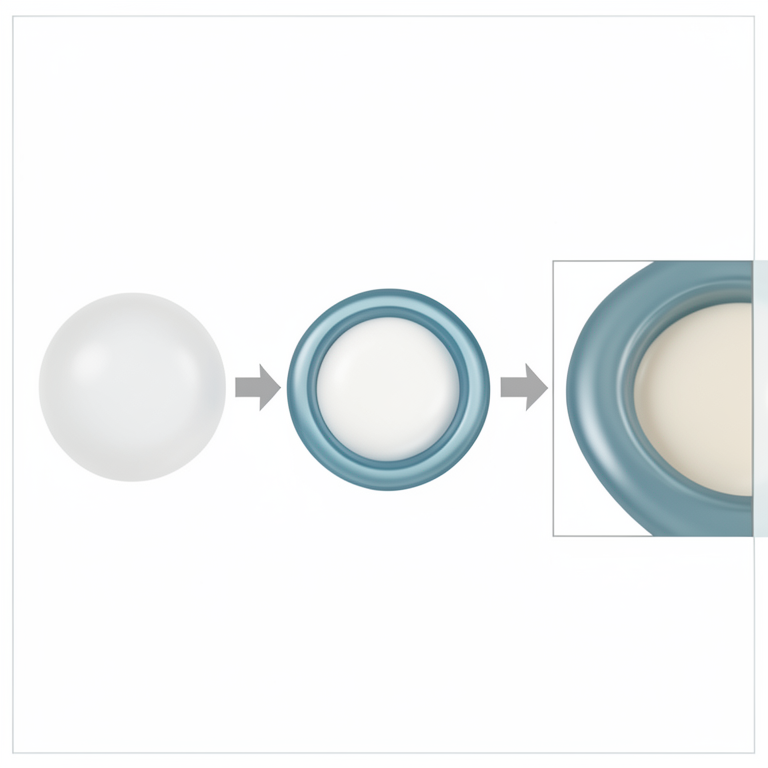
Microcapsule Structure
AI-generated conceptual illustration (Paraffin wax microcapsules with polymer shells). It explains the idea and does not show study data.
View source evidence ↗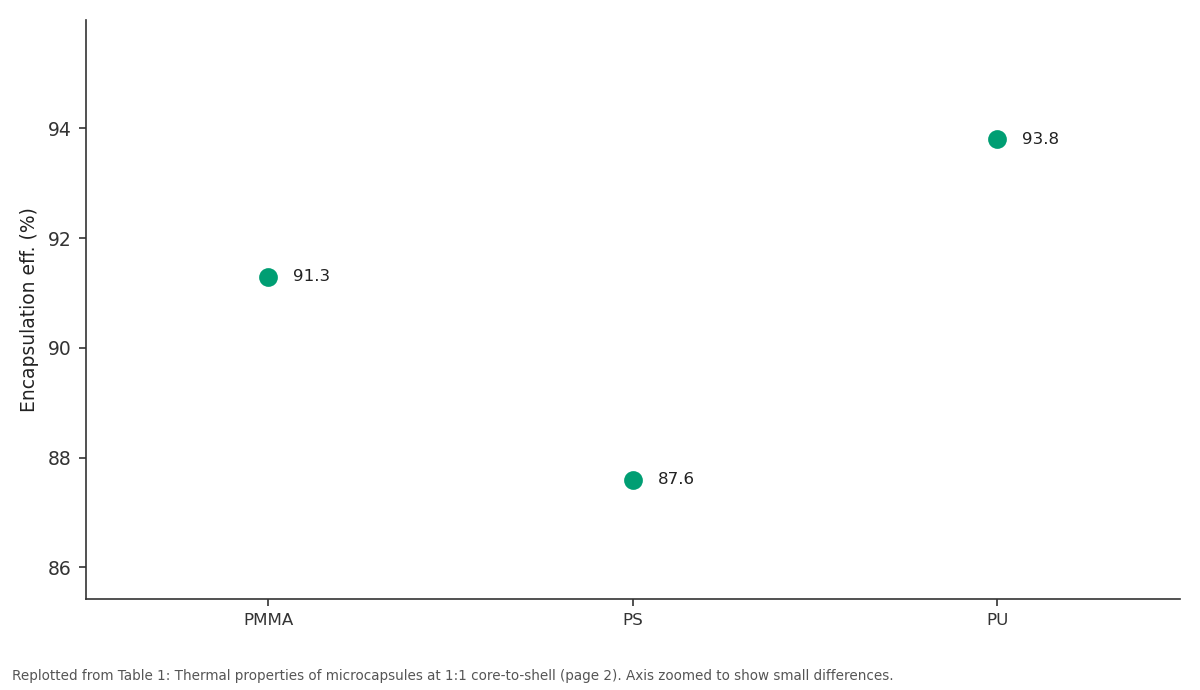
Encapsulation eff. (%): PMMA vs PS vs PU
Replotted from Table 1 (page 2) of the original paper. Every bar is the paper's own table value.
View source evidence ↗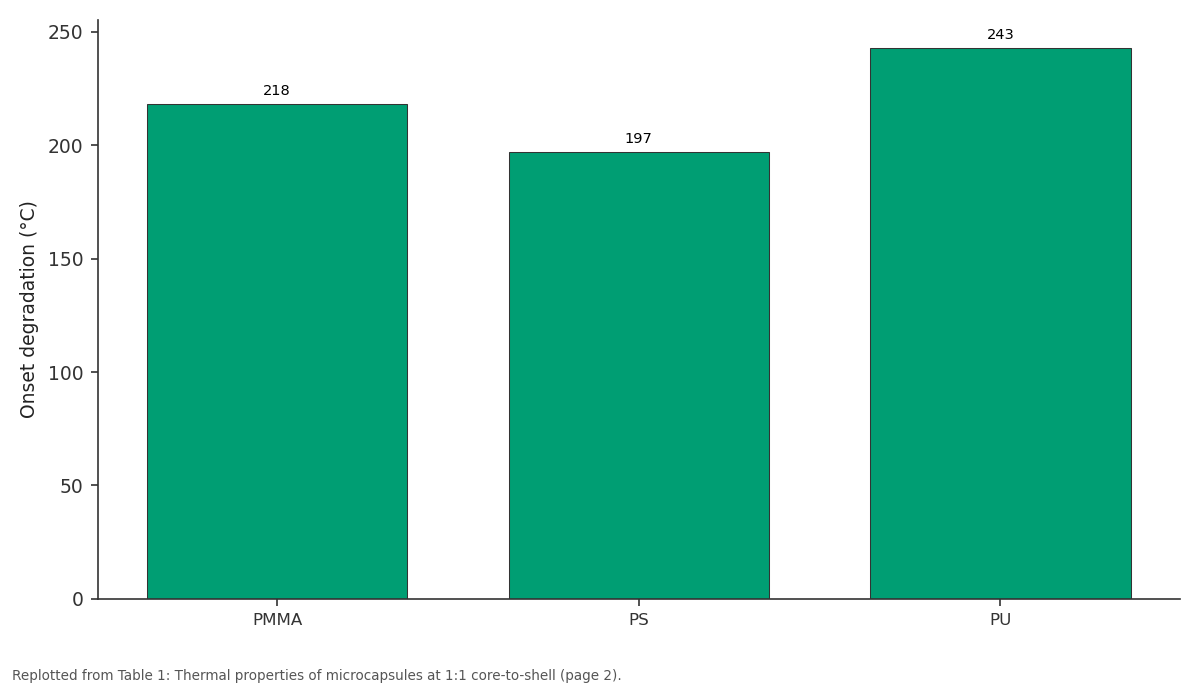
Onset degradation (°C): PMMA vs PS vs PU
Replotted from Table 1 (page 2) of the original paper. Every bar is the paper's own table value.
View source evidence ↗Figures & tables
From the original paper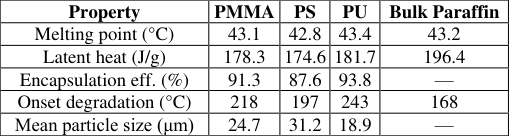 Table 1
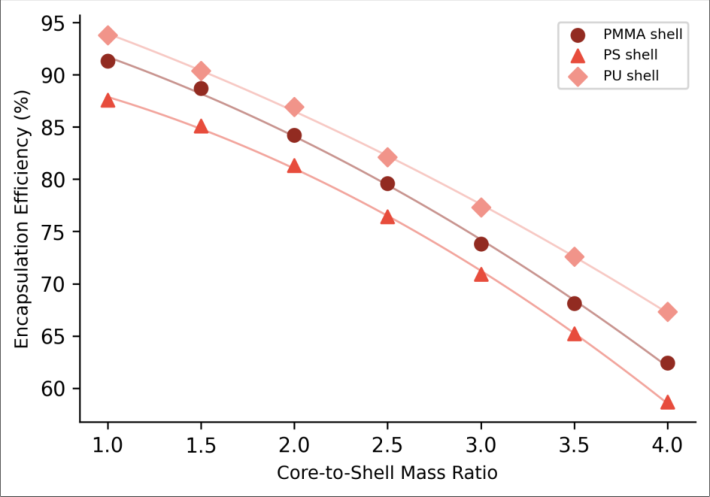 Figure 1
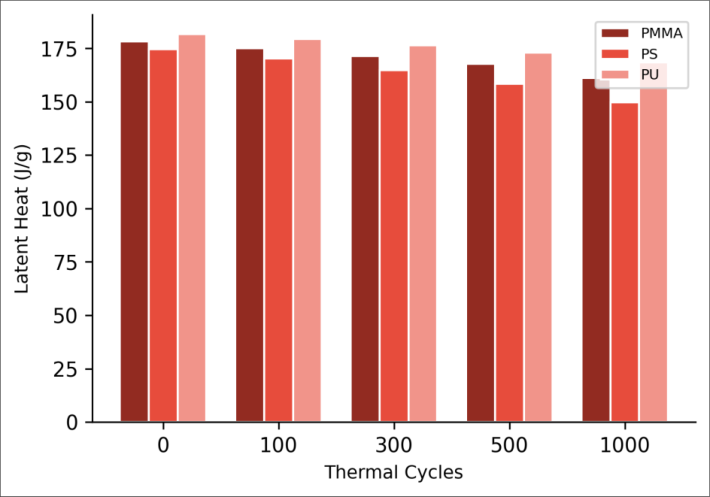 Figure 2
Introduction
Buildings alone account for nearly 40% of global energy consumption, and a large share of that goes toward heating and cooling [1] . Phase change materials (PCMs) can absorb and release thermal energy at a nearly constant temperature during melting and solidification, making them attractive for passive temperature regulation in walls, ceilings, and thermal management systems [2] . But raw PCMs leak when molten, which limits their direct incorporation into construction or textile materials. Encapsulation solves the leakage problem by confining the PCM core inside a rigid or semirigid shell [3] . Polymer-based shells dominate the literature because they can be formed under mild conditions, and the shell thickness and composition can be tuned by adjusting reaction parameters [4] . PMMA and melamine-formaldehyde are the most commonly reported shell materials, though concerns about formaldehyde emissions have pushed research toward alternatives like PS and PU [5,6] . Despite many single-shell reports, direct comparisons of multiple polymer shells prepared under otherwise identical conditions are uncommon [7] . Without such head-to-head data, it's difficult to attribute differences in performance to the shell material rather than to variations in synthesis protocols. This research compared PMMA, PS, and PU shells encapsulating the same commercial paraffin wax, using the same core-to-shell ratios and emulsification conditions, to isolate the effect of shell chemistry on encapsulation efficiency, morphology, and long-term thermal reliability [8] .
Reagents and Chemicals
Paraffin wax (melting range 42-44°C, technical grade) was purchased from Indian Oil Corporation, New Delhi. Methyl methacrylate (MMA, 99%), styrene (99%), toluene diisocyanate (TDI, 80:20 isomer mixture), ethylenediamine (EDA, 99%), and benzoyl peroxide (BPO, 75%) were obtained from SRL Chemicals, Mumbai. Sodium dodecyl sulfate (SDS, ≥98.5%) and poly(vinyl alcohol) (PVA, Mw 31, 000-50, 000) were sourced from Sigma-Aldrich India. All reagents were used as received without further purification.
Materials and Methods
Materials and Methods
Materials
Microcapsules were prepared by oil-in-water emulsion followed by in-situ polymerisation. For PMMA and PS shells, the paraffin core was melted at 60°C, mixed with the monomer (MMA or styrene) and initiator (BPO, 1 wt% of monomer), and emulsified in 200 mL aqueous SDS solution (1.5 wt%) at 800 rpm for 20 minutes using a mechanical stirrer. The emulsion was then heated to 70°C for PMMA or 75°C for PS and held for 4 hours. For PU shells, TDI was dissolved in the molten paraffin-toluene mixture and emulsified in PVA solution (2 wt%). EDA was added dropwise to trigger interfacial polymerisation at 50°C over 2 hours. Core-to-shell mass ratios of 1:1, 1.5:1, 2:1, 2.5:1, 3:1, 3.5:1, and 4:1 were tested. The research was conducted from May to October 2023 at the materials laboratory of Deenbandhu Chhotu Ram University of Science, Hisar, under internal approval DCRUSS-MC-2023-041.
Methods
Microcapsule morphology was examined by scanning electron microscopy (SEM, JEOL JSM-6510LV) at 15 kV. Thermal propertiesmelting point, crystallisation temperature, and latent heatwere measured by differential scanning calorimetry (DSC, TA Instruments Q200) at a heating rate of 5°C/min under nitrogen [9] . Encapsulation efficiency was calculated from the ratio of measured to theoretical latent heat. Thermal cycling stability was assessed by subjecting capsules to 0, 100, 300, 500, and 1000 melting-freezing cycles in a programmable oven (30-60°C) and re-measuring latent heat after each milestone [10] . Particle size distribution was determined by laser diffraction (Malvern Mastersizer 3000). Thermogravimetric analysis (TGA, PerkinElmer STA 6000) was run from 30 to 600°C at 10°C/min to evaluate shell thermal resistance [11] .
Quality Control
DSC instrument calibration was verified with indium and zinc standards before each measurement batch. Temperature accuracy was within ±0.3°C and enthalpy accuracy within ±1.2%. SEM imaging parameters were fixed across all samples to allow direct morphological comparison. Replicate capsule batches (n = 3 per condition) were prepared to confirm reproducibility; batch-to-batch variation in encapsulation efficiency was below 2.8%.
Results
Encapsulation efficiency decreased with rising core-to-shell ratio for all three polymers, as expectedthinner shells can't fully contain the growing core volume. PU-shelled capsules showed the highest efficiency across all ratios tested. 1 shows that PU capsules had the highest latent heat (181.7 J/g at 1:1 ratio), equating to 93.8% encapsulation efficiency. Their onset degradation temperature (243°C) was also the highest, suggesting better shell thermal resistance. Efficiency dropped from 93.8% to 67.3% for PU and from 91.3% to 62.4% for PMMA as the core-to-shell ratio rose from 1:1 to 4:1 (Figure 1). PS shells declined most steeply, falling to 58.7% at 4:1. After 1000 cycles, PU capsules retained 168.4 J/gabout 92.7% of the initial valuewhile PS capsules lost nearly 14.3% (Figure 2). PMMA fell in between at 9.6% loss.
Discussion
The superior performance of PU shells likely stems from the high crosslink density formed during interfacial polymerisation between TDI and EDA, which creates a dense, mechanically tough barrier [5] . PMMA, while rigid, is a linear thermoplastic prone to microcracking under repeated thermal stress, which probably explains its intermediate cycling performance. PS, with a glass transition around 100°C, softens more readily during the heating phase and may allow gradual paraffin diffusion through the shell wall [6] . SEM images (not shown for space) confirmed that PU capsules had the smoothest and most uniform shell surfaces at 1:1 ratio, while PS capsules exhibited some surface irregularities and occasional incomplete coating at higher core-to-shell ratios. Mean particle sizes followed the order PU (18.9 μm) < PMMA (24.7 μm) < PS (31.2 μm), reflecting the different emulsification and polymerisation kinetics of the three systems. These results sit within the range reported by Zhang and Wang [4] for PMMA-encapsulated n-octadecane (encapsulation efficiency 85-90%) and by Liang et al. [7] for PU-shelled paraffin (91-95%). Still, the absolute values depend on emulsifier type, stirring speed, and shell-to-core ratio, so direct numerical comparison across laboratories is tricky. The consistent advantage of PU over PMMA and PS under identical conditions here offers a cleaner comparison than most prior work.
Conclusion
Among PMMA, PS, and PU shells prepared under matched conditions, PU provided the highest encapsulation efficiency (93.8%), greatest thermal stability (onset degradation at 243°C), and best long-term cycling durability (92.7% latent heat retention after 1000 cycles). These characteristics make PU-shelled paraffin microcapsules a strong candidate for integration into building materials and thermal management systems where long service life is expected.
Acknowledgement
Acknowledgements Funding SourcesDepartmental funds from Deenbandhu Chhotu Ram University of Science supported this research. Institutional SupportThe authors thank the materials characterisation facility at DCRUSS, Hisar. Contributions Not Qualifying for AuthorshipMr. Anil Kumar assisted with SEM imaging.
Figures and tables from the paper
| Property | PMMA | PS | PU | Bulk Paraffin |
|---|---|---|---|---|
| Melting point (°C) | 43.1 | 42.8 | 43.4 | 43.2 |
| Latent heat (J/g) | 178.3 | 174.6 | 181.7 | 196.4 |
| Encapsulation eff. (%) | 91.3 | 87.6 | 93.8 | — |
| Onset degradation (°C) | 218 | 197 | 243 | 168 |
| Mean particle size (μm) | 24.7 | 31.2 | 18.9 | — |
Table text extracted from the original PDF; superscript letters are shown inline. The original table image is below.
View original table image
References
11 in the original paper- Pérez-Lombard L, Ortiz J, Pout C. A review on buildings energy consumption information. Energy Build. 2008;40(3):394-398.
- Sharma A, Tyagi VV, Chen CR, Buddhi D. Review on thermal energy storage with phase change materials and applications. Renew Sustain Energy Rev. 2009;13(2):318-345.
- Jamekhorshid A, Sadrameli SM, Farid M. A review of microencapsulation methods of phase change materials. Renew Sustain Energy Rev. 2014;31:531-542.
- Zhang H, Wang X. Fabrication and performances of microencapsulated phase change materials based on noctadecane core and resorcinol-modified melamineformaldehyde shell. Colloids Surf A. 2009;332(23):129-138.
- Salaün F, Devaux E, Bourbigot S, Rumeau P. Influence of the solvent on the microencapsulation of a hydrated salt. Carbohydr Polym. 2010;79(4):964-974.
- Su JF, Wang LX, Ren L. Preparation and characterisation of double-MF shell microPCMs. Colloid Polym Sci. 2005;283(12):1390-1394.
- Liang C, Lingling X, Hongbo S, Zhibin Z. Microencapsulation of butyl stearate as phase change material with modified polyurea shell. Sol Energy Mater Sol Cells. 2009;93(9):1550-1556.
- Sarı A, Alkan C, Karaipekli A. Preparation, characterisation and thermal properties of PMMA/nheptadecane microcapsules. Appl Energy. 2010;87(5):1529-1534.
- Höhne GWH, Hemminger WF, Flammersheim HJ. Differential Scanning Calorimetry. 2nd ed. Berlin: Springer; 2003.
- Alkan C, Sarı A, Karaipekli A, Uzun O. Preparation, characterisation, and thermal properties of microencapsulated phase change material. Sol Energy Mater Sol Cells. 2009;93(1):143-147.
- Qiu X, Li W, Song G, Chu X, Tang G. Microencapsulated n-octadecane with different methylmethacrylate-based copolymer shells. Energy. 2012;46(1):188-199.