
Research article · 2026 · Full text
International Journal of Horticulture and Food ScienceModeling in vitro dry matter digestibility of oat (Avena sativa) fodder based on proximate and fiber fractions
Volume 8(3) · Pages 77–81 · DOI: 10.33545/26631067.2026.v8.i3a.498 ↗
Research areasFood composition and propertiesRuminant Nutrition and Digestive PhysiologyAgronomic Practices and Intercropping Systems
Abstract
Author-writtenThe present investigation was conducted to evaluate the in vitro Dry Matter Digestibility (IVDMD) of oat (Avena sativa L.) fodder and to develop predictive models based on proximate and fiber fractions. Eight oat cultivars were studied at two growth stages (60 and 90 days after sowing) under a factorial randomized block design. The results revealed that IVDMD was significantly influenced by cultivar, growth stage, and their interaction (p<0.01). The overall mean IVDMD was 61.47%, with a marked decline from 65.51% at 60 DAS to 57.42% at 90 DAS, indicating reduced digestibility with advancing maturity due to increased structural carbohydrate accumulation. Among cultivars, RO-2000-19 exhibited the highest digestibility (67.07%), whereas RO-2000-16 recorded the lowest (54.23%), reflecting genotypic variation in fiber composition and degradability. Correlation analysis demonstrated that IVDMD was positively associated with crude protein (r = 0.700), ether extract (r = 0.697), and ash (r = 0.653), while it was negatively correlated with crude fibre (r = −0.756) and nitrogen free extract (r = −0.678). Furthermore, strong negative correlations were observed with detergent fiber fractions, particularly silica (r = −0.864), ADF (r = −0.801), and cellulose (r = −0.774), indicating their critical role in limiting digestibility. Regression analysis revealed that the model based on proximate constituents explained 66% of the variation in IVDMD (R² = 0.66), whereas the model based on detergent fiber fractions showed substantially higher predictive accuracy (R² = 0.85). These findings clearly indicate that fiber fractions, especially structural carbohydrates and silica, are superior predictors of forage digestibility compared to proximate composition. The study underscores the importance of early harvesting (60 DAS) for maximizing digestibility and highlights the potential of integrating chemical composition with regression modeling for rapid and reliable prediction of forage quality. The developed models can serve as effective tools for forage evaluation, ration formulation, and selection of nutritionally superior oat cultivars for enhanced livestock productivity.
Summary
Source-checkedPlain-language reading of the full paper, prepared with AI and checked against the text. Each point links to the authors' own words.
Why it matters
- Oat is a significant temperate forage crop for ruminants because it produces high biomass and is palatable with balanced nutrients. View evidence ↗
- The digestibility of forage is primarily determined by cell wall components like NDF, ADF, lignin, and silica. View evidence ↗
- Thicker cell walls and increased lignification lower digestibility by blocking microbes from reaching fermentable substrates. View evidence ↗
The question
- The study aimed to evaluate the in vitro dry matter digestibility (IVDMD) of oat fodder and create predictive models using fiber and proximate fractions. View evidence ↗
What they did
- Researchers used a factorial randomized block design to study eight oat cultivars at 60 and 90 days after sowing (DAS). View evidence ↗
- IVDMD was measured using a modified two-stage technique developed by Tilley and Terry and Van Soest. View evidence ↗
What they found
- The average IVDMD was 61.47%, which decreased significantly from 65.51% at 60 DAS to 57.42% at 90 DAS. View evidence ↗
- Cultivar RO-2000-19 had the highest digestibility at 67.07%, while RO-2000-16 had the lowest at 54.23%. View evidence ↗
- A predictive model based on proximate constituents explained 66% of the variation in IVDMD. View evidence ↗
- The model based on detergent fiber fractions was more accurate, explaining 85% of the variation in IVDMD. View evidence ↗
What it means
- The authors conclude that harvesting oat fodder early, around 60 DAS, is essential to maximize its digestibility. View evidence ↗
- The authors recommend integrating chemical composition with predictive modeling for the rapid and accurate estimation of forage quality. View evidence ↗
Visual summary
2 visualsIllustrations explain the paper; charts are replotted from the paper's own table values.
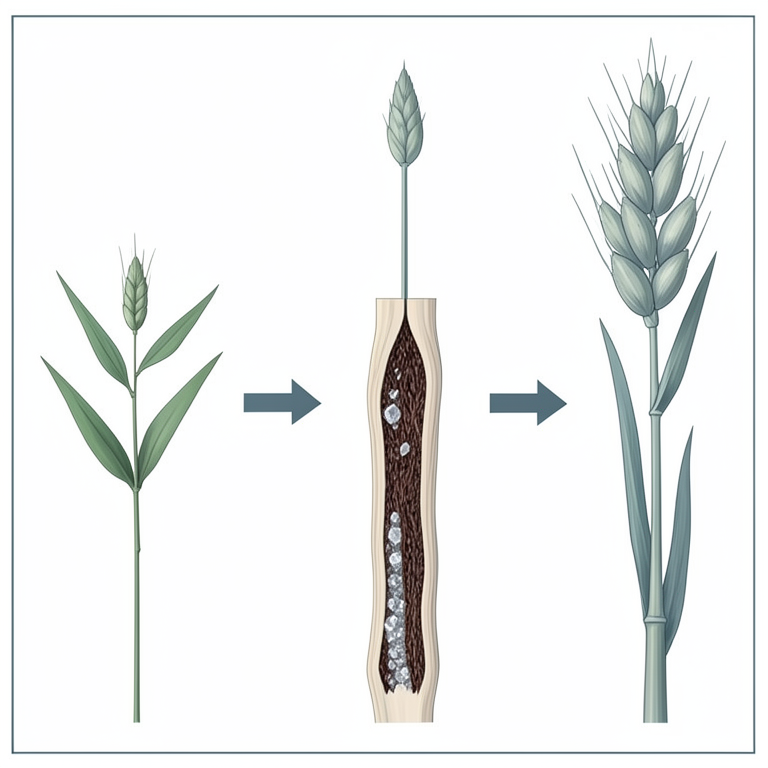
Impact of Maturity on Digestibility
AI-generated conceptual illustration (oat plants (Avena sativa)). It explains the idea and does not show study data.
View source evidence ↗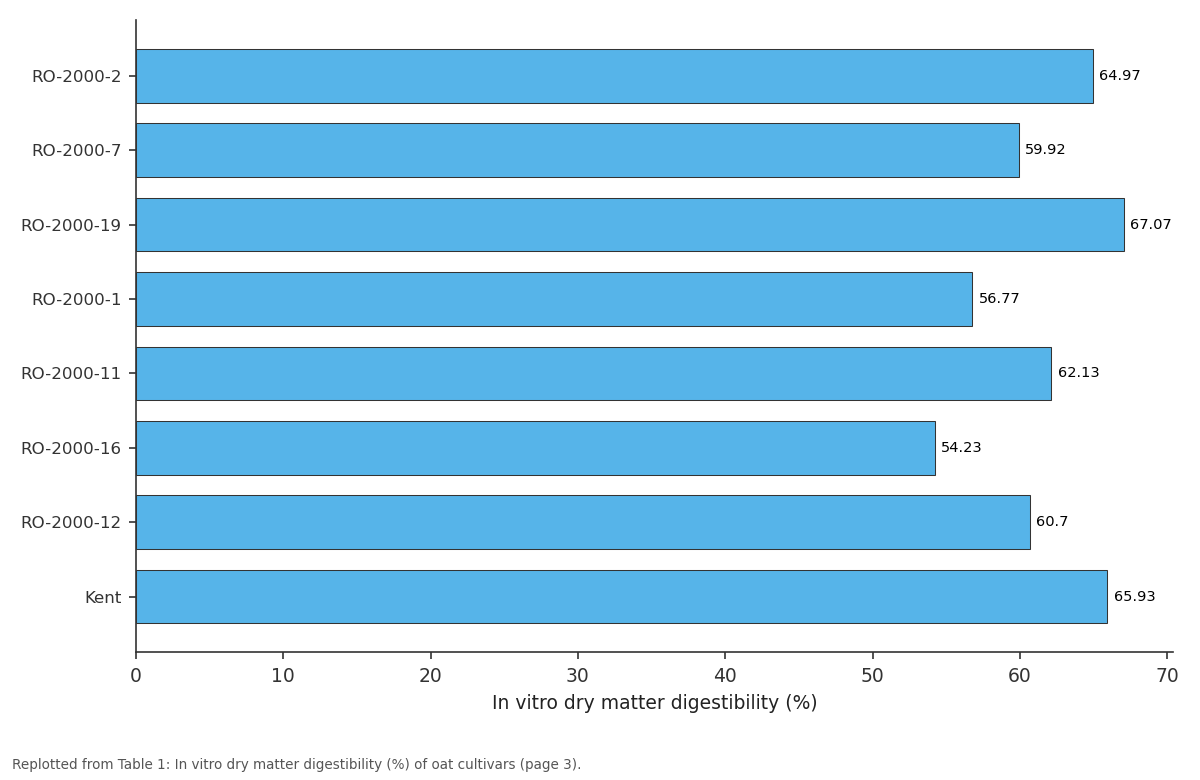
Mean: RO-2000-2 vs RO-2000-7 vs RO-2000-19 vs RO-2000-1 vs RO-2000-11
Replotted from Table 1 (page 3) of the original paper. Every bar is the paper's own table value.
View source evidence ↗Figures & tables
From the original paper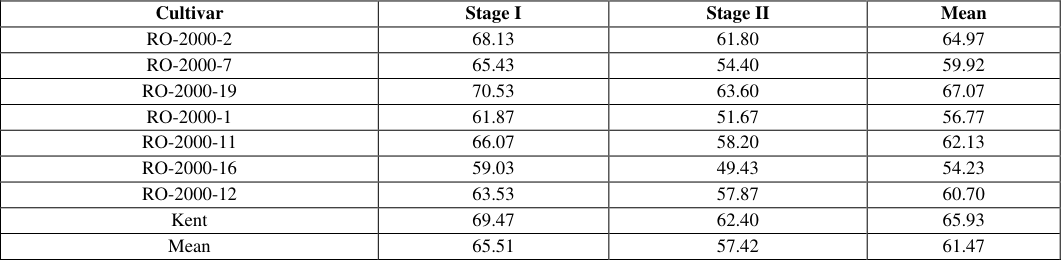 Table 1
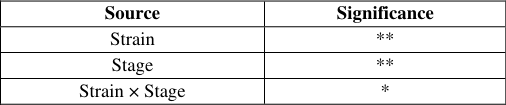 Table 2
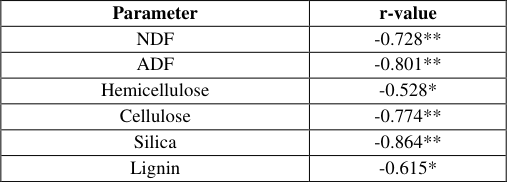 Table 4
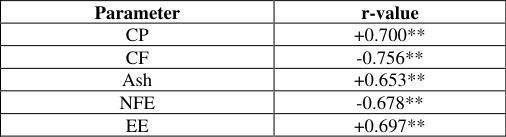 Table 3
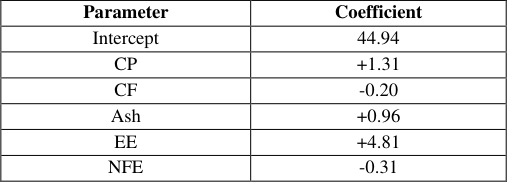 Table 5
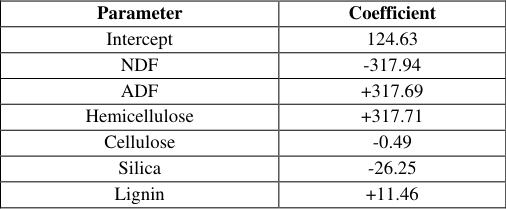 Table 6
 Table 7
Introduction
Oat (Avena sativa L.) is an important temperate forage crop widely utilized in ruminant feeding systems due to its high biomass production, palatability, and relatively balanced nutrient composition. However, the efficiency of forage utilization in ruminants is primarily determined not only by its chemical composition but also by its digestibility, which governs nutrient availability and animal performance. Among the various laboratory methods, In vitro Dry Matter Digestibility (IVDMD) has been extensively used as a reliable indicator of forage quality due to its strong association with in vivo digestibility and intake (Foster, 2023) [4] . Digestibility of forage is largely influenced by the proportion and composition of cell wall constituents, particularly Neutral Detergent Fibre (NDF), Acid Detergent Fibre (ADF), lignin, and silica. These structural components form the major fraction of plant biomass and act as primary limiting factors for microbial degradation in the rumen. It is well established that increased lignification and cell wall thickening reduce digestibility by restricting microbial access to fermentable substrates (Jung & Allen, 1995; Van Soest, 1994) [7,13] . Furthermore, silica deposition enhances tissue rigidity and further impedes enzymatic breakdown, thereby exerting a negative influence on forage utilization.
Growth stage is a critical determinant of forage digestibility. As plants mature, there is a progressive increase in structural carbohydrates accompanied by a decline in cell solubles and protein fractions, leading to a reduction in digestibility. Recent studies have confirmed that fiber concentration increases while digestibility decreases with advancing maturity, highlighting a clear inverse relationship between plant age and nutritive value (Tulu, 2025) [12] . Similarly, investigations on oat-based feeding systems have demonstrated that IVDMD and nutrient availability decline as forage advances from vegetative to reproductive stages (Gaytán-Aleman, 2025) [6] . In addition to maturity, genotypic variation among oat cultivars plays a significant role in determining digestibility. Differences in cell wall composition, lignin concentration, and anatomical characteristics contribute to variability in IVDMD among cultivars. Previous studies on oat genotypes have reported substantial variation in digestibility values, emphasizing the potential for selection of superior cultivars with improved feeding value (Gadisa, 2023) [5] . Given the complexity of factors influencing digestibility, there has been increasing interest in developing predictive models based on chemical composition. Regression approaches utilizing proximate and detergent fiber fractions have been widely applied to estimate IVDMD, enabling rapid and cost-effective assessment of forage quality. It is well recognized that fiber fractions, particularly NDF, ADF, and lignin, are more reliable predictors of digestibility than proximate components, as they directly represent the structural barriers to microbial degradation (Van Soest, 1994) [13] . Such predictive relationships are valuable tools for forage evaluation, ration formulation, and breeding programs aimed at improving feed efficiency. Despite extensive research, there remains a need for integrated evaluation of oat cultivars combining digestibility assessment with predictive modeling under specific agroclimatic conditions. Particularly, limited information is available on the relative efficiency of proximate versus detergent-based models in predicting IVDMD in oat cultivars grown under Indian conditions. Therefore, the present investigation was undertaken to evaluate the in vitro dry matter digestibility of different oat cultivars at varying growth stages and to develop predictive relationships between IVDMD and chemical composition, with the objective of identifying key determinants of digestibility and improving forage quality assessment.
Materials and Methods 1. Experimental material and sampling
The study utilized eight oat (Avena sativa) cultivars grown under rabi season at MPKV, Rahuri. Samples were collected at two growth stages (60 and 90 DAS), sun-dried, and ground (2 mm sieve).
Chemical composition analysis Ground samples were analyzed for:
• Proximate constituents (AOAC, 2012) [1] • DM, CP, EE, CF, NFE, Total Ash Fiber fractions (Van Soest method, 1968) [14] • NDF, ADF, cellulose, hemicellulose, lignin, silica
• Minerals • Calcium and phosphorus
In vitro Dry Matter Digestibility (IVDMD)
IVDMD was determined using the Tilley and Terry (1963) [11] two-stage technique, modified by Van Soest et al. (1968) [14] .
Statistical and regression analysis
• Data analyzed using FRBD • Regression analysis performed to develop prediction equations of IVDMD using:
Results and Discussion 1. In vitro Dry Matter Digestibility (IVDMD)
The In vitro Dry Matter Digestibility (IVDMD) of oat cultivars was significantly influenced by strain, growth stage, and their interaction (p < 0.01) (Table 1 andTable 2). The overall mean IVDMD was 61.47%, with values ranging from 54.23% to 67.07% among different cultivars (Table 1). A pronounced decline in IVDMD was observed with advancement in maturity, decreasing from 65.51% at Stage I (60 DAS) to 57.42% at Stage II (90 DAS) (Table 1). This reduction in digestibility is primarily associated with increased accumulation of structural carbohydrates and lignification of plant tissues at later growth stages. Among the cultivars, RO-2000-19 recorded the highest mean IVDMD (67.07%), followed by Kent (65.93%), while the lowest was observed in RO-2000-16 (54.23%) (Table 1). The superior digestibility of RO-2000-19 may be attributed to its lower fiber fractions and lignin content, whereas the poor performance of RO-2000-16 is associated with higher structural components. The interaction effect (Table 2) further revealed that RO-2000-19 at Stage I exhibited the highest IVDMD (70.53%), while RO-2000-16 at Stage II recorded the lowest value (49.43%), indicating genotype-specific responses to maturity (Khorasani, 1997 & Cherney, 1982) [8,3] . These findings are consistent with earlier reports that digestibility declines with advancing maturity due to increased cell wall constituents (Coblentz et al., 2010; Van Soest, 1994) [15,13] .
| Source | Significance |
|---|---|
| Strain | ** |
| Stage | ** |
| Strain × Stage | * |
Table text extracted from the original PDF; superscript letters are shown inline. The original table image is below.
View original table image
| Cultivar | Stage I | Stage II | Mean |
|---|---|---|---|
| RO-2000-2 | 68.13 | 61.80 | 64.97 |
| RO-2000-7 | 65.43 | 54.40 | 59.92 |
| RO-2000-19 | 70.53 | 63.60 | 67.07 |
| RO-2000-1 | 61.87 | 51.67 | 56.77 |
| RO-2000-11 | 66.07 | 58.20 | 62.13 |
| RO-2000-16 | 59.03 | 49.43 | 54.23 |
| RO-2000-12 | 63.53 | 57.87 | 60.70 |
| Kent | 69.47 | 62.40 | 65.93 |
| Mean | 65.51 | 57.42 | 61.47 |
Table text extracted from the original PDF; superscript letters are shown inline. The original table image is below.
View original table image
Relationship between proximate constituents and IVDMD
Correlation analysis revealed significant associations between IVDMD and proximate composition (Table 3). IVDMD showed a strong positive correlation with:
| Parameter | r-value |
|---|---|
| CP | +0.700** |
| CF | -0.756** |
| Ash | +0.653** |
| NFE | -0.678** |
| EE | +0.697** |
Table text extracted from the original PDF; superscript letters are shown inline. The original table image is below.
View original table image
• Crude protein (r = 0.700)
• Ether extract (r = 0.697)
• Total ash (r = 0.653) Conversely, significant negative correlations were observed with:
• Crude fibre (r = -0.756)
• Nitrogen free extract (r = -0.678)
These relationships indicate that nutrient-rich fractions (protein and lipids) enhance digestibility, whereas increased fibre content reduces microbial accessibility and digestion efficiency. The strong negative association with crude fibre confirms its role as a major limiting factor in forage utilization (Buxton, 1996 & Mertens, 1997) [2,9] .
Relationship between detergent fiber fractions and IVDMD
IVDMD exhibited significant negative correlations with all detergent fiber fractions (Table 4), including:
| Parameter | r-value |
|---|---|
| NDF | -0.728** |
| ADF | -0.801** |
| Hemicellulose | -0.528* |
| Cellulose | -0.774** |
| Silica | -0.864** |
| Lignin | -0.615* |
Table text extracted from the original PDF; superscript letters are shown inline. The original table image is below.
View original table image
• Hemicellulose (r = -0.528)
• Silica (r = -0.864) Among these, silica showed the strongest negative correlation (r = -0.864), indicating its critical role in limiting digestibility. Silica deposition increases rigidity of plant tissues and restricts enzymatic and microbial degradation, thereby reducing feed utilization (Moore, 2001 & Wilson, 1993) [10,16] . Similarly, lignin acts as a physical barrier by forming complexes with cellulose and hemicellulose, limiting their accessibility to rumen microorganisms (Jung & Allen, 1995) [7] . The strong negative correlations observed in the present study are in agreement with established principles of forage quality evaluation (Van Soest, 1994) [13] . The model explained 66% of the variation in IVDMD (R² = 0.66) with a multiple correlation coefficient of R = 0.81 (Table 5). The positive coefficients for CP, EE, and ash indicate their favorable contribution to digestibility, whereas negative coefficients for CF and NFE indicate their inhibitory effects.
| Parameter | Coefficient |
|---|---|
| Intercept | 44.94 |
| CP | +1.31 |
| CF | -0.20 |
| Ash | +0.96 |
| EE | +4.81 |
| NFE | -0.31 |
Table text extracted from the original PDF; superscript letters are shown inline. The original table image is below.
View original table image
Although this model provides moderate predictive accuracy, it suggests that proximate constituents alone are insufficient to fully explain variability in digestibility. This model exhibited a significantly higher predictive accuracy, explaining 85% of the variation in IVDMD (R² = 0.85) with a multiple correlation coefficient of R = 0.92 (Table 6). The higher coefficient of determination indicates that fiber fractions are superior predictors of digestibility compared to proximate components. The strong negative contribution of silica and cellulose further emphasizes their role in limiting digestibility. [13,7] .
| Parameter | Coefficient |
|---|---|
| Intercept | 124.63 |
| NDF | -317.94 |
| ADF | +317.69 |
| Hemicellulose | +317.71 |
| Cellulose | -0.49 |
| Silica | -26.25 |
| Lignin | +11.46 |
Table text extracted from the original PDF; superscript letters are shown inline. The original table image is below.
View original table image
Conclusion
The present study conclusively demonstrated that In vitro Dry Matter Digestibility (IVDMD) of oat (Avena sativa) fodder is significantly influenced by both growth stage and genotypic variation, with maturity-induced changes in chemical composition playing a decisive role in determining digestibility. A marked decline in IVDMD from 60 to 90 days after sowing was observed, primarily attributable to increased accumulation of structural carbohydrates, particularly NDF, ADF, cellulose, lignin, and silica, which collectively restrict microbial degradation in the rumen. Correlation analysis established that IVDMD is positively associated with nutrient-rich fractions such as crude protein and ether extract, while it is strongly and negatively correlated with fiber components, especially crude fibre and silica. Among all parameters, silica and lignin emerged as critical limiting factors, underscoring their significant role in reducing forage digestibility through structural reinforcement of plant tissues. Regression modeling further revealed that detergent fiber fractions provide superior predictive accuracy (R² = 0.85) compared to proximate constituents (R² = 0.66), highlighting their greater relevance in explaining variability in digestibility. This clearly indicates that structural carbohydrate composition is a more reliable determinant of forage digestibility than conventional proximate analysis alone.
From a practical standpoint, the findings emphasize that early harvesting (around 60 DAS) is essential for maximizing digestibility, while delayed harvesting leads to a substantial decline in nutritive value. Additionally, cultivars such as RO-2000-19 demonstrated superior digestibility characteristics, whereas RO-2000-16 exhibited lower feeding value due to higher fiber and silica content, indicating the importance of genotype selection.
Overall, the study establishes that integrating chemical composition with predictive modeling provides a robust framework for rapid and accurate estimation of forage digestibility, which can be effectively utilized in forage evaluation, ration formulation, and breeding programs aimed at improving feed efficiency and livestock productivity.
Figures and tables from the paper
| Model | R² | Accuracy |
|---|---|---|
| Proximate | 0.66 | Moderate |
| Detergent | 0.85 | High |
Table text extracted from the original PDF; superscript letters are shown inline. The original table image is below.
View original table image
References
14 in the original paper- Buxton DR. Quality-related characteristics of forages as influenced by plant environment and agronomic factors. Anim Feed Sci Technol. 1996;59(1-3):37-49.
- Cherney JH, Marten GC. Small grain crop forage potential: I. Biological and chemical determinants of quality and yield. Crop Sci. 1982;22(2):227-231.
- Foster JL, Smith WB, Rouquette FM, Tedeschi LO. Forages and pastures symposium: an update on in vitro and in situ experimental techniques for approximation of ruminal fiber degradation. J Anim Sci. 2023;101:skad097.
- Gadisa B, Debela M, Dinkale T, Tulu A. Forage yield and quality parameters of eight oat (Avena sativa L.) genotypes at multilocation trials in Eastern Oromia, Ethiopia. Cogent Food Agric. 2023;9(1):2259521.
- Gaytán-Aleman L, Mendoza-Carreola J, CalderónLeyva G, Arellano-Rodriguez F, Angel-García O, Contreras-Villarreal V, et al. Nutrient composition, digestibility, and intake of diets chosen by goats that grazed alfalfa and oat field residues. J Appl Anim Res. 2025;53(1):2486265.
- Jung HG, Allen MS. Characteristics of plant cell walls affecting intake and digestibility of forages by ruminants. J Anim Sci. 1995;73(9):2774-2790.
- Khorasani GR, Jedel PE, Helm JH, Kennelly JJ. Influence of stage of maturity on yield components and chemical composition of cereal grain silages. Can J Anim Sci. 1997;77(2):259-267.
- Mertens DR. Creating a system for meeting the fiber requirements of dairy cows. J Dairy Sci. 1997;80(7):1463-1481.
- Moore KJ, Jung HJG. Lignin and fiber digestion. In: Forage cell wall structure and digestibility. Madison (WI): ASA-CSSA-SSSA; 2001.
- Tilley JMA, Terry RA. A two-stage technique for the in vitro digestion of forage crops. Grass Forage Sci. 1963;18(2):104-111.
- Tulu A, Diribsa M, Alemu T, Tolera A. Forage yield, proportions of morphological fractions and nutritive value of stay-green sorghum (Sorghum bicolor L.) as affected by variety and growth stage. J Agric Food Res. 2025;21.
- Van Soest PJ. Nutritional ecology of the ruminant. Ithaca (NY): Cornell University Press; 1994.
- Van Soest PJ, Jones LHP. Effect of silica in forages upon digestibility. J Dairy Sci. 1968;51(10):1644-1648.
- Coblentz WK, Walgenbach RP. Fall growth, nutritive value, and estimation of total digestible nutrients for cereal-grain forages in the north-central United States. J Anim Sci. 2010;88(1):383-399.