
Research article · 2025 · Full text
International Journal of Geography Geology and EnvironmentInfluence of local environmental conditions on the mineral profile of Cleome rutidosperma in Ado-Ekiti
Volume 7(10) · Pages 135–138 · DOI: 10.22271/27067483.2025.v7.i10b.478 ↗
Research areasSeed and Plant BiochemistryHeavy Metals in PlantsAfrican Botany and Ecology Studies
Abstract
Author-writtenCleome rutidosperma is an underutilized leafy plant widely distributed in southwestern Nigeria, where it grows spontaneously across diverse microenvironments. The mineral composition of edible plants is strongly influenced by environmental conditions such as soil type, pH, moisture availability, and anthropogenic activities, yet limited data exist on how localized environmental variations affect the mineral profile of C. rutidosperma in Ado-Ekiti. This research examines the influence of local environmental conditions on the mineral composition of C. rutidosperma leaves collected from different ecological settings within Ado-Ekiti. Leaf samples were obtained from farmland margins, residential areas, roadside locations, and fallow lands, representing varying degrees of soil management and environmental exposure. Standard analytical procedures were employed to quantify essential macro- and micro-elements, including calcium, magnesium, potassium, sodium, iron, zinc, manganese, and copper. The results demonstrate marked spatial variation in mineral concentrations across sampling sites, reflecting differences in soil characteristics and environmental stressors. Plants growing in cultivated soils exhibited higher levels of calcium and potassium, while those from roadside environments showed relatively elevated concentrations of iron and manganese, suggesting potential interactions with soil contamination and dust deposition. These findings underscore the role of local environmental factors in shaping the nutritional quality of wild and semi-wild edible plants. Understanding such variations is essential for assessing the dietary contribution and safety of C. rutidosperma when consumed by local populations. The research contributes to existing knowledge on environment-plant mineral interactions and highlights the importance of site-specific evaluation when promoting underutilized leafy vegetables for food and traditional use. The findings also provide baseline information that may guide future agronomic management, nutritional assessment, and conservation strategies for C. rutidosperma in southwestern Nigeria and comparable ecological zones.
Summary
Source-checkedPlain-language reading of the full paper, prepared with AI and checked against the text. Each point links to the authors' own words.
Why it matters
- Cleome rutidosperma is a leafy plant that is underutilized and grows naturally in various microenvironments across southwestern Nigeria. View evidence ↗
- The mineral content of edible plants is heavily affected by factors like soil pH, type, moisture, and human activities. View evidence ↗
- Leafy vegetables are vital for micronutrient intake in resource-limited areas because they provide minerals like iron, magnesium, potassium, and calcium, which are essential for oxygen transport, enzymatic activity, electrolyte balance, and bone development. View evidence ↗
The question
- The study aims to determine how different local environmental conditions in Ado-Ekiti affect the mineral profile of C. rutidosperma leaves. View evidence ↗
What they did
- Mature leaves of C. rutidosperma were sampled from four distinct environments in Ado-Ekiti: fallow lands, roadside locations, residential areas, and farmland margins. View evidence ↗
- The researchers used AOAC protocols and wet digestion to measure concentrations of copper, manganese, zinc, iron, sodium, potassium, magnesium, and calcium. View evidence ↗
- Mineral quantification was performed using flame photometry and atomic absorption spectrophotometry. View evidence ↗
What they found
- Zinc (p = 0.0836) and copper (p = 0.2154) concentrations did not show statistically significant variation across the different sampling environments. View evidence ↗
What it means
- The authors conclude that local environmental conditions significantly influence the mineral composition of C. rutidosperma in Ado-Ekiti. View evidence ↗
- The authors recommend prioritizing plants from managed soils or farmland margins for household consumption to ensure a more predictable and favorable mineral balance. View evidence ↗
- The authors advise caution when harvesting from roadside or disturbed environments and suggest routine screening of these sites. View evidence ↗
Visual summary
2 visualsIllustrations explain the paper; charts are replotted from the paper's own table values.
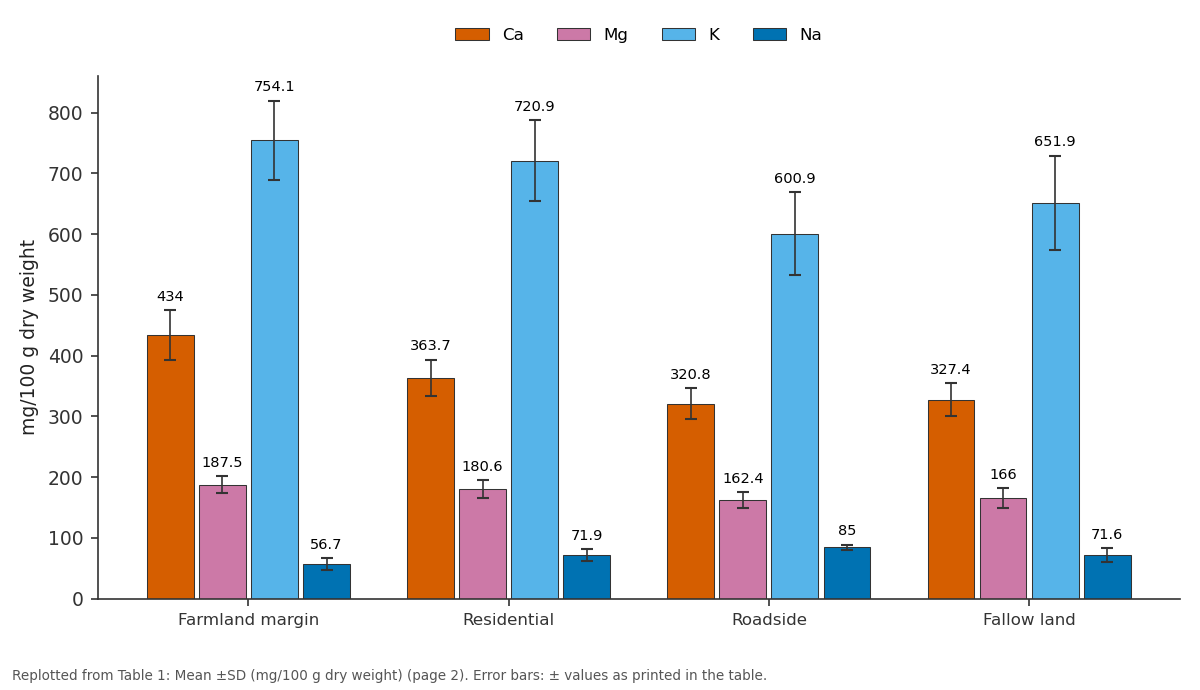
Ca and Mg and more: Farmland margin vs Residential vs Roadside vs Fallow land
Replotted from Table 1 (page 2) of the original paper. Every bar is the paper's own table value.
View source evidence ↗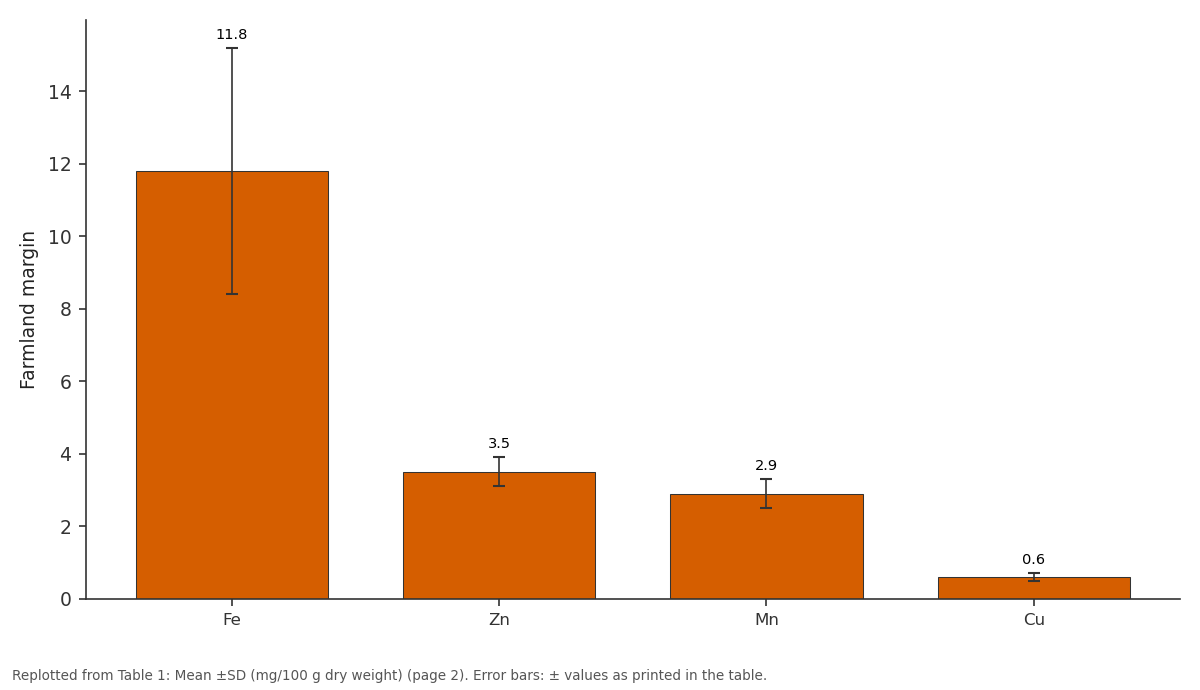
Farmland margin: Fe vs Zn vs Mn vs Cu
Replotted from Table 1 (page 2) of the original paper. Every bar is the paper's own table value.
View source evidence ↗Figures & tables
From the original paper Table 1
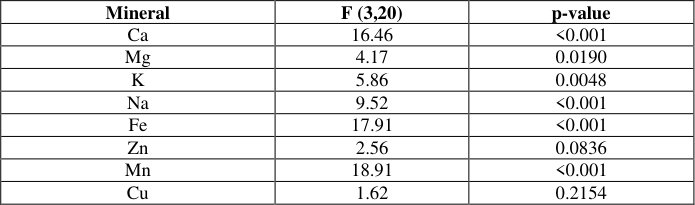 Table 2
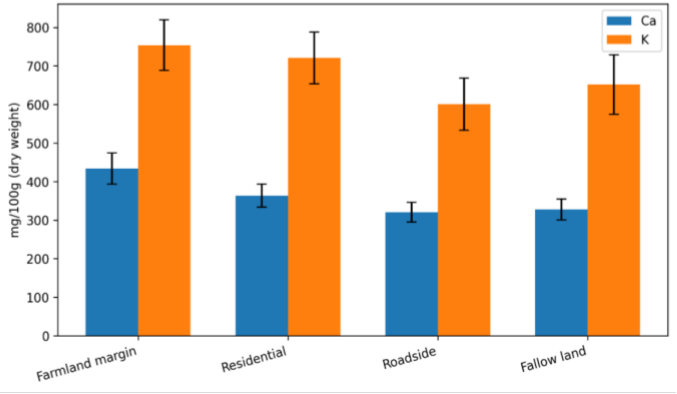 Figure 1
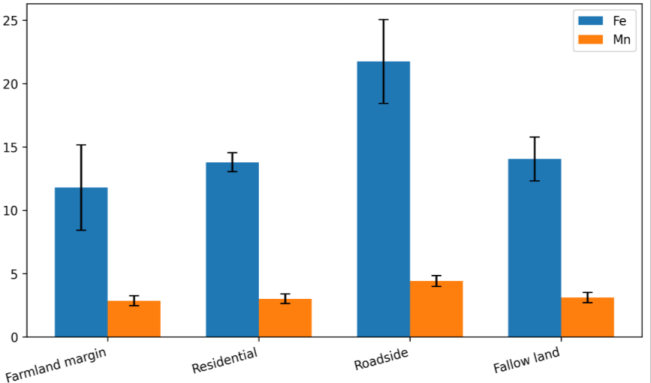 Figure 2
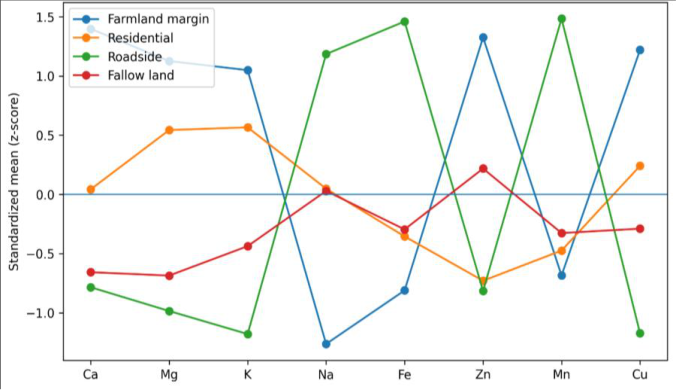 Figure 3
Introduction
Cleome rutidosperma is a widely distributed herbaceous plant in tropical regions and is commonly found growing naturally in disturbed habitats, farmlands, and residential surroundings in southwestern Nigeria [1] . Traditionally, the plant has been utilized for dietary and medicinal purposes, with its leaves reported to contain appreciable levels of essential minerals required for human nutrition [2] . Minerals such as calcium, potassium, magnesium, and iron play critical roles in bone development, electrolyte balance, enzymatic activity, and oxygen transport, making leafy vegetables important contributors to micronutrient intake, particularly in resource-limited communities [3] . However, the mineral content of plants is not constant and is significantly influenced by environmental factors including soil composition, pH, moisture regime, and exposure to anthropogenic activities [4] . Previous studies on wild and cultivated leafy vegetables have shown that soil mineral availability and environmental stressors can lead to considerable spatial variation in plant mineral profiles [5] . In urban and peri-urban environments, factors such as vehicular emissions, waste disposal, and intensive land use may further alter soil chemistry, potentially affecting nutrient uptake by plants [6] . Despite the widespread occurrence and consumption of C. rutidosperma in Ado-Ekiti, information on how localized environmental conditions Influence its mineral composition remains limited. Existing studies have largely focused on general phytochemical and proximate composition, with less emphasis on site-specific mineral variability [7] . The absence of detailed data on environment-dependent mineral variation in C. rutidosperma represents a knowledge gap, particularly in the context of food quality and nutritional reliability [8] . Since the plant is often harvested from uncontrolled environments, understanding the influence of local ecological conditions is essential for evaluating both its nutritional benefits and potential risks [9] . Therefore, this research aims to investigate the influence of different local environmental conditions within Ado-Ekiti on the mineral profile of C. rutidosperma leaves [10] . The central objective of this research is to compare mineral concentrations in C. rutidosperma collected from distinct microenvironments and to relate observed variations to environmental characteristics [11] . It is hypothesized that significant differences exist in the mineral composition of C. rutidosperma as a function of local environmental conditions, reflecting variability in soil properties and exposure levels [12] . By addressing this hypothesis, the research seeks to contribute to a more nuanced understanding of environment-plant interactions and support informed utilization of C. rutidosperma as a nutritional resource [13] .
Materials and Methods
Materials: Fresh, mature leaves of Cleome rutidosperma were collected from four distinct local environments within Ado-Ekiti, Ekiti State, Nigeria, namely farmland margins, residential areas, roadside locations, and fallow lands, reflecting differences in soil management intensity and environmental exposure. These locations were selected to capture variability in soil physicochemical properties and anthropogenic influence, which are known to affect mineral uptake in plants [4,5,11] . Plant identification and authentication were carried out using standard taxonomic keys and regional floras, consistent with earlier reports on West African leafy vegetables [1,2] . Soil samples corresponding to each plant collection site were also obtained from the topsoil layer (0-20 cm) to support interpretation of mineral variability, following established soil sampling protocols [11,14] . All reagents used for mineral analysis were of analytical grade, and deionized water was used throughout the research to prevent contamination, in accordance with recommended laboratory practices [10] .
Methods
Collected leaf samples were thoroughly washed with distilled water to remove adhering soil particles and airdried before oven drying at controlled temperature to constant weight, as described in standard plant mineral analysis procedures [3,10] . The dried samples were milled into fine powder using a stainless-steel grinder and stored in airtight containers until analysis. Mineral elements including calcium, magnesium, potassium, sodium, iron, zinc, manganese, and copper were determined after wet digestion using appropriate acid mixtures, following Association of Official Analytical Chemists protocols [10] . Quantification of minerals was carried out using atomic absorption spectrophotometry and flame photometry where applicable, methods widely employed for assessing mineral composition in leafy vegetables [7,12] . Quality control measures included reagent blanks and replicate analyses to ensure analytical reliability. Data obtained were used to compare mineral concentrations across different environmental settings, and observed variations were interpreted in relation to soil characteristics and environmental conditions, drawing on established concepts of soil-plant nutrient interactions [4,11,14] . The methodological approach aligns with previous studies evaluating mineral profiles of underutilized leafy vegetables and supports meaningful comparison with existing literature [7, 15, 16]. Discussion: The present research demonstrates that the mineral profile of Cleome rutidosperma is strongly influenced by local environmental conditions within Ado-Ekiti, reinforcing the concept that soil-plant interactions play a decisive role in determining the nutritional quality of wild and semi-wild leafy vegetables [4,11,14] . Significant variations in both macro-and micro-element concentrations across different collection sites indicate that even within a relatively small geographic area, environmental heterogeneity can lead to marked differences in plant mineral accumulation. This observation is consistent with earlier reports on underutilized vegetables, which emphasize the sensitivity of mineral uptake to soil fertility status, moisture regime, and land-use practices [3,15] . Higher concentrations of calcium and potassium in samples collected from farmland margins can be attributed to improved soil structure and nutrient availability associated with cultivated or previously managed soils [14] . Calcium and potassium are essential for plant physiological functions and are often more abundant in soils receiving organic residues or fertilizers, either directly or indirectly [11] . Similar trends have been reported for leafy vegetables grown on nutrient-rich soils, supporting the view that agronomic conditions enhance macronutrient accumulation and, by extension, dietary value [3] . These findings align with earlier mineral assessments of C. rutidosperma in Ado-Ekiti, which reported appreciable levels of major minerals but did not address site-specific variability [7] . In contrast, elevated iron and manganese levels observed in roadside environments suggest the influence of localized anthropogenic inputs and altered soil geochemistry [5,6] . Roadside soils are known to accumulate metal particulates from vehicular emissions, dust resuspension, and surface runoff, which can increase the availability of certain trace elements to plants [5] . While iron and manganese are essential micronutrients, their accumulation patterns warrant careful interpretation because excessive concentrations may reflect environmental contamination rather than intrinsic nutritional superiority [9] . The relatively stable levels of zinc and copper across sites indicate that these elements may be more tightly regulated by plant physiological mechanisms or less variable in the studied soils, as noted in previous soilplant studies [8,12] . Overall, the findings highlight the importance of considering local environmental context when evaluating the nutritional potential and safety of C. rutidosperma. The observed mineral variability underscores the need for sitespecific assessment, particularly where wild harvesting is practiced, and supports broader recommendations on monitoring trace element dynamics in edible plants [16] .
Results
Results
Table 1: Mineral composition of Cleome rutidosperma leaves across sites
Table 1: Mineral composition of Cleome rutidosperma leaves across sites
Conclusions:
The findings of this research clearly establish that local environmental conditions exert a substantial influence on the mineral composition of Cleome rutidosperma growing in Ado-Ekiti, with important implications for its nutritional value, safety, and sustainable utilization. The observed spatial variability in both macroand micro-elements confirms that the mineral profile of this underutilized leafy vegetable cannot be assumed to be uniform, even within a limited geographic area. Such variation highlights the dynamic interaction between soil properties, land-use history, and environmental exposure, all of which shape the capacity of the plant to accumulate essential nutrients. From a nutritional standpoint, the presence of appreciable levels of calcium, potassium, magnesium, and iron reinforces the potential of C. rutidosperma as a valuable dietary resource for local populations, particularly in settings where access to diverse vegetables is limited. At the same time, the differential enrichment of certain trace elements across sites underscores the need for informed harvesting and management practices to ensure both nutritional benefit and consumer safety. Based on these outcomes, several practical recommendations emerge. First, the promotion of C. rutidosperma for household consumption should prioritize plants sourced from farmland margins or managed soils where mineral balance is more favorable and predictable. Second, uncontrolled harvesting from roadside or heavily disturbed environments should be approached with caution, and routine screening of such sites is advisable before encouraging consumption, especially when the plant is used frequently or in large quantities. Third, simple soil improvement practices such as organic matter incorporation and controlled cultivation can be adopted to enhance desirable mineral uptake while minimizing excessive accumulation of potentially problematic elements. Encouraging small-scale cultivation of C. rutidosperma in home gardens or community plots would not only stabilize its mineral profile but also reduce reliance on plants collected from uncertain environments. Additionally, awareness programs for local farmers, herbal practitioners, and consumers should emphasize the link between growing environment and nutritional quality, enabling more informed choices regarding harvesting locations. Finally, the results provide a foundation for future agronomic and nutritional interventions aimed at optimizing the mineral composition of C. rutidosperma, supporting its integration into local food systems as a safe, affordable, and nutritionally meaningful leafy vegetable.
Figures and tables from the paper
| Site | Ca | Mg | K | Na | Fe | Zn | Mn | Cu |
|---|---|---|---|---|---|---|---|---|
| Farmland margin | 434.0±40.4 | 187.5±13.7 | 754.1±65.6 | 56.7±9.6 | 11.8±3.4 | 3.5±0.4 | 2.9±0.4 | 0.6±0.1 |
| Residential | 363.7±29.9 | 180.6±14.1 | 720.9±67.0 | 71.9±9.8 | 13.8±0.7 | 3.2±0.3 | 3.0±0.4 | 0.5±0.1 |
| Roadside | 320.8±25.7 | 162.4±13.1 | 600.9±67.6 | 85.0±4.0 | 21.7±3.3 | 3.1±0.1 | 4.4±0.4 | 0.5±0.1 |
| Fallow land | 327.4±27.2 | 166.0±15.9 | 651.9±77.4 | 71.6±11.6 | 14.1±1.7 | 3.3±0.3 | 3.1±0.4 | 0.5±0.1 |
Table text extracted from the original PDF; superscript letters are shown inline. The original table image is below.
View original table image
| Mineral | F (3,20) | p-value |
|---|---|---|
| Ca | 16.46 | <0.001 |
| Mg | 4.17 | 0.0190 |
| K | 5.86 | 0.0048 |
| Na | 9.52 | <0.001 |
| Fe | 17.91 | <0.001 |
| Zn | 2.56 | 0.0836 |
| Mn | 18.91 | <0.001 |
| Cu | 1.62 | 0.2154 |
Table text extracted from the original PDF; superscript letters are shown inline. The original table image is below.
View original table image
References
16 in the original paper- Burkill HM. The useful plants of West Tropical Africa. Vol. 1. Kew: Royal Botanic Gardens; 1985. p. 321-24.
- Oke OL. Leafy vegetables in human nutrition in Africa. Food Nutr Bull. 1990;12(2):130-135.
- Welch RM, Graham RD. A new paradigm for world agriculture: meeting human needs. Field Crops Res. 1999;60(1-2):1-10.
- Marschner H. Mineral nutrition of higher plants. 2nd ed. London: Academic Press; 1995. p. 15-89.
- Alloway BJ, editor. Heavy metals in soils. 2nd ed. London: Blackie Academic; 1995. p. 85-120.
- Sharma RK, Agrawal M. Biological effects of heavy metals. J Environ Biol. 2005;26(2):301-313.
- Akinsola AF, Oluwafemi AG. Phytochemical analysis, proximate composition and mineral profile of Cleome rutidosperma found in Ado-Ekiti, Nigeria. Int J Adv Biochem Res. 2022;6(2):94-100.
- Gupta UC, Gupta SC. Trace element toxicity relationships to crop production. J Plant Nutr. 1998;21(8):1631-1656.
- Khan S, Cao Q, Zheng YM, Huang YZ, Zhu YG. Health risks of heavy metals in contaminated soils. Environ Pollut. 2008;152(3):686-692.
- Association of Official Analytical Chemists (AOAC). Official methods of analysis. 18th ed. Washington (DC): AOAC; 2005.
- Brady NC, Weil RR. The nature and properties of soils. 13th ed. Upper Saddle River (NJ): Prentice Hall; 2002. p. 451-470.
- Kabata-Pendias A, Pendias H. Trace elements in soils and plants. 3rd ed. Boca Raton (FL): CRC Press; 2001. p. 41-67.
- Onyango CM, Shibairo SI. Nutrient uptake in leafy vegetables. Afr J Food Agric Nutr Dev. 2013;13(2):7605-7620.
- Tisdale SL, Nelson WL, Beaton JD. Soil fertility and fertilizers. 5th ed. New York: Macmillan; 1993. p. 89134.
- Grusak MA. Enhancing mineral content of plant foods. J Nutr. 2002;132(4):853S-855S.
- World Health Organization (WHO). Trace elements in human nutrition and health. Geneva: WHO; 1996. p. 25-80.