
Research article · 2025 · Full text
International Journal of Horticulture and Food ScienceGrowth, yield and quality improvement in beetroot (Beta vulgaris L.) through integrated nutrient management practices
Volume 7(7) · Pages 06–10 · DOI: 10.33545/26631067.2025.v7.i7a.330 ↗
Research areasIrrigation Practices and Water ManagementPlant Physiology and Cultivation StudiesBotanical Research and Applications
Abstract
Author-writtenA field experiment entitled “Growth, Yield and Quality Improvement in Beetroot (Beta vulgaris L.) through Integrated Nutrient Management Practices” was conducted during rabi, 2024-25 at Instructional Farm, School of Agricultural Sciences, Dabok, Udaipur. The experiment comprised of twelve treatments using vermicompost and recommended dose of fertilizerse it her alone in combinations which were replicated thrice in randomized block design. Beetroot variety USM - Janifer was used as a test crop. The results reveled that among all treatments T12 (5 t ha-1 Vermicompost + 100% RDF) was found to significantly increase growth, yield attributes, yield, quality parameters, soil properties as well as economics of beetroot. It was found that maximum value of growth parameters viz., germination percentage (92.33%), plant height(18.27,29.83 and 41.17 cm) and number of leaves (8.67,13.00 and 17.33) at 30,60 and 90DAS) was found with treatment T12 (5 t ha-1 Vermicompost + 100% RDF), yield attributes and yield viz., diameter of bulb (8.83 cm), average weight of bulb (198.33 g), harvest index (70.67%), yield plot-1 (29.33 kg), yield ha-1 (52.38t ha-1) were observed witht he application of T12 (5 t ha-1 Vermicompost + 100% RDF). Further it was noted that maximum values of quality parameters viz., TSS (11.77 °Brix) and chlorophyll content in leaf (1.46 mg g-1), was found with treatment T12 (5 t ha-1 Vermicompost + 100% RDF). Maximum net return (₹456,850 ha-1) and B-C ratio (4.29) were obtained with T12 (5 t ha-1 Vermicompost + 100% RDF).
Summary
Source-checkedPlain-language reading of the full paper, prepared with AI and checked against the text. Each point links to the authors' own words.
Why it matters
- Beetroot is a highly nutritious vegetable, providing essential vitamins, minerals, and proteins. View evidence ↗
- The crop is valued for potential health benefits, including its role in managing cancer and coronary heart disease. View evidence ↗
- Average beetroot yields in India typically range between 15 and 25 tonnes per hectare. View evidence ↗
The question
- The study aimed to evaluate how integrated nutrient management practices affect the growth, yield, and quality of beetroot. View evidence ↗
What they did
- The research was conducted from December 2024 to March 2025 at the School of Agricultural Sciences in Dabok, Udaipur. View evidence ↗
- The study used a randomized block design with twelve treatments combining vermicompost and recommended doses of fertilizers, each replicated three times. View evidence ↗
- The USM-Janifer beetroot cultivar was planted with a spacing of 45 cm between rows and 20 cm between plants. View evidence ↗
What they found
- Treatment T12 (5 t ha-1 Vermicompost + 100% RDF) produced the highest germination (92.33%), plant height (up to 41.17 cm), and leaf count (up to 17.33) at 90 days after sowing. View evidence ↗
- The T12 treatment resulted in the best yield attributes, including a bulb diameter of 8.83 cm, average bulb weight of 198.33 g, and a total yield of 52.38 t ha-1. View evidence ↗
- Quality parameters were maximized under T12, reaching 11.77 °Brix for total soluble solids (TSS) and 1.46 mg g-1 for leaf chlorophyll content. View evidence ↗
- The T12 treatment was the most economically viable, yielding a maximum net return of ₹456,850 ha-1 and a benefit-cost (B-C) ratio of 4.29. View evidence ↗
What it means
- The authors recommend the T12 treatment (5 t ha-1 Vermicompost + 100% RDF) to optimize growth, yield, quality, and economic returns for beetroot. View evidence ↗
- The authors note that their conclusions are based on a single year of investigation and require further evaluation. View evidence ↗
Visual summary
2 visualsIllustrations explain the paper; charts are replotted from the paper's own table values.
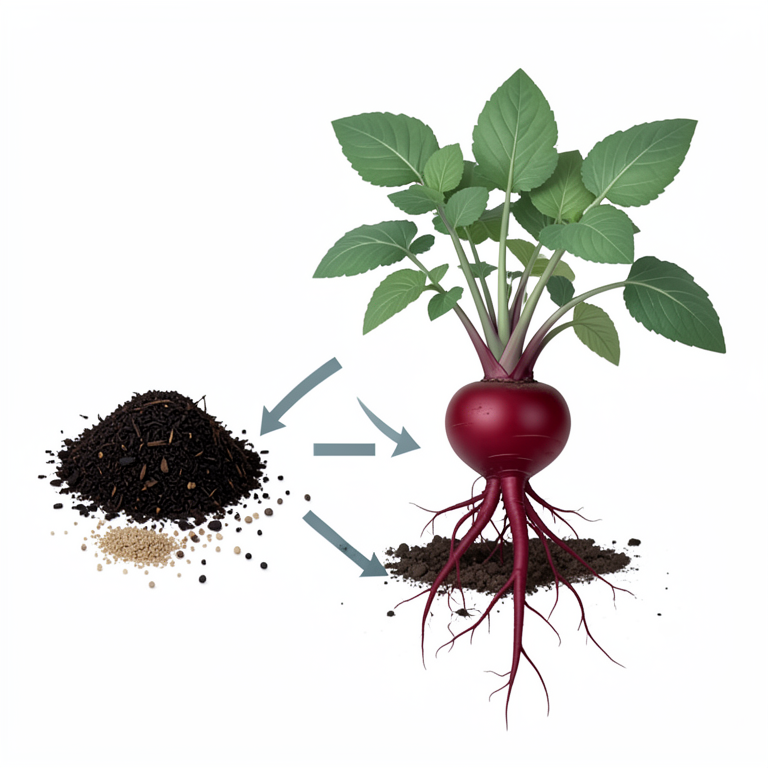
Integrated Nutrient Management Concept
AI-generated conceptual illustration (beetroot plants (Beta vulgaris L.)). It explains the idea and does not show study data.
View source evidence ↗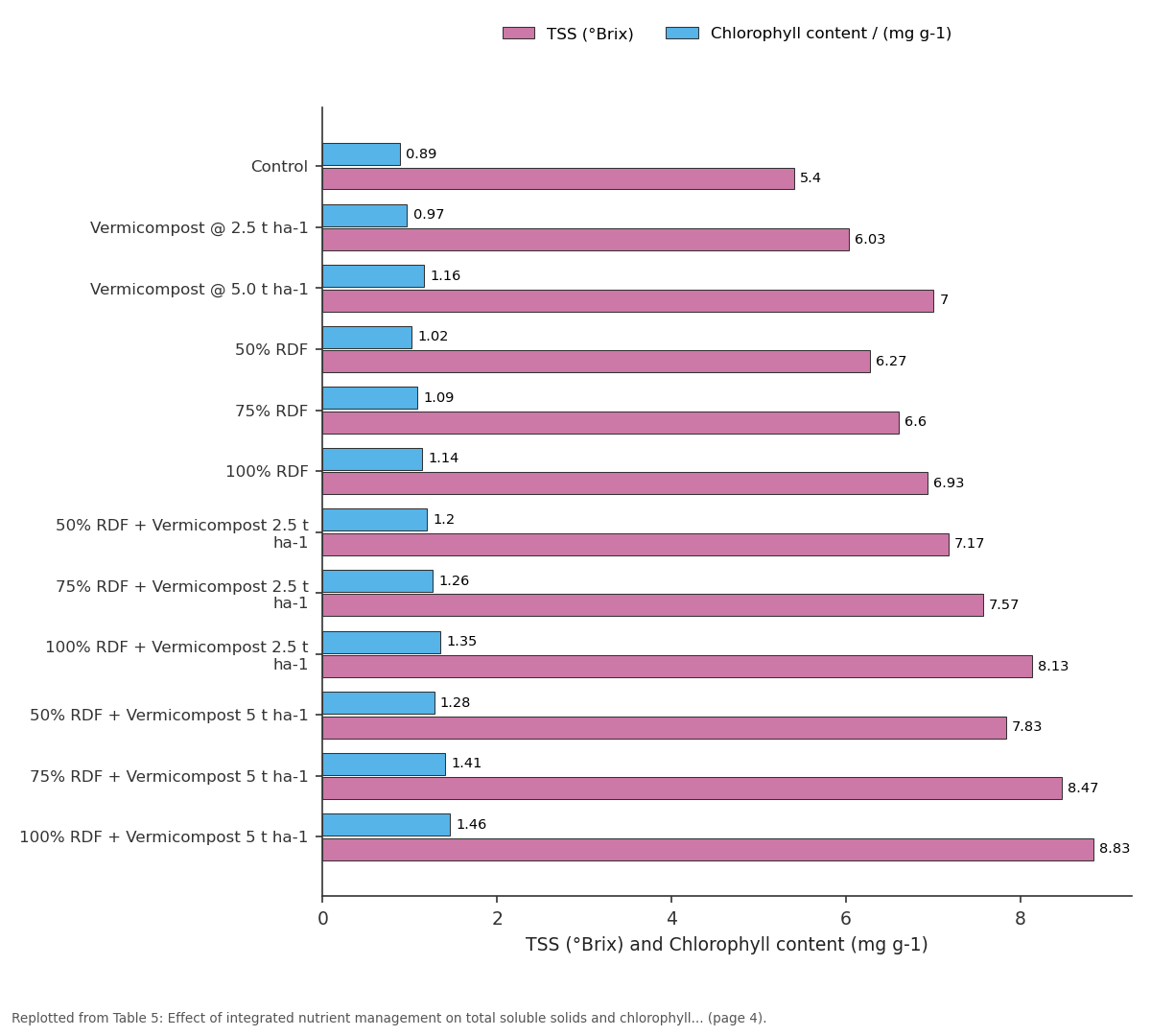
TSS (°Brix) and Chlorophyll content / (mg g-1): Control vs Vermicompost @ 2.5 t... vs Vermicompost @ 5.0 t... vs 50% RDF vs 75% RDF
Replotted from Table 5 (page 4) of the original paper. Every bar is the paper's own table value.
View source evidence ↗Figures & tables
From the original paper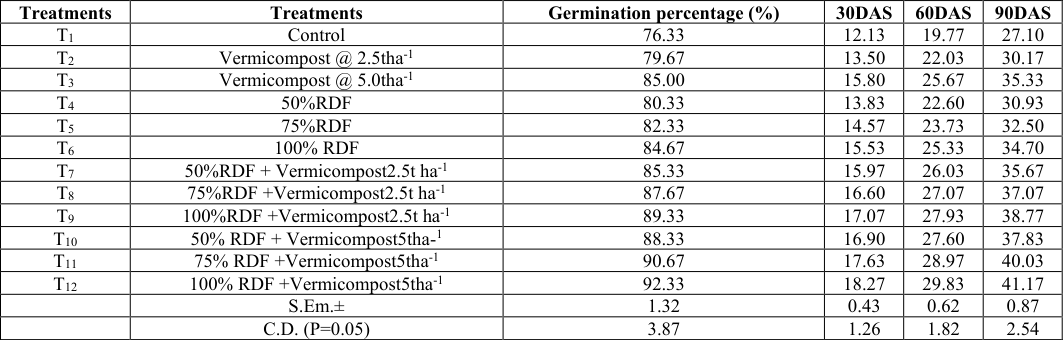 Table 1
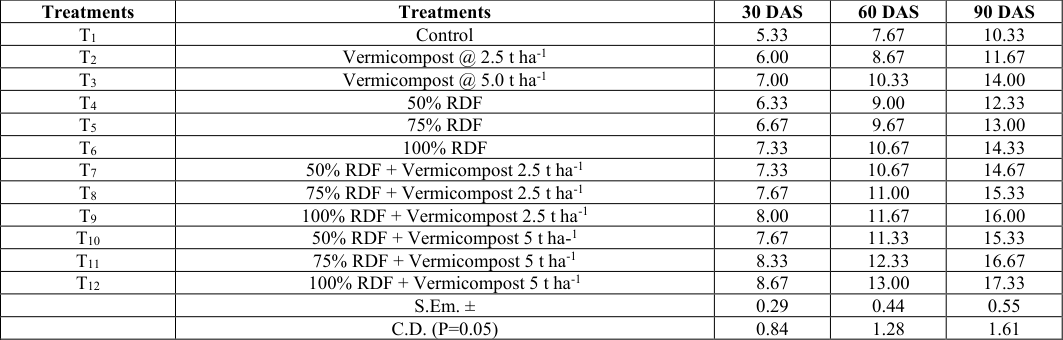 Table 2
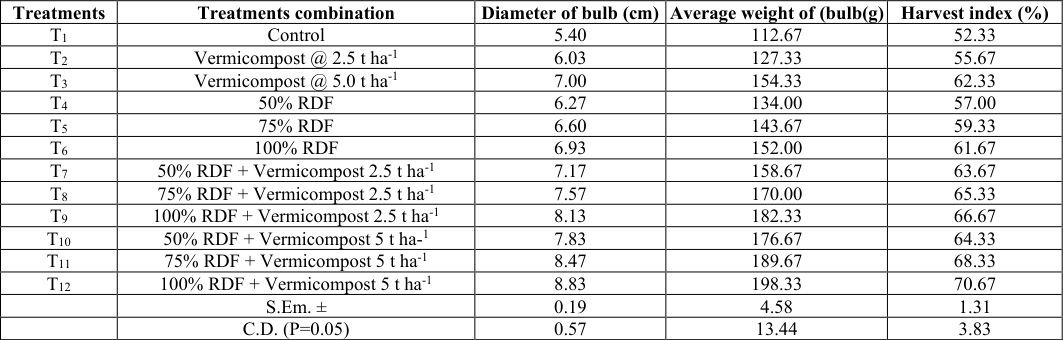 Table 3
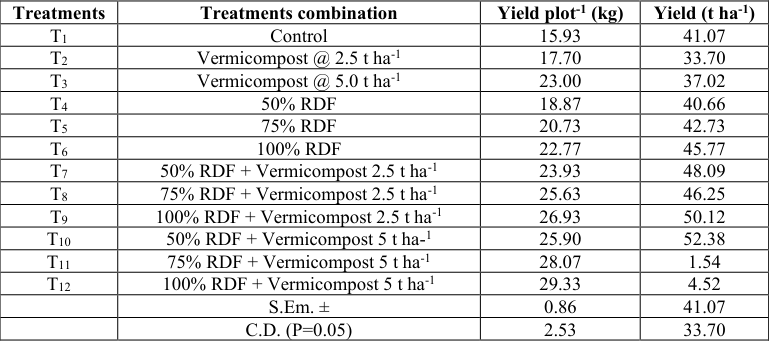 Table 4
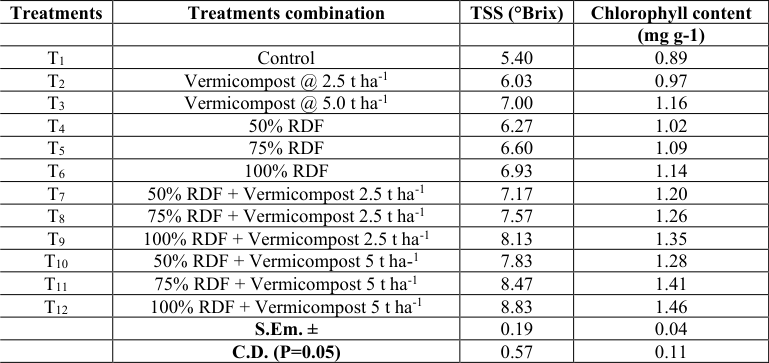 Table 5
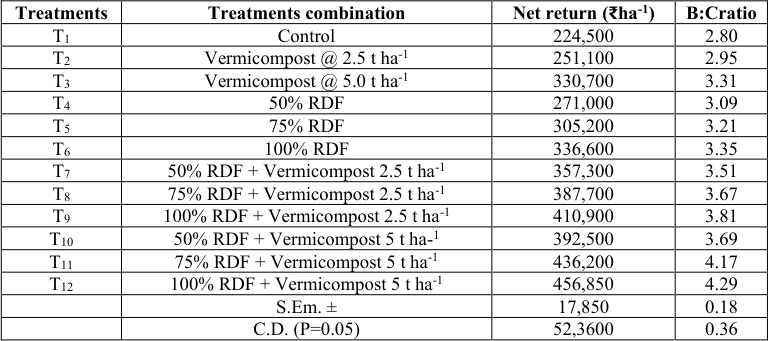 Table 6
Introduction
Beetroot (Beta vulgaris L.), also known as garden beet or table beet, belongs to the family Chenopodiaceae in company with palak, spinach, swiss chard, parsley, celery. The chromosome number of cultivated beetroot is 2n=18. Western Europe and North Africa is the origin of beetroot where they were grown to feed both humans and livestock. It is a biennial crop and also grown as a cool season annual. In India it is grown in northern and southern parts. It is grown in almost all states of India but in small scale only. It produces green tops and a swollen, fleshy and thick root used both as vegetable and salad. The upper and lower portion of the root develops from the hypocotyl and taproot respectively. During the development of root, concentric rings in a median cross section of mature beetroot is visible due to the alternately form of the vascular and parenchymatissues. Beetroot is a rich source of protein, carbohydrates, calcium, phosphorus, and vitamin C and has 87.7% of water per 100 g of fresh weight. Hence it is an ideal vegetable for healthconscious people, Deuter and Grundy (2004) [3] . The colour of beetroot is due to the presence of red violet pigments of β cyanine and a yellow pigment β xanthine. It has many nutritive properties such as antiradical properties which improve the quality of human blood and revive stress-based disorders drawing the attention of consumers to use it in cuisine. It is also beneficial in many clinical conditions including coronary heart disease and cancer, Kavitha et al. (2014) [5] . It is one of the natural foods which boost the energy in athletes as it has one of the highest nitrates and sugar contents. It received increasing attention due to possible health benefits in humans, especially its antioxidant and anti-inflammatory activities. Beetroot productivity in India varies, with average yields ranging from 15 to 25t ha -1 , depending on the region and agricultural practices. Highinput farms that utilize improved beetroot varieties, effective irrigation systems, and pest control can reach yields of up to 30 tons per hectare. This increase in yield reflects the impact of modern agricultural techniques on beetroot production in India. Research shows that a combination of integrated organic nutrient management practices can produce better results than using either alone. Organic manure improves the physical and chemical properties of soil, while biofertilizer enhance biological activity, which can lead to improved growth and yield. Combining organic manure and biofertilizer results in higher beetroot yield due to a more balanced nutrient supply and improved soil health. Both organic manure and biofertilizers have demonstrated positive effects on beetroot growth, yield, and quality. Their combined use tends to produce synergistic results. More long-term, field-based studies across different regions and beetroot varieties, as wellas the need for cost-benefit analysis for farmers.
Materials and Methods
The field experiment was conducted during December, 2024to March, 2025 Horticulture farm, Department of Horticulture, School of Agricultural Sciences, Dabok, Udaipur. Geographically, Udaipur is located at 24° 34' N latitude and 73° 42' E longitude at an elevation of 582.17 meters above mean sea level (MSL). This particular part of India falls under agro climatic zone IV a i.e. "Sub-Humid Southern Plain and Aravalli Hills" of Rajasthan state. The geography of the experimental site was fairly levelled with an ample surface drainage and the field soil was having clay loam texture. In experiment conducted ten treatments in RBD Design with trice replications. In study, cultivar USM -Janifer was used. Seeds of beetroot variety USM -Janifer were sown directly in the prepared beds at a spacing of 45 cm between rows and 20 cm between plants. Light irrigation was provided immediately after sowing to ensure proper germination.
Results and Discussion
Results and Discussion
Effect of Integrated nutrient management on Growth attributes
Data examine in Table 1 to 2 indicate that application of integrated nutrient management brought about a significant variation in growth parameters as viz., Germination percentage, Plant height and Number of leaves plant-1 . The maximum germination percentage (92.33%), maximum plant height (18.27, 29.83 and 41.17 cm), maximum number of leaves (8.67, 13.00 and 17.33) was observed at 30, 60 and 90 DAS under T12 (5 t ha -1 Vermicompost + 100% RDF), followed by treatments T11 (5 t ha -1 Vermicompost + 75% RDF) and T9 (2.5 t ha-1 Vermicompost + 100% RDF), respectively. The result obtained by the use of integrated nutrient management are due to rapid cell division, multiplication and cell elongation in meristematic region of plant which promoted vegetative growth of plant in the form of plant height. Maximum value of growth parameters might be due to improved physio-chemical and biological properties of soil like water holding capacity, hydraulic conductivity, high rate of microbial transformation due to availability of organic carbon for heterotrophic organism, buffering effect, improved soil aggregation, aeration, release of organic acids etc. which act as stimulant for supply of crop nutrients during the course of microbial decomposition and enable the crop to utilize nutrient and water more efficiently Shanu et al. (2019) [11] and Kushwah et al. (2019) [6] . The organic manures are useful to maintain and sustain higher status of soil fertility and availability of nutrient to crop. Nutrient management by use of vermicompost improved chemical physical and biological properties of soil which lead to higher growth of rootswhich might have resulted in increased absorption and efficient translocation of nutrients towards plant system during vegetative growth. Thus, balanced nutrition under appropriate nutrient environment might have resulted in better root development and plant growth. Moreover increasing value ofgrowthparameters under T12 (5t ha -1 Vermicompost +100% RDF) might be due to increased availability of nitrogen, phosphorous and potassium to the plant initiallythrough vermicompost and then by inorganic fertilizers matching the needs of plants throughout the cropping season. The findings of the present study are in the similar consent with the findings of Mahmoud and Mohamed (2018) [7] and Baria et al. (2023) [1] in beetroot.
| Treatments | Treatments | Germination percentage (%) | 30DAS | 60DAS | 90DAS |
|---|---|---|---|---|---|
| T1 | Control | 76.33 | 12.13 | 19.77 | 27.10 |
| T2 | Vermicompost @ 2.5tha-1 | 79.67 | 13.50 | 22.03 | 30.17 |
| T3 | Vermicompost @ 5.0tha-1 | 85.00 | 15.80 | 25.67 | 35.33 |
| T4 | 50%RDF | 80.33 | 13.83 | 22.60 | 30.93 |
| T5 | 75%RDF | 82.33 | 14.57 | 23.73 | 32.50 |
| T6 | 100% RDF | 84.67 | 15.53 | 25.33 | 34.70 |
| T7 | 50%RDF + Vermicompost2.5t ha-1 | 85.33 | 15.97 | 26.03 | 35.67 |
| T8 | 75%RDF +Vermicompost2.5t ha-1 | 87.67 | 16.60 | 27.07 | 37.07 |
| T9 | 100%RDF +Vermicompost2.5t ha-1 | 89.33 | 17.07 | 27.93 | 38.77 |
| T10 | 50% RDF + Vermicompost5tha-1 | 88.33 | 16.90 | 27.60 | 37.83 |
| T11 | 75% RDF +Vermicompost5tha-1 | 90.67 | 17.63 | 28.97 | 40.03 |
| T12 | 100% RDF +Vermicompost5tha-1 | 92.33 | 18.27 | 29.83 | 41.17 |
| S.Em.± | 1.32 | 0.43 | 0.62 | 0.87 | |
| C.D. (P=0.05) | 3.87 | 1.26 | 1.82 | 2.54 |
Table text extracted from the original PDF; superscript letters are shown inline. The original table image is below.
View original table image
Yield attributes and yield
A glance of the data represented in Table 3 to 4 clearly revealed that there was significant increase in bulb diameter with the application of integrated nutrient management. A perusal of data revealed that diameter of bulb was significantly affected by the application of integrated nutrient management. The maximum diameter of bulb (8.83 cm) maximum average weight of bulb (198.33 g) The maximum harvest index (70.67%) highest yield plot -1 (29.33 kg) maximum yield hectare -1 (52.38 t ha -1 ) were recorded under T12 (5 t ha -1 Vermicompost + 100% RDF). The important reasons responsible for better production of yield attributes and bulb yield might be due to supply of nutrients in balanced amount and adequate availability. The higher bulb yield of beetroot seemed to be the cumulative effect of increased plant growth parameters like plant height, number of leaves and yield attributes due to application of integrated organic nutrient management. The better plant growth provided greater sites for photosynthesis and translocation of photosynthates from source to sink (bulbs) Das et al. (2018) [2] . The use of integrated nutrient management significantly improve the growth of beetroot crop. The increased values for yield parameters in the study might be due tohigher number of bacteria, fungiand actinomycetes found in vermicompost and due to which higher mineralization and solubilization of nutrients occurs that provide nutrients to plants resulting to increased yield attributes and yield. These results are in close conform.
| Treatments | Treatments combination | Diameter of bulb (cm) | Average weight of (bulb(g) | Harvest index (%) |
|---|---|---|---|---|
| T1 | Control | 5.40 | 112.67 | 52.33 |
| T2 | Vermicompost @ 2.5 t ha-1 | 6.03 | 127.33 | 55.67 |
| T3 | Vermicompost @ 5.0 t ha-1 | 7.00 | 154.33 | 62.33 |
| T4 | 50% RDF | 6.27 | 134.00 | 57.00 |
| T5 | 75% RDF | 6.60 | 143.67 | 59.33 |
| T6 | 100% RDF | 6.93 | 152.00 | 61.67 |
| T7 | 50% RDF + Vermicompost 2.5 t ha-1 | 7.17 | 158.67 | 63.67 |
| T8 | 75% RDF + Vermicompost 2.5 t ha-1 | 7.57 | 170.00 | 65.33 |
| T9 | 100% RDF + Vermicompost 2.5 t ha-1 | 8.13 | 182.33 | 66.67 |
| T10 | 50% RDF + Vermicompost 5 t ha-1 | 7.83 | 176.67 | 64.33 |
| T11 | 75% RDF + Vermicompost 5 t ha-1 | 8.47 | 189.67 | 68.33 |
| T12 | 100% RDF + Vermicompost 5 t ha-1 | 8.83 | 198.33 | 70.67 |
| S.Em. ± | 0.19 | 4.58 | 1.31 | |
| C.D. (P=0.05) | 0.57 | 13.44 | 3.83 |
Table text extracted from the original PDF; superscript letters are shown inline. The original table image is below.
View original table image
Quality parameters
The data Table 5 regards to effect of integrated nutrient management on total soluble solids of beetroot have been presented in Table 7. Application of integrated nutrient management had significant effect on total soluble solids of beetroot. The maximum total soluble solids (11.77 °Brix) maximum chlorophyll content in leaf (1.46 mg g -1 ) T12 (5 t ha -1 Vermicompost + 100% RDF) Application of organic manures provides all essential 17 elements in sufficient amount which improves the overall metabolism of plant. Availability of micro-nutrients, which are required for the synthesis of various nutrient components, improves the nutritional quality of the end product. Further the accumulation of more mineral nutrient improves the dry matter and overall quality of the product. This might be due to easy availability of nutrient and organic carbon lead to balanced C-N ratio which improved the quality of produce. Vermicompost increases the availability of nutrients by enhancing microbial population resulting in increased mineralization and oxidation process. Similar findings were also noticed by Reddy et al. (2020) [10] , Patel et al. (2018) [9] and Naeem et al. (2013) [8] in beetroot.
| Treatments | Treatments combination | TSS (°Brix) | Chlorophyll content |
|---|---|---|---|
| (mg g-1) | |||
| T1 | Control | 5.40 | 0.89 |
| T2 | Vermicompost @ 2.5 t ha-1 | 6.03 | 0.97 |
| T3 | Vermicompost @ 5.0 t ha-1 | 7.00 | 1.16 |
| T4 | 50% RDF | 6.27 | 1.02 |
| T5 | 75% RDF | 6.60 | 1.09 |
| T6 | 100% RDF | 6.93 | 1.14 |
| T7 | 50% RDF + Vermicompost 2.5 t ha-1 | 7.17 | 1.20 |
| T8 | 75% RDF + Vermicompost 2.5 t ha-1 | 7.57 | 1.26 |
| T9 | 100% RDF + Vermicompost 2.5 t ha-1 | 8.13 | 1.35 |
| T10 | 50% RDF + Vermicompost 5 t ha-1 | 7.83 | 1.28 |
| T11 | 75% RDF + Vermicompost 5 t ha-1 | 8.47 | 1.41 |
| T12 | 100% RDF + Vermicompost 5 t ha-1 | 8.83 | 1.46 |
| S.Em. ± | 0.19 | 0.04 | |
| C.D. (P=0.05) | 0.57 | 0.11 |
Table text extracted from the original PDF; superscript letters are shown inline. The original table image is below.
View original table image
Economics
A keen observation of data Table 6 revealed that the application of integrated organic nutrient management influences the net return. The maximum net return of ₹456,850 ha -1 and maximum B-C of 4.29 was found with the application of with T12 (5 t ha -1 Vermicompost + 100% RDF) This increased net return and B:C ratio might be due to the fact that under T12 treatment the output was significantly higher due to increased yield, therefore, higher bulb yields resulted in higher net returns and B-C ratio. Similar finding was recorded through use of integrated organic nutrient management by Jawadagi et al. (2020) [4] who emphasized that INM reduces the reliance on synthetic fertilizers, leading to lower production costs and reduced environmental impact. Economic analyses indicate higher benefit-cost ratios with INM due to sustained yields and improved product quality.
| Treatments | Treatments combination | Net return (₹ha-1) | B:Cratio |
|---|---|---|---|
| T1 | Control | 224,500 | 2.80 |
| T2 | Vermicompost @ 2.5 t ha-1 | 251,100 | 2.95 |
| T3 | Vermicompost @ 5.0 t ha-1 | 330,700 | 3.31 |
| T4 | 50% RDF | 271,000 | 3.09 |
| T5 | 75% RDF | 305,200 | 3.21 |
| T6 | 100% RDF | 336,600 | 3.35 |
| T7 | 50% RDF + Vermicompost 2.5 t ha-1 | 357,300 | 3.51 |
| T8 | 75% RDF + Vermicompost 2.5 t ha-1 | 387,700 | 3.67 |
| T9 | 100% RDF + Vermicompost 2.5 t ha-1 | 410,900 | 3.81 |
| T10 | 50% RDF + Vermicompost 5 t ha-1 | 392,500 | 3.69 |
| T11 | 75% RDF + Vermicompost 5 t ha-1 | 436,200 | 4.17 |
| T12 | 100% RDF + Vermicompost 5 t ha-1 | 456,850 | 4.29 |
| S.Em. ± | 17,850 | 0.18 | |
| C.D. (P=0.05) | 52,3600 | 0.36 |
Table text extracted from the original PDF; superscript letters are shown inline. The original table image is below.
View original table image
Conclusion
On the basis of present investigation entitled "Growth, Yield and Quality Improvement in Beetroot (Beta vulgaris L.) through Integrated Nutrient Management Practices" it may be concluded that treatment T12 (5 t ha -1 Vermicompost + 100% RDF) and T11 (5t ha -1 Vermicompost + 75% RDF) were found significantly superior in terms of growth, yield attributing characters, yield and quality parameters of beetroot crop. The significant increase in economic characters viz., net return and B-C ratio was found with the application of T12 (5 t ha -1 Vermicompost + 100% RDF). Therefore, treatment T12 (5 t ha -1 Vermicompost + 100% RDF) may be recommended for beetroot crop to obtain superior values of growth, yield, quality parameters and increased net return of the treatments. This treatment also enhanced the physical properties of the soil. However, this conclusion is on the basis of one year investigation further evaluation is required.
Acknowledgement
AcknowledgementAuthors are grateful to the department of Horticulture, School of Agricultural Sciences, JRNRV University, Udaipur for providing facility during research work.
Figures and tables from the paper
| Treatments | Treatments | 30 DAS | 60 DAS | 90 DAS |
|---|---|---|---|---|
| T1 | Control | 5.33 | 7.67 | 10.33 |
| T2 | Vermicompost @ 2.5 t ha-1 | 6.00 | 8.67 | 11.67 |
| T3 | Vermicompost @ 5.0 t ha-1 | 7.00 | 10.33 | 14.00 |
| T4 | 50% RDF | 6.33 | 9.00 | 12.33 |
| T5 | 75% RDF | 6.67 | 9.67 | 13.00 |
| T6 | 100% RDF | 7.33 | 10.67 | 14.33 |
| T7 | 50% RDF + Vermicompost 2.5 t ha-1 | 7.33 | 10.67 | 14.67 |
| T8 | 75% RDF + Vermicompost 2.5 t ha-1 | 7.67 | 11.00 | 15.33 |
| T9 | 100% RDF + Vermicompost 2.5 t ha-1 | 8.00 | 11.67 | 16.00 |
| T10 | 50% RDF + Vermicompost 5 t ha-1 | 7.67 | 11.33 | 15.33 |
| T11 | 75% RDF + Vermicompost 5 t ha-1 | 8.33 | 12.33 | 16.67 |
| T12 | 100% RDF + Vermicompost 5 t ha-1 | 8.67 | 13.00 | 17.33 |
| S.Em. ± | 0.29 | 0.44 | 0.55 | |
| C.D. (P=0.05) | 0.84 | 1.28 | 1.61 |
Table text extracted from the original PDF; superscript letters are shown inline. The original table image is below.
View original table image
| Treatments | Treatments combination | Yield plot-1 (kg) | Yield (t ha-1) |
|---|---|---|---|
| T1 | Control | 15.93 | 41.07 |
| T2 | Vermicompost @ 2.5 t ha-1 | 17.70 | 33.70 |
| T3 | Vermicompost @ 5.0 t ha-1 | 23.00 | 37.02 |
| T4 | 50% RDF | 18.87 | 40.66 |
| T5 | 75% RDF | 20.73 | 42.73 |
| T6 | 100% RDF | 22.77 | 45.77 |
| T7 | 50% RDF + Vermicompost 2.5 t ha-1 | 23.93 | 48.09 |
| T8 | 75% RDF + Vermicompost 2.5 t ha-1 | 25.63 | 46.25 |
| T9 | 100% RDF + Vermicompost 2.5 t ha-1 | 26.93 | 50.12 |
| T10 | 50% RDF + Vermicompost 5 t ha-1 | 25.90 | 52.38 |
| T11 | 75% RDF + Vermicompost 5 t ha-1 | 28.07 | 1.54 |
| T12 | 100% RDF + Vermicompost 5 t ha-1 | 29.33 | 4.52 |
| S.Em. ± | 0.86 | 41.07 | |
| C.D. (P=0.05) | 2.53 | 33.70 |
Table text extracted from the original PDF; superscript letters are shown inline. The original table image is below.
View original table image
References
11 in the original paper- Baria VK, Sitapara HH, Thounaojam AS, Goswami PB. Influence of Integrated Nitrogen Management on Growth and Yield of Beet Root (Beta vulgaris L.). Int J Plant Soil Sci. 2023;35(24):123-130.
- Das P, Singh S, Rathore D. Impact of biofertilizers and organic manures on the yield and quality of beetroot. J Agric Sci. 2018;15(3):220-229.
- Deuter P, Grundy T. Beetroot commercial production and processing. Agency for Food and Fibre Sciences. Holland Horticultural Limited Partnership. 2004:1-4.
- Jawadagi RS, Patil MG, Kulkarni SS. Effect of Integrated Nutrient Management in Vegetables: Economic and Environmental Impacts. Indian Hortic J. 2020;14(3):197-203.
- Kavitha R, Ravichandran P, Saw T, Gabr M, Abdel RR, Ahmed R, et al. Effects of different encapsulation agents and drying process on the stability of betalains extract. J Food Sci Technol. 2014;51(9):2216-2221.
- Kushwah G, Sharma RK, Kushwah SS, Mishra SN. Effect of organic manures, inorganic fertilizers and varieties on growth, yield and quality of tropical carrot. Indian J Hortic. 2019;76(3):451-456.
- Mahmoud RA, Mohamed MH. Effect of vermicompost and biofertilizers on the growth and biochemical characteristics of beetroot. Soil Biol Biochem. 2018;42(2):146-154.
- Naeem M, Khalil H, Khan A, Malik W. Synergistic effects of organic fertilizers and biofertilizers on beetroot growth and quality. J Agric Sci. 2013;5(2):8998.
- Patel M, Sharma P, Verma K. Impact of organic inputs on the nutritional quality of beetroot. J Agric Sci Technol. 2018;20(1):78-88.
- Reddy KR, Patil S, Naik S. Effect of organic and biological inputs on beetroot production. Indian J Agric Res. 2020;54(6):805-812.
- Shanu V, Lakshminarayana D, Prasanth P, Saidaiah D. Studies on the Effect of integrated nutrient management (INM) on growth and yield parameters of carrot (Daucus carota L.) cv. Kuroda Improved under Southern Telangana Conditions. Int J Curr Microbiol App Sci. 2019;8(04):2786-2789.