
Research article · 2026 · Full text
International Journal of Agriculture and NutritionGreen extraction approaches for anthocyanins and polyphenols in grape pomace
Volume 8(2) · Pages 01–09 · DOI: 10.33545/26646064.2026.v8.i2a.339 ↗
Research areasPhytochemicals and Antioxidant ActivitiesFermentation and Sensory AnalysisEdible Oils Quality and Analysis
Abstract
Author-writtenVitis vinifera L., commonly known as grapes, is one of the most extensively cultivated crops worldwide, with more than 80% of production dedicated to winemaking. This process generates large amounts of byproducts, including grape pomace (GP), wine lees, and wastewater, which pose environmental and economic challenges. Among these residues, GP is particularly significant as it contains high levels of polyphenols, bioactive compounds with well-established antioxidant and anti-inflammatory properties. In recent years, GP has attracted growing interest as a sustainable source of natural compounds for applications in the food, pharmaceutical, and nutraceutical industries. This work highlights the valorisation of GP by examining its phenolic composition, therapeutic potential, and the innovative extraction technologies developed to recover these compounds. Environmentally friendly methods such as ultrasound-assisted extraction, microwave-assisted extraction, supercritical fluid extraction, and natural deep eutectic solvents are emphasised, alongside advanced analytical techniques for precise characterisation. Furthermore, the biological benefits of GP polyphenols are discussed, with recent findings underscoring their metabolism and the critical role of gut microbiota in modulating their activity. By demonstrating how winemaking residues can be transformed into high-value bioactive agents, this study underscores the importance of sustainable waste management and circular economy practices. GP valorisation not only reduces environmental impact but also contributes to the development of eco-innovative solutions that bridge agriculture, health, and industry.
Summary
Source-checkedPlain-language reading of the full paper, prepared with AI and checked against the text. Each point links to the authors' own words.
Why it matters
- Grapes are among the most widely grown crops globally, with over 80% of the production used for making wine. View evidence ↗
- The winemaking process creates significant quantities of byproducts like grape pomace, which present economic and environmental difficulties. View evidence ↗
- Grape pomace is a valuable residue because it is rich in polyphenols, which are known for their anti-inflammatory and antioxidant effects. View evidence ↗
The question
- The study aims to explore the valorization of grape pomace by reviewing its phenolic makeup, therapeutic uses, and modern extraction technologies. View evidence ↗
What they did
- The review focuses on green extraction methods, specifically supercritical fluid extraction, microwave-assisted extraction, ultrasound-assisted extraction, and natural deep eutectic solvents. View evidence ↗
What they found
- Grape marc typically contains total polyphenols between 0.68-0.75 mg GAE per 100 g (dry weight) and anthocyanins ranging from 84.4 to 131 mg per 100 g (dry weight). View evidence ↗
- Optimized ultrasound-assisted extraction using 95% methanol/formic acid at 25 °C for 1.5 hours (with 10 minutes of ultrasound) produced high concentrations of various anthocyanins. View evidence ↗
- For microwave-assisted extraction, the most effective conditions were 50% methanol at 50 °C for 20 minutes with 100 W of power. View evidence ↗
- Supercritical fluid extraction optimized at 45-46 °C, 160-165 kg/cm², and 6-7% ethanol achieved a 12.31% extraction efficiency. View evidence ↗
- Among natural deep eutectic solvents, the choline chloride-citric acid mixture yielded the most anthocyanins and showed high stability, with only 10% degradation at 4 °C and -18 °C. View evidence ↗
- Pressurized liquid extraction using 50% v/v ethanol-water at pH 2.0 and 40 °C was most effective, with five compounds making up over 78% of the total anthocyanin yield. View evidence ↗
- Anthocyanins provide cardioprotective benefits by acting as antioxidants that reduce oxidative stress and neutralize free radicals. View evidence ↗
- Anthocyanins contribute to metabolic health by regulating glucose metabolism and improving insulin sensitivity, which may lower the risk of type 2 diabetes. View evidence ↗
What it means
- The authors conclude that future research should focus on green chemistry-aligned purification and fractionation to maximize purity and yield while minimizing environmental impact. View evidence ↗
- A stated limitation is the need to explore industrial scalability to ensure laboratory successes can be converted into cost-effective large-scale operations. View evidence ↗
Visual summary
1 visualsIllustrations explain the paper; they do not show study data.
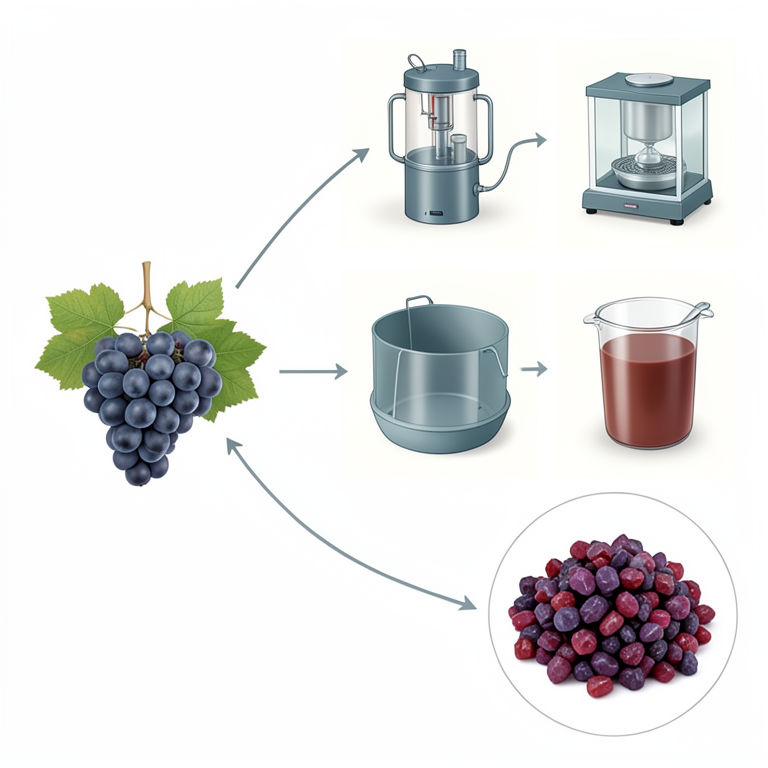
Study overview
AI-generated conceptual illustration (grape pomace (skins and seeds)). It explains the idea and does not show study data.
View source evidence ↗Introduction
Global grape production reaches nearly 60 million tons annually. Grapes are notable for their richness in polyphenolic compounds, with about 75% concentrated in the skins and seeds. A significant portion of this harvest is directed toward winemaking, a process that generates considerable amounts of organic waste, wastewater, and greenhouse gases, contributing to environmental pollution (Kammerer et al., 2004) [31] . One of the main by-products of vinification is grape pomace, the solid residue left after maceration and fermentation, which amounts to approximately 8.49 million tons worldwide each year. Similar to wine, grape pomace is a complex mixture containing diverse polyphenolic compounds, ranging from simple molecules like hydroxycinnamic and hydroxybenzoic acids to more intricate structures such as flavonoids (Ghafoor et al., 2010) [23] . Traditionally, pomace has been used as a fertiliser or sold to distilleries for ethanol production, practices that overlook its valuable bioactive compounds. In the food industry, interest in grape pomace lies in its high phenolic content and its potential role in disease prevention. The elevated concentration of polyphenols in pomace results from incomplete extraction during winemaking, with levels varying according to grape variety and vinification conditions. The transfer of these compounds depends on their solubility and affinity between phases. For instance, while up to 60% of total phenolics can migrate from grapes to wine, only about 38% of monomeric anthocyanins are transferred. This makes pomace an attractive source for recovering phenolics, serving both environmental and economic purposes, reducing waste while providing natural alternatives to synthetic colourants (Sirohi et al., 2010) [55] . Although several studies highlight the benefits of grape marc extracts, most research has focused on white grape residues, leaving Red grape pomace less explored despite its higher anthocyanin content (Teixeira et al, 2014; Lima et al., 2017; Bonfigli et al., 2017) [58,37,6] . Anthocyanins, while promising as natural colourants, face challenges in food applications due to their instability during processing and storage. Their stability is influenced by factors such as molecular structure, pH, temperature, oxygen exposure, pigment concentration, and water activity in the food matrix (Christ et al., 2013; Boonchu et al., 2013; Meini et al., 2019; Beres et al., 2017; Cheynier, 2012; Rockenbach et al., 2011; Sousa et al., 2014) [15,7,41,4,14,50,56] . Research in this field generally revolves around three stages: extraction, identification, and stabilisation. Extraction methods are typically classified into conventional and modern techniques, though no standardised approach exists yet. Because anthocyanins are polar compounds, traditional solid-liquid extraction using solvents like water, methanol, ethanol, and acetone is common. However, these methods often require long extraction times, consume large amounts of solvent, and risk degrading bioactive molecules. To align with green chemistry principles, further development of advanced extraction and separation technologies is needed to produce high-quality extracts while preserving the integrity of target compounds.
Composition of Grape Pomace
Grape marc is one of the main by-products of winemaking, accounting for roughly 10-20% of the total grapes processed. It consists of seeds, pulp, skins, stalks, and leaves, and its composition includes about 30% structural polysaccharides such as cellulose, xyloglucan, arabinan, mannan, and xylan; 20% pectic acids; and around 15% proanthocyanidins, proteins, and phenolic compounds. Because only a limited amount of phenols is extracted during vinification, grape marc retains a notably high concentration of these compounds (Mendes et al., 2013; Fontana et al., 2013; Abbas et al., 2017; Brezoiu et al., 2019; Lu et al., 1999; Amico et al., 2004) [42,19,1,11,38,3] . The extent of compound diffusion during winemaking is largely influenced by processing conditions. The predominant phenolic groups present in grape marc are anthocyanins, flavanols, and stilbenes. Distribution of extractable phenols varies across grape tissues: approximately 60-70% are found in the seeds, 30-35% in the skins, and 10% or less in the pulp. Overall, grape marc contains between 0.68-0.75 mg GAE per 100 g (dry weight) of total polyphenols, while anthocyanin levels range from 84.4 to 131 mg per 100 g (dry weight). The major anthocyanins in grape skins are the 3-O-glucosides of malvidin, petunidin, cyanidin, peonidin, and delphinidin. However, factors such as grape variety, ripeness, and environmental conditions can significantly influence the presence and concentration of these pigments (Boussetta et al., 2009; Vega et al., 2013; Pina et al., 2015) [9, 61, 48] .
Chemistry of Polyphenols
Polyphenols represent a diverse group of plant-derived molecules, most of which are associated with cell wall structures. Their fundamental unit is the phenolic ring, and their complexity ranges from simple phenolic acids to larger, high-molecular-weight compounds such as tannins. Based on the number of phenolic rings and structural features, they are generally divided into two categories: flavonoids and non-flavonoids, with flavonoids being the predominant group. Non-flavonoid compounds include hydroxybenzoic acids, hydroxycinnamic acids, stilbenes, lignans, and coumarins Goula et al., 2016; Bordiga et al., 2019; Zhao et al., 2020; Liazid et al., 2011) [26,8,65,8,65,36] . Anthocyanins, which are glycosylated derivatives of anthocyanidins, belong to the flavonoid family. Their structure consists of two aromatic rings (A and B) connected by a heterocyclic ring (C). These pigments are responsible for the colouration of grapes and wine, with their hue determined by the degree of hydroxylation, methylation, and glycosylation. Anthocyanins are typically present in glycosylated forms rather than as aglycones. Glycosides occur mainly as O-glucosides, where carbohydrates are linked through oxygen atoms, and less frequently as Cglucosides, where the linkage involves carbon-carbon bonds. The most common glycosylation sites are position 3 of the C-ring and positions 5 and 7 of the A-ring, while substitutions at positions 3′, 4′, and 5′ of the B-ring occur less often (Caldas et al., 2018; Vidal et al., 2004; Garrido et al., 2013; Li et al., 2013; Shiraz et al., 2015; Cortez et al., 2017) [12,62,21,35,53,16] . Classification of these molecules depends on the oxidation state of the heterocyclic ring and the substitution pattern of the B-ring. Within each subgroup, structural diversity arises from variations in hydroxyl group placement and the presence of different functional groups such as methyl groups, sugars, and organic acids. The hydroxyl groups of anthocyanidin aglycones can be substituted with sugar residues, most commonly glucose and rhamnose. These sugars may further bind to additional carbohydrates through glycosidic or acylated linkages. Typical acyl groups include p-coumaric, caffeic, ferulic, gallic, and p-hydroxybenzoic acids, as well as aliphatic acids such as malonic, acetic, or malic acids, usually attached via ester bonds. Glycosylation enhances water solubility and stabilises anthocyanins by creating intramolecular hydrogen bonding networks, whereas acylation reduces solubility and alters molecular polarity and size Khoo et al., 2017; Garzon et al., 2008) [33,22] . Anthocyanins exist in different equilibrium forms depending on pH. At strongly acidic conditions (pH < 2), they appear as bright red flavylium cations. As pH increases, proton loss and hydration at the C2 position led to equilibrium between pseudobase carbinol (hemiketal) and chalcone structures, both of which are colourless and unstable. At alkaline conditions (pH > 7), purple quinoidal bases dominate. Structural diversity arises from variations in the B-ring substitution, the type of sugar attached, and the presence of additional molecules in the glycosylated segment (Fernandes et al., 2015) [18] . Due to their electron-deficient nature, anthocyanins are highly reactive and act as natural antioxidants. They are generally considered safe, showing low toxicity even at higher intake levels compared to synthetic dyes. However, their application as food colourants is limited by their instability under processing and storage conditions. They are prone to oxidation and degradation, with stability strongly influenced by pH, oxygen exposure, light, temperature, and intrinsic molecular structure (Spigno et al., 2007) [57] .
Anthocyanins and Anthocyanin Derivatives
The red colouration of grapes is primarily due to anthocyanins, which are concentrated in the skin. These pigments also impart the characteristic red hue to young wines, though over time and during ageing, the colour gradually shifts toward orange as anthocyanins transform into more complex derivative compounds. Current evidence suggests that such derivatives are absent in fresh grapes and are formed only during the winemaking process. Among these, pyranoanthocyanins are particularly noteworthy because they exhibit greater stability against pH fluctuations and sulphur dioxide bleaching compared to native anthocyanins. The interaction between anthocyanins and flavanols occurs through two main condensation mechanisms. In the first step, the nucleophilic C6 or C8 position of a flavanol attacks the electrophilic C4 of the flavylium cation, resulting in a colourless adduct. This adduct can subsequently undergo oxidation, regenerating red flavylium structures and eventually forming xanthylium salts. In the second mechanism, condensation takes place following the acidic cleavage of the interflavanic bond in procyanidins. This reaction generates a carbocation (electrophile), which interacts with the C6 or C8 position of hydrated anthocyanins. These carbocations may also react with other flavanols, leading to the formation of new proanthocyanidin molecules (Wang et al., 2016; Ameer et al., 2017) [64,2] . Pyranoanthocyanins are formed in wine through cycloaddition reactions between the flavylium cation and various metabolites, resulting in the creation of an additional pyran ring. This structural modification produces hypochromatic shifts in visible absorption compared to the original anthocyanin, giving wines a characteristic brick-red colouration. These compounds arise from the interaction of anthocyanins with molecules such as acetaldehyde, acetoacetic acid, pyruvic acid, vinylphenol, vinylguaiacol, and vinylcatechol. Furthermore, anthocyanin derivatives themselves can act as precursors, generating additional pyranoanthocyanin structures. Classification of pyranoanthocyanins depends on the reacting molecule, leading to categories such as vitisin-type pyranoanthocyanins, phenyl-pyranoanthocyanins, vinylflavanol-pyranoanthocyanins, and vinyl-pyranoanthocyanins. A mechanism for vitisin formation in which metabolites attach to the C4 and C5 positions of anthocyanins. This is followed by dehydration and oxidation, ultimately producing the extra pyran ring that stabilises the pigment (Ongkowijoyo et al., 2018; Madureira et al., 2020) [46,39] . Vitisins are formed through reactions between anthocyanins and metabolites such as pyruvic acid, acetoacetic acid, and acetaldehyde. Their formation begins with a cycloaddition at the C4 and C5 positions of the anthocyanin molecule, followed by dehydration and oxidation, which results in the development of a new pyran ring. Within this group, Type A vitisins are particularly notable. They are produced when the enol form of pyruvic acid reacts with malvidin-3-Oglucoside. These compounds exhibit remarkable stability against nucleophilic attack, enabling them to persist in wines for as long as 15 years. Type B vitisins, which share structural similarities with Type A, are generated through the cycloaddition of acetaldehyde, typically involving acylated anthocyanins. The key distinction between Type A and Type B vitisins lies in the absence of the carboxyl group at the C10 position of the D ring in Type B. The formation of Type A vitisins is favoured under conditions of high pyruvic acid concentration, low pH, and low temperature.
However, once fermentation ends and the medium becomes depleted, the rate of Type A vitisin production declines, while the formation of Type B vitisins becomes predominant (Brahim et al., 2014; Friedman et al., 2014) [10,20] . Flavanyl pyranoanthocyanins occur naturally in red wines and can also be synthesised in model systems through acetaldehyde-mediated reactions. Compared to native anthocyanins, these pigments exhibit enhanced stability across varying pH levels and display a more intense orange colouration. Their formation pathway closely resembles that of vitisins. First reported these compounds in model solutions, and subsequent studies later confirmed their presence in both experimental and commercial wines. Pyranoanthocyanin dimers are produced through reactions between carboxypyranoanthocyanins and methyl pyranoanthocyanins. These compounds were first identified in nine-year-old Port wines and were subsequently synthesised and examined in controlled model solutions (Guerrero et al., 2013) [27] .
Polymeric Anthocyanins
These derivatives are formed through the direct polymerisation of anthocyanins with flavanols. Compared to monomeric anthocyanins, they exhibit higher stability, showing greater resistance to nucleophilic attack, oxidative reactions, and bleaching by sulphur dioxide. Two main pathways have been proposed for their formation. [67] and Pissarra et al. (2003) [68] . Additionally, Salas et al. (2005) [51] reported the presence of (epi) cat-ethyl-mv3glc in wines produced from Cabernet Sauvignon (60%) and Tannat (40%) varieties, using UV-visible analysis.
Tannin-anthocyanin (T-A) derivatives formed through direct condensation have been demonstrated in wine fractions before and after thiolysis using HPLC-MS analysis. During the formation of these pigments, anthocyanins bind at the C6 or C8 positions as terminal units, acting as precursors to malvidin-3-O-glucoside, which is released among the thiolysis products. Two distinct peaks were detected, corresponding either to a flavone or to a bicyclic anthocyanin-tannin (A-T) structure. The latter results from a direct reaction between malvidin-3-O-glucoside (linked via C4) and catechin. In addition, both pyranoanthocyanins and direct condensation pigments have been identified in red wine fractions through UV-visible and MS techniques. Salas et al. (2004) [51] showed that flavanol-anthocyanin adducts in wine are formed via acid-catalysed cleavage of proanthocyanidins, followed by the addition of anthocyanins to the resulting carbocation. This process led to the production of catechin-malvidin-3-O-glucoside (cat-mv3glc) and epicatechin-malvidin-3-O-glucoside (ec-mv3glc). To validate this mechanism, reactions between mv3glc and ec-(4-8)-ec-3-O-gallate were tested in a model solution at pH 2, yielding pigments consistent with those observed in wine. Evidence confirms that anthocyanin derivatives and tannins begin forming immediately after anthocyanin extraction. Direct condensation adducts are more stable than those produced via mediated condensation. Although larger condensed tannins can also form, they tend to precipitate quickly, making their condensation with anthocyanins less efficient compared to smaller proanthocyanidins. One of the key factors affecting wine composition and quality is the ripeness of the grapes at harvest. In Tinto Fino and Cabernet Sauvignon wines aged for one year in barrels followed by six months in bottles, researchers identified malvidin-catechin derivatives, anthocyanin-pyruvic acid adducts, and vinyl-flavonoids. Using UPLC-MS/MS, it was possible to classify 18 groups of polyphenols in red wine, encompassing 50 distinct monomeric pigments along with oligomeric adducts formed between proanthocyanidins and malvidin. Further LC-MS analysis enabled the detection and characterization of various anthocyanin derivatives, including the tentative identification of two novel aldehyde-flavanol-ethyl pyranoanthocyanin compounds. These findings were part of investigations into how oxygen exposure during barrel ageing influences wine chemistry.
Factors Influencing the Stability of Anthocyanins
The anthocyanin heterocyclic ring carries positive charges at the C2 and C4 positions, which makes it highly susceptible to nucleophilic attack. The most significant reaction is the addition of water at C2 of the flavylium cation. In contrast, anthocyanins in their hydrated state can also interact with electrophiles through hydroxyl groups or at the C6 and C8 positions. Ring A, of the floroglucinol type, contains two nucleophilic sites activated by three hydroxyl groups two in the ortho position and one in the para position (Kannampilly et al., 2019) [32] .
Effect of pH
The red colouration of anthocyanins is attributed to the flavylium cation, though their appearance depends on environmental conditions and pH. At low pH, the flavylium form dominates, producing a bright red hue. Near neutral pH, the quinoidal base becomes prevalent, giving a bluish-violet colour. Between pH 3 and 6, colourless carbinol pseudobases form, which coexist with chalcone pseudobases that are slightly yellowish. Upon oxidation, these chalcones irreversibly convert into colourless phenolic acids, leading to pigment degradation. The transformation into chalcones is considered the initial stage of anthocyanin breakdown.
Effect of Concentration
Higher anthocyanin concentrations enhance pigment stability and intensify colour through self-association. These interactions can occur between two flavylium cations, two hemiketal forms, two quinoidal bases, or between a quinoidal base and a flavylium cation, thereby reducing susceptibility to water attack.
Effect of Temperature
Thermal degradation of anthocyanins follows first-order kinetics. Elevated temperatures accelerate pigment breakdown during processing and storage, shifting the equilibrium toward the trans-chalcone form. At high heat, the sugar attached at C3 is lost, the ring opens, and colourless chalcones are produced.
Effect of Light
Exposure to light speeds up anthocyanin degradation. Photochemical breakdown products are like those generated by thermal effects, leading to pigment instability.
Effect of Oxygen
Oxygen promotes anthocyanin degradation through direct oxidation or enzymatic activity. Enzymes such as polyphenol oxidase catalyse the conversion of chlorogenic acid into O-quinone, which subsequently reacts with anthocyanins to form brown condensation products.
Effect of Co-Pigmentation
Co-pigmentation involves molecular associations that enhance or modify colour intensity. It is considered the primary mechanism of colour stabilisation in plants. Co-pigments, rich in π-electrons, interact with flavylium ions, shielding them from water attack at C2. This interaction produces a hyperchromic effect (increased absorbance) and a bathochromic shift (wavelength change) in UV-visible spectra. Co-pigmentation can occur through several pathways, such as intramolecular self-association when the co-pigment is another anthocyanin, complexation when metals are involved, intermolecular co-pigmentation with molecules containing free electron pairs, short-lived associations with other phenolic compounds due to weak bonding.
Bioactive Compound Extraction Methods
The extraction process plays a fundamental role in isolating and identifying phenolic compounds from grape pomace. Extraction methods are generally divided into two categories: conventional techniques and modern alternatives (El Gharras et al., 2009) [17] . Traditional approaches, such as maceration and solvent extraction, are often time-intensive, costly due to the large volumes of solvents required, and yield relatively low amounts of target analytes because of thermal degradation. They also raise concerns regarding solvent disposal and recycling. In contrast, advanced methods, including ultrasound-assisted extraction, supercritical fluid extraction, pressurised liquid extraction, pulsed electric fields, accelerated solvent extraction, and the use of natural deep eutectic solvents (NADES), offer greater efficiency. These techniques reduce extraction time, lower costs, and produce extracts of higher purity. Despite these advantages, both conventional and modern methods face challenges such as solvent toxicity, differences in molecular polarity, solubility issues, limited selectivity, and difficulties in separating bioactive compounds from solvents. Polyphenols vary widely in solubility and recovery yields, complicating selective extraction. To address these limitations, more efficient approaches, such as supercritical fluid extraction or ultrasound-assisted extraction combined with eutectic solvents, have been explored to enhance recovery and maintain compound integrity (Quiñones and Aleixandre, 2012) [49] .
Solid-Liquid Extraction
The extraction of phenolic compounds from grape pomace is a fundamental step in their isolation and characterisation. Methods are generally divided into conventional and modern approaches. Traditional techniques, such as maceration and solvent extraction, are widely used but present several drawbacks, including long processing times, high solvent consumption, low yields due to thermal degradation, and challenges with solvent disposal and recycling. Ethanol and methanol are the most common solvents, with ethanol recognised as safe for food applications by EFSA and FAO/WHO, while methanol is restricted to experimental use because of its toxicity (Li et al., 2014) [34] . To overcome these limitations, alternative methods have been developed. Modern extraction techniques include ultrasound-assisted extraction, supercritical fluid extraction, pressurised liquid extraction, pulsed electric fields, accelerated solvent extraction, and the use of natural deep eutectic solvents (NADES) (Valencia-Aviles et al., 2017) [60] . These approaches are faster, more efficient, and often yield extracts of higher purity while reducing solvent use. However, challenges remain, such as solvent toxicity, variations in molecular polarity and solubility, low selectivity, and difficulties in separating bioactive compounds from solvents. Polyphenols show wide variability in solubility and recovery efficiency, making selective extraction complex. Recent advances highlight the potential of high-efficiency solvents and hybrid methods, for example, combining ultrasound with NADES or using supercritical fluids with ethanol modifiers, to improve yields and maintain compound integrity (He et al., 2010; Pervaiz et al., 2017) [29,47] . These innovations align with the principles of green chemistry, aiming to produce high-quality extracts with minimal environmental impact while preserving the structural stability of bioactive molecules.
Ultrasound-assisted extraction (UAE)
Ultrasound-assisted extraction (UAE) is a modern technique that utilises sound waves across different frequency ranges to enhance the recovery of bioactive compounds. Power ultrasound (20-100 kHz), commonly applied in cleaning, welding, and extraction, is particularly effective for polyphenol recovery. At low frequencies, large cavitation bubbles are generated within the solvent medium; their violent collapse produces intense shear forces that disrupt cell walls, increase solvent penetration, and accelerate compound release (Hayasaka et al., 2002; Sigurdson et al., 2017) [28,54] . The energy applied during UAE varies depending on the type of molecule and the matrix, typically ranging between 20 and 700 W. Several studies have demonstrated the efficiency of UAE in extracting phenolics. Zheng et al. (2010) [66] optimised anthocyanin recovery from grape skins using an orthogonal design with variables including solvent composition, extraction time, temperature, and ultrasound duration. The best results were achieved with 95% methanol/formic acid, ultrasound treatment for 10 minutes, extraction at 25 °C, and a total duration of 1.5 hours, yielding high concentrations of monomeric, acylated, and polymeric anthocyanins. Similarly, combined UAE with supercritical fluid extraction, showing that treatment at 20 kHz and 80 W for short durations significantly increased polyphenol content, with maximum yields observed at 80 °C. Further confirmed the effectiveness of UAE, reporting exceptionally high phenolic recovery and strong antioxidant activity when using water or water-ethanol mixtures as solvents under controlled ultrasound conditions.
Microwave Assisted Extraction (MAE)
Microwave-assisted extraction (MAE) is a technique that utilises electromagnetic radiation in the range of 0.001 to 1 m wavelength. When microwaves interact with a sample, their energy is absorbed and converted into heat through mechanisms such as ionic conduction and dipolar rotation. This heating effect accelerates solvent penetration and enhances the release of bioactive compounds. MAE has proven effective for recovering short-chain polyphenols, including phenolic acids and flavonoids, but its application is limited for polymeric compounds like anthocyanins and tannins, as these molecules are heat-sensitive and may degrade under microwave exposure (Giusti et al., 2003 [24,13,66] . The efficiency of MAE depends on several operational parameters, including microwave power and frequency, exposure time, moisture content of the sample, particle size, solvent polarity, solid-to-liquid ratio, temperature, pressure, and the number of extraction cycles. Among these, solvent choice is particularly critical, as it influences both the solubility of the target compounds and the absorption of microwave energy. Experimental studies have demonstrated the potential of MAE for grape pomace valorisation. Liazid et al. (2011) [36] optimised anthocyanin extraction from grape skins by testing variables such as solvent composition (50-80% methanol in water), temperature (50-100 °C), extraction time (5-20 min), microwave power (100-500 W), and solvent volume (25-50 mL). The best results were achieved at 50 °C, with 50% methanol, 20 minutes of extraction, and 100 W power without agitation. Similarly, Caldas et al. (2018) applied MAE at a frequency of 2458 MHz, with a power density of 1000 W/L using ethanol as the solvent. After 30 minutes of extraction, they reported a total polyphenol yield of 104 mg GAE per gram of dry weight, identifying malvidin-3-O-glucoside, quercetin, rutin, catechin, and epicatechin as the major compounds.
Supercritical Fluid Extraction (SFE)
Supercritical fluid extraction (SFE) is a two-stage process that first involves extracting soluble compounds from solid matrices, followed by separating the desired analytes from the solvent. The efficiency of this method depends on several parameters, including the choice of supercritical fluid, the addition of modifiers, and the control of temperature and pressure. Carbon dioxide (CO₂) is the most used solvent in food applications because it is inexpensive, non-toxic, and can be easily removed by depressurisation, resulting in high-purity extracts (Horbowicz et al., 2008) [30] . CO₂ is particularly effective for nonpolar or slightly polar compounds, and since the process is conducted without exposure to light or air, it minimises degradation reactions. However, its limited ability to dissolve polyphenols in grape residues necessitates the use of polar cosolvents such as ethanol or water to enhance solubility. Ethanol, being food-grade and widely accepted, is frequently employed, and its consumption in modified CO₂ systems is lower compared to conventional extraction methods, typically ranging between 5-15%. Moreover, the process is usually carried out at moderate temperatures (around 30 °C), which helps preserve thermally sensitive compounds. Pinelo et al. (2007) [69] compared conventional extraction with SFE, using conditions of 35-50 °C and pressures between 80-350 bar, with ethanol modifiers ranging from 0-8%. Their findings showed that higher yields were achieved when ethanol was included as a cosolvent, with extraction efficiencies ranging from 2.5% to 30%. Extracts obtained through SFE also exhibited greater phenolic content and stronger antioxidant activity compared to those from conventional methods. Similarly, Ghafoor et al. (2010) [23] optimised SFE using an orthogonal array design, testing temperatures between 37-46 °C, pressures of 140-170 kg/cm², and ethanol modifiers of 5-8%. The optimal conditions were identified at 45-46 °C, 160-165 kg/cm², and 6-7% ethanol, yielding 12.31% extraction efficiency, 2.156 mg GAE/100 mL of total polyphenols, and 1.176 mg/mL of total anthocyanins.
Natural Deep Eutectic Solvents Extraction (NADES)
Natural deep eutectic solvents (NADES) are mixtures with low melting points that behave like liquids when two or more solid components are combined in specific proportions and heated to the eutectic point. These solvents are inexpensive, simple to prepare, and generally non-toxic, making them attractive for green extraction processes. Their effectiveness arises from the presence of functional groups such as hydroxyl, carboxyl, or amine groups, which form extensive hydrogen bonding networks. However, their high viscosity and low vapour pressure can limit efficiency (Gonzalez-Paramas et al., 2004; Salas et al., 2004) [70,51] . The formation of NADES depends strongly on the molar ratio of their constituents, and improper ratios prevent eutectic behaviour. For systems involving choline chloride as a hydrogen bond acceptor, ratios of 1:2 are common, though other combinations such as 1:1, 1:3, or 1:4 are also used. Typical synthesis temperatures range between 80-100 °C. Explored the scale-up of NADES-assisted extraction, focusing on solvent selection, optimisation of extraction parameters, compound recovery, and recycling. They tested eight NADES formulations, including choline chloride-citric acid, choline chloride-malic acid, choline-proline-malic acid, proline-malic acid, betaine-malic acid, betaine-citric acid, malic acid-glucose-glycerol, and malic acid-glucose. These mixtures were prepared by stirring and heating at 50 °C, with varying water contents (10-50%). Extraction was performed using ultrasound and microwave techniques. The choline chloride-citric acid mixture provided the highest anthocyanin yield and demonstrated strong stabilising capacity, with only 10% degradation at 4 °C and -18 °C. Recycling efficiency was also notable, with citric acid recovered at nearly 78% and anthocyanins at 90%. Combined NADES with ultrasound-assisted extraction, synthesising mixtures of choline chloride with donors such as citric acid, malic acid, oxalic acid, glucose, fructose, xylose, and glycerol. Their results showed that NADES based on organic acids achieved superior extraction efficiency compared to conventional solvents, with anthocyanin yields ranging from 2.89 to 6.42 mg malvidin-3-O-glucoside equivalents per gram of dry weight. Water addition improved efficiency by reducing viscosity and enhancing mass transfer, though excessive dilution (>50%) reduced effectiveness. Further evaluated NADES for anthocyanin recovery, preparing mixtures of choline chloride with various hydrogen bond donors, including malic acid, citric acid, glycerol, glucose, fructose, galactose, ribose, sucrose, and maltose. After lyophilisation, ultrasonic extraction was performed at room temperature for 45 minutes. Compared to conventional solvents such as methanol and ethanol, most NADES showed comparable or superior efficiency. The choline chloride-citric acid mixture was particularly effective, yielding approximately 25 mg cyanidin-3,5-diglucoside equivalents per gram of grape skin, surpassing traditional solvents.
Pressurised liquid extraction (PLE)
Pressurised liquid extraction (PLE) is a technique that employs solvents under elevated temperatures and sufficient pressure to maintain them in a liquid state (Nave et al., 2010) [43] . Temperature plays a crucial role in optimising PLE, as it alters solvent properties such as surface tension, diffusivity, and viscosity, thereby influencing mass transfer. However, the application of high temperatures is restricted when dealing with thermolabile compounds that are prone to degradation. In contrast, pressure has a relatively minor effect on solvent characteristics, with typical operating ranges between 5 and 15 MPa, unless the solvent's saturation pressure is specifically required. PLE systems can operate in either continuous or static flow modes, each requiring distinct equipment designs. Ethanol is the most used solvent in this method, with extraction temperatures generally set between 40-60 °C for heat-sensitive phenolics and 75-220 °C for more thermostable compounds. Pereira et al. (2018) investigated dynamic high-pressure extraction using different solvents, including pure ethanol, ethanolwater mixtures (50% v/v), acidified ethanol-water (pH 2.0), and acidified water (pH 2.0), at a constant pressure of 10 ± 0.5 MPa and a mass flow rate of 5 g/min. Sequential extraction was also tested, beginning with ethanol-water (50% v/v, pH 2.0) at 40 °C, followed by ethanol-water (50% v/v) at 100 °C. The most effective condition for anthocyanin recovery was ethanol-water (50% v/v, pH 2.0) at 40 °C, under which fifteen anthocyanins were identified and quantified, with five compounds accounting for more than 78% of the total yield.
Beneficial Effects of Anthocyanins
Anthocyanins, a major class of polyphenolic compounds, are widely recognised for their broad spectrum of healthpromoting properties. Their cardioprotective role is particularly significant, as they act as potent antioxidants capable of neutralising free radicals and reducing oxidative stress, which is a key contributor to cardiovascular disease Beyond their antioxidant activity, anthocyanins exhibit vasodilatory effects that improve blood flow, Vaso protective actions that strengthen vascular walls, and antithrombotic properties that reduce the risk of clot formation. They also demonstrate lipid-lowering (antilipemic) activity, contributing to the prevention of atherosclerosis by reducing LDL cholesterol oxidation. Furthermore, anthocyanins possess anti-inflammatory and anti-apoptotic functions, helping to regulate immune responses and protect cells from premature death (Sanchez-Ilarduya 2012). Recent studies have also highlighted their role in metabolic health, showing that anthocyanins can improve insulin sensitivity, regulate glucose metabolism, and reduce the risk of type 2 diabetes (Oliveira et al., 2007) [45] Their neuroprotective potential is another area of growing interest, with evidence suggesting that anthocyanins may enhance cognitive function, protect against neurodegenerative diseases such as Alzheimer's, and improve memory by reducing oxidative damage in brain tissues. In addition, anthocyanins have been linked to anti-cancer properties, as they can inhibit tumour cell proliferation, induce apoptosis in malignant cells, and suppress angiogenesis, thereby limiting tumour growth (Vivar-Quintana et al., 2002) [63] . Their antimicrobial activity against certain bacteria and fungi further expands their relevance in food preservation and human health. Collectively, these diverse biological effects position anthocyanins as multifunctional compounds with applications in preventive medicine, functional foods, and nutraceuticals (Mateus et al., 2001) [40] .
Conclusion
The body of research reviewed demonstrates that a wide range of extraction techniques, both conventional and modern, can be applied to recover polyphenolic compounds from grape pomace and related byproducts. These methods vary in efficiency, selectivity, and sustainability, but all highlight the immense potential of grape pomace as a source of bioactive molecules. Despite the progress made, a pressing need remains to refine extraction strategies for greater selectivity, particularly for anthocyanin derivatives that exhibit enhanced stability and colour retention compared to native anthocyanins. Such derivatives are of special interest for industrial applications, including natural food colourants, pharmaceuticals, and cosmetics, where stability under varying pH, temperature, and storage conditions is essential. Future research should therefore prioritise the development of advanced fractionation and purification processes that align with the principles of green chemistry, minimising solvent use and environmental impact while maximising yield and purity. The integration of innovative technologies, such as ultrasound-assisted extraction, microwave-assisted extraction, supercritical fluid extraction, and NADES-based systems, offers promising avenues for sustainable recovery. Moreover, combining extraction with pre-treatments like enzymatic hydrolysis, pulsed electric fields, or steam explosion could further enhance efficiency by improving cell wall disruption and compound release. Another important direction is the exploration of industrial scalability, ensuring that laboratory-scale successes can be translated into costeffective, large-scale operations. This includes optimising solvent recycling, reducing energy consumption, and designing continuous extraction systems. Additionally, more attention should be given to the characterisation of anthocyanin derivatives using advanced analytical tools such as UPLC-MS/MS, NMR, and high-resolution spectroscopy, which can provide deeper insights into structural transformations during winemaking and storage.
Finally, interdisciplinary approaches that connect food science, pharmacology, and biotechnology will be crucial for unlocking the full potential of anthocyanins. By combining extraction optimisation with studies on bioavailability, metabolism, and clinical efficacy, future investigations can pave the way for anthocyanins to be more effectively incorporated into functional foods, dietary supplements, and therapeutic formulations. In conclusion, while current extraction methods have demonstrated significant promise, the next stage of research must focus on selective, sustainable, and scalable processes that not only recover anthocyanins efficiently but also preserve their stability and biological activity, thereby maximising their value in both health and industry.
References
70 in the original paper- Abbas M, Saeed F, Anjum FM, Tufail T, Bashir MS, Ishtiaq A. Natural polyphenols: an overview. Int J Food Prop. 2017;20:1689-1699.
- Ameer K, Shahbaz HM, Kwon JH. Green extraction methods for polyphenols from plant matrices and their byproducts. Compr Rev Food Sci Food Saf. 2017;16:295-315.
- Amico V, Napoli EM, Renda A, Ruberto G, Spatafora C, Tringali C. Constituents of grape pomace from the Sicilian cultivar 'Nerello Mascalese'. Food Chem. 2004;88:599-607.
- Beres C, Costa GNS, Cabezudo I, da Silva-James NK, Teles ASC, Cruz AP, Mellinger-Silva C, Tonon RV, Cabral LMC, Freitas SP. Towards integral utilisation of grape pomace from winemaking process. Waste Manag. 2017;68:581-594.
- Berrueta L, Gallo B, Vicente F. Mass spectrometry fragmentation pattern of coloured flavanol-anthocyanin and anthocyanin-flavanol derivatives in aged red wines of Rioja. Aust J Grape Wine Res. 2012;18:203-214.
- Bonfigli M, Godoy E, Reinheimer MA, Scenna NJ. Comparison between conventional and ultrasoundassisted techniques for extraction of anthocyanins from grape pomace: experimental results and mathematical modelling. J Food Eng. 2017;207:56-72.
- Boonchu T, Utama-Ang N. Optimization of extraction and microencapsulation of bioactive compounds from red grape (Vitis vinifera L.) pomace. J Food Sci Technol. 2013;52:784-792.
- Bordiga M, Travaglia F, Locatelli M. Valorisation of grape pomace: an approach that is increasingly reaching its maturity. Int J Food Sci Technol. 2019;54:933-942.
- Boussetta N, Lanoisellé J, Bedel-Cloutour C, Vorobiev E. Extraction of soluble matter from grape pomace by high voltage electrical discharges for polyphenol recovery: effect of sulphur dioxide and thermal treatments. J Food Eng. 2009;95:192-198.
- Brahim M, Gambier F, Brosse N. Optimization of polyphenols extraction from grape residues in water medium. Ind Crops Prod. 2014;52:18-22.
- Brezoiu AM, Matei C, Deaconu M, Stanciuc AM, Trifan A, Gaspar A, Berger D. Polyphenols extract from grape pomace: characterization and valorisation through encapsulation into mesoporous silica-type matrices. Food Chem Toxicol. 2019;133:110787.
- Caldas TW, Mazza KEL, Teles ASC, Mattos GN, Brígida AIS, Conte-Junior CA, Borguini RG, Godoy RLO, Cabral LMC, Tonon RV. Phenolic compounds recovery from grape skin using conventional and nonconventional extraction methods. Ind Crops Prod. 2018;111:86-91.
- Castañeda-Ovando A, Pacheco-Hernández MD, PáezHernández ME, Rodríguez JA, Galán-Vidal CA. Chemical studies of anthocyanins. Food Chem. 2009;113:859-871.
- Cheynier V. Phenolic compounds: from plants to foods. Phytochem Rev. 2012;11:153-177.
- Christ KL, Burritt RL. Critical environmental concerns in wine production: an integrative review. J Clean Prod. 2013;53:232-242.
- Cortez R, Luna-Vital DA, Margulis D, de Mejia EG. Natural pigments: stabilization methods of anthocyanins for food applications. Compr Rev Food Sci Food Saf. 2017;16:180-198.
- El Gharras H. Polyphenols: food sources, properties and applications. Int J Food Sci Technol. 2009;44:25122518.
- Fernandes A, Brás NF, Mateus N, de Freitas V. A study of anthocyanin self-association by NMR spectroscopy. New J Chem. 2015;39:2602-2611.
- Fontana AR, Antoniolli A, Bottini R. Grape pomace as a sustainable source of bioactive compounds: extraction, characterization, and biotechnological applications of phenolics. J Agric Food Chem. 2013;61:8987-9003.
- Friedman M. Antibacterial, antiviral, and antifungal properties of wines and winery byproducts in relation to their flavonoid content. J Agric Food Chem. 2014;62:6025-6042.
- Garrido J, Borges F. Wine and grape polyphenols-a chemical perspective. Food Res Int. 2013;54:18441858.
- Garzón GA. Anthocyanins as natural colorants and bioactive compounds. Acta Biol Colomb. 2008;13:2736.
- Ghafoor K, Park J, Choi Y. Optimisation of supercritical fluid extraction of bioactive compounds from grape (Vitis labrusca B.) peel using response surface methodology. Innov Food Sci Emerg Technol. 2010;11:485-490.
- Giusti M, Wrolstad R. Acylated anthocyanins from edible sources and their applications in food systems. Biochem Eng J. 2003;14:217-225.
- González-Paramás AM, da Silva FL, Martín-López P, Macz-Pop G, Manzano SG, Alcalde-Eon C, PérezAlonso JJ, Escribano-Bailon MT, Rivas-Gonzalo JC, Santos-Buelga C. Flavanol-anthocyanin condensed pigments in plant extracts. Food Chem. 2006;94:428436.
- Goula AM, Thymiatis K, Kaderides K. Valorization of grape pomace: drying behavior and ultrasound extraction of phenolics. Food Bioprod Process. 2016;100:132-144.
- Guerrero RF, Smith P, Bindon KA. Application of insoluble fibers in the fining of wine phenolics. J Agric Food Chem. 2013;61:4424-4432.
- Hayasaka Y, Asenstorfer R. Screening for potential pigments derived from anthocyanins in red wine using nanoelectrospray tandem mass spectrometry. J Agric Food Chem. 2002;50:756-761.
- He J, Giusti MM. Anthocyanins: natural colorants with health-promoting properties. Annu Rev Food Sci Technol. 2010;1:163-187.
- Horbowicz M, Kosson R, Grzesiuk A, Dębski H. Anthocyanins of fruits and vegetables-their occurrence, analysis and role in human nutrition. Vegetable Crops Res Bull. 2008;68:5-22.
- Kammerer D, Claus A, Carle R, Schieber A. Polyphenol screening of pomace from red and white grape varieties (Vitis vinifera L.) by HPLC-DADMS/MS. J Agric Food Chem. 2004;52:4360-4367.
- Kannampilly NJ, Devadas CT. Kinetic modelling of anthocyanin extraction from grape (Vitis vinifera) using response surface methodology. Int J Innov Technol Explor Eng. 2019;8:3015-3019.
- Khoo HE, Azlan A, Tang ST, Lim SM. Anthocyanidins and anthocyanins: colored pigments as food, pharmaceutical ingredients, and potential health benefits. Food Nutr Res. 2017;61:1-16.
- Li AN, Li S, Zhang YJ, Xu XR, Chen YM, Li HB. Resources and biological activities of natural polyphenols. Nutrients. 2014;6:6020-6033.
- Li Y, Ma R, Xu Z, Wang J, Chen T, Chen F, Wang Z. Identification and quantification of anthocyanins in Kyoho grape juice-making pomace, Cabernet Sauvignon grape winemaking pomace and their fresh skin. J Sci Food Agric. 2013;93:1404-1411.
- Liazid A, Guerrero RF, Cantos E, Palma M, Barroso CG. Microwave-assisted extraction of anthocyanins from grape skins. Food Chem. 2011;124:1238-1243.
- Lima A, Soares CMF, Paltram R, Halbwirth H, Bica K. Extraction and consecutive purification of anthocyanins from grape pomace using ionic liquid solutions. Fluid Phase Equilibria. 2017;451:68-78.
- Lu Y, Foo LY. The polyphenol constituents of grape pomace. Food Chem. 1999;65:1-8.
- Madureira J, Barros L, Verde SC, Margaça FMA, Santos-Buelga C, Ferreira ICFR. Ionizing radiation technologies to increase the extraction of bioactive compounds from agro-industrial residues. J Agric Food Chem. 2020;68:11054-11067.
- Marquez A, Serratosa MP, Merida J. Pyranoanthocyanin derived pigments in wine: structure and formation during winemaking. J Chem. 2013;2013:1-15;
- Mateus N, de Freitas V. Evolution and stability of anthocyanin-derived pigments during port wine aging. J Agric Food Chem. 2001;49:5217-5222.
- Meini MR, Cabezudo I, Boschetti CE, Romanini D. Recovery of phenolic antioxidants from Syrah grape pomace through optimisation of an enzymatic extraction process. Food Chem. 2019;283:257-264.
- Mendes JAS, Prozil SO, Evtuguin DV, Cruz LP. Characterization of grape skins from red grape pomaces of the variety Touriga Nacional. Ind Crops Prod. 2013;43:25-32.
- Nave F, Teixeira N, Mateus N, de Freitas V. The fate of flavanol-anthocyanin adducts in wines: study of their putative reaction patterns in the presence of acetaldehyde. Food Chem. 2010;121:1129-1138.
- Oliveira J, da Silva MA, Teixeira N, de Freitas V, Salas E. Screening of anthocyanins and anthocyanin-derived pigments in red wine grape pomace using LC-DAD/MS and MALDI-TOF techniques. J Agric Food Chem. 2015;63:7636-7644.
- Oliveira J, de Freitas V, Silva AMS, Mateus N. Reaction between hydroxycinnamic acids and anthocyanin-pyruvic acid adducts yielding new portisins. J Agric Food Chem. 2007;55:6349-6356.
- Ongkowijoyo P, Luna-Vital DA, de Mejia EG. Extraction techniques and analysis of anthocyanins from food sources by mass spectrometry: an update. Food Chem. 2018;250:113-126.
- Pervaiz T, Faghihi F, Salman HM, Fang J. Naturally occurring anthocyanin: structure, functions and biosynthetic pathway in fruit plants. J Plant Biochem. 2017;5:1-9.
- Pina F, Oliveira J, de Freitas V. Anthocyanins and derivatives are more than flavylium cations. Tetrahedron. 2015;71:3107-3114.
- Quiñones M, Aleixandre MMA. Los polifenoles, compuestos de origen natural con efectos saludables sobre el sistema cardiovascular. Nutr Hosp. 2012;27:76-89.
- Rockenbach II, Gonzaga LV, Rizelio VM, Gonçalves AEDSS, Genovese MI, Fett R. Phenolic compounds and antioxidant activity of seed and skin extracts of red grape pomace from Brazilian winemaking. Food Res Int. 2011;44:897-901.
- Salas E, Atanasova V, Poncet-Legrand C, Meudec E, Mazauric JP, Cheynier V. Demonstration of the occurrence of flavanol-anthocyanin adducts in wine and in model solutions. Anal Chim Acta. 2004;513:325332.
- Shiraz L, Giacosa S, Marengo F, Guidoni S, Rolle L, Hunter JJ. Anthocyanin yield and skin softening during maceration, as affected by vineyard row orientation and grape ripeness of Vitis vinifera. Food Chem. 2015;174:8-15.
- Sigurdson GT, Tang P, Giusti MM. Natural colorants: food colorants from natural sources. Annu Rev Food Sci Technol. 2017;8:261-280.
- Sirohi R, Tarafdar A, Singh S, Negi T, Gaur VK, Gnansounou E, Bharathiraja B. Green processing and biotechnological potential of grape pomace: current trends and opportunities for sustainable biorefinery. Bioresour Technol. 2020;314:123771.
- Sousa EC, Uchôa-Thomaz AMA, Carioca JOB, de Morais SM, de Lima A, Martins CG, Alexandrino CD, Ferreira PAT, Rodrigues ALM, Rodrigues SP, et al. Chemical composition and bioactive compounds of grape pomace (Vitis vinifera L.), Benitaka variety, grown in Northeast Brazil. Food Sci Technol. 2014;34:135-142.
- Spigno G, de Faveri DM. Antioxidants from grape stalks and marc: influence of extraction procedure on yield, purity and antioxidant power of the extracts. J Food Eng. 2007;78:793-801.
- Teixeira A, Baenas N, Dominguez-Perles R, Barros A, Rosa E, Moreno DA, Garcia-Viguera C. Natural bioactive compounds from winery by-products as health promoters. Int J Mol Sci. 2014;15:15638-15678.
- Tsao R. Chemistry and biochemistry of dietary polyphenols. Nutrients. 2010;2:1231-1246.
- Valencia-Avilés E, Ignacio-Figueroa I, Sosa-Martínez E, Bartolomé-Camacho MC. Polyphenols: antioxidant and toxicological properties. Rev Fac Cienc Químicas. 2017;31:15-29.
- Vega DB. Formación y evolución de pigmentos de tipo pironoantociano en la elaboración de vinos tintos y rosados. PhD Thesis. Ciudad Real (Spain): Universidad de Castilla-La Mancha; 2013.
- Vidal S, Hayasaka Y, Meudec E, Cheynier V, Skouroumounis G. Fractionation of grape anthocyanin classes using multilayer coil countercurrent chromatography with step gradient elution. J Agric Food Chem. 2004;52:713-719.
- Vivar-Quintana AM, Santos-Buelga C, Rivas-Gonzalo JC. Anthocyanin-derived pigments and colour of red wines. Anal Chim Acta. 2002;458:147-155.
- Wang W, Jung J, Tomasino E, Zhao Y. Optimization of solvent and ultrasound-assisted extraction for different anthocyanin-rich fruit and their effects on anthocyanin compositions. LWT Food Sci Technol. 2016;72:229238.
- Zhao X, Zhang S, Zhang X, He F, Duan C. An effective method for the semi-preparative isolation of high-purity anthocyanin monomers from grape pomace. Food Chem. 2020;310:125830.
- Zheng L, Qiuhong P, Cui X, Duan C. Optimization on anthocyanins extraction from wine grape skins using orthogonal test design. Food Sci Biotechnol. 2010;19:1047-1053.
- Es-Safi NE, Fulcrand H, Cheynier V, Moutounet M. Studies on the acetaldehyde-induced condensation of (-)-epicatechin and malvidin 3-O-glucoside in a model solution system. Journal of Agricultural and Food Chemistry. 1999 May 17;47(5):2096-102.
- Pissarra J, Mateus N, Rivas-Gonzalo J, Santos Buelga C, De Freitas V. Reaction between malvidin 3-glucoside and (+)-catechin in model solutions containing different aldehydes. Journal of Food Science. 2003 Mar;68(2):476-81.
- Sandi C, Pinelo-Nava MT. Stress and memory: behavioral effects and neurobiological mechanisms. Neural plasticity. 2007;2007(1):078970.
- González-Paramás AM, Esteban-Ruano S, SantosBuelga C, de Pascual-Teresa S, Rivas-Gonzalo JC. Flavanol content and antioxidant activity in winery byproducts. Journal of agricultural and food chemistry. 2004 Jan 28;52(2):234-8.