
Research article · 2026 · Full text
International Journal of Horticulture and Food ScienceSimple and complex coacervation as food encapsulation strategies: Thermodynamics, material selection, and functional applications
Volume 8(1) · Pages 123–127 · DOI: 10.33545/26631067.2026.v8.i1b.474 ↗
Research areasMicroencapsulation and Drying ProcessesProteins in Food SystemsElectrospun Nanofibers in Biomedical Applications
Abstract
Author-writtenCoacervation is a liquid–liquid phase separation (LLPS) phenomenon that enables the formation of dense, polymer-rich microcapsules for the protection and controlled delivery of sensitive bioactive compounds under mild processing conditions. This review examines the thermodynamic principles and classifications of simple and complex coacervation, emphasizing the role of electrostatic interactions, polymer compatibility, and environmental factors such as pH, ionic strength, and temperature. The selection of food-grade wall materials, including animal- and plant-derived proteins and polysaccharides, is critically evaluated in relation to encapsulation efficiency, functional performance, and clean-label consumer trends. Recent advances in the stabilization and delivery of natural food pigments and bioactives are highlighted. Key challenges associated with process control, scalability, and regulatory acceptance are discussed, alongside emerging opportunities in sustainable biopolymer systems and stimuli-responsive delivery platforms for next-generation functional foods.
Summary
Source-checkedPlain-language reading of the full paper, prepared with AI and checked against the text. Each point links to the authors' own words.
Why it matters
- There is an increasing need for delivery systems that can protect sensitive bioactive compounds, like vitamins and natural pigments, to meet the demand for functional and clean-label foods. View evidence ↗
- Bioactive compounds in food are susceptible to degradation from light, oxygen, heat, and pH changes, which can lower their effectiveness and sensory appeal. View evidence ↗
- Coacervation is a promising microencapsulation method because it works under mild aqueous conditions and provides high efficiency in protecting these compounds. View evidence ↗
The question
- The paper aims to review the thermodynamic principles, classifications, and the influence of environmental factors on simple and complex coacervation. View evidence ↗
- The review evaluates how the choice of food-grade wall materials, such as proteins and polysaccharides, affects encapsulation efficiency and aligns with clean-label trends. View evidence ↗
What they did
- Complex coacervation occurs when two or more oppositely charged macromolecules, typically a protein and a polysaccharide, interact in water. View evidence ↗
- The process is driven thermodynamically by a reduction in the system's total Gibbs free energy, often via electrostatic attraction. View evidence ↗
What they found
- The combination of gelatin and gum Arabic is highly effective, achieving encapsulation efficiencies greater than 90% at a pH between 3.5 and 4.5. View evidence ↗
- Coacervation allows for a high payload capacity, with core loading reaching up to 90%. View evidence ↗
- Alginate is a preferred material for intestinal release because it is stable in the acidic stomach but dissolves in the alkaline small intestine. View evidence ↗
- Encapsulation helps anthocyanins maintain their color intensity even at neutral pH levels where they are typically unstable. View evidence ↗
- Animal proteins like gelatin and whey provide superior gas barriers and film-forming properties, but they are not vegan and can gel at temperatures below 40 °C. View evidence ↗
- Plant proteins (pea, soy) are sustainable and vegan alternatives, though they may introduce bitter off-flavors and have pH-sensitive solubility. View evidence ↗
What it means
- The authors conclude that coacervation is a versatile and efficient strategy for stabilizing and delivering sensitive food ingredients. View evidence ↗
Visual summary
1 visualsIllustrations explain the paper; they do not show study data.
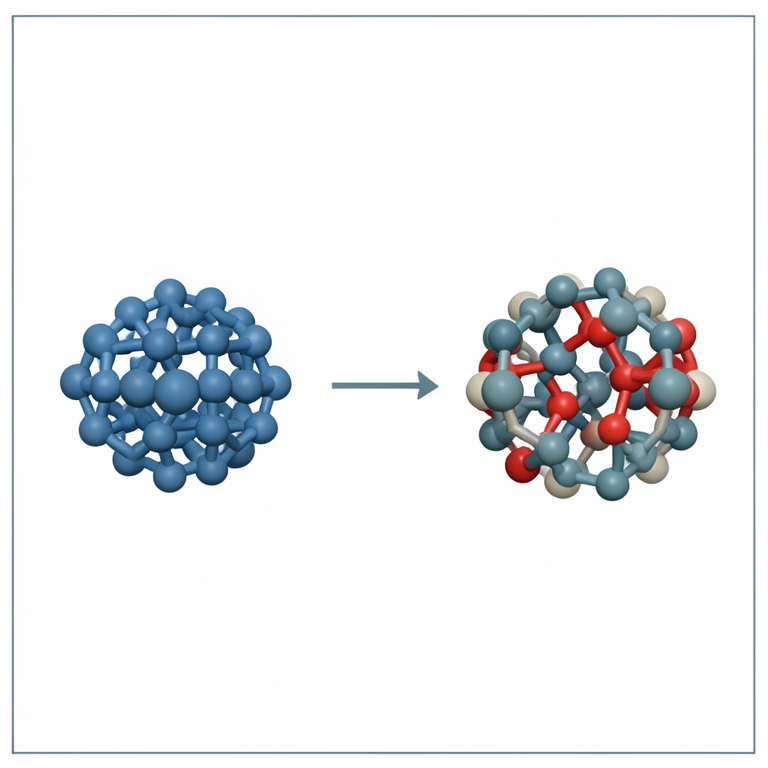
Simple vs Complex Coacervation
AI-generated conceptual illustration (protein and polysaccharide macromolecules in an aqueous solution). It explains the idea and does not show study data.
View source evidence ↗Introduction
The growing demand for functional, clean-label, and nutritionally fortified foods has intensified the need for advanced delivery systems capable of preserving the stability and bioavailability of sensitive bioactive compounds such as natural pigments, vitamins, flavors, and polyunsaturated fatty acids. These compounds are often vulnerable to degradation caused by oxygen exposure, light, thermal processing, and pH fluctuations during food manufacturing and storage, resulting in reduced efficacy and compromised sensory quality (Nezamdoost-Sani et al., 2024) [12] . Microencapsulation technologies have emerged as a strategic solution to these challenges, with coacervation gaining particular attention due to its ability to operate under mild, aqueous conditions while achieving high encapsulation efficiency. (Alrosan et al., 2025; Fu et al., 2025; Nezamdoost-Sani et al., 2024) [1,5,12] . Coacervation is a liquid-liquid phase separation process in which macromolecular interactions lead to the formation of a dense, polymer-rich phase that can effectively coat and entrap core materials. The mechanism is primarily governed by thermodynamic principles, including the reduction of Gibbs free energy and strong electrostatic attraction between oppositely charged polymers, particularly in complex coacervation systems (Fu et al., 2025) [5] . Recent research highlights the increasing relevance of protein-polysaccharide coacervates for food applications due to their tunable structural properties, enhanced stability in diverse food matrices, and compatibility with biodegradable and generally recognized as safe (GRAS) materials (Alrosan et al., 2025) [1] . Furthermore, the transition toward plant-based and allergen-free formulations has driven innovation in alternative biopolymer combinations, expanding the functional potential of coacervation in sustainable food system development (Muñoz-Coyotecatl et al., 2025) [10] .
Coacervation
Coacervation is a liquid-liquid phase separation (LLPS) phenomenon where a homogeneous macromolecular solution transitions into two distinct immiscible liquid layers (Moulik et al., 2022) [9] . The process is characterized by the formation of a dense, polymer rich phase known as the "coacervate" and a dilute supernatant phase, referred to as the "equilibrium liquid" (Napiórkowska & Kurek, 2022) [11] . First described by Bungenberg de Jong and Kruyt in 1929, the term originates from the Latin acervus, meaning "to heap," reflecting the way molecules aggregate together without forming a solid precipitate (Higashi & Ikeda, 2025) [6] . This unique state is widely utilized in the food, pharmaceutical, and cosmetic industries, particularly as a wall-forming technique for microencapsulation.
Principle
The fundamental mechanism of coacervation involves the strategic lowering of a polymer's solubility, a process governed by precise thermodynamic equilibrium (Doshi et al., 2024) [3] . A key distinction of this process is that it preserves the liquid state of the droplets unlike precipitation which enables the effective coating of core substances. This phase separation is generally propelled by a decrease in the system's total Gibbs free energy, often triggered by electrostatic attraction between molecules with opposite charges (Napiórkowska & Kurek, 2022) [11] . Furthermore, the increase in entropy driven by the liberation of counterions and the restructuring of solvent molecules acts as a vital catalyst for the process (Moulik et al., 2022) [9] . The efficiency and stability of the coacervate are ultimately sensitive to variables like pH, temperature, ionic strength, and polymer chain length.
Classification: Simple vs. Complex Coacervation
Coacervation is fundamentally bifurcated into two categories, distinguished by the complexity of the macromolecular system and the specific stimuli that initiate phase separation.
Simple Coacervation
Simple coacervation involves a singular macromolecular species in solution (Moulik et al., 2022) [9] . This process is generally induced by the introduction of a "coacervating agent" typically a salt or a miscible non-solvent like ethanol which effectively competes for the hydration shell surrounding the polymer. This dehydration promotes intermolecular polymer-polymer associations over polymersolvent interactions (Napiórkowska & Kurek, 2022) [11] . A prototypical illustration of this mechanism is the addition of sodium sulfate to an aqueous gelatin solution, which reduces the polymer's solubility and results in the formation of a concentrated liquid phase.
Complex Coacervation
Conversely, complex coacervation arises from the interaction of two or more oppositely charged macromolecules frequently a protein and a polysaccharide-within an aqueous environment (Doshi et al., 2024) [3] . By modulating the pH to a range where the polymers carry opposing net charges, spontaneous association occurs, driven primarily by intense electrostatic attraction (Napiórkowska & Kurek, 2022) [11] . This variant is particularly prevalent in industrial microencapsulation; it typically facilitates more robust capsule stability while operating under milder processing conditions (Moulik et al., 2022) [9] . The electrostatic coupling between positively charged gelatin and negatively charged gum Arabic at a precise pH remains the quintessential model for this phenomenon.
Food-Grade Wall Materials
The selection of appropriate wall materials is critical for the success of coacervation in food systems. These biopolymers must be generally recognized as safe (GRAS), biodegradable, and compatible with "clean-label" trends (Napiórkowska & Kurek, 2022) [11] . Proteins: Animal-derived proteins like gelatin, whey protein, and casein are prized for their amphiphilic nature and excellent film-forming properties (Doshi et al., 2024) [3] . Gelatin remains the industry standard due to its versatile pH-dependent charge (Moulik et al., 2022) [9] . Polysaccharides: These serve as the anionic component in most complex systems. Gum Arabic is the most widely used due to its low viscosity, while alginate, chitosan, and pectin are used to tailor the release properties of the capsules (Napiórkowska & Kurek, 2022; Timilsena et al., 2020) [11,15] . Plant-Based Alternatives: Recent advancements focus on pea protein, soy protein, and starch derivatives to cater to the growing demand for vegan and allergenfree products (Doshi et al., 2024; Souza et al., 2020) [3,13] .
In the development of microencapsulation systems, the choice of wall material dictates the stability, release profile, and consumer acceptance of the final product. Below is a detailed comparison of common food-grade wall materials used in coacervation, highlighting their specific performance characteristics. [15] Plant Proteins Pea, Soy Protein Sustainable; hypoallergenic; vegan Bitter off-flavors; pH-sensitive solubility Doshi et al. (2024) [3] ; Souza et al.
(2020) [13] Anionic Polysaccharides Gum Arabic, Alginate, Pectin Acid-stable; low viscosity; mucoadhesive Supply volatility; unintended cation gelation Napiórkowska & Kurek (2022) [11] Cationic Polysaccharides Chitosan Antimicrobial; unique natural polycation Acid-only solubility; shellfish allergen Jyothi et al. (2010) [8] ; Espinosa-Andrews (2013) [4] [15]
Technical Insights into Selection
The synergy between these materials is often more important than their individual properties. For instance: The "Standard" Pair: Gelatin and Gum Arabic remain the most studied pair because they achieve high encapsulation efficiency (> 90%) under mild acidic conditions (pH 3.5-4.5) (Napiórkowska & Kurek, 2022) [11] . Controlled Release: If a product requires gastric bypass (intestinal release), Alginate is preferred because it remains stable in the acidic stomach but dissolves in the alkaline environment of the small intestine (Souza et al., 2020) [13] . Clean Label Trends: Manufacturers are increasingly replacing Gelatin with Whey Protein Isolate (WPI) or Pea Protein to meet "natural" and "vegetarian" labeling requirements, though this often requires more precise pH control to manage the protein's isoelectric point (Doshi et al., 2024) [3] .
Encapsulation of Food Pigments by Coacervation
Natural pigments are increasingly sought after to replace synthetic dyes, yet their application in the food industry is hindered by extreme sensitivity to processing conditions. Coacervation-based encapsulation offers a robust solution by enveloping these bioactive compounds within a protective biopolymer shell (Napiórkowska & Kurek, 2022) [11] . This technique is specifically applied to diverse pigment classes, including anthocyanins (red/purple), carotenoids (orange/yellow), curcumin (yellow), chlorophylls (green), and betalains (magenta). The primary benefits of utilizing coacervation for pigment stabilization include: Protection from Environmental Stress: The dense wall of the coacervate acts as a physical barrier against oxygen and light, significantly reducing oxidation and photodegradation (Souza et al., 2020) [13] . For instance, encapsulating carotenoids in a gelatin-gum Arabic complex prevents the loss of their antioxidant properties (Timilsena et al., 2020) [15] . Enhanced Stability: Coacervation shields pigments from rapid degradation during heat treatment and mitigates the "color shift" typically seen with pH fluctuations (Xiao et al., 2022). Anthocyanins, which are normally unstable at neutral pH, maintain better color intensity when encapsulated (Napiórkowska & Kurek, 2022) [11] . Improved Matrix Compatibility: Many natural pigments are lipophilic (fat-soluble) and difficult to incorporate into water-based foods. Coacervation transforms these into water-dispersible microparticles, ensuring uniform color distribution throughout the food matrix (Timilsena et al., 2020) [15] . Controlled Release: The polymer shell can be engineered to release the pigment only under specific conditions, such as mechanical shearing during chewing or specific pH changes in the digestive tract, allowing for controlled color delivery (Souza et al., 2020) [13] .
By addressing these stability and solubility challenges, coacervation is a pivotal technology for manufacturers aiming to transition toward clean-label and natural food coloring solutions (Doshi et al., 2024) [3] .
Applications in the Food Industry
Coacervation is a versatile technology used to incorporate sensitive ingredients into diverse food systems without compromising their sensory or nutritional quality. By transforming liquids into stable microparticles, it allows for the fortification of products that would otherwise be difficult to process (Napiórkowska & Kurek, 2022) [11] .
Beverages: It is used to encapsulate lipophilic vitamins (A, D, E, K) and omega-3 fatty acids, ensuring they remain dispersed in water-based drinks without creating an "oily" mouthfeel or unappealing sediment (Timilsena et al., 2020) [15] . Dairy Products: In products like yogurt, ice cream, and flavored milk, coacervation protects delicate flavors and probiotics from the acidic environment and shear forces during homogenization (Souza et al., 2020) [13] . Bakery and Confectionery: The process creates heatstable pigments and flavors that can withstand high baking temperatures. In confectionery, it allows for the "timed release" of flavors in chewing gum, extending the sensory experience. Functional Foods and Dietary Supplements:
Coacervation is highly effective at masking undesirable tastes and odors, such as the metallic taste of minerals or the fishy smell of marine oils. This makes nutritional supplements more palatable for consumers (Napiórkowska & Kurek, 2022) [11] .
Advantages of Coacervation
The widespread adoption of coacervation in the food industry is due to several unique technical and commercial benefits: High Payload Capacity: Coacervation can achieve exceptionally high core loading (up to 90%), meaning a small amount of wall material can protect a large amount of active ingredient (Moulik et al., 2022) [9] . Mild Processing Conditions: Unlike spray drying, which uses high heat, coacervation typically occurs at ambient or low temperatures, preserving the integrity of thermolabile (heat-sensitive) compounds (Timilsena et al., 2020) [15] . Superior Controlled Release: The permeability and thickness of the coacervate shell can be precisely tuned to release the core based on specific triggers like pH changes, temperature shifts, or mechanical pressure. Sustainability: Because it utilizes natural biopolymers like proteins and polysaccharides, the process is environmentally friendly and supports biodegradability and "green" manufacturing (Doshi et al., 2024) [3] .
Limitations and Challenges
Despite its advantages, coacervation presents certain hurdles that can complicate large-scale industrial implementation: Complexity of Process Control: The success of the "complex" variant depends on a rigorous balance of pH, ionic strength, and polymer ratios. Even slight deviations can prevent phase separation or lead to total precipitation (Napiórkowska & Kurek, 2022) [11] . Stability and Shelf Life: Coacervates are essentially "liquid-in-liquid" dispersions. Without a secondary hardening or cross-linking step (e.g., using enzymes like transglutaminase), the capsules may be fragile and prone to leaking over time (Timilsena et al., 2020) [15] . High Cost: The raw materials (such as high-quality gelatin or gum Arabic) and the multi-step batch processing involved can make coacervation more expensive than simpler methods like spray drying or extrusion (Souza et al., 2020) [13] . Regulatory & Allergen Constraints: While GRAScertified, the use of animal-derived proteins (gelatin, whey) poses challenges for vegan or allergen-sensitive markets, necessitating the shift toward more complex plant-protein systems (Doshi et al., 2024) [3] .
Future perspective
Future developments in coacervation-based encapsulation are expected to focus strongly on sustainability, functionality, and industrial scalability. The replacement of conventional animal-derived polymers, such as gelatin, with plant-based proteins and polysaccharides represents a major research frontier aimed at improving environmental performance and meeting consumer expectations for vegan and clean-label products (Alrosan et al., 2025) [1] . The emergence of stimuli-responsive coacervate systems offers promising opportunities for targeted nutrient and bioactive delivery. These systems can be engineered to release encapsulated compounds in response to specific triggers such as pH changes, enzymatic activity, or mechanical forces in the gastrointestinal tract, enhancing bioavailability and enabling personalized nutrition strategies (Fu et al., 2025) [5] .
From an engineering standpoint, improving the scalability and reproducibility of coacervation processes remains a critical challenge. The integration of real-time monitoring tools, predictive modeling, and artificial intelligence-based process optimization is expected to enhance control over phase separation dynamics and capsule formation, thereby reducing production variability and cost (Nezamdoost-Sani et al., 2024) [12] . Additionally, the development of hybrid encapsulation platforms, combining coacervation with spray drying, microfluidics, or extrusion technologies, is anticipated to expand the structural complexity and functional performance of encapsulated food systems. Such approaches may facilitate the design of multi-layered delivery vehicles and novel food textures with improved stability and controlled release characteristics (Szpicer, 2025) [14] .
Conclusion
Coacervation is a highly versatile and efficient microencapsulation strategy that addresses critical challenges associated with the stabilization and delivery of sensitive food ingredients. Its ability to form protective polymeric shells under mild, aqueous conditions makes it particularly suitable for functional, clean-label, and bioactive-enriched food applications. The synergistic selection of proteins and polysaccharides plays a pivotal role in determining encapsulation efficiency, release behavior, and product compatibility across diverse food matrices (Fu et al., 2025) [5] . Despite its advantages, widespread industrial adoption is constrained by challenges related to process complexity, material costs, capsule stability, and regulatory and allergen considerations. However, recent advancements in [1,12] .
References
16 in the original paper- Alrosan M, Al-Ghazzawi A, Al-Holy M. Complex coacervation of plant-based proteins and polysaccharides: sustainable encapsulation techniques for bioactive compounds. Food Engineering Reviews. 2025. doi:10.1007/s12393-025-09408-7.
- Carvalho GR, Fernandes RVB, de Castro e Silva P, Dessimoni ALDA, Oliveira CR, Borges SV, et al. Influence of modified starches as wall materials on the properties of spray-dried lemongrass oil. Journal of Food Science and Technology. 2019;56(11):4972-4981.
- Doshi N, Guo W, Chen F, Venema P, Shum HC, de Vries R, et al. Simple and complex coacervation in systems involving plant proteins. Soft Matter. 2024;20(9):1966-1977.
- Espinosa-Andrews H, Báez-González JG, Cruz-Sosa F, Vernon-Carter EJ. Gum Arabic-chitosan complex coacervation. Biomacromolecules. 2007;8(4):13131318. doi:10.1021/bm0611634.
- Fu L, Zhang Y, Wang X, Liu J. Recent advances in polysaccharide-protein complex coacervates and their food-related applications. Carbohydrate Polymers. 2025;332:121985. doi:10.1016/j.carbpol.2025.121985.
- Higashi SL, Ikeda M. Coacervates composed of lowmolecular-weight compounds: molecular design, stimuli responsiveness, confined reaction. Advanced Biology. 2025;9(5):2400572.
- Huang GQ, Sun YT, Xiao JX, Yang J. Complex coacervation of soybean protein isolate and chitosan. Food Chemistry. 2012;135(2):534-539.
- Jyothi NVN, Prasanna PM, Sakarkar SN, Prabha KS, Ramaiah PS, Srawan GY. Microencapsulation techniques: factors influencing encapsulation efficiency. Journal of Microencapsulation. 2010;27(3):187-197.
- Moulik SP, Rakshit AK, Pan A, Naskar B. An overview of coacervates: the special disperse state of amphiphilic and polymeric materials in solution. Colloids and Interfaces. 2022;6(3):45.
- Muñoz-Coyotecatl S, Hernández-Carranza P, GallegosInfante JA. Complex coacervation of anthocyanin-rich pigments with gum arabic, inulin and pea protein: stability and functional performance. Frontiers in Nutrition. 2025;12:1523365. doi:10.3389/fnut.2025.1523365.
- Napiórkowska A, Kurek M. Coacervation as a novel method of microencapsulation of essential oils: a review. Molecules. 2022;27(16):5142.
- Nezamdoost-Sani N, Amiri S, Khaneghah AM. Application of the coacervation technique for microencapsulation of bioactive ingredients: a critical review. Journal of Agriculture and Food Research. 2024;15:100760. doi:10.1016/j.jafr.2024.100760.
- Souza V, Thomazini M, Chaves I, Furtado R, FavaroTrindade CS. Microencapsulation by complex coacervation as a tool to protect bioactive compounds and to reduce astringency and strong flavor of vegetable extracts. Food Hydrocolloids. 2019;98:105244. doi:10.1016/j.foodhyd.2019.105244.
- Szpicer A. Innovative microencapsulation techniques of bioactive compounds in food systems. Applied Sciences. 2025;15(22):11908. doi:10.3390/app152211908.
- Timilsena YP, Akanbi TO, Khalid N, Adhikari B, Barrow CJ. Complex coacervation: principles, mechanisms and applications in microencapsulation. International Journal of Biological Macromolecules. 2019;121:1276-1286.
- Zhao Y, Khalid N, Shu G, Neves MA, Kobayashi I, Nakajima M. Complex coacervates from gelatin and octenyl succinic anhydride modified kudzu starch: formulation and characterization. Food Hydrocolloids. 2019;86:70-77.