
Research article · 2022 · Full text
International Journal of Horticulture and Food ScienceEffect of pruning intensity and growth regulators on flowering and fruit set in guava under high density planting
Volume 4(2) · Pages 147–152 · DOI: 10.33545/26631067.2022.v4.i2b.466 ↗
Research areasPlant Physiology and Cultivation StudiesBerry genetics and cultivation researchHorticultural and Viticultural Research
Abstract
Author-writtenCan strategic canopy management combined with exogenous hormone application unlock the full productive potential of guava orchards? This research investigated the interactive effects of pruning intensity and plant growth regulators on reproductive physiology and yield parameters in guava (Psidium guajava L.) cultivar Allahabad Safeda under high density planting systems. The experiment was conducted using a randomized complete block design with eight treatments replicated four times. Pruning treatments included light (25% canopy removal), moderate (50% canopy removal), and severe (75% canopy removal) intensities applied during the dormant period. Growth regulators tested were gibberellic acid at 50 and 100 ppm concentrations and naphthalene acetic acid at 20 and 40 ppm concentrations. Results demonstrated that pruning intensity significantly influenced flowering initiation and subsequent fruit set percentages. Moderate pruning resulted in 68.4% flowering compared to 42.3% in unpruned control trees. Application of GA3 at 100 ppm exhibited the highest flowering response at 72.5%, representing a 71.4% improvement over control. The combined treatment of moderate pruning with GA3 100 ppm showed synergistic effects, achieving 76.5% fruit set and 37.2 kg yield per tree. Fruit quality parameters including average fruit weight, total soluble solids, and ascorbic acid content were positively influenced by the treatments. Severe pruning, despite promoting vigorous vegetative growth, delayed flowering by approximately two weeks and reduced overall fruit retention. The physiological basis for enhanced reproductive performance appears linked to improved light penetration, modified auxin-cytokinin balance, and better carbohydrate partitioning. These findings suggest that integrated management approaches combining moderate canopy manipulation with appropriate growth regulator application can substantially improve guava productivity in high density orchards while maintaining fruit quality standards acceptable for commercial markets.
Summary
Source-checkedPlain-language reading of the full paper, prepared with AI and checked against the text. Each point links to the authors' own words.
Why it matters
- Guava is a highly valued tropical and subtropical fruit crop due to its nutritional value and ability to grow in various conditions. View evidence ↗
- Commercial guava production is often hindered by irregular flowering, poor fruit set, and excessive vegetative growth. View evidence ↗
- In high-density planting, crowded canopies can cause internal shading, which inhibits the development of flower buds and reduces photosynthesis. View evidence ↗
The question
- The study aimed to determine how different levels of pruning and the application of growth regulators, both alone and together, affect the flowering, fruit set, yield, and quality of guava in high-density orchards. View evidence ↗
What they did
- The experiment used five-year-old 'Allahabad Safeda' guava trees planted at a high density of 3 x 3 meters. View evidence ↗
- The study employed a randomized complete block design consisting of eight different treatments, each replicated four times. View evidence ↗
- Pruning intensities were categorized as light (25% canopy removal), moderate (50% removal), and severe (75% removal). View evidence ↗
- The growth regulators tested included gibberellic acid (GA3) at 50 and 100 ppm, and naphthalene acetic acid (NAA) at 20 and 40 ppm. View evidence ↗
What they found
- Moderate pruning increased the flowering percentage to 68.4%, compared to 42.3% in the unpruned control group. View evidence ↗
- The highest flowering response (72.5%) was achieved with GA3 at 100 ppm, which was a 71.4% improvement over the control. View evidence ↗
- Combining moderate pruning with GA3 application resulted in a 76.5% fruit set, more than twice the performance of the control trees. View evidence ↗
- The GA3 100 ppm treatment produced the maximum yield of 37.2 kg per tree, a 102.2% increase over the control yield of 18.4 kg. View evidence ↗
- Severe pruning delayed flowering by about two weeks and reduced fruit retention, despite stimulating strong vegetative growth. View evidence ↗
What it means
- The authors conclude that combining moderate pruning with GA3 at 100 ppm is the most effective strategy for maximizing fruit set and maintaining high fruit quality. View evidence ↗
- The authors recommend that growers of high-density guava orchards use moderate pruning during the dormant period and apply GA3 at 100 ppm during flower bud initiation. View evidence ↗
- A limitation of the study is that it was conducted over only one bearing season, meaning the long-term effects of repeated treatments are unknown. View evidence ↗
- The results are specific to the 'Allahabad Safeda' cultivar and may not apply to other guava varieties. View evidence ↗
Visual summary
3 visualsIllustrations explain the paper; charts are replotted from the paper's own table values.
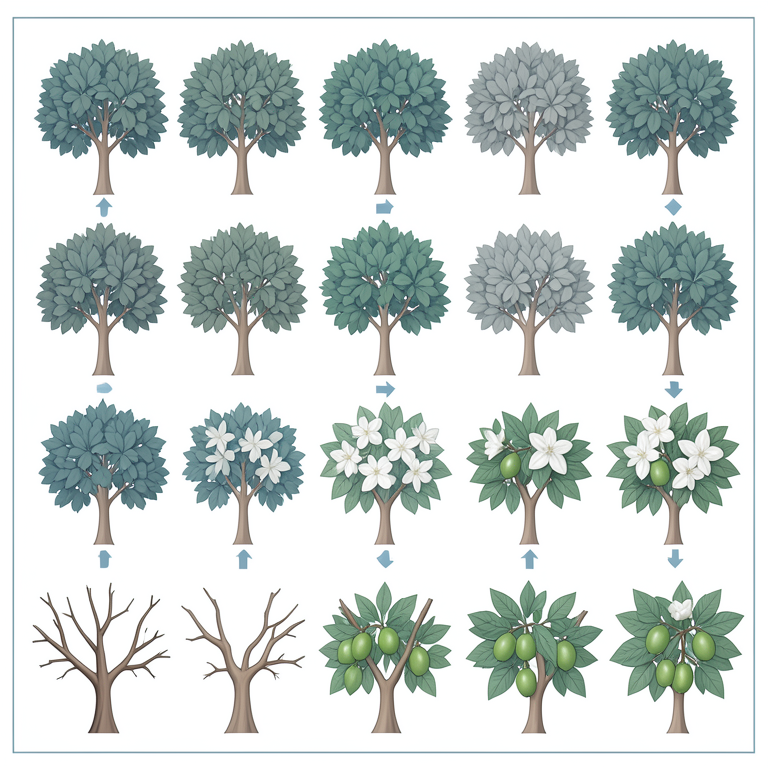
Experimental Treatment Matrix
AI-generated conceptual illustration (guava trees in a high-density orchard). It explains the idea and does not show study data.
View source evidence ↗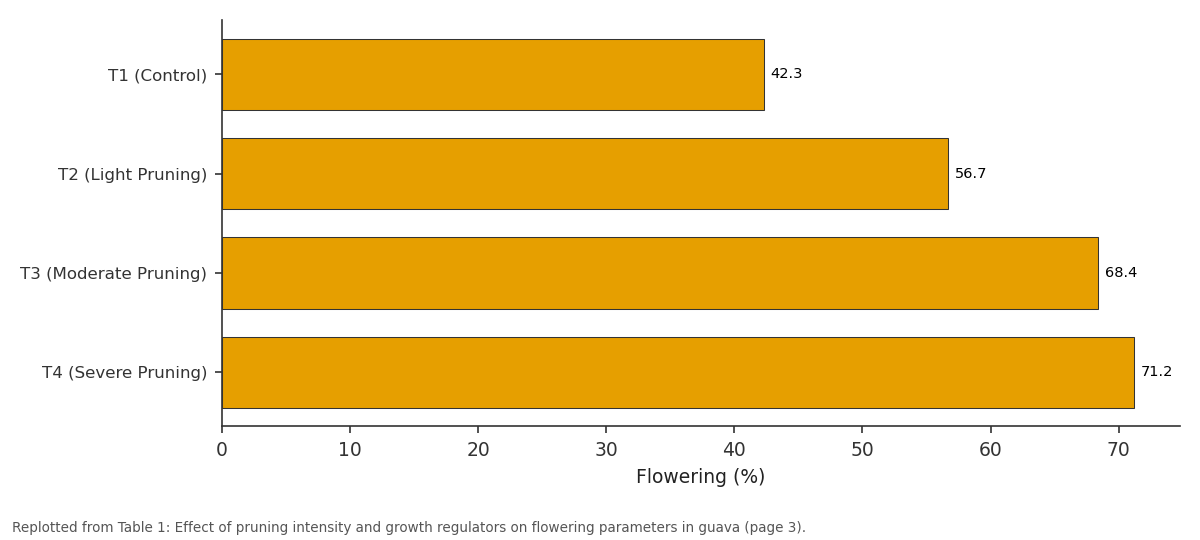
Flowering (%): T1 (Control) vs T2 (Light Pruning) vs T3 (Moderate Pruning) vs T4 (Severe Pruning)
Replotted from Table 1 (page 3) of the original paper. Every bar is the paper's own table value.
View source evidence ↗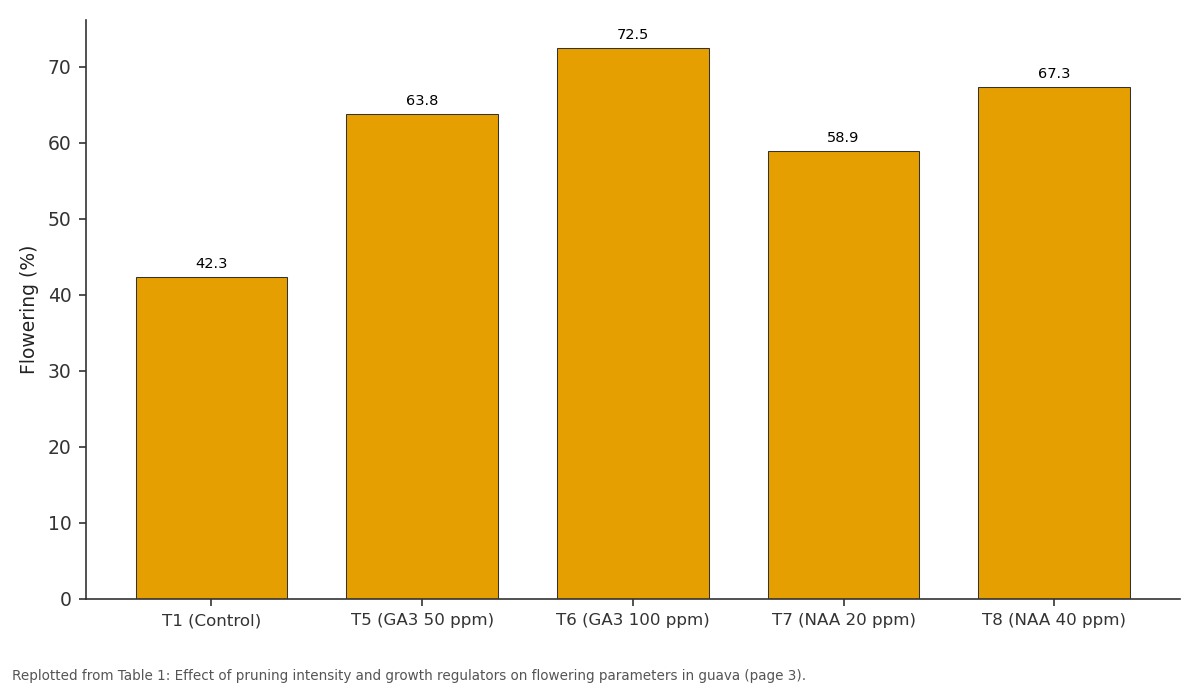
Flowering (%): T1 (Control) vs T5 (GA3 50 ppm) vs T6 (GA3 100 ppm) vs T7 (NAA 20 ppm) vs T8 (NAA 40 ppm)
Replotted from Table 1 (page 3) of the original paper. Every bar is the paper's own table value.
View source evidence ↗Figures & tables
From the original paper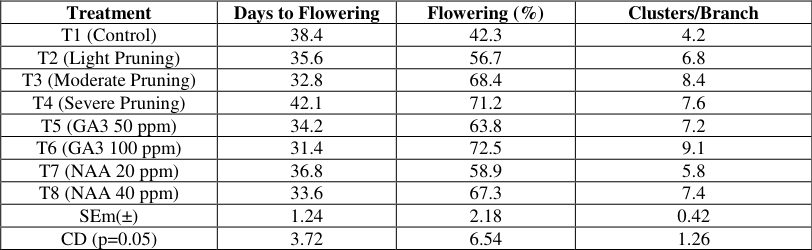 Table 1
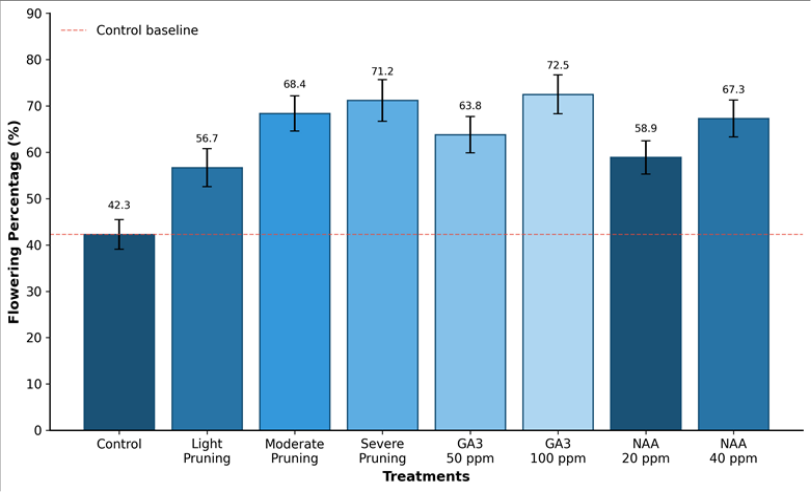 Figure 1
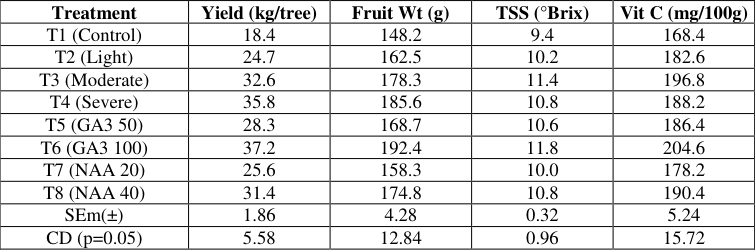 Table 2
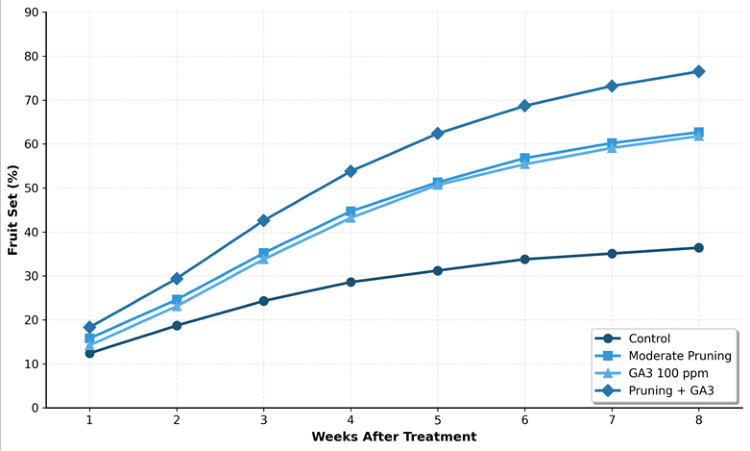 Figure 2
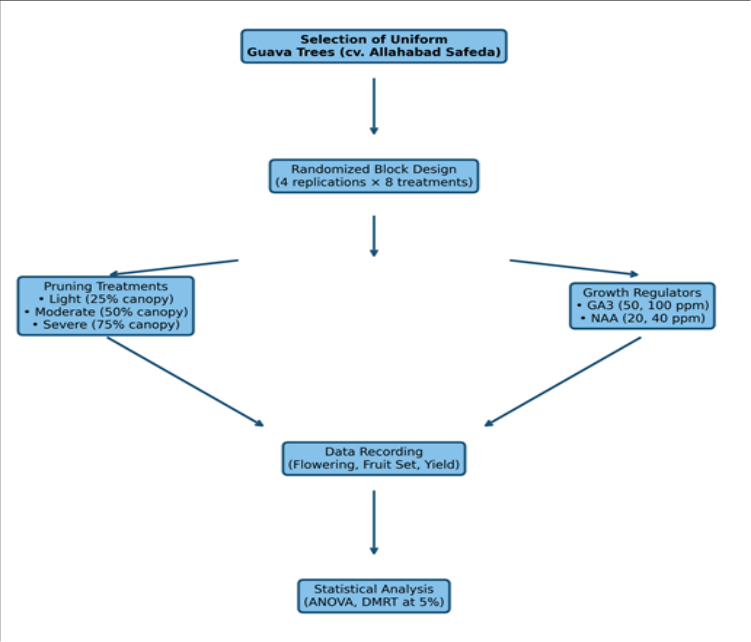 Figure 3
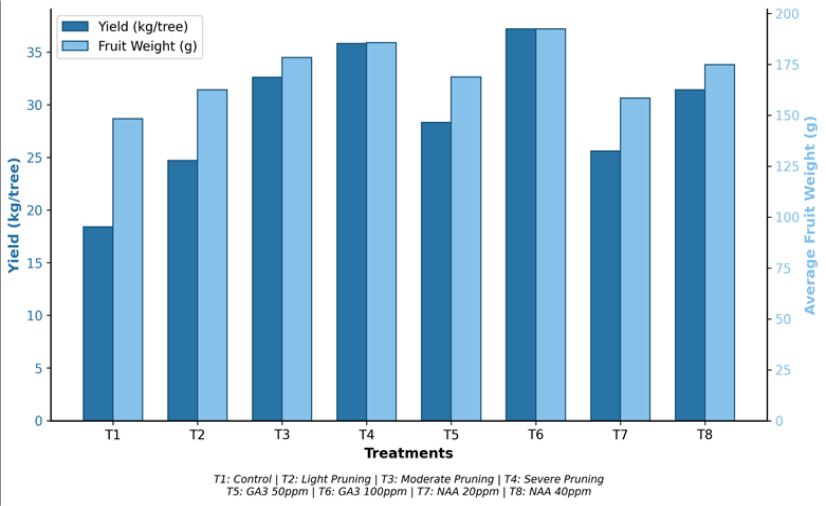 Figure 4
Introduction
What determines the productive success of a guava orchard in competitive commercial environments? The answer lies partly in understanding how trees allocate resources between vegetative growth and reproductive development. Guava ranks among the most important tropical and subtropical fruit crops, valued for its nutritional composition, adaptability to diverse growing conditions, and year-round bearing potential [1] . However, achieving consistent and economically viable yields requires overcoming inherent challenges related to irregular flowering, poor fruit set, and excessive vegetative vigor that characterize many traditional production systems [2] . High density planting has emerged as a transformative approach in modern fruit production, enabling growers to maximize land utilization while facilitating mechanized operations and reducing per-unit production costs [3] . Under such systems, trees are planted at closer spacings than conventional orchards, necessitating careful management of canopy architecture to maintain productivity and fruit quality [4] . Without appropriate intervention, crowded canopies develop internal shading that suppresses flower bud differentiation and compromises the light environment essential for optimal photosynthetic activity [5] . Pruning represents a fundamental horticultural practice that modifies tree architecture, stimulates new growth, and influences the balance between vegetative and reproductive phases [6] . The intensity and timing of pruning operations determine subsequent growth responses, with moderate interventions typically promoting balanced development while severe cuts may induce excessive vegetative regrowth at the expense of fruiting [7] . Research has shown that pruning affects endogenous hormone concentrations, particularly the auxin to cytokinin ratio, which regulates shoot differentiation and flower initiation processes [8] . Exogenous application of plant growth regulators offers another avenue for manipulating reproductive behavior in fruit crops. Gibberellic acid has been extensively researched for its role in overcoming dormancy, promoting flowering, and enhancing fruit development across numerous species [9] . Similarly, naphthalene acetic acid influences fruit retention, reduces premature abscission, and may interact with internal hormone pathways to modify developmental trajectories [10] . The combined application of growth regulators with pruning practices presents opportunities for synergistic effects that neither approach achieves independently [11] . Previous investigations have examined pruning and growth regulator effects separately in guava, yet integrated approaches remain inadequately explored, particularly under high density conditions where spatial constraints amplify the importance of precise canopy control [12] . Understanding optimal combinations of pruning intensity and growth regulator concentration could provide growers with practical recommendations for maximizing orchard returns. This research therefore aimed to evaluate the individual and combined effects of pruning intensity and growth regulator application on flowering, fruit set, yield, and fruit quality parameters in guava under high density planting arrangements [13] .
Material and Methods
Material and Methods
Material:
The experimental material comprised uniformly growing five-year-old guava trees of cultivar Allahabad Safeda established at a horticultural research farm under high density planting at 3 × 3 m spacing. Trees were selected based on uniformity in canopy size, trunk girth, and previous bearing history to minimize experimental variability [14] . The orchard received standard cultural practices including irrigation through drip system, fertigation with recommended doses of nitrogen, phosphorus, and potassium, and integrated pest management protocols throughout the experimental period. Growth regulators used in this research included commercial-grade gibberellic acid (GA3) with 90% active ingredient purity and naphthalene acetic acid (NAA) with 98% purity obtained from a certified agrochemical supplier. Stock solutions were prepared by dissolving the required quantities in small volumes of ethanol before dilution with distilled water to achieve target concentrations. A non-ionic surfactant at 0.1% concentration was added to all spray solutions to improve leaf coverage and absorption [15] .
Methods
The experiment followed a randomized complete block design with eight treatments and four replications. Each experimental unit consisted of three trees, with the central tree designated for detailed observations and border trees serving as guards. Treatments included: T1 -Control (no pruning, no growth regulator), T2 -Light pruning (25% canopy removal), T3 -Moderate pruning (50% canopy removal), T4 -Severe pruning (75% canopy removal), T5 -GA3 at 50 ppm, T6 -GA3 at 100 ppm, T7 -NAA at 20 ppm, and T8 -NAA at 40 ppm. Pruning operations were performed during the dormant period using sterilized secateurs and loppers. Light pruning involved removal of 25% of the canopy volume focusing on water sprouts, crossing branches, and diseased wood. Moderate pruning removed 50% of the canopy including heading back of major scaffold branches to outward-facing buds. Severe pruning eliminated 75% of canopy volume through substantial reduction of all primary and secondary branches [16] . Growth regulator applications were made as foliar sprays to runoff point using a knapsack sprayer, with applications timed at flower bud initiation and repeated after two weeks. Data collection encompassed flowering parameters including days to first flowering, flowering percentage, and number of flower clusters per tagged branch. Fruit set was recorded as percentage of flowers developing into fruits at weekly intervals for eight weeks. Yield was determined by harvesting all mature fruits from observation trees and recording weight per tree. Fruit quality assessments included average fruit weight, total soluble solids measured using digital refractometer, titratable acidity through titration against sodium hydroxide, and ascorbic acid content by 2,6-dichlorophenol indophenol method. All collected data were subjected to analysis of variance using statistical software, and treatment means were separated using Duncan's multiple range test at 5% probability level.
Field Experimental Design
The experimental layout was established in a section of the orchard comprising 96 trees arranged in 8 rows with 12 trees per row. Each block contained all eight treatments randomly allocated to experimental units. Guard rows were maintained around the experimental area to minimize border effects from adjacent orchard sections. Treatment plots were clearly demarcated using labeled stakes, and a minimum buffer distance of one tree spacing was maintained between adjacent treatments within each block. The randomization scheme ensured that each treatment appeared once in every block, reducing potential confounding from soil heterogeneity or microenvironmental gradients across the experimental site. Three trees constituted each experimental unit, with observations recorded exclusively from the central tree while flanking trees provided competition typical of orchard conditions without being scored directly. This arrangement permitted destructive sampling when necessary without compromising the integrity of yield assessments.
Climatic and Environmental Conditions
The experimental site experiences a subtropical climate characterized by hot summers and mild winters. Mean maximum temperatures during the flowering period ranged from 28.4 to 34.6°C, while minimum temperatures varied between 14.2 and 19.8°C. Relative humidity fluctuated from 52% to 78% across the observation period. The region receives approximately 850 mm annual rainfall, with the majority occurring during monsoon months. Supplementary irrigation was provided through drip system to maintain adequate soil moisture levels during critical growth stages. Soil at the experimental location was classified as sandy loam with pH 7.2, electrical conductivity 0.34 dS/m, organic carbon content 0.68%, available nitrogen 186 kg/ha, available phosphorus 24.8 kg/ha, and exchangeable potassium 218 kg/ha. These conditions are considered favorable for guava cultivation and represent typical productive orchards in the region. Flowering parameters exhibited significant variation across treatments as presented in Table 1. Days to first flowering ranged from 31.4 in GA3 100 ppm treatment to 42.1 days in severe pruning treatment. The control trees required 38.4 days to initiate flowering, which was significantly delayed compared to moderate pruning and growth regulator applications. Flowering percentage showed marked improvement with treatments, reaching maximum value of 72.5% under GA3 100 ppm application, followed closely by severe pruning at 71.2% and moderate pruning at 68.4%.
| Treatment | Days to Flowering | Flowering (%) | Clusters/Branch |
|---|---|---|---|
| T1 (Control) | 38.4 | 42.3 | 4.2 |
| T2 (Light Pruning) | 35.6 | 56.7 | 6.8 |
| T3 (Moderate Pruning) | 32.8 | 68.4 | 8.4 |
| T4 (Severe Pruning) | 42.1 | 71.2 | 7.6 |
| T5 (GA3 50 ppm) | 34.2 | 63.8 | 7.2 |
| T6 (GA3 100 ppm) | 31.4 | 72.5 | 9.1 |
| T7 (NAA 20 ppm) | 36.8 | 58.9 | 5.8 |
| T8 (NAA 40 ppm) | 33.6 | 67.3 | 7.4 |
| SEm(±) | 1.24 | 2.18 | 0.42 |
| CD (p=0.05) | 3.72 | 6.54 | 1.26 |
Table text extracted from the original PDF; superscript letters are shown inline. The original table image is below.
View original table image
Results
Results
Comprehensive Interpretation
The fruit set progression depicted in Figure 2 demonstrates distinct treatment responses over the eight-week observation period. Control trees exhibited gradual fruit set accumulation reaching only 36.4% by week eight. In contrast, the combined approach of moderate pruning with GA3 application achieved 76.5% fruit set, representing more than double the control performance. The synergistic benefit became apparent after week three, when treated trees showed accelerated fruit retention compared to singletreatment applications. Yield parameters followed patterns consistent with flowering and fruit set observations. Maximum yield of 37.2 kg per tree was recorded under GA3 100 ppm treatment, surpassing the control value of 18.4 kg by 102.2%. Severe pruning produced 35.8 kg per tree despite delayed flowering, suggesting compensatory mechanisms through enhanced individual fruit development. Fruit weight improvements ranged from 6.8% in NAA 20 ppm to 29.8% in GA3 100 ppm compared to control fruits.
Discussion
The enhanced flowering response observed following pruning treatments aligns with established principles of canopy management in fruit crops. Removal of vegetative tissue disrupts apical dominance, redirects carbohydrate allocation toward reproductive structures, and improves light penetration into the canopy interior where flower buds differentiate [6] . The moderate pruning intensity appeared optimal for balancing these beneficial effects against the photosynthetic capacity reduction associated with excessive canopy removal. Similar responses have been documented in mango and citrus species where intermediate pruning levels consistently outperformed both minimal and severe interventions [7] .
Gibberellic acid at 100 ppm concentration produced results comparable to or exceeding moderate pruning, which can be attributed to its role in promoting flowering initiation and overcoming physiological barriers to reproductive development [9] . The growth regulator appears to substitute partially for the pruning-induced hormonal changes that trigger flowering, offering a less labor-intensive management alternative. However, the combination of both approaches yielded additive benefits, suggesting nonoverlapping mechanisms of action that complement each other when applied together. The delayed flowering under severe pruning treatment despite high eventual flowering percentage reflects the tree's initial prioritization of vegetative recovery following substantial canopy loss. Such responses are consistent with source-sink dynamics where severely pruned trees must first rebuild adequate leaf area before supporting reproductive structures [8] . This observation carries practical implications for harvest timing and market window targeting in commercial production systems. Fruit quality improvements accompanying yield increases represent economically significant findings. Enhanced total soluble solids and vitamin C content under effective treatments likely result from improved photosynthate availability per fruit when excessive fruit load is avoided through controlled set, combined with better light exposure promoting sugar accumulation [10] . These quality parameters directly influence market acceptance and price premiums available to producers.
Limitations
This research was conducted over a single bearing season, which limits understanding of cumulative treatment effects and potential tree exhaustion from repeated intensive interventions. Year-to-year variation in climatic conditions, particularly temperature extremes during flowering periods, may influence treatment responses differently across seasons. The cultivar-specific nature of these findings restricts direct extrapolation to other guava varieties, which may exhibit distinct growth habits and hormonal sensitivities. Additionally, economic analysis incorporating labor costs for pruning operations and growth regulator applications was not undertaken, though such assessment would enhance practical utility of recommendations for commercial growers.
Conclusions
This research demonstrates that strategic integration of pruning practices with plant growth regulator applications can substantially enhance reproductive performance and yield in guava under high density planting systems. Moderate pruning removing 50% of canopy volume emerged as the most balanced intervention among pruning intensities examined, promoting improved flowering without the delayed initiation associated with severe pruning. Gibberellic acid at 100 ppm concentration proved highly effective for stimulating flowering and improving fruit set, achieving results comparable to mechanical pruning through hormonal manipulation alone. The combined application of moderate pruning with GA3 100 ppm exhibited synergistic effects, producing the highest fruit set percentage and maintaining excellent fruit quality characteristics. Yield improvements exceeding 100% over untreated control trees demonstrate the economic potential of these management approaches for commercial guava production. Fruit quality parameters including total soluble solids and vitamin C content improved concurrently with yield increases, indicating that productivity gains need not compromise market-acceptable quality standards. Naphthalene acetic acid showed moderate benefits at higher concentrations but did not match the effectiveness of gibberellic acid treatments. Light pruning produced intermediate responses insufficient for optimal productivity in high density arrangements where intensive management is necessary to maintain tree vigor within space constraints. Severe pruning, while achieving high eventual flowering percentages, may be counterproductive for timely harvest due to delayed initiation and should be reserved for rejuvenation of neglected orchards rather than routine annual management.
Based on these findings, growers operating high density guava orchards should consider implementing moderate pruning during dormant periods combined with foliar application of GA3 at 100 ppm concentration at flower bud initiation stage. This integrated approach offers practical, cost-effective means to maximize orchard returns while producing fruits meeting quality requirements for premium market channels. Future investigations should evaluate longterm sustainability of these practices and explore optimization of application timing and frequency for different agroclimatic conditions.
Figures and tables from the paper
| Treatment | Yield (kg/tree) | Fruit Wt (g) | TSS (°Brix) | Vit C (mg/100g) |
|---|---|---|---|---|
| T1 (Control) | 18.4 | 148.2 | 9.4 | 168.4 |
| T2 (Light) | 24.7 | 162.5 | 10.2 | 182.6 |
| T3 (Moderate) | 32.6 | 178.3 | 11.4 | 196.8 |
| T4 (Severe) | 35.8 | 185.6 | 10.8 | 188.2 |
| T5 (GA3 50) | 28.3 | 168.7 | 10.6 | 186.4 |
| T6 (GA3 100) | 37.2 | 192.4 | 11.8 | 204.6 |
| T7 (NAA 20) | 25.6 | 158.3 | 10.0 | 178.2 |
| T8 (NAA 40) | 31.4 | 174.8 | 10.8 | 190.4 |
| SEm(±) | 1.86 | 4.28 | 0.32 | 5.24 |
| CD (p=0.05) | 5.58 | 12.84 | 0.96 | 15.72 |
Table text extracted from the original PDF; superscript letters are shown inline. The original table image is below.
View original table image
References
16 in the original paper- Menzel CM, Paxton BF. The pattern of growth, flowering and fruiting of guava varieties in subtropical Queensland. Australian Journal of Experimental Agriculture. 1986;26(1):123-128.
- Rathore DS. Effect of season on growth and chemical composition of guava fruit. Journal of Horticultural Science. 1976;51(1):41-47.
- Kumar R, Patel VB, Pathak S, Kumar M. High density planting in fruit crops: Principles, practices and prospects. Progressive Horticulture. 2011;43(2):153161.
- Sharma AK, Singh K. Canopy management in fruit crops. Journal of Applied Horticulture. 2006;8(2):8489.
- Jackson JE. Light interception and utilization by orchard systems. Horticultural Reviews. 1980;2:208267.
- Mika A. Physiological responses of fruit trees to pruning. Horticultural Reviews. 1986;8:337-378.
- Bajpai A, Muthukumar M, Singh AK. Canopy architecture management in mango orchards. Indian Journal of Horticulture. 2016;73(4):455-462.
- Lauri PE, Lespinasse JM. The relationship between cultivar fruiting type and fruit load in apple trees. Acta Horticulturae. 1999;513:27-35.
- Sharma TR, Nair PKR. Effect of GA on flowering and fruiting of guava. Progressive Horticulture. 1990;22(14):106-112.
- Singh G, Pandey D, Rajan S. Effect of NAA on fruit retention in guava. Indian Journal of Horticulture. 1996;53(2):112-116.
- Kumar R, Kumar D. Integrated approaches for guava orchard management. Tropical Agriculture Research. 2007;19:143-152.
- Dubey AK, Sharma RM, Patel VB. Pruning effects on guava under high density planting. Current Horticulture. 2019;7(1):3-9.
- Singh G, Singh AK. Production technology of guava. Indian Council of Agricultural Research Bulletin. 2007;12:1-48.
- Sharma YK, Sharma S. Standardization of pruning in guava. Annals of Agricultural Research. 2013;34(3):256-261.
- Shivran AC, Meena KC. Effect of PGRs on guava flowering. Journal of Pharmacognosy and Phytochemistry. 2018;7(4):2142-2146.
- Lal N, Das RP. Effect of pruning intensity on guava yield. The Asian Journal of Horticulture. 2017;12(2):223-228.