
Research article · 2026 · Full text
International Journal of Horticulture and Food SciencePimenta dioica (Allspice): An integrated review of botanical characteristics, phytochemical diversity, pharmacological activities, and industrial relevance
Volume 8(1) · Pages 44–49 · DOI: 10.33545/26631067.2026.v8.i1a.455 ↗
Research areasEssential Oils and Antimicrobial ActivityPhytochemicals and Antioxidant ActivitiesPiperaceae Chemical and Biological Studies
Abstract
Author-writtenAllspice (Pimenta dioica [L.] Merr.), a dioecious evergreen tree of the family Myrtaceae, represents one of the most economically and pharmacologically significant spice crops native to the Neotropical region. Renowned for its unique aromatic profile that integrates sensory notes reminiscent of clove, cinnamon, and nutmeg, the species has gained increasing global relevance beyond culinary applications. This review synthesizes and critically evaluates contemporary literature on the botany, phytochemistry, pharmacology, cultivation, and industrial applications of P. dioica. Taxonomically, the species displays a complex reproductive system characterized by functional dioecy, posing distinct challenges for commercial propagation and orchard productivity. Phytochemical investigations consistently identify eugenol, methyl eugenol, and β-caryophyllene as dominant constituents of the essential oil, accompanied by diverse polyphenols and flavonoids that collectively underpin its multifunctional bioactivity. Pharmacological evidence highlights strong antibacterial, antifungal, antioxidant, anti-inflammatory, and anticancer properties, mediated through mechanisms including membrane destabilization, quorum-sensing inhibition, mitochondrial depolarization, autophagy induction, and modulation of NF-κB pathways. In parallel, agronomic studies emphasize the importance of optimized propagation techniques, nutrient management, disease surveillance particularly for Austropuccinia psidii (myrtle rust) and post-harvest drying systems to ensure high-quality spice and essential oil yields. Industrially, P. dioica is emerging as a high-value ingredient in food preservation, active packaging, perfumery, cosmetics, and botanical biopesticide formulations. Despite its wide-ranging utility, significant knowledge gaps remain regarding genetic improvement, standardization of chemotypes, resistance breeding, and clinical validation of therapeutic benefits. Addressing these gaps through genomics-assisted breeding, metabolomics, and translational medical research is essential for unlocking the full commercial and biomedical potential of this underutilized yet highly promising tropical species.
Summary
Source-checkedPlain-language reading of the full paper, prepared with AI and checked against the text. Each point links to the authors' own words.
Why it matters
- Allspice (Pimenta dioica) is a significant spice crop from the Neotropical region, valued for both its economic and pharmacological importance. View evidence ↗
- The plant is known for an aroma that blends notes of cinnamon, clove, and nutmeg, leading to its use in more than just cooking. View evidence ↗
- The essential oils in allspice leaves and berries are rich in phenylpropanoids, especially eugenol, which provides various health-promoting properties. View evidence ↗
The question
- The authors aim to synthesize and evaluate current research regarding the botany, chemistry, medical properties, farming, and industrial uses of Pimenta dioica. View evidence ↗
What they did
- The study is an integrated review that analyzes existing scientific literature across multiple disciplines. View evidence ↗
What they found
- Allspice trees typically grow between 6 and 15 meters in orchards, while wild trees can reach 20 meters. View evidence ↗
- The species is functionally dioecious, meaning there are separate male and female trees. View evidence ↗
- Air layering (marcotting) with hormonal treatments in January has achieved success rates of up to 100% in India. View evidence ↗
- Eugenol is the primary component of the essential oil, making up 60-90% of berry oil and often over 90% of leaf oil. View evidence ↗
- Aqueous allspice extracts (AAE) have been found to suppress the growth of breast cancer and androgen-dependent prostate cancer cells. View evidence ↗
- Oral acute toxicity tests in rats and mice showed LD50 values over 5,000 mg/kg, indicating the extract is practically non-toxic. View evidence ↗
- The essential oil can extend the shelf life of meat products by inhibiting Salmonella and Listeria without needing synthetic additives. View evidence ↗
- The essential oil acts as a botanical pesticide that is toxic to stored grain pests such as Sitophilus zeamais and Tribolium castaneum. View evidence ↗
What it means
- The authors conclude that allspice should be viewed as a multifunctional bioresource for biomedical innovation, sustainable farming, and clean-label food preservation. View evidence ↗
- The authors note a lack of hermaphroditic cultivars for better land use and a need for human clinical trials to validate medicinal claims. View evidence ↗
Figures & tables
From the original paper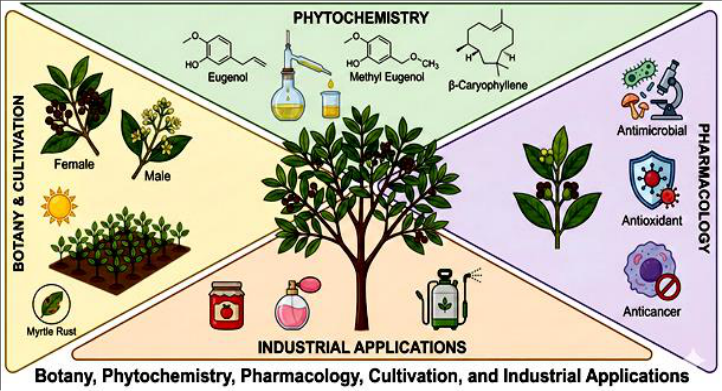 Figure 1
Introduction
The global spice trade has historically been defined by a quest for unique sensory experiences, driving exploration, colonialism, and the reshaping of global economies. Among the pantheon of tropical aromatics, Pimenta dioica (L.) Merr., universally known as allspice, occupies a singular and somewhat paradoxical position (Machuca & Pulido-Salas, 2020) [13] . Belonging to the Myrtaceae family, this evergreen tree produces a berry that, when dried, exhibits a complex organoleptic profile reminiscent of a blend of cinnamon (Cinnamomum verum), clove (Syzygium aromaticum), and nutmeg (Myristica fragrans), Ashokkumar et al., 2022) [4] ; Premachandran & Murthy, 2022 [19] . It was this multifarious aroma that led 17th-century English explorers to coin the term "allspice," a name that has persisted in the English-speaking world, despite the plant's distinct botanical identity as a singular species rather than a mixture, Zhang & Lokeshwar, 2012 [31] ; Rojas-Sandoval, 2001 [22] . Indigenous to the Neotropics specifically the Greater Antilles, southern Mexico, and Central America P. dioica has been an integral component of Mesoamerican ethnomedicine and cuisine for millennia (Machuca & Pulido-Salas, 2020) [13] .
Historically referred to as "Jamaica pepper" or "pimento", the plant was encountered by Spanish explorers who initially confused it with black pepper (Piper nigrum), leading to the Spanish designation "pimienta" (Ravindran, 2017) [21] . Unlike other New World crops such as maize or solanaceous vegetables that rapidly integrated into global agriculture, P. dioica remained largely recalcitrant to naturalization outside its native range for centuries (Jarquín-Enríquez et al., 2021) [9] . This was primarily due to its complex reproductive biology, specifically its functional dioecy, which baffled early horticulturalists who failed to understand the necessity of non-bearing male trees for pollination (Premachandran et al., 2024) [6] . Today, P. dioica is recognized not merely as a culinary condiment but as a reservoir of potent bioactive compounds. The essential oil derived from its leaves and berries is rich in phenylpropanoids, particularly eugenol, which underpins a vast pharmacological portfolio ranging from antimicrobial and antioxidant activities to promising anticancer potential (Mérida-Reyes et al., 2020; Premachandran et al., 2024) [14,6] . In the industrial sector, the plant is gaining traction as a source of natural preservatives in food technology, utilizing active packaging systems to extend the shelf life of meat and produce (Andrade et al., 2023; Rastogi et al., 2024) [3,20] . Despite its economic and medicinal importance, the global production of allspice remains concentrated in specific geographic pockets, with Jamaica and Mexico dominating the trade (Machuca & Pulido-Salas, 2020) [13] . The industry faces significant challenges, including the devastating impact of pathogens like Myrtle Rust (Austropuccinia psidii) and the inherent inefficiencies of harvesting a dioecious tree crop (Glen et al., 2007; Sarathambal et al., 2021) [8,24] .
Botanical Description and Taxonomy 2.1 Taxonomy and Nomenclature
Pimenta dioica (L.) Merr is a member of the Myrtaceae family, a commercially significant family that includes other essential oil-bearing genera such as Syzygium (clove), Eucalyptus, and Melaleuca (Rojas-Sandoval, 2001) [22] . The taxonomic history of the species is complex, reflecting early botanical confusion. Linnaeus originally classified it as Myrtus dioica and Myrtus pimenta (Ravindran, 2017) [21] . It has also been described under the synonyms Pimenta officinalis Lindl., Eugenia pimenta (L.) DC., and Pimenta vulgaris Lindl. (Ashokkumar et al., 2022) [4] . The specific epithet dioica refers to the plant's dioecious sexual system, a critical and somewhat rare feature in the Myrtaceae family, distinguishing it from many hermaphroditic spice crops (Tenne et al., 2018) [27] .
Morphological Characteristics
The allspice tree is a slow-growing, mid-canopy evergreen that can attain heights of 6 to 15 meters in cultivated orchards, though wild specimens in primary forests may reach up to 20 meters (Machuca & Pulido-Salas, 2020; Rojas-Sandoval, 2001) [22] . Trunk and Bark: The trunk is typically upright, covered in a smooth, peeling bark that is grayish-white to silver in appearance, often shedding in strips to reveal a lighter inner bark (Premachandran & Murthy, 2022) [19] . Foliage: The leaves are opposite, oblong-lanceolate, and coriaceous (leathery), measuring 4-15 cm in length.
A defining characteristic of the Myrtaceae family is the presence of pellucid glands translucent oil sacs embedded in the mesophyll visible when the leaf is held up to the light (Ashokkumar et al., 2022) [4] . These glands release a potent aroma of clove and pepper when crushed, serving as the source of Pimento Leaf Oil (Rastogi et al., 2024) [20] . Inflorescence: The flowers are borne in axillary panicles (cymes). They are small, approximately 6-10 mm across, with four white petals and numerous stamens. While the flowers appear structurally similar, they are functionally unisexual. Fruit: The fruit is a globose berry, approximately 4-6 mm in diameter. It transitions from green to deep purple or black upon physiological maturity. For the spice trade, the berries are harvested at the "mature green" stage fully developed but not yet ripe (Mérida-Reyes et al., 2020) [14] . At this stage, the concentration of aromatic oils is highest, and the pericarp is firm. Upon drying, the pericarp hardens, becomes rugose (wrinkled), and turns reddish-brown, housing two kidney-shaped seeds separated by a thin septum (Rastogi et al., 2024) [20] .
Reproductive Biology: Dioecy and Pollination
A central challenge in the botany and agronomy of P. dioica is its sexual system. The species is functionally dioecious, meaning individual trees act as either male or female, although the morphological distinction can be subtle to the untrained eye. Female trees possess flowers with a functioning pistil and receptive stigma, while male trees produce abundant fertile pollen but possess only rudimentary, non-functional pistils (Premachandran & Murthy, 2022; Rojas-Sandoval, 2001) [19,22] . Pollination is primarily entomophilous, mediated by small bees and other insects attracted to the nectar and pollen. The dioecious nature implies that solitary trees are reproductively isolated unless a compatible partner is nearby, necessitating strategic planting designs in commercial orchards to ensure pollen flow (Machuca & Pulido-Salas, 2020) [13] .
Genetic Diversity and Molecular Markers
Understanding the genetic structure of P. dioica populations is vital for conservation and breeding. Recent molecular studies utilizing Inter-Simple Sequence Repeat (ISSR) and Random Amplified Polymorphic DNA (RAPD) markers have highlighted significant genetic variability among populations (Lutege et al., 2023) [12] . For instance, studies on Tanzanian collections using chloroplast rbcL gene markers revealed high genetic diversity, suggesting diverse evolutionary origins or multiple introductions (Lutege et al., 2023) [12] . Furthermore, metabolic profiling combined with genetic analysis has been used to differentiate male and female trees before flowering. Leaf metabolite profiles differ significantly between sexes, with female trees exhibiting a distinct chemical fingerprint, a finding crucial for early sex determination which remains a major hurdle in propagation.
Agronomy and Cultivation 3.1 Agro-climatic Requirements
Successful cultivation of P. dioica is restricted to specific tropical zones that mimic its native Caribbean habitat. The tree requires a humid tropical climate with an annual rainfall between 1,500 and 2,500 mm (Rojas-Sandoval, 2001) [22] . It is notably intolerant of frost; even brief exposure to temperatures near 0 °C can cause severe defoliation or death of young trees (Ravindran, 2017) [21] . The ideal temperature range for vegetative growth and fruit set is 20-30 °C; temperatures exceeding 35 °C, combined with low humidity, can lead to flower abortion and fruit drop (AL rashidi et al., 2022) [1] . In Jamaica and Central America, allspice grows from sea level up to approximately 1,000 meters, while in India, it is recommended for elevations above 1,000 meters to ensure optimal temperature regimes for oil accumulation.
Propagation Methods
Propagation is the most critical bottleneck in the expansion of allspice cultivation due to the unpredictability of dioecy in seedlings.
Sexual Propagation (Seeds)
Traditionally, allspice is propagated by seeds extracted from fully ripe purple berries. The seeds are recalcitrant, meaning they lose viability quickly if dried or stored at low temperatures (Rojas-Sandoval, 2001) [22] . They must be sown immediately after extraction and washing, with germination typically occurring within 15 days. The major disadvantage is the impossibility of determining the sex of the sapling until flowering occurs, which can take 5-6 years, often resulting in orchards with an inefficient 1:1 male-tofemale ratio (Premachandran & Murthy, 2022) [19] .
Vegetative Propagation
To overcome the limitations of seed propagation, modern agronomy focuses on vegetative techniques. Research indicates that air layering (marcotting) is a highly successful method, with success rates of up to 100% reported in India when performed during January using hormonal treatments (ALrashidi et al., 2022) [1] . Additionally, grafting techniques using auxin concentrations (e.g., 2500 ppm IBA and NAA) have yielded rooting rates of over 60% in cuttings, allowing for the clonal propagation of high-yielding females. In vitro protocols using nodal segments stimulated by cytokinins have also been developed to mass-produce disease-free planting material (Rastogi et al., 2024) [20] .
Field Management and Cultural Practices
Standard spacing is approximately 6 m x 6 m or up to 8 m in extensive systems, with a recommended male-to-female ratio of 1:10 to ensure adequate pollination (Ravindran, 2017) [21] . Nutrient management significantly impacts yield; young trees require organic manure and a balanced NPK regimen (e.g., 20:180:50 g per tree), while mature trees respond well to higher doses applied in split applications. P. dioica is frequently intercropped with coconut, banana, or coffee, as the partial shade simulates its natural forest habitat and reduces heat stress (Parulekar et al., 2020) [18] .
Pests and Diseases
The most significant pathological threat to Pimenta dioica globally is Myrtle Rust (Austropuccinia psidii), formerly known as Puccinia psidii (Glen et al., 2007) [8] . This fungal pathogen attacks young, actively growing tissues, causing deformation and defoliation, with potential yield losses exceeding 70% in susceptible Myrtaceae species (Carnegie et al., 2010; Sarathambal et al., 2021) [5,24] . Chemical control involves fungicides such as triadimenol, though resistance breeding is the long-term goal (Glen et al., 2007) [8] . Insect pests such as tea mosquito bugs (Helopeltis spp.) and mealybugs are also common and are managed via Integrated Pest Management (IPM) Strategies (Rojas-Sandoval, 2001) [22] .
Harvest and Post-Harvest Processing
Harvest timing is critical; berries are harvested at the "mature green" stage to retain the characteristic spicy aroma (Machuca & Pulido-Salas, 2020) [13] . Drying is the most crucial post-harvest operation. While traditional sun drying on concrete floors remains common, advanced methods like Freeze Drying (FD) and Cross-Flow Drying (CFD) have been shown to retain higher levels of total polyphenols (approx. 70 mg GE/g) and essential oils (3.62%) compared to solar methods (Rastogi et al., 2024) [20] . Cross-flow drying is often recommended as the most economically viable industrial option (Rastogi et al., 2024) [20] .
Phytochemistry 4.1 Essential Oil Composition
The pharmacological properties of P. dioica are largely attributable to its essential oil (EO), which typically constitutes 1.5% to 4.5% of dried berries and 0.5% to 2.0% of fresh leaves (Mérida-Reyes et al., 2020; Ashokkumar et al., 2022) [14,4] . Gas Chromatography-Mass Spectrometry (GC-MS) analyses consistently identify phenylpropanoids as the dominant class. Eugenol (4-Allyl-2-methoxyphenol) is universally the major compound, accounting for 60-90% of the total oil volume in berries and often exceeding 90% in leaf oils (Premachandran et al., 2024; Jarquín-Enríquez et al., 2021) [6,9] . Other significant constituents include methyl eugenol, b-caryophyllene, myrcene, and 1,8-cineole (Ashokkumar et al., 2022, El-Nashar et al., 2025) [4,7] .
Chemotypic Variation
Distinct chemotypes exist based on geographical origin. The "Jamaican chemotype" is the industry standard, characterized by high eugenol (> 70%) and low myrcene content, offering intense spicy notes (Padmakumari et al., 2011; Machuca & Pulido-Salas, 2020) [17,13] . In contrast, Mexican and Central American populations often exhibit greater variability, with some chemotypes showing elevated levels of myrcene, methyl eugenol, or 1,8-cineole, which can impart herbal or medicinal nuances.
Non-Volatile Constituents
Crude extracts of P. dioica contain a wealth of polar compounds contributing to its bioactivity. Flavonoids such as quercetin and its glycosides (e.g., quercitrin, rutin) are abundant antioxidants (Zhang & Lokeshwar, 2012 [31] ; El-Nashar et al., 2025) [7] . Phenolic acids like gallic acid and ferulic acid are also major constituents (Premachandran et al., 2024) [6] . Additionally, complex glycosides such as Ericifolin (a galloylglucoside) isolated from berries have garnered attention for their potential anticancer mechanisms (Zhang & Lokeshwar, 2012 [31] ; Shamaladevi et al., 2013) [25] .
Pharmacology 5.1 Antimicrobial Activity
P. dioica EO exhibits broad-spectrum antimicrobial properties. It is effective against Gram-positive bacteria (Staphylococcus aureus, Listeria monocytogenes) and Gram-negative bacteria (Escherichia coli, Salmonella Typhimurium), with MIC values as low as 0.048 mg/mL (Mérida-Reyes et al., 2020) [14] . The mechanism involves membrane disruption by lipophilic constituents like eugenol (Mérida-Reyes et al., 2020) [14] . Furthermore, recent studies indicate anti-quorum sensing activity, where the oil inhibits biofilm formation and virulence factors in Pseudomonas aeruginosa without necessarily killing the bacteria, suggesting a lower risk of resistance development (AL rashidi et al., 2022) [1] .
Antifungal Mechanisms
The oil shows potent fungicidal activity against spoilage fungi like Aspergillus flavus and pathogens like Candida albicans. Mechanisms include the downregulation of ergosterol biosynthesis and the inhibition of malate dehydrogenase (MDH), a crucial enzyme in the fungal TCA cycle (Sarathambal et al., 2021; Zabka et al., 2009) [24,30] . Studies confirm that the oil reduces plasma membrane ergosterol content, effectively compromising fungal structural integrity (Sarathambal et al., 2021) [24] .
Anticancer Potential
Aqueous allspice extracts (AAE) and Ericifolin have demonstrated significant anticancer potential. Research shows AAE suppresses proliferation in androgen-dependent prostate cancer cells (LNCaP) and breast cancer cells (MDA-MB231) (Shamaladevi et al., 2013) [25] . Proposed mechanisms include the induction of autophagy and the intrinsic mitochondrial apoptotic pathway, characterized by caspase activation and cell cycle arrest at the G1/S phase (Zhang & Lokeshwar, 2012) [31] . Importantly, these extracts exhibit selectivity, showing limited toxicity toward nontumorigenic cells (Shamaladevi et al., 2013) [25] .
Anti-inflammatory and Analgesic Effects
Ethnomedicinal uses for arthritis are supported by findings that allspice compounds, particularly quercetin and eugenol, inhibit the NF-kB signaling pathway, thereby reducing the expression of pro-inflammatory cytokines like TNF-a and IL-6 (Al-Rehaily et al., 2002) [2] . Eugenol also acts as a local anesthetic by blocking voltage-gated sodium channels, explaining its traditional utility for toothaches (Premachandran et al., 2024) [6] .
Anti-diabetic Activity
Extracts inhibit a-amylase and a-glucosidase, enzymes responsible for carbohydrate digestion, thus reducing postprandial blood glucose spikes (Loizzo et al., 2016) [10] . While some studies suggest Myristica fragrans (mace) may have higher inhibitory potency, P. dioica still demonstrates significant potential as a functional food ingredient for glycemic control (Loizzo et al., 2016; Premachandran et al., 2024) [10,6] .
Toxicology and Safety
Acute toxicity studies in mice and rats report LD50 values exceeding 5,000 mg/kg, classifying the extract as practically non-toxic in acute oral scenarios (Al-Rehaily et al., 2002) [2] . However, moderate cytotoxicity in bioassays implies that high concentrations of the essential oil should be used with caution, particularly in topical applications.
Industrial and Commercial Applications
Beyond its long-standing culinary role, Pimenta dioica has become an increasingly valuable industrial ingredient. Its eugenol-rich essential oil is now widely used as a natural preservative in active food packaging, as a fragrance component in cosmetics and perfumery, and as a botanical pesticide supporting sustainable agriculture. These diverse commercial applications underscore the economic significance of allspice, as illustrated in Figure 1.
Food Industry
P. dioica is evolving from a culinary spice to a functional preservative. Its essential oil effectively inhibits Salmonella and Listeria in meat products, extending shelf life without synthetic additives (Andrade et al., 2022) [3] . Advanced applications involve encapsulating the oil into biopolymers (e.g., chitosan) to create active packaging films that release antimicrobial volatiles, effectively preserving strawberries and cheese (Dima et [6,23,20] .
Perfumery and Cosmetics
Pimento Berry Oil is a valued "heart note" in perfumery, utilized in fragrances like Spicebomb and Poivre Samarcande for its warm, spicy profile (Narayanankutty et al., 2021) [16] . In cosmetics, its antiseptic and warming properties make it a common ingredient in aftershaves, soaps, and body washes (Jarquín-Enríquez et al., 2021) [9] . [16,27] . It interferes with the insect octopaminergic system, offering an organic alternative to synthetic pesticides (Tenne et al., 2018) [27] .
Economic Importance and Global Trade
Jamaica and Mexico are the primary global producers, with Jamaica historically prized for high-quality berries (Machuca & Pulido-Salas, 2020) [13] . The trade involves thousands of metric tons annually, with significant exports to the US and Europe (Rojas-Sandoval, 2001) [22] . However, the industry faces volatility due to climate change, hurricane damage, and the threat of adulteration, necessitating strict quality control measures (Machuca & Pulido-Salas, 2020; Jarquín-Enríquez et al., 2021) [13,9] .
Knowledge Gaps and Future Perspectives
Key gaps include the lack of hermaphroditic cultivars to improve land efficiency and the need for clinical trials to validate medicinal claims in humans (Premachandran & Murthy, 2022) [19] . Breeding for resistance to Myrtle Rust (Austropuccinia psidii) is urgent to secure future supply (Glen et al., 2007) [8] . Additionally, further research into nano-formulations is required to optimize the stability and sensory compatibility of allspice-based preservatives in food systems (Jarquín-Enríquez et al., 2021; Rastogi et al., 2024) [9, 20] .
Conclusion
Pimenta dioica (L.) Merr emerges from this synthesis as a chemically and biologically sophisticated Neotropical resource whose value transcends its traditional status as a culinary spice. Integrating evidence across botany, agronomy, phytochemistry, and pharmacology reveals a species in which functional dioecy, rich phenylpropanoid and polyphenolic profiles, and broad-spectrum bioactivity intersect to create substantial opportunities for high-value applications in food systems, therapeutics, and agroindustry. The dominance of eugenol-based chemotypes, coupled with demonstrated antimicrobial, antioxidant, antiinflammatory and anticancer mechanisms, positions allspice as a compelling candidate for development as a natural preservative, nutraceutical and adjuvant in disease management. Concurrently, advances in vegetative propagation, micro propagation and drying technologies underscore the feasibility of quality-oriented value chain optimization, even as Myrtle Rust, climate vulnerability and genetic erosion pose serious constraints. Future progress will depend on integrating genomics-assisted breeding, metabolomics, resistance screening and rigorously designed clinical trials to standardize chemotypes, validate health claims and engineer resilient, high-yielding cultivars. Strategically, P. dioica should be regarded not as a minor spice crop but as a multifunctional bioresource capable of contributing meaningfully to sustainable agriculture, cleanlabel food preservation and plant-based biomedical innovation.
References
32 in the original paper- ALrashidi AA, Noumi E, Snoussi M, Feo VD. Chemical composition, antibacterial and anti-quorum sensing activities of Pimenta dioica L. essential oil and its major compound (eugenol) against foodborne pathogenic bacteria. Plants (Basel). 2022;11(4):540.
- Al-Rehaily AJ, Al-Said MS, Al-Yahya MA, Mossa JS, Rafatullah S. Ethnopharmacological studies on allspice (Pimenta dioica) in laboratory animals. Pharm Biol. 2002;40(3):200-5.
- Andrade BF, Ferreira VRF, Cardoso GP, Andrade MPD, Ramos ADLS, Cardoso MDG, et al. Allspice (Pimenta dioica Lindl) leaves essential oil as a potential antioxidant and antimicrobial source for use in mechanically deboned poultry meat. Braz J Food Technol. 2023;26:e2022125.
- Ashokkumar K, Murugan M, Vellaikumar S, Dhanya MK. Essential oil composition of allspice [Pimenta dioica (L.) Merill.] leaf from the Western Ghats, India. J Curr Opin Crop Sci. 2022;3(3):168-72.
- Carnegie AJ, Lidbetter JR, Walker J, Horwood MA, Tesoriero L, Glen M, et al. Uredo rangelii, a taxon in the guava rust complex, newly recorded on Myrtaceae in Australia. Australas Plant Pathol. 2010;39(5):463-6.
- Dima C, Cotârlet M, Alexe P, Dima S. Microencapsulation of essential oil of pimento [Pimenta dioica (L) Merr.] by chitosan/k-carrageenan complex coacervation method. Innov Food Sci Emerg Technol. 2014;22:203-11.
- El-Nashar HA, Negmeldin AT, Baz AE, Cuyler M, Alston B, Lall N, et al. GC-MS analysis and tyrosinase inhibitory potential of Pimenta dioica flower essential oil. Phyton. 2025;94(10).
- Glen M, Alfenas AC, Zauza EAV, Wingfield MJ, Mohammed C. Puccinia psidii: A threat to the Australian environment and economy-a review. Australas Plant Pathol. 2007;36(1):1-16.
- Enríquez JL, Torres IP, Islas JH, Martínez FNL. Pimenta dioica: A review on its composition, phytochemistry, and applications in food technology. Int Food Res J. 2021;28(5).
- Loizzo MR, Sicari V, Tenuta MC, Leporini MR, Falco T, Pellicanò TM, et al. Phytochemicals content, antioxidant and hypoglycaemic activities of commercial nutmeg mace (Myristica fragrans L.) and pimento (Pimenta dioica (L.) Merr.). Int J Food Sci Technol. 2016;51(9):2057-63.
- Leal LAC, Palou E, Malo LA, Bach H. Antimicrobial, cytotoxic, and anti-inflammatory activities of Pimenta dioica and Rosmarinus officinalis essential oils. BioMed Res Int. 2019;2019:1639726.
- Lutege R, Venkataramana P, Ndunguru J, Boykin L. Phylogenetic diversity of allspice (Pimenta dioica) collections from Tanzania using chloroplast (cp) rbcL gene. [Journal/Publisher info if available]. 2023.
- Machuca P, Pulido-Salas MT, Trabanino F. Past and present of allspice (Pimenta dioica) in Mexico and Guatemala. From traditional management to current large-scale markets. Rev Ethnoécol. 2020;(18).
- Reyes MMS, Wug MMA, Hernández OBE, Fernández GIC, Simas DLR, Silva RDAJ, et al. Composition and antibacterial activity of the essential oil from Pimenta dioica (L.) Merr from Guatemala. Medicines (Basel). 2020;7(10):59.
- Mueller M, Hobiger S, Jungbauer A. Antiinflammatory activity of extracts from fruits, herbs and spices. Food Chem. 2010;122(4):987-96.
- Narayanankutty A, Kuttithodi AM, Alfarhan A, Rajagopal R, Barcelo D. Chemical composition, insecticidal and mosquito larvicidal activities of allspice (Pimenta dioica) essential oil. Molecules. 2021;26(21):6698.
- Padmakumari KP, Sasidharan I, Sreekumar MM. Composition and antioxidant activity of essential oil of pimento (Pimenta dioica (L) Merr.) from Jamaica. Nat Prod Res. 2011;25(2):152-60.
- Parulekar YR, Khandekar RG, Haldankar PM, Babu N, Cheriyan H, Pethe UB, et al. Integrated multi-storeyed cropping of tree spices in coconut plantations for sustainability under aberrant coastal climate. Adv Agric Res Technol J. 2020;4(1):105-13.
- Premachandran MS, Murthy PS. Ethnobotanical, phytochemical, pharmacological properties and applications of Pimenta dioica L.: A review. J Herbs Spices Med Plants. 2022;28(2).
- Rastogi NK, Murthy PS. Implications of dehydration processing on the bio-actives, chemometrics and fingerprinting of allspice (Pimenta dioica L.) leaves. Food Biophys. 2024;19(4):1157-76.
- Ravindran PN. The encyclopedia of herbs and spices. Wallingford: CABI; 2017.
- Sandoval RJ. Pimenta dioica (allspice). Wallingford: CABI Compendium; 2001.
- Rusková M, Opálková Šišková A, Mosnáčková K, Gago C, Guerreiro A, et al. Biodegradable active packaging enriched with essential oils for enhancing the shelf life of strawberries. Antioxidants (Basel). 2023;12(3):755.
- Sarathambal C, Rajagopal S, Viswanathan R. Mechanism of antioxidant and antifungal properties of Pimenta dioica (L.) leaf essential oil on Aspergillus flavus. J Food Sci Technol. 2021;58(7):2497-506.
- Shamaladevi N, Lyn DA, Shaaban KA, Zhang L, Villate S, Rohr J, et al. Ericifolin: A novel antitumor compound from allspice that silences androgen receptor in prostate cancer. Carcinogenesis. 2013;34(8):1822-32.
- Shikku Premachandran M, Benny N, Thirumal Kumar D, Priya G, Doss C, Murthy PS. Molecular docking and ADMET profiling of Pimenta dioica bioactives: targeting carboxylesterase; 2024.
- Tenne PCRK, Karunaratne MMSC. Phytochemical profile and bioactivity of essential oil from Pimenta dioica leaves on cowpea beetle, Callosobruchus maculatus (F.) (Coleoptera: Bruchidae): A farmer friendly solution for postharvest pest management. Open Agric. 2018;3(1).
- Hernández VS, Cruz CCA, Santiago SM, Bello BJJ. Evaluation of different antioxidants during in vitro establishment of allspice (Pimenta dioica L. Merrill): a recalcitrant species. Agro Productiv. 2021;14(11):14957.
- Vazques CS, Alcala VR, Izaguirre RDA, Berber MSR, Montalvo-Hernandez D. Technological gap in allspice (Pimenta dioica L. Merr) production. Agro Productiv. 2021;14(05).
- Zabka M, Pavela R, Slezakova L. Antifungal effect of Pimenta dioica essential oil against dangerous pathogenic and toxinogenic fungi. Ind Crops Prod. 2009;30(2):250-3.
- Zhang L, Lokeshwar BL. Medicinal properties of the Jamaican pepper plant Pimenta dioica and allspice. Curr Drug Targets. 2012;13(14):1900-6.
- Zhang L, Shamaladevi N, Jayaprakasha GK, Patil BS, Lokeshwar BL. Polyphenol-rich extract of Pimenta dioica berries (allspice) kills breast cancer cells by autophagy and delays growth of triple negative breast cancer in athymic mice. Oncotarget. 2015;6(18):1637991.