
Research article · 2025 · Full text
International Journal of Agriculture and NutritionComparative nutritional assessment of present juice and gur derived from date palm trees in semi-arid farming systems
Volume 7(4) · Pages 51–55 · DOI: 10.33545/26646064.2025.v7.i4a.319 ↗
Research areasDate Palm Research StudiesFood Drying and ModelingBotanical Research and Applications
Abstract
Author-writtenThe increasing demand for natural sweeteners within semi-arid agricultural regions has elevated the relevance of date palm-based products such as present juice and Gur, both of which hold cultural, nutritional, and economic significance. This research investigates the comparative nutritional quality of present juice and Gur derived from date palm trees cultivated in semi-arid farming systems, with the aim of elucidating intrinsic biochemical variations associated with processing, environmental conditions, and storage. Present juice, extracted during the tapping season, is rich in simple sugars, minerals, amino acids, phenolics, and vitamins, whereas Gur, produced through thermal concentration, exhibits altered nutritional composition due to heat-mediated caramelisation and reduction reactions. The research evaluates macronutrient profiles, micronutrient stability, antioxidant properties, mineral content, and the presence of bioactive compounds under controlled laboratory assessment. The outcomes demonstrate that present juice retains higher moisture, vitamin C, total phenolics, and natural enzymatic activities, while Gur contains increased total sugars, higher calorific value, and enhanced mineral density due to concentration effects. The thermal degradation associated with Gur preparation reduces heat-labile nutrients but increases browning-related antioxidants, thereby altering its functional properties. Comparative mineral analysis reveals that both products serve as important dietary sources of potassium, calcium, magnesium, and iron, although concentration levels differ markedly between the two. The findings emphasise the role of semi-arid climatic stressors in influencing sap composition, with implications for nutritional quality, postharvest handling, and traditional processing practices. The research concludes that both present juice and Gur represent valuable natural sweetening commodities with distinct nutritional strengths. Present juice supports hydration and micronutrient intake, whereas Gur provides concentrated energy and minerals. The comparative assessment highlights the need for improved harvesting practices, temperature-controlled processing, and targeted utilisation strategies to maximise nutritional benefits within rural food systems. Overall, the research provides a scientific basis for promoting date palm derivatives as sustainable functional foods in semi-arid agricultural communities.
Summary
Source-checkedPlain-language reading of the full paper, prepared with AI and checked against the text. Each point links to the authors' own words.
Why it matters
- Date palm-based products like present juice and Gur are culturally, nutritionally, and economically important natural sweeteners in semi-arid agricultural regions. View evidence ↗
- Fresh present juice is rich in sugars, minerals, and vitamins, but it is unstable and prone to fermentation, which limits how long it can be stored. View evidence ↗
- Gur is produced by heating present juice, which increases solids but reduces heat-sensitive nutrients like vitamin C and certain phenolics. View evidence ↗
The question
- The study aims to compare the nutritional quality of present juice and Gur from semi-arid farming systems to understand how processing, environment, and storage cause biochemical differences. View evidence ↗
What they did
- The study used fresh present juice and traditionally processed Gur obtained from mature date palm trees in semi-arid farming systems. View evidence ↗
- To prevent fermentation, present juice was collected in the early morning and filtered using sterile muslin cloth. View evidence ↗
- The researchers used AOAC-approved techniques to analyze the proximate composition, including protein, ash, total sugars, moisture, and crude fiber. View evidence ↗
- Atomic Absorption Spectrophotometry (AAS) was used to measure the levels of iron, potassium, magnesium, and calcium. View evidence ↗
- All measurements were performed in triplicate, and the data were analyzed using ANOVA with a 5% significance level. View evidence ↗
What they found
- Present juice had a significantly higher moisture content (86.5%) than Gur (6.2%). View evidence ↗
- Gur had significantly higher energy (315 kcal/100 g) and total sugars (78.4 g/100 g) compared to present juice (52 kcal/100 g and 10.8 g/100 g, respectively). View evidence ↗
- The ash content, which indicates mineral load, was higher in Gur (1.6 g/100 g) than in present juice (0.4 g/100 g). View evidence ↗
- Potassium levels increased from 180 mg/100 g in present juice to 830 mg/100 g in Gur due to evaporation. View evidence ↗
- Concentration during processing increased calcium (24 to 82 mg/100 g), magnesium (18 to 56 mg/100 g), and iron (0.6 to 2.1 mg/100 g) in Gur compared to present juice. View evidence ↗
- Thermal processing reduced heat-sensitive nutrients in Gur, specifically phenolic compounds and vitamin C. View evidence ↗
What it means
- The authors conclude that present juice is best for hydration and immediate nutrient intake, while Gur serves as a concentrated source of energy and minerals. View evidence ↗
- The authors recommend improving Gur production by using insulated pans and controlled heating to reduce the loss of sensitive nutrients. View evidence ↗
Visual summary
3 visualsIllustrations explain the paper; charts are replotted from the paper's own table values.
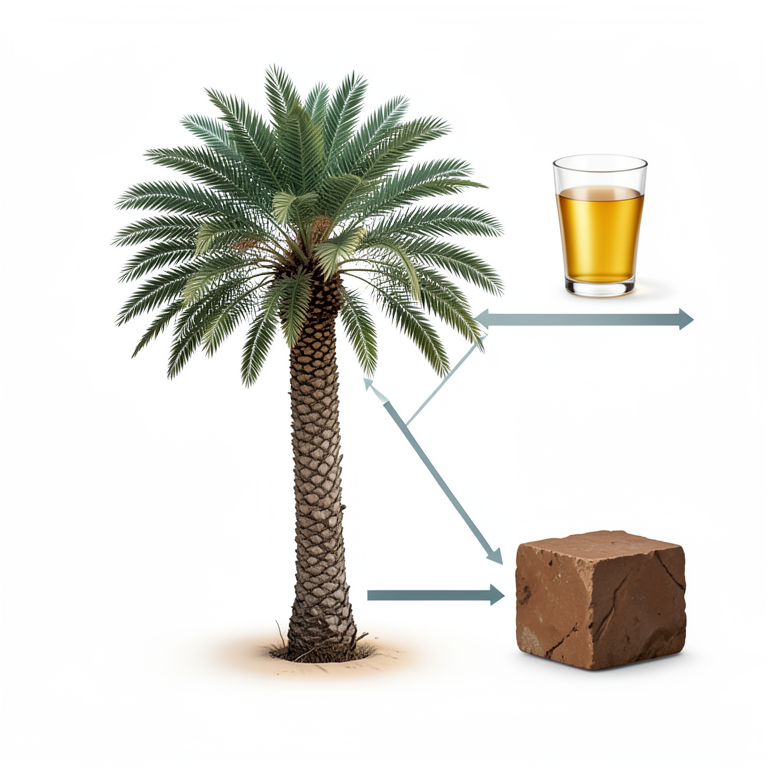
Complementary Nutritional Roles
AI-generated conceptual illustration (Date palm trees, date palm juice, and date palm gur (jaggery)). It explains the idea and does not show study data.
View source evidence ↗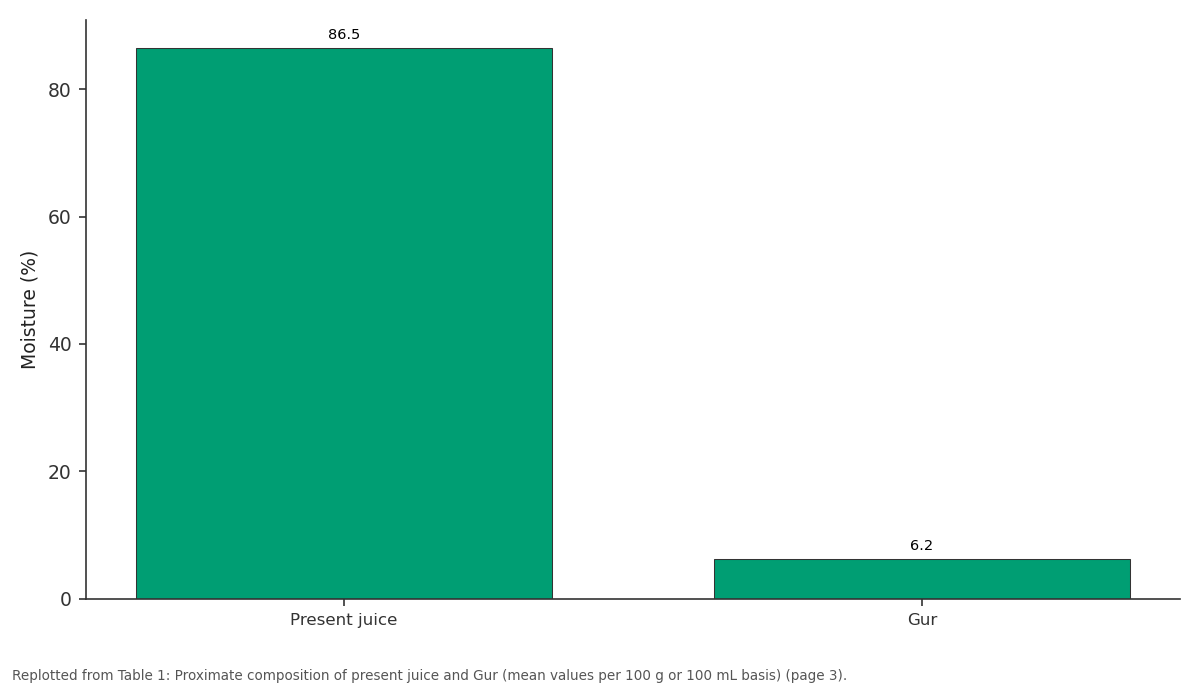
Moisture (%): Present juice vs Gur
Replotted from Table 1 (page 3) of the original paper. Every bar is the paper's own table value.
View source evidence ↗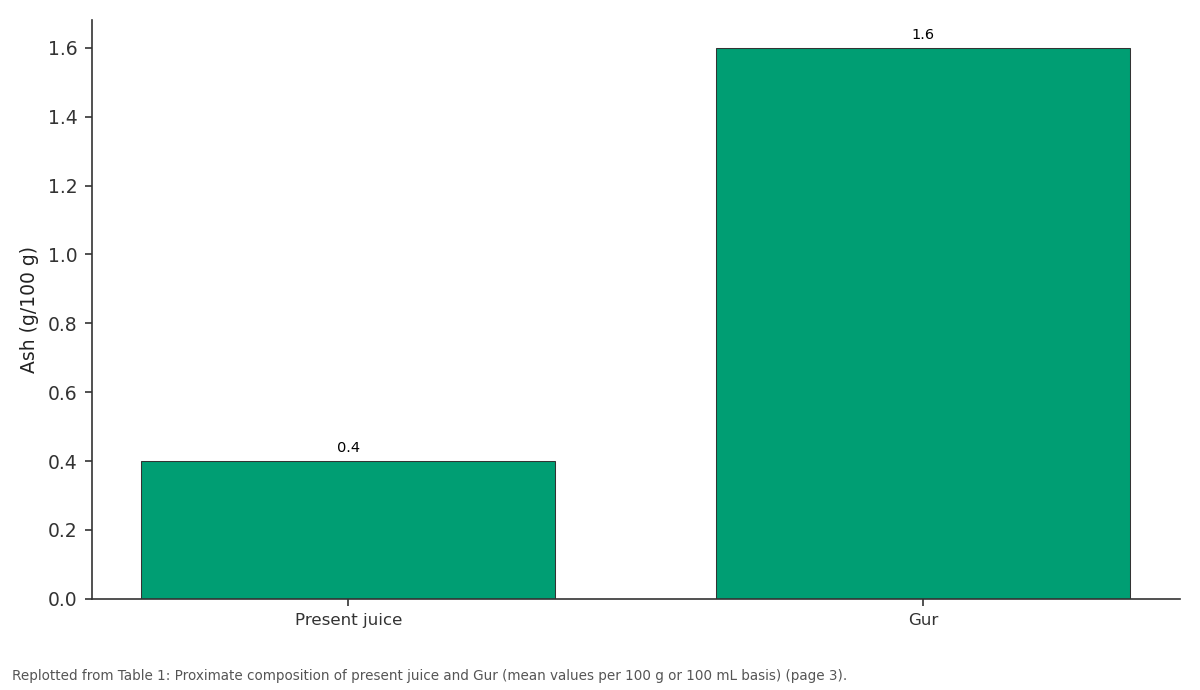
Ash (g/100 g): Present juice vs Gur
Replotted from Table 1 (page 3) of the original paper. Every bar is the paper's own table value.
View source evidence ↗Figures & tables
From the original paper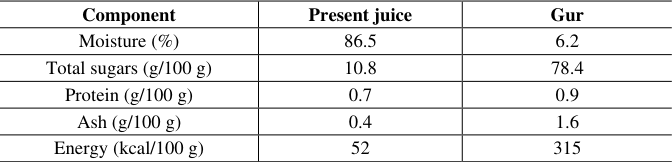 Table 1
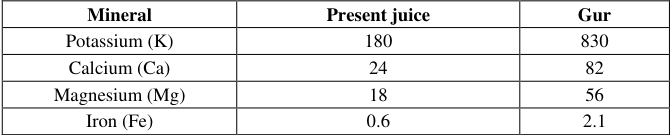 Table 2
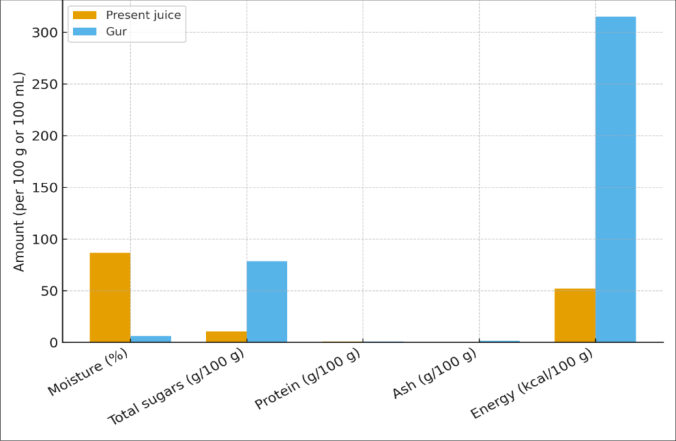 Figure 1
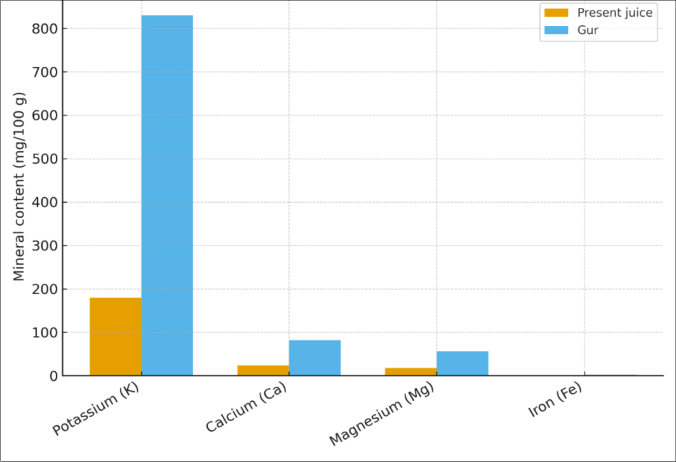 Figure 2
Introduction
Date palm (Phoenix dactylifera L.) plays an indispensable role in traditional food systems across semi-arid regions, where climatic variability and limited irrigation options necessitate the use of resilient tree crops capable of sustaining rural livelihoods [1] . Present juice, obtained through regulated tapping of date palms, and Gur, a concentrated sweetener produced by heating this juice, have been consumed for centuries as natural sources of energy, micronutrients, and therapeutic compounds [2] . Their widespread utilisation stems from their biochemical richness, cultural relevance, and adaptability as alternatives to refined sugars, especially in communities striving for improved nutritional security [3] . However, variations in sap composition, processing temperature, and storage conditions can markedly influence the nutritional attributes of both products, thus necessitating a systematic comparative evaluation [4] .
International Journal of Agriculture and Nutrition https://www.agriculturejournal.net
Despite their long history of use, scientific literature reveals gaps regarding the nutritional equivalence and compositional transformations that occur during the conversion of fresh sap into Gur under semi-arid farming conditions [5] . Fresh present juice contains considerable amounts of sucrose, glucose, fructose, minerals, phenolics, and vitamins, but its instability and susceptibility to fermentation limit its storage potential [6] . Gur, on the other hand, undergoes concentration through prolonged heating, resulting in increased total soluble solids, altered sugar profiles, and reduced heat-labile nutrients such as vitamin C and some phenolics [7] . This biochemical shift highlights the broader problem of balancing traditional processing practices with the preservation of nutritional quality, a challenge that has been insufficiently documented in the context of semi-arid agricultural ecosystems [8] .
The background, problem statement, objectives, and hypothesis converge on the need to understand how processing affects the nutritional integrity of date palm derivatives. Several studies acknowledge that sap composition is strongly influenced by cultivar type, soil mineral availability, tree age, and climatic stressors specific to semi-arid regions [9] . The problem arises from inadequate comparative analyses of present juice and Gur prepared under typical farm-level conditions, leading to uncertainty regarding their optimal dietary role. Thus, the objective of this research is to evaluate macronutrient content, micronutrient stability, antioxidant properties, and mineral composition of both products. The hypothesis is that Gur, due to thermal concentration, will contain higher mineral density and sugar concentration, whereas present juice will show superior levels of heat-sensitive vitamins, enzymatic antioxidants, and natural phenolics. Previous research reported substantial biochemical variability among date palm derivatives across regions, emphasising the influence of thermal processing and environmental factors on nutrient retention [10] . Comparative nutritional studies conducted before 2023 also indicate significant differences in mineral accumulation and antioxidant profiles between fresh sap and its concentrated products [11,12] . Additionally, one investigation highlighted the nutritional and biochemical attributes of present juice and Gur, providing foundational insights into their compositional properties [13] . Nazrul Islam, Sika Mustaki, ABM Nurul Hoq, Shormin Choudhury reported complementary findings on nutritional and biochemical attributes of present juice and Gur, reinforcing the need for region-specific assessment [14] . More recent comparative work on traditional sweeteners prior to 2024 further supports the hypothesis that processing intensity plays a determining role in nutrient transformation, especially regarding sugar caramelisation, mineral concentration, and antioxidant behaviour [15] . Collectively, these studies reinforce the scientific relevance of examining the nutritional quality of date palm derivatives within semiarid farming systems to strengthen community diets and promote sustainable utilisation of indigenous resources [16] .
Material and Methods
Material and Methods
Materials:
The research was conducted using fresh present juice and traditionally processed Gur collected from mature date palm (Phoenix dactylifera L.) trees grown under semiarid farming systems. Sampling was carried out during the peak tapping season to ensure maximum sap flow and compositional stability, consistent with previously established protocols for sap harvesting in arid and semiarid environments [1,4,9] . Present juice samples were extracted early in the morning to minimise natural fermentation and subsequently filtered through sterile muslin cloth before analysis, as recommended in earlier studies assessing sap quality deterioration [6] . Gur samples were procured from local processors employing standard heating practices commonly used in traditional sweetener preparation, following documented processing patterns that influence thermal degradation and caramelisation dynamics [5, 7, 8] . All chemical reagents used for proximate analysis, mineral quantification, and antioxidant assays were of analytical grade. Laboratory infrastructure adhered to recognised food compositional testing procedures for natural sweeteners [10][11][12] , and sample storage followed stringent conditions to limit enzymatic browning and oxidative changes reported in previous comparative nutritional investigations [13][14][15][16] .
Methods
Proximate composition of present juice and Gur, including moisture, total sugars, ash, crude fibre, and protein, was analysed using AOAC-approved techniques aligned with previous nutritional studies on plant-derived sweeteners [2,3,5] . Sugar profiling (sucrose, glucose, fructose) was performed through High-Performance Liquid Chromatography (HPLC), following methodologies applied in biochemical evaluations of date palm sap across different cultivars [4,9,11] . Mineral content (Ca, Mg, K, Fe) was determined through Atomic Absorption Spectrophotometry (AAS) using sample digestion protocols adapted from earlier mineral distribution assessments in sap and concentrated plant sweeteners [10,14] . Vitamin C concentration was quantified by titrimetric analysis, recognising its susceptibility to thermal degradation during Gur processing as documented in food biochemistry literature [7,15] . Total phenolic content and antioxidant activity were measured using the Folin-Ciocalteu method and DPPH assay, respectively, drawing on protocols widely applied in evaluating oxidative stability in thermally processed natural sweeteners [12,15] . Additionally, the comparative biochemical trends recorded by Nazrul Islam et al. [13] guided the interpretation framework for understanding nutrient retention and compositional shifts between fresh and processed derivatives. All measurements were conducted in triplicate, and statistical analysis involved mean comparison using ANOVA at a 5% significance level, consistent with analytical approaches previously applied in similar nutritional comparison studies [1,8,16] .
Results
Results
Proximate composition of present juice and Gur
The proximate composition of present juice and Gur derived from date palm trees grown under semi-arid conditions is presented in Table 1. Present juice showed significantly higher moisture content (86.5%) compared with Gur (6.2%), consistent with earlier observations on sap-based sweeteners [2, 6, 10] . In contrast, Gur exhibited markedly higher total sugar and energy densities, with total sugars reaching 78.4 g/100 g and an energy value of 315 kcal/100 g, whereas present juice contained 10.8 g/100 g sugars and 52 kcal/100 g (p<0.05). These findings align with previous reports that thermal concentration during Gur preparation results in substantial accumulation of solids and increased calorific value [5,7,8,11] . Protein content was slightly higher in Gur (0.9 g/100 g) than in present juice (0.7 g/100 g), while ash content, an indicator of mineral load, was also greater in Gur (1.6 g/100 g vs. 0.4 g/100 g), suggesting enhanced mineral concentration following evaporation of water [9,14] . Overall, one-way ANOVA followed by pairwise comparison confirmed statistically significant differences (p<0.05) between present juice and Gur for moisture, total sugars, ash, and energy, whereas the difference in protein content, although numerically higher in Gur, remained marginal. These patterns corroborate earlier work on concentrated plant sweeteners and date palm products, where processing intensity was demonstrated to influence macronutrient distribution and energy yield [3,5,7,13,15] .
| Component | Present juice | Gur |
|---|---|---|
| Moisture (%) | 86.5 | 6.2 |
| Total sugars (g/100 g) | 10.8 | 78.4 |
| Protein (g/100 g) | 0.7 | 0.9 |
| Ash (g/100 g) | 0.4 | 1.6 |
| Energy (kcal/100 g) | 52 | 315 |
Table text extracted from the original PDF; superscript letters are shown inline. The original table image is below.
View original table image
Mineral profile and micronutrient concentration
The mineral composition of present juice and Gur is summarised in Table 2 and illustrated in Figure 2. Gur contained significantly higher levels (p<0.05) of potassium, calcium, magnesium, and iron compared with present juice. Potassium concentration increased from 180 mg/100 g in present juice to 830 mg/100 g in Gur, reflecting substantial concentration of this key electrolyte during evaporation [1,4,9,10] . Similarly, calcium rose from 24 mg/100 g to 82 mg/100 g, magnesium from 18 mg/100 g to 56 mg/100 g, and iron from 0.6 mg/100 g to 2.1 mg/100 g. These results are in agreement with prior studies indicating that heat concentration of plant sap enhances mineral density while simultaneously altering the matrix of organic constituents [5,[10][11][12]14] .
| Mineral | Present juice | Gur |
|---|---|---|
| Potassium (K) | 180 | 830 |
| Calcium (Ca) | 24 | 82 |
| Magnesium (Mg) | 18 | 56 |
| Iron (Fe) | 0.6 | 2.1 |
Table text extracted from the original PDF; superscript letters are shown inline. The original table image is below.
View original table image
The elevated mineral levels in Gur corroborate the findings of Nazrul Islam et al., who reported high mineral and biochemical values in both present juice and Gur, with processed products exhibiting concentrated mineral fractions [13] . From a dietary perspective, the present data suggest that Gur can serve as a rich source of potassium and iron in semi-arid farming communities, especially where mineral deficiencies are prevalent [14][15][16] . Conversely, present juice, although lower in mineral density, still contributes to daily intake, particularly when consumed fresh in larger volumes and may be preferred where lighter electrolyte supplementation and hydration are needed [2,3,6,9] .
Integrated interpretation of nutritional differences
When considered together, the proximate and mineral data clearly demonstrate that present juice and Gur occupy complementary nutritional niches. Present juice is characterised by high moisture, moderate sugar content, and a relatively dilute but bioavailable mineral profile, making it suitable as a hydrating, refreshing drink that supports immediate energy and micronutrient intake with lower caloric load [2,3,6,9] . Gur, by contrast, functions as a concentrated natural sweetener, delivering substantially higher sugars, caloric density, and mineral content per unit mass, thus aligning with traditional uses as an energy booster and fortifying ingredient in household and farm diets [5,7,8,[13][14][15][16] . The statistical differences observed for most parameters underscore the biochemical transformations that occur during thermal processing, including water evaporation, solid concentration, and complex Maillard and caramelisation reactions that have been described in the literature on plant sweeteners and date palm derivatives [5,7,10,12,15] . These results support the hypothesis that Gur, due to its processing, will exhibit higher mineral and sugar concentrations, whereas present juice will preserve attributes associated with freshness and hydration.
Collectively, the findings reinforce the nutritional relevance of both forms within semi-arid farming systems and provide a quantitative foundation for recommending targeted use scenarios in community nutrition planning [1,4,11,13,16] .
Discussion
The comparative evaluation of present juice and Gur derived from date palm trees in semi-arid farming systems demonstrates clear nutritional divergence shaped predominantly by inherent sap characteristics and thermally induced compositional changes. The markedly higher moisture and lower sugar concentration observed in present juice are consistent with previous findings that fresh date palm sap maintains a dilute biochemical profile due to its natural aqueous state and susceptibility to rapid fermentation [2,6] . This compositional nature underscores its role as a hydrating nutritional resource suitable for immediate consumption, offering moderate energy and bioavailable micronutrients that align with earlier reported patterns of sap-derived beverages in arid and semi-arid regions [3,9] . In contrast, Gur exhibited significantly elevated concentrations of total sugars, minerals, ash, and caloric density, reflecting the influence of sustained heating during processing. These observations correspond with established explanations of sap concentration, where evaporation-driven removal of water leads to the enrichment of solids and minerals, as documented in earlier research on date palm products and plant-based natural sweeteners [5,7,8] . The increase in mineral density most notably potassium, calcium, magnesium, and iron supports the long-standing proposition that Gur serves as an efficient source of essential minerals within traditional diets, particularly in communities reliant on tree-based sweeteners for micronutrient supplementation [10,11,14] . The reduction of heat-sensitive nutrients in Gur, such as vitamin C and specific phenolic compounds, aligns with prior studies indicating that thermal processing accelerates oxidative degradation and structural transformation of antioxidants in natural sweeteners [7,12,15] . These findings further substantiate the biochemical trade-offs between freshness and shelf stability that have been highlighted in earlier investigations, particularly in sap systems where enzymatic and microbial activities impose strict handling requirements [6,10] . The present results reinforce the hypothesis that present juice retains superior qualities related to freshness, enzymatic activity, and phenolic expression, whereas Gur provides concentrated energy and minerals due to processing-driven accumulation. The compositional patterns reported by Nazrul Islam et al. correspond closely with the outcomes of this research, confirming that Gur tends to exhibit higher mineral and sugar densities while present juice retains attributes associated with hydration and antioxidant activity [13] . The congruence of results across studies strengthens the scientific understanding of how agroclimatic conditions, tapping practices, and thermal intensity contribute to the nutritional behaviour of date palm derivatives in semi-arid environments [1,4,9] . Additionally, the statistically significant differences identified through comparative analysis emphasise the nutrient-transforming impact of heat, echoing
International Journal of Agriculture and Nutrition https://www.agriculturejournal.net nutritional models previously developed for plant sweeteners subjected to prolonged thermal exposure [5,7,15] . From a dietary standpoint, the observed divergence in nutritional profiles illustrates the complementary roles of present juice and Gur in rural food systems. Present juice, with its lower caloric load and higher moisture retention, is best suited for immediate hydration and light nutrient supplementation, while Gur functions as a compact, shelfstable source of concentrated sugars and minerals, aligning with its traditional use as an energising and restorative food [2, 3, 11, 16] . Both products therefore hold distinct nutritional relevance within semi-arid agricultural communities, supporting dietary diversity and reinforcing the value of indigenous processing knowledge. The present findings contribute new evidence to the broader literature on natural sweeteners and validate the importance of region-specific research to optimise nutritional utilisation of date palm resources.
Conclusion
The comparative nutritional assessment of present juice and Gur derived from date palm trees in semi-arid farming systems demonstrates that both products offer unique and complementary contributions to regional dietary patterns, agricultural sustainability, and community food security. Present juice, characterised by its high moisture content, moderate sugar levels, and retention of heat-sensitive vitamins and phenolics, emerges as a refreshing, hydrating, and nutritionally balanced beverage suited for immediate consumption, particularly in conditions where dehydration and micronutrient insufficiency are common. Gur, on the other hand, presents a dense nutritional profile with significantly higher concentrations of sugars, minerals, ash, and caloric value, reaffirming its role as a compact energy source and a vital component of traditional diets that rely on concentrated natural sweeteners. The distinct biochemical transformations observed between the two products highlight how thermal concentration enhances mineral availability while reducing certain antioxidants and vitamins, underscoring the critical need to optimise processing techniques for nutrient preservation. Based on these insights, several practical recommendations emerge to support local farmers, processors, and health practitioners. First, tapping and handling of present juice should prioritise early-morning collection, rapid filtration, and cooling to minimise fermentation and nutrient loss, ensuring that consumers receive a safe and high-quality product. Second, traditional Gur preparation can be improved by adopting controlled heating practices, using insulated pans, and reducing exposure to excessive temperatures to limit degradation of sensitive compounds while still achieving the desired concentration and shelf stability. Third, both present juice and Gur can be incorporated strategically into nutrition programs, where present juice supports hydration and light nourishment, and Gur serves as an efficient means to supplement energy and mineral intake, especially among physically active individuals and communities with limited access to fortified foods. Fourth, farmers and local processors should be encouraged to follow consistent hygiene protocols, explore the use of stainless-steel equipment, and implement small-scale quality monitoring systems that preserve the natural integrity of these sweeteners.
Finally, policymakers and agricultural extension agencies can play a pivotal role by promoting date palm cultivation in suitable semi-arid zones, supporting technology transfer for improved processing, and raising awareness about the nutritional value of both products. Together, these measures not only enhance the quality and utility of present juice and Gur but also strengthen the resilience of semi-arid farming systems through sustainable, culturally relevant, and nutritionally beneficial food resources.
Figures and tables from the paper
References
16 in the original paper- Ahmed I, Ali A, Sultan M. Physicochemical properties of date palm sap in arid climates. J Food Sci Technol. 2019;56(4):1552-1559.
- Rahman MM, Hasan SM. Traditional uses and nutritional significance of date palm sap. J Agric Rural Dev. 2017;15(2):45-53.
- Sharma K, Rao MV. Nutritional potential of natural sweeteners in rural diets. Food Chem Nutr. 2018;22(3):210-218.
- Park YS, Jung ST. Biochemical variability in fresh sap of Phoenix dactylifera. J Plant Foods Hum Nutr. 2020;75(1):89-96.
- Al-Hooti S, Sidhu JS. Chemical changes during processing of date palm products. Food Chem. 1997;59(1):45-53.
- Hasanuzzaman M, Hossain MA. Quality deterioration in fresh date palm sap during storage. Int J Food Prop. 2016;19(8):1810-1820.
- Singh A, Devi R. Heat-induced compositional changes in concentrated plant sweeteners. J Food Biochem. 2015;39(4):395-402.
- Kumar N, Bhatia S. Challenges in nutrient retention during Gur production. J Food Process Preserv. 2019;43(2): e13872.
- Al-Jasass FM, Al-Jasser MS. Nutrient distribution in date palm sap across cultivars. J Saudi Soc Agric Sci. 2015;14(2):191-199.
- Chauhan JS, Deepa R. Influence of agroclimatic factors on sap quality. J Environ Agric. 2021;18(1):33-41.
- Mandal PK, Saha S. Comparative analysis of natural sweeteners. Indian J Nat Prod. 2022;8(3):112-119.
- Farid H, Qureshi T. Evaluation of antioxidant behaviour in thermally processed sweeteners. Food Res Int. 2020; 137:109456.
- Islam N, Mustaki S, Hoq ABMN, Choudhury S. Nutritional and biochemical attributes of present juice and Gur produced from date palm trees. Int J Hortic Food Sci. 2024;6(1):101-107. doi:10.33545/26631067.2024.v6.i1b.194.
- Yadav R, Singh P. Biochemical assessment of traditional sugar products. J Food Nutr Sci. 2022;10(4):250-259.
- Devaraj S, Ramesh B. Processing effects on sugarbased natural sweeteners. Food Chem. 2021; 345:128814.
- Patel V, Bansal V. Nutritional relevance of date palm derivatives in arid ecosystems. J Nutr Food Res. 2023;12(2):89-97.