
Research article · 2025 · Full text
International Journal of Biology SciencesOxidative stress mitigation by Berberis aristata root extract: An in vitro antioxidant study
Volume 7(11) · Pages 20–26 · DOI: 10.33545/26649926.2025.v7.i11a.513 ↗
Research areasBerberine and alkaloids researchPhytochemicals and Antioxidant ActivitiesPlant-based Medicinal Research
Abstract
Author-writtenBerberis aristata DC., traditionally known for its medicinal properties, is a rich source of bioactive phytoconstituents. Oxidative stress, caused by the accumulation of reactive oxygen species (ROS) and reactive nitrogen species (RNS), contributes to a variety of diseases. The objective of this study was to evaluate the in vitro antioxidant capacity of Berberis aristata aqueous root extract (BAE). The antioxidant capacity of BAE was evaluated using three mechanistic assays: nitric oxide (NO) scavenging activity, superoxide anion radical scavenging activity, and reducing power activity. The effects were compared with standard antioxidants such as potassium nitrite and ascorbic acid. BAE demonstrated significant, dose-dependent antioxidant activity in all assays. In a nitric oxide scavenging assay, BAE showed an IC₅₀ value of 86.143 µg/ml, indicating effective quenching of nitrosative radicals. The extract also demonstrated effective inhibition of superoxide radicals with an IC₅₀ of 69.828 µg/ml, comparable to standard ascorbic acid (IC₅₀ 57.942 µg/ml). The results indicate that BAE possesses strong antioxidant properties, likely due to its phenolics, flavonoids, and alkaloids such as berberine. BAE's ability to effectively scavenge free radicals and reduce oxidative stress suggests its potential as a natural therapeutic agent for managing oxidative stress-related diseases.
Summary
Source-checkedPlain-language reading of the full paper, prepared with AI and checked against the text. Each point links to the authors' own words.
Why it matters
- Oxidative stress is caused by the buildup of reactive nitrogen and oxygen species, which can lead to various diseases. View evidence ↗
- Broiler chickens are particularly vulnerable to oxidative damage due to rapid growth and high metabolic rates, which can negatively impact their health and performance. View evidence ↗
- Berberis aristata DC. is a plant known for its medicinal properties and rich content of bioactive phytoconstituents. View evidence ↗
The question
- The study aimed to evaluate the antioxidant capacity of an aqueous root extract from Berberis aristata (BAE) using in vitro methods. View evidence ↗
- The researchers sought to determine if BAE could serve as a natural antioxidant supplement to mitigate oxidative stress in broiler chickens. View evidence ↗
What they did
- The aqueous root extract (BAE) was prepared by dissolving 100 g of root powder in 1 L of distilled water with stirring for 72 hours. View evidence ↗
- The antioxidant capacity was measured using three specific assays: reducing power, superoxide anion radical scavenging, and nitric oxide (NO) scavenging. View evidence ↗
- For the nitric oxide scavenging assay, BAE and potassium nitrite were tested at working concentrations between 10 and 100 μg/ml. View evidence ↗
- The superoxide anion radical scavenging activity was tested using BAE and ascorbic acid at concentrations of 10-100 μg/ml. View evidence ↗
- The reducing power assay utilized BAE and ascorbic acid at concentrations ranging from 20 to 200 μg/ml, incubated at 50 °C for 30 minutes. View evidence ↗
What they found
- In the nitric oxide scavenging assay, BAE showed an IC50 of 86.143 µg/ml, which was less potent than the potassium nitrite standard (IC50 27.719 µg/ml). View evidence ↗
- At the highest concentration of 200 µg/ml, BAE had a reducing power of 0.406±0.011, which was significantly lower than that of ascorbic acid (1.611±0.039). View evidence ↗
- Both the BAE extract and the standard antioxidant showed a dose-dependent increase in reducing power. View evidence ↗
What it means
- The authors conclude that BAE is a promising natural antioxidant source for managing oxidative stress-related diseases, supporting the plant's traditional medicinal use. View evidence ↗
- The antioxidant effects are attributed to the synergistic action of phenolics, flavonoids, and alkaloids like berberine. View evidence ↗
Visual summary
2 visualsIllustrations explain the paper; charts are replotted from the paper's own table values.
Antioxidant Testing Framework
AI-generated conceptual illustration (Berberis aristata root extract in test tubes). It explains the idea and does not show study data.
View source evidence ↗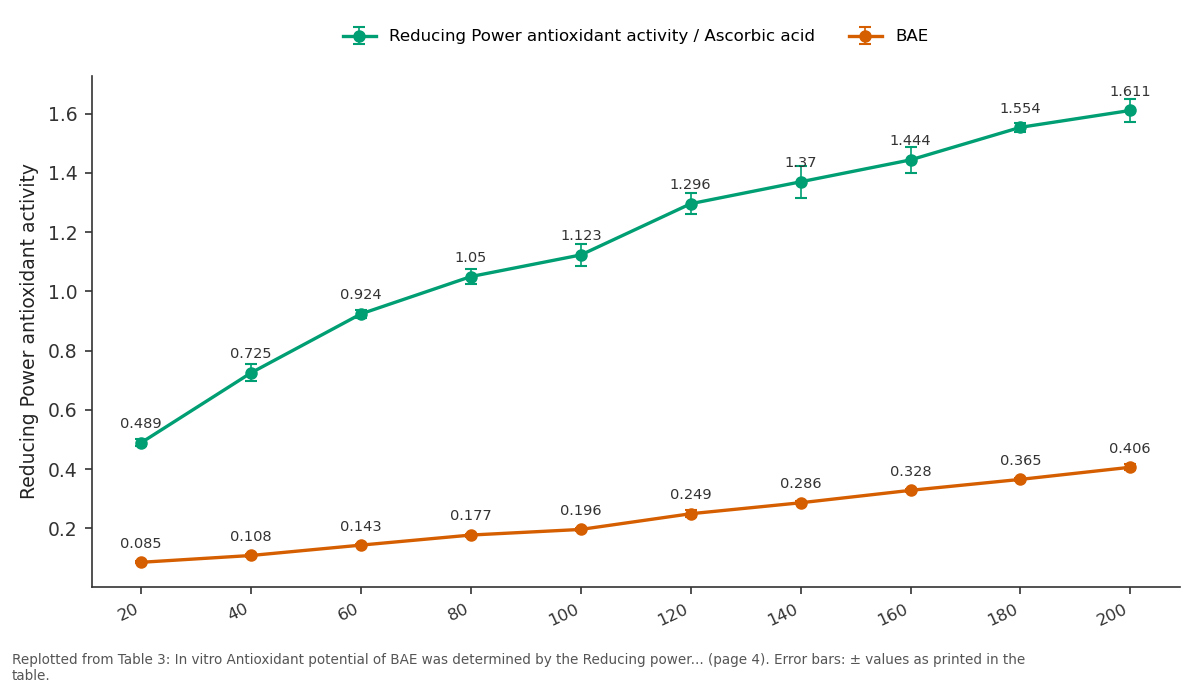
Reducing Power antioxidant activity /... and BAE: 20 vs 40 vs 60 vs 80 vs 100
Replotted from Table 3 (page 4) of the original paper. Every bar is the paper's own table value.
View source evidence ↗Figures & tables
From the original paper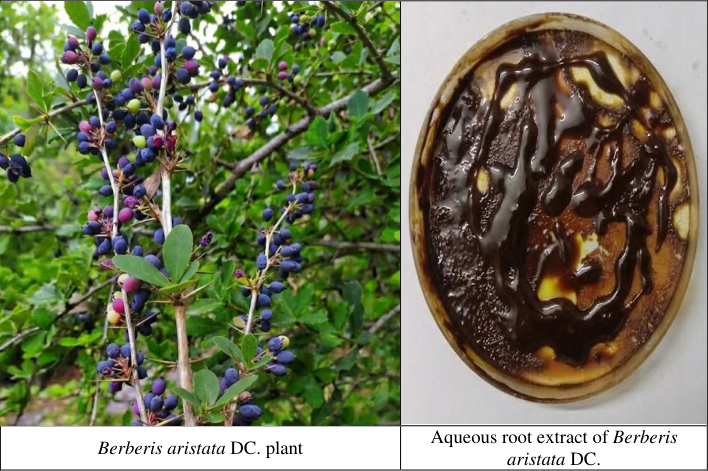 Table 1
 Table 1
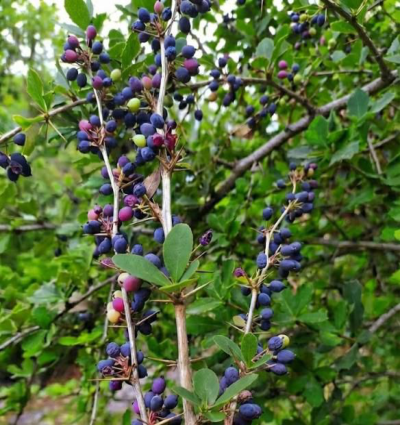 Figure 1
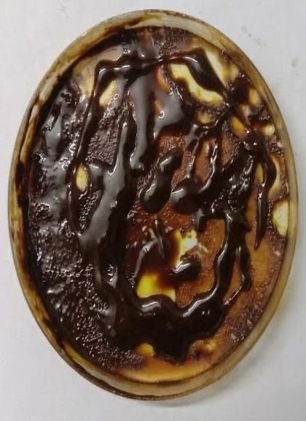 Figure 1
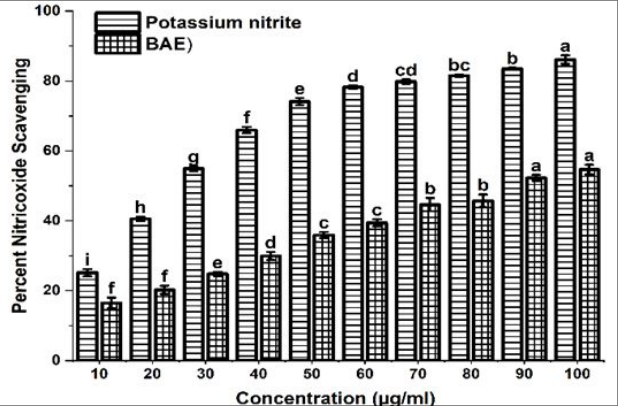 Figure 2
 Table 2
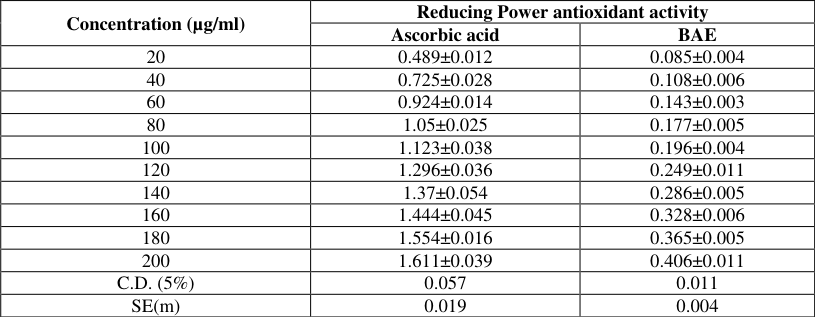 Table 3
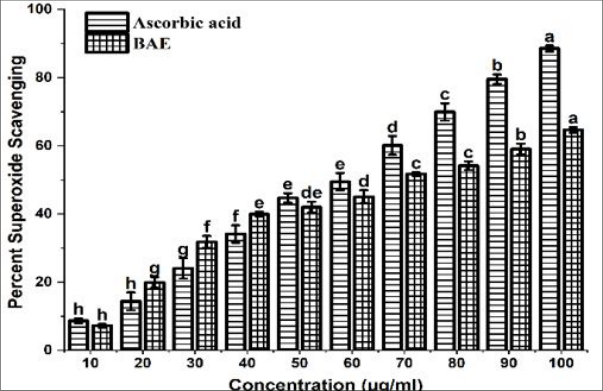 Figure 3
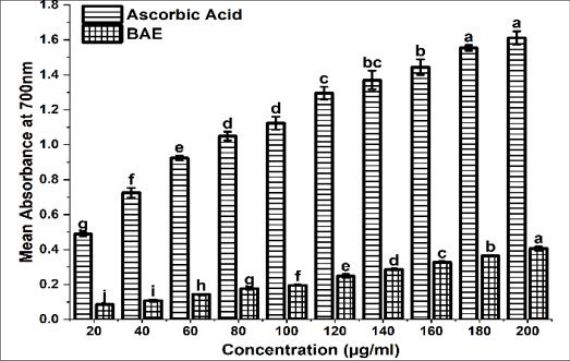 Figure 4
Introduction
Medicinal plants have been an essential part of traditional healthcare systems worldwide. Ayurveda, one of the oldest medical traditions, uses plant-based therapies to restore physical, mental, and emotional balance, thereby promoting well-being, preventing disease, and treating existing ailments. The global demand for herbal medicines is steadily increasing, driven not only by cultural acceptance but also by their perceived safety, biocompatibility, and minimal side effects (Mitra et al., 2011; Ambwani et al., 2018) [17,3] . More than 80% of the population in developing countries relies on botanicals for their primary healthcare needs (Ekor, 2014) [10] . Due to their rich phytochemical diversity, medicinal plants provide numerous secondary metabolites such as alkaloids, flavonoids, terpenoids, phenolics, and lignans that contribute to their therapeutic potential (Mongalo et al., 2016; Pant et al., 2021; Pandey and Ambwani, 2022) [18,20,19] . Berberis aristata DC commonly known as Daruharidra, is an essential medicinal plant widely used in Ayurveda, Unani, Homeopathy, Traditional Chinese Medicine, and Modern Herbal Practice. Belonging to the Berberidaceae family, this plant grows mostly in the Himalayan region (1000-3000 m) and the Nilgiri Range (1000-2400 m) (Bhardwaj and Kaushik, 2012; Chaudhary et al., 2021) [4,7] . Of the more than 70 Indian Berberis species, B. aristata is the most valuable because of its long-standing medicinal uses, including the management of fever, arthritis, jaundice, nephrolithiasis, and various inflammatory diseases (Malhotra, et al., 2021). Phytochemical investigations indicate that Berberis spp. contains a variety of bioactive compounds alkaloids, flavonoids, terpenoids, sterols, phenolic acids, carotenoids, and anthocyanins with isoquinoline alkaloids being the main functional components (Bhatt et al., 2018) [5] . The main alkaloid, berberine, is found in the roots, stem bark, rhizomes, and leaves, followed by palmatine (Shahid et al., 2009) [24] . These alkaloids contribute to a variety of reported pharmacological properties, including antimicrobial, antipyretic, hepatoprotective,
Evaluation of In vitro Antioxidative Potential of BAE
The antioxidant capacity of BAE was evaluated using biochemical assays as previously reported by Ambwani et al., 2024, 2025. [22,2] Nitric Oxide scavenging activity Nitric oxide scavenging activity was tested using the method of Jagetia et al. (2004) [12] . Fresh stock solutions of potassium nitrite and BAE (1 mg/ml) were prepared using sodium nitroprusside (5 mM) in PBS (10 mM, pH 7.4), and the working concentration was maintained at 10-100 μg/ml. For each concentration, 90 μl of the reaction mixture was added to a 96-well plate, with only sodium nitroprusside used as a control. The samples were incubated for 150 min at 25 °C, after which 90 μl of Griess reagent (1% sulfanilamide, 2% H₃PO₄, and 0.1% naphthylethylenediamine hydrochloride) was added. The chromophore formed by diazotization and subsequent coupling of nitrite was quantified at 546 nm using an ELISA reader. To ensure accuracy, all experiments were performed three times, with three technical replicates per experiment. The percentage of nitric oxide scavenging was calculated as:
×100
where Ab c represents the control absorbance and Ab s represents the absorbance in the presence of BAE, and IC₅₀ values were determined to reflect the scavenging efficiency of the extract.
Superoxide anion radical scavenging activity
The superoxide anion radical scavenging activity of BAE was tested using a slightly modified method from Iqbal et al. (2012) [11] . Stock solutions of ascorbic acid and BAE (1 mg/ml) were prepared in double-distilled water, and a working concentration of 10-100 μg/ml was created accordingly. For each reaction, 3 ml of phosphate buffer (pH 7.4), 1 ml of NBT (50 μM), and 1 ml of NADH (73 μM) were added to the test solution, and the reaction was initiated by adding 1 ml of PMS (15 μM). After 5 min of incubation at room temperature, absorbance was measured at 560 nm against a reagent blank. The assay was performed in triplicate, and the percent scavenging activity was calculated as:
Percent superoxide anion radical scavenging=
Where, Ab c is the absorbance of the control and Ab s is the absorbance in the presence of the BAE extract. The concentration (in μg/ml) at which 50% inhibition occurred is known as the IC 50 value, and it is used to expressed the superoxide anion radical scavenging activity of the BAE.
Reducing power antioxidant activity
The reducing power of BAE was tested using the method of Subhashini et al. (2011) with slight modifications. Stock solutions of the extract and ascorbic acid (1 mg/ml) were prepared, and working concentrations of 20-200 μg/ml were incubated at 50 °C for 30 min in a reaction mixture containing 2.5 ml of 0.1 M phosphate buffer (pH 6.6) and 2.5 ml of 1% potassium ferricyanide. The reaction was terminated by adding 2.5 ml of 10% trichloroacetic acid and then centrifuged at 3000 g for 10 min. The supernatant (2.5 ml) was mixed with an equal volume of distilled water and 0.5 ml of 0.1% ferric chloride, and the formation of ferricferrous complexes was measured at 700 nm using a UVvisible spectrophotometer, using a distilled water blank and ascorbic acid as a reference standard. All tests were performed three times with three technical replicates to ensure reliability, and increased absorbance was interpreted as indicating higher electron-donating and reducing power potentials of the extract.
Statistical Analysis
We performed all antioxidant tests three times to ensure reliability and reusability. Therefore, results are presented as mean values with their standard deviations (SD). Statistical significance was determined using one-way analysis of variance (ANOVA) in OPSTAT software. Microsoft Excel was used for initial data handling, and final graphical representations were created using Origin Pro.
Results
After preparing BAE (Figure 1), its antioxidant capacity was evaluated using a series of in vitro tests. The antioxidant capacity of BAE was assessed using different plant extractbased antioxidant tests, including nitric oxide scavenging activity, superoxide anion radical scavenging activity, and reducing power activity. These tests together examine different mechanisms of antioxidant actions.
BAE Based Antioxidant Activity Nitric Oxide scavenging activity
The nitric oxide scavenging activity of Berberis aristata aqueous extract (BAE) was tested and compared with potassium nitrite. Table 1 shows nitric oxide scavenging activity of BAE that has an IC 50 value of 86.143 µg/ml, while the standard of potassium nitrite has an IC 50 value of 27.719 µg/ml (Figure 2). The significant nitric oxide scavenging capacity of BAE suggests the presence of bioactive compounds capable of quenching nitric oxide radicals. Nitric oxide, although a key signaling molecule, generates reactive nitrogen species that can trigger oxidative stress in pathological conditions.
| S. No. | Mean Percent Scavenging activity | IC50 (µg/ml) | CD (5%) | SE(m) |
|---|---|---|---|---|
| 1. | Mean Percent Scavenging of Potassium nitrite±SD | 27.719 | 1.33 | 0.448 |
| 2. | Mean Percent Scavenging of BAE±SD | 86.143 | 2.228 | 0.75 |
Table text extracted from the original PDF; superscript letters are shown inline. The original table image is below.
View original table image
BAE's high scavenging percentage and low IC₅₀ value
suggest that its phytoconstituents probably flavonoids and phenolic compounds effectively neutralize NO radicals.
This highlights BAE's potential as a strong natural antioxidant that may help reduce nitrosative stress.
Superoxide anion radical scavenging activity
The superoxide scavenging capacity of Berberis aristata aqueous extract (BAE) was tested at different concentrations and compared with ascorbic acid, a standard antioxidant. As shown in Table 2, the IC₅₀ value of BAE (69.828 µg/ml) was significantly higher than that of ascorbic acid (57.942 µg/ml), indicating a stronger scavenging capacity. This trend was further supported by the dose-response pattern shown in Figure 3, which confirms the concentrationdependent scavenging capacity of BAE. The results indicate that BAE possesses potent superoxide radical scavenging properties. The significantly lower IC₅₀ value compared to ascorbic acid indicates that the extract contains phytoconstituents capable of effectively neutralizing superoxide anions. Superoxide radicals are the main ROS that initiate oxidative chain reactions leading to cellular damage. BAE's ability to suppress these radicals demonstrates its strong electron-donating and free-radical quenching capacity. The increased activity may be due to the presence of phenolics, flavonoids, alkaloids, and other bioactive ingredients known for their redox properties. These compounds likely act by either directly scavenging superoxide radicals or by inhibiting their formation through enzyme-mediated pathways. The concentration-dependent response further supports BAE's antioxidant potency and is in line with previous reports on the antioxidant capacity of Berberis species.
| S. No. | Mean Percent Scavenging activity | IC50 (µg/ml) | CD (5%) | SE(m) |
|---|---|---|---|---|
| 1. | Mean Percent Scavenging of Ascorbic acid±SD | 57.942 | 3.758 | 1.265 |
| 2. | Mean Percent Scavenging of BAE±SD | 69.828 | 2.283 | 0.769 |
Table text extracted from the original PDF; superscript letters are shown inline. The original table image is below.
View original table image
Reducing power antioxidant activity
The reducing power of BAE was tested against ascorbic acid at concentrations ranging from 20-200 µg/ml. Both BAE and the standard showed concentration-dependent increases in absorbance. Table 3 and figure 4 shows the Ascorbic acid showed significantly higher reducing power at all concentrations (1.611±0.039 at 200 µg/ml) compared to BAE (0.406±0.011 at 200 µg/ml). Although BAE's reducing power was lower than the standard, the consistent increase in absorbance confirms its electron-donating capacity. The reducing power assay measures the ability of antioxidants to donate electrons and reduce ferric ions to their ferrous form. BAE showed decent but concentrationdependent reducing power, suggesting that its phytochemicals possess electron-transfer capabilities.
| Concentration (µg/ml) | Reducing Power antioxidant activity | — |
|---|---|---|
| Ascorbic acid | BAE | |
| 20 | 0.489±0.012 | 0.085±0.004 |
| 40 | 0.725±0.028 | 0.108±0.006 |
| 60 | 0.924±0.014 | 0.143±0.003 |
| 80 | 1.05±0.025 | 0.177±0.005 |
| 100 | 1.123±0.038 | 0.196±0.004 |
| 120 | 1.296±0.036 | 0.249±0.011 |
| 140 | 1.37±0.054 | 0.286±0.005 |
| 160 | 1.444±0.045 | 0.328±0.006 |
| 180 | 1.554±0.016 | 0.365±0.005 |
| 200 | 1.611±0.039 | 0.406±0.011 |
| C.D. (5%) | 0.057 | 0.011 |
| SE(m) | 0.019 | 0.004 |
Table text extracted from the original PDF; superscript letters are shown inline. The original table image is below.
View original table image
Although weaker than ascorbic acid, the consistently increasing absorbance indicates the presence of phenolic and flavonoid compounds that contribute to its reducing capacity. This supports the idea that BAE may act as a reductant under conditions of oxidative stress, complementing its free radical scavenging mechanism observed in other assays.
Discussion
BAE exhibited strong nitric oxide scavenging activity, as evidenced by a significant decrease in Griess reagent absorbance with increasing concentration. This suggests that the extract effectively neutralizes NO radicals generated by sodium nitroprusside. The activity observed in our study is consistent with previous findings on Berberis species, which consistently demonstrate high NO-scavenging capacities. Joshi et al. (2020) [14] reported that B. aristata exhibited one of the highest NO-scavenging effects among medicinal plants tested, while Jain et al. (2023) [13] demonstrated that berberine alone produced over 90% inhibition, with an IC₅₀ comparable to that of ascorbic acid. These studies support berberine's role as a major contributor to BAE's NOquenching capacity. Similarly, Sahu and Podili (2023) [23] demonstrated dose-dependent NO inhibition by Berberis extract, and also reported that its alkaloids and phenolics act as effective electron donors. Chaudhary and Lokhande (2023) [6] [14] found that methanolic extracts of botanicals such as Withania somnifera, Curcuma longa, Zingiber officinale, and Boswellia serrata showed significant activity, with inhibition ranging from 54% to 92% at 50 mg/mL. Specifically, C. longa and a mixed herbal formulation showed the highest scavenging capacity (96.1-98.5%), which was similar to or slightly lower than the maximum activity observed in our BAE samples. Therefore, the improved performance of BAEs in this study suggests higher concentrations or stronger reactivity of antioxidant components such as alkaloids, flavonoids, and phenolic acids.
Further support for the strong scavenging capacity of Berberis components is provided by Jain et al. (2023) [13] , who reported an IC₅₀ of 145.6 µg/mL for purified berberine.
Although purified berberine showed slightly lower activity than ascorbic acid (IC₅₀: 96.4 µg/mL), its efficiency highlights the importance of berberine as one of the main contributors to the antioxidant activity of Berberis extracts.
The IC₅₀ values obtained in our study are consistent with these reports, confirming that BAE contains potent radicalquenching components that can compete well with standard antioxidants. Sahu and Podili (2023) [23] observed that Bauhinia monandra extract (BME) showed decent activity (46.93% inhibition at 150 µg/mL) with an EC₅₀ of 154.27 µg/mL, outperforming catechin in some respects. When these results are considered alongside the nearly complete superoxide inhibition shown by BAE in this work, the superior efficacy of the Berberis-based preparations becomes clear. The reducing power assay is an important measure of antioxidant capacity because it reflects the ability of bioactive compounds to donate electrons, thereby neutralizing free radicals and terminating propagating oxidative chain reactions. According to Kaushik et al.
(2010) [15] , the efficiency of converting ferric (Fe³⁺) to ferrous (Fe²⁺) ions is a reliable marker of antioxidant potency. Similar results have been reported for similar plant extracts. Terminalia arjuna bark extract (TAE) also showed a significant increase in reducing potential depending on the concentration, which is consistent with Shahriar et al. (2012). Trigonella foenum-graecum extract (TFE) showed a mild but significant reducing power due to its polyphenols and associated phytochemicals, which is consistent with previous findings (Dhull et al., 2020). This activity may be due to the phytoconstituents of BAE, particularly phenolics, flavonoids, and alkaloids such as berberine, which readily react with free radicals to form more stable, non-reactive products, thereby reducing oxidative stress.
Conclusion
In this study, a water root extract of Berberis aristata DC.
(BAE) was successfully prepared and its antioxidant capacity was evaluated using multi-mechanistic in vitro assays. The results revealed that BAE possesses significant antioxidant activity, evidenced by its ability to scavenge free radicals and donate electrons. Specifically, BAE exhibited strong nitric oxide (NO) scavenging activity with an IC₅₀ of 86.143 µg/ml, indicating its effectiveness in reducing nitrosative stress. Furthermore, the extract displayed strong superoxide anion radical scavenging capacity, indicating its high ability to neutralize superoxide radicals, which are the main initiators of oxidative chain reactions. Although the reducing power of BAE was lower than that of standard ascorbic acid, it showed a clear concentration-dependent increase, confirming the extract's ability to act as an electron donor to stabilize reactive species. The observed antioxidant activity is likely due to the synergistic effect of bioactive phytoconstituents present in the root, including alkaloids (such as berberine), flavonoids, and phenolics. These compounds appear to act through both direct radical quenching and electron donation mechanisms. Overall, these results support the traditional medicinal use of Berberis aristata and suggest that BAE is a promising source of natural antioxidants for the management of oxidative stressrelated diseases.
Acknowledgement
AcknowledgmentsThe research facilities provided for this study by the Dean of College of Basic Sciences and Humanities and the Director of Experiment Station at G. B. Pant University of Agriculture & Technology, Pantnagar-263145, Uttarakhand, India, are sincerely acknowledged. Department of Biotechnology, Government of India, for providing master's thesis research grant to Sampat Kumar Kumawat is duly acknowledged.
References
27 in the original paper- Ambwani S, Chand P, Kaur A, Semwal S, Verma J, Ambwani TK. Unraveling the medicinal properties of Tinospora cordifolia in chicken lymphocytes: antioxidant and immunomodulatory perspectives. Journal of Scientific Research and Reports. 2024 Dec 11;30(12):282-297.
- Ambwani S, Chand P, Kumawat SK, Singh H, Koranga D. In vitro analysis of antioxidant capacity of Bauhinia variegata (L.) Benth leaf extract. Pharmacological Research-Natural Products. 2025 Aug 20;100350:1-12.
- Ambwani S, Tandon R, Ambwani TK, Malik YS. Current knowledge on nanodelivery systems and their beneficial applications in enhancing the efficacy of herbal drugs. Journal of Experimental Biology and Agriculture Science. 2018;6(1):87-107.
- Bhardwaj D, Kaushik N. Phytochemical and pharmacological studies in genus Berberis. Phytochemistry Reviews. 2012 Dec;11(4):523-542.
- Bhatt LR, Wagle B, Adhikari M, Bhusal S, Giri A, Bhattarai S. Antioxidant activity, total phenolic and flavonoid content of Berberis aristata DC. and Berberis thomsoniana CK Schneid. from Sagarmatha National Park, Nepal. Pharmacognosy Journal. 2018;10(6s):1-7.
- Choudhari RD, Lokhande V. In vitro evaluation of Berberis aristata for cytotoxic activity. International Journal of Research in Pharmacy and Allied Science. 2023;2(3):45-60.
- Choudhary S, Kaurav H, Madhusudan S, Chaudhary G. Daruharidra (Berberis aristata): review based upon its ayurvedic properties. International Journal for Research in Applied Sciences and Biotechnology. 2021;8(2):98106.
- Deb K, Kaur A, Ambwani S, Ambwani TK. Preliminary phytochemical analyses of hydromethanolic leaf extract of Melia azedarach L. Journal of Medicinal Plants Study. 2018;6:4-8.
- Dhull SB, Kaur M, Sandhu KS. Antioxidant characterization and in vitro DNA damage protection potential of some Indian fenugreek (Trigonella foenumgraecum) cultivars: effect of solvents. Journal of Food Science and Technology. 2020 Sep;57(9):3457-3466.
- Ekor M. The growing use of herbal medicines: issues relating to adverse reactions and challenges in monitoring safety. Frontiers in Pharmacology. 2014 Jan 10;4:177-185.
- Iqbal J, Zaib S, Farooq U, Khan A, Bibi I, Suleman S. Antioxidant, antimicrobial and free radical scavenging potential of aerial parts of Periploca aphylla and Ricinus communis. International Scholarly Research Notices. 2012;2012(1):563267:1-8.
- Jagetia GC, Rao SK, Baliga MS, Babu KS. Evaluation of nitric oxide scavenging activity of certain herbal formulations in vitro: a preliminary study. Phytotherapy Research. 2004 Jul;18(7):561-565.
- Jain S, Tripathi S, Tripathi PK. Antioxidant and antiarthritic potential of berberine: in vitro and in vivo studies. Chinese Herbal Medicines. 2023 Oct;15(4):549-555.
- Joshi P, Yadaw GS, Joshi S, Semwal RB, Semwal DK. Antioxidant and anti-inflammatory activities of selected medicinal herbs and their polyherbal formulation. South African Journal of Botany. 2020 May 1;130:440-447.
- Kaushik D, Khokra SL, Kaushik P, Sharma C, Aneja KR. Evaluation of antioxidant and antimicrobial activity of Abutilon indicum. Pharmacologyonline. 2010;1:102-108.
- Malhotra B, Kulkarni GT, Dhiman N, Joshi DD, Chander S, Kharkwal A, et al. Recent advances on Berberis aristata emphasizing berberine alkaloid including phytochemistry, pharmacology and drug delivery system. Journal of Herbal Medicine. 2021 Jun 1;27:100433:1-15.
- Mitra MP, Saumya D, Sanjita D, Kumar DM. Phytopharmacology of Berberis aristata DC: a review. Journal of Drug Delivery & Therapeutics. 2011;1:4650.
- Mongalo NI, McGaw LJ, Segapelo TV, Finnie JF, Van Staden J. Ethnobotany, phytochemistry, toxicology and pharmacological properties of Terminalia sericea Burch. ex DC. (Combretaceae). Journal of Ethnopharmacology. 2016 Dec 24;194:789-802.
- Pandey Y, Ambwani S. Nano metal-based herbal theranostics for cancer management. Current Pharmaceutical Biotechnology. 2022;23(1):30-46.
- Pant P, Pandey S, Dall'Acqua S. Influence of environmental conditions on secondary metabolites in medicinal plants: a literature review. Chemistry & Biodiversity. 2021 Nov;18(11):e2100345:1-15.
- Potdar N, Gelbaya T, Nardo LG. Endometrial injury to overcome recurrent embryo implantation failure: a systematic review and meta-analysis. Reproductive Biomedicine Online. 2012 Dec 1;25(6):561-571.
- Rawat S, Goswami R, Ambwani S, Ambwani TK. Exploring the immunomodulatory and antioxidant capacities of Berberis aristata in avian lymphocytes. Journal of Phytopharmacology. 2024;13(3):254-260.
- Sahoo S, Podili K. In vitro and in silico antioxidant and reactive oxygen species (ROS) scavenging activity of Berberis aristata root extract and identification of berberine using UPLC-PDA. SSRN. 2024;4807564:120.
- Shahid M, Rahim T, Shahzad A, Latif TA, Fatma T, Rashid M, et al. Ethnobotanical studies on Berberis aristata DC. root extracts. African Journal of Biotechnology. 2009;8(4):1-7.
- Shahriar M, Akhter S, Hossain MI, Haque MA, Bhuiyan MA. Evaluation of in vitro antioxidant activity of bark extracts of Terminalia arjuna. Journal of Medicinal Plants Research. 2012 Oct;6(39):5286-5298.
- Sharmila KJ, Monisha SM, Beevi AA, Deebarathi V. Antibacterial, antioxidant, anticancer effects and GCMS analysis of Berberis aristata. Biomedicine. 2020 Sep;40(3):286-293.
- Subhashini NA, Thangathirupathi A, Lavanya N. Antioxidant activity of Trigonella foenum-graecum using various in vitro and ex vivo models. International Journal of Pharmacy and Pharmaceutical Sciences. 2011;3(2):96-102.