
Research article · 2025 · Full text
International Journal of Horticulture and Food ScienceEffect of gibberellic acid (GA₃) levels on growth, yield and economics of different varieties of palak (Beta vulgaris var. bengalensis)
Volume 7(10) · Pages 103–107 · DOI: 10.33545/26631067.2025.v7.i10b.411 ↗
Research areasAdvanced Materials Characterization TechniquesAdvanced Electron Microscopy Techniques and ApplicationsCrystallography and Radiation Phenomena
Abstract
Author-writtenThe experiment investigates the effect of different concentrations of gibberellic acid (GA3) and varietal differences on the growth, yield, and economic returns of palak (Beta vulgaris var. bengalensis). Growth parameters evaluated included plant height, number of leaves, leaf width, length, leaf area, and leaf area index. Yield parameters such as fresh and dry leaf yield, along with economic indicators like gross and net returns and benefit-cost ratio, were also studied. Results showed that 200 ppm GA3 significantly enhanced growth traits, with plant height reaching 24.22 cm and leaf area 85.06 cm², outperforming other concentrations. Yield was highest at 200 ppm with 18.15 t/ha fresh leaf yield and 2.18 t/ha dry leaf yield. Although 300 ppm also improved parameters compared to control, its effect was less than 200 ppm, indicating possible negative effects at higher concentrations. Among varieties, Pusa Bharti had superior growth, yield, and economic outcomes compared to All Green and Jobner Green. The findings demonstrate that 200 ppm GA3 optimizes palak growth and productivity, while varietal selection further influences results. Economic analysis confirms that this treatment is cost-effective, offering the best return on investment. This study highlights the importance of appropriate GA3 dosing and selecting responsive varieties to maximize palak production.
Summary
Source-checkedPlain-language reading of the full paper, prepared with AI and checked against the text. Each point links to the authors' own words.
Why it matters
- Palak, also known as Indian spinach, is a highly significant leafy vegetable grown across India. View evidence ↗
- Gibberellic acid (GA3) is a widely used plant growth regulator (PGR) used to enhance crop productivity and quality. View evidence ↗
The question
- The study aimed to determine how different concentrations of GA3 and different palak varieties affect growth, yield, and economic returns. View evidence ↗
What they did
- The researchers used a factorial randomized block design with 36 plots, testing four GA3 levels across three palak varieties: All Green, Pusa Bharti, and Jobner Green. View evidence ↗
- GA3 was administered as a foliar spray 25 days after sowing (DAS) during the active vegetative growth phase. View evidence ↗
- Growth, yield, and quality parameters were assessed based on a single cutting performed at 45 DAS. View evidence ↗
What they found
- The 200 ppm GA3 treatment produced the best growth results, including a plant height of 24.22 cm and a leaf area of 85.06 cm². View evidence ↗
- The highest yields were achieved with 200 ppm GA3, resulting in 18.15 t/ha fresh leaf yield and 2.18 t/ha dry leaf yield. View evidence ↗
- Economically, 200 ppm GA3 was the most effective, yielding a net return of Rs. 325,866/ha and a benefit-cost ratio of 2.55. View evidence ↗
- Pusa Bharti was the superior variety, recording the highest growth metrics, such as a plant height of 22.40 cm and a leaf area of 83.59 cm². View evidence ↗
- Pusa Bharti achieved the highest yields among varieties, with 18.70 t/ha fresh leaf yield and 2.17 t/ha dry leaf yield. View evidence ↗
- Pusa Bharti was the most profitable variety, with a net return of Rs. 340,602/ha and a B:C ratio of 2.68. View evidence ↗
- Growth performance decreased at 300 ppm compared to 200 ppm, suggesting that excessive GA3 may cause hormonal imbalance or phytotoxicity. View evidence ↗
What it means
- The authors conclude that 200 ppm GA3 is the optimal concentration for maximizing the growth, yield, and profitability of palak. View evidence ↗
- The authors recommend selecting responsive varieties, specifically Pusa Bharti, to further increase productivity and economic returns. View evidence ↗
Visual summary
3 visualsIllustrations explain the paper; charts are replotted from the paper's own table values.
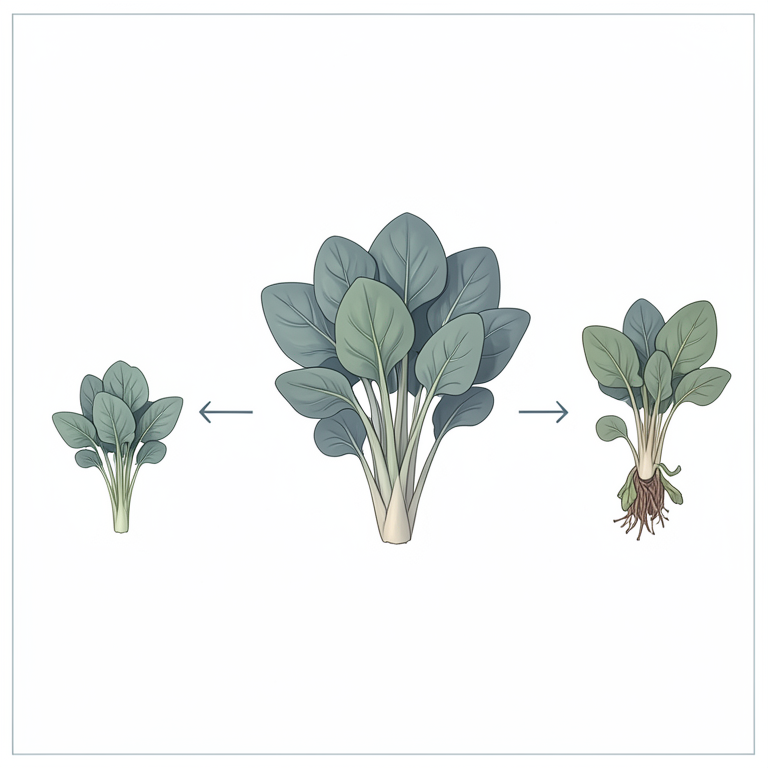
GA3 Concentration Response Curve
AI-generated conceptual illustration (Palak spinach plants (Beta vulgaris var. bengalensis)). It explains the idea and does not show study data.
View source evidence ↗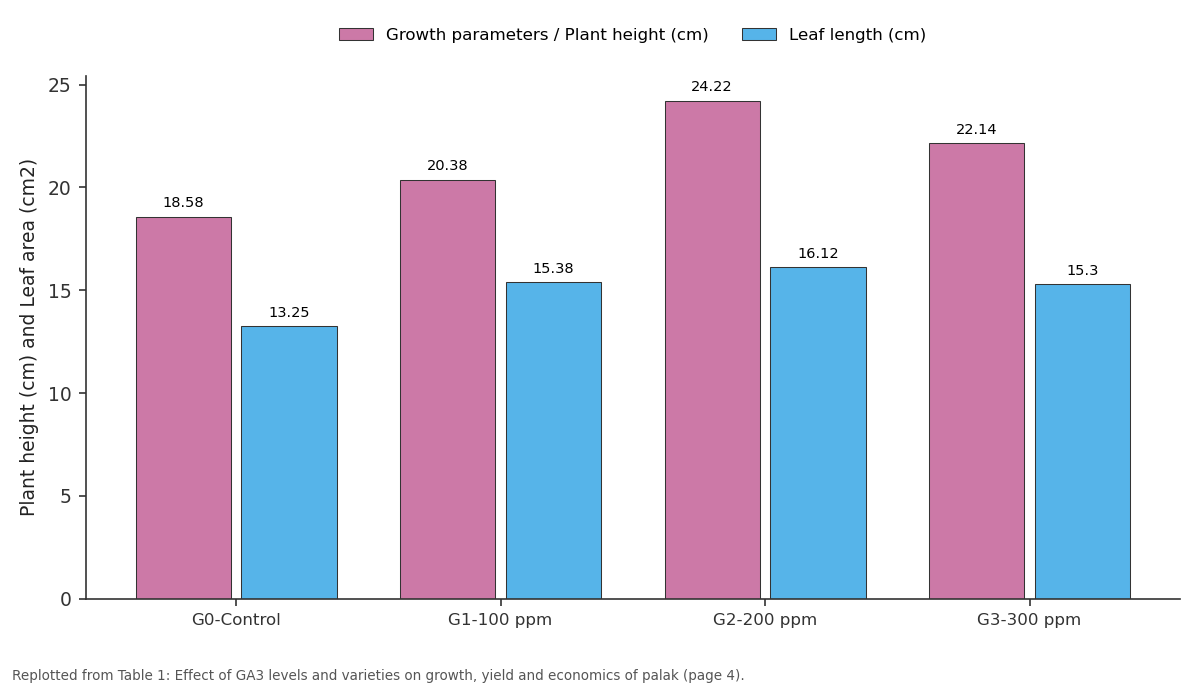
Growth parameters / Plant height (cm) and Leaf length (cm): G0-Control vs G1-100 ppm vs G2-200 ppm vs G3-300 ppm
Replotted from Table 1 (page 4) of the original paper. Every bar is the paper's own table value.
View source evidence ↗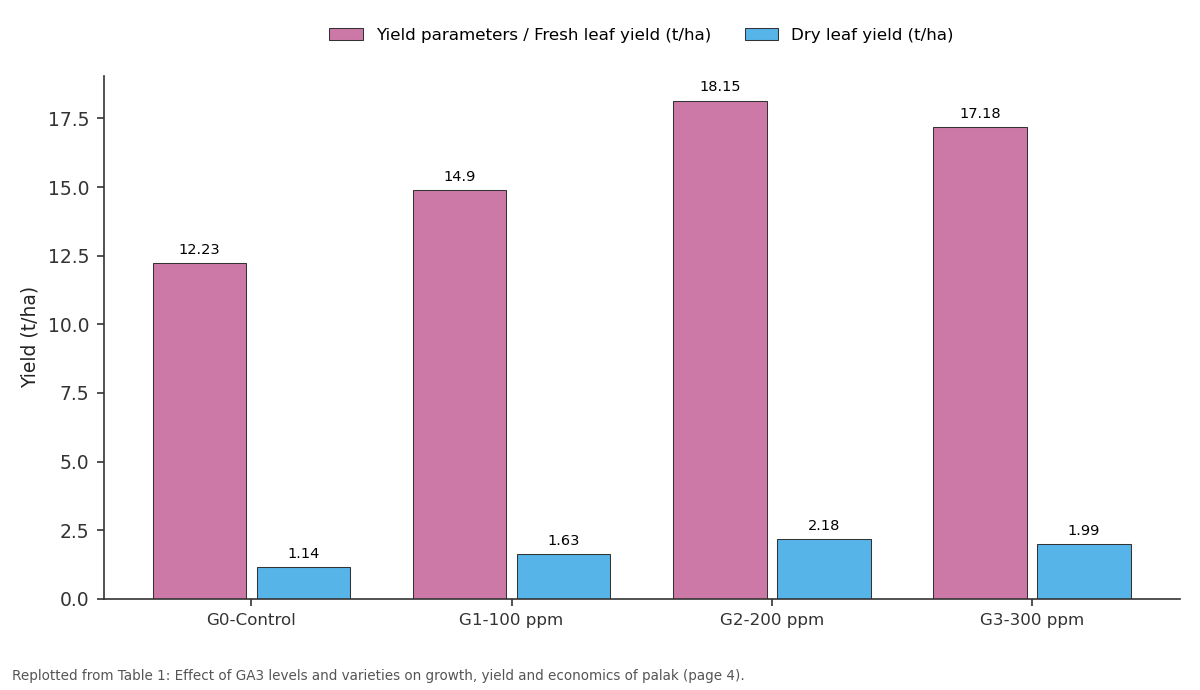
Yield parameters / Fresh leaf yield (t/ha) and Dry leaf yield (t/ha): G0-Control vs G1-100 ppm vs G2-200 ppm vs G3-300 ppm
Replotted from Table 1 (page 4) of the original paper. Every bar is the paper's own table value.
View source evidence ↗Figures & tables
From the original paper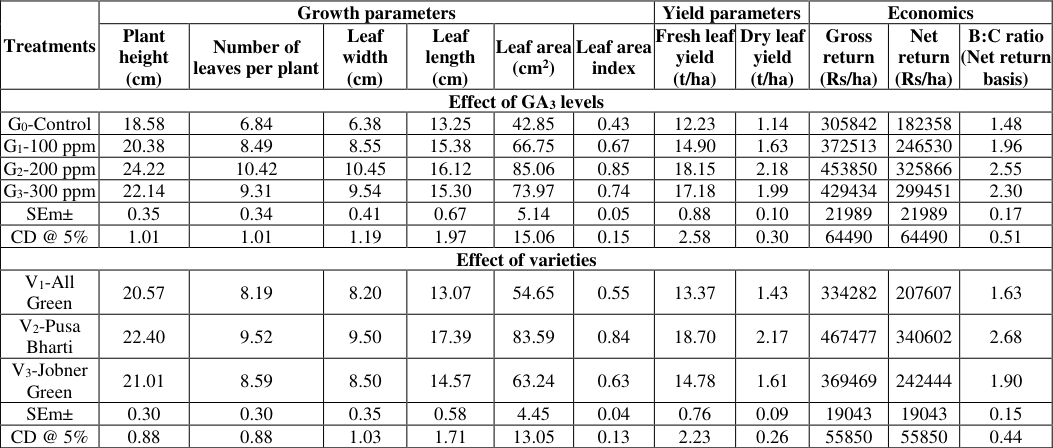 Table 1
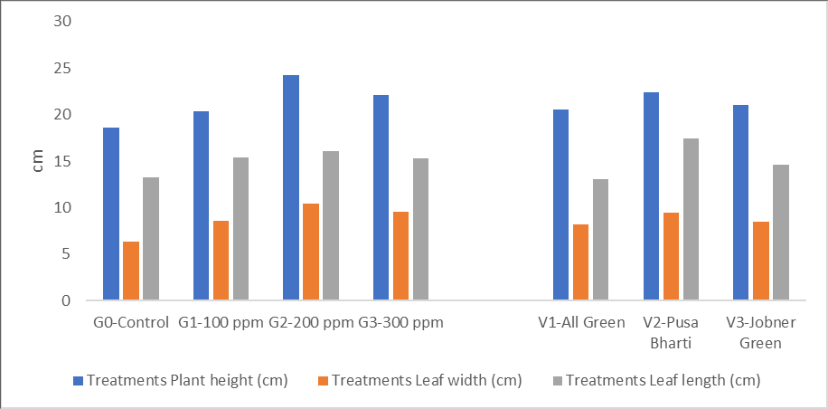 Figure 1
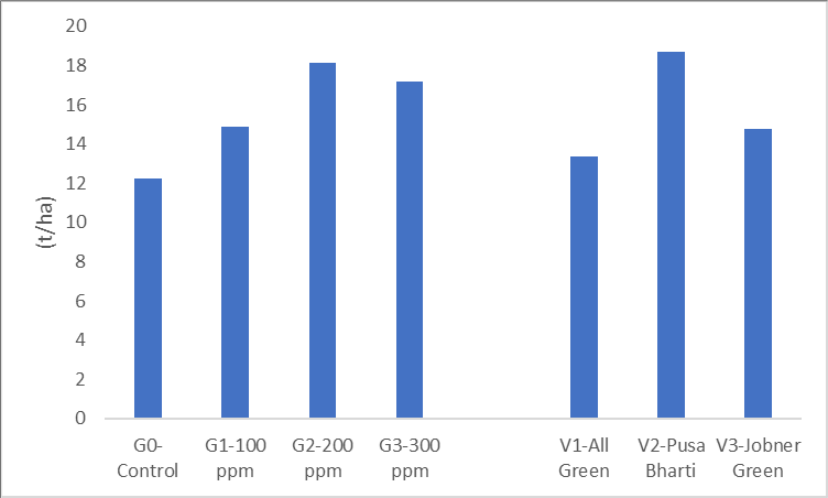 Figure 2
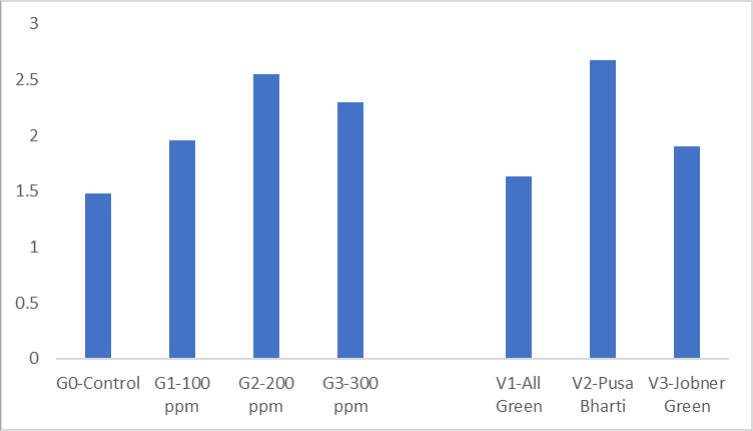 Figure 3
Introduction
Palak or spinach beet (Beta vulgaris var. bengalensis), commonly known as Indian spinach, belongs to the family Chenopodiaceae and represents one of the most important leafy vegetables cultivated throughout India (Krishna et al., 2022) [6] . This versatile crop has gained significant attention due to its exceptional nutritional profile, adaptability to diverse climatic conditions, and potential for multiple harvests within a single growing season. Palak stands distinguished as a nutritional powerhouse, earning the title "Mines of Minerals" due to its remarkable mineral content. The crop serves as an affordable source of essential vitamins including A, K, E, D, and C, along with crucial minerals such as calcium, iron, thiamine, folic acid, nicotinic acid, riboflavin, and pyridoxine (Maurya et al., 2019; Tripathy et al., 2021) [8,12] . Per 100 grams of edible portion, palak provides 268.60 mg nitrogen, 49.68 mg phosphorus, 141.68 mg potash, 368.00 mg calcium, 42.32 mg iron, 50.24 mg ascorbic acid, and 52.00 μg carotene (Krishna et al., 2022) [6] . In India, leafy vegetables occupy approximately 9.205 million hectares with an annual production of 162.187 million tonnes (Kumar et al., 2022) [7] . Palak cultivation offers farmers multiple cutting opportunities, typically yielding 6-8 harvests at 15-18-day intervals, making it an economically viable crop for smallholder farmers. Several improved varieties of palak have been developed to meet diverse agroclimatic requirements across India. All Green variety represents an early-maturing cultivar suitable for September sowing, characterized by uniformly green, tender leaves and typically matures in 40 days yielding approximately 125 q/ha through 6-7 cuttings. Pusa Bharati stands out as a superior variety developed through hybridization, featuring dark green, succulent leaves with enhanced nutritional content and late bolting characteristics, recording maximum fresh weight of 21.96-24.11 g per plant across multiple cuttings. Jobner Green variety, evolved through spontaneous mutation, exhibits tolerance to alkaline soils (pH 7.0-10.5) and produces long, thick, succulent leaves with strong flavor. Plant growth regulators (PGRs) have emerged as crucial tools in modern agriculture for enhancing crop productivity, quality, and stress tolerance. Among various PGRs, gibberellic acid (GA3) represents one of the most extensively studied and commercially utilized phytohormones (Shah et al., 2023) [9] . GA3, chemically known as gibberellin A3 with the molecular formula C19H22O6, functions as a tetracyclic diterpene compound that regulates numerous developmental processes in plants. GA3 exerts its influence through complex molecular mechanisms involving gene expression regulation and protein synthesis modulation (Tang et al., 2025) 11] . At the cellular level, GA3 overcomes growth restraint mediated by DELLA proteins, thereby facilitating stem elongation, leaf expansion, and overall plant development. Research demonstrates that GA3 applications significantly enhance various physiological processes including seed germination, stem elongation, flowering induction, and fruit development. In leafy vegetables, GA3 treatment has been shown to increase plant height, leaf area, biomass accumulation, and overall yield parameters. Studies on lettuce revealed that GA3 concentrations of 10⁻⁸ to 10⁻⁶ M promoted growth and enhanced yield, with optimal responses observed at 10⁻⁶ M concentration. The application of GA3 in vegetable production has yielded promising results across various crops. In spinach cultivation, GA3 treatments have demonstrated significant improvements in germination percentage, seedling vigor, and growth parameters. Studies on various leafy vegetables confirm GA3's effectiveness in enhancing nutritional quality alongside yield improvements. In kale, GA3 application at 100 ppm increased total phenolic content by 17% and vitamin C content significantly compared to control treatments. Similarly, research on chili plants showed that GA3 at 150 ppm produced superior results in plant height (141.58 cm), fruit yield (25.70 t/ha), and vitamin C content (98.49 mg/100 g). Determining optimal GA3 concentrations remains crucial for maximizing benefits while avoiding potential adverse effects. Research indicates that GA3 effectiveness follows a concentration-dependent response, with optimal ranges typically falling between 50-200 ppm for most vegetable crops. Lower concentrations (50-100 ppm) generally promote vegetative growth parameters, while higher concentrations (150-200 ppm) may enhance reproductive development and quality attributes. Application timing and methods significantly influence GA3 effectiveness, with foliar applications during active growth phases typically yielding superior results compared to soil applications. Despite extensive research on GA3 applications in various crops, specific studies examining GA3 effects on different palak varieties remain limited. The interaction between GA3 concentrations and varietal characteristics requires systematic investigation to develop variety-specific recommendations. Furthermore, the optimization of GA3 application for enhancing quality parameters such as oxalic acid content, mineral composition, and antioxidant activity in palak needs comprehensive evaluation. Understanding GA3's role in stress mitigation, particularly under challenging environmental conditions, could significantly enhance palak cultivation in marginal areas.
Materials and methods
The experiment was conducted during the Rabi season of 2024-25 at the School of Agricultural Sciences, Jaipur National University, Jaipur, Rajasthan. The experimental design was a factorial randomized block design (FRBD) with 12 treatment combinations (four GA3 levels and three palak varieties: All Green, Pusa Bharti, and Jobner Green) replicated thrice, giving a total of 36 plots. Plants were spaced 20 cm × 5 cm. The field was prepared by thorough ploughing, weed removal, and application of 15-20 t/ha farmyard manure. Fungicide-treated seeds were sown in rows at a depth of 2-3 cm. All farming practices were implemented during the crop grown period. Thinning was performed at 15-20 DAS to ensure an optimal plant-to-plant distance of 5-10 cm. Weeding was done first at 20-25 DAS and as necessary thereafter. Irrigation was given immediately after sowing and then at 7-10 day intervals, while fertilizer was applied at recommended doses, with nitrogen split half at sowing and remainder after the first cutting. GA3 was applied as foliar spray at 25 DAS during the active vegetative growth stage. Pest and disease control involved neem products or Dimethoate for insect pests and Mancozeb for fungal diseases as per requirements. Irrigation was managed using a sprinkler system to ensure uniform water distribution throughout the growing period. Only one cutting was done at 45 DAS to assess the treatment effects on growth, yield, and quality parameters. Statistical analysis was carried out using analysis of variance (ANOVA), and means were separated using the least significant difference (LSD) test at a 5% level of significance. The interactions between both factors were analyzed to assess their combined effect on palak growth.
Results
Results
Effect of GA3 levels
Application of GA3 significantly influenced the growth parameters of palak, with the magnitude of effects varying among GA3 levels and varieties. Among the GA3 treatments, plants treated with 200 ppm GA3 (G2) exhibited the highest values for all growth parameters, recording a plant height of 24.22 cm, 10.42 leaves per plant, a leaf width of 10.45 cm, a leaf length of 16.12 cm, a maximum leaf area of 85.06 cm², and a leaf area index of 0.85. The next best performance was observed in the 300 ppm GA3 level (G3), which also manifested substantial enhancement in all growth metrics compared to control but was slightly inferior to 200 ppm. The 100 ppm GA3 (G1) also showed a significant improvement over control (G0) across all studied parameters. The control treatment consistently recorded the lowest values, indicating the positive role of GA3 application in palak growth. Application of GA3 had a significant impact on the yield parameters of palak. Among the GA3 levels, treatment with 200 ppm (G2) resulted in the highest fresh leaf yield (18.15 t/ha) and dry leaf yield (2.18 t/ha), followed closely by the 300 ppm level (G3), which produced fresh and dry yields of 17.18 t/ha and 1.99 t/ha, respectively. Application at 100 ppm (G1) also enhanced both fresh (14.90 t/ha) and dry leaf yields (1.63 t/ha) compared to the control, whereas the control (G0) recorded the lowest yields (12.23 t/ha fresh, 1.14 t/ha dry). Among GA3 treatments, the highest gross return (Rs. 453,850/ha), net return (Rs. 325,866/ha), and benefit-cost (B:C) ratio of 2.55 were recorded for the 200 ppm GA3 treatment (G2). The 300 ppm level (G3) also showed substantial returns with a gross return of Rs. 429,434/ha, net return of Rs. 299,451/ha, and a B:C ratio of 2.30. The 100 ppm GA3 treatment (G1) produced a gross return of Rs.
372,513/ha, net return of Rs. 246,530/ha, and B:C ratio of 1.96, all significantly higher than the control (G0), which showed the lowest returns and a B:C ratio of 1.48.
Effect of varieties
Effect of varieties
Summary
The study demonstrated that application of gibberellic acid (GA3) significantly enhanced growth, yield, and economic returns of palak (Beta vulgaris var. bengalensis). Among GA3 levels, 200 ppm consistently showed the most pronounced improvement in growth parameters such as plant height, number of leaves, leaf dimensions, leaf area, and leaf area index. This treatment also yielded the highest fresh and dry leaf production, surpassing both lower and higher GA3 concentrations. In terms of economics, 200 ppm GA3 resulted in the maximum gross and net returns and the best benefit-cost ratio, confirming its cost-effectiveness despite a modest increase in cultivation cost. Regarding varietal performance, Pusa Bharti outperformed All Green and Jobner Green in all growth and yield parameters, including plant height, leaf size, leaf area, fresh and dry yield, and substantially higher economic returns with the best B:C ratio. Jobner Green ranked second, while All Green recorded the lowest values, though still responsive to GA3 treatment.
Discussion
The pronounced improvement in growth parameters at 200 ppm GA3 is primarily due to the hormone's pivotal role in promoting cell elongation, division, and overall leaf expansion, processes that directly increase leaf area and leaf area index critical indicators of the plant's photosynthetic capacity. GA3 functions by stimulating the biosynthesis of essential growth-related enzymes and the upregulation of gene expression involved in cell wall loosening and expansion, which leads to increased cell size and number (Singh et al., 2025) [10] . This enzymatic activity facilitates greater biomass accumulation, manifested as taller plants, increased leaf number, and enlarged leaf surfaces, which directly enhance photosynthetic area and, consequently, biomass productivity (Aftab et al., 2011) [1] . However, the diminished performance observed at 300 ppm compared to 200 ppm suggests that supraphysiological concentrations of GA3 may induce hormonal imbalance or phytotoxic effects, inhibiting optimum growth. This response aligns with findings by El-Shazoly (2024) [3] , who reported that excessive GA3 can disrupt the endogenous hormonal balance, leading to reduced cell elongation and overall plant vigor. The concentration-dependent nature of GA3's effects was further detailed by Han et al., (2025) [5] , who noted that while low to moderate doses enhance plant growth, surpassing the threshold concentration causes metabolic toxicity or overstimulation, triggering stress responses and growth retardation in leafy vegetables. Therefore, the observed drop in growth parameters at 300 ppm reflects this threshold phenomenon, marking 200 ppm as the optimum concentration that balances growth promotion without adverse hormonal disruption. The superior response exhibited by the Pusa Bharti variety underscores the critical role of genetic potential and varietal sensitivity in modulating responsiveness to plant growth regulators. Pusa Bharti's enhanced leaf morphology, characterized by larger and thicker leaves, coupled with its physiological efficiency, such as higher chlorophyll content and nutrient uptake efficiency, contributes to its increased photosynthetic capacity (Khedkar et al., 2023) [13] . Enhanced photosynthesis directly results in higher biomass accumulation and yield, outperforming All Green and Jobner Green varieties under identical GA3 treatments. This finding is supported by studies from Filimon et al. (2023) [4] , who emphasized the interaction effects of genotype and plant growth regulators, highlighting that cultivar-specific traits influence the magnitude of response to GA3 foliar application.
Economically, the significant increases in both growth and yield parameters under optimal GA3 application translate directly into enhanced gross and net returns, as well as improved benefit-cost (B:C) ratios, validating the practical and economic viability of GA3 use in palak cultivation. Despite a marginal increase in input costs associated with hormone application, the proportional boost in crop productivity justifies these expenditures. These economic benefits align with observations by Ali et al., (2024) [2] , who demonstrated that judicious use of GA3 in leafy vegetables optimizes resource use efficiency and profitability by maximizing biomass and marketable yield. Moreover, the balance achieved between biological efficacy and economic returns at 200 ppm GA3 highlights this concentration as both agronomically and commercially optimal for palak production systems. In summary, the integration of physiological, biochemical, and economic factors, supported by the literature, confirms that 200 ppm GA3 efficiently enhances palak growth and yield through molecular and cellular growth stimulation while avoiding the deleterious effects observed at higher concentrations. Concurrently, varietal genetic attributes play a decisive role in defining the magnitude of growth regulator responsiveness, with Pusa Bharti exhibiting superior performance. Collectively, these findings coalesce to recommend the targeted use of 200 ppm GA3, particularly in high-potential varieties like Pusa Bharti, to maximize sustainable production and profitability in palak cultivation.
Conclusion
The application of GA3 significantly improved the growth, yield, and economic returns of palak. The 200 ppm GA3 treatment showed the highest plant height, leaf number, leaf dimensions, leaf area, and leaf area index, indicating optimal vegetative growth stimulation. Though the 300-ppm level also enhanced growth and yield compared to control, its effectiveness was slightly lower than 200 ppm, suggesting a threshold beyond which GA3 may negatively affect growth. Control plants exhibited the lowest growth and yield parameters.
In yield terms, 200 ppm GA3 produced the highest fresh and dry leaf yields. Among varieties, Pusa Bharti consistently outperformed All Green and Jobner Green, showing greater biomass and higher yield. Economically, 200 ppm GA3 resulted in the best gross and net returns and benefit-cost ratio, with Pusa Bharti also proving the most profitable cultivar.
Overall, GA3 at 200 ppm is the most effective concentration for maximizing palak growth, yield, and profitability. Increased GA3 levels beyond this point reduce benefits, highlighting the importance of optimizing hormone dosage. Selecting a responsive variety like Pusa Bharti further enhances productivity and economic gains.
Figures and tables from the paper
References
12 in the original paper- Aftab T, Khan MMA, Idrees M, Naeem M, Moinuddin. Optimizing nitrogen levels combined with gibberellic acid for yield, photosynthesis, enzyme activities, and artemisinin content of Artemisia annua. Front Agric China. 2011;5(1):51-59.
- Ali A, Niu G, Masabni J, Ferrante A, Cocetta G. Integrated nutrient management of fruits, vegetables, and crops using biostimulants, soilless cultivation, and traditional and modern approaches. Agriculture. 2024;14(8):1330.
- El-Shazoly RM. Phytohormonal priming by gibberellic acid for tolerance of Chenopodium quinoa L. to ZnO NPs phytotoxicity. Catrina: Int J Environ Sci. 2024;33(1):57-69.
- Filimon RM, Rotaru L, Filimon VR. Effects of exogenous growth regulators on characteristics of an interspecific grapevine cultivar. Biol Agric Hortic. 2023;39(2):91-114.
- Han X, Mi Y, Wang H, Ye S, Abe-Kanoh N, Ji W. Influence of GA3 and CPPU on quality and peelability of 'Wuhe Cuibao' grape. Agronomy. 2025;15(8):1986.
- Krishna LS, Kumari KU, Rekha GK, Rao P, Shekar V. Effect of organic manures and bio inputs on growth, yield, and quality of palak (Beta vulgaris var. bengalensis). Pharma Innov J. 2022;11(8):1450-1453.
- Kumar Pradeep T, Peter KV, Sangeetakutty M. Seven decades of vegetable research in India. Int J Innov Hortic. 2022;11(2):135-157.
- Maurya D, Akhtar S, Tripathi V, Pandey AK. Vegetables for nutritional security and human diet. Adv Hortic. 2019;39:17-19.
- Shah SH, Islam S, Mohammad F, Siddiqui MH. Gibberellic acid: regulator of plant growth, development, and stress responses. J Plant Growth Regul. 2023;42(12):7352-7373.
- Singh L, Sadawarti RK, Singh SK, Shaifali, Mirza AA. Efficacy of plant growth regulators on productivity of strawberries (Fragaria x ananassa Duchesne). J Plant Growth Regul. 2025;44(3):1072-1086.
- Tang J, Xia X, Li Y, Zhang X, Luo R, Wu C,... Qian J. Molecular mechanisms of gibberellic acid (GA3) on 'Da Hong Tian' pomegranate (Punica granatum L.). Scientia Hortic. 2025;343:114067.
- Tripathy B, Rout S, Mishra UN, Sahoo G, Pradhan K, Prusty AK, Dash L. Vegetables: a source of nutraceuticals. Ann Rom Soc Cell Biol. 2021;25(4):17921-17941.