
Research article · 2025 · Full text
International Journal of Agriculture and Food ScienceImpact of seeding density and cell spacing on biochemical parameters of spinach (Spinacia oleracea L.) under DWC technique of aquaponics
Volume 7(9) · Pages 798–802 · DOI: 10.33545/2664844x.2025.v7.i9k.827 ↗
Research areasScience Education and PedagogyEducational Strategies and EpistemologiesEducational Assessment and Improvement
Abstract
Author-writtenA study was conducted to evaluate the effect of plant spacing and seeding density on various biochemical parameters of spinach variety All Green under Deep Water Culture technique of aquaponics during August to October, 2024. The experiment was laid out in a Factorial Completely Randomized Design (FCRD) with two replications. The experimental design included two factors viz., three plant spacings-S₁: 5 cm × 5 cm, S₂: 15 cm × 5 cm, and S₃: 15 cm × 15 cm and four seeding densities i.e. D₁: one seed per cup, D₂: two seeds per cup, D₃: three seeds per cup, and D₄: four seeds per cup. The biochemical parameters assessed in the study included nitrogen, phosphorus, potassium, ascorbic acid, and chlorophyll content. Among these, plant spacing and seeding density had no statistically significant effect on nitrogen, phosphorus, potassium and ascorbic acid content. However, chlorophyll content was significantly influenced by plant spacing.
Summary
Source-checkedPlain-language reading of the full paper, prepared with AI and checked against the text. Each point links to the authors' own words.
Why it matters
- Spinach is a cool-season leafy vegetable valued for its medicinal and nutritional properties. View evidence ↗
- Aquaponics is a sustainable food production system that combines aquaculture and hydroponics, using only about 10% of the water required for traditional soil-based farming. View evidence ↗
- There is a lack of research on how to optimize the production of spinach within aquaponic systems specifically under conditions found in India. View evidence ↗
The question
- The study aimed to evaluate how different seeding densities and plant spacings affect the biochemical parameters of the 'All Green' spinach variety using the Deep Water Culture (DWC) aquaponics technique. View evidence ↗
What they did
- The researchers used a Factorial Completely Randomized Design (FCRD) with two replications for the experiment. View evidence ↗
- Five plants were randomly selected to measure biochemical parameters, specifically nitrogen, phosphorus, potassium, chlorophyll content, and ascorbic acid content. View evidence ↗
What they found
- Cell spacing did not significantly affect nitrogen content, though the highest value (3.23%) was at 5x5 cm and the lowest (3.00%) was at 15x15 cm. View evidence ↗
- Phosphorus content remained uniform at 0.05% across all spacing treatments, indicating no significant impact from cell spacing. View evidence ↗
- Inter-plant spacing did not significantly change potassium content, which ranged between 2.01% and 2.09%. View evidence ↗
- There were no statistically significant differences in ascorbic acid content across the different cup spacings. View evidence ↗
- Plant spacing significantly affected chlorophyll; the widest spacing (15x15 cm) produced the most chlorophyll (3.75 mg), while the closest spacing (5x5 cm) produced the least (2.76 mg). View evidence ↗
- Neither plant spacing nor seeding density had a statistically significant effect on the levels of nitrogen, phosphorus, potassium, or ascorbic acid. View evidence ↗
- Varying the seeding density did not result in any statistically significant changes in chlorophyll content. View evidence ↗
What it means
- The authors conclude that the uniform environment and unrestricted nutrient availability in the DWC system provided equal access for all plants, leading to non-significant differences in most biochemical parameters. View evidence ↗
Visual summary
1 visualsIllustrations explain the paper; they do not show study data.
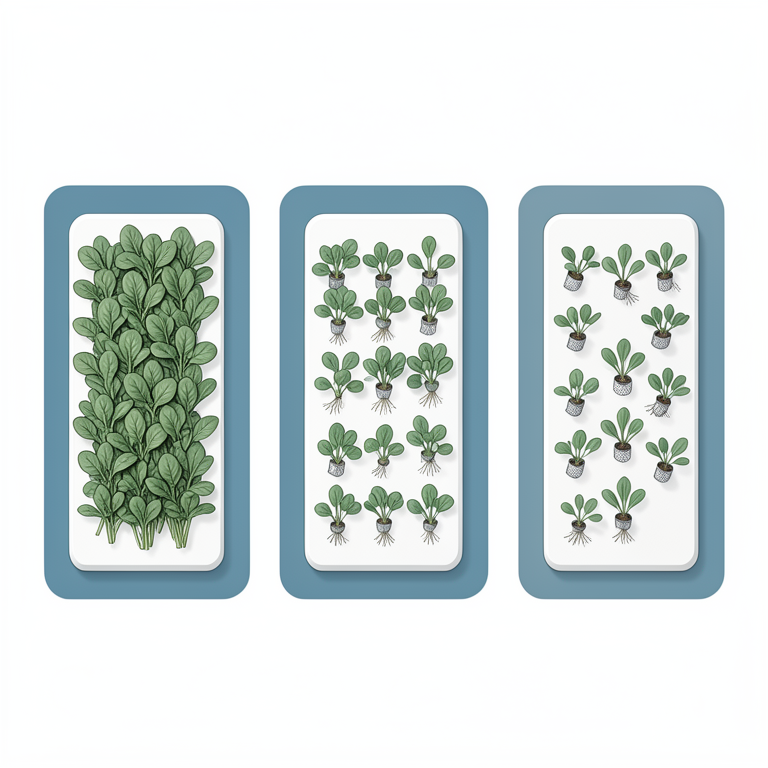
Experimental Setup Layout
AI-generated conceptual illustration (spinach plants (Spinacia oleracea L.) in a deep water culture aquaponics system). It explains the idea and does not show study data.
View source evidence ↗Figures & tables
From the original paper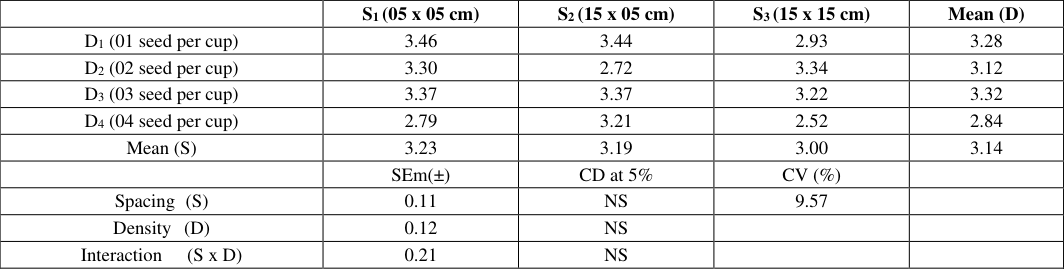 Table 1
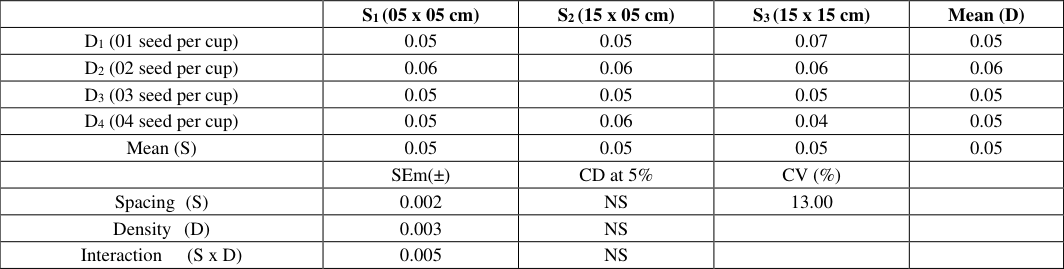 Table 2
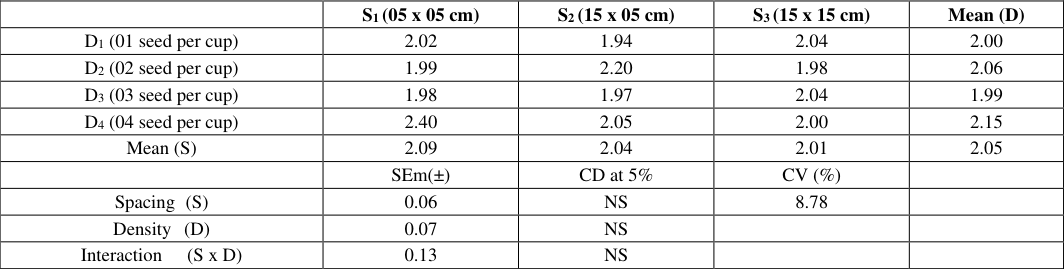 Table 3
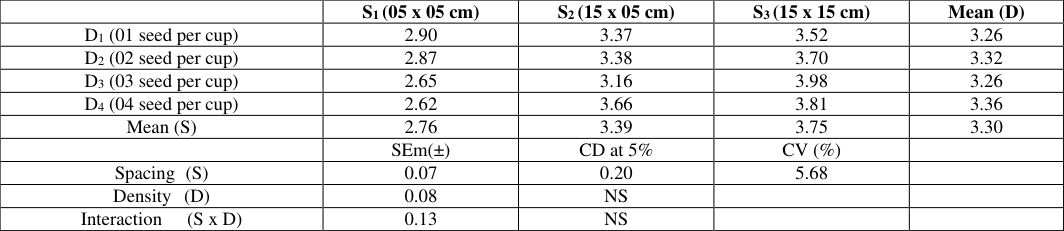 Table 4
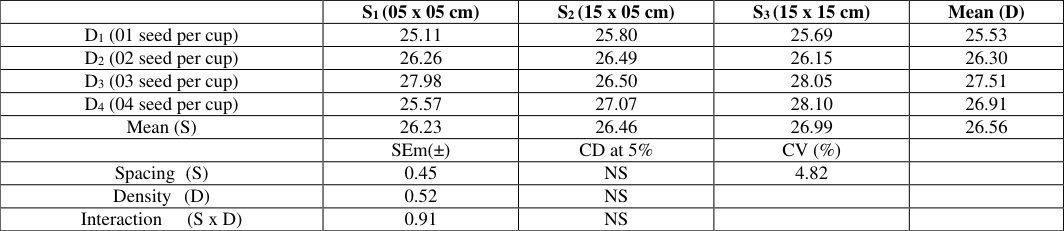 Table 5
Introduction
Spinach (Spinacia oleracea L.), a cool-season leafy vegetable from the Amaranthaceae family is widely cultivated for its nutritional and medicinal value (Awan et al., 2016) [1] . It is rich in vitamins A and C, folic acid, iron, calcium, and antioxidants. It supports human health by reducing anaemia, constipation, and oxidative stress-related conditions (Yadav et al., 2020; Lomnitski et al., 2003) [17,6] . Medicinally, it contains bioactive compounds like flavonoids, alkaloids, tannins, and glycosides, and is traditionally used to treat diabetes, asthma, inflammation, and neurological disorders (Roughani & Miri, 2019) [14] . It is a diploid (2n=12), dioecious species with tetramorphic sex expression-comprising extreme male, vegetative male, female, and rare monoecious forms (Yadav et al., 2020) [17] . Genetic studies link cultivated spinach to S. turkestanica, suggesting domestication likely occurred in Eastern or Southern Asia, including regions like Afghanistan and Pakistan (Ribera et al., 2021) [13] . Spinach is commonly used in traditional Indian cuisine by mixing its leaves into wheat flour to prepare dishes like roti, puri, and paratha. Due to its nutritional richness and adaptability, it shows great potential for agricultural diversification and addressing malnutrition (Yadav et al., 2020) [17] . The crop thrives with minimal inputs and can be cultivated even on marginal lands. Moreover, its high tolerance to cold makes it suitable for fresh-market production and protected cultivation systems like high tunnels (Black et al., 2008) [2] . Spinach productivity is affected by both plant spacing and seed density. Reducing spacing to increase planting density has been found to enhance both leaf yield and overall biomass production (Maboko & Du Plooy, 2009) [7] . Alternatively, wider spacing enhances vegetative characteristics including greater plant height and leaf expansion, attributed to better resource availability and microclimate conditions (Woldu et al., 2019) [16] . Soilless culture enables sustainable intensification by reducing dependence on arable land and freshwater, while ensuring high productivity. With controlled environmental parameters, it supports healthy plant growth and efficient nutrient uptake, leading to rapid development and higher yields. The system requires minimal inputs-using only one-fifth the land and onetwentieth the water compared to conventional farming making it more environmentally sustainable. Nevertheless, the closed-loop nature of the system demands vigilant monitoring and effective disease management (Fussy & Papenbrock, 2022) [4] . These factors are motivating the transition to innovative cultivation practices. The soilless cultivation technique enhances vegetable crop production by enabling plant growth in mediums other than soil, with essential mineral nutrients administered directly to root systems through irrigation. Hydroponics, aeroponics, and aquaponics constitute the primary forms of this cultivation method.
Aquaponics, an integrated food production system combining aquaculture and hydroponics, facilitates efficient use of resources by reducing water usage to about 10 per cent of that in traditional soil-based horticulture. This method is well-suited for urban and resource-limited rural settings, sharing advantages with hydroponics and recirculating aquaculture systems. Aquatic animal waste is biologically processed by bacteria to generate nutrients absorbed by plants, which in turn clean the water before it is recycled back to the aquatic tanks (Ranawade et al., 2017) [12] . The synergistic integration of these components enhances overall system productivity. Considering the critical dependence of future agriculture on water and land availability, aquaponics presents a promising sustainable solution (Verma et al., 2020) [15] . Despite its potential, limited studies exist on optimizing spinach production in aquaponic systems under Indian conditions. Thus to address this, the present study was conducted to determine its feasibility within aquaponics, at the Landcraft Agro Aquaponics Unit located A/p. Hatkanangale, Tal. Hatkanangale, Dist. Kolhapur.
Materials and Methods
The present research was conducted to evaluate the effect of plant spacing and seeding density on various biochemical parameters of spinach
Results and Discussion
The analysis of variance revealed non-significant differences among the factors and treatments for the traits studied. Due to the continuous circulation of the nutrientenriched solution across the hydroponic system, uniform nutrients availability is ensured for all plants. As a result, biochemical parameters measured across treatments did not differ significantly.
Cell spacing recorded non-significant influence on total Nitrogen content in spinach leaves (Table 1). Maximum N content (3.23%) was recorded at a cell spacing of 05 x 05 cm (S 1 ) and a minimum nitrogen content (3.00%) observed at cell spacing of 15 x 15 (S 3 ). The influence of seeding density also not statistically significant. Among the treatments, D 3 (three seeds/cup) resulted in the higher nitrogen concentration (3.32%), followed by D 1 (3.28%), D 2 (3.12%), and D 4 (2.84%). These outcomes align with previous studies in lettuce by Gonnella et al. (2003) [5] . A non-significant interaction effect between spacing and seeding density was recorded for nitrogen.
| — | S1 (05 x 05 cm) | S2 (15 x 05 cm) | S3 (15 x 15 cm) | Mean (D) |
|---|---|---|---|---|
| D1 (01 seed per cup) | 3.46 | 3.44 | 2.93 | 3.28 |
| D2 (02 seed per cup) | 3.30 | 2.72 | 3.34 | 3.12 |
| D3 (03 seed per cup) | 3.37 | 3.37 | 3.22 | 3.32 |
| D4 (04 seed per cup) | 2.79 | 3.21 | 2.52 | 2.84 |
| Mean (S) | 3.23 | 3.19 | 3.00 | 3.14 |
| SEm(±) | CD at 5% | CV (%) | ||
| Spacing (S) | 0.11 | NS | 9.57 | |
| Density (D) | 0.12 | NS | ||
| Interaction (S x D) | 0.21 | NS |
Table text extracted from the original PDF; superscript letters are shown inline. The original table image is below.
View original table image
Cell spacing had no significant impact on total phosphorus content in spinach leaves, with a uniform value of 0.05% recorded across all spacing treatments. Similar findings were reported by Maboko and Du Plooy (2013) [8] in tomatoes and Maludin et al. (2020) [9] in Pakchoy under raftbased and closed hydroponic systems, respectively. No significant influence of seeding density was recorded on total phosphorus levels in spinach leaves. Although the D 2 treatment (two seeds per cup) recorded a slightly elevated value (0.06%), the remaining densities produced similar readings (0.05%). These results corroborate those of Gonnella et al. (2003) [5] in lettuce grown at varying densities (Table 2). There was no notable interactive impact of plant spacing and seeding density on the phosphorus content of spinach.
| — | S1 (05 x 05 cm) | S2 (15 x 05 cm) | S3 (15 x 15 cm) | Mean (D) |
|---|---|---|---|---|
| D1 (01 seed per cup) | 0.05 | 0.05 | 0.07 | 0.05 |
| D2 (02 seed per cup) | 0.06 | 0.06 | 0.06 | 0.06 |
| D3 (03 seed per cup) | 0.05 | 0.05 | 0.05 | 0.05 |
| D4 (04 seed per cup) | 0.05 | 0.06 | 0.04 | 0.05 |
| Mean (S) | 0.05 | 0.05 | 0.05 | 0.05 |
| SEm(±) | CD at 5% | CV (%) | ||
| Spacing (S) | 0.002 | NS | 13.00 | |
| Density (D) | 0.003 | NS | ||
| Interaction (S x D) | 0.005 | NS |
Table text extracted from the original PDF; superscript letters are shown inline. The original table image is below.
View original table image
Variations in inter-plant spacing did not result in significant differences in total potassium content in spinach leaves, which ranged from 2.01% to 2.09%. The higher potassium concentration was recorded under the densest spacing (S 1 : 05 × 05 cm), while the lowest was found at the widest spacing (S 3 : 15 × 15 cm). These findings are supported by Maboko & Du Plooy (2013) [8] . No statistically significant differences were observed in potassium content as a result of varying seeding densities. A peak K content of 2.15% was noted in the D 4 treatment (four seeds per cup), followed by D 2 with 2.06%. While D 3 treatment (three seeds per cup) recorded the minimum potassium content (1.99%) (Table 3). These results are in agreement with the findings of Gonnella et al. (2003) [5] in lettuce cultivated under hydroponic conditions. While Potassium were unaffected by the interaction of spacing and seeding density.
| — | S1 (05 x 05 cm) | S2 (15 x 05 cm) | S3 (15 x 15 cm) | Mean (D) |
|---|---|---|---|---|
| D1 (01 seed per cup) | 2.02 | 1.94 | 2.04 | 2.00 |
| D2 (02 seed per cup) | 1.99 | 2.20 | 1.98 | 2.06 |
| D3 (03 seed per cup) | 1.98 | 1.97 | 2.04 | 1.99 |
| D4 (04 seed per cup) | 2.40 | 2.05 | 2.00 | 2.15 |
| Mean (S) | 2.09 | 2.04 | 2.01 | 2.05 |
| SEm(±) | CD at 5% | CV (%) | ||
| Spacing (S) | 0.06 | NS | 8.78 | |
| Density (D) | 0.07 | NS | ||
| Interaction (S x D) | 0.13 | NS |
Table text extracted from the original PDF; superscript letters are shown inline. The original table image is below.
View original table image
Plant spacing had a significant impact on chlorophyll accumulation in spinach leaves. The highest chlorophyll content (3.75 mg) was recorded at the widest spacing of 15 × 15 cm (S 3 ), followed by 15 × 5 cm spacing (S 2 ), which yielded 3.39 mg chlorophyll content. In contrast, the significantly lowest chlorophyll content (2.76 mg) was observed under the closest spacing of 5 × 5 cm (S 1 ). These results indicate that wider spacing facilitates better chlorophyll development in spinach leaves (Table 4). A similar trend was observed by Noboa et al. (2022) [10] in kale. No statistically significant variation was observed across different seeding densities. The maximum chlorophyll concentration (3.36 mg/100 g) was observed at a seeding density of four seeds per cup (D 4 ), while minimum chlorophyll levels (3.26 mg/100 g) were found in both one seed (D 1 ) and three seeds per cup (D 3 ) treatments. These findings are in agreement with results earlier reported by Dalave (2022) [3] in dill. The interaction between spacing and seeding density did not significantly influence chlorophyll content in spinach leaves (Table 4).
| — | S1 (05 x 05 cm) | S2 (15 x 05 cm) | S3 (15 x 15 cm) | Mean (D) |
|---|---|---|---|---|
| D1 (01 seed per cup) | 2.90 | 3.37 | 3.52 | 3.26 |
| D2 (02 seed per cup) | 2.87 | 3.38 | 3.70 | 3.32 |
| D3 (03 seed per cup) | 2.65 | 3.16 | 3.98 | 3.26 |
| D4 (04 seed per cup) | 2.62 | 3.66 | 3.81 | 3.36 |
| Mean (S) | 2.76 | 3.39 | 3.75 | 3.30 |
| SEm(±) | CD at 5% | CV (%) | ||
| Spacing (S) | 0.07 | 0.20 | 5.68 | |
| Density (D) | 0.08 | NS | ||
| Interaction (S x D) | 0.13 | NS |
Table text extracted from the original PDF; superscript letters are shown inline. The original table image is below.
View original table image
Ascorbic acid content ranged across different cup spacings, with no statistically significant differences. The maximum value was recorded at 15 × 15 cm spacing (S 3 ), while the minimum was observed at 5 × 5 cm (S 1 ) (Table 5). Wider spacing enhanced ascorbic acid content in spinach, likely due to better light exposure and reduced stress, supporting findings by Quy et al. (2016) [11] in hydroponic lettuce. Seeding density had no significant impact on the ascorbic acid levels in spinach leaves. The maximum content (27.51 mg per 100 g fresh weight) was recorded in the treatment with three seeds per cup (D 3 ), followed by four seeds (D 4 ) and two seeds per cup (D 2 ), which yielded 26.91 mg and 26.30 mg, respectively. The minimum value (25.53 mg/100 g) was observed in the single-seed treatment (D 1 ). No significant interactive effect of spacing and seeding density on ascorbic acid content was observed in spinach.
| — | S1 (05 x 05 cm) | S2 (15 x 05 cm) | S3 (15 x 15 cm) | Mean (D) |
|---|---|---|---|---|
| D1 (01 seed per cup) | 25.11 | 25.80 | 25.69 | 25.53 |
| D2 (02 seed per cup) | 26.26 | 26.49 | 26.15 | 26.30 |
| D3 (03 seed per cup) | 27.98 | 26.50 | 28.05 | 27.51 |
| D4 (04 seed per cup) | 25.57 | 27.07 | 28.10 | 26.91 |
| Mean (S) | 26.23 | 26.46 | 26.99 | 26.56 |
| SEm(±) | CD at 5% | CV (%) | ||
| Spacing (S) | 0.45 | NS | 4.82 | |
| Density (D) | 0.52 | NS | ||
| Interaction (S x D) | 0.91 | NS |
Table text extracted from the original PDF; superscript letters are shown inline. The original table image is below.
View original table image
Conclusion
The uniformity in environmental conditions and unrestricted nutrient availability within the system ensured equal nutrient access for all plants, thereby resulting in statistically nonsignificant differences among treatments for the biochemical parameters studied.
References
17 in the original paper- Awan DA, Ahmad F, Imdad M. Influence of row spacing and frequency of cuttings on spinach (Spinacia oleracea) production. J Bioresour Manag. 2016;3(1):6. https://doi.org/10.35691/JBM.6102.0047
- Black B, Drost D, Rowley D, Heflebower R. Constructing a low-cost high tunnel. Horticulture, Utah State University, Cooperative Extension. 2008; p. 8.
- Dalave VG. Standardization of production technology for dill (Anethum graveolens L.) under DWC technique of aquaponics [MSc thesis]. Rahuri: Mahatma Phule Krishi Vidyapeeth; 2022. 111 p.
- Fussy A, Papenbrock J. An overview of soil and soilless cultivation techniques: chances, challenges and the neglected question of sustainability. Plants. 2022;11(9):1153. https://doi.org/10.3390/plants11091153
- Gonnella M, Serio F, Conversa G, Santamaria P. Yield and quality of lettuce grown in floating system using different sowing density and plant spatial arrangements. Acta Hortic. 2003;614:687-692. https://doi.org/10.17660/ActaHortic.2003.614.102
- Lomnitski L, Bergman M, Nyska A, Ben-Shaul V, Grossman S. Composition, efficacy, and safety of spinach extracts. Nutr Cancer. 2003;46(2):222-231.
- Maboko MM, Du Plooy CP. Effect of plant spacing on growth and yield of lettuce (Lactuca sativa L.) in a soilless production system. S Afr J Plant Soil. 2009;26(3):195-198.
- Maboko MM, Du Plooy CP. High-density planting of tomato cultivars with early decapitation of growing point increased yield in a closed hydroponic system. Acta Agric Scand B Soil Plant Sci. 2013;63(8):676-682. https://doi.org/10.1080/09064710.2013.851276
- Maludin AJ, Lum MS, Lassim MM, Gobilik J. Optimal plant density, nutrient concentration and rootzone temperature for higher growth and yield of Brassica rapa L. 'Curly Dwarf Pak Choy' in raft hydroponic system under tropical climate. Trans Sci Technol. 2020;7(4):178-188.
- Noboa CS, de Lima BM, Bettan SR, Gupta D, Verruma-Bernardi MR, Purquerio LFV, et al. Hydroponic kale: effects of row spacing and number of plants per cell on yield and quality. Aust J Crop Sci. 2022;16(5):596-604. https://doi.org/10.21475/ajcs.22.16.05.p3561
- Quy NV, Sinsiri W, Chitchamnong S, Boontiang K, Kaewduangta W. Effect of plant densities and supporting materials of the vertical hydroponic system on the growth and yields of lettuce. Khon Kaen Agric J. 2016;44(4):723-730.
- Ranawade PS, Tidke SD, Kate AK. Comparative cultivation and biochemical analysis of Spinacia oleracea grown in aquaponics, hydroponics and field conditions. Int J Curr Microbiol Appl Sci. 2017;6(4):1007-1013.
- Ribera A, Treuren R van, Kik C, Bai Y, Wolters AMA. On the origin and dispersal of cultivated spinach (Spinacia oleracea L.). Genet Resour Crop Evol. 2021;68:1023-1032.
- Roughani A, Miri SM. Spinach: an important green leafy vegetable and medicinal herb. In: Proc. 2nd Int Conf Med Plants, Organic Farming, Natural and Pharmaceutical Ingredients; 2019. p. 1-6.
- Verma AK, Nayak SK, Chandrakant MH, Reang DS, Javed H, Peter RM. Production of spinach (Spinacia oleracea) plant and seed of Rohu (Labeo rohita) in a recirculating aquaponic system. J Water Eng Manag. 2020;1(2):35-42.
- Woldu Z, Negawo K, Melak T, Gebeyaw Y. Comparison of the combined effect of intra-row spacing International Journal of Agriculture and Food Science https://www.agriculturaljournals.com and harvesting interval on yield and yield components of Swiss chard (Beta vulgaris L.). J Biol Agric Healthc. 2019;9(19):43-47.
- Yadav RK, Tomar BS, Choudhary H, Sumanlata. Pusa Vilayati Palak: a highly nutritious spinach variety. Indian Hortic. 2020;65(4):29-31.