
Research article · 2025 · Full text
International Journal of Agriculture and Food ScienceA study on marketing and branding strategies for promoting organic farming in Anantapur district of Andhra Pradesh
Volume 7(12) · Pages 507–510 · DOI: 10.33545/2664844x.2025.v7.i12g.1081 ↗
Research areasOrganic Food and AgricultureAgricultural Systems and PracticesFisheries and Aquaculture Studies
Abstract
Author-writtenThe present study investigates the critical role of marketing and branding strategies in the promotion of organic farming in Anantapur district of Andhra Pradesh. As a region marked by arid climatic conditions, low rainfall, and recurrent droughts, Anantapur presents unique challenges for conventional agriculture, making it a promising candidate for the adoption of sustainable organic farming practices. The study focuses on understanding the socio-economic background of organic farmers, evaluating the branding and marketing approaches adopted, and identifying the major constraints inhibiting the growth of organic farming. The research was conducted using purposive sampling methods in selected mandals and villages within the district. Data were collected through structured interviews, focus group discussions, and key informant interviews, involving a total of 100 farmers engaged in organic practices. Descriptive statistics were used to analyze socio-economic data, while the Garrett Ranking Technique and SWOT analysis were employed to identify key challenges and strategic opportunities. Findings reveal that while there is growing interest in organic farming, critical issues such as lack of certification support, limited access to organized markets, insufficient promotional efforts, and low consumer awareness continue to hinder widespread adoption. Additionally, farmers expressed a need for cooperative branding models, improved training, and policy support to help build consumer trust and improve market linkages. The study concludes with recommendations that include strengthening institutional frameworks, expanding branding and marketing education, and enhancing infrastructural facilities. These strategic interventions are essential to transform organic farming from a niche practice into a mainstream livelihood option in Anantapur.
Summary
Source-checkedPlain-language reading of the full paper, prepared with AI and checked against the text. Each point links to the authors' own words.
Why it matters
- Anantapur district is a promising area for organic farming because its arid climate, low rainfall, and frequent droughts make conventional agriculture difficult. View evidence ↗
- The success of organic farming in this region depends on effective branding and marketing to ensure farmers can access markets and realize the value of their produce. View evidence ↗
The question
- The study aims to examine the current branding and marketing practices used by organic farmers in the Anantapur district. View evidence ↗
- The research also seeks to identify the socio-economic profiles of farmers, the constraints they encounter, and opportunities for improvement. View evidence ↗
What they did
- The study was conducted in the Anantapur district of Andhra Pradesh, specifically focusing on the purposively selected Garladinne Mandal. View evidence ↗
- The researchers used purposive sampling to select 100 respondents, with 25 farmers chosen from each of the selected villages. View evidence ↗
- Data collection was carried out using key informant interviews, focus group discussions, and structured interviews. View evidence ↗
- The study analyzed data using descriptive statistics, SWOT analysis, and the Garrett Ranking Technique to identify challenges and opportunities. View evidence ↗
What they found
- The majority of organic farmers (58%) are middle-aged, falling within the 32 to 61 age bracket. View evidence ↗
- A large portion of the farmers are small-scale, with 40% being marginal landholders (<1 ha) and 35% being small landholders (1–2 ha). View evidence ↗
- Branding adoption is very low at 8%, although 75% of farmers expressed interest in using cooperative branding models. View evidence ↗
- The most preferred marketing channel is weekly local markets, used by 54% of the respondents. View evidence ↗
- Farmers face significant marketing barriers, including low price realization (68%), lack of access to markets outside their village (72%), and unawareness of digital marketing or urban demand (84%). View evidence ↗
- According to Garrett Ranking, the most critical constraints are the high cost of certification (Rank I, mean score 72.45) and a lack of consumer awareness (Rank II, mean score 67.21). View evidence ↗
What it means
- The authors recommend enhancing infrastructural facilities, expanding education on marketing and branding, and strengthening institutional frameworks to mainstream organic farming. View evidence ↗
- The study notes that digital marketing is hindered by low digital literacy, poor connectivity, and a lack of trust in online payment systems. View evidence ↗
Visual summary
2 visualsIllustrations explain the paper; charts are replotted from the paper's own table values.
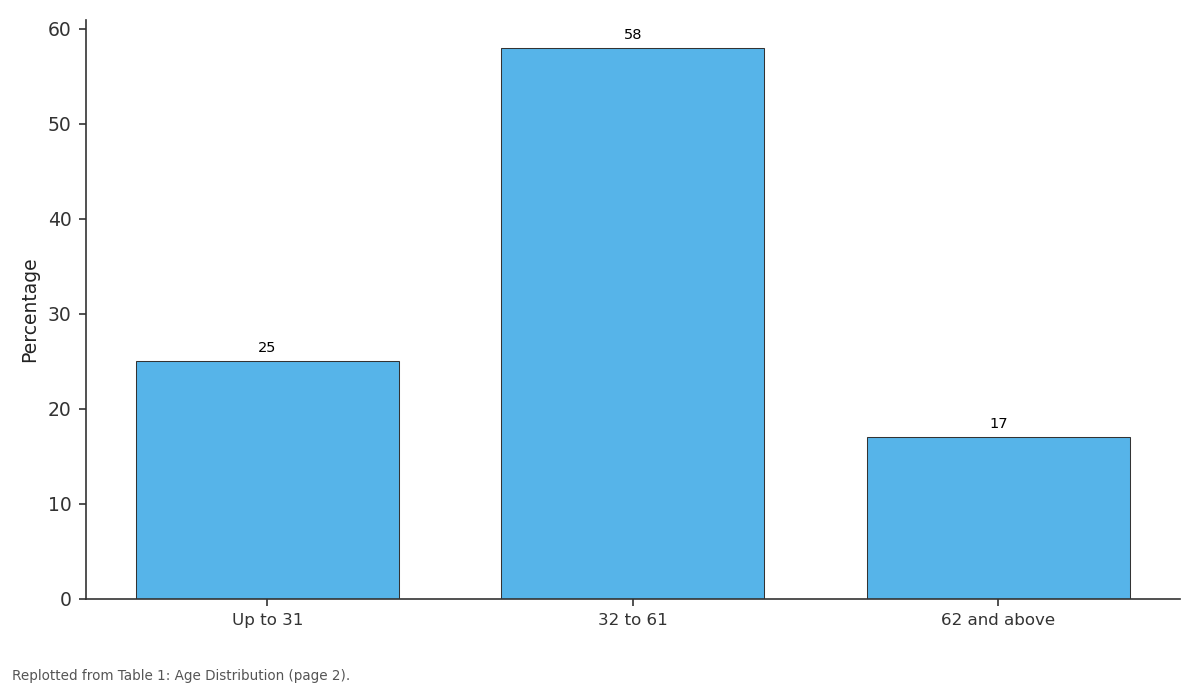
Percentage: Up to 31 vs 32 to 61 vs 62 and above
Replotted from Table 1 (page 2) of the original paper. Every bar is the paper's own table value.
View source evidence ↗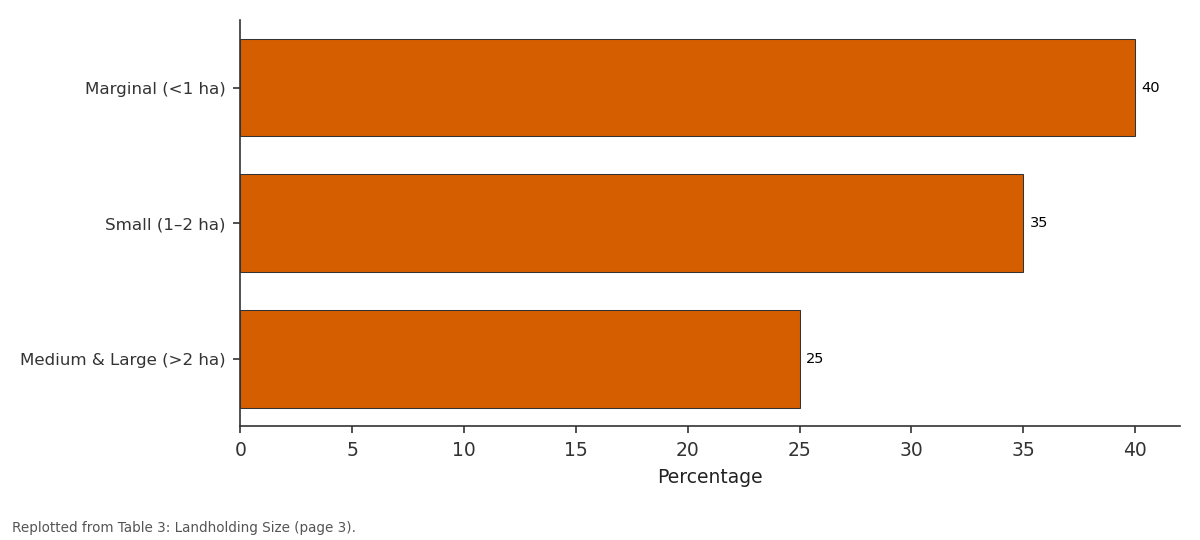
Percentage: Marginal (<1 ha) vs Small (1–2 ha) vs Medium & Large (>2 ha)
Replotted from Table 3 (page 3) of the original paper. Every bar is the paper's own table value.
View source evidence ↗Figures & tables
From the original paper Table 1
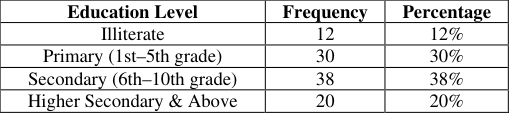 Table 2
 Table 3
 Table 4
 Table 5
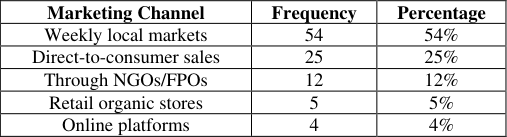 Table 6
Introduction
Organic farming has emerged as a viable and environmentally sustainable alternative to conventional agriculture, offering multiple benefits such as improved soil health, reduced dependency on chemical inputs, and enhanced biodiversity. In recent years, there has been a growing trend toward organic farming globally and nationally, driven by increasing consumer awareness of health, environmental sustainability, and food safety. In the Indian context, the organic sector is witnessing significant growth; however, its progress in arid and semi-arid zones like Anantapur remains limited due to various constraints. Anantapur district, situated in the Rayalaseema region of Andhra Pradesh, is predominantly a dryland area characterized by erratic rainfall, frequent droughts, and limited irrigation facilities. Agriculture in this region is primarily subsistence-oriented, with crops such as groundnut, millets, pulses, and fruits like mango and custard apple being grown under low-input conditions. These characteristics make Anantapur a suitable candidate for organic farming, particularly due to the natural alignment of its farming systems with organic principles. Despite this potential, the adoption and success of organic agriculture in the region depend largely on effective marketing and branding strategies that can create awareness, enhance value realization, and ensure market access. This study aims to fill the existing knowledge gap by examining the current marketing and branding practices among organic farmers in Anantapur. It also identifies the key socioeconomic characteristics of these farmers, the constraints they face, and the opportunities available for improving organic agriculture through strategic interventions. By analyzing both primary data from farmers and secondary data from official sources, the study provides actionable insights and recommendations to enhance the viability and sustainability of organic farming in this drought-prone district.
Objectives 1. To study the socio-economic profile of respondents in the study area. 2. To examine branding strategies to promote organic farming. 3. To study the marketing strategies to promote organic farming. 4. To identify constraints in promoting organic farming in the study area.
Research Methodology
This chapter outlines the research design and methodological framework adopted for the study. It details the procedures followed for the selection of the study area, sampling techniques, data collection methods, and the tools and techniques used for data analysis. The methodology was carefully chosen to ensure that the study objectives are effectively achieved, and that the data obtained is valid, reliable, and relevant to the research problem.
Selection of the District
Out of the 26 districts in Andhra Pradesh, the present study was undertaken in Anantapur district, which is part of the Rayalaseema region. Anantapur is characterized by an arid climate, erratic rainfall, and frequent droughts, making it one of the most ecologically vulnerable districts in the state. Agriculture in the region is primarily rainfed and drylandbased, and farmers are heavily reliant on natural resources.
In recent years, due to environmental degradation and the increasing cost of chemical inputs, there has been a growing interest among farmers in sustainable agricultural practices, including organic farming. Crops such as groundnut, millets, and pulses have seen rising adoption of organic methods. Given these conditions and developments, Anantapur was purposively selected as the study area for its unique agroclimatic challenges and the emerging organic farming movement. This made it a suitable district for assessing the socio-economic and agronomic dimensions of organic farming.
Selection of Blocks (Mandals)
Following the selection of Anantapur district, the next step was the identification of specific Mandal(s) for detailed fieldwork. Anantapur comprises 63 Mandals. A comprehensive list of these Mandals was obtained from the District Agricultural Office. Garladinne Mandal was purposively selected based on the following criteria: Prevalence of organic farming practices (certified or intransition), Accessibility and logistical convenience for field visits, Support and cooperation from local agricultural officers, Presence of active farmer groups and NGOs promoting organic agriculture. Garladinne Mandal had a significant number of farmers who had adopted or were experimenting with organic farming. Additionally, the Mandal displayed diverse agro-ecological and socioeconomic characteristics, enriching the study's data pool.
Selection of Villages
Upon selection of the Mandal, a list of villages within Garladinne Mandal was obtained in consultation with Mandal-level agricultural and revenue authorities. Based on predefined criteria-such as the presence of a substantial number of organic farmers, ongoing participation in government or NGO-led organic farming initiatives, and willingness of farmers to participate in the study-5% of the villages in the Mandal were selected.The selected villages offered a mix of small, marginal, and medium farmers, representing varied farming experiences and socioeconomic profiles. This approach ensured data representativeness and allowed for comprehensive insights into organic farming practices in the region.
Selection of Respondents
In each selected village, a list of farmers was prepared with the help of local agricultural assistants and village heads. From this list, farmers who had either fully adopted organic farming or demonstrated significant awareness and interest in organic practices were identified.The study employed purposive sampling, as the objective was to specifically assess the knowledge, behavior, and practices of those familiar with or actively engaged in organic farming. An equal number of 25 respondents per village were selected, resulting in a total sample size of 100 respondents across the villages.Efforts were made to ensure inclusivity by selecting respondents across gender, age groups, and landholding sizes. All participants were informed about the purpose of the study, and interviews were conducted only after obtaining their informed consent.
Results and Discussion
This chapter presents and analyzes the data collected from the respondents regarding their demographic characteristics, farming practices, income levels, marketing channels, and constraints related to organic farming. The findings provide insights into the socio-economic background of organic farmers, the extent of branding adoption, marketing issues, and key challenges affecting the promotion of organic farming in Anantapur district.
Demographic Profile of Respondents
Demographic Profile of Respondents
Discussion
The data shows that a majority (58%) of organic farmers fall within the 32-61 age bracket. This group represents economically active, middle-aged individuals who are often considered the decision-makers in farming households. Their involvement in organic farming suggests that the transition to sustainable agriculture is being led by those with a balance of physical capability and farming experience. This group is likely to have witnessed the longterm impacts of chemical-intensive agriculture and may be more receptive to alternative practices. The 25% of respondents under 31 years reflect a positive sign for generational continuity in organic farming. Their presence indicates that younger farmers are entering or continuing in agriculture, potentially bringing with them openness to innovation and digital technologies. However, the 17% of respondents aged 62 and above underscores the need for training programs tailored to older farmers, who may be slower to adopt new marketing strategies or technology-based interventions.
Landholding and Income Distribution
Landholding and Income Distribution
Discussion
The landholding pattern indicates that 75% of organic farmers are either marginal or small landholders. This is consistent with national rural trends, where fragmented landholdings often limit mechanization and commercialscale agriculture. For these farmers, organic farming offers an economically viable alternative that reduces input costs and reliance on external inputs. However, smaller landholdings also present challenges in achieving economies of scale for branding, packaging, and market access. These farmers may struggle to invest in individual branding efforts or certification. As such, cooperative models, such as Farmer Producer Organizations (FPOs), become essential for scaling their reach and reducing marketing costs.
Discussion
Income is a critical determinant of farmers' ability to invest in inputs, marketing, and capacity building. The data shows a relatively even income distribution, with 42% earning between ₹50,000-₹1,00,000, and 40% above ₹1,00,000 annually. This suggests that a significant portion of organic farmers have financial capacity to invest in basic branding and marketing tools if support structures are in place. Conversely, 18% of respondents earn less than ₹50,000 annually, indicating high economic vulnerability. This group requires targeted subsidies, technical assistance, and linkage to low-cost certification to avoid exclusion from formal organic markets.
Major Crops Cultivated
The dominant crops cultivated by the respondents include: Groundnut, Foxtail millet, Red gram, Mango, Custard apple Discussion: These crops are particularly well-suited to dryland, low-input organic farming systems. Groundnut and millets are drought-resistant and nutrient-rich, while pulses like red gram naturally enrich soil nitrogen. Mango and custard apple are perennial fruit crops with good market demand and lower pesticide requirements. These crop choices align well with ecological principles and offer comparative advantages in organic production.
Branding Practices and SWOT Analysis Branding Adoption
• Only 8% of respondents used any form of branding.
• 12% had undergone branding or packaging training.
• Just 5% sold their produce under self-made labels.
• 75% expressed interest in cooperative branding.
Discussion
Despite a low level of branding (8%), the fact that 75% of respondents are willing to explore cooperative branding indicates a strong latent demand. Farmers understand the potential of branding to differentiate their produce and capture price premiums. However, the major barriers include lack of technical knowledge, high design and packaging costs, and limited exposure to branding benefits.
Investments in community-level training, pilot branding projects, and local cooperatives could help smallholders market their organic produce more effectively. Government schemes and NGO interventions should focus on providing basic toolkits for branding, including label design, storytelling, and digital packaging.
5: SWOT Analysis
5: SWOT Analysis
Strengths Weaknesses Traditional organic knowledge passed through generations
Limited knowledge of branding and value addition Dryland crops ideal for organic production High cost and complexity of organic certification Opportunities Threats Growing urban demand for organic and natural produce Market adulteration by non-organic sellers E-commerce and digital marketing platforms Price fluctuations and lack of price guarantees
Discussion
The SWOT analysis reveals that Anantapur has inherent strengths in traditional knowledge and crop suitability. Market opportunities are also increasing with rising urban demand for organic foods. However, weaknesses like limited certification access and branding inexperience hinder scale and profitability. The threat from fake organic produce calls for better enforcement and traceability solutions (e.g., QR code labels, certification seals). Price volatility can be mitigated through contract farming models and linkages with stable buyers such as organic retail chains or online grocers.
Marketing Channels and Constraints
Marketing Channels and Constraints
Discussion
More than half (54%) of the respondents rely on weekly local markets, which offer limited margins and are often saturated with non-organic produce. Only 9% are accessing premium outlets like retail organic stores or online platforms, showing a digital and infrastructural gap. Digital marketing remains underutilized due to poor connectivity, low digital literacy, and mistrust in online payments. There is a need to build digital infrastructure, train farmers in e-commerce, and support e-trade platforms that aggregate smallholders.
Marketing Challenges Faced
• 68% reported low price realization.
• 72% had no access to markets beyond their village.
• 84% were unaware of urban demand or digital marketing options. The majority of respondents face severe marketing bottlenecks. Lack of awareness about premium markets results in undervalued organic produce. Strengthening ruralurban market linkages through mobile apps, SMS-based market updates, and tie-ups with buyers in cities can improve outcomes. Government should promote organic market yards or dedicated spaces within mandis to ensure price transparency.
Figures and tables from the paper
| Age Group | Frequency | Percentage |
|---|---|---|
| Up to 31 | 25 | 25% |
| 32 to 61 | 58 | 58% |
| 62 and above | 17 | 17% |
Table text extracted from the original PDF; superscript letters are shown inline. The original table image is below.
View original table image
| Education Level | Frequency | Percentage |
|---|---|---|
| Illiterate | 12 | 12% |
| Primary (1st–5th grade) | 30 | 30% |
| Secondary (6th–10th grade) | 38 | 38% |
| Higher Secondary & Above | 20 | 20% |
Table text extracted from the original PDF; superscript letters are shown inline. The original table image is below.
View original table image
| Landholding Category | Frequency | Percentage |
|---|---|---|
| Marginal (<1 ha) | 40 | 40% |
| Small (1–2 ha) | 35 | 35% |
| Medium & Large (>2 ha) | 25 | 25% |
Table text extracted from the original PDF; superscript letters are shown inline. The original table image is below.
View original table image
| Annual Income (INR) | Frequency | Percentage |
|---|---|---|
| Less than ₹50,000 | 18 | 18% |
| ₹50,000 – ₹1,00,000 | 42 | 42% |
| More than ₹1,00,000 | 40 | 40% |
Table text extracted from the original PDF; superscript letters are shown inline. The original table image is below.
View original table image
| Strengths | Weaknesses |
|---|---|
| Traditional organic knowledge passed through generations | Limited knowledge of branding and value addition |
| Dryland crops ideal for organic production | High cost and complexity of organic certification |
| Opportunities | Threats |
| Growing urban demand for organic and natural produce | Market adulteration by non-organic sellers |
| E-commerce and digital marketing platforms | Price fluctuations and lack of price guarantees |
Table text extracted from the original PDF; superscript letters are shown inline. The original table image is below.
View original table image
| Marketing Channel | Frequency | Percentage |
|---|---|---|
| Weekly local markets | 54 | 54% |
| Direct-to-consumer sales | 25 | 25% |
| Through NGOs/FPOs | 12 | 12% |
| Retail organic stores | 5 | 5% |
| Online platforms | 4 | 4% |
Table text extracted from the original PDF; superscript letters are shown inline. The original table image is below.
View original table image
References
5 in the original paper- Kumar S, Singh R. Marketing strategies for organic products: an analysis of consumer awareness and satisfaction. International Journal of Business and Management. 2016;11(6):112-121.
- Das S, Kumar V. Economic analysis of organic farming adoption in Maharashtra: a case study. Indian Journal of Agricultural Economics. 2017;72(3):320-330.
- Ali M, Rahman S. Adoption of organic farming practices: constraints and benefits among smallholder farmers in India. International Journal of Agricultural Sustainability. 2018;16(2):135-145.
- Singh A, Sharma R. Impact of organic farming on farm income and environment: a case study from Punjab. Journal of Environmental Management. 2019;233:351360.
- Tripathi P, Mehta D. Knowledge and adoption of organic farming practices among farmers in Uttar Pradesh. Indian Journal of Extension Education. 2020;56(3):15-22.