
Research article · 2025 · Full text
International Journal of Agriculture and Food ScienceProbiotic and synbiotic dairy foods: Current technological challenges and future innovations
Volume 7(12) · Pages 20–24 · DOI: 10.33545/2664844x.2025.v7.i12a.1020 ↗
Research areasProbiotics and Fermented FoodsAnimal Nutrition and PhysiologyBiopolymer Synthesis and Applications
Abstract
Author-writtenProbiotic and synbiotic dairy foods have gained substantial attention due to their proven contributions to gut health, immunity, metabolic balance, and overall well-being. This review provides an updated overview of probiotics, prebiotics, and synbiotics, along with their historical development and scientific definitions. Dairy matrices such as milk, yogurt, and cheese offer nutrient-rich environments that enhance the viability and functional performance of probiotics during processing, storage, and gastrointestinal transit. Market trends indicate increasing consumer interest in clean-label, minimally processed, premium, and microbiome-focused products, which is driving rapid growth in the functional dairy sector. Technological challenges including probiotic survival, encapsulation efficiency, formulation stability, fermentation compatibility, and packaging limitations remain key obstacles to product optimization. Emerging technologies such as next-generation probiotics, plant-fiber-enriched synbiotics, CRISPR-based strain engineering, high-pressure processing, and intelligent packaging offer promising avenues for improving probiotic stability and efficacy. Future developments in personalized nutrition, multi-strain synbiotic systems, dairy-based nutraceutical beverages, and regulatory harmonization are expected to shape the next phase of innovation in this field. Overall, probiotic and synbiotic dairy foods hold strong potential as effective, consumer-friendly functional foods, provided that scientific, technological, and regulatory challenges are adequately addressed.
Summary
Source-checkedPlain-language reading of the full paper, prepared with AI and checked against the text. Each point links to the authors' own words.
Why it matters
- Probiotic and synbiotic dairy foods are highly valued for their ability to improve overall well-being, including metabolic balance, immunity, and gut health. View evidence ↗
- Dairy matrices like cheese, yogurt, and milk are ideal for delivering probiotics because their nutrient-rich environments protect and stabilize beneficial microorganisms. View evidence ↗
- Current market trends show a consumer preference for minimally processed, clean-label products, driving the use of gentle processing and natural prebiotics. View evidence ↗
The question
- The review aims to provide an updated overview of the scientific definitions and historical development of probiotics, prebiotics, and synbiotics. View evidence ↗
- The paper examines key technological obstacles to product optimization, such as packaging limits, fermentation compatibility, and probiotic survival. View evidence ↗
What they did
- The authors conducted a review of current literature to synthesize information on probiotics, prebiotics, and synbiotics in dairy foods. View evidence ↗
What they found
- High-temperature treatments, pasteurization, and intense homogenization can damage cell membranes and significantly lower the count of viable probiotic strains. View evidence ↗
- Freeze drying leads to higher survival rates of probiotics compared to other methods by removing water at low temperatures to preserve cell integrity. View evidence ↗
- Lactobacillus species can help reduce lactose intolerance by producing β-galactosidase, which aids in the digestion of lactose. View evidence ↗
- Certain probiotic strains contribute to reductions in fat accumulation, body weight, and obesity-related metabolic markers by regulating appetite and energy metabolism. View evidence ↗
- CRISPR-based genetic editing can be used to increase the safety profile, metabolic capabilities, and stress tolerance of probiotic strains. View evidence ↗
- Optimized high-pressure processing (HPP) can extend shelf life and preserve probiotic viability without affecting sensory attributes or product quality. View evidence ↗
- Intelligent packaging using biosensors, moisture regulators, and oxygen scavengers can be used to monitor and maintain probiotic viability. View evidence ↗
What it means
- The authors conclude that dairy matrices are an effective delivery method for health-promoting microorganisms due to their support of functionality and survival. View evidence ↗
- The authors expect the sector to expand through personalized nutrition and functional beverages, provided quality and regulatory standards are satisfied. View evidence ↗
- Product performance is currently limited by the challenge of maintaining probiotic viability during digestion, storage, and processing. View evidence ↗
Visual summary
1 visualsIllustrations explain the paper; they do not show study data.
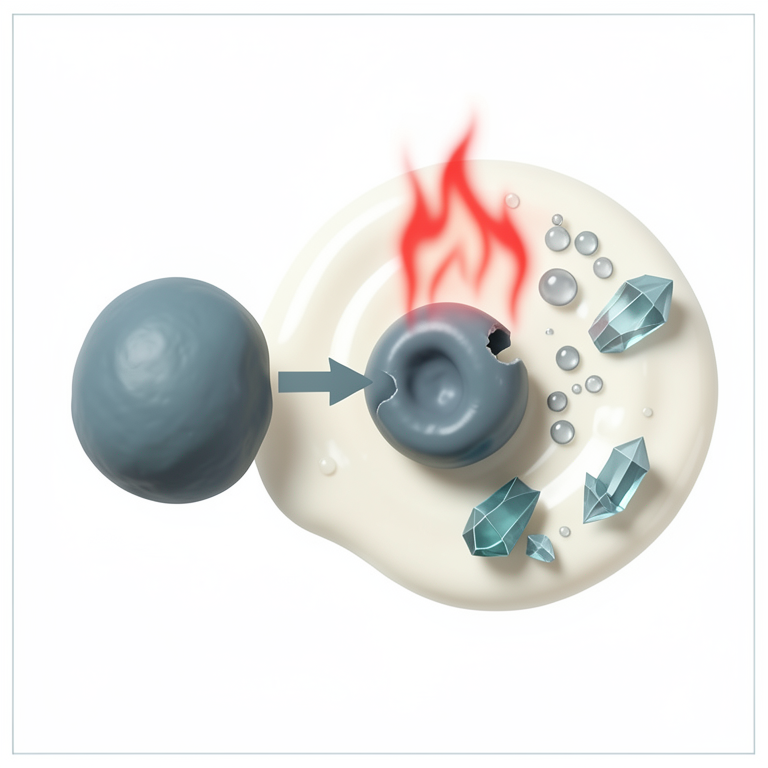
Probiotic Stress Factors
AI-generated conceptual illustration (Lactobacillus probiotic bacteria in a dairy matrix). It explains the idea and does not show study data.
View source evidence ↗Introduction
The importance of probiotics was brought to light in 2001 when the definition of probiotics was first established. It was redefined as "live microorganisms that, when administered in sufficient amounts, provide numerous health benefits to the host". This definition was further refined in 2014 by a panel of scientists from the International Scientific Association for Probiotics and Prebiotics (ISAPP) as "this definition encompasses a wide range of microbes and applications, while capturing the essence of probiotics" (Chandrasekaran et al., 2024) [4] . The concept of prebiotics was first introduced in 1995 by Glenn R. Gibson and Marcel Roberfroid, who explained that prebiotics are non-digestible food ingredients that selectively stimulate the growth or activity of one or a limited number of bacteria in the colon, with beneficial effects on the host, thereby improving host health. Later, in 2004, Glenn R. Gibson and Hollie M. Probert proposed three criteria: (i) resisting hydrolysis by mammalian enzymes and gastrointestinal absorption and gastric acidity; (ii) fermented by gut microorganisms; (iii) selectively stimulating the activity and growth of gut bacteria involved in health and well-being. In 2016, the International Scientific Association for Probiotics and Prebiotics (ISAPP) redefined prebiotics as a selectively utilized substrate by host microorganisms conferring a health benefit. The criteria for defining prebiotics are evolving gradually. This review will focus on prebiotics in a broader sense. (Yoo et al., 2024) [27] . Synbiotics are formed when probiotics and prebiotics are coupled. Synergistic effects between probiotics and prebiotics are significant due to the advancement of preserving and introducing living microorganism supplements in the gastrointestinal tract. Synbiotics offer the advantage that probiotics are more readily available in the gastrointestinal tract. (Siddiqui et al., 2023) [22] .
1.1 Importance of dairy as a delivery matrix (milk, yogurt, cheese) Dairy products such as milk, yogurt, and cheese are considered ideal delivery matrices for probiotics and synbiotics because they offer a nutrient-rich, protective environment that enhances the survival, stability, and functionality of beneficial microorganisms (Yao et al., 2024) [26] . The natural composition of dairy rich in lactose, casein, whey proteins, minerals, and fats acts as a buffer against stress during food processing, storage, and gastrointestinal transit (Singh et al., 2023) [23] . The nearneutral pH and high-water activity enable probiotics to remain metabolically active, while lactose serves as an energy source, supporting their growth and viability. Fermented dairy products like yogurt provide an acidic yet stable ecosystem where probiotics can coexist with starter cultures and maintain high cell counts (Coelho et al., 2022) [7] . Lactic acid bacteria in raw-milk cheeses: From starter cultures to probiotic functions. Foods, 11 (15), 2276.). Cheese, especially semi-hard and hard varieties, offers a more stable microstructure with low oxygen, limited moisture, and longer shelf life, making it one of the most effective carriers for delivering high probiotic loads (Falih et al., 2024) [13] . Furthermore, consumers widely accept dairybased functional foods, and they align well with the concept of delivering health benefits through everyday dietary habits, strengthening their commercial and nutritional relevance as delivery vehicles for probiotics and synbiotics.
Market and consumer trends
The demand for probiotic and synbiotic dairy products has grown steadily in recent years, driven mainly by increasing awareness of gut health, immunity, and preventive nutrition. Yogurt, fermented milk drinks, and probiotic beverages remain the most popular categories due to consumer familiarity and convenience. Synbiotic formulations are also gaining attention because they offer enhanced functional benefits by combining probiotics with prebiotics (Ali et al., 2022) [1] . Consumers increasingly prefer clean-label, minimally processed products, which encourages the use of natural prebiotics and gentle processing technologies. There is also a notable rise in premium and fortified dairy products, including high-protein probiotic drinks and strain-specific formulations. Although plant-based probiotic options are expanding, dairy products remain dominant because of their superior ability to maintain probiotic viability (Chauhan and Rao, 2024) [5] . Personalized nutrition, online retail, and microbiome-focused products are shaping purchasing behavior, while emerging markets such as India show rapid growth due to rising incomes and expanding dairy infrastructure. At the same time, regulatory bodies are placing greater emphasis on accurate labeling and validated health claims, influencing how manufacturers design and market probiotic and synbiotic dairy products.
Technological Challenges a. Viability of Probiotics
Maintaining the viability of probiotic cells throughout processing, storage, and consumption is one of the major technological challenges in developing probiotic and synbiotic dairy products. Probiotics are sensitive to several processing and environmental factors that can reduce their cell count and functional activity.
Survival during processing (heat, homogenization):
Many probiotic strains are heat-labile and cannot withstand pasteurization, high-temperature treatments, or intense homogenization. These processes can damage cell membranes and significantly reduce viable counts (Rabbani et al., 2025) [18] . Oxygen sensitivity: Several probiotic species, particularly Bifidobacterium, are anaerobic or microaerophilic (Chen et al., 2022) [6] . Exposure to oxygen during mixing, filling, and storage decreases their stability and survival. Storage stability: Viability decreases over time due to temperature fluctuations, moisture changes, and interactions with other food components. Probiotics require refrigeration and optimal water activity to maintain the required CFU levels until the end of shelf life (Zavišić et al., 2023) [28] . Acidity tolerance: In fermented dairy products, the acidic environment can stress probiotic cells. Low pH during fermentation and storage may cause membrane damage, reducing their survival before ingestion (Sionek et al., 2024) [24] .
b. Encapsulation Technologies
Encapsulation is widely used to enhance the survival of probiotics during processing, storage, and gastrointestinal transit. It provides a physical barrier that protects cells from heat, oxygen, acidity, and mechanical stress commonly encountered in dairy processing.
Microencapsulation methods (spray drying, freeze drying, extrusion): Spray drying is a cost-effective technique that converts probiotic suspensions into dry powder, though high temperatures may reduce viability.
Freeze drying preserves cell integrity more effectively by removing water at low temperatures, resulting in higher survival rates. Extrusion involves forming gel beads containing probiotics under mild conditions, offering excellent protection but with higher production costs (Ermis et al., 2022) [12] . Protective materials (alginate, chitosan, proteins):
Alginate is one of the most commonly used encapsulating polymers due to its biocompatibility and ability to form stable gels (Siberi Riseh et al., 2021) [20] .
Chitosan provides an additional protective coating with antimicrobial resistance and controlled release properties (Asadi et al., 2022) [2] . Milk-derived proteins such as whey protein isolate and casein can also be used to encapsulate probiotics, improving their stability and compatibility with dairy matrices.
c. Product Formulation Issues
Product formulation plays a critical role in maintaining probiotic viability and ensuring desirable sensory characteristics in dairy products. pH adjustment: Probiotics are sensitive to low pH, especially in fermented products such as yogurt.
Maintaining an optimal pH during and after fermentation is essential to prevent excessive acid stress and loss of viability (de Souza et al., 2023) [9] . Texture and syneresis: Probiotics can influence the textural properties of dairy products. Issues such as whey separation (syneresis), viscosity changes, or graininess may occur, requiring stabilizers or adjustments to fermentation conditions (Arab et al., 2023) [2] . Interaction with milk components (lactose, casein):
Milk components can support or inhibit probiotic survival. Lactose serves as an energy source, while casein and whey proteins can form protective microstructures around cells. However, proteinprobiotic interactions may also affect texture and fermentation kinetics (Zhao et al., 2024) [29] .
d. Fermentation Challenges
Fermentation introduces several challenges that influence probiotic performance and product quality.
Selection of strains compatible with dairy cultures: Probiotic strains must coexist with traditional starter cultures without inhibiting each other or altering expected product characteristics. Co-culturing difficulties: Differences in growth rates, nutrient requirements, and metabolic activities can complicate co-fermentation, affecting probiotic counts and sensory outcomes (Dhiman et al., 2025) [10] . Phage sensitivity: Bacteriophages can infect starter and probiotic cultures, leading to fermentation failure, reduced viability, or inconsistent product quality (White et al., 2022) [25] .
e. Packaging Challenges
Packaging conditions directly influence probiotic survival during storage and distribution. Oxygen permeability: Many probiotic strains are oxygen-sensitive; therefore, packaging materials must minimize oxygen exposure to prevent oxidative damage and viability loss (Đinh et al., 2025) [11] . Light sensitivity: Exposure to light can accelerate oxidative reactions and reduce probiotic stability, making opaque or UV-protective packaging desirable. Cold-chain requirements: Most dairy-based probiotics require consistent refrigeration to maintain viable cell counts until the end of shelf life. Temperature fluctuations during storage and transport remain a major challenge.
Health Benefits and Mechanisms
Probiotic and synbiotic dairy products provide several documented health benefits, largely mediated through their interaction with the gastrointestinal system and host immune responses.
Gut microbiota modulation: Probiotics help restore and maintain a balanced gut microbiota by increasing beneficial bacterial populations and reducing pathogenic species. Their metabolic activities, such as short-chain fatty acid production, contribute to improved gut barrier function and overall digestive health (Dahiya and Nigam, 2023) [8] . Immune enhancement: Certain probiotic strains stimulate components of the immune system, including macrophages, dendritic cells, and natural killer cells. They can enhance antibody production (particularly IgA) and regulate cytokine responses, contributing to improved resistance against infections (Mazziotta et al., 2023) [17] . Lactose intolerance reduction: Probiotic cultures, especially Lactobacillus species, produce βgalactosidase, which assists in lactose digestion.
Regular consumption of fermented dairy products can reduce symptoms such as bloating, gas, and discomfort in lactose-intolerant individuals (Ibrahim et al., 2021) [14] . Anti-inflammatory and anti-obesity effects: Probiotics may reduce systemic inflammation by modulating cytokine profiles and improving intestinal permeability. Some strains also influence energy metabolism and appetite regulation, contributing to reductions in body weight, fat accumulation, and metabolic markers associated with obesity (Mafe et al., 2025) [16] .
Emerging Technologies & Innovations
Advances in biotechnology and food processing are creating new opportunities to improve the stability, functionality, and health benefits of probiotic and synbiotic dairy products. Next-generation probiotics (e.g., Akkermansia, Bifidobacterium longum BB536): These strains are gaining attention for their targeted metabolic and immunological benefits. Incorporating next-generation probiotics into dairy matrices requires optimized processing conditions to maintain viability and functional activity (Li et al., 2023) [15] . Synbiotic dairy fortified with plant fibers: Adding natural prebiotic fibers such as inulin, FOS, or resistant starch enhances probiotic growth and survivability while improving gastrointestinal benefits. Such combinations also support clean-label and functionalfood trends (Shin et al., 2021) [21] . CRISPR-based strain modification: CRISPR tools enable precise genetic editing to enhance stress tolerance, improve metabolic capabilities, or increase the safety profile of probiotic strains. This technology can produce strains better suited for dairy environments and processing conditions. High-pressure processing (HPP) for improved survival: HPP is a non-thermal technique that maintains product quality while reducing microbial load. When optimized, it can help preserve probiotic viability and extend shelf life without damaging sensory attributes. Smart/intelligent packaging for probiotic count:
Modern packaging technologies incorporate oxygen scavengers, moisture regulators, or biosensors that monitor probiotic viability. These systems help maintain stability and provide real-time quality information to manufacturers and consumers.
Future Prospects
The probiotic and synbiotic dairy sector is expected to expand significantly as consumer awareness and technological capabilities continue to grow. Personalized probiotic dairy products: Future formulations may target individual microbiome profiles, offering tailored benefits for digestion, immunity, or metabolic health. Microbiome-based diagnostics will support this personalization. and multi-fiber synbiotics: Combining diverse probiotic strains with multiple prebiotic fibers can provide broader and more robust functional benefits, supporting gut health through synergistic mechanisms.
Dairy-based nutraceutical beverages: Functional dairy drinks enriched with bioactive compounds, vitamins, minerals, and customized probiotic blends will drive product innovation, especially in on-the-go and clinical nutrition markets. Regulatory challenges (FSSAI, EFSA, FDA): Stricter regulations require validated evidence for health claims, accurate strain identification, and assurance of probiotic viability at the end of shelf life. Meeting these standards will be essential for product approval and consumer trust.
Conclusion
Probiotic and synbiotic dairy foods offer an effective way to deliver health-promoting microorganisms because dairy matrices support good survival and functionality. However, challenges such as maintaining viability during processing, storage, and digestion still limit product performance. Advances in encapsulation, fermentation control, packaging, and emerging technologies are helping improve stability and efficacy. With growing interest in gut health, personalized nutrition, and functional beverages, probiotic and synbiotic dairy products are expected to expand further, provided that regulatory and quality requirements are met.
References
29 in the original paper- Ali MA, Kamal MM, Rahman MH, Siddiqui MN, Haque MA, Saha KK, Rahman MA. Functional dairy products as a source of bioactive peptides and probiotics: current trends and future prospectives. J Food Sci Technol. 2022;59(4):1263-1279.
- Arab M, Yousefi M, Khanniri E, Azari M, Ghasemzadeh-Mohammadi V, Mollakhalili-Meybodi N. Yogurt syneresis: effect of processing conditions and additives. J Food Sci Technol. 2023;60(6):1656-1665.
- Asadi S, Mortezagholi B, Hadizadeh A, Borisov V, Ansari MJ, Shaker Majdi H, et al. Ciprofloxacin-loaded titanium nanotubes coated with chitosan. Pharmaceutics. 2022;14(7):1359.
- Chandrasekaran P, Weiskirchen S, Weiskirchen R. Effects of probiotics on gut microbiota: an overview. Int J Mol Sci. 2024;25(11):6022.
- Chauhan K, Rao A. Clean-label alternatives for food preservation: An emerging trend. Heliyon. 2024;10(16):eXXXXXX.
- Chen Y, Meenu M, Baojun X. Microencapsulation of obligate anaerobe probiotics: A narrative review. Food Rev Int. 2022;38(Suppl 1):373-402.
- Coelho MC, Malcata FX, Silva CC. Lactic acid bacteria in raw-milk cheeses: from starter cultures to probiotic functions. Foods. 2022;11(15):2276.
- Dahiya D, Nigam PS. Antibiotic-therapy-induced gut dysbiosis and restoration by probiotics and synbiotics. Int J Mol Sci. 2023;24(4):3074.
- de Souza M, Drunkler DA, Colla E. Probiotic functional yogurt: challenges and opportunities. Fermentation. 2023;10(1):6.
- Dhiman S, Kaur S, Thakur B, Singh P, Tripathi M. Nutritional enhancement of plant-based fermented foods: microbial innovations. Fermentation. 2025;11(6):346.
- Đinh HN, Ureña M, Oliete B, Denimal E, Dupont S, Beney L, Karbowiak T. Sodium alginate as an encapsulating material for oxygen-sensitive probiotics. Food Hydrocoll. 2025;160:110857.
- Ermis E. Drying methods for improving probiotic powder quality: a review. Dry Technol. 2022;40(11):2199-2216.
- Falih MA, Altemimi AB, Alkaisy QH, Awlqadr FH, Abedelmaksoud TG, Amjadi S, et al. Enhancing safety and quality in the global cheese industry: a review of innovative preservation techniques. Heliyon. 2024;10(23):eXXXXXX.
- Ibrahim SA, Gyawali R, Awaisheh SS, Ayivi RD, Silva RC, Subedi K, et al. Fermented foods and probiotics for lactose intolerance. J Dairy Res. 2021;88(3):357-365.
- Li Y, Arai S, Kato K, Iwabuchi S, Iwabuchi N, Muto N, et al. Immunomodulatory effect of Bifidobacterium longum subsp. longum BB536. Nutrients. 2023;16(1):42.
- Mafe AN, Edo GI, Akpoghelie PO, Gaaz TS, Yousif E, Zainulabdeen K, et al. Probiotics and food bioactives: effects on gut microbiome and metabolic health. Probiotics Antimicrob Proteins. 2025;1-42.
- Mazziotta C, Tognon M, Martini F, Torreggiani E, Rotondo JC. Probiotics mechanism of action on immune cells. Cells. 2023;12(1):184.
- Rabbani A, Ayyash M, D'Costa CD, Chen G, Xu Y, Kamal-Eldin A. Effect of heat pasteurization and sterilization on milk safety, composition, sensory properties and nutritional quality. Foods. 2025;14(8):1342.
- Ranadheera CS, Evans CA, Adams MC, Baines SK. Probiotic delivery through dairy foods: an overview of processing challenges and solutions. Food Res Int. 2017;64:1-14.
- Saberi Riseh R, Skorik YA, Thakur VK, Moradi Pour M, Tamanadar E, Noghabi SS. Encapsulation of bacteria with alginate polymer material. Int J Mol Sci. 2021;22(20):11165.
- Shin JS, Kim BH, Baik MY. Plant proteins and dietary fibers for plant-based yogurts. Foods. 2021;10(10):2305.
- Siddiqui SA, Khan S, Mehdizadeh M, Nirmal NP, Khanashyam AC, Fernando I, et al. Consumer studies focus on prebiotics, probiotics, and synbiotics in food packaging: a review. Curr Food Sci Technol Rep. 2023;1(1):13-29.
- Singh B, Pavithran N, Rajput R. Effects of food processing on nutrients. Curr J Appl Sci Technol. 2023;42(46):34-49.
- Sionek B, Szydłowska A, Trząskowska M, KołożynKrajewska D. Impact of physicochemical conditions on lactic acid bacteria survival in food products. Fermentation. 2024;10(6):298.
- White K, Yu JH, Eraclio G, Dal Bello F, Nauta A, Mahony J, van Sinderen D. Bacteriophage-host interactions in fermented foods. Microbiome Res Rep. 2022;1(1):3.
- Yao D, Ranadheera CS, Shen C, Wei W, Cheong LZ. Milk fat globule membrane: composition, production and its potential as encapsulant for bioactives and probiotics. Crit Rev Food Sci Nutr. 2024;64(33):123361251.
- Yoo S, Jung SC, Kwak K, Kim JS. The role of prebiotics in modulating gut microbiota: implications for human health. Int J Mol Sci. 2024;25(9):4834. International Journal of Agriculture and Food Science https://www.agriculturaljournals.com
- Zavišić G, Ristić S, Petković B, Živkov-Šaponja D, Jojić N, Janković D. Microbiological quality of probiotic products. Arh Farm. 2023;73(1):17-34.
- Zhao Y, Saxena J, Truong T, Chandrapala J. Lactoseproteins-minerals in dairy systems: a review. In: Milk Proteins-Technological Innovations and Applications. IntechOpen; 2024. p. 75.