
Research article · 2025 · Full text
International Journal of Agriculture and Food SciencePhysiochemical and microbiological evaluation of yoghurt prepared using lactic acid bacteria isolated from human feces
Volume 7(11) · Pages 605–611 · DOI: 10.33545/2664844x.2025.v7.i11h.1012 ↗
Research areasProbiotics and Fermented FoodsGut microbiota and healthBiopolymer Synthesis and Applications
Abstract
Author-writtenThe Codex Alimentarius, established by the FAO/WHO Committee, defines yoghurt as a fermented dairy product produced via the symbiotic metabolic activity of Lactobacillus delbrueckii subsp. bulgaricus and Streptococcus thermophilus. Recently, there has been growing interest in non-traditional sources, such as human fecal samples, for isolating lactic acid bacteria (LAB) strains with probiotic potential. In this study, three LAB strains were isolated from human fecal samples, molecularly identified, and incorporated into yoghurt formulations both individually and in combination as probiotic LAB cultures. The experimental yoghurts were compared to a Y1 made with traditional starter cultures to evaluate physicochemical, microbial, and sensory properties. Results revealed significant differences in microbial counts between Y1 and experimental yoghurts, while all samples maintained favorable physicochemical properties within acceptable ranges. Color analysis indicated that ingredient variations influenced the lightness (L), red-green (a), and yellow-blue (b) values. Texture parameters, including hardness, adhesiveness, and cohesiveness, were affected by culture concentration and incubation time; however, these differences were not statistically significant, suggesting consistency across formulations. Among the experimental samples, one showed improved syneresis, indicating enhanced water-holding capacity These findings underscore the potential of human-derived LAB strains for developing probiotic yoghurt while maintaining desirable quality attributes. The study highlights the importance of strain selection, culture concentration, and formulation parameters in optimizing product characteristics and consumer appeal.
Summary
Source-checkedPlain-language reading of the full paper, prepared with AI and checked against the text. Each point links to the authors' own words.
Why it matters
- Yoghurt is a widely consumed dairy product created when lactic acid bacteria (LAB) ferment lactose into lactic acid. View evidence ↗
- Human fecal samples are considered a rich source for isolating novel LAB strains that may improve the functional and probiotic properties of yoghurt. View evidence ↗
- LAB from the human gut may be better adapted to the gastrointestinal environment, such as resisting gastric acid and bile salts, compared to traditional dairy-sourced strains. View evidence ↗
The question
- The study aims to investigate whether Lactobacillus strains isolated from human feces can be effectively used for yoghurt production and maintain probiotic viability. View evidence ↗
What they did
- Three LAB strains (AMBAD 8, AMAAS 6, and AMAAD 9) were isolated from human fecal samples and identified using 16S rRNA sequence analysis. View evidence ↗
- The study compared a control yoghurt (Y1) made with traditional strains against three experimental yoghurts (Y2, Y3, and Y4) each using one of the human-derived LAB strains. View evidence ↗
- Yoghurt was prepared using 100ml of Amul Taza milk (3% fat, 8.5% SNF) supplemented with 3% skimmed milk powder and 7% sugar. View evidence ↗
- Data were expressed as mean ± standard deviation from four observations and analyzed using one-way ANOVA. View evidence ↗
What they found
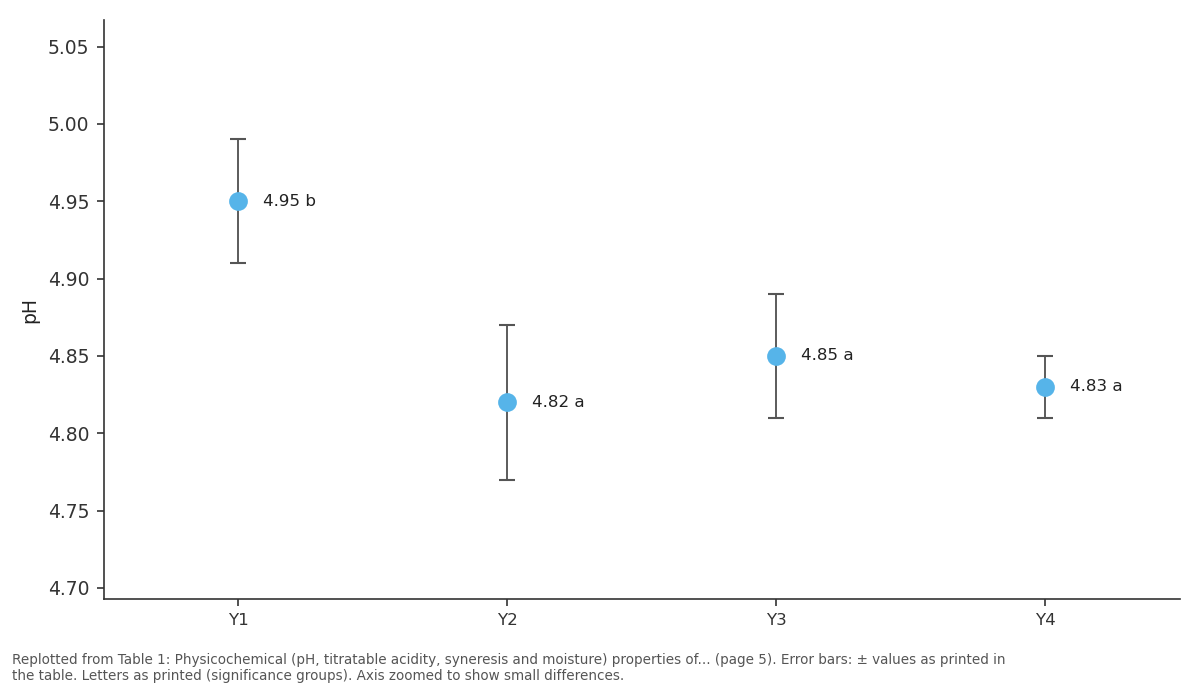
- The control yoghurt (Y1) had a significantly higher pH (4.95 ± 0.04) than the experimental yoghurts, meaning it was less acidic. View evidence ↗
- No significant difference in titratable acidity was found between the control and experimental samples, with values ranging from 0.14% to 0.15%. View evidence ↗
- Y2 showed significantly higher syneresis (38.13 ± 0.75%) compared to Y1 (35.63 ± 2.53%), indicating more whey separation. View evidence ↗
- Moisture content remained consistent across all samples, ranging from 70% to 80% with no significant differences. View evidence ↗
- The control yoghurt (Y1) was significantly lighter (L = 88.09 ± 0.09) than all experimental yoghurts. View evidence ↗
- Although Y1 had the highest hardness (176.91 ± 153.91 g), there were no statistically significant differences in hardness among the samples. View evidence ↗
What it means
- The authors conclude that LAB strains from human fecal samples are feasible starters for yoghurt production and perform similarly to traditional dairy cultures. View evidence ↗
- The authors suggest that gut-derived LAB may offer advantages in probiotic delivery and survival due to their natural adaptation to the human gastrointestinal tract. View evidence ↗
Visual summary
2 visualsIllustrations explain the paper; charts are replotted from the paper's own table values.
pH: Y1 vs Y2 vs Y3 vs Y4
Replotted from Table 1 (page 5) of the original paper. Every bar is the paper's own table value.
View source evidence ↗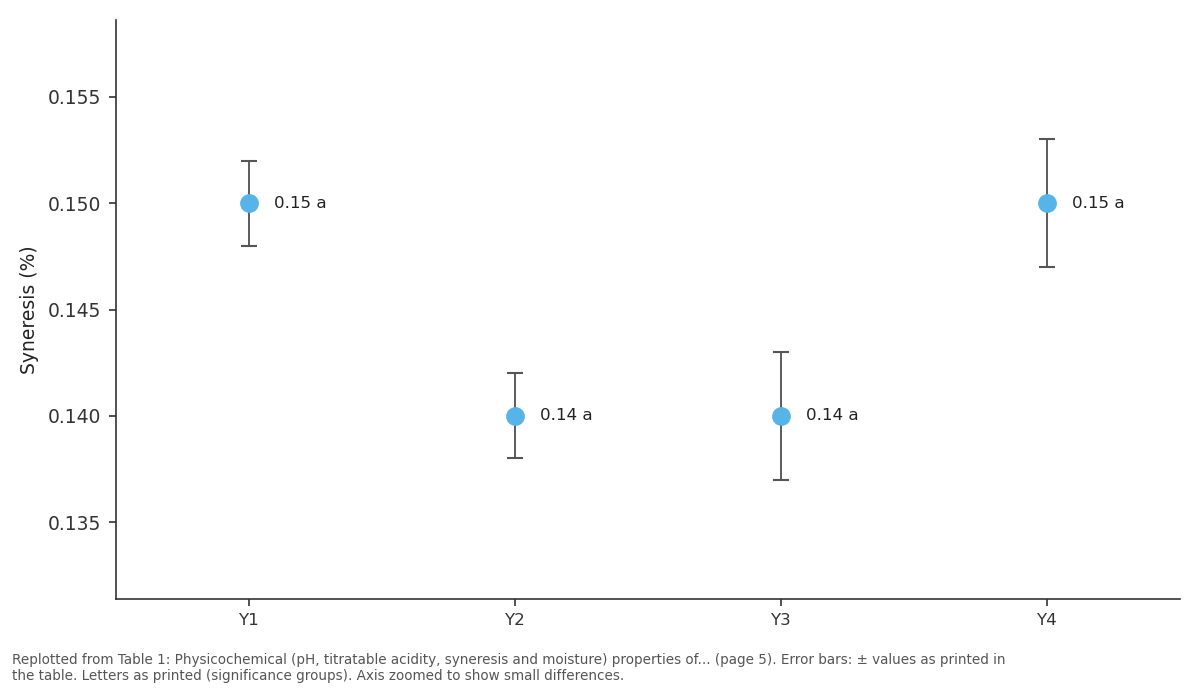
Acidity: Y1 vs Y2 vs Y3 vs Y4
Replotted from Table 1 (page 5) of the original paper. Every bar is the paper's own table value.
View source evidence ↗Figures & tables
From the original paper Table 1
 Table 2
 Table 3
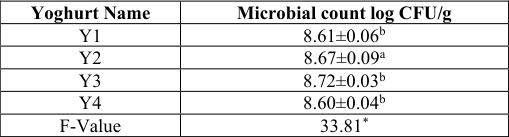 Table 4
Introduction
Yoghurt is popular dairy product obtained by fermentation of lactose to lactic acid by lactic acid bacteria (LAB), and can be made from all types of milk [1] . Yoghurt is defined by the FAO/WHO Committee of the Codex Alimentarius as a fermented dairy product produced through the metabolic activity of two symbiotic microorganisms, Lactobacillus delbrueckii subsp. bulgaricus and Streptococcus thermophiles [2] . Lactic acid bacteria (LAB) are a Grampositive bacterium that is rod or coccus-shaped that can produce lactic acid as the primary end product through hetero fermentative or homofermentative metabolism. LAB is commonly found in traditional fermented foods such as yoghurt, cheese, sourdough, beverages, wine, sausages, olives, and others [3] . These bacteria play a key role in converting lactose into lactic acid, leading to the characteristic tangy taste, thick texture, and improved shelf-life of yoghurt. In addition, as a dairy product, yoghurt is an excellent source of vitamins, minerals, and calcium necessary for healthy teeth, bones, and immune system [1] . Probiotic yoghurt is a widely consumed fermented dairy product known for its rich nutrient profile and various health benefits. Its production relies on lactic acid bacteria (LAB), which ferment lactose into lactic acid, imparting the characteristic flavor and texture associated with yoghurt. Historically, LAB for yoghurt production has been derived from traditional dairy sources, such as milk and cream. However, recent studies have highlighted the potential of non-traditional sources, particularly human fecal samples, for isolating LAB strains with promising probiotic properties [4] . The human gut microbiota is a complex and dynamic community of microorganisms that plays a crucial role in maintaining health and homeostasis. It comprises a diverse array of bacterial species that contribute to various metabolic functions, including digestion, immunomodulation, and protection against pathogens. Isolating LAB from human fecal samples offers a unique opportunity to tap into this rich reservoir of microorganisms, potentially leading to the discovery of novel probiotic strains that can enhance the functional properties of yoghurt [5,6] . Research has shown that LAB derived from the human gut can exhibit superior probiotic traits compared to those from traditional dairy sources. For instance, strains isolated from fecal samples may demonstrate better adaptation to the human gastrointestinal environment, including resistance to bile salts and gastric acid [4,7] . These traits make them particularly suitable for use in yoghurt production, potentially leading to products with enhanced health benefits. Studies have shown that LAB isolated from human fecal samples can exhibit unique metabolic pathways that contribute to the production of flavor compounds and enhance textural properties [2,8] . For instance, certain strains may produce exopolysaccharides, which can improve yoghurt viscosity and mouth feel. Understanding the microbiological profiles of these strains is essential for optimizing fermentation conditions and ensuring consistent product quality. The pH of yoghurt typically decreases during fermentation due to lactic acid production, which is critical for flavor development and microbial stability [9] . Additionally, the texture and viscosity are important sensory attributes that affect consumer acceptance. The sensory profile of yoghurt can be significantly altered by the choice of LAB used in fermentation. Research has shown that LAB isolated from human fecal samples can produce distinct flavors and aromas compared to traditional dairy strains. For example, certain strains may enhance the production of desirable volatile compounds that contribute to the yoghurt's flavor complexity [1,3,10,11] .
Conducting a comprehensive sensory evaluation of yoghurt produced with these strains is essential to assess consumer preferences and to identify the most promising candidates for commercial application. This study investigates the fermentative potential and probiotic viability of Lactobacillus strains isolated from human fecal samples for yoghurt production. The gutderived strains were compared with conventional starter cultures (control yoghurt) by evaluating key parameters, including fermentation time, pH reduction, texture. The research also assessed the probiotic potential, survival in yoghurt, and compatibility of these strains with dairy fermentation to enhance yoghurt diversification and the functional value of dairy products.
Materials and Methods Milk Source and Preparation
Pasteurized Amul Taza milk (3% fat and 8.5% SNF) was purchased from the local market. The milk was stored at 4°C until further use in yoghurt production.
Isolation and Cultivation of LAB from Human Fecal Samples
Lactic acid bacteria (LAB) were isolated from human fecal samples and identified through 16S rRNA sequence analysis and identified as AMBAD 8 (Lactobacillus delbrueckii strains BCRC 12195) AMAAS 6 (Lactobacillus delbrueckii subsp. Lactis DSM 20072 strains ATCC 12315) AMAAD 9 (Lactobacillus delbrueckii subsp. sunkii strain YIT 11221).
The identified LAB strains were cultivated in De Man, Rogosa, and Sharpe (MRS) broth at 37 °C for 24 h to prepare the starter culture. The activated LAB cultures were transferred into sterilized skim milk to further enhance their activity and viability. These cultures were subcultured every 10 days by transferring a small inoculum into fresh MRS broth and skim milk to ensure the consistent viability of the starter culture.
Standard Yoghurt Strains
Commercial yoghurt strains, Streptococcus thermophilus 074 and Lactobacillus bulgaricus 09, were obtained from the National Collection of Dairy Cultures (NCDC) at the National Dairy Research Institute (NDRI), Karnal, India. The strains were maintained in sterilized skim milk and subcultured every 10 days to sustain their activity and viability for subsequent yoghurt production.
Yoghurt preparation
Yoghurt preparation was carried out as described by Tamime and Death (1980) and Tamime and Robinson (1985) as follows [12,13] : Received 100ml of Amul Taza milk (3% fat and 8.5% SNF), heated up to 50 °C and skimmed milk powder (3%) and sugar (7%) were added. They were allowed to dissolve completely. Thereafter cooled the milk was cooled to 42-45 °C, inoculated with S. thermophilus and L. bulgaricus (1:1 ratio), and incubated at 42 C for 4 -41/2h until the pH of the sample reached up to 4.5. The prepared yoghurt was sealed with aluminum foil (alcohol treated) and lid, cooled and stored at 4 C in the refrigerator. Y1: Streptococcus thermophilus and Lactobacillus bulgaricus (Control) Y2: AMBAD 8 (Lactobacillus delbrueckii strains BCRC 12195) Y3: AMAAS 6 (Lactobacillus delbrueckii subsp. Lactis DSM 20072 strains ATCC 12315) Y4: AMAAD 9 (Lactobacillus delbrueckii subsp. sunkii strain YIT 11221)
Determination of pH
The pH of yoghurt samples was measured following the method described by Matela [14] . Briefly, 10 g of each yoghurt sample was diluted in 100 mL of distilled water, and the mixture was allowed to equilibrate to room temperature. The pH of the resulting solution was then recorded using a calibrated pH meter.
Determination of titratable acidity
Titratable acidity was measured as described by BIS 1981 [15] . 9 g of sample was taken in a 50 ml beaker and 18 ml of distilled water (CO2 free water) was added. It was titrated against 0.1 N NaOH using phenolphthalein as an indicator until a permanent pink color existed for at least 30 sec to 1 min, end endpoint was the appearance of pink color.
% Titrable acidity = 9 × 0.1 × ml of NaOH weight of sample
Determination of Syneresis
Syneresis was measured by centrifuging 20 g of yoghurt sample in a centrifuge tube at 500 rpm for 5 minutes [16] . The resulting clear supernatant was carefully transferred into a small beaker, and its volume was measured using a pipette. Syneresis was then calculated using the following equation:
Where; VE is the weight of the transparent supernatant Y is the weight of the yogurt sample
Moisture content determination
The moisture content was determined by the oven method as described by AOAC (2005) [17] . In this process, 2g of the sample was dried in a hot air oven for 24 h at 100C. The samples were desiccated and weighed repeatedly until a constant weight was achieved, ensuring accurate and consistent measurements.
% Moisture = fresh wt of sample × dry wt of sample fresh wt of sample × 100
Color evaluation
Color evaluation of each yoghurt sample was conducted using a Color Flex EZ (IR Technology Services Pvt. Ltd, Navi Mumbai), calibrated with white and black reference plates. The colorimetric parameters L*(luminosity), a*(redgreen component), and b*(yellow-blue component) were recorded to quantify the lightness, redness, and yellowness of each sample, respectively. Each sample underwent duplicate measurements to ensure the accuracy and reliability of the color data.
Texture profile analysis of yoghurt
Yoghurts were analyzed for texture parameters. Texture Analyzer, CT3 (Brookfield Engineering Laboratories, Inc.) was used to measure texture parameters hardness, adhesiveness, cohesiveness, springiness and gumminess. The analysis was conducted with two sequential compression tests utilizing a cylindrical probe (TA3/100) with a test and pretest speed of 2 mm/s and no rest phase between compressions.
Hardness, adhesiveness, cohesiveness, springiness, and gumminess values were derived from the texture profiles using Texture Pro CT Software, enabling a detailed assessment of the yoghurt's structural properties. This analysis provided an in-depth understanding of the textural attributes contributing to the yoghurt's overall consistency and consumer acceptability.
Bacterial count
Yoghurt samples (1 g) were weighed and diluted in 0.1% peptone water, followed by serial dilutions to obtain appropriate concentrations for bacterial enumeration. The samples were then plated and incubated under anaerobic conditions at 37°C for 48 and 72 h, respectively. Bacterial growth was quantified and reported as log CFU/g [18] .
Statistical analysis
The results are expressed as mean ± standard deviation based on four observations. Statistical significance between variables was determined using one-way ANOVA (IBM SPSS Statistics Version 26.0.
Results and Discussion
Results and Discussion
Determination of pH and titratable acidity
The pH measurements of yoghurt samples, as presented in Table 1, revealed a significant difference between the Y1 sample (4.95 ± 0.04) and the experimental samples (Y2, Y3, and Y4), with the Y1 sample displaying a notably higher pH, indicating lower acidity (p < 0.05). Among the experimental samples, Y2 exhibited the lowest pH (4.82 ± 0.05), while Y3 and Y4 had comparable pH values of 4.85 ± 0.04 and 4.83 ± 0.02, respectively. The titratable acidity, expressed as a percentage of lactic acid, ranged from 0.14 to 0.15%, with no statistically significant differences observed between the Y1 and experimental samples (p > 0.05). All yoghurt samples complied with the Food and Drug Administration (FDA) guidelines, which recommend a maximum pH of 4.5 for yoghurt products [19] . The low pH observed in these samples is attributed to lactic acid production during lactose fermentation by bacterial cultures, contributing to the characteristic acidity of yoghurt [20] . This acidification is crucial for enhancing calcium bioavailability, as the low pH converts calcium into its ionic form, facilitating absorption in the intestine. Additionally, the acidic environment reduces the inhibitory impact of dietary phytic acid on calcium bioavailability, further improving mineral uptake [21] . The low pH also serves as a natural barrier against pathogenic growth, thus enhancing the microbial safety of the product [22] . Similar findings were reported by Kiros et al., who observed that yoghurt's low pH is essential for both mineral absorption and microbial safety [23] .
| Yoghurt Name | pH | Acidity | Syneresis | Moisture |
|---|---|---|---|---|
| Y1 | 4.95±0.04b | 0.15 ±0.002a | 35.63± 2.53a | 78.75± 2.18a |
| Y2 | 4.82±0.05a | 0.14 ±0.002a | 38.13 ±0.75b | 78.89 ±2.24a |
| Y3 | 4.85±0.04a | 0.14 ±0.003a | 35.63 ±0.76a | 79.33± 2.10a |
| Y4 | 4.83±0.02a | 0.15 ±0.003a | 37.25± 0.87ab | 78.44 ±2.38a |
| F-Values | 8.12* | 1.96 | 2.9* | 0.11 |
Table text extracted from the original PDF; superscript letters are shown inline. The original table image is below.
View original table image
Determination of Syneresis
Syneresis, as shown in Table 1, which indicates whey separation, varied significantly among the yoghurt samples. The Y1 sample exhibited a syneresis value of 35.63 ± 2.53%, which was significantly lower than that of Y2 (38.13 ± 0.75%; p < 0.05), suggesting a higher degree of whey separation in Y2. However, no significant differences in syneresis were observed between the Y1 and samples Y3 (35.63 ± 0.76%) and Y4 (37.25 ± 0.87%). Syneresis in yoghurt generally arises from modifications and disruptions within its protein network, with additional contributing factors such as mechanical shear, structural shrinkage, and reduced bonding energy between whey proteins and the casein network during storage [16] . Similar studies were reported by Rahmani et al., confirming these influences on Syneresis behavior in yoghurt [24] .
Moisture content determination
The moisture content of all yoghurt samples, as shown in Table 1, ranged from 70% to 80%, with no significant differences observed between the Y1 and experimental samples (p > 0.05), indicating consistent water retention across treatments. This uniformity suggests that the experimental conditions did not notably impact the moisture levels in the yoghurt samples. The moisture content across the samples in this study, ranging from 78.44% to 79.33%, is consistent with results from Olugbuyiro et al., who reported moisture values between 78% and 80% for standard yoghurt formulations [25] . This moisture level supports the yoghurt's texture and mouthfeel, as similarly noted by Lee and Lucey, who found that moisture stability, is essential for optimal yoghurt texture [26] .
Color analysis
Color is a key factor in consumer preference for dairy products, impacting their sensory appeal. The color analysis of yoghurt samples in this study demonstrated significant differences in lightness (L), red-green chromaticity (a), and yellow-blue chromaticity (b) across formulations [27] . The Y1 sample displayed a lightness value (L) of 88.09 ± 0.09, which was significantly higher than that of Y2 (87.50 ± 0.44), Y3 (87.82 ± 0.29), and Y4 (87.48 ± 0.23) (F = 3.86, p < 0.05). Variations in the lightness values may be attributed to differences in protein and fat composition among the samples. The chromaticity values (a) ranged from -1.23 ± 0.63 in Y1 to -0.32 ± 0.06 in Y3, reflecting differences in red-green intensity. Y2 and Y4 had intermediate a-values of -0.68 ± 0.05 and -0.67 ± 0.47, respectively, with significant variation observed among all samples (F = 6.73, p < 0.01). This suggests that the formulations had a measurable impact on the red-green color perception of the yoghurt. Regarding the b-values, which reflect yellow-blue intensity, Y2 recorded the highest value at 12.26 ± 0.17, followed by Y3 (12.18 ± 0.05) and Y4 (12.16 ± 0.03), while Y1 had a bvalue of 11.69 ± 0.49. Statistical analysis confirmed significant differences in yellow-blue chromaticity across the samples (F = 4.33, p < 0.05), likely due to compositional factors influencing the color stability and intensity of the yoghurt (Table . 2). These results are consistent with findings by Nguyen et al., who reported that formulation variations significantly affect yoghurt's color parameters, with specific bacterial strains and ingredient modifications impacting lightness and chromaticity values [28] . This variation in color characteristics plays a critical role in the overall sensory quality of yoghurt.
Texture analysis
The texture profile of yoghurt samples, including hardness, adhesiveness, fracturability, cohesiveness, gumminess, springiness, and chewiness, is presented in Table 3. Hardness, defined as the force needed to achieve a specific deformation, is a critical texture attribute in yoghurt and significantly influences consumer perception and product quality [29] . While the Y1 sample exhibited the highest hardness (176.91 ± 153.91 g), the differences between samples were not statistically significant (F = 0.223, p > 0.05). Y2 showed the lowest hardness (133.75 ± 89.57 g), while Y3 and Y4 exhibited intermediate values. These results are consistent with findings by Kose et al. [30] , who observed that culture levels between 2-2.5% resulted in higher yoghurt firmness. Additionally, Sah et al. [31] reported that increased incubation time contributed to higher hardness in yoghurt, suggesting that incubation and culture level optimization are crucial for texture consistency.
| Parameters | Y1 | Y2 | Y3 | Y4 | F- Value |
|---|---|---|---|---|---|
| Hardness Cycle g | 176.91±153.91a | 133.75±89.57a | 181.25±30.10a | 167.50±15.54a | 0.223 |
| Adhesiveness MJ | 0.70 ± 0.69a | 1.28 ±0.74a | 2.53± 1.68a | 2.80± 2.07a | 1.978 |
| Fracturability: g | 10.00 ± 4.08a | 11.25± 4.79a | 13.5 ±4.36a | 9.75± 4.11a | 0.623 |
| Hardness Cycle 2: gm | 101.25 ±68.60a | 91.25± 60.19a | 138.50 21.11a | 125.50±25.51a | 0.799 |
| Cohesiveness: | 0.37 ± 0.09a | 0.35± 0.02a | 0.42± 0.04a | 0.33± 0.05a | 0.692 |
| Springiness: mm | 8.35± 0.69a | 7.72 ±1.86a | 7.99 ±2.49a | 7.98± 1.36a | 0.091 |
| Gumminess: g | 55.0±0 37.53a | 46.75 ±31.65a | 65.25± 1.71a | 60.00± 10.03a | 0.394 |
| Chewiness: mJ | 5.68 ±2.70a | 3.92± 3.54a | 7.35± 1.78a | 3.90± 0.69a | 1.851 |
Table text extracted from the original PDF; superscript letters are shown inline. The original table image is below.
View original table image
Adhesiveness and Fracturability
Adhesiveness or stickiness is the required work for the prevailing attraction force between the food surface and various substances coming into contact with it. In fact, adhesiveness is the force required to separate the material that sticks to the teeth during eating [32] . Adhesiveness had an inverse relationship with yoghurt eating quality. Adhesiveness, reflecting the work needed to separate the yoghurt from the measuring probe, varied from 0.70 ± 0.69 MJ in Y1 to 2.80 ± 2.07 MJ in Y4, with no statistically significant differences between samples (F = 1.978, p > 0.05). Fracturability, which indicates the force at which a sample fractures, ranged from 10.00 ± 4.08 g in the Y1 to 13.5 ± 4.36 g in Y3, also showing no significant differences among samples (F = 0.623, p > 0.05). These results align with findings from previous studies, where fracturability was not a defining characteristic in differentiating yoghurt textures under similar conditions [33] .
Cohesiveness, Gumminess, and Springiness
Cohesiveness, which measures the yoghurt's ability to withstand a second deformation, was similar across samples, with values from 0.33 ± 0.05 in Y4 to 0.42 ± 0.04 in Y3 (F = 0.692, p > 0.05). Gumminess, associated with the energy needed to chew the yoghurt to a consistency ready for swallowing, ranged from 46.75 ± 31.65 g in Y2 to 65.25 ± 1.71 g in Y3, with no significant variation (F = 0.394, p > 0.05). Springiness, indicating the yoghurt's recovery after deformation, ranged from 7.72 ± 1.86 mm in Y2 to 8.35 ± 0.69 mm in Y1 (F = 0.091, p > 0.05). Studies have shown that texture attributes like cohesiveness and springiness are sensitive to protein structure and fat content but may not vary significantly with small formulation changes [35] .
Chewiness
Chewiness, calculated as the product of gumminess and springiness, ranged from 3.90 ± 0.69 MJ in Y4 to 7.35 ± 1.78 MJ in Y3, also demonstrating no significant difference (F = 1.851, p > 0.05). Chewiness is a vital parameter in assessing the overall textural feel of yoghurt, as it integrates hardness, gumminess, and cohesiveness, but was unaffected by formulation differences in this study. These results correspond with the findings of Mousavi et al., who demonstrated that while yogurt texture can be optimized through adjustments in incubation time and culture type, such variations do not always yield significant alterations in texture [29] . Overall, these findings indicate that yoghurt texture can be impacted by culture concentration, incubation time, and protein structure, though differences may not always be statistically significant under Y1-led conditions. As highlighted by Mousavi et al. [29] and Kose et al. [30] , achieving desirable yoghurt texture depends on carefully balancing these factors to ensure consistency and consumer acceptance.
Microbial count
To confer therapeutic benefits, a minimum viable bacterial count of 10 6 CFU/mL is recommended in food products at the time of consumption [34] . As shown in Table 4, the microbial counts of the yoghurt samples in this study exhibited significant differences across formulations (F = 33.81, p < 0.05). Sample Y2 recorded the highest microbial count at 8.67 ± 0.09 log CFU/g, followed closely by Y3 (8.72 ± 0.03 log CFU/g), Y1 (8.61 ± 0.06 log CFU/g), and Y4 (8.60 ± 0.04 log CFU/g). These values indicate that all samples achieved microbial viability above 8 log CFU/g, meeting the standard threshold for probiotic efficacy, as suggested by Champagne et al., thus reflecting the effective maintenance of lactic acid bacteria viability across formulations [35] . Maintaining high microbial counts is essential for the probiotic functionality of yoghurt, as it enhances health benefits and supports quality by promoting lactose fermentation and acid production. Other research has similarly documented microbial viability levels of International Journal of Agriculture and Food Science https://www.agriculturaljournals.com approximately 10 8 CFU/g, further validating the benefits of high probiotic counts in dairy products [36] .
| Yoghurt Name | Microbial count log CFU/g |
|---|---|
| Y1 | 8.61±0.06b |
| Y2 | 8.67±0.09a |
| Y3 | 8.72±0.03b |
| Y4 | 8.60±0.04b |
| F-Value | 33.81* |
Table text extracted from the original PDF; superscript letters are shown inline. The original table image is below.
View original table image
Conclusion
This study demonstrates the feasibility of utilizing LAB strains isolated from human fecal samples as viable starters for yoghurt production, showing that these strains are capable of effective lactose fermentation with comparable characteristics to traditional dairy-based LAB cultures. The experimental yoghurts exhibited notable acidity, syneresis, and microbial viability, which are critical indicators of probiotic efficacy and product stability. The use of LAB strains derived from human gut microbiota offers potential advantages in yoghurt fermentation due to these strain's inherent adaptability to the human gastrointestinal tract, potentially enhancing probiotic delivery and survival in vivo. These findings support the prospect of using nontraditional LAB sources to diversify yoghurt fermentation processes and improve the functional quality of fermented dairy products.
Acknowledgement
AcknowledgmentsThe authors would like to acknowledge the SHODH-Scheme for Developing High-Quality Research fellowship, facilitated by the Knowledge Consortium of Gujarat, Education Department, Government of Gujarat, Ahmedabad, India.
Figures and tables from the paper
| Yoghurt Name | L* | a* | b* |
|---|---|---|---|
| Y1 | 8.09 ± 0.09b | -1.23 ± 0.63a | 11.69 ± 0.49a |
| Y2 | 87.50 ± 0.44a | -0.68 ± 0.05b | 12.26 ± 0.17b |
| Y3 | 87.82 ± 0.29ab | -0.32 ± 0.06b | 12.18 ± 0.05b |
| Y4 | 87.48 ± 0.23a | -0.67 ± 0.47b | 12.16 ± 0.03b |
| F-values | 3.86* | 6.73** | 4.33* |
Table text extracted from the original PDF; superscript letters are shown inline. The original table image is below.
View original table image
References
36 in the original paper- Popović N, Brdarić E, Đokić J, Dinić M, Veljović K, Golić N, et al. Yogurt Produced by Novel Natural Starter Cultures Improves Gut Epithelial Barrier In Vitro. Microorganisms. 2020;8(10):1586.
- Falah F, Vasiee A, Yazdi FT, Behbahani BA. Preparation and Functional Properties of Synbiotic Yogurt Fermented with Lactobacillus brevis PML1 Derived from a Fermented Cereal-Dairy Product. BioMed Research International. 2021;2021:1-9.
- Marco ML, Heeney D, Binda S, Cifelli CJ, Cotter PD, Foligné B, et al. Health benefits of fermented foods: microbiota and beyond. Current Opinion in Biotechnology. 2017;44:94-102.
- Zhang L, Qu H, Liu X, Li Q, Liu Y, Wang W, et al. Comparison and selection of probiotic Lactobacillus from human intestinal tract and traditional fermented food in vitro via PCA, unsupervised clustering algorithm, and heat-map analysis. Food Science & Nutrition. 2022;10(12):4247-57.
- Ali WS, Reza AT. Characterization of Lactobacillus Isolates from Human Mouth and Feces as Probiotics. Cihan University-Erbil Scientific Journal. 2020;4(1):712.
- Yadav M, Kumar T, Kanakan A, Maurya R, Pandey R, Chauhan NS. Isolation and Characterization of Human Intestinal Bacteria Cytobacillus oceanisediminis NB2 for Probiotic Potential. Frontiers in Microbiology. 2022;13.
- García-Burgos M, Moreno-Fernández J, Alférez MJM, Díaz-Castro J, López-Aliaga I. New perspectives in fermented dairy products and their health relevance. Journal of Functional Foods. 2020;72:104059.
- Hill C, Guarner F, Reid G, Gibson GR, Merenstein DJ, Pot B, et al. The International Scientific Association for Probiotics and Prebiotics consensus statement on the scope and appropriate use of the term probiotic. Nature Reviews Gastroenterology & Hepatology. 2014;11(8):506-14.
- Jomehzadeh N, Javaherizadeh H, Amin M, Saki M, AlOuqaili MTS, Hamidi H, et al. Isolation and identification of potential probiotic Lactobacillus species from feces of infants in southwest Iran. International Journal of Infectious Diseases. 2020;96:524-30.
- Gänzle MG. Lactic metabolism revisited: metabolism of lactic acid bacteria in food fermentations and food spoilage. Current Opinion in Food Science. 2015;2:106-17.
- Sornplang P, Piyadeatsoontorn S. Probiotic isolates from unconventional sources: a review. Journal of Animal Science and Technology. 2016;58(1):26.
- Tamime AY, Robinson RK. Yogurt: Science and Technology. Oxford, UK: Pergamon Press; 1985.
- Tamime AY, Deeth HC. Yogurt: technology and biochemistry. Journal of Food Protection. 1980;43(12):939-77.
- Matela KS, Pillai MK, Thamae T. Evaluation of pH, titratable acidity, syneresis and sensory profiles of some yogurt samples from the kingdom of Lesotho. Food Research. 2019;3(6):693-7.
- Bureau of Indian Standards. Tolerance limits for industrial effluents prescribed by Bureau of Indian Standards, IS 2490 (Part I). 1981.
- Tavakoli H, Fatahi S, Shahidi F. Effect of whey protein and hydrocolloid addition on physical properties and texture profile of yogurt. International Dairy Journal. 2018;81:20-6.
- Official Methods of Analysis of AOAC International. 2005
- Kılıç EE, Halil Kılıç İ, Koç B. Yogurt production potential of lactic acid bacteria isolated from leguminous seeds and effects of encapsulated lactic acid bacteria on bacterial viability and physicochemical and sensory properties of yogurt. Journal of Chemistry. 2022;2022(1):2683126.
- Weerathilake WADV, Rasika DMD, Ruwanmali JKU, Munasinghe MADD. The evolution, processing, varieties and health benefits of yogurt. International Journal of Scientific and Research Publications. 2014;4(4):1-10.
- Oladipo IC, Atolagbe OO, Adetiba TM. Nutritional evaluation and microbiological analysis of yogurt produced from full cream milk, tiger-nut milk, skimmed milk and fresh cow milk. Pensee. 2014;76(4):30-8.
- Adolfsson O, Meydani SN, Russell RM. Yogurt and gut function. The American Journal of Clinical Nutrition. 2004 Aug 1;80(2):245-56.
- Mbaeyi-Nwaoha IE, Nnagbo CL, Obodoechi CM, Nweze BC, Okonkwo TM. Production and evaluation of yogurt contained local stabilizers-Brachystegia eurycoma ('Achi') and Detarium microcarpuim ('Ofo'). International Journal of Biotechnology and Food Science. 2017;5(2):23-31.
- Kiros E, Seifu E, Bultosa G, Solomon WK. Effect of carrot juice and stabilizer on the physicochemical and microbiological properties of yogurt. LWT-Food Science and Technology. 2016;69:191-6.
- Rahmani F, Gandomi H, Noori N, Faraki A, Farzaneh M. Microbial, physiochemical and functional properties of probiotic yogurt containing Lactobacillus acidophilus and Bifidobacterium bifidum enriched by green tea aqueous extract. Food Science & Nutrition. 2021;9(10):5536-45.
- Olugbuyiro JA, Oseh JE. Physico-chemical and sensory evaluation of market yogurt in Nigeria. Pakistan Journal of Nutrition. 2011;10(10):914-8.
- Lee WJ, Lucey JA. Formation and physical properties of yogurt. Asian-Australasian Journal of Animal Sciences. 2010;23(9):1127-36.
- Noh HJ, Seo HM, Lee JH, Chang YH. Physicochemical and sensory properties of yogurt supplemented with corni fructus during storage. Preventive Nutrition and Food Science. 2013;18(1):45.
- Nguyen TQN, Le TT, Dong THT. Enhancing yogurt overall quality with enzymatically hydrolyzed cantaloupe rind powder: Effects of the supplement ratio on texture, rheology, stability, phenolic content, and antioxidant activity. AIMS Agriculture & Food. 2024;9(3).
- Mousavi M, Heshmati A, Daraei Garmakhany A, Vahidinia A, Taheri M. Texture and sensory characterization of functional yogurt supplemented with flaxseed during cold storage. Food Science & Nutrition. 2019;7(3):907-17.
- Kose YE, Altun I, Kose S. Determination of texture profile analysis of yogurt produced by industrial and traditional method. International Journal of Scientific and Technological Research. 2018;4(8):66-70.
- Sah BNP, Vasiljevic T, McKechnie S, Donkor ON. Physicochemical, textural and rheological properties of probiotic yogurt fortified with fibre-rich pineapple peel powder during refrigerated storage. LWT-Food Science and Technology. 2016;65:978-86.
- Delikanli B, Ozcan T. Improving the textural properties of yogurt fortified with milk proteins. Journal of Food Processing and Preservation. 2017;41(5):e13101.
- Tavakoli H, Hosseini O, Jafari SM, Katouzian I. Evaluation of physicochemical and antioxidant properties of yogurt enriched by olive leaf phenolics within nanoliposomes. Journal of Agricultural and Food Chemistry. 2018;66(35):9231-40.
- Tripathi MK, Giri SK. Probiotic functional foods: Survival of probiotics during processing and storage. Journal of Functional Foods. 2014;9:225-41.
- Champagne CP, Ross RP, Saarela M, Hansen KF, Charalampopoulos D. Recommendations for the viability assessment of probiotics as concentrated cultures and in food matrices. International Journal of Food Microbiology. 2011;149(3):185-93.
- Fatima SM, Hekmat S. Microbial and sensory analysis of soy and cow milk-based yogurt as a probiotic matrix for Lactobacillus rhamnosus GR-1. Fermentation. 2020;6(3):74.