
Research article · 2025 · Full text
International Journal of Agriculture and Food SciencePost-harvest processing of millets: Challenges, technological advances, and nutritional outcomes - a comprehensive review
Volume 7(11) · Pages 598–601 · DOI: 10.33545/2664844x.2025.v7.i11h.1010 ↗
Research areasFood composition and propertiesFood Drying and ModelingAgricultural Engineering and Mechanization
Abstract
Author-writtenMillets are nutrient-dense, climate-adaptable grains that hold significant promise for sustainable food systems and nutrition security. However, their adoption is hindered by persistent limitations in post-harvest processing, which influence yield, efficiency, and food quality. This review synthesizes developments ranging from traditional hand-operated methods to technologically advanced processing systems tailored specifically for millets. Innovations such as customized dehullers, cleaner-cum-pearlers, compact milling modules, and modern value-addition processes like extrusion and puffing are systematically discussed. Particular emphasis is given to how processing affects millet nutrient profiles. The review highlights the urgent need for affordable, millet-specific, and scalable technologies that empower farmers, small processors, and industries while improving product quality and market potential.
Summary
Source-checkedPlain-language reading of the full paper, prepared with AI and checked against the text. Each point links to the authors' own words.
Why it matters
- Millets are highly nutritious and adaptable to various climates, making them important for global nutrition security and sustainable food systems. View evidence ↗
- In India, millets are critical for food security because they can grow in harsh conditions, including drought, poor soil, and high temperatures, with minimal inputs. View evidence ↗
- Millet production in India is increasing, rising from 15.38 million tonnes in FY24 to 18.015 million tonnes in 2024-2025. View evidence ↗
The question
- The review aims to synthesize the evolution of millet processing, from traditional manual methods to advanced, millet-specific technological systems. View evidence ↗
- A key objective of the study is to examine how different processing methods impact the nutritional profiles of millets. View evidence ↗
What they did
- The review systematically analyzes various innovations, including customized dehullers, cleaner-cum-pearlers, compact milling modules, and value-addition processes like puffing and extrusion. View evidence ↗
- Traditional processing involves sun-drying harvested millets to a moisture level of 12-14% to ensure safe storage and easier processing. View evidence ↗
What they found
- Using adapted rice milling machines for millets is often unsuccessful, resulting in higher grain breakage, lower yields, and loss of nutrients due to differences in grain hardness and shape. View evidence ↗
- A specific dehusker for minor millets achieved dehulling efficiencies of up to 52.21% for little millet and 48.74% for kodo millet. View evidence ↗
- A foxtail millet dehuller reached efficiencies of up to 82.24% when operating at an optimal moisture level of 12%. View evidence ↗
- Polishing millets significantly reduces essential micronutrients, including zinc, iron, and B-complex vitamins, as well as antioxidant levels. View evidence ↗
- Modern commercial cleaning systems using magnetic separators, aspirators, and vibratory sieves can process between 1000-1200 kg per hour. View evidence ↗
- An integrated cleaner-cum-pearler achieved a pearling efficiency of 78.2% while reducing grain breakage. View evidence ↗
- A finger millet thresher-cum-pearler can achieve over 78% pearling efficiency and significantly lower grain breakage. View evidence ↗
- Small-scale processing units with investments of ₹1.5-2 lakhs can process 50-60 kg per hour and remain profitable. View evidence ↗
What it means
- The authors conclude that while modern technologies provide necessary speed and capacity, they must be refined specifically for millets to minimize losses and increase efficiency. View evidence ↗
- The authors recommend supporting millet processing innovations through policy incentives, local manufacturing, and training to boost farmer income and nutritional security. View evidence ↗
Visual summary
1 visualsIllustrations explain the paper; they do not show study data.
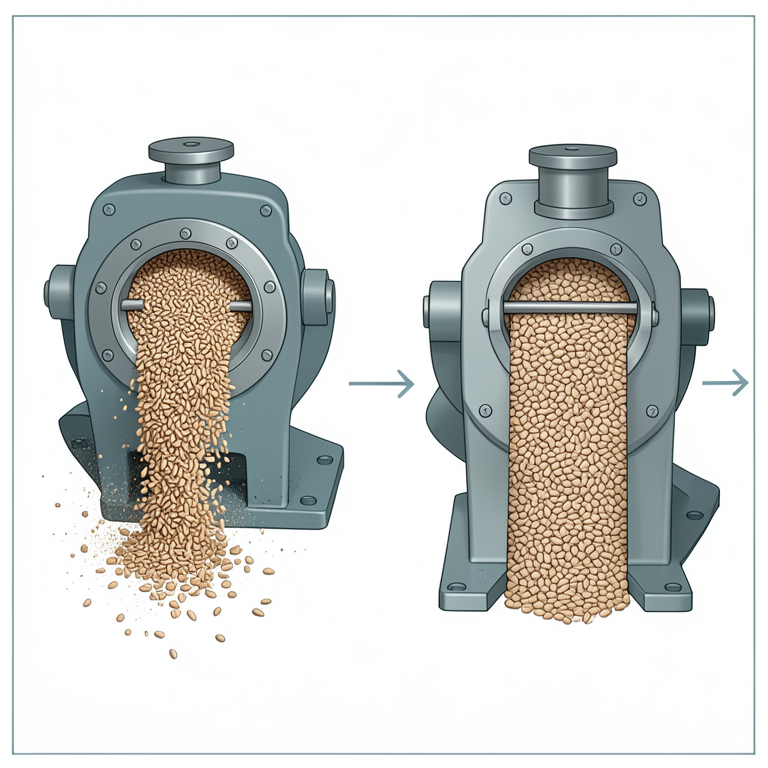
Generic vs. Millet-Specific Milling
AI-generated conceptual illustration (millet grains and milling machinery). It explains the idea and does not show study data.
View source evidence ↗Introduction
Millets, respectfully referred to as "Shree-Anna" in India, are small-seeded cereal grains belonging to the Poaceae (grass) family. This group includes sorghum, pearl millet, little millet, finger millet, teff millet, proso millet, kodo millet, browntop millet, fonio millet, and foxtail millet (Paliwal et al., 2023) [16] . Nutritionally, millets contain approximately 65-75% carbohydrates, 2-5% fat, 8-15% dietary fiber, and 7-12% protein (Vikaspedia, 2025). In India, they play a vital role in food security due to their ability to thrive under minimal inputs and challenging agro-climatic conditions such as drought, high temperatures, poor soil fertility, and pest pressure. Their short growing period further enhances their importance in sustainable agriculture, especially in semi-arid and rainfed ecosystems (Chapke et al., 2020; Food and Agriculture Organization of the United Nations, 2025; Ashoka et al., 2023) [4,5,1] . Millets have recently regained national and global attention. India's millet production increased from 15.38 million tonnes in the fiscal year 2023-2024 (FY24) to 18.015 million tonnes in 2024-2025, indicating a rising trend in cultivation and productivity. Further recognition came when the United Nations General Assembly declared 2023 as the International Year of Millets (IYM 2023), following a proposal by the Government of India supported by 72 countries. The FAO led the global celebrations, emphasizing sustainable production, enhanced consumption, and expansion of millet-based market opportunities. Nevertheless, despite these positive developments, the commercial presence of millets remains limited. A major constraint is the challenge associated with post-harvest processing. Millet grains possess tightly bound husks and diverse grain shapes, making dehusking and milling far more complex than crops like rice or wheat. Attempts to adapt rice milling machines have achieved limited success due to differences in grain morphology and hardness, often leading to high breakage, reduced yields, and nutrient loss (Kate et al., 2021) [11] . This review discusses the existing challenges in millet processing and refinement, largely driven by the lack of millet-specific technologies. It also traces the evolution from traditional manual tools to modern processing equipment such as abrasive dehullers and compact multifunctional units. Additionally, it highlights recent advancements in cleaning, dehulling, and value-addition technologies. Understanding these developments is crucial for integrating millets into both rural and urban food systems and for supporting their broader commercialization and utilization (Kaleemullah et al., 2023) [10] .
Traditional Millet Processing Practices
Traditional millet processing in rural regions relied heavily on manual labor and rudimentary tools, forming an integral part of household-level food preparation systems for generations. After harvesting, millet panicles or whole plants were typically sun-dried until the grains reached a moisture level of about 12-14%, which ensured safe storage and facilitated subsequent processing. Threshing and decortication were carried out using bullocks or tractors to trample the harvested crop, or through hand-operated devices such as stone grinders, wooden pounders, mortars and pestles, or simple pounding sticks on mud yards or tarred surfaces. These methods, although laborious, allowed dehusking with minimal grain breakage and helped maintain nutritional quality due to the gentle, low-impact nature of manual operations. Drying formed another essential step. Millets are generally harvested at a moisture content of 15-20%, which is too high for safe storage. Therefore, extensive open-field or sun drying was practiced to reduce moisture to the stable range of 12-14%. Although effective, this method exposed grains to pests, insects, and unpredictable weather conditions, often resulting in contamination or partial spoilage. Cleaning and grading were also conducted using simple indigenous techniques. Winnowing was the primary means of removing lighter impurities such as chaff, dust, and small debris, but the process was highly labor-intensive and inconsistent.
Grading relied on traditional hand-held sieves whose pore sizes were not standardized, leading to non-uniform separation of millet grains that naturally vary in size and shape.
Puffing and sand roasting represented another important traditional technique, especially for preparing ready-to-eat millet products. Sand roasting, a high-temperature shorttime dry-heat process, used pre-heated sand to induce rapid expansion of the starchy endosperm. While it enhanced palatability, traditional sand roasting also introduced risks of contamination, inconsistent heating, and unhygienic working conditions. Despite these limitations, traditional processing methods were gentle, maintained most of the grain's inherent nutrients, and required minimal external energy inputs. However, these techniques could not meet the growing demands for large-scale processing and uniform product quality in modern food systems.
Current Millet Processing Practices
The adoption of mechanized technologies marked a major shift in millet processing, allowing rural and semi-urban units to handle larger quantities more efficiently. Devices such as hammer mills, disc mills, and abrasive dehullers gradually replaced manual tools, offering improved speed and throughput. Nevertheless, millets continue to pose substantial challenges owing to their small grain size, variable morphology, and tightly bound husk. Unlike rice or wheat, millet husks adhere firmly to the kernel, making their removal difficult without causing grain breakage or nutrient loss. Studies such as Shobana et al. (2013) [24] have noted that the structural composition of millets renders them more vulnerable to mechanical damage during milling, which complicates the use of generic equipment. [14] reported that polishing results in marked reductions in micronutrients such as iron, zinc, and Bcomplex vitamins, and also decreases antioxidant levels that are essential for managing metabolic disorders. The authors argue that preservation of the bran and germ is vital, particularly in populations vulnerable to micronutrient deficiencies. Kate et al. (2021) [11] similarly advocate for the adoption of sensor-based milling systems that prevent overpolishing and allow processors to tailor polishing intensity according to product requirements, thereby maximizing nutrient retention.
The limited availability of millet-specific machines further constrains efficient processing. As highlighted by Chapke et al. (2020) [4] , the lack of standardization in grain properties makes it difficult to design universal equipment. While modifications of rice milling machines are common, they often cause excessive grain breakage, increased wastage, and reduced milling yields (Kaleemullah et al., 2023) [10] .
Innovations such as the finger millet thresher-cum-pearler developed by Powar et al. (2021) [18] demonstrate the benefits of integrating multiple operations in a single unit, reducing labor and improving processing efficiency. Milletspecific machines improve profitability by minimizing losses, enhancing yield, and reducing operational costs. Storage-related limitations also continue to hinder millet utilization. Millets are more prone to rancidity after milling due to higher lipid content, which oxidizes rapidly when exposed to air. Hadimani and Malleshi noted that improper storage leads to off-flavors, nutrient loss, and short shelf life. Stabilization techniques such as dry roasting, steaming, infrared heating, and blanching have been suggested by Maurya et al. (2023) [14] and Rathore et al. (2022) [20] as effective methods to slow lipid oxidation and extend shelf stability. Packaging also plays an essential role, with Kate et al. (2021) [11] emphasizing the importance of vacuum sealing, multilayer packaging materials, and modifiedatmosphere packaging in preserving quality and reducing spoilage. These measures highlight the interconnectedness of processing, stabilization, packaging, and storage in ensuring commercially viable millet products.
Nutritional Implications of Millet Processing
Millet processing significantly influences the nutritional outcomes of the final product. Excessive polishing removes the bran and germ layers, reducing fiber, minerals, and essential vitamins. Chapke et al. (2020) [4] emphasize the importance of minimizing polishing to retain intrinsic nutritional benefits, particularly dietary fiber and Bvitamins. Pre-processing methods such as soaking, germination, and parboiling enhance nutrient availability and reduce anti-nutritional factors such as phytates and tannins. Germination, in particular, increases the bioavailability of iron and calcium, making millets more suitable for combating micronutrient deficiencies. Whole and semi-polished millets offer significant health advantages. Products derived from whole grains retain higher levels of fiber and antioxidants, supporting digestive health, glycemic control, and cardiovascular function. Saleh et al. note that whole-grain millet consumption aligns with the requirements of therapeutic diets and nutrition-centered interventions. These findings affirm the importance of adopting processing methods that preserve grain integrity and nutritional density.
Innovations in Equipment and Processing Techniques
Recent advancements in millet processing technologies have improved efficiency, grain quality, and scalability. Cleaning remains a crucial first step because the presence of stones, chaff, and dust affects dehulling and polishing efficiency. Modern cleaning systems equipped with vibratory sieves, aspirators, and magnetic separators can process 1000-1200 kg per hour, providing high-throughput solutions suitable for commercial operations (Kunkari et al., 2023) [13] .
Integrating size grading and density separation, as noted by Maurya et al. (2023) [14] , further enhances downstream processing. Machines adapted from rice milling, such as gravity separators and destoners, have also proved effective for millet cleaning (Balasubramanian et al., 2012) [2] . Tejaswini et al. (2020) [25] developed a cleaner-cum-pearler that integrates cleaning and dehusking, achieving a pearling efficiency of 78.2% while minimizing breakage-demonstrating the potential of multi-functional equipment in small-scale processing units.
Abrasive dehullers equipped with emery rollers remain central to modern millet milling. Their adjustable pressure and rotational speed allow fine-tuning for different millet types (Kate et al., 2021) [11] . The Vivek Thresher-cum-Pearler, developed by VPKAS Almora in collaboration with RuTAG-IIT Delhi, provides low-cost dehulling and polishing solutions suitable for rural and tribal contexts with limited power availability (Prasad, 2013) [19] . Powar et al.
(2021) [18] developed a finger millet thresher-cum-pearler capable of achieving more than 78% pearling efficiency, significantly reducing grain breakage. These integrated machines support high-throughput processing and contribute to improved profitability for small and medium enterprises. [15,12] . Radhakrishnan et al. (2021) [21] highlight that value-added products not only improve convenience and sensory appeal but also expand millet's applications in modern food markets. Adoption of innovations from rice milling, including optical sorting and controlled presteaming, has also benefited millet processing by improving grain uniformity and processing consistency (Balasubramanian et al., 2012) [2] . Emerging smart milling technologies incorporate sensors capable of monitoring temperature, moisture, and pressure in real time, thereby reducing wastage and maintaining product quality. Such automated systems provide operational flexibility, allowing processors to produce a variety of millet-based flours and specialty products with consistent quality.
Conclusion
Strengthening post-harvest processing is essential for promoting millets as mainstream nutritious grains. While traditional methods retain nutrients, they are not scalable. Modern technologies offer speed and capacity but need millet-specific refinement to reduce losses and improve efficiency. Emerging solutions such as multi-stage cleaner-cumpearlers, compact integrated mills, and advanced valueaddition technologies show strong potential to boost the millet sector. Supporting these innovations with appropriate training, local manufacturing, and policy incentives can significantly improve processing efficiency, farmer income, and nutritional security.
References
25 in the original paper- Ashoka P, Raut D, Sudeepthi B, Gawande KN, Reddy GSV, Padhan SR, Panigrahi CK. Millet's role as a climate resilient staple for future food security: A review. International Journal of Environment and Climate Change. 2023;13(11):4542-4552.
- Balasubramanian S, Singh KK, Kumar R, Patil RT. Post-harvest technology and value addition of millets: A review. Journal of Food Science and Technology. 2012;49(6):673-683.
- Chakraborty S, Banerjee R, Bhattacharya S. Design and development of a smart grain milling system for small millets. Journal of Food Process Engineering. 2019;42(7):e13161.
- Chapke RR, Prasad GS, Das IK, Hariprasann K, Singode A, Kanthi Sri BS, Tonapi VA. Latest millets production and processing technologies. ICAR-Indian Institute of Millets Research. 2020.
- P Dhamodharan, J Bhuvaneshwari, S Sowmiya, R Chinnadurai. Revitalizing fodder production: Challenges and opportunities. Int J Res Agron 2024;7(1):208-217.
- Gbabo A, Solomon OA, Amodu MY. Development and performance evaluation of a millet thresher. International Journal of Engineering and Technology Innovation. 2013;3(2):142-149.
- Goyal RK, D, Kumar R. Automation in agro-processing: Advances in programmable logic controller (PLC)-based control systems. Trends in Food Science & Technology. 2022;125:185-195.
- Jamal A. A literature review on design of mini rice milling machine. International Journal of Scientific Research in Science and Technology. 2021;8(4):1-4.
- Kaleemullah S, Reddy MR, Prabhakar B. Performance evaluation of minor millet processing machines suitable for small and medium scale industries. The Pharma Innovation Journal. 2023;12(5):2726-2729.
- Kate A, Kunkari DA, Lokhande M. Traditional and advance processing technology of millets -A review. Journal of Emerging Technologies and Innovative Research. 2021;10(4):386-397.
- Kumar A, Tripathi MK, Yadav R. Recent advancements in millet fermentation: A review. Journal of Cereal Research. 2021;13(1):45-55.
- Kunkari DA, Lokhande M, Gaikwad ST. Traditional and advance processing technology of millets -A review. Journal of Emerging Technologies and Innovative Research. 2023;10(4):386-397.
- Maurya R, Boini T, Misro L, Radhakrishnan T, Sreedharan AP, Gaidhani D. Comprehensive review on millets: Nutritional values, effect of food processing and dietary aspects. Journal of Drug Research in Ayurvedic Sciences. 2023;8(S):S82-S99.
- Mariotti M, Iametti S, Pagani MA. Characteristics of puffed cereals obtained by high-pressure puffing. Journal of Cereal Science. 2006;43(3):399-409.
- Paliwal H, Mishra I, Warshini A. Importance and benefits of millets cultivation in India. Just Agriculture. 2023;3(7):146-150.
- Patel MM, Rao PH. Process optimization of millet pearling using multistage abrasive machines. Journal of Cereal Science. 2020;95:103030.
- Powar RV, Aware VV, Patil SB, Shahare PU. Development and evaluation of finger millet threshercum-pearler. International Journal of Agriculture Sciences. 2021;13(1):10001-10004.
- Prasad R. A machine for dehusking of minor millets. Centre for Rural Development and Technology, IIT Delhi; 2013.
- Rathore S, Kaur P, Kumar A. Recent advancements in millet preservation and storage. Journal of Cereal Research. 2022;14(1):51-59.
- Radhakrishnan V, Ramesh J, Anandaraj B. Technologies of millet value-added products. International Journal of Food and Nutritional Sciences. 2021;10(2):112-119.
- Sharma V, Mehta R. Role of smart sensors in postharvest grain processing: A case for millet value chains. Agricultural Engineering Today. 2021;45(2):32-38.
- Shingare R, Kale D, Kadam V. Infrared and fluidized bed roasting of food grains. International Journal of Food Engineering. 2013;9(1):41-50.
- Shobana S, Krishnaswamy K, Sudha V, Malleshi NG, Anjana RM, Palaniappan L, Mohan V. Finger millet (Eleusine coracana L.): A review of its nutritional properties, processing, and plausible health benefits. Advances in Food and Nutrition Research. 2013;69:139.
- Tejaswini VV, Bhaskara Rao D, Lakshmipathy R, Sivala Kumar. Development and evaluation of cleanercum-pearler for finger millet. International Journal of Current Microbiology and Applied Sciences. 2020;7(11):1819-1830.
- Food and Agriculture Organization of the United Nations. Millets: Climate-smart seeds of the future. FAO; 2025.
Cited by 1
From OpenAlex, OpenCitations and reference lists read by Scinovex
- Millet Production and Utilisation in Northern Ghana ↗
Linda Dari, Fatima Mahamud, Victor Afari‐Sefa · International Journal of Nutrition and Food Sciences · 2026
Millet is one of the most important staple crops grown in Northern Ghana, where it plays a crucial role in ensuring climate resilience, promoting food security, supporting livelihoods, and enhancing nutrition. Northern Ghana's semi-arid climate and reliance on rain-fed agriculture make millet a crucial crop, as it is well adapted to drought and poor soil conditions. The research aimed to…
❝ 0PDF