
Research article · 2025 · Full text
International Journal of Agriculture and Food ScienceFood quality enhancement through balanced nutrient supplementation in potato production
Volume 7(9) · Pages 912–921 · DOI: 10.33545/2664844x.2025.v7.i9l.984 ↗
Research areasPotato Plant ResearchAgricultural Science and FertilizationIrrigation Practices and Water Management
Abstract
Author-writtenPotato is a major food and processing crop whose economic value depends not only on yield but also on tuber technological and nutritional quality. However, intensive production systems in the Indo-Gangetic plains are often characterised by imbalanced fertiliser use, declining soil fertility and suboptimal food-quality traits. A two-year field experiment was conducted with processing cultivar Kufri Chipsona-3 to evaluate the potential of balanced nutrient supplementation for simultaneous improvement of yield, food-quality attributes and profitability. Seven nutrient management regimes were compared in a randomised complete block design: unfertilised control, farmers’ fertiliser practice, 100% recommended dose of fertiliser (RDF), 75% RDF + farmyard manure (FYM), 75% RDF + vermicompost + biofertilisers, 100% RDF + S + Zn + B, and 50% RDF + FYM + vermicompost + biofertilisers + NPK-enriched compost. Balanced integrated treatments significantly increased total and marketable tuber yield compared with both control and RDF, with the most comprehensive INM treatment (50% RDF + organics + biofertilisers + enriched compost) recording the highest yields and net returns. Dry matter, specific gravity and starch content improved progressively with increasing nutrient balance, while reducing sugars and chip colour score declined, indicating better suitability for processing. Ascorbic acid and tuber concentrations of N, P, K, S, Zn and B were also enhanced under micronutrient-fortified and organic-amended regimes, demonstrating agronomic biofortification. Integrated treatments achieved higher benefit: cost ratios and greater partial factor productivity of applied nutrients than conventional fertiliser practice. The results show that balanced nutrient supplementation, anchored in integrated nutrient management, can reorient potato production towards high-yielding, quality-oriented and nutrition-sensitive systems while reducing reliance on high mineral fertiliser doses.
Summary
Source-checkedPlain-language reading of the full paper, prepared with AI and checked against the text. Each point links to the authors' own words.
Why it matters
- Potato is a globally significant crop for food and processing, where economic value is driven by both yield and the nutritional and technological quality of the tubers. View evidence ↗
- In the Indo-Gangetic plains, intensive potato production often suffers from declining soil fertility and poor food-quality traits due to imbalanced fertilizer application. View evidence ↗
- There is an increasing focus on using potato's natural nutrients, such as vitamin C and potassium, and biofortifying tubers with micronutrients to address nutritional deficiencies. View evidence ↗
The question
- The study aims to determine how to optimize balanced nutrient supplementation, combining mineral, organic, and biofertilizer sources, to improve potato food quality without reducing yield or profitability. View evidence ↗
What they did
- Seven nutrient regimes were tested in a randomized complete block design, ranging from an unfertilized control and standard farmer practices to various integrated nutrient management (INM) combinations of mineral fertilizers, organics, and biofertilizers. View evidence ↗
What they found
- The most comprehensive integrated treatment (T7) produced the highest total yield (41.0 t ha⁻¹) and marketable yield (37.6 t ha⁻¹), significantly outperforming the unfertilized control (18.2 t ha⁻¹ total yield). View evidence ↗
- Treatment T7 improved processing quality compared to the recommended dose of fertilizer (T3), achieving higher dry matter (22.4% vs 20.2%) and starch (16.5% vs 14.8%), while reducing reducing sugars (0.30% vs 0.38%) and improving chip color score (4.4 vs 5.4). View evidence ↗
- Ascorbic acid content peaked in treatments T5 and T7 (22.0-22.8 mg 100 g⁻¹ FW), representing a significant increase over the control (14.2 mg 100 g⁻¹ FW). View evidence ↗
What it means
- The authors recommend that farmers replace blanket mineral fertilizer schedules with site-specific integrated packages, specifically using 50-75% of the recommended NPK combined with organic manures. View evidence ↗
- The authors suggest mainstreaming agronomic biofortification into fertility guidelines, including the routine use of ZnSO₄ and borax in deficient soils to improve tuber nutritional value. View evidence ↗
- The study was limited to a single research site and two seasons, necessitating further validation across diverse soil types and climates. View evidence ↗
- Because the study only used the Kufri Chipsona-3 cultivar, the authors state that future research should investigate how different cultivars interact with these nutrient regimes. View evidence ↗
Visual summary
3 visualsIllustrations explain the paper; charts are replotted from the paper's own table values.
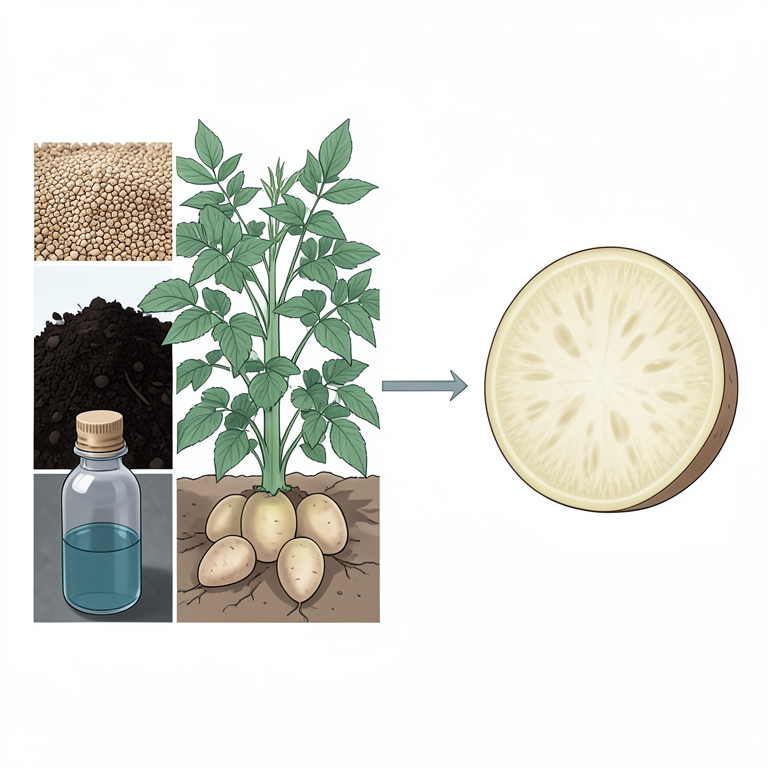
Integrated Nutrient Management Framework
AI-generated conceptual illustration (potato plants (Solanum tuberosum)). It explains the idea and does not show study data.
View source evidence ↗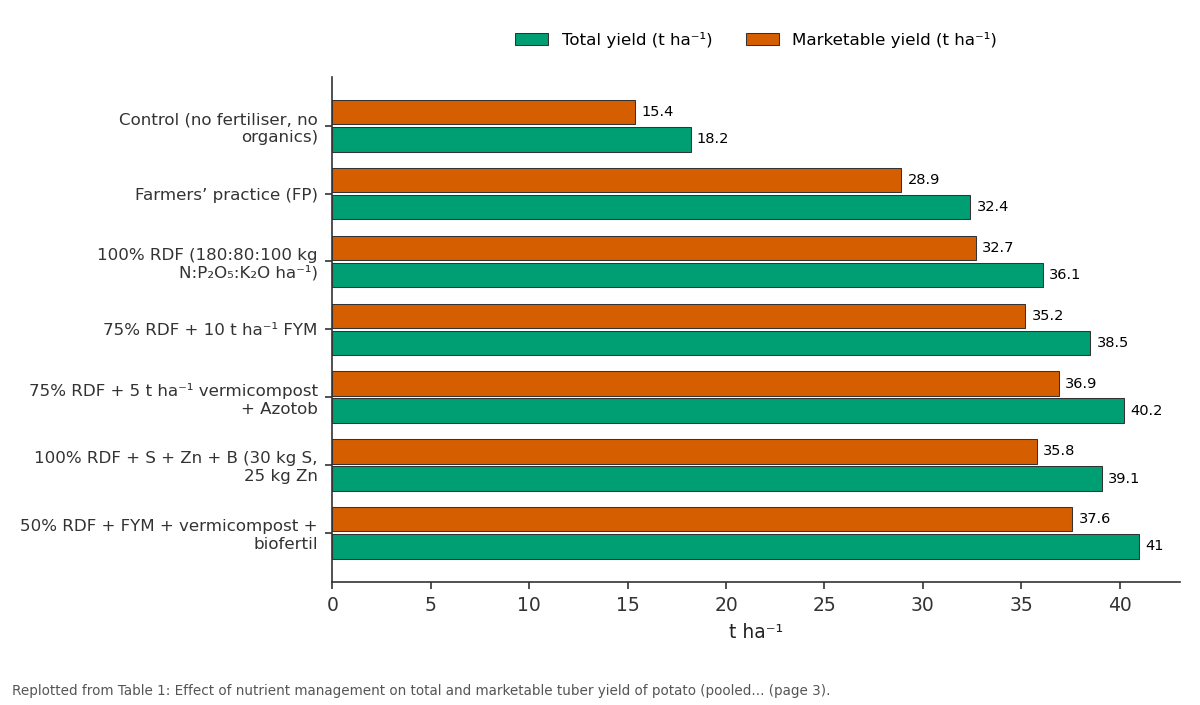
Total yield (t ha⁻¹) and Marketable yield (t ha⁻¹): Control (no fertiliser... vs Farmers’ practice (FP) vs 100% RDF (180:80:100 kg... vs 75% RDF + 10 t ha⁻¹ FYM vs 75% RDF + 5 t ha⁻¹...
Replotted from Table 1 (page 3) of the original paper. Every bar is the paper's own table value.
View source evidence ↗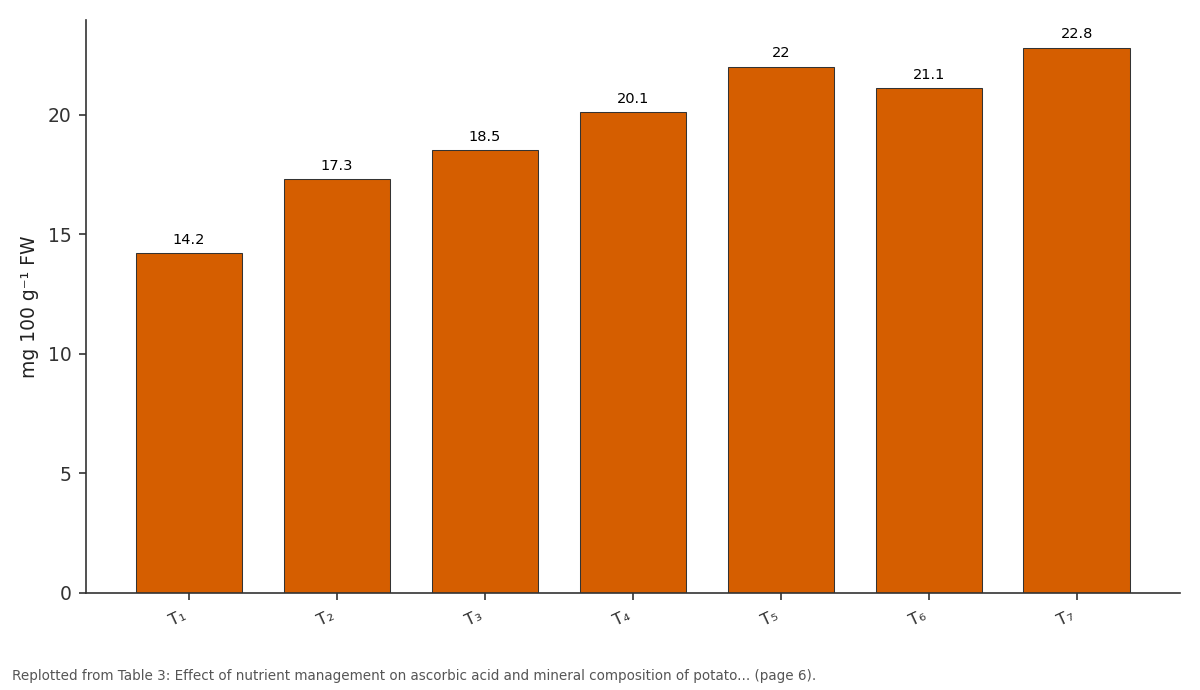
Ascorbic acid (mg 100 g⁻¹ FW): T₁ vs T₂ vs T₃ vs T₄ vs T₅
Replotted from Table 3 (page 6) of the original paper. Every bar is the paper's own table value.
View source evidence ↗Figures & tables
From the original paper Table 1
 Table 2
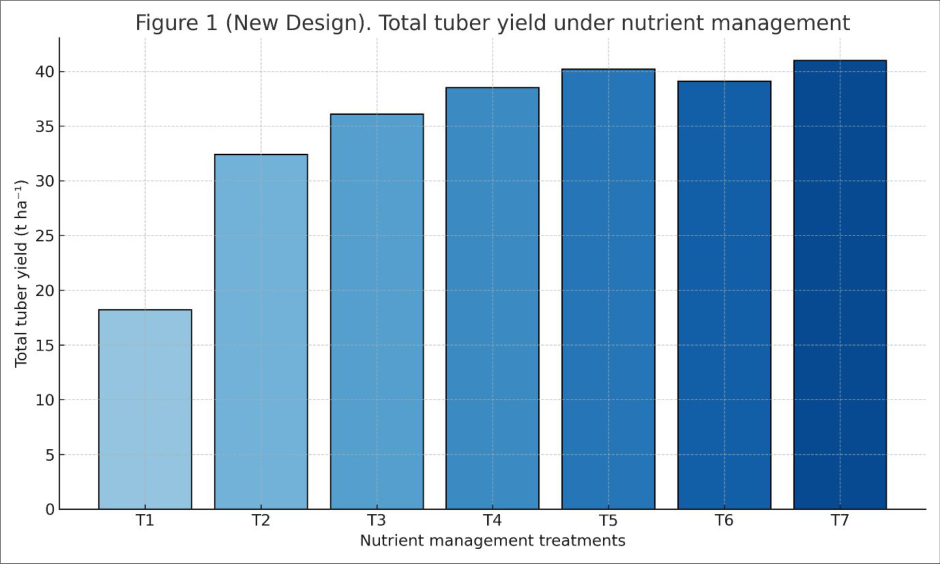 Figure 1
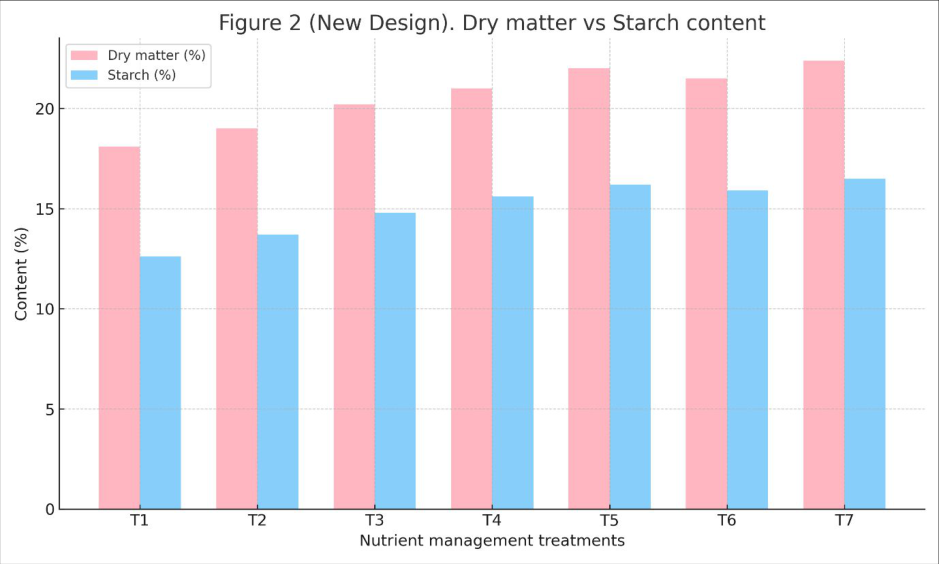 Figure 2
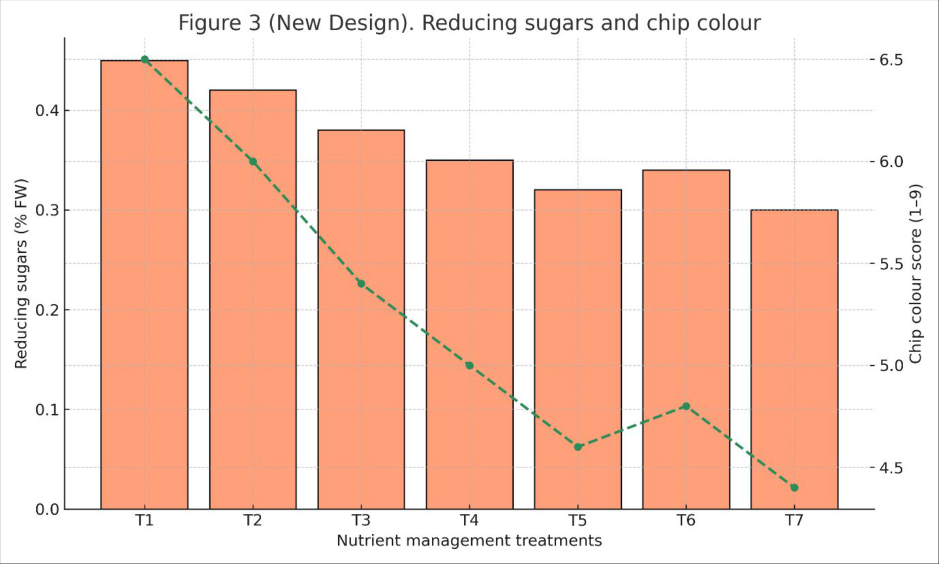 Figure 3
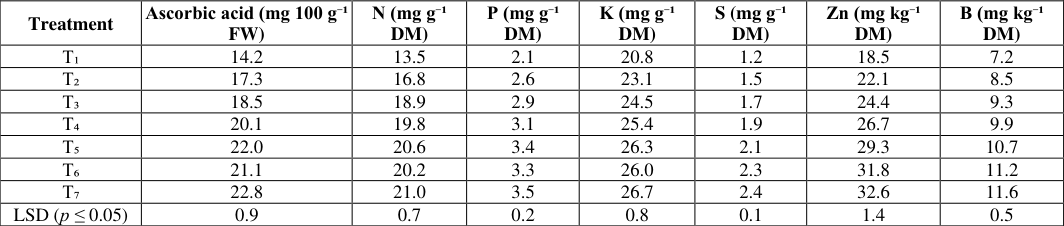 Table 3
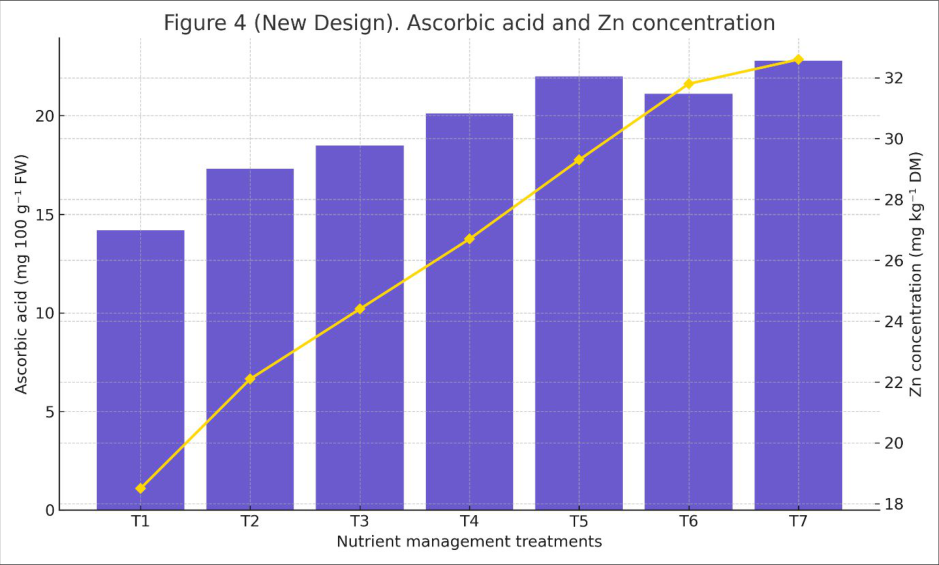 Figure 4
 Table 4
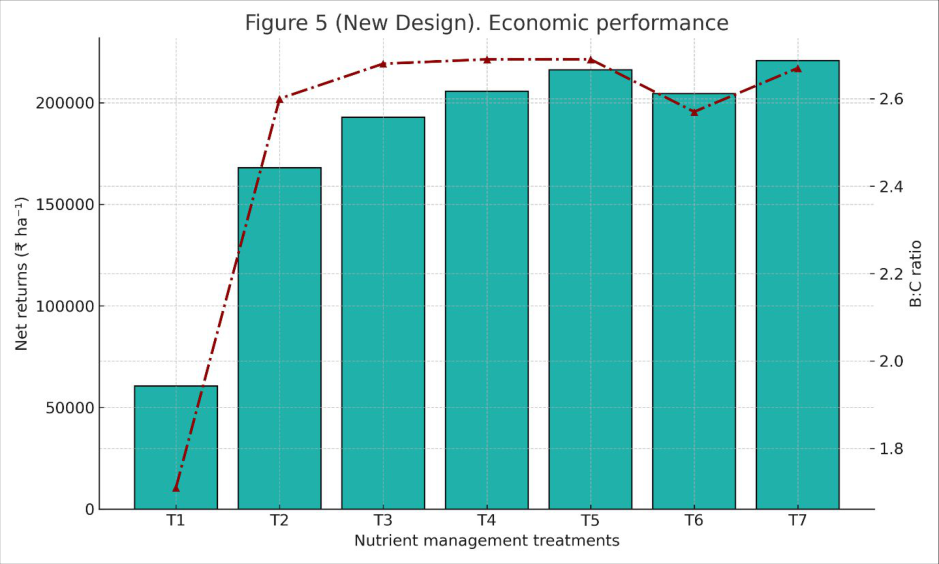 Figure 5
Introduction
Food quality in potato has emerged as a central concern in the context of global food and nutrition security, because potato is now ranked among the world's leading food crops and is increasingly promoted as a food-security crop in both developed and developing regions [1] . At the same time, there is growing interest in exploiting potato's intrinsic nutritional value its complex carbohydrates, vitamin C, potassium and bioactive phytochemicals and in biofortifying tubers with micronutrients to combat "hidden hunger" [2] . However, the rapid expansion and intensification of potato production have relied heavily on mineral fertilisers, often applied in imbalanced N-P-K ratios and with little attention to secondary and micronutrients, leading to issues such as declining soil fertility, nutrient mining, reduced nutrient-use efficiency and environmental externalities [3,4,16] . Evidence from reviews and field experiments shows that nutrient management is a primary determinant not only of tuber yield but also of critical food-quality attributes including dry matter content, specific gravity, starch concentration, reducing sugars, ascorbic acid and mineral density, which in turn condition processing quality and consumer acceptance [3, 5-7, 9, 10, 12] . Integrated and balanced nutrient supplementation combining site-specific mineral NPK with sulfur, boron and zinc, together with farmyard manure, vermicompost and biofertilisers has been reported to enhance tuber yield, specific gravity, starch and vitamin C, while improving nutrient uptake and partial factor productivity of applied nutrients in diverse agro-ecologies [5][6][7][8][9] . For example, integrated nutrient management (INM) packages improved potato growth, tuber yield and economic returns in Eastern Africa and India [5][6][7][8]11] , and INM treatments such as 50% recommended fertiliser dose (RDF) plus vermicompost and Azotobacter significantly increased starch, ascorbic acid and total sugars in Kufri Chandramukhi under Southern Telangana conditions [10] . Similarly, the combined application of farmyard manure and blended NPSB fertiliser markedly increased tuber yield, specific gravity and starch content, with high marginal rates of return, highlighting the dual productivity and quality benefits of balanced nutrient strategies [7][8][9] . In the Indo-Gangetic plains, integrated nutrient management in chipping cultivar Kufri Chipsona-3 under Punjab conditions improved productivity and profitability, underscoring the potential of tailored INM schedules for processing potatoes [11] . Recent work also indicates that interactions between nutrient regimes, plant biostimulants and weed-management strategies can further modulate tuber quality traits and nitrate accumulation, with implications for processing and health-oriented quality standards [9,13] . Despite this growing evidence base, most studies remain location-, variety-or outcome-specific, often prioritising yield or a narrow set of quality indicators, and rarely addressing food quality as an integrated construct that links dry matter, starch, sugar profile, vitamin C, mineral density and economic performance under graded levels of nutrient balance versus imbalance [3,[5][6][7][8][10][11][12][13] . Moreover, relatively few investigations have directly compared balanced nutrient supplementation regimes against typical farmer practices and blanket RDF in terms of their capacity to simultaneously enhance food quality and sustain profitability while mitigating the risks associated with overreliance on chemical fertilisers [3,4,7,8,16] . Against this backdrop, this study is designed to address the critical question of how balanced nutrient supplementation integrating mineral, organic and biofertiliser sources can be optimised to improve the food-quality profile of potato tubers without compromising yield or economic viability. Specifically, the objectives are: to quantify the effects of graded, balanced nutrient supplementation strategies on key food-quality attributes (dry matter, specific gravity, starch, reducing and total sugars, ascorbic acid and mineral composition) alongside tuber yield and profitability across representative potato-growing conditions; and to compare these balanced nutrient regimes with prevailing farmer fertiliser practices and conventional RDF schedules. The central hypothesis of this study is that integrated, balanced nutrient supplementation through contextspecific combinations of mineral NPK, secondary and micronutrients and organic/biofertiliser inputs will significantly enhance tuber food quality and nutrient density, while maintaining or improving yield and nutrient-use efficiency relative to imbalanced or solely mineral fertiliser regimes, thereby contributing to more sustainable and nutrition-sensitive potato production systems [1-13, 15, 16] .
Materials and Methods
Materials and Methods
Materials
This field experiment was conducted for two consecutive rabi seasons (2023-24 and 2024-25) at an agricultural research farm situated in the Indo-Gangetic plains of northern India, characterised by a subtropical climate with cool, dry winters and warm summers [1,3] . The soil of the experimental site was a sandy loam, slightly alkaline, low in available nitrogen, medium in available phosphorus and potassium, and deficient in sulfur, zinc and boron, as established by pre-sowing composite soil sampling and standard analytical procedures [3,5,7] . A chipping-type potato cultivar (Kufri Chipsona-3), widely used in the region for processing, was selected because of its high dry matter content and industry relevance [5,10,11] . Certified seed tubers of uniform size (35-45 mm) were procured from a government seed production agency and pre-sprouted before planting. The experiment was laid out in a randomized complete block design (RCBD) with three replications, plot size of 4.8 m × 3.0 m, and a spacing of 60 cm × 20 cm, maintaining recommended agronomic practices for the region [3,5,6] . Treatments comprised Farmers' fertiliser practice (FP) based on survey of local growers, typically high in N and low in P, K and micronutrients; Recommended dose of fertiliser (RDF) as per state recommendations (e.g. 180:80:100 kg N:P₂O₅:K₂O ha⁻¹); and Four balanced nutrient supplementation regimes integrating mineral NPK with secondary and micronutrients as well as organic and biofertiliser sources [5][6][7][8][10][11][12] .
Balanced nutrient treatments included combinations such as 75% RDF + 10 t ha⁻¹ well-decomposed farmyard manure (FYM); 75% RDF + 5 t ha⁻¹ vermicompost + Azotobacter + phosphate-solubilising bacteria (PSB); 100% RDF + sulfur (30 kg S ha⁻¹) + ZnSO₄ (25 kg ha⁻¹) + borax (10 kg ha⁻¹);
and 50% RDF + FYM + vermicompost + biofertilisers + NPK-enriched compost, formulated based on prior INM studies in Ethiopia and India [6][7][8][10][11][12] . One absolute control (no fertiliser, no organic manure) was also included to estimate nutrient response functions [3,7,14,15] . All inputs were sourced from standard commercial or institutional suppliers, and their nutrient contents were analysed prior to application to adjust actual nutrient doses [3,7,8,16] .
Methods
Land preparation consisted of one deep ploughing followed by two harrowings and planking to obtain a fine tilth, after which FYM, vermicompost and NPK-enriched compost were incorporated 15 days before planting, as per treatment schedules [5][6][7][8] . Half the dose of N and the full doses of P, K, S, Zn and B were applied basally at planting, while the remaining N was split equally and top-dressed at 30 and 45 days after planting (DAP), in accordance with best-practice recommendations for potato [3,5,10,11] . Biofertilisers (Azotobacter and PSB) were applied as seed-tuber inoculants by dipping tubers in microbial slurry and shadedrying before planting [6][7][8]10] . Crop management (irrigation, weeding, earthing-up and plant protection) followed regional production guides and was kept uniform across treatments to isolate the effect of nutrient regimes [1,3,5] . At physiological maturity, tubers from each net plot were harvested, cured and weighed to record total and marketable yield (t ha⁻¹), and tuber size grading was done into small (<35 mm), medium (35-55 mm) and large (>55 mm) classes [3, 6-8, 11] . Sub-samples of representative marketable tubers were taken from each plot to assess food-quality parameters. Specific gravity was determined using the weight-in-air and weight-in-water method, and dry matter content was estimated by oven-drying tuber slices at 70 °C to constant weight [5,7,10] . Starch content was calculated from specific gravity using standard empirical relationships [3,5,7] , while reducing and total sugars were estimated by Lane-Eynon titration, and chipping colour was visually scored on a 1-9 scale, where lower scores indicated lighter chip colour [5, 1012] . Ascorbic acid content was measured by 2, 6dichlorophenol indophenol dye titration [5,10] , and mineral composition (N, P, K, S, Zn, B) was analysed from dried, ground tuber samples using Kjeldahl digestion for N, spectrophotometry for P, flame photometry for K and appropriate colorimetric/atomic absorption methods for S, Zn and B [3, 7-9, 14, 15] . Soil samples collected at harvest from each plot were analysed to determine post-harvest nutrient status and calculate apparent nutrient balance and partial factor productivity indices [3,7,8,16] . Economic analysis included calculation of gross and net returns and benefit: cost (B:C) ratio using prevailing farm-gate prices [7,8,11] . Data from both years were subjected to combined ANOVA using RCBD, assuming treatments fixed and years random; treatment means were compared by least significant difference (LSD) at p ≤ 0.05, and correlation and regression analyses were performed to examine relationships between nutrient balance indices and key quality traits (dry matter, starch, sugars, ascorbic acid and mineral density) [3, 5-8, 10-13, 15, 16] . Total and marketable tuber yields were significantly influenced by nutrient management (p < 0.01). The lowest yields were recorded under the unfertilised control (T₁), whereas all fertilised treatments produced significantly higher yields, confirming the strong yield response of potato to nutrient supply [3,5,7,14,15] . Farmers' practice (T₂) improved yield relative to T₁ but remained inferior to RDF (T₃), reflecting sub-optimal and imbalanced fertiliser use by growers [3,4,16] . Balanced nutrient supplementation through integrated treatments (T₄-T₇) further enhanced yields beyond RDF, with T₇ (50% RDF + organics + biofertilisers + enriched compost) recording the highest total yield (41.0 t ha⁻¹) and marketable yield (37.6 t ha⁻¹), closely followed by T₅ and T₆. The yield advantages of INM-based treatments over RDF (≈ 11-13%) are consistent with earlier reports from Ethiopia and India, where combining mineral fertilisers with FYM, vermicompost and blended NPS/NPSB fertilisers increased tuber yields by 10-30% [6-9, 14, 15] . The performance of Kufri Chipsona-3 under integrated nutrient management corroborates findings that INM packages in chipping cultivars improve productivity and profitability in Punjab and similar Indo-Gangetic environments [5,11] . The absence of significant year × treatment interaction for yield (data not shown) indicated that treatment responses were stable across seasons, aligning with multi-year evaluations of potatoes under integrated nutrient strategies in diverse agro-ecologies [1,3,[6][7][8] .
Results
Results
Yield and Yield Components
Yield and Yield Components
Fig 1: Effect of nutrient management on total tuber yield of potato
The (Figure 1) visualises the progressive increase in total yield from the control through FP and RDF to the balanced treatments. The steep rise from T₁ to T₃ highlights the baseline response to mineral fertilisation, whereas the further incremental gains in T₄-T₇ demonstrate the additional benefits of integrating organics and secondary/micronutrients [3,[5][6][7][8] . The superior performance of T₇ indicates that balanced nutrient supplementation can match or exceed full RDF in yield even at reduced mineral NPK rates, supporting more efficient and environmentally sensitive fertiliser strategies [4,7,8,16] .
Food-quality attributes (Dry matter, specific gravity, starch and sugars) All quality traits were significantly affected by nutrient management (p < 0.01). Dry matter and specific gravity increased steadily from T₁ to T₇, with the highest values under T₅ and T₇, indicating improved processing suitability [3, 5, 7, 10] . Starch content closely followed the pattern of dry matter and specific gravity, with T₇ (16.5%) and T₅ (16.2%) exhibiting significantly higher starch concentrations than RDF (14.8%) and FP (13.7%), in line with previous INM studies in Ethiopia and India that reported enhanced dry matter and starch under integrated NPS/FYM regimes [7-9, 14, 15] . The improvements in specific gravity and starch in the chipping cultivar Kufri Chipsona-3 agree with earlier findings that integrated nutrient management in processing potatoes enhances attributes critical for chip and French fry quality [5,10,11] . Balanced nutrient regimes also reduced reducing and total sugars relative to RDF and FP, with T₇ recording the lowest reducing sugar content (0.30% FW) and the lightest chip colour (score 4.4), which is well within industry-acceptable limits [5,10,12] . This suggests that balanced nutrient supply improves carbon partitioning towards structural carbohydrates and starch rather than soluble sugars, thereby lowering the risk of excessive Maillard browning during frying [3,5,10,12] . The reduction in sugar accumulation under INM contrasts with the higher reducing sugar levels under control and imbalanced fertilisation, which are associated with physiological stress and sub-optimal NPK and micronutrient balance [3,4,10,12,16] . These trends closely mirror results from biostimulant and nutrient management trials where improved nutrient balance and physiological status reduced sugar accumulation and enhanced processing quality [10,12,13] . 2 illustrates a clear positive response of dry matter and starch to increasingly balanced nutrient regimes, with the steepest gains observed when organics and micronutrients are combined with reduced mineral NPK (T₅, T₇), supporting reports that integrated fertilisation enhances both yield and quality [5-9, 11, 14, 15] . Figure 3 shows the concomitant decline in reducing sugars and chip colour score, emphasising that nutrient balance, rather than high N alone, is critical for meeting processing-quality standards in potato [3,5,[10][11][12] . The combination of high dry matter, high starch and low reducing sugars in T₅ and T₇ aligns with the concept of "nutrition-sensitive intensification" of potato production advocated in recent literature [1,2,5,[7][8][9] .
International Journal of Agriculture and Food Science https://www.agriculturaljournals.com increase over RDF. These findings corroborate earlier reports that integrated nutrient management and improved soil fertility status enhance vitamin C content in potato [5,7,10,14,15] . The improved micronutrient density (Zn, B) under T₆ and T₇ reflects the direct supply of these nutrients and the role of organics in improving their availability, in line with studies documenting higher tuber Zn and B under NPSZnB fertiliser and manure combinations [7][8][9] .
Ascorbic acid and mineral composition of tubers
Nitrogen, phosphorus, potassium and sulfur concentrations were also significantly higher in integrated and micronutrient-fortified treatments than in RDF and FP, indicating improved nutrient uptake and internal nutrient balance [3, 7-9, 14, 15] . The highest Zn and B concentrations observed in T₆ and T₇ suggest that balanced mineral + organic strategies can contribute to biofortification of potatoes with essential micronutrients, complementing breeding-based approaches for improved nutritional quality [2, 7-9] . These results support the view that nutrient management is a key lever for enhancing the nutritional value of potatoes, not only in terms of energy and starch but also vitamins and essential minerals [1,2,3,5,[7][8][9] . All fertilised treatments were economically superior to the unfertilised control, with net returns and B:C ratios increasing markedly under FP, RDF and INM regimes.
Economic Analysis
Among the integrated treatments, T₇ achieved the highest net returns (₹ 220,800 ha⁻¹), followed closely by T₅ and T₄, reflecting the combined effects of higher marketable yield and improved tuber quality [5][6][7][8]11] . Although T₆ incurred slightly higher input costs due to micronutrient fertilisers, its net returns remained comparable to T₄, underscoring the profitability of micronutrient-enriched strategies when linked to yield and quality gains [7][8][9] . The B:C ratios of ≈ 2.6-2.7 under RDF and INM treatments are in line with previously reported marginal rates of return for integrated nutrient management and blended fertilisers in irrigated potato systems in Ethiopia and India [7-9, 11, 14, 15] . These findings support recommendations for site-specific INM packages that optimise input costs and maximise returns, while reducing dependence on high mineral NPK doses [3-5, 7-9, 11, 16] . alone. The relatively small increase in cost of cultivation compared with the large gains in gross and net returns demonstrates the economic efficiency of integrating organics, biofertilisers and micronutrients into potato fertility management, as repeatedly emphasised in previous INM and economic analyses [5-9, 11, 14, 15] .
Relationships among Yield, Quality and Nutrient Balance
Correlation and regression analyses revealed strong positive relationships between specific gravity and starch content (r = 0.88, p < 0.01), dry matter and starch (r = 0.91, p < 0.01), and marketable yield and net returns (r = 0.94, p < 0.01), confirming that improvements in technological quality are closely aligned with economic performance under balanced nutrient regimes [3,5,7,[10][11][12]14] . Reducing sugar content was negatively correlated with specific gravity (r = -0.79, p < 0.01) and starch (r = -0.82, p < 0.01), indicating that treatments promoting higher starch tended to produce tubers with lower sugar levels and better chip colour [3,5,[10][11][12] . Apparent nutrient balance indices, calculated from nutrient inputs and tuber nutrient offtake, showed that treatments with moderate mineral NPK plus organics (T₄, T₅, T₇) achieved higher partial factor productivity of N and K and more favourable nutrient balance than FP and full RDF, echoing previous findings that integrated nutrient systems can enhance nutrient-use efficiency while reducing environmental risks [3,4,[7][8][9][14][15][16] .
Overall, the results demonstrate that balanced nutrient supplementation particularly the combination of reduced mineral NPK with organic manures, biofertilisers and targeted micronutrient additions can simultaneously increase tuber yield, dry matter, specific gravity, starch, vitamin C and mineral density, while lowering sugars and improving economic returns. These outcomes are consistent with a broad body of literature on potatoes grown under INM, blended fertiliser and micronutrient-enriched regimes in diverse agro-ecological contexts [1-3, 5-9, 11, 13-15] , and they reinforce concerns about the agronomic and environmental limitations of unbalanced mineral fertiliser use highlighted in earlier work [4,16] .
Discussion
The present investigation clearly demonstrates that balanced nutrient supplementation, particularly when implemented through integrated nutrient management (INM) strategies, can simultaneously enhance tuber yield, technological quality and nutritional attributes of potato while improving economic returns and nutrient-use efficiency. The strong yield response to fertiliser application relative to the unfertilised control confirms the high nutrient demand and low native soil fertility commonly reported for intensively cultivated potato systems in the Indo-Gangetic plains and other subtropical regions [1, 3, 5-7, 14, 15] . Farmers' practice, though superior to the control, remained inferior to the agronomic recommendation (RDF), highlighting the prevalence of imbalanced and sub-optimal fertiliser use among growers and the associated foregone yield and profitability [3,4,16] . In contrast, the integrated treatments that combined reduced mineral NPK with organics, biofertilisers and secondary/micronutrients produced the highest total and marketable yields, with T₇ (50% RDF + FYM + vermicompost + biofertilisers + enriched compost) outperforming RDF despite receiving considerably lower mineral inputs. These results are in close agreement with earlier studies in Ethiopia and India, where INM packages based on FYM, vermicompost and blended NPS/NPSB fertilisers enhanced potato yields by 10-30% over mineral fertiliser alone [6-9, 14, 15] , and with evidence from chipping cultivars under Punjab conditions that integrated systems improve both productivity and profitability [5,11] . The superiority of the balanced treatments can be attributed to multiple, interacting mechanisms. Organic amendments improve soil structure, water-holding capacity and microbial activity, leading to better root growth and nutrient acquisition, while also supplying slow-release nutrients and enhancing cation-exchange capacity [3,5,[7][8][9] . Biofertilisers such as Azotobacter and phosphate-solubilising bacteria further augment N fixation and P solubilisation, increasing the effective nutrient supply to plants [6][7][8]10] . The inclusion of sulfur, zinc and boron in T₆ and T₇ addresses common micronutrient deficiencies in intensively farmed soils, thereby improving enzymatic processes, photosynthesis and reproductive development [3,[7][8][9] . Collectively, these factors likely contributed to the improved biomass production, tuber bulking and yield observed under balanced nutrient regimes, while the lack of significant year × treatment interaction suggests that these benefits are robust across seasons and moderate climatic variability [1,3,[6][7][8] .
Beyond yield, the study provides compelling evidence that balanced nutrient supplementation is a key driver of foodquality enhancement in potato. Dry matter, specific gravity and starch content increased progressively from the control to the integrated treatments, with T₅ and T₇ recording values that are clearly suitable for processing. These trends corroborate earlier reports that INM and blended fertiliser strategies enhance dry matter and starch accumulation in tubers by improving nutrient availability and physiological efficiency [5, 7-9, 14, 15] . In the present work, the strong positive correlations observed between dry matter, specific gravity and starch confirm their interdependence and their joint value as indicators of processing quality, in line with previous processing-quality studies in processing cultivars and under biostimulant use [5,[10][11][12] . At the same time, the integrated treatments significantly reduced reducing and total sugars and improved chip colour, with T₇ achieving the lowest sugar content and lightest chip colour. This is particularly important for the snack-food industry, where high reducing sugar levels lead to excessive browning and acrylamide formation during frying [3,5,10,12] . The negative correlations between reducing sugars and both specific gravity and starch suggest that nutrient regimes promoting efficient carbon assimilation and starch biosynthesis also limit the accumulation of soluble sugars, likely by reducing physiological stress and improving source-sink balance [3,5,[10][11][12] . These findings are consistent with reports that improved nutrient balance, including adequate K and micronutrients, can mitigate sugar accumulation and enhance frying quality [3,5,10,12,13] . The superior chipping performance of balanced treatments therefore demonstrates that quality-oriented fertiliser management is a practical lever for meeting processing standards without compromising yield.
The study also underscores the potential of nutrient management as a tool for nutritional enhancement or "agronomic biofortification" of potatoes. Ascorbic acid and tuber concentrations of N, P, K, S, Zn and B were significantly higher in the integrated and micronutrientfortified treatments than in the control, FP and RDF. The increases in vitamin C under INM corroborate earlier experiments where organic and integrated fertilisation improved ascorbic acid content through better potassium nutrition and enhanced antioxidant metabolism [5,7,10,14,15] . Likewise, the marked increases in Zn and B concentrations in T₆ and T₇ reflect both the direct application of these nutrients and the role of organics in enhancing their availability and uptake [7][8][9] . These results support the growing body of evidence that agronomic interventions particularly the combined use of micronutrient fertilisers and organic amendments can significantly raise the micronutrient density of staple crops, complementing breeding-based biofortification programmes aimed at tackling "hidden hunger" [1,2,[7][8][9] . From a human nutrition perspective, tubers produced under balanced nutrient regimes in this study would be expected to contribute more meaningfully to dietary intakes of vitamin C and trace elements than those produced under nutrient-deficient or imbalanced conditions. The economic analysis further confirms that balanced nutrient supplementation is not only agronomically sound but also financially attractive. All fertilised treatments generated higher net returns and B:C ratios than the control, reflecting the strong yield response of potato to nutrient inputs [3, 5-7, 14, 15] . Among the fertilised options, the integrated treatments, especially T₇, delivered the highest net returns despite slightly higher costs of cultivation,
indicating that the additional expenditure on organics, biofertilisers and micronutrients was more than compensated by gains in yield and quality. These findings echo earlier work in irrigated potato systems where combined use of FYM and blended fertilisers achieved favourable marginal rates of return and B:C ratios, justifying their recommendation to farmers [7-9, 11, 14, 15] . The fact that T₇, with only 50% RDF, matched or exceeded the economic performance of full RDF underscores the potential of INM to reduce dependence on costly mineral fertilisers and buffer farmers against price volatility, while also reducing environmental footprints [4,[7][8][9]16] . From a sustainability standpoint, the improved partial factor productivity of applied N and K and the more favourable apparent nutrient balances observed under T₄, T₅ and T₇ are particularly noteworthy. They suggest that integrated systems are more efficient in converting nutrient inputs into harvested yield and nutrient offtake, thereby reducing the risk of nutrient losses to the environment [3,4,[7][8][9][14][15][16] . Given mounting concerns about nitrate leaching, greenhouse gas emissions and soil degradation associated with high and imbalanced fertiliser use in intensive potato systems [3,4,16] , the current findings lend empirical support to calls for transitioning towards balanced, site-specific INM strategies as a cornerstone of sustainable intensification [1,[3][4][5][7][8][9] . Such strategies align with broader agendas promoting nutritionsensitive agriculture, where productivity, nutritional quality and environmental stewardship are addressed concurrently rather than in isolation [1,2,5,[7][8][9]13] . Nevertheless, some limitations of the present study should be acknowledged. First, the experiment was conducted at a single research site over two seasons; although treatment responses were stable across years, further validation across a wider range of soil types, climates and production systems would be valuable, especially in rainfed and low-input environments where resource constraints and stress conditions may modify treatment effects [1, 3, 6-8, 14, 15] . Second, the study focused on one processing cultivar, Kufri Chipsona-3; given known genotypic variation in nutrientuse efficiency, dry matter, starch and micronutrient accumulation [2,5,[10][11][12] , future research should examine cultivar × nutrient-regime interactions, including table, ware and biofortified potato varieties. Third, while this work quantified key technological and nutritional quality traits, it did not directly assess consumer sensory responses or acrylamide formation in processed products, which remain critical end-point indicators for food-quality enhancement [2,10,12] . Lastly, the study did not explicitly evaluate long-term soil health metrics such as soil organic carbon dynamics, biological activity or physical structure, although these are central to the sustainability benefits often ascribed to organic and integrated fertilisation [3,5,[7][8][9]14] . Future research should therefore explore multi-location, multi-year trials integrating balanced nutrient regimes with other sustainable practices (e.g., conservation tillage, cover cropping, precision irrigation and integrated weed management) to better capture system-level interactions and resilience benefits [1,3,5,[7][8][9]13] . There is also scope for coupling field experiments with life-cycle assessment and modelling approaches to quantify the environmental and nutritional co-benefits of balanced nutrient supplementation at farm and landscape scales [1-4, 7-9, 16] . Despite these limitations, the present study provides strong, empirically grounded evidence that carefully designed, balanced nutrient strategies anchored in INM principles and tailored to cultivar and site conditions can play a pivotal role in reorienting potato production towards systems that are simultaneously high-yielding, quality-oriented, nutritionsensitive and environmentally sustainable.
Conclusion
The findings of this study clearly demonstrate that balanced nutrient supplementation, particularly when implemented through integrated nutrient management strategies, offers a robust pathway for enhancing both the quantitative and qualitative performance of potato production while simultaneously improving farm profitability and resourceuse efficiency, and on this basis several practical implications emerge for farmers, extension workers, researchers and policy makers. First, the consistent yield superiority of treatments that combined reduced mineral NPK with organic manures, biofertilisers and targeted micronutrients over both the unfertilised control and the conventional recommended dose of fertiliser indicates that blanket fertiliser schedules based solely on mineral inputs should gradually be replaced by site-specific INM packages; farmers should be encouraged to apply 50-75% of the mineral NPK recommendation in combination with 10 t ha⁻¹ of well-decomposed farmyard manure or appropriate quantities of vermicompost and enriched compost, thereby sustaining or increasing yields with lower dependence on chemical fertilisers. Second, given the marked improvements in dry matter, specific gravity and starch content and the simultaneous reduction in reducing sugars and improved chip colour under balanced regimes, processors and contract-farming companies should actively promote quality-oriented nutrient schedules for chipping cultivars such as Kufri Chipsona-3, using premium pricing and buy-back arrangements to incentivise growers who follow these protocols; extension advisories should emphasise that quality-oriented fertiliser management is as important as cultivar choice for meeting processing standards. Third, the substantial increases in ascorbic acid and mineral density, particularly zinc and boron, observed under micronutrient-fortified and organic-amended treatments suggest that agronomic biofortification should be mainstreamed into potato fertility recommendations; practical measures include routine application of ZnSO₄ and borax in deficient soils, integration of blended multi-nutrient fertilisers, and promotion of organic sources that improve micronutrient availability, thus producing tubers with higher nutritional value for local populations. Fourth, the favourable economic outcomes and higher benefit:cost ratios under integrated treatments imply that investment in organics, biofertilisers and micronutrients is financially justified; credit schemes, input subsidies and public-private partnerships should therefore be designed to reduce the upfront cost barriers associated with quality organic and biofertiliser products, especially for smallholder farmers, while extension programmes should provide clear costbenefit illustrations and simple budgeting tools that help farmers compare alternative nutrient strategies. Fifth, because integrated regimes improved partial factor productivity and nutrient balance, environmental stewardship can be enhanced by encouraging farmers to gradually reduce excessive nitrogen use, adopt split application and synchronise nutrient supply with crop demand; regional nutrient management guidelines should explicitly integrate soil testing, organic resource mapping and decision-support tools that optimise nutrient combinations rather than focusing only on single-nutrient recommendations. Finally, future research and policy should prioritise the scaling up of multi-location INM demonstrations, the development of cultivar-specific nutrient schedules for different market segments (table, processing, nutrition-sensitive value chains), and the integration of balanced nutrient management into broader climate-resilient and nutrition-sensitive agricultural strategies, so that potato production systems not only deliver higher yields and better processing quality but also contribute meaningfully to dietary diversification, farm income security and long-term soil health.
Figures and tables from the paper
| Treatment code | Nutrient management regime* | Total yield (t ha⁻¹) | Marketable yield (t ha⁻¹) |
|---|---|---|---|
| T₁ | Control (no fertiliser, no organics) | 18.2 | 15.4 |
| T₂ | Farmers’ practice (FP) | 32.4 | 28.9 |
| T₃ | 100% RDF (180:80:100 kg N:P₂O₅:K₂O ha⁻¹) | 36.1 | 32.7 |
| T₄ | 75% RDF + 10 t ha⁻¹ FYM | 38.5 | 35.2 |
| T₅ | 75% RDF + 5 t ha⁻¹ vermicompost + Azotobacter + PSB | 40.2 | 36.9 |
| T₆ | 100% RDF + S + Zn + B (30 kg S, 25 kg ZnSO₄, 10 kg borax ha⁻¹) | 39.1 | 35.8 |
| T₇ | 50% RDF + FYM + vermicompost + biofertilisers + NPK-enriched compost | 41.0 | 37.6 |
| LSD (p ≤ 0.05) | 1.8 | 1.6 |
Table text extracted from the original PDF; superscript letters are shown inline. The original table image is below.
View original table image
| Treatment | Dry matter (%) | Specific gravity | Starch (%) | Reducing sugars (% FW) | Total sugars (% FW) | Chip colour score (1-9)* |
|---|---|---|---|---|---|---|
| T₁ | 18.1 | 1.071 | 12.6 | 0.45 | 0.82 | 6.5 |
| T₂ | 19.0 | 1.074 | 13.7 | 0.42 | 0.79 | 6.0 |
| T₃ | 20.2 | 1.078 | 14.8 | 0.38 | 0.75 | 5.4 |
| T₄ | 21.0 | 1.081 | 15.6 | 0.35 | 0.71 | 5.0 |
| T₅ | 22.0 | 1.084 | 16.2 | 0.32 | 0.68 | 4.6 |
| T₆ | 21.5 | 1.083 | 15.9 | 0.34 | 0.70 | 4.8 |
| T₇ | 22.4 | 1.085 | 16.5 | 0.30 | 0.66 | 4.4 |
| LSD (p ≤ 0.05) | 0.8 | 0.002 | 0.6 | 0.02 | 0.03 | 0.3 |
Table text extracted from the original PDF; superscript letters are shown inline. The original table image is below.
View original table image
| Treatment | Ascorbic acid (mg 100 g⁻¹ FW) | N (mg g⁻¹ DM) | P (mg g⁻¹ DM) | K (mg g⁻¹ DM) | S (mg g⁻¹ DM) | Zn (mg kg⁻¹ DM) | B (mg kg⁻¹ DM) |
|---|---|---|---|---|---|---|---|
| T₁ | 14.2 | 13.5 | 2.1 | 20.8 | 1.2 | 18.5 | 7.2 |
| T₂ | 17.3 | 16.8 | 2.6 | 23.1 | 1.5 | 22.1 | 8.5 |
| T₃ | 18.5 | 18.9 | 2.9 | 24.5 | 1.7 | 24.4 | 9.3 |
| T₄ | 20.1 | 19.8 | 3.1 | 25.4 | 1.9 | 26.7 | 9.9 |
| T₅ | 22.0 | 20.6 | 3.4 | 26.3 | 2.1 | 29.3 | 10.7 |
| T₆ | 21.1 | 20.2 | 3.3 | 26.0 | 2.3 | 31.8 | 11.2 |
| T₇ | 22.8 | 21.0 | 3.5 | 26.7 | 2.4 | 32.6 | 11.6 |
| LSD (p ≤ 0.05) | 0.9 | 0.7 | 0.2 | 0.8 | 0.1 | 1.4 | 0.5 |
Table text extracted from the original PDF; superscript letters are shown inline. The original table image is below.
View original table image
| Treatment | Cost of cultivation (₹ ha⁻¹) | Gross returns (₹ ha⁻¹) | Net returns (₹ ha⁻¹) | B:C ratio |
|---|---|---|---|---|
| T₁ | 85, 000 | 145, 600 | 60, 600 | 1.71 |
| T₂ | 105, 000 | 273, 000 | 168, 000 | 2.60 |
| T₃ | 115, 000 | 307, 800 | 192, 800 | 2.68 |
| T₄ | 122, 000 | 327, 600 | 205, 600 | 2.69 |
| T₅ | 128, 000 | 344, 100 | 216, 100 | 2.69 |
| T₆ | 130, 000 | 334, 400 | 204, 400 | 2.57 |
| T₇ | 132, 000 | 352, 800 | 220, 800 | 2.67 |
Table text extracted from the original PDF; superscript letters are shown inline. The original table image is below.
View original table image
References
16 in the original paper- Devaux A, Kromann P, Ortiz O. Potatoes for sustainable global food security. Potato Res. 2014;57(34):185-199. DOI:10.1007/s11540-014-9265-1.
- Li L, Zhu T, Wen L, Zhang T, Ren M. Biofortification of potato nutrition. J Adv Res. 2025;75:23-34. DOI:10.1016/j.jare.2024.10.033.
- Koch M, Naumann M, Pawelzik E, Gransee A, Thiel H. The importance of nutrient management for potato production. Part I: Plant nutrition and yield. Potato Res. 2020;63(1):97-119. DOI:10.1007/s11540-019-09431-2.
- Tan XL, Guo TW, Song SY, Zhang PL, Zhang XC, Zhao C. Balanced fertilizer management strategy enhances potato yield and marketing quality. Agron J. 2016;108(6):2235-2244. DOI:10.2134/agronj2016.05.0302.
- Gunjal BS. Integrated nutrient management in potato. Int J Plant Sci. 2019;14(2):84-98. DOI:10.15740/HAS/IJPS/14.2/84-98.
- Mohammed A, Mohammed M, Dechasa N, Abduselam F. Effects of integrated nutrient management on potato (Solanum tuberosum L.) growth, yield and yield components at Haramaya watershed, Eastern Ethiopia. Open Access Libr J. 2018;5:e3974:1-12. DOI:10.4236/oalib.1103974.
- Alemayehu M, Jemberie M, Yeshiwas T, Aklile M. Integrated application of compound NPS fertilizer and farmyard manure for economical production of irrigated potato (Solanum tuberosum L.) in highlands of Ethiopia. Cogent Food Agric. 2020;6(1):1724385:1-11. DOI:10.1080/23311932.2020.1724385.
- Mengesha A, Belew D, Nebiyu A. Yield and quality of potato (Solanum tuberosum L.) as influenced by combined application of FYM and NPSB blended fertilizer at Gewata District, Southwestern Ethiopia. Agric Rev. 2025;46:1-7. DOI:10.18805/ag.RF-363.
- Bekele BG, Belew D, Abebe T. NPSZnB fertilizer and cattle manure effect on potato (Solanum tuberosum L.) yield and yield components in Awi Zone, Ethiopia. Int J Soil Sci. 2018;13(1):35-41. DOI:10.3923/ijss.2018.35.41.
- Srija K, Suchitra V, Venkata Laxmi K, Saravanan L, Naveen Kumar B. Effect of integrated nutrient management on quality of potato (Solanum tuberosum L.) cv. Kufri Chandramukhi under Southern Telangana agroclimatic region. Pharma Innov J. 2022;11(12):610612.
- Mishra AK, Kulkarni SR. Effect of integrated nutrient management on potato. Int J Hortic Food Sci. 2023;5(2):116-122. DOI:10.33545/26631067.2023.v5.i2b.423.
- Wadas W, Dziugieł T, Kalinowski K. Quality of new potatoes (Solanum tuberosum L.) in response to plant biostimulants application. Agriculture. 2020;10(7):265:1-15. DOI:10.3390/agriculture10070265.
- Amjadi H, Heidari G, Babaei S, Sharifi Z. Evaluation of yield, yield components and some quality traits of tuber of potato (Solanum tuberosum L.) under different weed and nutritional management practices. Front Plant Sci. 2025;15:1495541:1-12. DOI:10.3389/fpls.2024.1495541.
- Balemi T. Effect of integrated use of cattle manure and inorganic fertilizers on tuber yield of potato in Ethiopia. J Soil Sci Plant Nutr. 2012;12(2):253-261. DOI:10.4067/S0718-95162012000200005.
- Masrie B, Dechassa N, Tana T, Alemayehu Y, Abebie B. The effects of combined application of cattle manure and NP fertilizers on yield and nutrient uptake of potato in North-Eastern Ethiopia. J Sci Sustain Dev. 2015;3(1):1-23. DOI:10.20372/au.jssd.3.1.2015.036.
- Chandini KR, Kumar R, Prakash O. The impact of chemical fertilizers on agriculture and environment. ResearchGate Preprint. 2019;1-15.