
Research article · 2025 · Full text
International Journal of Advanced Chemistry ResearchOptimization of lactic acid production by Lactobacillus plantarum using agro-industrial wastes as substrates
Volume 7(11) · Pages 29–33 · DOI: 10.33545/26646781.2025.v7.i11a.330 ↗
Research areasProbiotics and Fermented FoodsBiofuel production and bioconversionbiodegradable polymer synthesis and properties
Abstract
Author-writtenLactic acid is an industrially significant organic acid with broad applications in food preservation, pharmaceuticals, and biodegradable plastics. The high cost of conventional carbon substrates, however, limits the economic feasibility of its microbial production. In the present study, various agro-industrial wastes molasses, corn starch hydrolysate, fruit peel hydrolysate, and whey were evaluated as low-cost substrates for lactic acid production using Lactobacillus plantarum. Fermentation was carried out at 37 °C, pH 6.0, and 5% inoculum for 72 h under anaerobic conditions. Among the substrates tested, molasses supported the highest lactic acid yield of 45.2 g L⁻¹, with a productivity of 0.63 g L⁻¹ h⁻¹ and a conversion efficiency of 77.2%. Optimization of substrate concentration revealed 6% (w/v) molasses as the most effective level for maximum yield. These findings demonstrate that agro-industrial residues can be effectively valorised as renewable feedstocks for sustainable lactic acid production, contributing to cost reduction and waste management in a circular bioeconomy framework.
Summary
Source-checkedPlain-language reading of the full paper, prepared with AI and checked against the text. Each point links to the authors' own words.
Why it matters
- Lactic acid is a highly important organic acid used across the pharmaceutical, food preservation, and biodegradable plastic industries. View evidence ↗
- The high cost of carbon substrates is a significant barrier to commercial lactic acid production, potentially making up 60% of total expenses. View evidence ↗
- Microbial fermentation using lactic acid bacteria is preferred over chemical synthesis because it produces optically pure L(+)-lactic acid and has a lower environmental impact. View evidence ↗
The question
- The study aimed to evaluate and optimize the use of whey, fruit peels, corn starch, and molasses as low-cost alternative substrates for lactic acid production using Lactobacillus plantarum. View evidence ↗
What they did
- The researchers used a strain of Lactobacillus plantarum sourced from the Microbial Type Culture Collection in Chandigarh, India. View evidence ↗
- Fermentations were performed in 250 mL flasks with 100 mL medium, using a 5% inoculum of L. plantarum incubated at 37 °C for 72 hours under anaerobic conditions. View evidence ↗
- To find the optimal yield, the initial sugar concentration for each tested substrate was varied between 2% and 10% (w/v). View evidence ↗
- Lactic acid levels were quantified using the p-hydroxydiphenyl-FeCl₃ colorimetric method. View evidence ↗
What they found
- After 72 hours, molasses produced the highest lactic acid yield at 45.2 g/L, outperforming corn starch hydrolysate (38.1 g/L), fruit peel hydrolysate (33.4 g/L), and whey (29.8 g/L). View evidence ↗
- Molasses achieved a productivity of 0.63 g L⁻¹ h⁻¹ and a conversion efficiency of 77.2%. View evidence ↗
- The most effective substrate concentration for maximizing yield was found to be 6% (w/v) molasses. View evidence ↗
- Higher initial sucrose concentrations slowed the initial rate of hydrolysis and caused glucose and fructose to accumulate for the first 12-24 hours due to osmotic stress and substrate inhibition. View evidence ↗
- Substrate utilization was efficient in the molasses group, with residual sugar dropping from 60 g/L to 6.4 g/L. View evidence ↗
What it means
- The authors concluded that agro-industrial wastes are effective and economical substrates for producing lactic acid using L. plantarum. View evidence ↗
- The research highlights that converting agro-industrial residues into biochemicals is feasible and provides both environmental and economic advantages. View evidence ↗
- The authors suggest that future research should explore integrated purification methods, nutrient supplementation, and continuous fermentation systems to improve scalability and efficiency. View evidence ↗
Visual summary
2 visualsIllustrations explain the paper; charts are replotted from the paper's own table values.
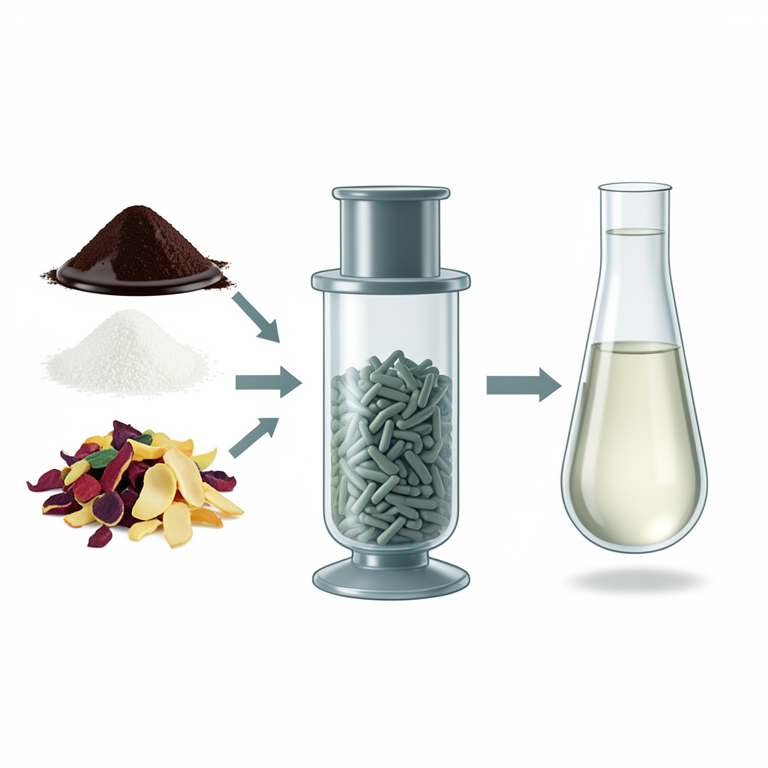
Substrate Comparison
AI-generated conceptual illustration (Lactobacillus plantarum bacteria and agro-industrial waste substrates). It explains the idea and does not show study data.
View source evidence ↗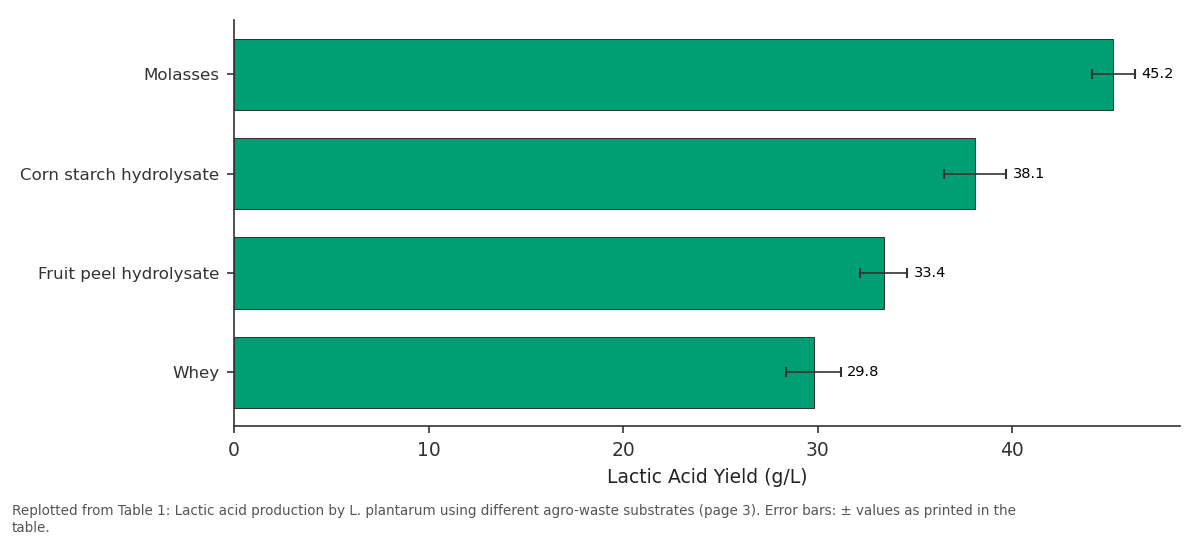
Lactic Acid Yield (g/L): Molasses vs Corn starch hydrolysate vs Fruit peel hydrolysate vs Whey
Replotted from Table 1 (page 3) of the original paper. Every bar is the paper's own table value.
View source evidence ↗Figures & tables
From the original paper Table 1
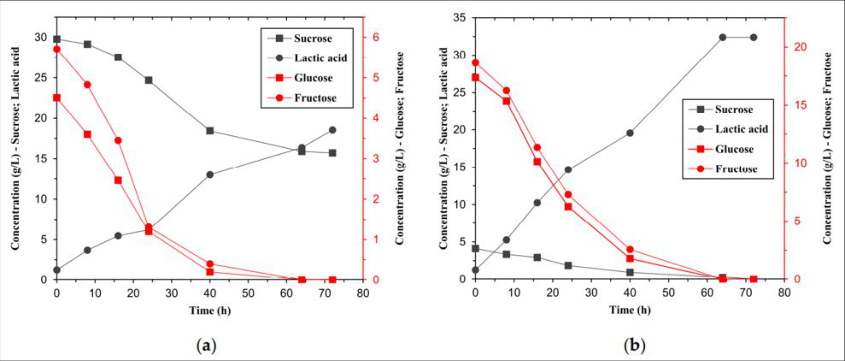 Figure 1
Introduction
Lactic acid is a versatile organic acid that has gained global attention due to its wide industrial applications in the food, pharmaceutical, cosmetic, and biodegradable plastic sectors. It serves as an acidulant, preservative, and precursor for the synthesis of polylactic acid (PLA), a biodegradable polymer that provides an eco-friendly alternative to petrochemical-based plastics [1] . The increasing demand for lactic acid has stimulated interest in developing sustainable and cost-effective biotechnological processes for its production. Conventionally, lactic acid can be synthesized either chemically or biologically. Chemical synthesis, often involving lactonitrile hydrolysis, produces a racemic mixture of D-and Llactic acid and relies on petroleum-based feedstocks, making it less desirable in the current sustainability-driven market. In contrast, microbial fermentation using lactic acid bacteria (LAB) offers several advantages: production of optically pure L(+)-lactic acid, lower environmental impact, and the ability to utilize renewable biomass as substrates [2] . Among the various LAB species, Lactobacillus plantarum is a homofermentative bacterium that efficiently converts hexose sugars into lactic acid with minimal by-product formation. It exhibits tolerance to acidic environments and can ferment a wide variety of carbohydrates, making it suitable for large-scale industrial fermentation processes. A major limitation in the commercial production of lactic acid by fermentation is the high cost of carbon substrates, which can account for up to 60% of total production expenses. [3][4][5] . Traditionally used substrates such as glucose, sucrose, and starch are expensive and compete with food supply chains. Consequently, there is growing interest in agro-industrial wastes and by-products as alternative carbon sources for fermentation [6] . These materials including molasses, corn starch residues, fruit peels, and whey are abundant, inexpensive, and rich in fermentable sugars and nutrients. Their utilization not only reduces production costs but also contributes to environmental sustainability by minimizing waste disposal problems.
Several studies have reported the potential of using agricultural and food-processing wastes for microbial fermentation [7][8][9] .
For instance, molasses, a by-product of sugar industries, contains high levels of sucrose and trace minerals that support microbial growth. Corn starch residues and whey are also rich in carbohydrates and nitrogen compounds, while fruit peels (such as orange, banana, and pineapple peels) provide glucose, fructose, and other micronutrients beneficial for LAB growth [10][11][12][13][14] . However, the efficiency of lactic acid production varies with substrate composition, sugar concentration, and fermentation conditions. Therefore, optimization of substrate selection and concentration is essential to maximize lactic acid yield and productivity. Despite numerous reports on lactic acid fermentation, comparative analyses of multiple agro-industrial wastes under standardized fermentation conditions remain limited. Furthermore, process optimization tailored to Lactobacillus plantarum can enhance yield and establish the organism's potential for waste valorization [15][16][17][18] . The combination of microbial and substrate optimization aligns with circular bioeconomy principles converting low-value residues into high-value biochemicals through eco-efficient fermentation. The present study aims to evaluate and optimize the use of various agro-industrial wastes molasses, corn starch, fruit peels, and whey as alternative substrates for lactic acid production by Lactobacillus plantarum [19][20][21] . The effects of substrate type and concentration on lactic acid yield, productivity, and substrate utilization efficiency were investigated under controlled fermentation conditions [22] . The findings are expected to contribute to developing a sustainable and economically viable process for large-scale lactic acid production using renewable biomass resources.
Materials and Methods
Materials and Methods
Microorganism and Maintenance
The bacterial strain used in this study was Lactobacillus plantarum, obtained from the Microbial Type Culture Collection, Chandigarh, India. The culture was maintained on de Man, Rogosa and Sharpe (MRS) agar slants at 4 °C and sub-cultured every four weeks. For inoculum preparation, a loopful of the strain was transferred to 50 mL of sterile MRS broth and incubated at 37 °C for 24 h under static, anaerobic conditions. The actively growing culture with an optical density (OD₆₀₀) of 0.8-1.0 was used as inoculum for fermentation experiments.
Preparation of Agro-Industrial Waste Substrates
Four different agro-industrial wastes were evaluated as carbon sources for lactic acid production: molasses, corn starch, fruit peels, and whey.
Molasses
Cane molasses was procured from a local sugar processing unit. It was diluted to desired concentrations (2-10% w/v) using distilled water and clarified by heating at 80 °C for 15 min to remove suspended solids. The clarified solution was filtered through muslin cloth and sterilized at 121 °C for 15 min before use.
Corn Starch Hydrolysate
Commercial corn starch residue was obtained from a local corn milling plant. The starch slurry (10% w/v) was liquefied with α-amylase (0.5 mL/100 mL) at 90 °C for 30 min, followed by saccharification using glucoamylase (0.5 mL/100 mL) at 60 °C for 2 h. The hydrolysate was filtered, cooled, and adjusted to desired concentrations with distilled water. The pH was maintained at 6.0 prior to sterilization.
Fruit Peel Hydrolysate
A mixture of banana and orange peels was selected due to their high sugar and mineral content. The peels were washed, dried at 60 °C, and ground into powder. Ten grams of peel powder were hydrolyzed in 100 mL of 1% (v/v) dilute HCl at 100 °C for 1 h. The hydrolysate was neutralized with CaCO₃, filtered, and adjusted to the required sugar concentration.
Whey
Sweet whey was obtained from a local dairy. The sample was filtered to remove fat and protein residues and pasteurized at 70 °C for 30 min. The whey was used directly as substrate, and its initial lactose concentration was measured using the DNS method. All substrates were adjusted to an initial pH of 6.0, supplemented with yeast extract (1 g L⁻¹) and MgSO₄•7H₂O (0.2 g L⁻¹) to ensure adequate nitrogen and mineral supply.
Fermentation Conditions
Batch fermentations were conducted in 250 mL Erlenmeyer flasks containing 100 mL of fermentation medium. Each flask was inoculated with 5% (v/v) of 24 h-old L. plantarum culture and incubated at 37 °C for 72 h under anaerobic conditions. To maintain anaerobiosis, flasks were sealed with rubber stoppers, and calcium carbonate (CaCO₃, 2 g L⁻¹) was added as a neutralizing agent to prevent acid inhibition. Agitation was maintained at 150 rpm to ensure uniform mixing. All experiments were performed in triplicate. Samples were withdrawn at 12-hour intervals for analysis of residual sugar, cell growth, and lactic acid concentration.
Optimization of Substrate Concentration
To determine the optimum substrate concentration for maximum lactic acid yield, the initial sugar concentration of each substrate was varied from 2% to 10% (w/v). Fermentations were performed under identical conditions (37 °C, pH 6.0, 72 h, 5% inoculum). The optimum concentration was determined based on maximum lactic acid yield (g L⁻¹) and conversion efficiency (%).
Analytical Methods Cell Growth Measurement
Cell growth was estimated spectrophotometrically by measuring the optical density at 600 nm (OD₆₀₀) using a UV-Vis spectrophotometer. A standard calibration curve relating OD to dry cell weight was prepared to express biomass concentration in g L⁻¹.
Determination of Reducing Sugars
Residual reducing sugars in the fermentation broth were determined by the 3,5-dinitrosalicylic acid (DNS) method using glucose as standard. Results were expressed as grams of reducing sugar per liter (g L⁻¹).
Estimation of Lactic Acid
Lactic acid concentration was measured using the phydroxydiphenyl-FeCl₃ colorimetric method (Barker and Summerson, 1941). Briefly, 1 mL of fermented sample was centrifuged, and 0.2 mL of supernatant was mixed with 1 mL of 4% CuSO₄ and 6 mL of concentrated H₂SO₄. After heating for 10 min in a boiling water bath and cooling, 0.1 mL of 1.5% p-hydroxydiphenyl reagent was added. The absorbance was measured at 560 nm. A standard curve was prepared using pure lactic acid. Alternatively, HPLC analysis using an Aminex HPX-87H column with 0.005 M H₂SO₄ as mobile phase (0.6 mL min⁻¹, 40 °C) was employed for precise quantification when necessary.
Calculation of Yield and Productivity
Lactic acid yield (Yp/s) and productivity (Qp) were calculated using the following equations:
Statistical Analysis
All experimental data were obtained in triplicate and expressed as mean ± standard deviation (SD). Statistical differences among treatments were analysed by one-way ANOVA using SPSS version 25.0, and significance was accepted at p < 0.05. Graphs and figures were generated using OriginPro 2024 software.
Results and Discussion
Results and Discussion
Screening of Agro-Industrial Wastes as Carbon Sources
The ability of Lactobacillus plantarum to utilize various agro-industrial wastes molasses, corn starch hydrolysate, fruit peel hydrolysate, and whey for lactic acid production was investigated under identical fermentation conditions (37 °C, pH 6.0, 72 h, 5% inoculum). The results are summarized in Table 1. Among the tested substrates, molasses supported the highest lactic acid production (45.2 g/L) after 72 h, followed by corn starch hydrolysate (38.1 g/L), fruit peel hydrolysate (33.4 g/L), and whey (29.8 g/L).
| Substrate | Initial Sugar (g/L) | Residual Sugar (g/L) | Lactic Acid Yield (g/L) | Productivity (g/L·h) | Conversion Efficiency (%) |
|---|---|---|---|---|---|
| Molasses | 60.0 | 6.4 | 45.2 ± 1.1 | 0.63 | 77.2 |
| Corn starch hydrolysate | 60.0 | 10.1 | 38.1 ± 1.6 | 0.53 | 63.5 |
| Fruit peel hydrolysate | 60.0 | 14.6 | 33.4 ± 1.2 | 0.46 | 55.7 |
| Whey | 60.0 | 18.8 | 29.8 ± 1.4 | 0.41 | 49.6 |
Table text extracted from the original PDF; superscript letters are shown inline. The original table image is below.
View original table image
The superior performance of molasses can be attributed to its high sucrose and mineral content, which Favors rapid growth and lactic acid accumulation by L. plantarum. Similar results were reported where molasses yielded over 40 g/L lactic acid using Lactobacillus delbrueckii.
Conversely, lower yields from whey and fruit peels may be due to the presence of inhibitory compounds (proteins, phenolics) and the need for additional nitrogen supplementation. These results confirm that agro-wastes can serve as viable, low-cost substrates for lactic acid fermentation, though their nutrient composition and sugar profiles significantly affect fermentation efficiency.
Effect of Substrate Concentration
The influence of substrate concentration on lactic acid fermentation by Lactobacillus plantarum was analyzed using sucrose-based molasses media at different initial concentrations. In contrast, at the higher initial sucrose concentration (Figure b), the initial rate of sucrose hydrolysis was slower, and accumulation of glucose and fructose was observed during the first 12-24 h, likely due to osmotic stress and substrate inhibition effects at elevated sugar levels. Nevertheless, once the hydrolysis intermediates were metabolized, lactic acid accumulation proceeded rapidly, reaching a maximum concentration of ~33-35 g L⁻¹ after 60 h. The rate of sugar consumption after 24 h was significantly higher, suggesting that L. plantarum adapted to the higher substrate load after the initial lag phase. In both conditions, sucrose was almost completely depleted by 60-72 h, and lactic acid production plateaued, signifying product inhibition or nutrient exhaustion. The conversion of sucrose to lactic acid followed a nearly stoichiometric relationship, with minimal accumulation of intermediate sugars after 36 h in the low-sucrose system and after 48 h in the high-sucrose system. Comparatively, the higher substrate concentration yielded greater final lactic acid concentration but showed slower initial fermentation kinetics and extended fermentation time. This observation aligns with the substrate inhibition phenomenon frequently reported in LAB fermentations (Wee et al., 2006; John et al., 2006). High sugar concentrations increase osmotic pressure, reduce cell activity, and prolong the adaptation phase, while moderate concentrations (around 6% w/v) favor balanced growth and acid production. Therefore, considering both productivity and conversion efficiency, 6% (w/v) substrate concentration was identified as optimal for lactic acid fermentation by L. plantarum. Higher concentrations may enhance final yield but at the expense of longer fermentation time and reduced specific productivity. During the initial 24 h, rapid microbial growth was observed with a sharp increase in lactic acid concentration, reaching 25 g/L. The maximum production (45.2 g/L) was achieved after 60 h, after which the rate slowed due to nutrient depletion and product inhibition. The residual sugar decreased from 60 g/L to 6.4 g/L, indicating efficient substrate utilization. The near-stoichiometric conversion of glucose to lactic acid confirms the homofermentative metabolism of L. plantarum, where the Embden-Meyerhof-Parnas (EMP) pathway dominates, producing lactic acid as the primary metabolite. The slightly higher yield in the present study could be due to optimized conditions (pH 6.0, 37 °C, 5% inoculum) and the presence of trace minerals and amino acids in cane molasses, which support LAB metabolism. The conversion efficiency of 77.2% observed here is within the range reported for efficient homofermentative LAB strains, confirming the suitability of L. plantarum for industrialscale lactic acid fermentation using renewable agro-wastes.
Statistical Evaluation
Statistical analysis (one-way ANOVA) showed significant differences (p < 0.05) among substrates in terms of lactic acid yield and productivity. Molasses was statistically superior to other substrates, while corn starch and fruit peels formed a moderate group. The results highlight that substrate composition is a critical determinant of fermentation performance. The study demonstrates that substrate optimization plays a pivotal role in maximizing lactic acid yield during microbial fermentation. The high performance of molasses is attributed to its balanced nutrient profile, which eliminates the need for expensive supplements. Using agro-wastes such as corn starch and fruit peels also provided satisfactory yields, proving their potential as cost-effective and sustainable feedstocks for lactic acid production. By valorizing agricultural residues, this process supports a circular bioeconomy, reducing waste generation while providing a renewable platform for bio-based chemical production. Future work can focus on continuous fermentation systems, nutrient supplementation strategies, and integrated purification methods to further enhance process efficiency and scalability.
Conclusion
The present study successfully demonstrated that agroindustrial wastes can serve as effective and economical substrates for the microbial production of lactic acid using Lactobacillus plantarum. Among the tested feedstocks molasses, corn starch hydrolysate, fruit peel hydrolysate, and whey -molasses proved to be the most efficient substrate, yielding up to 45.2 g L⁻¹ of lactic acid under optimized fermentation conditions (37 °C, pH 6.0, 72 h, 5% inoculum, 6% substrate). The superior performance of molasses is attributed to its high fermentable sugar content, presence of micronutrients, and good buffering capacity, which collectively enhance microbial growth and acid production. The study further confirmed that increasing substrate concentration beyond the optimal level negatively impacts productivity due to substrate inhibition and osmotic stress. Overall, this research highlights the feasibility of converting agro-industrial residues into high-value biochemicals, providing both economic and environmental benefits. Utilizing wastes such as molasses and corn starch residues supports the goals of sustainable bioprocessing, reduces raw material costs, and minimizes waste disposal challenges associated with agricultural by-products.
Figures and tables from the paper
References
7 in the original paper- Abedi E, Hashemi A. Lactic acid production - producing microorganisms and substrates: overview of current status and prospects. Journal of Biotechnology. 2020;302:11-25.
- El-Sheshtawy HS, et al. Optimization of lactic acid production from agro-industrial wastes as cheap, renewable substrates. Bioresource Technology Reports. 2022;17:100940.
- Oyewole OA, et al. Microbial conversion of agrowastes for lactic acid production. Heliyon. 2023;9(2):e12850.
- Rahman NA. Sustainable lactic acid production from agricultural waste. Bioresources and Bioprocessing. 2025;12(1):23.
- Naydenova G. Comparison of lactic acid production from different agro-industrial wastes. Fermentation. 2025;11(8):437.
- Huang J. Advanced fermentation techniques for lactic acid production from renewable materials. Fermentation. 2023;9(8):765.
- Saavedra S, et al. Optimization of lactic acid production by Lactobacillus plantarum from Amazon fruit: process development. Revista Mexicana de Ingeniería Química. 2021;20(2):675-684.