
Research article · 2025 · Full text
International Journal of Agriculture and Food ScienceEffect of Different Levels of Saccharomyces cerevisiae Supplementation on Blood Biochemical Profile of Broiler Chickens
Volume 7(11) · Pages 22–25 · DOI: 10.33545/2664844x.2025.v7.i11a.937 ↗
Research areasAnimal Nutrition and PhysiologyFood Science and Nutritional StudiesPhytase and its Applications
Abstract
Author-writtenThe present investigation was conducted to assess the effect of different levels of Saccharomyces cerevisiae supplementation on the blood biochemical profile of broiler chickens. A total of 120-day-old Cobb-400 chicks were randomly allotted to four dietary treatments: T₀ (control), T₁ (1.0% yeast), T₂ (1.5% yeast), and T₃ (2.0% yeast), each with five replicates of six birds. Blood samples were collected on the 21st and 42nd days of age for the estimation of serum metabolites and enzyme activities. The results revealed that dietary supplementation of yeast significantly (p
Summary
Source-checkedPlain-language reading of the full paper, prepared with AI and checked against the text. Each point links to the authors' own words.
Why it matters
- Blood biochemical parameters are used as key indicators to assess the nutritional, metabolic, and physiological status of poultry. View evidence ↗
- Due to restrictions on antibiotic growth promoters, there is an increasing need for safe and effective alternative feed additives in poultry production. View evidence ↗
- Saccharomyces cerevisiae is a potential additive because it contains proteins, vitamins, minerals, and bioactive compounds like β-glucans that can improve digestion and immune response. View evidence ↗
The question
- The study aimed to evaluate how different levels of Saccharomyces cerevisiae supplementation (1.0%, 1.5%, and 2.0%) affect the serum enzyme and biochemical profiles of broiler chickens. View evidence ↗
What they did
- The experiment used 120 day-old Cobb-400 broiler chicks divided into four groups: a control (T₀) and three yeast supplementation levels (T₁: 1.0%, T₂: 1.5%, T₃: 2.0%), with five replicates of six birds each. View evidence ↗
- The birds were raised under uniform hygienic and management conditions for a total period of 42 days. View evidence ↗
- Blood samples of approximately 2 mL were collected from the wing vein of one bird per replicate on the 21st and 42nd days of the trial. View evidence ↗
- The researchers measured serum lipid profiles (cholesterol, HDL, LDL, triglycerides), protein levels (total protein, albumin), renal/hepatic markers (bilirubin, creatinine, urea), and liver enzymes (ALT, AST, ALP). View evidence ↗
What they found
- The lowest levels of bilirubin (0.42 mg/dL) and creatinine (0.23 mg/dL) were observed in the T₂ group, suggesting improved renal and hepatic function. View evidence ↗
- Liver enzyme activities (ALT, AST, and ALP) were reduced in yeast-supplemented groups, with the 1.5% level (T₂) recording the lowest values. View evidence ↗
- There was no significant difference in serum urea concentrations across the different treatment groups. View evidence ↗
What it means
- The authors concluded that supplementing broiler diets with 1.5% Saccharomyces cerevisiae is optimal for enhancing hepatic function, protein synthesis, and lipid metabolism. View evidence ↗
- The results suggest that S. cerevisiae can act as a natural growth promoter to improve physiological performance without requiring antibiotics. View evidence ↗
Visual summary
3 visualsIllustrations explain the paper; charts are replotted from the paper's own table values.
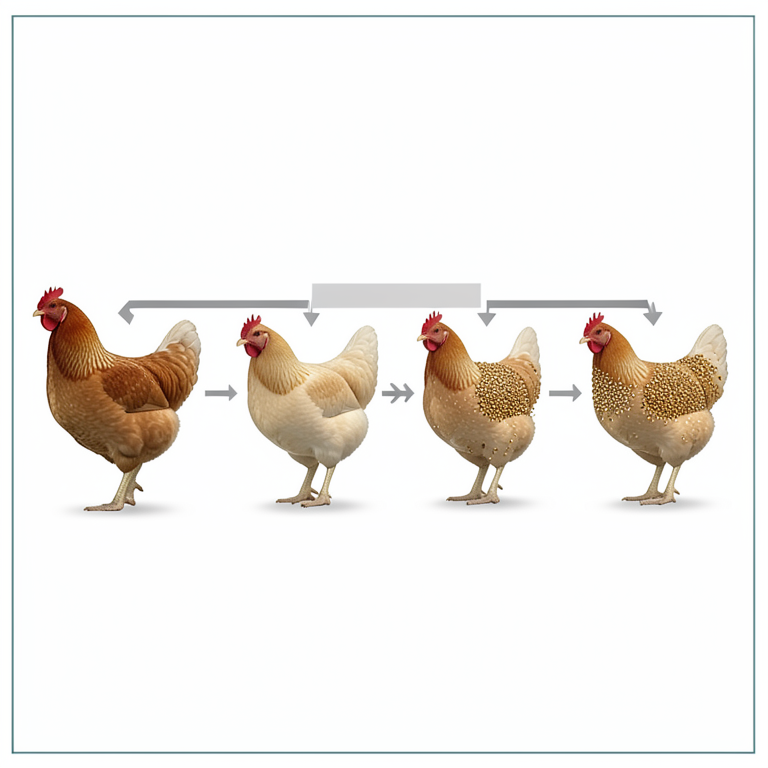
Experimental Group Layout
AI-generated conceptual illustration (broiler chickens). It explains the idea and does not show study data.
View source evidence ↗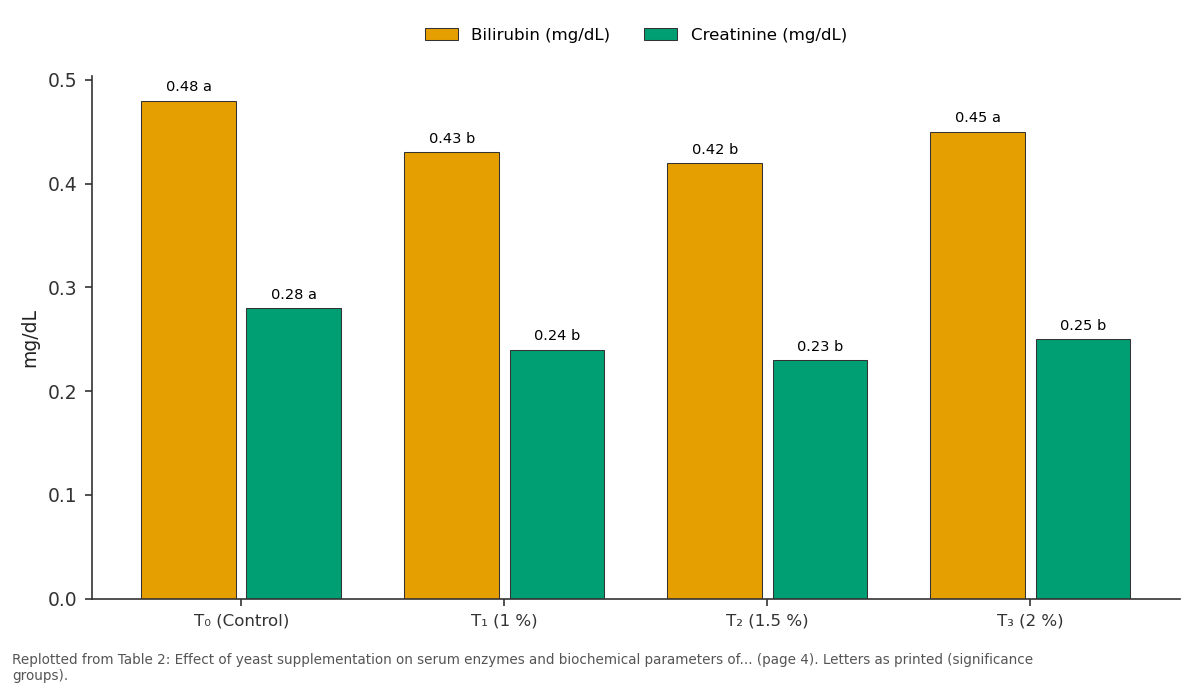
Bilirubin (mg/dL) and Creatinine (mg/dL): T₀ (Control) vs T₁ (1 %) vs T₂ (1.5 %) vs T₃ (2 %)
Replotted from Table 2 (page 4) of the original paper. Every bar is the paper's own table value.
View source evidence ↗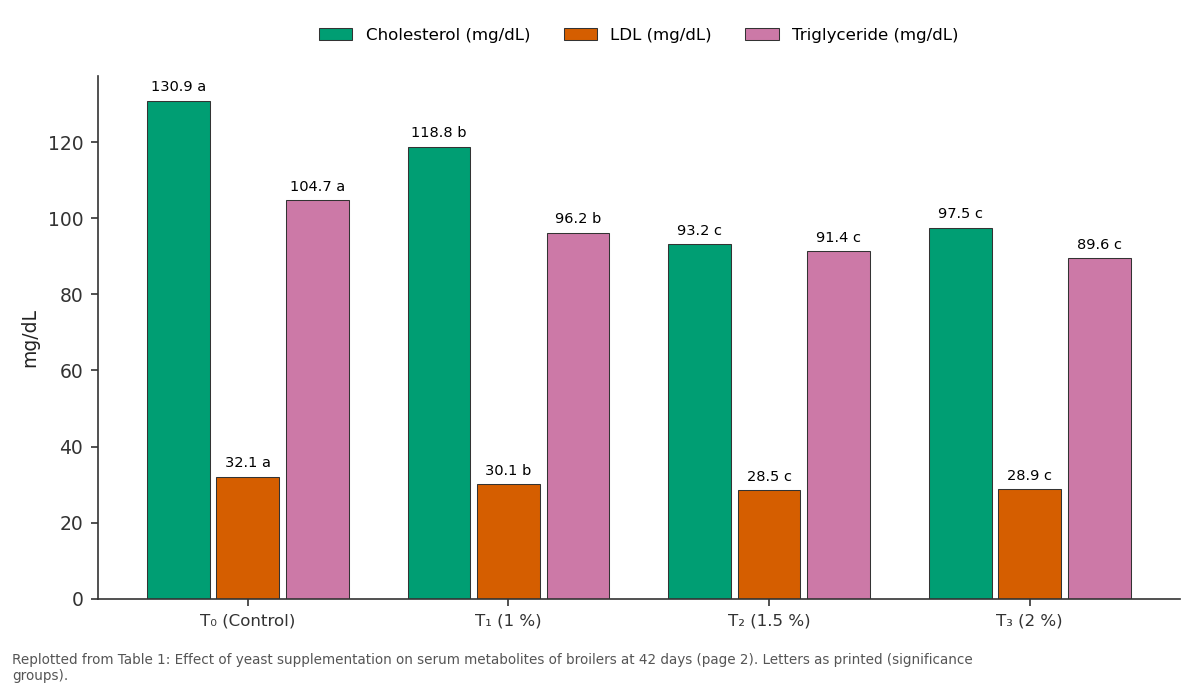
Cholesterol (mg/dL) and LDL (mg/dL) and more: T₀ (Control) vs T₁ (1 %) vs T₂ (1.5 %) vs T₃ (2 %)
Replotted from Table 1 (page 2) of the original paper. Every bar is the paper's own table value.
View source evidence ↗Figures & tables
From the original paper Table 1
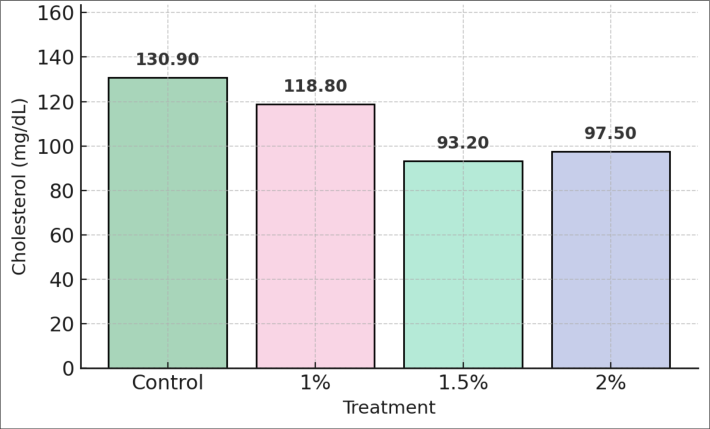 Figure 1
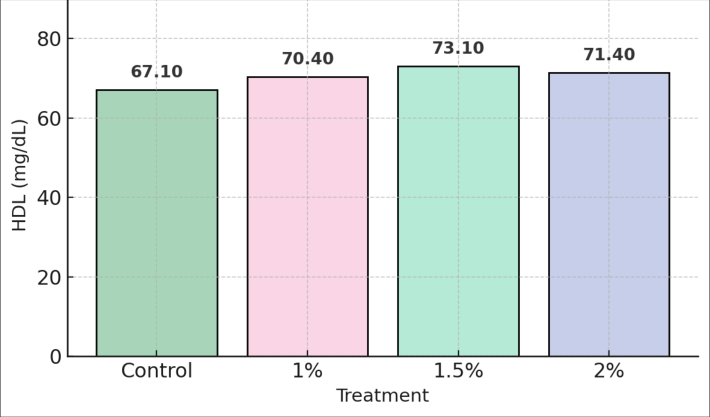 Figure 2
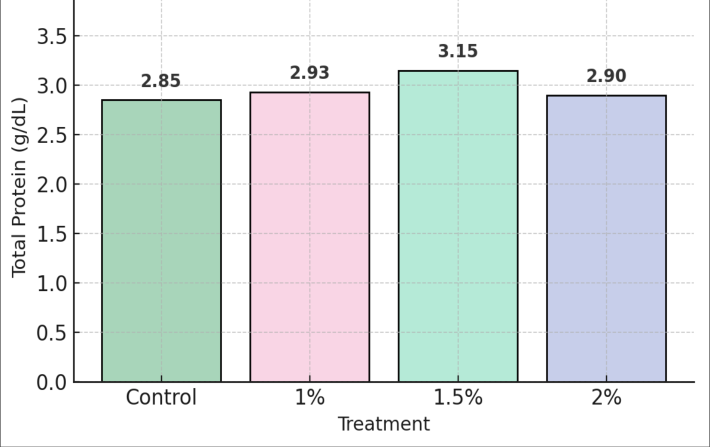 Figure 3
 Table 2
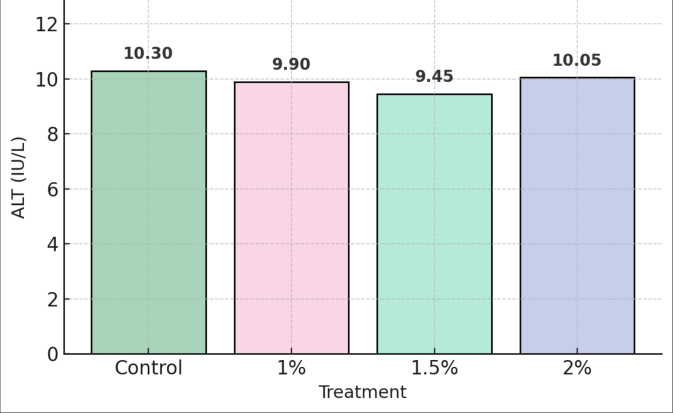 Figure 4
Introduction
Blood biochemical parameters serve as important indicators of the physiological, nutritional, and metabolic status of poultry. They reflect the functional condition of vital organs such as the liver, kidney, and heart, and provide insight into the animal's response to dietary modifications. Evaluation of blood constituents, including lipid profile, protein status, and enzyme activity, offers valuable information on nutrient utilization, liver function, and overall health of birds under experimental conditions. In modern poultry production, the need for safe and effective feed additives has become increasingly important following restrictions on the use of antibiotic growth promoters. Among the natural alternatives, yeast and yeast-based products have gained considerable attention due to their multifaceted nutritional and probiotic properties. Saccharomyces cerevisiae, in particular, is rich in proteins, essential amino acids, vitamins, minerals, βglucans, and mannan oligosaccharides, which contribute to improved digestion, enhanced immune response, and modulation of gut microflora Darboe (2022) [6] . These factors indirectly influence the biochemical composition of blood by supporting better liver function, efficient lipid metabolism, and improved nutrient assimilation. Previous studies have reported beneficial effects of yeast supplementation on serum cholesterol, triglycerides, total protein, and enzyme activity in poultry. Onifade et al. (1999) [1] observed improved blood biochemical indices in broilers supplemented with S. cerevisiae, while Santin et al. (2001) and Paryad and Mahmoudi (2008) [2,3] reported enhanced protein metabolism and reduced lipid levels. Goli and Shahryar (2015) [4] found decreased hepatic enzyme activities, suggesting hepatoprotective effects of yeast supplementation. However, variations in yeast strain, dosage, and dietary composition have resulted in inconsistent responses among studies. In view of these considerations, the present study was undertaken to evaluate the influence of different levels of Saccharomyces cerevisiae supplementation (1.0%, 1.5%, and 2.0%) on the serum biochemical and enzyme profile of broiler chickens.
Materials and Methods
The experiment was carried out at the Poultry Unit, Division of Animal Husbandry and Dairy Science, College of Agriculture, Dhule, Maharashtra. A total of 120-day-old Cobb-400 broiler chicks were randomly allotted to four dietary treatments: T₀ (control diet), T₁ (basal diet + 1.0% Saccharomyces cerevisiae), T₂ (basal diet + 1.5% S. cerevisiae), and T₃ (basal diet + 2.0% S. cerevisiae). Each treatment consisted of five replicates with six birds per replicate. The experimental design followed a completely randomized design (CRD). The birds were reared under uniform managemental and hygienic conditions for a period of 42 days. The diets were formulated as per the Bureau of Indian Standards (BIS, 1992) recommendations for broilers, ensuring the nutrient requirements of starter (0-21 days) and finisher (22-42 days) phases. Feed and water were provided ad libitum. Routine vaccination and biosecurity measures were strictly followed throughout the experimental period. At the end of the 21st and 42nd days of the feeding trial, approximately 2 mL of blood was collected from the wing vein of one bird per replicate using sterile syringes. The samples were allowed to clot and centrifuged at 3000 rpm for 10 minutes to separate the serum, which was then stored at -20°C until analysis. Serum samples were analyzed for lipid profile parameters cholesterol, high-density lipoprotein (HDL), low-density lipoprotein (LDL), and triglycerides using enzymatic colorimetric methods (CHOD-PAP and GPO-PAP). Total protein and albumin concentrations were determined by the Biuret and Bromocresol Green methods, respectively. Serum bilirubin, creatinine, and urea were estimated by standard biochemical kits, while liver enzyme activities including alanine aminotransferase (ALT), aspartate aminotransferase (AST), and alkaline phosphatase (ALP) were measured using commercial diagnostic kits (Span Diagnostics Ltd., India) following the manufacturer's instructions. All data were subjected to one-way analysis of variance (ANOVA) using standard statistical procedures. Differences among treatment means were compared using the Critical Difference (CD) test at 5% level of significance. The results are presented as mean ± standard error (SE).
Results and Discussion
The results of the present study revealed that supplementation of Saccharomyces cerevisiae at different levels had a significant (p<0.05) influence on the serum lipid profile of broilers. By the 21st day of feeding, yeast supplementation had already initiated beneficial physiological effects, as indicated by reduced serum cholesterol, LDL, and triglyceride levels, along with increased HDL and total protein concentrations compared to the control. Although the differences were moderate at this stage, the early improvement suggested that S. cerevisiae positively influenced lipid metabolism and protein synthesis from the initial phase of feeding. Similar early responses to probiotic yeast supplementation were also reported by Paryad and Mahmoudi (2008) and Santin et al. (2001) [2,3] . At the end of the trial (42 days), the effect became more pronounced. The mean cholesterol concentration decreased from 130.90 mg/dL in the control group to 93.20 mg/dL in T₂, showing a highly significant (p<0.05) hypocholesterolemic effect. As shown in Table 1 and Figure 1, Figure 2, Figure 3. This could be attributed to the ability of yeast to bind bile acids and enhance their excretion, thus reducing cholesterol absorption and synthesis. [5,7] observed that probiotic supplementation lowered LDL and triglyceride concentrations while improving HDL in poultry. Yeast supplementation significantly improved serum total protein and albumin concentrations (p<0.05). At 42 days, the highest total protein (3.15 g/dL) and albumin (1.56 g/dL) values were recorded in T₂, while the lowest were in the control group (2.85 and 1.54 g/dL, respectively). The improvement in protein parameters may be due to enhanced microbial enzyme activity, increased digestibility of nutrients, and better intestinal health resulting from yeast supplementation. These results are in agreement with Santin et al. (2001) [2] , who reported enhanced protein metabolism and immune status in broilers fed diets containing yeast cell wall components. The mannan oligosaccharides and βglucans in yeast may also stimulate gut health and protein turnover, leading to improved serum protein indices. The biochemical parameters associated with hepatic and renal function were also affected by dietary treatments. Serum bilirubin and creatinine concentrations showed a declining trend with increasing levels of yeast supplementation. The lowest bilirubin (0.42 mg/dL) and creatinine (0.23 mg/dL) were recorded in T₂, suggesting reduced hepatic stress and improved renal function. These findings are comparable to those of Goli and Shahryar (2015) [4] , who observed decreased hepatic enzyme activity and bilirubin levels in yeast-fed birds.
| Treatments | Cholesterol (mg/dL) | HDL (mg/dL) | LDL (mg/dL) | Triglyceride (mg/dL) | Total Protein (g/dL) | Albumin (g/dL) |
|---|---|---|---|---|---|---|
| T₀ (Control) | 130.90ᵃ | 67.10ᶜ | 32.10ᵃ | 104.70ᵃ | 2.85ᵇ | 1.54ᵃ |
| T₁ (1 %) | 118.80ᵇ | 70.40ᵇ | 30.10ᵇ | 96.20ᵇ | 2.93ᵇ | 1.49ᵇ |
| T₂ (1.5 %) | 93.20ᶜ | 73.10ᵃ | 28.50ᶜ | 91.40ᶜ | 3.15ᵃ | 1.56ᵃ |
| T₃ (2 %) | 97.50ᶜ | 71.40ᵃ | 28.90ᶜ | 89.60ᶜ | 2.90ᵇ | 1.48ᵇ |
| SE of Mean | 0.26 | 0.34 | 0.22 | 0.32 | 0.03 | 0.01 |
| CD @ 5 % | 0.76 | 1.02 | 0.64 | 0.98 | 0.09 | 0.02 |
Table text extracted from the original PDF; superscript letters are shown inline. The original table image is below.
View original table image
International Journal of Agriculture and Food Science https://www.agriculturaljournals.com [8] , attributing them to improved gutliver axis modulation and reduced metabolic load on hepatic tissue. Overall, the inclusion of Saccharomyces cerevisiae at 1.5% (T₂) was found to be optimal for improving serum lipid metabolism, protein synthesis, and hepatic function in broilers. The consistent improvement across multiple blood parameters indicates a synergistic effect of yeast nutrients, enzymes, and bioactive compounds on metabolic regulation. The observed trends support the role of S. cerevisiae as a natural growth promoter capable of enhancing physiological performance without the need for antibiotics.
Conclusion
Dietary supplementation of Saccharomyces cerevisiae at 1.5% (T₂) in broiler diets significantly improved lipid metabolism, protein synthesis, and liver enzyme activity. The findings suggest that yeast supplementation enhances physiological efficiency and biochemical health in broilers without adverse effects.
Figures and tables from the paper
| Treatments | Bilirubin (mg/dL) | Creatinine (mg/dL) | Urea (mg/dL) | ALT (IU/L) | AST (IU/L) | ALP (IU/L) |
|---|---|---|---|---|---|---|
| T₀ (Control) | 0.48ᵃ | 0.28ᵃ | 8.70ᶜ | 10.30ᵃ | 332.60ᵃ | 3280.10ᵃ |
| T₁ (1 %) | 0.43ᵇ | 0.24ᵇ | 9.20ᵇ | 9.90ᶜ | 321.80ᶜ | 3101.40ᶜ |
| T₂ (1.5 %) | 0.42ᵇ | 0.23ᵇ | 9.60ᵃ | 9.45ᵈ | 305.20ᵈ | 2945.30ᵈ |
| T₃ (2 %) | 0.45ᵃ | 0.25ᵇ | 9.40ᵃ | 10.05ᵇ | 330.10ᵇ | 3180.20ᵇ |
| SE of Mean | 0.01 | 0.01 | 0.02 | 0.07 | 0.85 | 11.80 |
| CD @ 5 % | 0.02 | 0.02 | 0.06 | 0.19 | 2.52 | 34.90 |
Table text extracted from the original PDF; superscript letters are shown inline. The original table image is below.
View original table image
References
8 in the original paper- Onifade AA, Odunsi AA, Babatunde GM, Olorede BR, Muma E. Comparison of the supplemental effects of Saccharomyces cerevisiae and antibiotics in lowprotein and high-fiber diets fed to broiler chickens. Arch Anim Nutr. 1999;52:29-39.
- Santin E, Maiorka A, Macari M. Performance and intestinal mucosa development of broiler chickens fed diets containing Saccharomyces cerevisiae cell wall. J Appl Poult Res. 2001;10:236-44.
- Paryad A, Mahmoudi M. Effect of different levels of supplemental yeast (Saccharomyces cerevisiae) on performance, blood constituents and carcass characteristics of broiler chicks. Afr J Agric Res. 2008;3(12):835-42.
- Goli SAH, Shahryar HA. The effect of Saccharomyces cerevisiae yeast on performance, blood biochemical and immunological parameters in broiler chickens. Iran J Appl Anim Sci. 2015;5(3):597-604.
- Colvard AM, Koci MD, Starkey CW. Evaluation of yeast-based probiotic supplementation on broiler performance and intestinal morphology. Poult Sci. 2014;93:305-13.
- Darboe AK. Review on the use of probiotics in poultry production (layers and broilers) as feed additives. Int J Vet Sci Anim Husbandry. 2022;7(5):37-42. DOI:10.22271/veterinary.2022.v7.i5a.442.
- Zhou M, Zhu Y, Huang X, Zhang C, Wei J. Effects of yeast supplementation on growth performance and serum biochemical parameters in broilers. Front Vet Sci. 2022;9:978563.
- Soren NM, Meena S, Kumar M, Das A, Prasad R. Influence of yeast supplementation on serum biochemical and enzymatic profile of broilers. Indian J Anim Res. 2024;58(4):451-6.