
Research article · 2025 · Full text
International Journal of Agriculture and Food ScienceStudies on sensory and microbial quality of peda blended with kidney bean (Phaseolus vulgaris) paste
Volume 7(10) · Pages 610–614 · DOI: 10.33545/2664844x.2025.v7.i10i.928 ↗
Research areasFood Science and Nutritional StudiesHumic Substances and Bio-Organic StudiesSeed and Plant Biochemistry
Abstract
Author-writtenThe peda was prepared by blending 2.5, 5 and 7.5 per cent of kidney bean paste with buffalo milk khoa aimed to study sensory properties of peda blended with kidney bean (Phaseolus vulgaris) paste. The sensory scores of peda blended with kidney bean paste increased non-significantly in T2 (8.75, 8.75, 8.75, 8.75) and then further decreased non-significantly in T3 (8.25, 8.25, 8.25, 8.25) and T4 (8.00, 7.75, 7.75, 8.00) as compared to control T1 (8.50, 8.50, 8.50, 8.50) for colour and appearance, flavour, body and texture and overall acceptability, respectively. The standard plate count of fresh peda blended with kidney bean paste in T2, T3 and T4 significantly decreased (9, 7, 5 ×10³ cfu/gm) as compared to control T1 (10 ×103 cfu/gm). The yeast and mould count was not observed as the product was fresh. The product was found to be free from coliform which indicates the hygienic quality of peda.
Summary
Source-checkedPlain-language reading of the full paper, prepared with AI and checked against the text. Each point links to the authors' own words.
Why it matters
- Peda is a popular Indian milk-sweet based on khoa, valued for its taste and nutritional content. View evidence ↗
- Kidney beans are widely used across cultures as a rich source of high-quality protein. View evidence ↗
- Incorporating legumes into milk products can enhance the overall nutritional value of the food. View evidence ↗
The question
- The study aimed to evaluate the sensory properties of peda when blended with varying percentages (2.5%, 5%, and 7.5%) of kidney bean paste. View evidence ↗
What they did
- The research was carried out between 2024 and 2025 at the College of Agriculture, Latur. View evidence ↗
- The base khoa was produced using standardized buffalo milk containing 6% fat and 9% solids-not-fat. View evidence ↗
- Four treatment groups were established: a control (T1, 100% khoa) and three blends with kidney bean paste at 2.5% (T2), 5% (T3), and 7.5% (T4). View evidence ↗
- A semi-trained panel of five judges used a 9-point hedonic scale to evaluate sensory attributes. View evidence ↗
- Microbiological quality was assessed by measuring standard plate count, coliform count, and yeast/mould count using specific agar media. View evidence ↗
What they found
- Body and texture scores peaked at T2 (8.75) and decreased non-significantly at higher concentrations, reaching 7.75 in T4, compared to 8.50 in the control. View evidence ↗
- Flavour scores increased non-significantly in T2 (8.75) but decreased to 7.75 in T4, with the authors attributing the decline to a 'beany flavour' at higher levels. View evidence ↗
- Overall acceptability was highest in T2 (8.75) and lowest in T4 (8.00), compared to the control (8.50). View evidence ↗
- The standard plate count decreased significantly as kidney bean paste increased, dropping from 10 × 10³ cfu/gm in the control to 5 × 10³ cfu/gm in T4. View evidence ↗
- No yeast or mould counts were observed in any of the fresh samples. View evidence ↗
- All peda samples were free from coliform, indicating high hygienic quality. View evidence ↗
What it means
- The authors conclude that adding 2.5% kidney bean paste to peda is successful as it does not negatively impact flavour or overall acceptability. View evidence ↗
Visual summary
3 visualsIllustrations explain the paper; charts are replotted from the paper's own table values.
Effect of Kidney Bean Paste on Microbial Load
AI-generated conceptual illustration (Peda candy blended with kidney bean paste). It explains the idea and does not show study data.
View source evidence ↗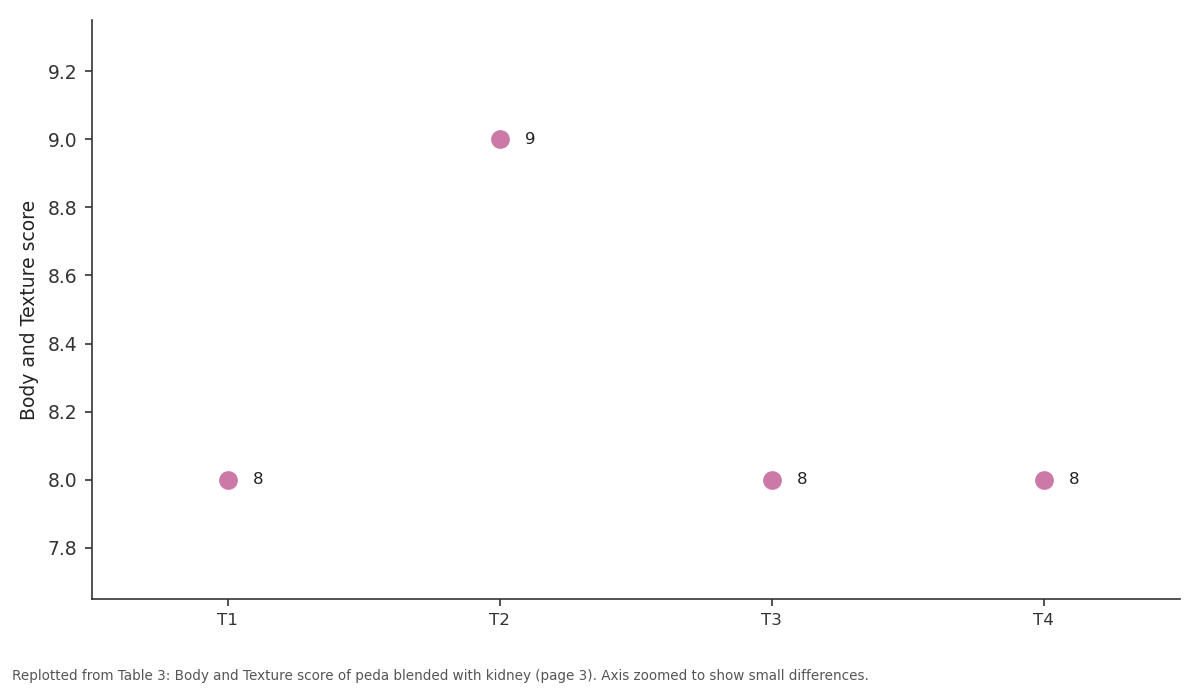
R4: T1 vs T2 vs T3 vs T4
Replotted from Table 3 (page 3) of the original paper. Every bar is the paper's own table value.
View source evidence ↗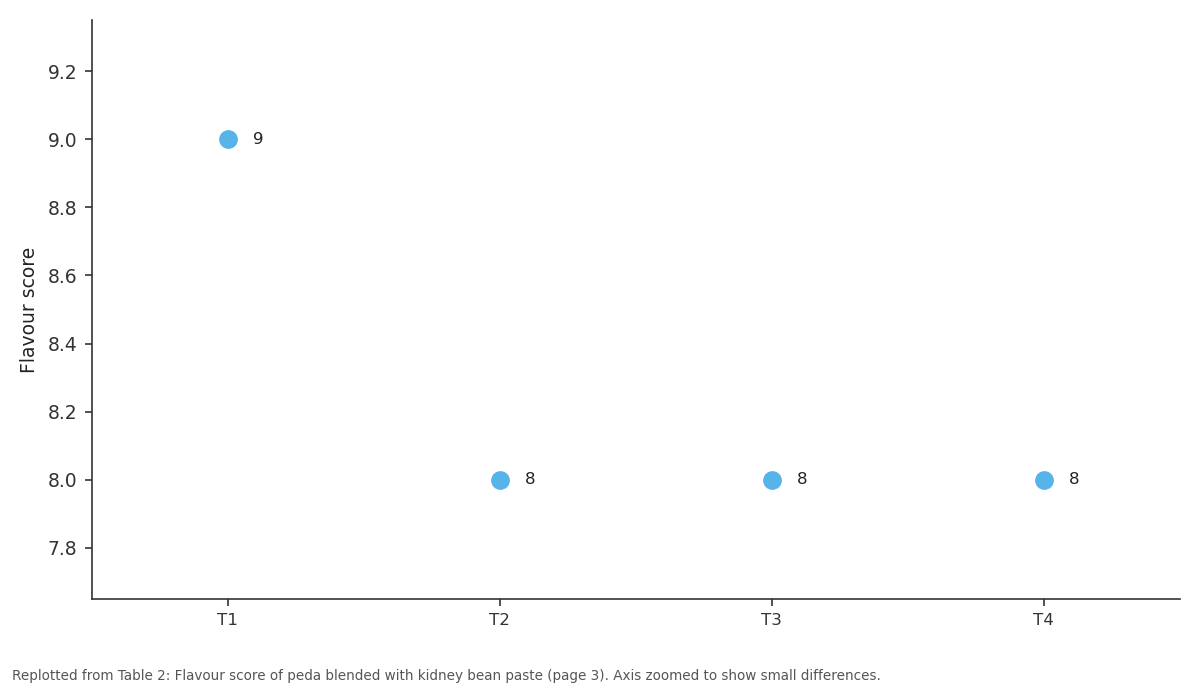
R4: T1 vs T2 vs T3 vs T4
Replotted from Table 2 (page 3) of the original paper. Every bar is the paper's own table value.
View source evidence ↗Figures & tables
From the original paper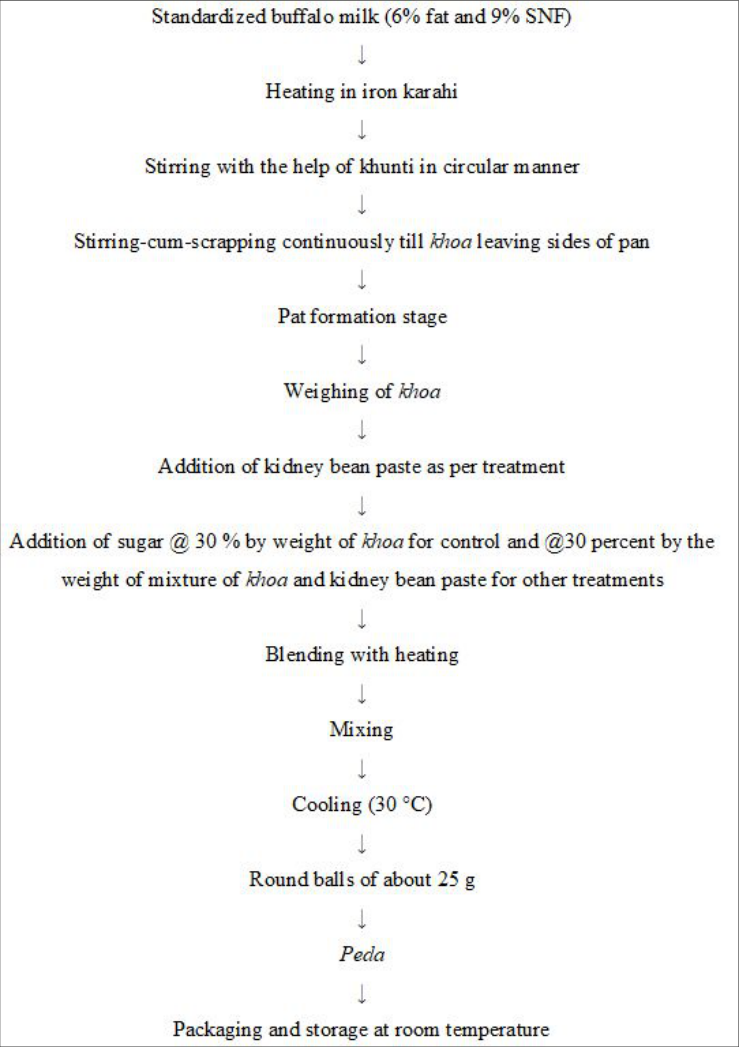 Figure 1
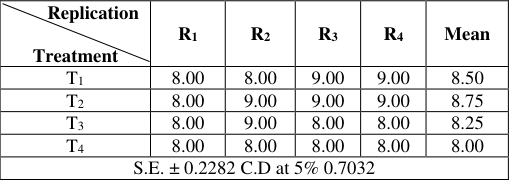 Table 1
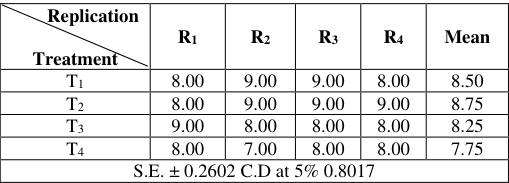 Table 3
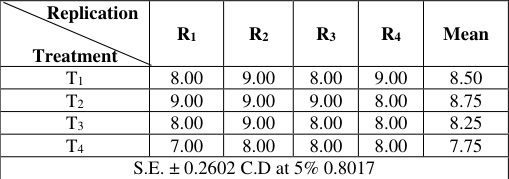 Table 2
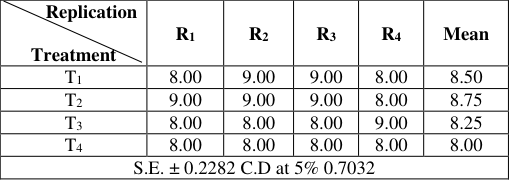 Table 4
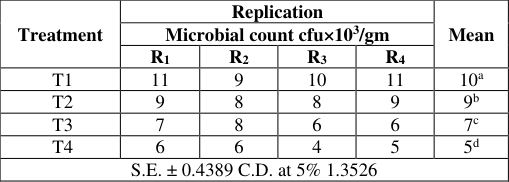 Table 5
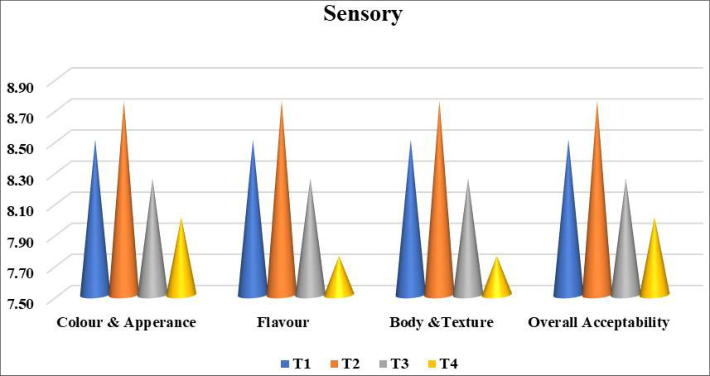 Figure 2
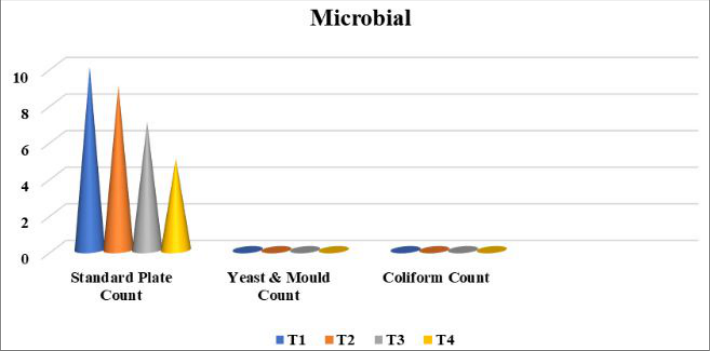 Figure 3
Introduction
The milk production has increased by 3.78% in 2023-24 over the previous year. Milk production has increased by 51.05% over the past 10 years from 146.31 million tonnes (2014-15) to 239.30 million tonnes (2023-24) (Basic Animal Husbandry Statistics, 2024). Buffalo milk is preferred for preparation of khoa and khoa based sweets because it gives soft and uniform body with smooth, compact and homogenous texture to finished products (Dhage et al., 2018) [3] . Khoa, a heat desiccated indigenous dairy product is the main base for the production of sweets in India (Rasane et al., 2015) [9] . Peda and burfi are two major khoa based milk-sweets are highly popular in India, because of their delicious taste and high nutritional value (Meshram, 2019) [8] . The base for peda is khoa and cane sugar in different proportions, other ingredients are also incorporated to cater the need of flavour or body and textural characteristics. (Gavhane et al., 2014) [5] . Kidney beans are rich source of good protein, they have become popular in many cultures throughout the world. The term 'kidney bean' refers to the shape of the bean. (Singh and Chandra, 2020) [10] . Addition of cereals and legumes in milk or milk products, directly or indirectly increases its nutritive value in human food.
Materials and Methods
The present study was conducted during 2024-2025 in the Department of Animal Husbandry and Dairy Science, College of Agriculture, Latur, Vasantrao Naik Marathwada Krishi Vidyapeeth, Parbhani.
Materials
Fresh Standardized Buffalo milk (6% fat and 9% SNF), fresh & good quality red kidney bean seeds and clean, crystalline cane sugar was purchased from local market.
Microbiological Media
The peda samples were analyzed for standard plate count, coliform count, yeast and mould count by using Nutrient Agar (NA), Violet Red Bile Agar (VRBA) and Potato Dextrose Agar (PDA) media, respectively.
Methodology
Good quality kidney bean seeds were soaked in water for 12-14 hours at room temperature and then kidney bean paste was prepared by peeling and grinding kidney bean seeds in mixer until fine paste form. Khoa was prepared by heating standardized buffalo milk (6 % Fat and 9% Solid Not Fat) in iron karahi with continuous stirring and scrapping until it reached pat formation stage. Kidney bean paste was added as per treatment combinations. 30 per cent sugar was added in control by weight of khoa and 30 per cent by weight of khoa plus kidney bean paste in treatment groups. Khoa was heated and blended till it get properly mixed. Round balls of peda with each weighing 25 gm were made and stored at room temperature.
Treatment combination
Peda blended with kidney bean paste was prepared using 30 per cent sugar by weight of khoa for control and 30 per cent by weight of khoa and kidney bean paste in treatment groups as follows. T 1 -100 parts of khoa (Control) T 2 -97.5 parts of khoa and 2.5 parts of kidney bean paste T 3 -95 parts of khoa and 5 parts of kidney bean paste T 4 -92.5 parts of khoa and 7.5 parts of kidney bean paste Sensory evaluation of control and peda blended with kidney bean paste was conducted by semi-trained panel of 5 judges using 9-point hedonic scale. The sensory attributes such as colour and appearance, body and texture, flavour and overall acceptability was studied and data obtained were analysed with Completely Randomized Block Design (CRD). The scores given by judges for different sensory parameters were recorded and subsequently discussed as follows. The microbiological analysis of peda samples for standard plate count, yeast and mould count, coliform count was performed according to A.O.A.C. method (1975).
Results and discussion
Colour and appearance score of peda blended with kidney bean paste The colour and appearance scores of peda blended with kidney bean paste are presented in Table 1. The colour and appearance score for control T 1 and peda blended with kidney bean paste T 2 , T 3 and T 4 was 8.50, 8.75, 8.25 and 8.00, respectively. The results indicated that addition of kidney bean paste in peda decreased colour and appearance score non-significantly towards higher level of addition of kidney bean paste in peda. The colour and appearance score for T 2 (8.75) was highest and differ non significantly from T 1 (8.50), T 3 (8.25) and T 4 (8.00). The non-significant difference in colour and appearance score among the treatment and control was due to pale tan colour of kidney bean paste. However, at higher concentration T 3 and T 4 colour and appearance was less appealing due to dull colour of peda. The results obtained in present study are similar with Vyawahare et al. (2022) [11] who reported that the colour and appearance scores in burfi sample blended with 10, 20, 30, 40 per cent date paste, decreased from 6.77 to 6.16.
| Replication Treatment | R1 | R2 | R3 | R4 | Mean |
|---|---|---|---|---|---|
| T1 | 8.00 | 8.00 | 9.00 | 9.00 | 8.50 |
| T2 | 8.00 | 9.00 | 9.00 | 9.00 | 8.75 |
| T3 | 8.00 | 9.00 | 8.00 | 8.00 | 8.25 |
| T4 | 8.00 | 8.00 | 8.00 | 8.00 | 8.00 |
| S.E. ± 0.2282 C.D at 5% 0.7032 |
Table text extracted from the original PDF; superscript letters are shown inline. The original table image is below.
View original table image
Flavour score of peda blended with kidney bean paste
The flavour scores of peda blended with kidney bean paste are presented in Table 2. The flavour score for control (T 1 ) and peda blended with kidney bean paste T 2 , T 3 and T 4 are 8.50, 8.75, 8.25 and 7.75, respectively. The results indicated that addition of kidney bean paste in peda increased flavour score nonsignificantly in treatment T 2 having mild pleasant flavour and decreased non-significantly towards higher level of addition of kidney bean paste in peda. The non-significant difference in flavour score among the treatment and control was due to beany flavour of kidney bean paste at higher level of addition of paste. The results of present study are similar with Febrianto et al. (2016) and Manonmani et al. (2014) [4,7] who reported that addition of kidney bean powder in cinnamon herbal coffee and kidney bean flour in bread at 4, 8, 12, 16, 20 per cent and 5, 15, 25 per cent, respectively decreased flavour scores at higher level of addition of kidney bean powder and kidney bean flour than control.
| Replication Treatment | R1 | R2 | R3 | R4 | Mean |
|---|---|---|---|---|---|
| T1 | 8.00 | 9.00 | 8.00 | 9.00 | 8.50 |
| T2 | 9.00 | 9.00 | 9.00 | 8.00 | 8.75 |
| T3 | 8.00 | 9.00 | 8.00 | 8.00 | 8.25 |
| T4 | 7.00 | 8.00 | 8.00 | 8.00 | 7.75 |
| S.E. ± 0.2602 C.D at 5% 0.8017 |
Table text extracted from the original PDF; superscript letters are shown inline. The original table image is below.
View original table image
Body and Texture score of peda blended with kidney bean paste
The body and texture scores of peda blended with kidney bean paste are presented in Table 3. The body and texture score for control (T 1 ) and peda blended with kidney bean paste T 2 , T 3 and T 4 are 8.50, 8.75, 8.25 and 7.75, respectively. The results indicated that addition of kidney bean paste in peda increased body and texture score non-significantly in T 2 then decreased with successive addition of kidney bean paste at higher percentage. The body and texture score for T 2 (8.75) was highest and differ non-significantly from T 1 , T 3 as well as T 4 . Decrease in body and texture score of peda at higher concentration of kidney bean paste was due to decrease in moisture. The results obtained in present study are similar with Vyawahare et al. (2022) [11] who reported that the body and texture scores in burfi sample blended with 10, 20, 30, 40 per cent date paste, decreased from 7.11 to 6.38.
| Replication Treatment | R1 | R2 | R3 | R4 | Mean |
|---|---|---|---|---|---|
| T1 | 8.00 | 9.00 | 9.00 | 8.00 | 8.50 |
| T2 | 8.00 | 9.00 | 9.00 | 9.00 | 8.75 |
| T3 | 9.00 | 8.00 | 8.00 | 8.00 | 8.25 |
| T4 | 8.00 | 7.00 | 8.00 | 8.00 | 7.75 |
| S.E. ± 0.2602 C.D at 5% 0.8017 |
Table text extracted from the original PDF; superscript letters are shown inline. The original table image is below.
View original table image
Overall acceptability score of peda blended with kidney bean paste:
The overall acceptability scores of peda blended with kidney bean paste are presented in Table 4. The overall acceptability score for control T 1 and peda blended with kidney bean paste T 2 , T 3 and T 4 was 8.50, 8.75, 8.25 and 8.00 respectively. The results indicated that addition of kidney bean paste in peda increased overall acceptability score in treatment T 2 and further decreased non-significantly. The overall acceptability score was highest in treatment T 2 (8.75) and lowest in T 4 (8.00) as compared to control as well as other treatment. The results of present study are in accordance with Vyawahare et al. (2022) [11] who reported that the overall acceptability scores in burfi sample blended with 10, 20, 30, 40 per cent date paste, increased in treatment T 3 and decreased in treatment T 1 , T 2 and T 4 as compared to control.
| Replication Treatment | R1 | R2 | R3 | R4 | Mean |
|---|---|---|---|---|---|
| T1 | 8.00 | 9.00 | 9.00 | 8.00 | 8.50 |
| T2 | 9.00 | 9.00 | 9.00 | 8.00 | 8.75 |
| T3 | 8.00 | 8.00 | 8.00 | 9.00 | 8.25 |
| T4 | 8.00 | 8.00 | 8.00 | 8.00 | 8.00 |
| S.E. ± 0.2282 C.D at 5% 0.7032 |
Table text extracted from the original PDF; superscript letters are shown inline. The original table image is below.
View original table image
Microbial quality of fresh peda blended with kidney bean paste
The fresh product prepared was subjected to microbial analysis with respect to standard plate count, yeast and mould count and coliform count.
Standard Plate Count of fresh peda blended with kidney bean paste
The standard plate count of peda blended with kidney bean paste are presented in Table 5 The mean value of standard plate count of fresh sample for control T 1 and peda blended with kidney bean paste T 2 , T 3 and T 4 was 10, 9, 7, 5 ×10 3 cfu/gm, respectively. The standard plate count of control sample (10 × 10 3 cfu/gm) was significantly higher than all other treatments. Among treatments standard plate count decreased significantly towards higher level of addition of kidney bean paste. As the kidney bean paste increased in peda the count in peda was decreased. This might be due to decreased level of moisture in kidney bean paste.
| Treatment | Replication | — | — | — | Mean |
|---|---|---|---|---|---|
| Microbial count cfu×103/gm | |||||
| R1 | R2 | R3 | R4 | ||
| T1 | 11 | 9 | 10 | 11 | 10a |
| T2 | 9 | 8 | 8 | 9 | 9b |
| T3 | 7 | 8 | 6 | 6 | 7c |
| T4 | 6 | 6 | 4 | 5 | 5d |
| S.E. ± 0.4389 C.D. at 5% 1.3526 |
Table text extracted from the original PDF; superscript letters are shown inline. The original table image is below.
View original table image
Yeast and Mould Count of fresh peda blended with kidney bean paste
The yeast and mould count was not observed in control peda as well as peda with different level of kidney bean paste as the product was fresh.
Coliform Count of fresh peda blended with kidney bean paste:
In the present study the product prepared by addition of different level of kidney bean paste with buffalo milk khoa was found to be free from coliform, indicates the hygienic quality of peda.
Conclusions
From present investigation it was observed that sensory parameters such as colour and appearance and overall acceptability had positive effect on peda. However, addition of 7.5 per cent kidney bean paste decreased flavour and body and texture scores as compared to control. Standard plate count in fresh product decreased significantly towards addition of kidney bean paste as compared to control. Yeast and mould count and coliform count was found to be absent.
Acknowledgement
International Journal of Agriculture and Food Science https://www.agriculturaljournals.com From the results of sensory scores it could be concluded that 2.5 per cent kidney bean paste could be successfully added in peda without affecting flavour and overall acceptability of finished product.
Figures and tables from the paper
References
11 in the original paper- AOAC. Official methods of analysis. 2nd ed. Washington (DC): Association of Official Analytical Chemists; 1975.
- Department of Animal Husbandry and Dairying. Basic animal husbandry statistics 2024. Ministry of Fisheries, Animal Husbandry and Dairying, Government of India; 2024 [cited 2025 Oct 30]. Available from: https://dahd.gov.in/sites/default/files/2024-11/BAHS2024.pdf
- Dhage DA, Londhe GK, Kamble NS, Godage SH. Studies on effect of fat levels on quality of peda. Int J Curr Microbiol Appl Sci. 2018;SP-6:148-53.
- Febrianto NA, Khalimatus S, Tejasari. Red kidney bean powder substituted milk in cinnamon herbal coffee: consumer perception, sensory properties and nutrition content. Pelita Perkebunan. 2016;32(2):109-19.
- Gavhane MS, Kambale NS, Desale RJ, Ghule BK, Mule PR. Studies on preparation of peda with ginger powder. Int J Food Agric Vet Sci. 2014;4(2):64-8.
- Ghule BK, Desale RJ, Awaz HB. Studies on preparation of bottle gourd peda. Asian J Dairy Food Res. 2013;32(4):328-31.
- Manonmani D, Bhol S, Bosco SJD. Effect of red kidney bean (Phaseolus vulgaris L.) flour on bread quality. Open Access Libr J. 2014;1:1-6.
- Akola (IN): Dr. Punjabrao Deshmukh Krishi Vidyapeeth; 2019 [cited 2025 Oct 30]. Available from: https://krishikosh.egranth.ac.in/handle/1/5810169294
- Rasane P, Tanwar B, Dey A. Khoa: a heat desiccated indigenous Indian dairy product. Res J Pharm Biol Chem Sci. 2015;6(5):39-48.
- Singh Y, Chandra S. Study to assess physical properties of different types of kidney beans (Phaseolus vulgaris). J Pharmacogn Phytochem. 2020;9(2):2455-9.
- Vyawahare AN, Meshram BD, Gawande HM, Kanoje RR. The development of burfi with date paste. Indian J Tradit Knowl. 2022;21(4):1-5.