
Research article · 2025 · Full text
International Journal of Agriculture and Food ScienceOptimization and Quality Evaluation of Dragon Fruit (Hylocereus undatus) Blended Lassi: Sensory, Nutritional, and Shelf-Life Assessment
Volume 7(10) · Pages 588–591 · DOI: 10.33545/2664844x.2025.v7.i10i.924 ↗
Research areasBotanical Research and ApplicationsFood and Agricultural SciencesNatural Products and Applications
Abstract
Author-writtenThe study aimed to develop an optimized formulation of dragon fruit (Hylocereus undatus) blended lassi by assessing the effects of different levels of dragon fruit pulp and sugar on sensory characteristics, nutritional composition, and shelf life. Lassi was prepared using various forms of dragon fruit (pulp, juice, shredded and powder), with the pulp form showing superior acceptability. The optimal formulation (10% dragon fruit pulp and 20% sugar) received the highest sensory ratings for colour (8.1±0.02), consistency (8.0±0.02), flavour (8.2±0.02), mouth feel (8.1±0.02), and overall acceptability (8.1±0.01). The optimized lassi contained 1.9% fat, 4.3% reducing sugars, 9.1% non-reducing sugars, and viscosity of 27.4 cp. Microbial evaluation revealed acceptable limits up to 6 days at 5 ± 1 °C. The findings suggest that dragon fruit pulp can effectively enhance the sensory and nutritional profile of lassi while maintaining consumer appeal and functional value.
Summary
Source-checkedPlain-language reading of the full paper, prepared with AI and checked against the text. Each point links to the authors' own words.
Why it matters
- Lassi is a traditional Indian fermented milk drink known globally for its nutritional value, probiotic properties, and refreshing taste. View evidence ↗
- Dragon fruit (Hylocereus undatus) is a tropical fruit rich in minerals, polyphenols, betalain pigments, and vitamins C and E, providing antioxidant and anti-inflammatory benefits. View evidence ↗
- Adding functional fruits to dairy products is a current trend used to enhance the nutritional profile, flavor, and overall consumer appeal of the products. View evidence ↗
The question
- The study aimed to find the optimal levels of dragon fruit pulp and sugar to maximize the sensory, physico-chemical, and microbiological quality of blended lassi during refrigerated storage. View evidence ↗
What they did
- The process began by heating fresh cow milk with 4% fat to 90°C for 15 minutes to improve consistency and denature proteins before cooling it to 37°C. View evidence ↗
- Dahi was produced by adding a 2% starter culture of Streptococcus lactis subsp. lactis and incubating the mixture at 37°C for 10 hours. View evidence ↗
- Lassi was prepared by blending curd with 10% water and varying levels of dragon fruit pulp (5-25%) and sugar (10-25%). View evidence ↗
- Sensory attributes including flavor, color, mouth feel, consistency, and overall acceptability were evaluated by 10 semi-trained judges using a 9-point hedonic scale. View evidence ↗
What they found
- Lassi made with dragon fruit pulp (F1) was significantly more acceptable across all sensory attributes compared to versions using juice, shredded fruit, or powder. View evidence ↗
- A pulp level of 10% (L2) yielded the best sensory results, with scores of 7.70 for color, 7.80 for consistency, and 7.74 for flavor. View evidence ↗
- The optimal sugar concentration was found to be 20% (S4), which significantly improved the product's overall acceptability, color, and flavor. View evidence ↗
- The combination of 10% pulp and 20% sugar was the most successful, scoring 8.1 for color, 8.0 for consistency, 8.2 for flavor, 8.1 for mouth feel, and 8.1 for overall acceptability. View evidence ↗
- The optimized lassi (10% pulp, 20% sugar) had 1.9% fat, 2.6% protein, 18.7% total solids, a pH of 4.42, and a viscosity of 27.4 cp. View evidence ↗
- The product remained microbiologically acceptable for up to 6 days when stored at 5 ± 1 °C, after which yeast and mold growth reduced the sensory quality. View evidence ↗
What it means
- The authors conclude that adding dragon fruit pulp to lassi significantly improves its nutritional value and sensory appeal. View evidence ↗
- The authors recommend dragon fruit pulp as a valuable functional ingredient for creating consumer-preferred, value-added dairy beverages. View evidence ↗
Visual summary
3 visualsIllustrations explain the paper; charts are replotted from the paper's own table values.
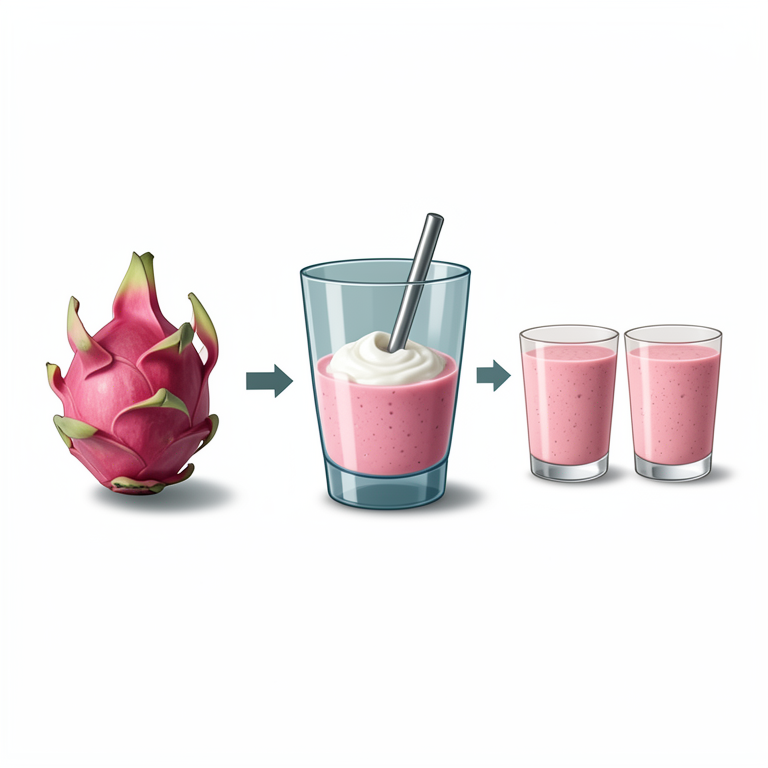
Optimization Process Flow
AI-generated conceptual illustration (Dragon fruit (Hylocereus undatus) and curd). It explains the idea and does not show study data.
View source evidence ↗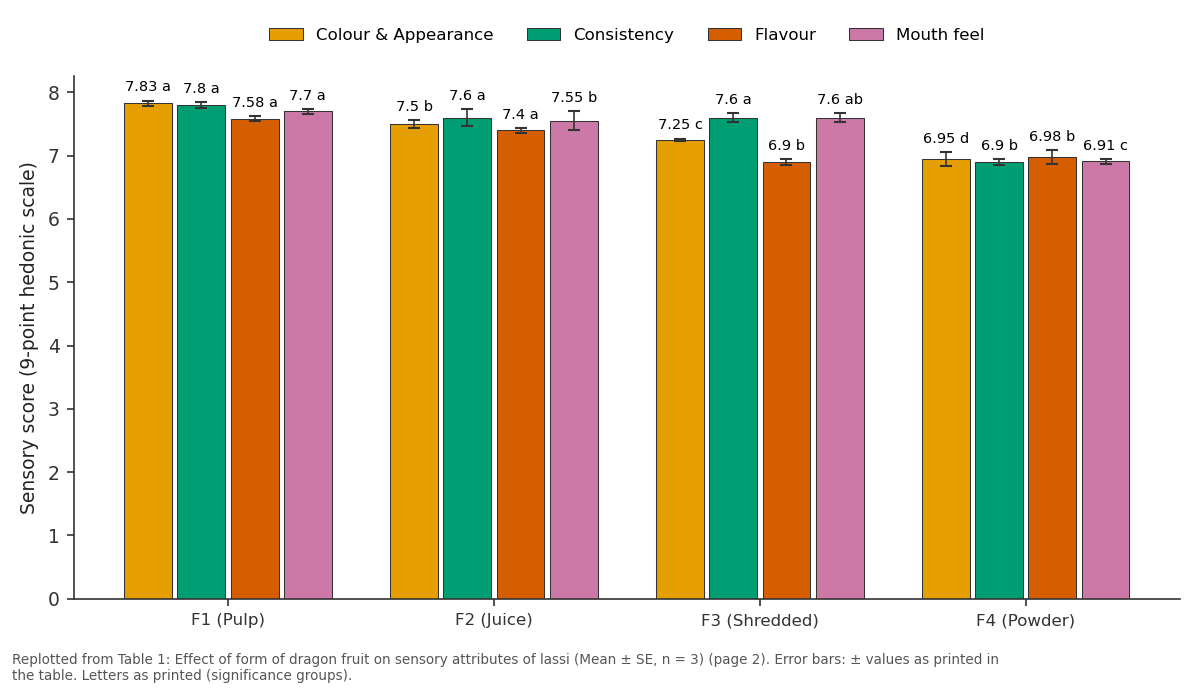
Colour & Appearance and Consistency and more: F1 (Pulp) vs F2 (Juice) vs F3 (Shredded) vs F4 (Powder)
Replotted from Table 1 (page 2) of the original paper. Every bar is the paper's own table value.
View source evidence ↗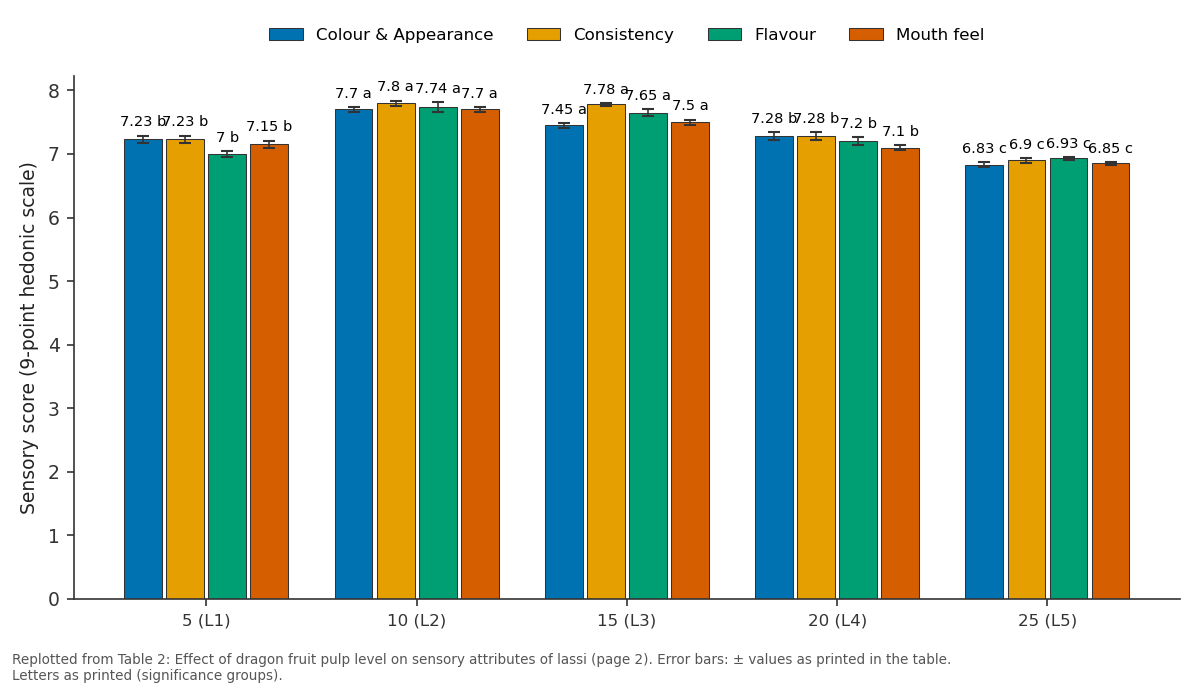
Colour & Appearance and Consistency and more: 5 (L1) vs 10 (L2) vs 15 (L3) vs 20 (L4) vs 25 (L5)
Replotted from Table 2 (page 2) of the original paper. Every bar is the paper's own table value.
View source evidence ↗Figures & tables
From the original paper Table 1
 Table 2
 Table 3
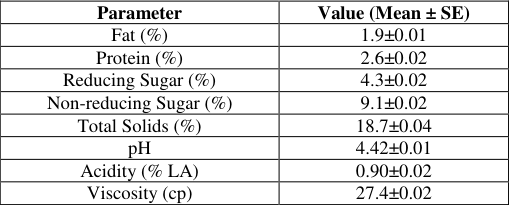 Table 4
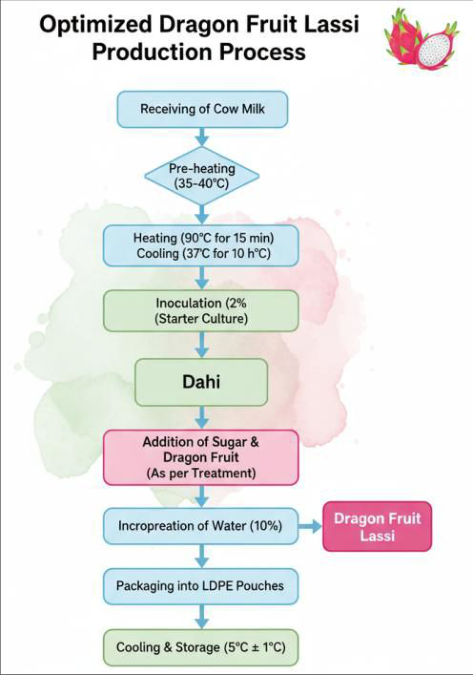 Figure 1
Introduction
Lassi, a traditional Indian fermented milk beverage, has gained global recognition for its refreshing taste, nutritional richness, and probiotic properties. Typically prepared by blending curd with water, sugar, and sometimes fruits or Flavouring agents, lassi offers both sensory satisfaction and health benefits (Patidar & Prajapati, 1998; Maji et al., 2018) [1,9] . Incorporating functional fruits into dairy matrices has become a recent trend to improve Flavour, nutrition, and consumer appeal (Akhtar et al., 2021; Kaur et al., 2019) [2,6] . Dragon fruit (Hylocereus undatus), a tropical cactus fruit native to Central and South America, is now widely cultivated in Asia, including India. The fruit is rich in vitamins (notably C and E), minerals, polyphenols, and betalain pigments, which contribute to its antioxidant and anti-inflammatory potential (Lourith & Kanlayavattanakul, 2013; Purwati et al., 2018) [8,14] . Its vivid pink colour and subtle sweetness make it an attractive natural additive for dairy-based products such as yogurts and smoothies. The functional incorporation of dragon fruit in lassi not only enhances its sensory quality but may also improve its bioactive and nutritional value (Hamidah et al., 2017) [5] . However, the optimization of pulp and sugar concentration is crucial to maintain an ideal balance between taste, texture, and stability. Hence, this study was conducted to optimize the formulation of dragon fruit-blended lassi by evaluating the impact of varying pulp and sugar levels on its sensory, physico-chemical, and microbiological properties during refrigerated storage.
Material and Method Preparation of Dragon Fruit Lassi
The process was standardized using the modified method of George et al. (2010) [18] : 1. Milk Standardization and Heat Treatment: Fresh cow milk (4% fat) was heated to 90°C for 15 min to denature whey proteins and enhance consistency. It was then cooled to 37°C. 2. Inoculation and Fermentation: A 2% starter culture containing Streptococcus lactis subsp. lactis was added and incubated at 37°C for 10 hours to obtain dahi.
3. Lassi Preparation: Dragon fruit pulp (5-5%), sugar (10-25%), and 10% water were blended into the curd using a hand blender until uniform. 4. Packaging and Storage: The product was filled into low-density polyethylene (LDPE) pouches and stored at 5±1°C for further analysis.
Sensory Evaluation
A semi-trained panel of 10 judges evaluated samples using the 9-point hedonic scale (colour, consistency, Flavour, Mouth feel, and overall acceptability) as per BIS (IS: 6273 Part II, 1971).
Microbiological Quality
Standard Plate Count (SPC), Yeast and Mold Count (YMC), and Coliform Count (CC) were determined using standard methods (Marth, 2009; Robinson, 2005) [19,20] . Results were expressed as CFU/mL.
Physico-Chemical Analysis
Parameters such as fat, protein, reducing and non-reducing sugars, ash, pH, acidity, and viscosity were determined following AOAC (2019) procedures.
Statistical Analysis
Data were analyzed using Completely Randomized Design (CRD) and Factorial CRD as per Snedecor and Cochran (1967) [11] . Significance was tested at p < 0.05.
Result and Discussion
Effect of Dragon Fruit Form Among pulp, juice, shredded, and powder forms, lassi prepared with pulp (F1) achieved significantly higher scores in all sensory attributes (p < 0.05). The superior results are attributed to the even dispersion and natural pectin content in pulp, which improves consistency and colour retention.
Similar observations were reported for kiwi-blended lassi and by Washimbe et al. (2020) [13] for muskmelon-based lassi.
Effect of Dragon Fruit Pulp Level
Lassi with 10% pulp (L2) obtained the highest mean sensory scores for colour (7.70 ± 0.04), consistency (7.80 ± 0.04), and Flavour (7.74 ± 0.08). Higher pulp levels (20-25%) decreased acceptability due to excessive thickness and astringency, consistent with findings by Dudhate et al.
(2021) [4] in pear-enriched lassi.
Effect of Sugar Level
Sugar improved sweetness and balance. Optimal sensory quality was achieved with 20% sugar (S4), which significantly enhanced Flavour, colour, and overall acceptability (p < 0.05). Over-sweetening (25%) caused a cloying taste, reducing preference (Prakash et al., 2020) [10] .
Combined Effect of Pulp and Sugar
The interaction effect between dragon fruit pulp and sugar was statistically non-significant, suggesting independent influence. The formulation T1S2 (10% pulp, 20% sugar) scored highest across all sensory parameters. Similar optimization trends were observed in fortified yogurt studies (Rohani et al., 2015; Akhtar et al., 2021) [12,2] .
Results and Discussion
Effect of Form of Dragon Fruit on Sensory Attributes of Lassi: Different forms of dragon fruitpulp (F1), juice (F2), shredded (F3), and powder (F4)were tested for sensory quality. Results (Table 1) revealed that lassi made with pulp (F1) achieved the highest scores in colour, consistency, Flavour, Mouth feel, and overall acceptability.
| Form of Dragon Fruit | Colour & Appearance | Consistency | Flavour | Mouth feel | Overall Acceptability |
|---|---|---|---|---|---|
| F1 (Pulp) | 7.83 ± 0.04a | 7.80 ± 0.04a | 7.58 ± 0.04a | 7.70 ± 0.04a | 7.73 ± 0.02a |
| F2 (Juice) | 7.50 ± 0.06b | 7.60 ± 0.13a | 7.40 ± 0.04a | 7.55 ± 0.15b | 7.45 ± 0.02b |
| F3 (Shredded) | 7.25 ± 0.02c | 7.60 ± 0.07a | 6.90 ± 0.04b | 7.60 ± 0.07ab | 7.37 ± 0.17b |
| F4 (Powder) | 6.95 ± 0.11d | 6.90 ± 0.04b | 6.98 ± 0.11b | 6.91 ± 0.04c | 6.88 ± 0.11c |
Table text extracted from the original PDF; superscript letters are shown inline. The original table image is below.
View original table image
The natural colour pigments (betacyanins) and pectin in dragon fruit pulp contributed to better texture and stability (Lourith & Kanlayavattanakul, 2013) [8] . 6.95 ± 0.11d 6.90 ± 0.04b 6.98 ± 0.11b 6.91 ± 0.04c 6.88 ± 0.11c Means followed by different superscripts in a column differ significantly (p < 0.05).
Lassi prepared with dragon fruit pulp (F1) received the highest overall acceptability. This could be attributed to the uniform colour distribution, desirable viscosity, and the smooth Mouth feel imparted by pulp compared to other forms. These findings are consistent with those of who reported that fruit pulps improve body and texture in Flavoured lassi.
Effect of Level of Dragon Fruit Pulp on Sensory Attributes
The sensory quality of lassi improved with increasing pulp level up to 10% (L2), beyond which scores declined (Table 2). Higher pulp levels made the product excessively thick and slightly astringent, decreasing acceptability. [4] , who found 10-12% fruit pulp to be optimal for fruit-enriched lassi. Excess pulp increases thickness and sedimentation, reducing consumer acceptance.
| Pulp Level (%) | Colour & Appearance | Consistency | Flavour | Mouth feel | Overall Acceptability |
|---|---|---|---|---|---|
| 5 (L1) | 7.23 ± 0.06b | 7.23 ± 0.06b | 7.00 ± 0.04b | 7.15 ± 0.06b | 7.10 ± 0.04b |
| 10 (L2) | 7.70 ± 0.04a | 7.80 ± 0.04a | 7.74 ± 0.08a | 7.70 ± 0.04a | 7.74 ± 0.03a |
| 15 (L3) | 7.45 ± 0.04a | 7.78 ± 0.02a | 7.65 ± 0.06a | 7.50 ± 0.04a | 7.66 ± 0.03a |
| 20 (L4) | 7.28 ± 0.06b | 7.28 ± 0.06b | 7.20 ± 0.06b | 7.10 ± 0.04b | 7.15 ± 0.04b |
| 25 (L5) | 6.83 ± 0.04c | 6.90 ± 0.04c | 6.93 ± 0.02c | 6.85 ± 0.02c | 6.86 ± 0.02c |
Table text extracted from the original PDF; superscript letters are shown inline. The original table image is below.
View original table image
Effect of Sugar Level on Sensory Attributes
The sugar level significantly influenced sweetness balance and overall perception (Table 3). Maximum sensory ratings were recorded for 20% sugar (S4), beyond which acceptability declined due to excessive sweetness. Sugar enhances palatability and Mouth feel up to 20% concentration, beyond which the sweetness overshadows the natural fruit Flavour. Similar findings were noted by Prakash et al. (2020) [10] and Rohani et al. (2015) [12] in Flavoured yogurt studies.
| Sugar Level (%) | Colour & Appearance | Consistency | Flavour | Mouth feel | Overall Acceptability |
|---|---|---|---|---|---|
| 10 (S1) | 6.83 ± 0.02c | 6.85 ± 0.04c | 7.00 ± 0.04c | 6.80 ± 0.04c | 6.83 ± 0.02c |
| 15 (S3) | 7.75 ± 0.02a | 7.75 ± 0.02a | 7.75 ± 0.05a | 7.75 ± 0.02a | 7.72 ± 0.04a |
| 20 (S4) | 8.03 ± 0.04a | 8.05 ± 0.06a | 8.03 ± 0.04a | 8.03 ± 0.04a | 7.90 ± 0.02a |
| 25 (S5) | 7.60 ± 0.04b | 7.65 ± 0.02b | 7.43 ± 0.02b | 7.50 ± 0.02b | 7.43 ± 0.02b |
Table text extracted from the original PDF; superscript letters are shown inline. The original table image is below.
View original table image
Combined Effect of Dragon Fruit Pulp and Sugar
The combination of 10% pulp and 20% sugar (T1S2) resulted in the highest mean scores for sensory attributes, indicating synergistic enhancement. The interaction effect (pulp × sugar) was non-significant (p > 0.05), suggesting independent contributions of each factor.
Physico-Chemical Composition
The proximate composition of the optimized formulation (10% pulp and 20% sugar) showed moderate fat, adequate protein, and enhanced total solids due to fruit addition (Table 4). The slight increase in reducing sugar and viscosity compared to control lassi is attributed to the sugar and pectin content of dragon fruit pulp. These results are consistent with Kaur et al. (2019) [6] and Washimbe et al.
| Parameter | Value (Mean ± SE) |
|---|---|
| Fat (%) | 1.9±0.01 |
| Protein (%) | 2.6±0.02 |
| Reducing Sugar (%) | 4.3±0.02 |
| Non-reducing Sugar (%) | 9.1±0.02 |
| Total Solids (%) | 18.7±0.04 |
| pH | 4.42±0.01 |
| Acidity (% LA) | 0.90±0.02 |
| Viscosity (cp) | 27.4±0.02 |
Table text extracted from the original PDF; superscript letters are shown inline. The original table image is below.
View original table image
(2020) [13] , who observed similar improvements in fruitblended dairy beverages.
Microbial and Shelf-Life Evaluation
The microbial load (SPC, YMC, and CC) remained within acceptable limits up to 6 days of storage at 5 ± 1 °C, after which sensory quality declined due to yeast and mold growth. These findings corroborate Hossain et al. (2022), who observed 5-7 days of shelf stability for fruit yogurt under similar conditions. The optimal formulation of lassi using 10% dragon fruit pulp and 20% sugar provided the best sensory and nutritional balance with acceptable shelf stability. The natural antioxidants and colour compounds in dragon fruit enhance the product's visual and nutritional appeal, positioning it as a value-added functional dairy beverage.
Conclusion
The study established that blending dragon fruit (Hylocereus undatus) pulp into lassi significantly enhances its sensory appeal and nutritional value. Among the tested formulations, lassi prepared with 10% dragon fruit pulp and 20% sugar exhibited the best sensory attributes for colour, consistency, Flavour, Mouth feel, and overall acceptability. The optimized product contained desirable physico-chemical properties and maintained good microbial quality for up to 6 days at 5±1°C. These findings confirm that dragon fruit pulp can serve as a valuable functional ingredient in dairy beverages, contributing to the development of a nutritious, visually appealing, and consumer-preferred value-added lassi.
Figures and tables from the paper
References
19 in the original paper- Patidar SK, Prajapati J. Standardization and evaluation of lassi prepared using Lactobacillus acidophilus and Streptococcus thermophilus. J Food Sci Technol. 1998;35(5):428-431.
- Akhtar S, Khan MI, Rahman M. Enhancing flavour and nutritional profile of dairy products with fruit incorporation. J Dairy Res. 2021;88(2):125-134.
- Bagal SG, Chavan KD, Kulkarni MB. Studies on preparation of lassi from high acid cow milk. J Dairying Foods Home Sci. 2007;26(2):80-84.
- Hamidah TH, Rosmanida. Analysis of Hylocereus spp. diversity based on phenetic method. Proc Int Biol Conf. 2017;1854(020012):1-8.
- Kaur I, Chawla R, Sivakumar S, Goel N, Mishra SR. Screening of optimized carrot pulp concentration for development of vitamin A fortified lassi. Indian J Pure Appl Biosci. 2019;7(4):231-237.
- Kedare VC, Nalkar SD, Deshmukh MB. Preparation of lassi blended with kiwi (Actinidia deliciosa) pulp. J Pharmacogn Phytochem. 2021;10(2):768-771.
- Lourith N, Kanlayavattanakul M. Antioxidant and stability of dragon fruit peel colour. Agro Food Ind HiTech. 2013;24(3):56-58.
- Maji S, Ray PR, Ghatak PK, Chakraborty C. Total phenolic content (TPC) and quality of herbal lassi fortified with turmeric (Curcuma longa) extract. Asian J Dairy Food Res. 2018;37(4):273-277.
- Prakash A, Jain R, Kumari K. Impact of sugar concentration on sensory characteristics of flavoured yogurts. Int J Dairy Technol. 2020;73(1):1-10.
- Snedecor GW, Cochran WG. Statistical Methods. 6th ed. Calcutta: Oxford and IBH Publishing; 1967.
- Rohani Z, Kader A, Noor M. The effect of sugar on sensory properties of yogurt. Food Qual Prefer. 2015;40:292-299.
- Washimbe DV, Patil RA, Patange SB, Kapkar RV. Studies on sensory analysis of low-fat muskmelon lassi. J Pharmacogn Phytochem. 2020;9(53):359-361.
- Purwati E, Pratama DR, Melia S, Purwanto H. Influence of Lactobacillus fermentum L23 and Streptococcus thermophilus with dragon fruit extract (Hylocereus polyrhizus) on quality of yoghurt. Int J Eng Technol. 2018;8:1-6.
- Hamidah T, Tsawab H, Rosmanida. Analysis of Hylocereus spp. diversity based on phenetic method. AIP Conf Proc. 2017;1854(1):020012.
- AOAC. Official Methods of Analysis. 21st ed. Gaithersburg: AOAC International; 2019.
- BIS. IS 6273 (Part II): Guide for Sensory Evaluation of Foods-Methods and Scales. New Delhi: Bureau of Indian Standards; 1971.
- George V, Arora S, Wadhwa BK, Singh AK, Sharma GS. Optimisation of sweetener blends for the preparation of lassi. Int J Dairy Technol. 2010;63(2):256-261.
- Marth EH, Steele J, editors. Applied Dairy Microbiology. New York: CRC Press; 2001.
- Robinson RK, editor. Dairy Microbiology Handbook: The Microbiology of Milk and Milk Products. 3rd ed. New York: John Wiley & Sons; 2005.