
Research article · 2025 · Full text
International Journal of Advanced Chemistry ResearchCytotoxic activity and Molecular docking studies of chalcone linked Isatin derivatives
Volume 7(10) · Pages 30–38 · DOI: 10.33545/26646781.2025.v7.i10a.321 ↗
Research areasSynthesis and biological activitySynthesis of Organic CompoundsQuinazolinone synthesis and applications
Abstract
Author-writtenChalcone and isatin scaffolds are widely recognized as privileged pharmacophores in medicinal chemistry because of their diverse biological activities. In this study, a new series of chalcone-linked isatin derivatives was synthesized and evaluated for cytotoxic and antimicrobial activities with the aim of identifying potent dual-action agents. The synthetic pathway involved N-alkylation of indoline-2,3-dione followed by nucleophilic addition at the C-3 position with various acetophenone analogues, yielding 3-hydroxy-3-(2-oxoethyl)-1-(3-phenylpropyl)indolin-2-one derivatives, which were further dehydrated to obtain (Z)-3-(2-oxoethylidene) derivatives. The structures of the synthesized compounds were confirmed by IR, NMR, and mass spectrometry. Antibacterial screening was carried out using the cup-plate method against Gram-positive (Bacillus subtilis, Staphylococcus aureus) and Gram-negative (Escherichia coli, Salmonella typhi) strains, with Ciprofloxacin as the standard. Several halogen-substituted derivatives demonstrated pronounced inhibition zones comparable to the standard drug. Cytotoxic activity was assessed by MTT assay against MDA-MB-231 (human breast adenocarcinoma) and A549 (human lung carcinoma) cell lines. IC₅₀ values indicated that derivatives such as 168i, 210b, and 248c exhibited significant cytotoxicity, with compound 210b being most effective against MDA-MB-231 and 248c showing high activity against A549. Nearly half of the most potent derivatives contained halogen substituents, suggesting that halogenation enhances cytotoxic and antimicrobial potential. Overall, the study highlights chalcone-linked isatin derivatives as promising scaffolds for the development of novel anticancer and antimicrobial agents.
Summary
Source-checkedPlain-language reading of the full paper, prepared with AI and checked against the text. Each point links to the authors' own words.
Why it matters
- Chalcones and isatin derivatives are highly valued in medicinal chemistry because they exhibit a wide range of biological activities. View evidence ↗
- Creating hybrid chalcone-isatin molecules is a strategic response to the global threats of multidrug-resistant pathogens and the need for better cancer treatments. View evidence ↗
- Combining two active pharmacophores can potentially lead to synergistic effects and improved interactions with biological targets. View evidence ↗
The question
- The study aimed to synthesize a new series of chalcone-linked isatin derivatives and evaluate them as potent dual-action antimicrobial and cytotoxic agents. View evidence ↗
What they did
- The compounds were synthesized via N-alkylation of indoline-2,3-dione, nucleophilic addition with acetophenone analogues, and subsequent dehydration. View evidence ↗
- The chemical structures of the synthesized derivatives were validated using IR, NMR, and mass spectrometry. View evidence ↗
- Antibacterial activity was tested using the cup-plate method against four bacterial strains (B. subtilis, S. aureus, E. coli, and S. typhi), using Ciprofloxacin as a control. View evidence ↗
- The cytotoxic potential of the compounds was measured using an MTT assay on human breast (MDA-MB-231) and lung (A549) cancer cell lines. View evidence ↗
- Molecular docking was performed using the iGEM DOCK suite to analyze interactions with the DNA gyrase ATP-binding domain and Cytochrome P450 (1PHC). View evidence ↗
What they found
- Compound 4i showed strong cytotoxic potential across both cancer types, with IC₅₀ values of 35.31 µM for MDA-MB-231 and 46.47 µM for A549. View evidence ↗
- Compound 4j demonstrated stronger cytotoxicity specifically against the A549 lung cancer cell line with an IC₅₀ of 42.17 µM. View evidence ↗
- Nearly half of the most potent derivatives featured halogen substituents, indicating that halogenation enhances the cytotoxic activity of these scaffolds. View evidence ↗
What it means
- The authors conclude that chalcone-linked isatin derivatives are promising dual-action agents with significant antimicrobial and cytotoxic potential. View evidence ↗
- The results validate the use of pharmacophore hybridization and provide a basis for developing these derivatives into lead molecules for future drug discovery. View evidence ↗
Visual summary
2 visualsIllustrations explain the paper; charts are replotted from the paper's own table values.
Pharmacophore Hybridization Concept
AI-generated conceptual illustration (Chalcone and Isatin chemical structures and a cancer cell). It explains the idea and does not show study data.
View source evidence ↗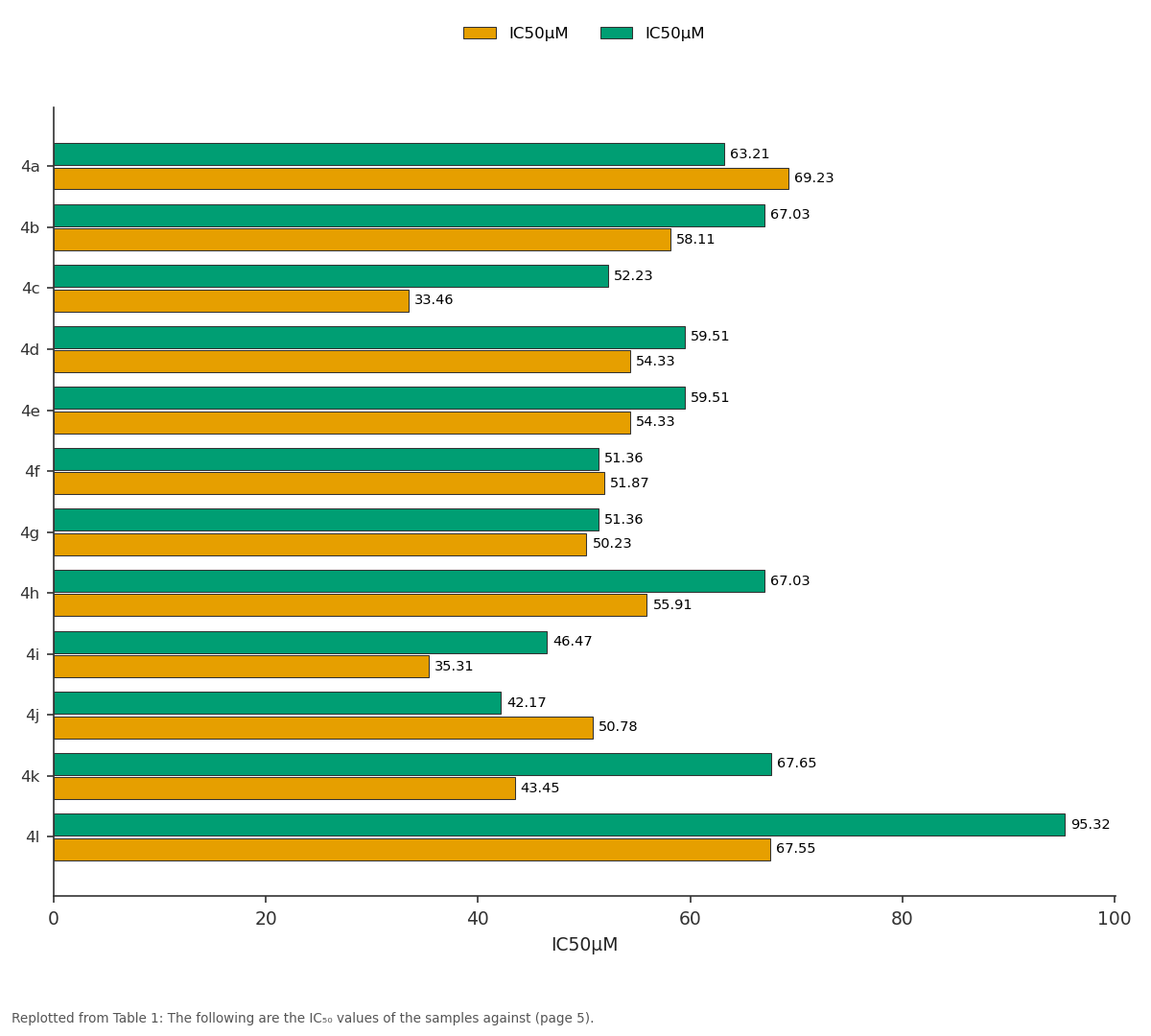
IC50µM and IC50µM: 4a vs 4b vs 4c vs 4d vs 4e
Replotted from Table 1 (page 5) of the original paper. Every bar is the paper's own table value.
View source evidence ↗Figures & tables
From the original paper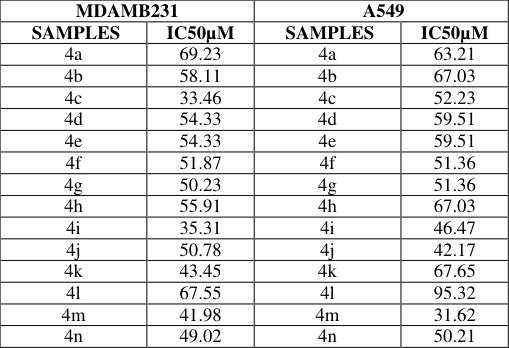 Table 1
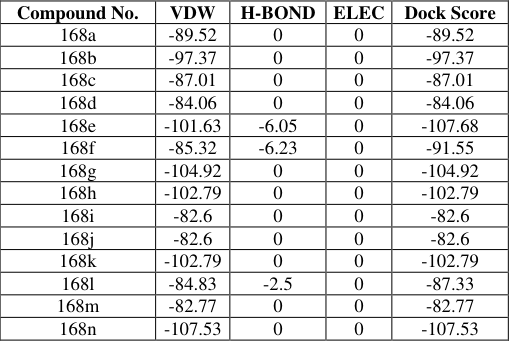 Table 3
Introduction
Chalcones and isatin derivatives are two important classes of heterocyclic and open-chain compounds that have drawn significant attention in medicinal chemistry due to their diverse pharmacological activities. Chalcones, belonging to the flavonoid family, are open-chain precursors in the biosynthesis of many naturally occurring flavonoids and isoflavonoids. They possess a characteristic α,β-unsaturated carbonyl system that makes them highly reactive and versatile in drug design. Chalcones are well recognized for their antimicrobial, anti-inflammatory, antioxidant, and cytotoxic activities, which arise mainly from their ability to interfere with cellular processes such as enzyme inhibition, cell cycle regulation, and reactive oxygen species (ROS) modulation. On the other hand, isatin (1H-indole-2, 3-dione) is a privileged heterocyclic scaffold extensively found in both natural and synthetic bioactive molecules. Isatin and its derivatives exhibit a wide spectrum of biological properties, including antiviral [1] , antibacterial [2] , antitubercular, [2,3], analgesics [4][5][6] and anticancer [7][8][9] activities. The fusion of chalcone and isatinpharmacophores therefore represents a rational approach to generate hybrid molecules with enhanced therapeutic potential. The development of novel chalcone-isatin hybrids is particularly important in the context of increasing antimicrobial resistance and the urgent need for effective anticancer agents. Microbial infections caused by multidrug-resistant pathogens pose a severe threat to global health, and existing antibiotics are often rendered ineffective due to rapid resistance development. Similarly, cancer remains one of the leading causes of death worldwide, with limitations in chemotherapy arising from toxicity, multidrug resistance, and poor selectivity of available drugs. Chalcone-linked isatin derivatives are promising candidates to address these challenges, as the combination of two pharmacologically active moieties can result in synergistic effects, improved bioavailability, and stronger interactions with biological targets. Their structural flexibility allows fine-tuning of functional groups, enabling selective targeting of microbial enzymes and cancer cell proliferation pathways. This makes them highly attractive for drug discovery programs seeking potent cytotoxic and antimicrobial agents. Previous studies have shown that modifications on both chalcone and isatin scaffolds can significantly enhance biological activity. The substitution of electron-donating or electron-withdrawing groups at different positions of the aromatic ring influences lipophilicity, membrane permeability, and binding affinity to enzymes and receptors. For instance, halogenated chalcone-isatin derivatives often display enhanced antimicrobial effects due to their ability to disrupt bacterial cell membranes, while derivatives with hydroxyl or methoxy groups may enhance cytotoxicity by triggering apoptosis in cancer cells. Thus, the synthesis and evaluation of chalcone-linked isatin derivatives provide valuable insights into structure-activity relationships (SARs) and open pathways for developing potent leads for antimicrobial and anticancer drug discovery. This study, therefore, aims to explore and analyze the cytotoxic and antimicrobial properties of such derivatives, highlighting their potential as promising therapeutic agents in modern pharmacology.
Theoretical Framework
The biological activity of the core molecule is further enhanced by the halogenation in the aromatic ring. Structure activity relationship (SAR) studies revealed that substitution at position 5 of isatin molecule was favoured over position 4, 6 or 7 leading to improved biological activity. For example in 2007 Vine et al reported a series of mono substituted isatin derivatives and proved that, 5-bromo, 5iodo and 5-fluoroisatin molecules were 5-10 times more active than the unsubstituted parent compound [10] However, over the last decade, various N-substituted analogs of isatin have been found to show more promising biological potential than its C-3 derivatives [11][12][13] . Various patents have been filed in recent years on medicinal applications of N-substituted isatin derivatives [14][15] . Since N-substituted isatin derivatives exhibit excellent antibacterial and acetylcholinesterase inhibitory activities, they are useful as lead compounds for fighting Alzheimer's disease and for synthesis of a variety of pharmaceutical intermediates 15 . N-Substituted isatins help in stimulating red blood cell production and treatment of anemia [16] . Due to their natural origin, facile synthesis, and easy industrial production, novel N-substituted isatin derivatives also have high prospects for anticancer drug development [17][18][19] . N-Substituted 5, 7-dibromoisatins have a simple structure and clear synthetic methodology, are easily modified, and have been shown to possess a specific pharmacological profile. Further investigation and SAR studies of various Nalkylated 5, 7-dibromoisatins by Vine and coworkers indicated that the presence of an aromatic ring with a one-to three-carbon atom linker at Nitrogen was preferred and electron-withdrawing group substituted at para-position of the substituent phenyl ring of isatin was most favorable for the biological activity [20] .
Therefore, the three active sites of isatin have made the molecule an important scaffold in the field of medicinal Chemistry. The theoretical grounding also incorporates the principles of green and efficient synthesis, where reactions catalyzed by bases such as K₂CO₃ in DMF exemplify simple, costeffective, and industrially feasible approaches. Characterization through spectroscopic techniques (NMR, IR, MS) provides empirical validation of molecular structures, which is essential for correlating chemical modifications with biological outcomes. Thus, this framework integrates pharmacophore hybridization theory, SAR analysis, and synthetic feasibility to support the hypothesis that chalcone-linked isatin derivatives can act as potent cytotoxic and antimicrobial agents.
Experimental Procedure Synthesis of 5-substituted 1-(3-phenylpropyl) indoline-2,3-dione (2a-b)
A stirred solution of indoline-2,3-dione or 5-fluoroindoline-2,3-dione (33.9 mmol/9 mmol) in N,N-dimethylformamide (40 mL) was treated with potassium carbonate (50 mmol) and (3-chloropropyl)benzene (13.6 mmol). The mixture was stirred at 80 °C for 16-18 h. After completion, the reaction mixture was poured into ice-cold water, and the precipitate formed was filtered, washed thoroughly with water, and dried to yield the desired product as a colorless solid.
Synthesis of 3-hydroxy-3-(2-oxoethyl) -1-(3phenylpropyl) indolin-2-one derivatives (3a-n)
To a solution of 1-(3-phenylpropyl)indoline-2,3-dione (3.75 mmol) in ethanol (20 mL), piperidine (11.25 mmol) and various acetophenone derivatives (4 mmol) such as 1-(naphthalen-2-yl)ethan-1-one, 1-(thiophen-2-yl)ethan-1-one, 1-(pyridin-3-yl)ethan-1-one, 1-(4-fluorophenyl)ethan-1-one, 1-(4-methoxyphenyl)ethan-1-one, or 4-acetylbenzonitrile were added. The reaction mixture was stirred at room temperature for 6 h. The solid product obtained was filtered, washed with ethanol, and dried.
Synthesis of (Z)-3-(2-oxoethylidene)-1-(3-phenylpropyl) indolin-2-one derivatives (4a-n)
A solution of compounds 3a-n (0.91 mmol) in ethanol (15 mL) was treated with concentrated HCl (5 mL) and refluxed for 6 h. The progress was monitored by TLC using solvent systems of varying polarity. After completion, the solid was filtered, dried, and recrystallized from ethanol to afford bright red crystalline needles of the desired products.
Spectral data of the synthesized compounds
The synthesized compounds 4a-4n were characterized using IR, ¹H NMR, and ¹³C NMR spectral analyses to confirm their structural features. The IR spectra of all compounds displayed strong absorption bands in the range of 1700-1711 cm⁻¹ corresponding to the C=O stretching vibration, while the amide (NHC=O) group exhibited characteristic absorption between 1649-1670 cm⁻¹. The aromatic C-C stretching vibrations appeared within 3018-3090 cm⁻¹, confirming the presence of aromatic rings. In the ¹H NMR spectra, the methylene protons attached to nitrogen (N-CH₂) appeared consistently as triplets around δ 3.6-3.86 ppm, while the adjacent aliphatic CH₂ groups resonated as multiplets between δ 2.0-2.14 ppm and δ 2.64-
Cytotoxic Activity
Breast cancer is the second most common cause of cancer mortality among women worldwide [21] . In 2016, an estimated 246,660 new cases of breast cancer diagnosed among women and 2600 among men [22] . According to the World Cancer Research Fund International 2012 report, the United States, China and India share almost one-third of the burden of disease,accounting for approximately25%ofall new cancer cases diagnosed. By 2021, the incidence rate of breast cancer in womenaged 55-69 years in China is estimated to increase from less than 6/10,000 to 1/1000, reaching a total of 250,000cases [23] ; in such situation, breast cancer can become themost common threat to women's physical and mental health. Therefore, studies on the prevention and cure of breast cancer are of great significance in our countrytherefore the search for effective anticancer agents continues. The present study aimedto investigate the anti-breast cancer potential of synthesized indole derivatives, for selected human breast cancer cell lines MDA-MB-231 by MTT assay. Lung cancer is one of the most widespread cancers and cause of death all aroundtheworld, [24][25][26][27] and most of the deaths are seen among men. Lung cancer includes mostly carcinomas, and 31%of lung cancers are adeno carcinomas. The A549 cells are adenocarcinomic human alveolar basal epithelial cells. The A549 cellline was first developed in 1972 by Giardet al [28] , therefore, the cytotoxic study of synthesized indole compounds on lung cancer was also carried out by MTT assay. using A549 cell line. Traditionally, the in vitro determinations of toxic effects of unknown compounds have been performed by counting viable cells after staining with a vital dye. Alternative methods used are measurement of radioisotope incorporation as a measure of DNA synthesis, counting by automated counters and others which rely on dyes and cellular activity. The MTT system is a means of measuring the activity of living cells via mitochondrial dehydrogenases. The MTT method is simple, accurate and yields reproducible results. The key componentis (3-[4,5dimethylthiazol-2-yl]-2,5-diphenyltetrazoliumbromide) or MTT, is a water soluble tetrazolium salt yielding a yellowish solution when prepared in media or salt solutions lacking phenol red. Dissolved MTT is converted to an insoluble purple formazan by cleavage of the tetrazolium ring by mitochondrial dehydrogenase enzymes of viable cells. This water insoluble formazan can be solubilized using DMSO, acidified isopropanol or other solvents (Pure propanol or ethanol). The resulting purple solution is spectrophotometrically measured. An increase or decrease in cell number results in a concomitant change in the amount of formazan formed, indicating the degree of effects caused by the test material
Test sample preparation
For cytotoxicity studies, 10mM stocks were prepared using DMSO. Serial two fold dilutions were prepared from 100µM to 3.125µM using DMEM plain media for treatment. [15] Cel llines and culture medium All the cell lines was procured from ATCC, stock cells was cultured in DMEM supplemented with 10% inactivated Fetal Bovine Serum( FBS), penicillin (100IU/ml),streptomycin(100µg/ml)in a humidified atmosphere of 5% CO2 at 37 o C until confluent. The cell was dissociated with cell dissociating solution (0.2 % trypsin, 0.02 % EDTA, 0.05 % glucose in PBS).The viability of the cells are checked andcentrifuged.Further,50,000cells/well wass eeded in a 96 wellplate and incubated for 24 hrs at 37 °C, 5 % CO2incubator Source of reagents: DMEM, FBS, Pen Strep, Trypsinprocured from In vitrogen.
Procedure
The monolayer cell culture was trypsinized and the cell count was adjusted to5.0 x 10 5 cells/ml using respective media containing10% FBS. To each well of the 96 wellmicrotiter plate, 100µlof the diluted cell suspension (50,000cells/well) was added. After 24 h, when a partial monolayer was formed, the supernatant was flicked off, washed the monolayer once with medium and 100 µl of different test concentrations of test drugs were added on to the partial monolayer in micro titer plates. The plates were then incubated at 37 o C for 24hrs in 5% CO2atmosphere. After incubation the test solutions in the wells were discarded and 100 µl of MTT (5 mg/10mlofMTTinPBS) was added to each well.The plates were incubated for 4h at 37 o C in 5% CO2atmosphere. The supernatant was removed and 100 µl of DMSO was added and the plates were gently shaken to solubilize the formed formazan. The absorbance was measured using a microplate reader at a wavelength of 590 nm. The percentage growth inhibition was calculated using the following formula and concentration of test drug needed to inhibit cell growth by 50% (IC50) values is generated from the dose-response curves for each cellline.
Calculating Inhibition % Inhibition = ((ODofControl-ODofsample)/ODofControl) x100.
Statistical evaluation IC50Value
The half maximal inhibitory concentration (IC50) is a measure of the effectiveness of a compound in inhibiting biological or biochemical function. This quantitative measure indicates how much of a particular drug or other substance (inhibitor) is needed to inhibit a given biological process (or component of a process,i.e. an enzyme, cell, cell receptor or microorganism) by half IC50 values for cytotoxicity tests were derived from a nonlinear regression analysis (curvefit) based on sigmoid dose responseurve (variable) and computed using GraphPadPrism6for MDA-MB-231cellsandA549cells. IC₅₀ is defined as the concentration of a compound required to inhibit 50% of the target cells, with lower IC₅₀ values indicating higher potency. In the present study, twenty-one synthesized indole derivatives were evaluated for their cytotoxic activity against two cancer cell lines, MDA-MB-231 (human breast adenocarcinoma) and A549 (human lung carcinoma). Among the tested compounds, derivative 4i exhibited significantly lower IC₅₀ values for both cell lines, indicating strong cytotoxic potential across tumor types For the MDA-MB-231 cell line, compounds 4c, 4g,4i,4j, 4k,4mand4n, demonstrated notable potency, with 4c
Results of Cytotoxic activity of synthesised compound.
showing the lowest IC₅₀ value, suggesting selective and pronounced activity against breast cancer cells. In contrast, compound 4j exhibited stronger cytotoxicity against the A549 lung cancer cell line, highlighting possible structural specificity in targeting different cancers Although no consistent trend was observed across all compounds, it is noteworthy that nearly half of the potent derivatives contained halogen substituents, suggesting that halogenation may enhance cytotoxic activity in indole-based scaffolds.
Molecular Docking
Molecular Docking is a method which anticipates the favored orientation of Ligand (Drug candidate) against receptor (Protein) to make a stable complex. Favoured orientation is possibly utilized to predict the strength of connection or binding affinity among ligand and protein by utilizing scoring functions. Docking is often applied to anticipate the binding orientation of drug candidates against protein targets in order to predict the affinity and activity of the drug. Therefore docking plays a pivotal role in the drug design and discovery process. The main aim of molecular docking is to computationally simulate the molecular identification process and accomplish an optimized conformation so that the free energy of overall system is minimized. The process of discovery of a new drug is a very difficult task. Modern drug discovery is mainly based In-silicochemico biological approach. Use of computer aided techniques in drug discovery and development process is rapidly gaining popularity, implementation and appreciation. So, the Docking process involves the following Steps:
Step I: preparation of protein: Three dimensional structure of the Protein should be retrieved from Proteindatabank (PDB); afterward the retrieved structure should be pre-processed. This should admit removal of the water molecules from the cavity, stabilizing the charges, filling the missing residues, generation the side chains etc. according to the parameters available.
Step II: active site prediction: After the preparation of protein, the active site of protein should be predicted. The receptor might possess lots of active sites merely the one of the concern should be picked out. Mostly the water molecules and hetero atoms are removed if present.
Step III: preparation of ligand: Ligands can be retrieved from several databases such as ZINC, Pub Chem or can be sketched applying Chem sketch tool. While picking out the ligand, the LIPINSKY'SRULE OF 5 should be utilized. Lipinski rule of 5 assists in discerning amongst non-drug like and drug like candidates. It promises high chance of success or failure due to drug likeness for molecule sabiding by with 2 or more than of the complying rules. For choice of a ligand allowing to the LIPINSKY'S RULE:
Step IV: docking: Ligand is docked against the protein and the interactions are analyzed. The scoring function gives score on the basis of best docked ligandcomplexis picked out.
Methodology
Methodology
4n
Results of Molecular docking studies Docking results of 1KIJ protein with synthesised compounds using iGEMDOCK software and docked scores of those molecules were represented in(Table No-2), and docking results of 1PHC protein with the synthesised compounds were represented in (Table -3) with their binding energies like Vanderwaal's energy, electrostatic and hydrogen bonding energy profiles. Binding energies of the protein-ligand (drug) interactions are important to describe how good the drug binds. 4(a-n) docks into the binding pockets of 1KIJ protein and 1PHC protein. The docked processof the molecules was represented in (Fig. 1&2).
From the analysis of docking scoreand energy, the compounds 4n, 4g, 4h, 4k, 4n showed the best results than other ligands. Among the four best compounds, seventy-five percent of the compounds contain halogen in their structure.
Conclusion
The present study successfully demonstrated the synthesis, characterization, and biological evaluation of novel chalcone-linked isatin derivatives. Structural confirmation of the synthesized compounds was achieved using IR, ¹H NMR, ¹³C NMR, and mass spectrometry, which collectively validated the designed framework. The antimicrobial activity, assessed by the cup-plate method against both Gram-positive and Gram-negative bacterial strains, revealed that several derivatives exhibited significant inhibition zones, comparable to the standard reference drug Ciprofloxacin. In particular, halogen-substituted derivatives displayed enhanced antimicrobial potential, indicating the favorable influence of electronegative substituents on bioactivity.
The cytotoxic activity of the synthesized compounds was investigated using the MTT assay against two human cancer cell lines, MDA-MB-231 (breast adenocarcinoma) and A549 (lung carcinoma). The IC₅₀ values highlighted compounds such as 4c, 4g, 4i, 4j, 4k, 4m and 4n as potent candidates, with compound 4c showing maximum activity against MDA-MB-231 and compound 4j demonstrating marked cytotoxicity against A549. Importantly, nearly half of the most active compounds incorporated halogen substituents, reinforcing the structure-activity relationship that halogenation enhances both antimicrobial and anticancer properties. From the analysis of docking scoreand energy, the compounds 4n,4g,4h,4k,4n showed the best results than other ligands. This study underscores the therapeutic promise of chalconelinked isatin derivatives as dual-action agents with significant cytotoxic and antimicrobial potential by docking method. The findings not only validate the concept of pharmacophore hybridization but also provide a foundation for further optimization, mechanistic investigations, and potential development of these derivatives as lead molecules in anticancer and antimicrobial drug discovery
Figures and tables from the paper
| MDAMB231 | — | A549 | — |
|---|---|---|---|
| SAMPLES | IC50µM | SAMPLES | IC50µM |
| 4a | 69.23 | 4a | 63.21 |
| 4b | 58.11 | 4b | 67.03 |
| 4c | 33.46 | 4c | 52.23 |
| 4d | 54.33 | 4d | 59.51 |
| 4e | 54.33 | 4e | 59.51 |
| 4f | 51.87 | 4f | 51.36 |
| 4g | 50.23 | 4g | 51.36 |
| 4h | 55.91 | 4h | 67.03 |
| 4i | 35.31 | 4i | 46.47 |
| 4j | 50.78 | 4j | 42.17 |
| 4k | 43.45 | 4k | 67.65 |
| 4l | 67.55 | 4l | 95.32 |
| 4m | 41.98 | 4m | 31.62 |
| 4n | 49.02 | 4n | 50.21 |
Table text extracted from the original PDF; superscript letters are shown inline. The original table image is below.
View original table image
| Compound No. | VDW | H-BOND | ELEC | Dock Score |
|---|---|---|---|---|
| 168a | -89.52 | 0 | 0 | -89.52 |
| 168b | -97.37 | 0 | 0 | -97.37 |
| 168c | -87.01 | 0 | 0 | -87.01 |
| 168d | -84.06 | 0 | 0 | -84.06 |
| 168e | -101.63 | -6.05 | 0 | -107.68 |
| 168f | -85.32 | -6.23 | 0 | -91.55 |
| 168g | -104.92 | 0 | 0 | -104.92 |
| 168h | -102.79 | 0 | 0 | -102.79 |
| 168i | -82.6 | 0 | 0 | -82.6 |
| 168j | -82.6 | 0 | 0 | -82.6 |
| 168k | -102.79 | 0 | 0 | -102.79 |
| 168l | -84.83 | -2.5 | 0 | -87.33 |
| 168m | -82.77 | 0 | 0 | -82.77 |
| 168n | -107.53 | 0 | 0 | -107.53 |
Table text extracted from the original PDF; superscript letters are shown inline. The original table image is below.
View original table image
References
28 in the original paper- Selvam P, Murgesh N, Chandramohan M, De Clercq E, Keyaerts E, Vijgen L, et al. In vitro antiviral activity of some novel isatin derivatives against HCV and SARSCoV viruses. Indian J Pharm Sci. 2008;70(1):91-4.
- Abbas SY, Farag AA, Ammar YA, Atrees AA, Mohamed AF, El-Henawy AA. Synthesis, characterization, and antiviral activity of novel fluorinated isatin derivatives. Monatshefte Chem Chem Monthly. 2013;144(11):1725-33.
- Sriram D, Yogeeswari P, Meena K. Synthesis, anti-HIV and antitubercular activities of isatin derivatives. Pharmazie. 2006;61(4):274-7.
- Aboul-Fadl T, Bin-Jubair FA, Aboul-Wafa O. Schiff bases of indoline-2,3-dione (isatin) derivatives and nalidixic acid carbohydrazide: synthesis, antitubercular activity and pharmacophoric model building. Eur J Med Chem. 2010;45(10):4578-86.
- Panneerselvam P, Reddy RS, Murali K, Kumar RR. Synthesis, analgesic, anti-inflammatory and antimicrobial activities of some novel Schiff's bases of 5-substituted isatin. Der Pharma Chem. 2010;2(1):2837.
- Venkateshwarlu E, Venkateshwar RJ, Umasankar K, Dheeraj G. Study of anti-inflammatory, analgesic and antipyretic activity of novel isatin derivatives. Asian J Pharm Clin Res. 2012;5(4):187-90.
- Havrylyuk D, Kovach N, Zimenkovsky B, Vasylenko O, Lesyk R. Synthesis and anticancer activity of isatinbased pyrazoline and thiazolidine conjugates. Arch Pharm. 2011;344(8):514-22.
- Taher AT, Khalil NA, Ahmed EM. Synthesis of novel isatin-thiazoline and isatin-benzimidazole conjugates as anti-breast cancer agents. Arch Pharm Res. 2011;34(10):1615-21.
- Kaminskyy D, Khyluk D, Vasylenko O, Zaprutko L, Lesyk R. Facile synthesis and anticancer activity International Journal of Advanced Chemistry Research https://www.chemistryjournals.net evaluation of spiro[thiazolidinone-isatin] conjugates. Sci Pharm. 2011;79(4):763-77.
- Vine KL, Locke JM, Ranson M, Benkendorff K, Pyne SG, Bremner JB. In vitro cytotoxicity evaluation of some substituted isatin derivatives. Bioorg Med Chem. 2007;15(3):931-8.
- Kumar S, Saha ST, Gu L, et al. 1H-1,2,3-Triazole tethered nitroimidazole-isatin conjugates: synthesis, docking, and anti-proliferative evaluation against breast cancer. ACS Omega. 2018;3(10):12106-13.
- Vine KL, Matesic L, Locke JM, et al. Recent highlights in the development of isatin-based anticancer agents. In: Prudhomme M, editor. Advances in anticancer agents in medicinal chemistry. Sharjah: Bentham Science Publishers; 2013. p. 254-312.
- Aboagye EO, Smith G, Nguyen QD, et al. Isatin derivatives for use as in vivo imaging agents. US Patent 8961930B2. 2009.
- Zhang L, Wang J. Application of podophyllotoxin isatin derivative to anti-leukemia drug and preparation method for podophyllotoxin isatin derivative. CN Patent 105250265A. 2015.
- Teledgy G, Adamik A, Majer I, Glover V. Isatin and its derivatives for use as a medicament. WO Patent 2007/132280 A1. 2007.
- Yang H. Use of isatin in stimulating red blood cell production and treatment of anemia. US Patent 20060229354A1. 2005.
- Jea PK, Maria R, Myree LJ, et al. Selectively deliverable isatin-based cytotoxic agents. WO Patent 2008074078. 2008.
- Cheng Y, Yuhua W, Xing G. Application of Nsubstituted isatin derivatives in preparing antitumor medicine. CN Patent 100569236C. 2006.
- Horne DA, Jove R, Lincoln C, et al. Isatin derivatives, pharmaceutical compositions thereof, and methods of use thereof. US Patent 20130225637A1. 2013.
- Vine KL, Locke JM, Ranson M, et al. Investigation into the cytotoxicity and mode of action of some novel Nalkyl-substituted isatins. J Med Chem. 2007;50(21):5109-17.
- Carty TJ, Sweeney FJ, Griffiths RJ, Eskra JD, Ernest MJ, Pillar JS, et al. Direct activation of the apoptosis machinery as a mechanism to target cancer cells. Inflamm Res. 1997;46(4):168-79.
- Kumar PR, Goud PS, Raju S, Sarma MR, Reddy GO. Organic synthesis and characterization of isatin derivatives. Org Process Res Dev. 2001;5(1):61-5.
- Porcs-Makkay M, Volk B, Kapiller-Dezsöfi R, Mezei T, Simig G. Synthesis of novel isatin analogs with biological activity. Monatsh Chem. 2004;135(6):697703.
- Huber K, Schemies J, Uciechowska U, Wagner JM, Rumpf T, Lewrick F, et al. Design and biological evaluation of isatin-derived inhibitors of histone deacetylases. J Med Chem. 2010;53(4):1383-6.
- Nguyen JT, Wells JA. Direct activation of the apoptosis machinery as a mechanism to target cancer cells. Proc Natl Acad Sci U S A. 2003;100(13):7533-8.
- Vine KL, Locke JM, Ranson M, et al. Investigation into the cytotoxicity and mode of action of some novel Nalkyl-substituted isatins. J Med Chem. 2007;50(21):5109-17.
- Modi NR, Shah RJ, Patel MJ, Suthar M, Chauhan BF, Patel L, et al. Design, synthesis, and QSAR study of novel 2-(2,3-dioxo-2,3-dihydro-1H-indol-1-yl)-Nphenylacetamide derivatives as cytotoxic agents. Med Chem Res. 2011;20(5):615-25.
- Han K, Zhou Y, Liu F, et al. Design, synthesis and in vitro cytotoxicity evaluation of 5-(2-carboxyethenyl) isatin derivatives as anticancer agents. Bioorg Med Chem Lett. 2014;24(3):591-4.