
Research article · 2025 · Full text
International Journal of Agriculture and Food ScienceEvaluation of impact of polishing on Physico-chemical Characteristics and nutraceutical components of Selected Rice Varieties
Volume 7(10) · Pages 339–345 · DOI: 10.33545/2664844x.2025.v7.i10e.893 ↗
Research areasGABA and Rice ResearchRice Cultivation and Yield ImprovementFood composition and properties
Abstract
Author-writtenRice, a staple food since prehistoric times, continues to be a primary dietary component for over 2 billion people across Asia, especially in India. The rice milling process, essential for making rice consumable, includes a critical step known as polishing. While polishing improves the appearance and texture of rice, it significantly reduces its nutritional quality. This study investigates the impact of polishing on the physico-chemical properties and nutraceutical characteristics of various rice varieties. Multiple rice samples were analyzed before and after different degrees of polishing. Parameters such as moisture content, measured along with antioxidant activity and phenolic content. Results revealed a consistent decline in essential nutrients and bioactive compounds post-polishing. The findings emphasize the nutritional trade-offs of rice processing and highlight the need for consumer awareness and balanced milling practices. This research contributes to optimizing rice processing methods to preserve its health benefits.
Summary
Source-checkedPlain-language reading of the full paper, prepared with AI and checked against the text. Each point links to the authors' own words.
Why it matters
- Rice is a critical staple food for more than 2 billion people in Asia, particularly in India. View evidence ↗
- Polishing is used to improve the texture and appearance of rice, but it comes at the cost of significantly reducing nutritional quality. View evidence ↗
The question
- The study aims to evaluate how polishing affects the nutraceutical characteristics and physico-chemical properties of different rice varieties. View evidence ↗
What they did
- The process involved cleaning grains, dehusked them with a rice sheller to produce brown rice, and then using a rice polisher to create white rice. View evidence ↗
- Moisture content was measured via the gravimetric method, total phenolic content was determined using the Camargo et al. method, and antioxidant activity was assessed using the DPPH radical scavenging assay. View evidence ↗
What they found
- Among unpolished varieties, GAR 22 had the longest kernels at 8.46 mm, while GR-103 had the shortest at 5.11 mm. View evidence ↗
- In unpolished rice, Narmada exhibited the highest porosity (45.01%) and Gurjari the lowest (36.66%). View evidence ↗
- Unpolished kernel weights varied from a minimum of 10.68 g in GR 4 to a maximum of 25.21 g in Gurjari. View evidence ↗
- Polishing caused moisture content to increase by 1.23% in GAR 201 and decrease by 0.81% in Dandi. View evidence ↗
- Total phenolic content dropped from a range of 41.62–69.77 mg GAE/100 g in unpolished rice to 35.45–58.49 mg GAE/100 g after polishing. View evidence ↗
- Antioxidant activity decreased from a range of 1.74%–11.92% in unpolished rice to 0.36%–8.24% in polished rice. View evidence ↗
What it means
- The authors conclude that polishing removes the bran layer where phenolic and antioxidant compounds are concentrated, thereby reducing the health-promoting properties of the rice. View evidence ↗
- The authors recommend minimally processed rice to retain the bran layer and enhance the grain's nutraceutical value. View evidence ↗
Visual summary
3 visualsIllustrations explain the paper; charts are replotted from the paper's own table values.
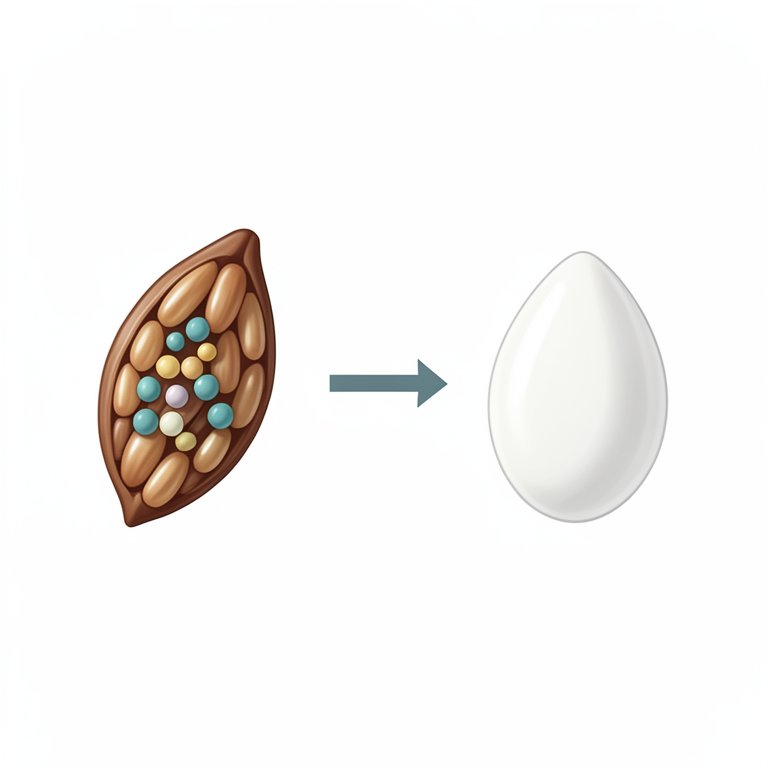
Nutritional Loss during Polishing
AI-generated conceptual illustration (brown and white rice grains). It explains the idea and does not show study data.
View source evidence ↗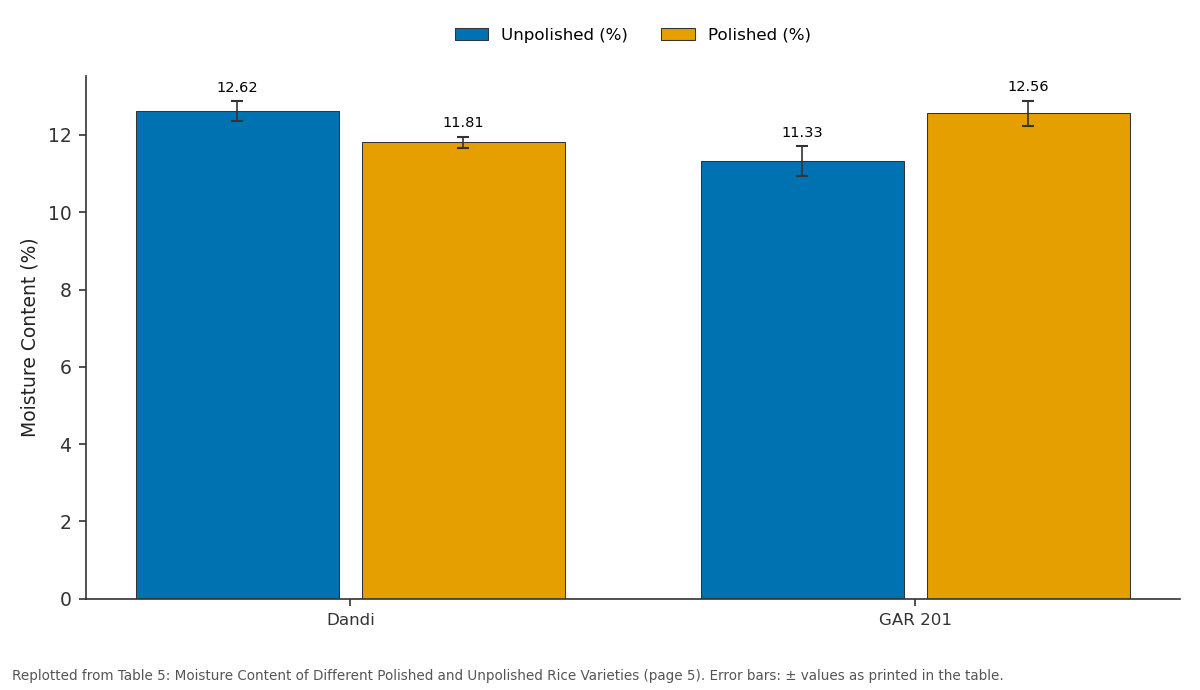
Unpolished (%) and Polished (%): Dandi vs GAR 201
Replotted from Table 5 (page 5) of the original paper. Every bar is the paper's own table value.
View source evidence ↗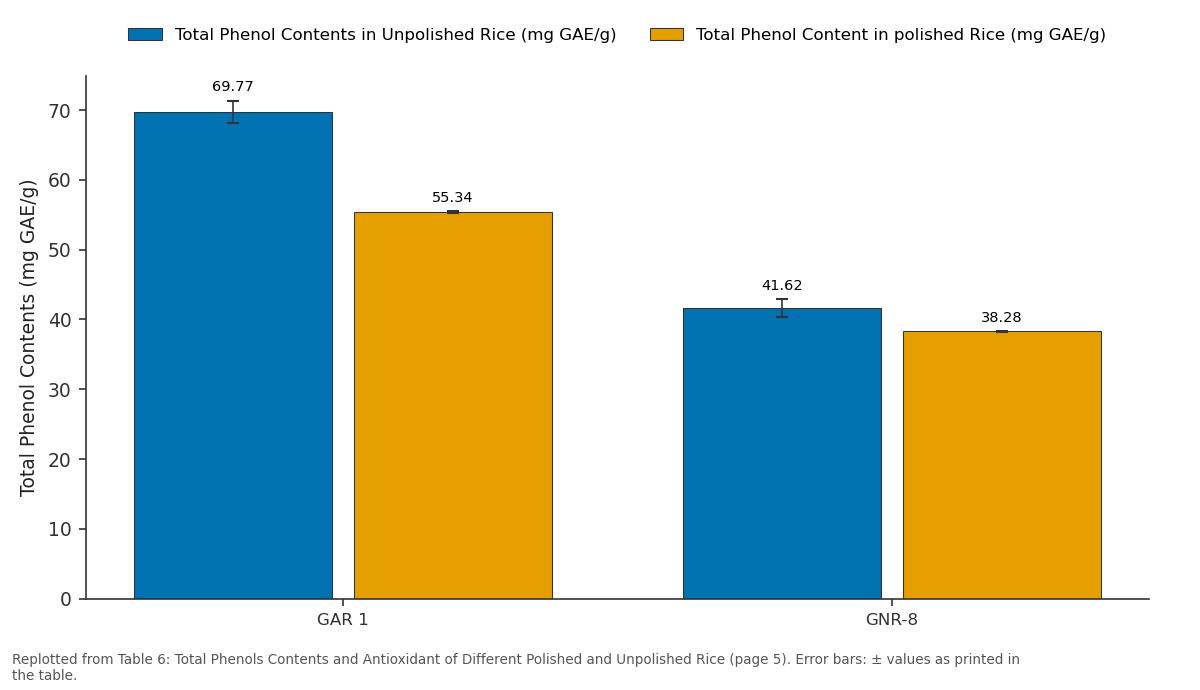
Total Phenol Contents in Unpolished Rice (mg... and Total Phenol Content in polished Rice (mg...: GAR 1 vs GNR-8
Replotted from Table 6 (page 5) of the original paper. Every bar is the paper's own table value.
View source evidence ↗Figures & tables
From the original paper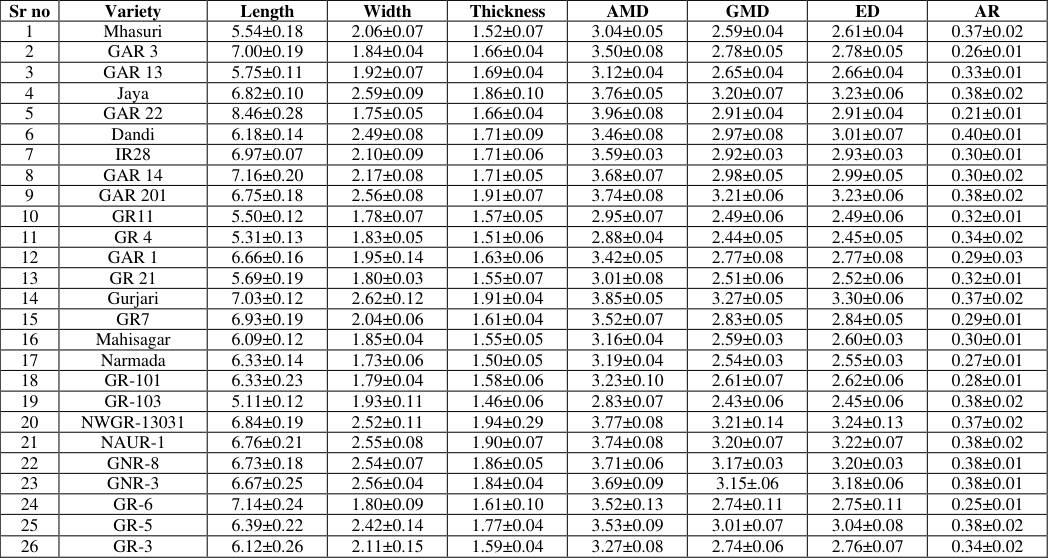 Table 1
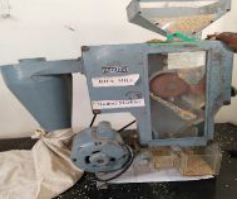 Plate 2
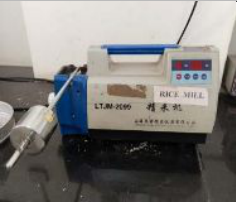 Plate 2
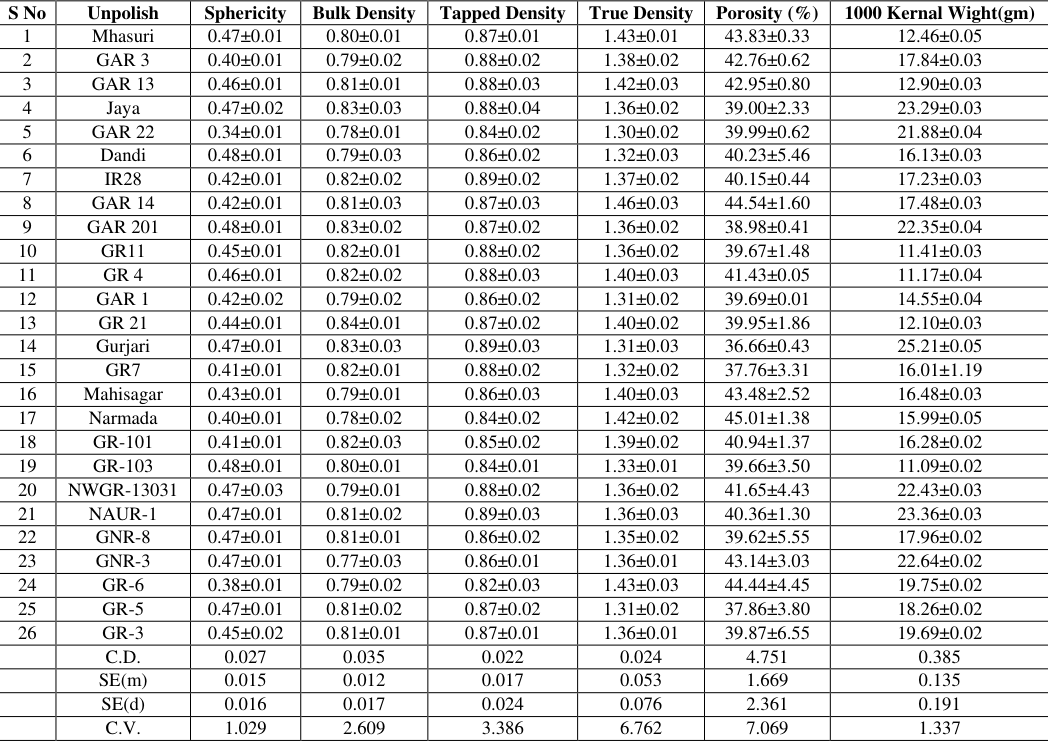 Table 2
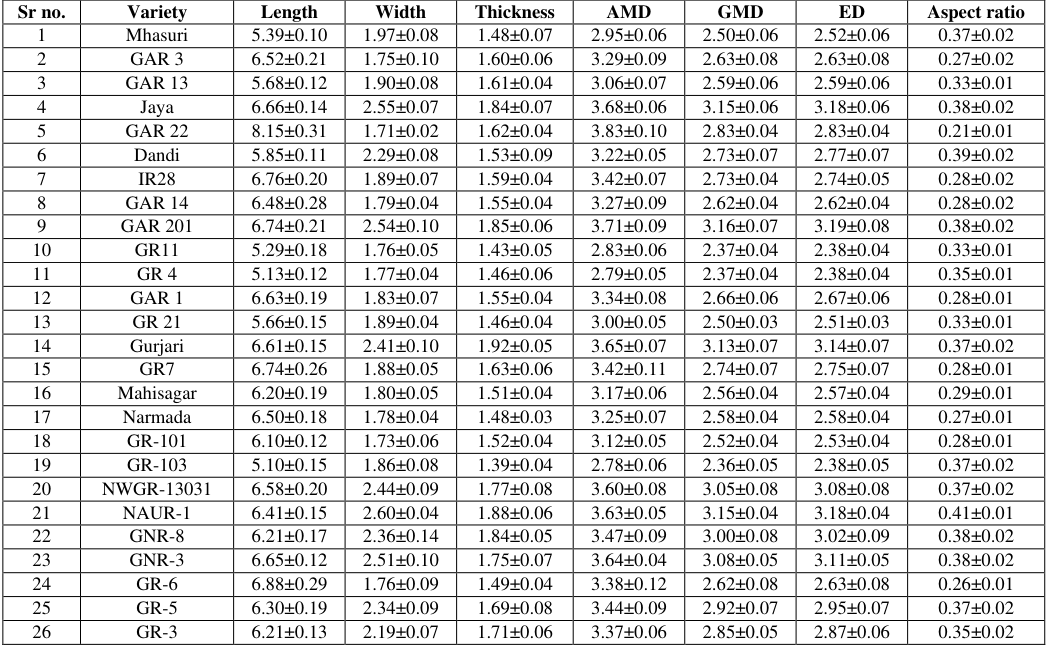 Table 3
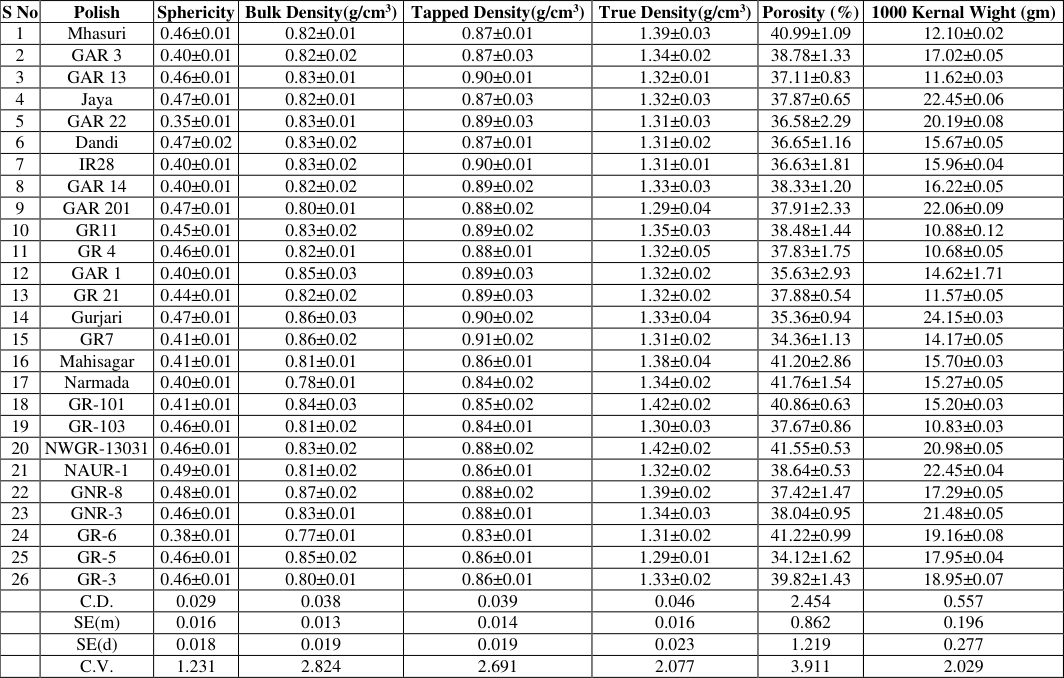 Table 4
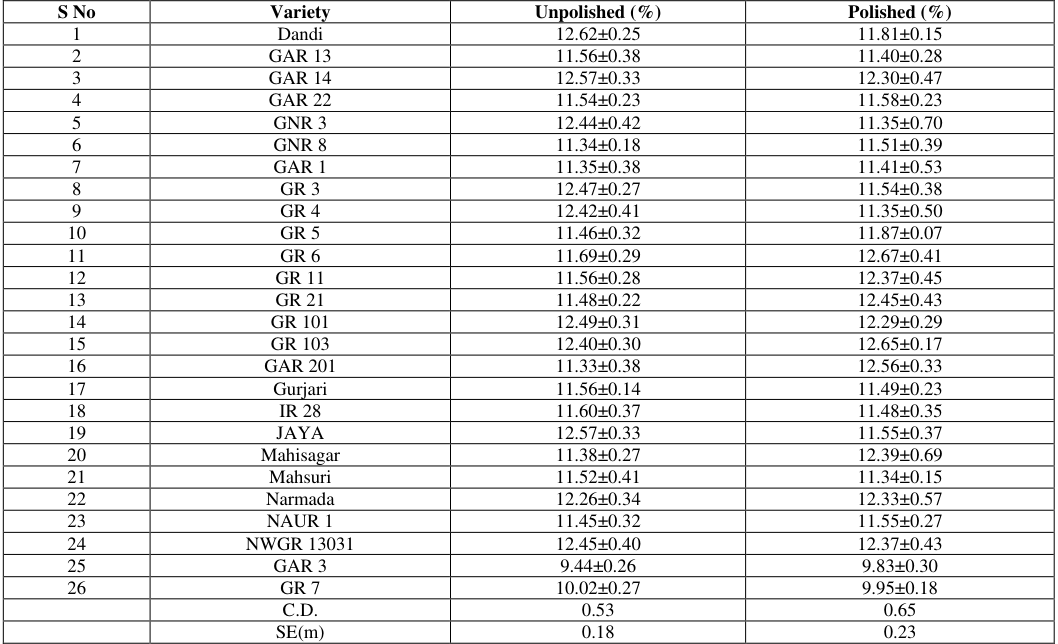 Table 5
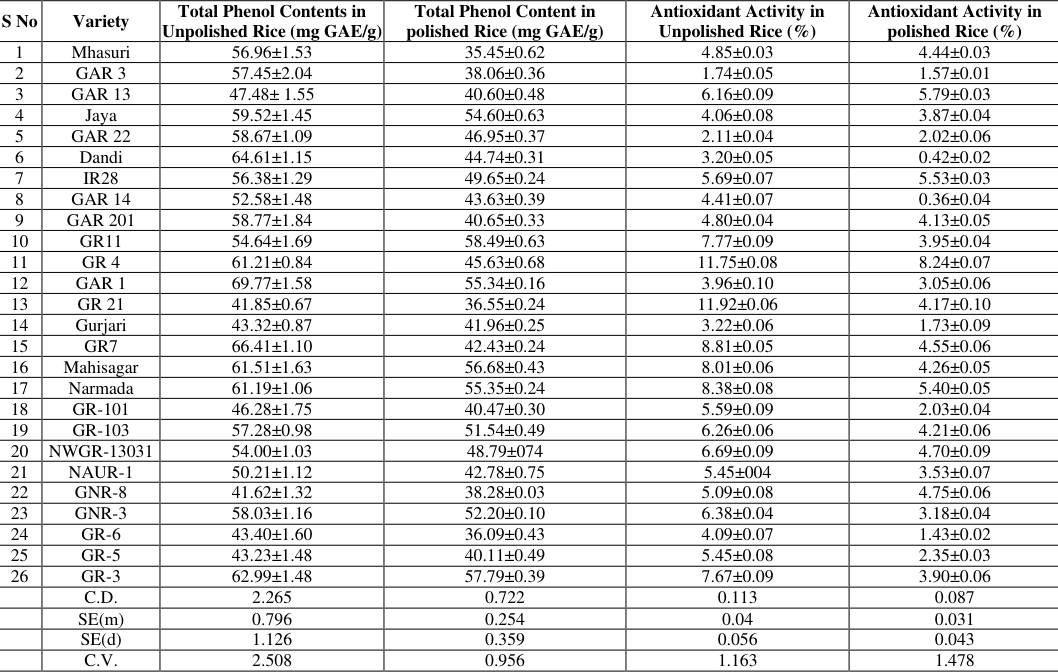 Table 6
Introduction
Cereals represent some of the earliest domesticated crops, with their cultivation tracing back to prehistoric periods. They constitute a fundamental component of the human diet, known as amylose. A smaller proportion of α-(1→6)linkages introduces branching points, thereby forming the highly branched architecture of amylopectin (Pandey et al., 2012) [7] . In which Amylose is a major factor affecting the eating quality of rice, with varieties classified as waxy (0-2%), very low (3-12%), low (13-20%), intermediate (21-25%), and high (>26%) based on their amylose content, which varies according to the rice variety and type (Juliano, 1985) [11] . There are different types of rice, including white, brown, basmati and jasmine etc, each with distinct characteristics and nutritional profiles. Rice is available in over 5000 varieties, of which Basmati rice occupies a prime position on account of its extra-long superfine slender grains, pleasant, exquisite aroma, fine cooking quality, sweet taste, soft texture, length-wise elongation with least breadth-wise swelling on cooking and tenderness of cooked rice (Bhattacharjee et al., 2002) [9] . Rice analysis is essential for maintaining its quality, nutritional value, and overall suitability for both consumers and the food industry. Among the various parameters, moisture content is a key factor that influences rice storage, processing, and shelf life (Kennedy, 2003) [10] . While amylose content in rice was determined using a direct method as described by Juliano, (1971) [11] . Because of the different limitations, many researchers are now adopting faster and more efficient indirect methods for analysis of moisture and amylose (Mittal et al., 2019) [12] .
Method and Materials
A total of twenty-six rice varieties (Gurjari, GR 11, Jaya, Mahsuri, GR 7, GR 3, IR 28, GR 103, Dandi, GR 21 (Vatrak), GAR 3, GAR 22 (Swagat), Mahisagar, GAR 201 (Anand Ashkhat), GAR 13, GR 101, GR 4, Narmada, GR 5, GAR 1, GR 6, NWGR-13031 GAR 14, GNR 3, NAUR 1, and GNR 8) were obtained from the Main Rice Research Centre, Navagam, Gujarat. The dried paddy grains were manually cleaned to remove foreign materials such as dust, straw, stones, and other impurities. The cleaned grains were then dehusked using a rice sheller to obtain brown rice and subsequently, the brown rice samples were polished using a rice polisher to obtain well-milled white rice (Plate 3.1). The white rice samples after polishing were analyzed for their physical and physicochemical properties, with a primary focus on phenolic content and anti-oxidant content. The moisture content was measured using the gravimetric method according to AOAC (2012). The total phenolic content was determined by the method described by Camargo et al. (2016) [14] . The antioxidant activity of the samples was evaluated using the 2,2-diphenyl-1picrylhydrazyl (DPPH) radical scavenging assay as described by Joshi et al. (2014) [5,15] .
Results
Results
Physical properties
The physical properties of various rice varieties were evaluated to determine their primary physical characteristics. These properties are critical as they significantly influence the rice's behaviour during postharvest handling, storage, packaging, transportation, and processing operations. Physical properties such as kernel length, width, thickness, equivalent diameter, aspect ratio, sphericity, true density, bulk density, and porosity were measured and analysed.
Moisture content
Moisture content is a critical parameter influencing the postharvest quality, storage stability, and processing characteristics of rice grains. It also affects mechanical properties and shelf life, playing a vital role in maintaining grain integrity during handling and storage. The observed variation in moisture content between unpolished and polished rice is primarily due to the removal of the bran layer during polishing, which exposes the hygroscopic endosperm. This exposed layer tends to absorb ambient moisture more easily, leading to an increase in moisture content in some varieties. However, the effect is not consistent across all genotypes, highlighting the role of genetic differences. GAR 201 showed the highest moisture increase (+1.23%) after polishing, while Dandi showed the largest decrease (-0.81%). Grain-specific traits like kernel hardness and bran composition likely influence these trends. Varieties such as GAR 3 and GR 7 maintained consistently low moisture levels, making them suitable for storage. The statistical thresholds (C.D. and SEM) confirm that some moisture differences among varieties are significant and reliable.
Total Phenols Contents and Antioxidant of Different Polished and Unpolished Rice
Pigmented rice varieties typically exhibit greater total phenolic content and antioxidant activity than non-pigmented (white) rice, [16] , Sripum et al. (2017) [17] , [18,19] . Therefore, retaining the bran layer helps enhance the health benefits of rice (Zhou et al., 2004) [20] .
Conclusion
The physical properties of various rice varieties, both polished and unpolished, showed considerable variation across multiple parameters, reflecting genetic diversity and potential suitability for different post-harvest applications. Among unpolished varieties, kernel length ranged from 5.11 mm (GR-103) to 8.46 mm (GAR 22), with geometric mean diameter (GMD) varying between 2.44 mm and 3.27 mm. Aspect ratio values ranged from 0.21 to 0.40, indicating significant differences in grain shape. Sphericity, a measure of grain roundness, varied between 0.34 and 0.48, while bulk densities ranged from 0.77 to 0.84 g/cm³, and true density values ranged from 1.29 to 1.46 g/cm³. Porosity, which affects airflow and drying efficiency, was highest in Narmada (45.01%) and lowest in Gurjari (36.66%). The 1000-kernel weight varied significantly, from 10.68 g in GR 4 to 25.21 g in Gurjari, highlighting differences in grain mass.
Polishing generally reduced kernel size slightly, particularly in width and thickness, though GAR 22 remained the longest even after polishing (8.15 mm). GMD and AMD also decreased marginally post-polishing, but the aspect ratio remained relatively stable, indicating shape consistency. Kernel weights and porosity values decreased slightly after polishing, while bulk and tapped densities often increased, improving flow properties. Sphericity remained consistent, though some minor changes were noted. In terms of moisture content, unpolished rice varieties ranged from 11.33% to 12.62%, while polished rice ranged from 11.35% to 12.67%, with a general trend of slightly lower moisture content after polishing, although some varieties showed an increase. These variations in dimensional, physical, and moisture characteristics are crucial for optimizing rice processing, packaging, storage, and equipment design, and also provide insight into varietal performance and consumer preferences.
Polishing significantly reduces the phenolic content and antioxidant activity of rice, as these compounds are concentrated in the bran layer. This nutritional loss affects the rice's health-promoting properties. Retaining the bran enhances nutraceutical value and supports dietary benefits. The findings align with previous research, emphasizing the importance of minimally processed rice.
Figures and tables from the paper
| Sr no | Variety | Length | Width | Thickness | AMD | GMD | ED | AR |
|---|---|---|---|---|---|---|---|---|
| 1 | Mhasuri | 5.54±0.18 | 2.06±0.07 | 1.52±0.07 | 3.04±0.05 | 2.59±0.04 | 2.61±0.04 | 0.37±0.02 |
| 2 | GAR 3 | 7.00±0.19 | 1.84±0.04 | 1.66±0.04 | 3.50±0.08 | 2.78±0.05 | 2.78±0.05 | 0.26±0.01 |
| 3 | GAR 13 | 5.75±0.11 | 1.92±0.07 | 1.69±0.04 | 3.12±0.04 | 2.65±0.04 | 2.66±0.04 | 0.33±0.01 |
| 4 | Jaya | 6.82±0.10 | 2.59±0.09 | 1.86±0.10 | 3.76±0.05 | 3.20±0.07 | 3.23±0.06 | 0.38±0.02 |
| 5 | GAR 22 | 8.46±0.28 | 1.75±0.05 | 1.66±0.04 | 3.96±0.08 | 2.91±0.04 | 2.91±0.04 | 0.21±0.01 |
| 6 | Dandi | 6.18±0.14 | 2.49±0.08 | 1.71±0.09 | 3.46±0.08 | 2.97±0.08 | 3.01±0.07 | 0.40±0.01 |
| 7 | IR28 | 6.97±0.07 | 2.10±0.09 | 1.71±0.06 | 3.59±0.03 | 2.92±0.03 | 2.93±0.03 | 0.30±0.01 |
| 8 | GAR 14 | 7.16±0.20 | 2.17±0.08 | 1.71±0.05 | 3.68±0.07 | 2.98±0.05 | 2.99±0.05 | 0.30±0.02 |
| 9 | GAR 201 | 6.75±0.18 | 2.56±0.08 | 1.91±0.07 | 3.74±0.08 | 3.21±0.06 | 3.23±0.06 | 0.38±0.02 |
| 10 | GR11 | 5.50±0.12 | 1.78±0.07 | 1.57±0.05 | 2.95±0.07 | 2.49±0.06 | 2.49±0.06 | 0.32±0.01 |
| 11 | GR 4 | 5.31±0.13 | 1.83±0.05 | 1.51±0.06 | 2.88±0.04 | 2.44±0.05 | 2.45±0.05 | 0.34±0.02 |
| 12 | GAR 1 | 6.66±0.16 | 1.95±0.14 | 1.63±0.06 | 3.42±0.05 | 2.77±0.08 | 2.77±0.08 | 0.29±0.03 |
| 13 | GR 21 | 5.69±0.19 | 1.80±0.03 | 1.55±0.07 | 3.01±0.08 | 2.51±0.06 | 2.52±0.06 | 0.32±0.01 |
| 14 | Gurjari | 7.03±0.12 | 2.62±0.12 | 1.91±0.04 | 3.85±0.05 | 3.27±0.05 | 3.30±0.06 | 0.37±0.02 |
| 15 | GR7 | 6.93±0.19 | 2.04±0.06 | 1.61±0.04 | 3.52±0.07 | 2.83±0.05 | 2.84±0.05 | 0.29±0.01 |
| 16 | Mahisagar | 6.09±0.12 | 1.85±0.04 | 1.55±0.05 | 3.16±0.04 | 2.59±0.03 | 2.60±0.03 | 0.30±0.01 |
| 17 | Narmada | 6.33±0.14 | 1.73±0.06 | 1.50±0.05 | 3.19±0.04 | 2.54±0.03 | 2.55±0.03 | 0.27±0.01 |
| 18 | GR-101 | 6.33±0.23 | 1.79±0.04 | 1.58±0.06 | 3.23±0.10 | 2.61±0.07 | 2.62±0.06 | 0.28±0.01 |
| 19 | GR-103 | 5.11±0.12 | 1.93±0.11 | 1.46±0.06 | 2.83±0.07 | 2.43±0.06 | 2.45±0.06 | 0.38±0.02 |
| 20 | NWGR-13031 | 6.84±0.19 | 2.52±0.11 | 1.94±0.29 | 3.77±0.08 | 3.21±0.14 | 3.24±0.13 | 0.37±0.02 |
| 21 | NAUR-1 | 6.76±0.21 | 2.55±0.08 | 1.90±0.07 | 3.74±0.08 | 3.20±0.07 | 3.22±0.07 | 0.38±0.02 |
| 22 | GNR-8 | 6.73±0.18 | 2.54±0.07 | 1.86±0.05 | 3.71±0.06 | 3.17±0.03 | 3.20±0.03 | 0.38±0.01 |
| 23 | GNR-3 | 6.67±0.25 | 2.56±0.04 | 1.84±0.04 | 3.69±0.09 | 3.15±.06 | 3.18±0.06 | 0.38±0.01 |
| 24 | GR-6 | 7.14±0.24 | 1.80±0.09 | 1.61±0.10 | 3.52±0.13 | 2.74±0.11 | 2.75±0.11 | 0.25±0.01 |
| 25 | GR-5 | 6.39±0.22 | 2.42±0.14 | 1.77±0.04 | 3.53±0.09 | 3.01±0.07 | 3.04±0.08 | 0.38±0.02 |
| 26 | GR-3 | 6.12±0.26 | 2.11±0.15 | 1.59±0.04 | 3.27±0.08 | 2.74±0.06 | 2.76±0.07 | 0.34±0.02 |
Table text extracted from the original PDF; superscript letters are shown inline. The original table image is below.
View original table image
| S No | Unpolish | Sphericity | Bulk Density | Tapped Density | True Density | Porosity (%) | 1000 Kernal Wight(gm) |
|---|---|---|---|---|---|---|---|
| 1 | Mhasuri | 0.47±0.01 | 0.80±0.01 | 0.87±0.01 | 1.43±0.01 | 43.83±0.33 | 12.46±0.05 |
| 2 | GAR 3 | 0.40±0.01 | 0.79±0.02 | 0.88±0.02 | 1.38±0.02 | 42.76±0.62 | 17.84±0.03 |
| 3 | GAR 13 | 0.46±0.01 | 0.81±0.01 | 0.88±0.03 | 1.42±0.03 | 42.95±0.80 | 12.90±0.03 |
| 4 | Jaya | 0.47±0.02 | 0.83±0.03 | 0.88±0.04 | 1.36±0.02 | 39.00±2.33 | 23.29±0.03 |
| 5 | GAR 22 | 0.34±0.01 | 0.78±0.01 | 0.84±0.02 | 1.30±0.02 | 39.99±0.62 | 21.88±0.04 |
| 6 | Dandi | 0.48±0.01 | 0.79±0.03 | 0.86±0.02 | 1.32±0.03 | 40.23±5.46 | 16.13±0.03 |
| 7 | IR28 | 0.42±0.01 | 0.82±0.02 | 0.89±0.02 | 1.37±0.02 | 40.15±0.44 | 17.23±0.03 |
| 8 | GAR 14 | 0.42±0.01 | 0.81±0.03 | 0.87±0.03 | 1.46±0.03 | 44.54±1.60 | 17.48±0.03 |
| 9 | GAR 201 | 0.48±0.01 | 0.83±0.02 | 0.87±0.02 | 1.36±0.02 | 38.98±0.41 | 22.35±0.04 |
| 10 | GR11 | 0.45±0.01 | 0.82±0.01 | 0.88±0.02 | 1.36±0.02 | 39.67±1.48 | 11.41±0.03 |
| 11 | GR 4 | 0.46±0.01 | 0.82±0.02 | 0.88±0.03 | 1.40±0.03 | 41.43±0.05 | 11.17±0.04 |
| 12 | GAR 1 | 0.42±0.02 | 0.79±0.02 | 0.86±0.02 | 1.31±0.02 | 39.69±0.01 | 14.55±0.04 |
| 13 | GR 21 | 0.44±0.01 | 0.84±0.01 | 0.87±0.02 | 1.40±0.02 | 39.95±1.86 | 12.10±0.03 |
| 14 | Gurjari | 0.47±0.01 | 0.83±0.03 | 0.89±0.03 | 1.31±0.03 | 36.66±0.43 | 25.21±0.05 |
| 15 | GR7 | 0.41±0.01 | 0.82±0.01 | 0.88±0.02 | 1.32±0.02 | 37.76±3.31 | 16.01±1.19 |
| 16 | Mahisagar | 0.43±0.01 | 0.79±0.01 | 0.86±0.03 | 1.40±0.03 | 43.48±2.52 | 16.48±0.03 |
| 17 | Narmada | 0.40±0.01 | 0.78±0.02 | 0.84±0.02 | 1.42±0.02 | 45.01±1.38 | 15.99±0.05 |
| 18 | GR-101 | 0.41±0.01 | 0.82±0.03 | 0.85±0.02 | 1.39±0.02 | 40.94±1.37 | 16.28±0.02 |
| 19 | GR-103 | 0.48±0.01 | 0.80±0.01 | 0.84±0.01 | 1.33±0.01 | 39.66±3.50 | 11.09±0.02 |
| 20 | NWGR-13031 | 0.47±0.03 | 0.79±0.01 | 0.88±0.02 | 1.36±0.02 | 41.65±4.43 | 22.43±0.03 |
| 21 | NAUR-1 | 0.47±0.01 | 0.81±0.02 | 0.89±0.03 | 1.36±0.03 | 40.36±1.30 | 23.36±0.03 |
| 22 | GNR-8 | 0.47±0.01 | 0.81±0.01 | 0.86±0.02 | 1.35±0.02 | 39.62±5.55 | 17.96±0.02 |
| 23 | GNR-3 | 0.47±0.01 | 0.77±0.03 | 0.86±0.01 | 1.36±0.01 | 43.14±3.03 | 22.64±0.02 |
| 24 | GR-6 | 0.38±0.01 | 0.79±0.02 | 0.82±0.03 | 1.43±0.03 | 44.44±4.45 | 19.75±0.02 |
| 25 | GR-5 | 0.47±0.01 | 0.81±0.02 | 0.87±0.02 | 1.31±0.02 | 37.86±3.80 | 18.26±0.02 |
| 26 | GR-3 | 0.45±0.02 | 0.81±0.01 | 0.87±0.01 | 1.36±0.01 | 39.87±6.55 | 19.69±0.02 |
| C.D. | 0.027 | 0.035 | 0.022 | 0.024 | 4.751 | 0.385 | |
| SE(m) | 0.015 | 0.012 | 0.017 | 0.053 | 1.669 | 0.135 | |
| SE(d) | 0.016 | 0.017 | 0.024 | 0.076 | 2.361 | 0.191 | |
| C.V. | 1.029 | 2.609 | 3.386 | 6.762 | 7.069 | 1.337 |
Table text extracted from the original PDF; superscript letters are shown inline. The original table image is below.
View original table image
| Sr no. | Variety | Length | Width | Thickness | AMD | GMD | ED | Aspect ratio |
|---|---|---|---|---|---|---|---|---|
| 1 | Mhasuri | 5.39±0.10 | 1.97±0.08 | 1.48±0.07 | 2.95±0.06 | 2.50±0.06 | 2.52±0.06 | 0.37±0.02 |
| 2 | GAR 3 | 6.52±0.21 | 1.75±0.10 | 1.60±0.06 | 3.29±0.09 | 2.63±0.08 | 2.63±0.08 | 0.27±0.02 |
| 3 | GAR 13 | 5.68±0.12 | 1.90±0.08 | 1.61±0.04 | 3.06±0.07 | 2.59±0.06 | 2.59±0.06 | 0.33±0.01 |
| 4 | Jaya | 6.66±0.14 | 2.55±0.07 | 1.84±0.07 | 3.68±0.06 | 3.15±0.06 | 3.18±0.06 | 0.38±0.02 |
| 5 | GAR 22 | 8.15±0.31 | 1.71±0.02 | 1.62±0.04 | 3.83±0.10 | 2.83±0.04 | 2.83±0.04 | 0.21±0.01 |
| 6 | Dandi | 5.85±0.11 | 2.29±0.08 | 1.53±0.09 | 3.22±0.05 | 2.73±0.07 | 2.77±0.07 | 0.39±0.02 |
| 7 | IR28 | 6.76±0.20 | 1.89±0.07 | 1.59±0.04 | 3.42±0.07 | 2.73±0.04 | 2.74±0.05 | 0.28±0.02 |
| 8 | GAR 14 | 6.48±0.28 | 1.79±0.04 | 1.55±0.04 | 3.27±0.09 | 2.62±0.04 | 2.62±0.04 | 0.28±0.02 |
| 9 | GAR 201 | 6.74±0.21 | 2.54±0.10 | 1.85±0.06 | 3.71±0.09 | 3.16±0.07 | 3.19±0.08 | 0.38±0.02 |
| 10 | GR11 | 5.29±0.18 | 1.76±0.05 | 1.43±0.05 | 2.83±0.06 | 2.37±0.04 | 2.38±0.04 | 0.33±0.01 |
| 11 | GR 4 | 5.13±0.12 | 1.77±0.04 | 1.46±0.06 | 2.79±0.05 | 2.37±0.04 | 2.38±0.04 | 0.35±0.01 |
| 12 | GAR 1 | 6.63±0.19 | 1.83±0.07 | 1.55±0.04 | 3.34±0.08 | 2.66±0.06 | 2.67±0.06 | 0.28±0.01 |
| 13 | GR 21 | 5.66±0.15 | 1.89±0.04 | 1.46±0.04 | 3.00±0.05 | 2.50±0.03 | 2.51±0.03 | 0.33±0.01 |
| 14 | Gurjari | 6.61±0.15 | 2.41±0.10 | 1.92±0.05 | 3.65±0.07 | 3.13±0.07 | 3.14±0.07 | 0.37±0.02 |
| 15 | GR7 | 6.74±0.26 | 1.88±0.05 | 1.63±0.06 | 3.42±0.11 | 2.74±0.07 | 2.75±0.07 | 0.28±0.01 |
| 16 | Mahisagar | 6.20±0.19 | 1.80±0.05 | 1.51±0.04 | 3.17±0.06 | 2.56±0.04 | 2.57±0.04 | 0.29±0.01 |
| 17 | Narmada | 6.50±0.18 | 1.78±0.04 | 1.48±0.03 | 3.25±0.07 | 2.58±0.04 | 2.58±0.04 | 0.27±0.01 |
| 18 | GR-101 | 6.10±0.12 | 1.73±0.06 | 1.52±0.04 | 3.12±0.05 | 2.52±0.04 | 2.53±0.04 | 0.28±0.01 |
| 19 | GR-103 | 5.10±0.15 | 1.86±0.08 | 1.39±0.04 | 2.78±0.06 | 2.36±0.05 | 2.38±0.05 | 0.37±0.02 |
| 20 | NWGR-13031 | 6.58±0.20 | 2.44±0.09 | 1.77±0.08 | 3.60±0.08 | 3.05±0.08 | 3.08±0.08 | 0.37±0.02 |
| 21 | NAUR-1 | 6.41±0.15 | 2.60±0.04 | 1.88±0.06 | 3.63±0.05 | 3.15±0.04 | 3.18±0.04 | 0.41±0.01 |
| 22 | GNR-8 | 6.21±0.17 | 2.36±0.14 | 1.84±0.05 | 3.47±0.09 | 3.00±0.08 | 3.02±0.09 | 0.38±0.02 |
| 23 | GNR-3 | 6.65±0.12 | 2.51±0.10 | 1.75±0.07 | 3.64±0.04 | 3.08±0.05 | 3.11±0.05 | 0.38±0.02 |
| 24 | GR-6 | 6.88±0.29 | 1.76±0.09 | 1.49±0.04 | 3.38±0.12 | 2.62±0.08 | 2.63±0.08 | 0.26±0.01 |
| 25 | GR-5 | 6.30±0.19 | 2.34±0.09 | 1.69±0.08 | 3.44±0.09 | 2.92±0.07 | 2.95±0.07 | 0.37±0.02 |
| 26 | GR-3 | 6.21±0.13 | 2.19±0.07 | 1.71±0.06 | 3.37±0.06 | 2.85±0.05 | 2.87±0.06 | 0.35±0.02 |
Table text extracted from the original PDF; superscript letters are shown inline. The original table image is below.
View original table image
| S No | Polish | Sphericity | Bulk Density(g/cm3) | Tapped Density(g/cm3) | True Density(g/cm3) | Porosity (%) | 1000 Kernal Wight (gm) |
|---|---|---|---|---|---|---|---|
| 1 | Mhasuri | 0.46±0.01 | 0.82±0.01 | 0.87±0.01 | 1.39±0.03 | 40.99±1.09 | 12.10±0.02 |
| 2 | GAR 3 | 0.40±0.01 | 0.82±0.02 | 0.87±0.03 | 1.34±0.02 | 38.78±1.33 | 17.02±0.05 |
| 3 | GAR 13 | 0.46±0.01 | 0.83±0.01 | 0.90±0.01 | 1.32±0.01 | 37.11±0.83 | 11.62±0.03 |
| 4 | Jaya | 0.47±0.01 | 0.82±0.01 | 0.87±0.03 | 1.32±0.03 | 37.87±0.65 | 22.45±0.06 |
| 5 | GAR 22 | 0.35±0.01 | 0.83±0.01 | 0.89±0.03 | 1.31±0.03 | 36.58±2.29 | 20.19±0.08 |
| 6 | Dandi | 0.47±0.02 | 0.83±0.02 | 0.87±0.01 | 1.31±0.02 | 36.65±1.16 | 15.67±0.05 |
| 7 | IR28 | 0.40±0.01 | 0.83±0.02 | 0.90±0.01 | 1.31±0.01 | 36.63±1.81 | 15.96±0.04 |
| 8 | GAR 14 | 0.40±0.01 | 0.82±0.02 | 0.89±0.02 | 1.33±0.03 | 38.33±1.20 | 16.22±0.05 |
| 9 | GAR 201 | 0.47±0.01 | 0.80±0.01 | 0.88±0.02 | 1.29±0.04 | 37.91±2.33 | 22.06±0.09 |
| 10 | GR11 | 0.45±0.01 | 0.83±0.02 | 0.89±0.02 | 1.35±0.03 | 38.48±1.44 | 10.88±0.12 |
| 11 | GR 4 | 0.46±0.01 | 0.82±0.01 | 0.88±0.01 | 1.32±0.05 | 37.83±1.75 | 10.68±0.05 |
| 12 | GAR 1 | 0.40±0.01 | 0.85±0.03 | 0.89±0.03 | 1.32±0.02 | 35.63±2.93 | 14.62±1.71 |
| 13 | GR 21 | 0.44±0.01 | 0.82±0.02 | 0.89±0.03 | 1.32±0.02 | 37.88±0.54 | 11.57±0.05 |
| 14 | Gurjari | 0.47±0.01 | 0.86±0.03 | 0.90±0.02 | 1.33±0.04 | 35.36±0.94 | 24.15±0.03 |
| 15 | GR7 | 0.41±0.01 | 0.86±0.02 | 0.91±0.02 | 1.31±0.02 | 34.36±1.13 | 14.17±0.05 |
| 16 | Mahisagar | 0.41±0.01 | 0.81±0.01 | 0.86±0.01 | 1.38±0.04 | 41.20±2.86 | 15.70±0.03 |
| 17 | Narmada | 0.40±0.01 | 0.78±0.01 | 0.84±0.02 | 1.34±0.02 | 41.76±1.54 | 15.27±0.05 |
| 18 | GR-101 | 0.41±0.01 | 0.84±0.03 | 0.85±0.02 | 1.42±0.02 | 40.86±0.63 | 15.20±0.03 |
| 19 | GR-103 | 0.46±0.01 | 0.81±0.02 | 0.84±0.01 | 1.30±0.03 | 37.67±0.86 | 10.83±0.03 |
| 20 | NWGR-13031 | 0.46±0.01 | 0.83±0.02 | 0.88±0.02 | 1.42±0.02 | 41.55±0.53 | 20.98±0.05 |
| 21 | NAUR-1 | 0.49±0.01 | 0.81±0.02 | 0.86±0.01 | 1.32±0.02 | 38.64±0.53 | 22.45±0.04 |
| 22 | GNR-8 | 0.48±0.01 | 0.87±0.02 | 0.88±0.02 | 1.39±0.02 | 37.42±1.47 | 17.29±0.05 |
| 23 | GNR-3 | 0.46±0.01 | 0.83±0.01 | 0.88±0.01 | 1.34±0.03 | 38.04±0.95 | 21.48±0.05 |
| 24 | GR-6 | 0.38±0.01 | 0.77±0.01 | 0.83±0.01 | 1.31±0.02 | 41.22±0.99 | 19.16±0.08 |
| 25 | GR-5 | 0.46±0.01 | 0.85±0.02 | 0.86±0.01 | 1.29±0.01 | 34.12±1.62 | 17.95±0.04 |
| 26 | GR-3 | 0.46±0.01 | 0.80±0.01 | 0.86±0.01 | 1.33±0.02 | 39.82±1.43 | 18.95±0.07 |
| C.D. | 0.029 | 0.038 | 0.039 | 0.046 | 2.454 | 0.557 | |
| SE(m) | 0.016 | 0.013 | 0.014 | 0.016 | 0.862 | 0.196 | |
| SE(d) | 0.018 | 0.019 | 0.019 | 0.023 | 1.219 | 0.277 | |
| C.V. | 1.231 | 2.824 | 2.691 | 2.077 | 3.911 | 2.029 |
Table text extracted from the original PDF; superscript letters are shown inline. The original table image is below.
View original table image
| S No | Variety | Unpolished (%) | Polished (%) |
|---|---|---|---|
| 1 | Dandi | 12.62±0.25 | 11.81±0.15 |
| 2 | GAR 13 | 11.56±0.38 | 11.40±0.28 |
| 3 | GAR 14 | 12.57±0.33 | 12.30±0.47 |
| 4 | GAR 22 | 11.54±0.23 | 11.58±0.23 |
| 5 | GNR 3 | 12.44±0.42 | 11.35±0.70 |
| 6 | GNR 8 | 11.34±0.18 | 11.51±0.39 |
| 7 | GAR 1 | 11.35±0.38 | 11.41±0.53 |
| 8 | GR 3 | 12.47±0.27 | 11.54±0.38 |
| 9 | GR 4 | 12.42±0.41 | 11.35±0.50 |
| 10 | GR 5 | 11.46±0.32 | 11.87±0.07 |
| 11 | GR 6 | 11.69±0.29 | 12.67±0.41 |
| 12 | GR 11 | 11.56±0.28 | 12.37±0.45 |
| 13 | GR 21 | 11.48±0.22 | 12.45±0.43 |
| 14 | GR 101 | 12.49±0.31 | 12.29±0.29 |
| 15 | GR 103 | 12.40±0.30 | 12.65±0.17 |
| 16 | GAR 201 | 11.33±0.38 | 12.56±0.33 |
| 17 | Gurjari | 11.56±0.14 | 11.49±0.23 |
| 18 | IR 28 | 11.60±0.37 | 11.48±0.35 |
| 19 | JAYA | 12.57±0.33 | 11.55±0.37 |
| 20 | Mahisagar | 11.38±0.27 | 12.39±0.69 |
| 21 | Mahsuri | 11.52±0.41 | 11.34±0.15 |
| 22 | Narmada | 12.26±0.34 | 12.33±0.57 |
| 23 | NAUR 1 | 11.45±0.32 | 11.55±0.27 |
| 24 | NWGR 13031 | 12.45±0.40 | 12.37±0.43 |
| 25 | GAR 3 | 9.44±0.26 | 9.83±0.30 |
| 26 | GR 7 | 10.02±0.27 | 9.95±0.18 |
| C.D. | 0.53 | 0.65 | |
| SE(m) | 0.18 | 0.23 |
Table text extracted from the original PDF; superscript letters are shown inline. The original table image is below.
View original table image
| S No | Variety | Total Phenol Contents in Unpolished Rice (mg GAE/g) | Total Phenol Content in polished Rice (mg GAE/g) | Antioxidant Activity in Unpolished Rice (%) | Antioxidant Activity in polished Rice (%) |
|---|---|---|---|---|---|
| 1 | Mhasuri | 56.96±1.53 | 35.45±0.62 | 4.85±0.03 | 4.44±0.03 |
| 2 | GAR 3 | 57.45±2.04 | 38.06±0.36 | 1.74±0.05 | 1.57±0.01 |
| 3 | GAR 13 | 47.48± 1.55 | 40.60±0.48 | 6.16±0.09 | 5.79±0.03 |
| 4 | Jaya | 59.52±1.45 | 54.60±0.63 | 4.06±0.08 | 3.87±0.04 |
| 5 | GAR 22 | 58.67±1.09 | 46.95±0.37 | 2.11±0.04 | 2.02±0.06 |
| 6 | Dandi | 64.61±1.15 | 44.74±0.31 | 3.20±0.05 | 0.42±0.02 |
| 7 | IR28 | 56.38±1.29 | 49.65±0.24 | 5.69±0.07 | 5.53±0.03 |
| 8 | GAR 14 | 52.58±1.48 | 43.63±0.39 | 4.41±0.07 | 0.36±0.04 |
| 9 | GAR 201 | 58.77±1.84 | 40.65±0.33 | 4.80±0.04 | 4.13±0.05 |
| 10 | GR11 | 54.64±1.69 | 58.49±0.63 | 7.77±0.09 | 3.95±0.04 |
| 11 | GR 4 | 61.21±0.84 | 45.63±0.68 | 11.75±0.08 | 8.24±0.07 |
| 12 | GAR 1 | 69.77±1.58 | 55.34±0.16 | 3.96±0.10 | 3.05±0.06 |
| 13 | GR 21 | 41.85±0.67 | 36.55±0.24 | 11.92±0.06 | 4.17±0.10 |
| 14 | Gurjari | 43.32±0.87 | 41.96±0.25 | 3.22±0.06 | 1.73±0.09 |
| 15 | GR7 | 66.41±1.10 | 42.43±0.24 | 8.81±0.05 | 4.55±0.06 |
| 16 | Mahisagar | 61.51±1.63 | 56.68±0.43 | 8.01±0.06 | 4.26±0.05 |
| 17 | Narmada | 61.19±1.06 | 55.35±0.24 | 8.38±0.08 | 5.40±0.05 |
| 18 | GR-101 | 46.28±1.75 | 40.47±0.30 | 5.59±0.09 | 2.03±0.04 |
| 19 | GR-103 | 57.28±0.98 | 51.54±0.49 | 6.26±0.06 | 4.21±0.06 |
| 20 | NWGR-13031 | 54.00±1.03 | 48.79±074 | 6.69±0.09 | 4.70±0.09 |
| 21 | NAUR-1 | 50.21±1.12 | 42.78±0.75 | 5.45±004 | 3.53±0.07 |
| 22 | GNR-8 | 41.62±1.32 | 38.28±0.03 | 5.09±0.08 | 4.75±0.06 |
| 23 | GNR-3 | 58.03±1.16 | 52.20±0.10 | 6.38±0.04 | 3.18±0.04 |
| 24 | GR-6 | 43.40±1.60 | 36.09±0.43 | 4.09±0.07 | 1.43±0.02 |
| 25 | GR-5 | 43.23±1.48 | 40.11±0.49 | 5.45±0.08 | 2.35±0.03 |
| 26 | GR-3 | 62.99±1.48 | 57.79±0.39 | 7.67±0.09 | 3.90±0.06 |
| C.D. | 2.265 | 0.722 | 0.113 | 0.087 | |
| SE(m) | 0.796 | 0.254 | 0.04 | 0.031 | |
| SE(d) | 1.126 | 0.359 | 0.056 | 0.043 | |
| C.V. | 2.508 | 0.956 | 1.163 | 1.478 |
Table text extracted from the original PDF; superscript letters are shown inline. The original table image is below.
View original table image
References
20 in the original paper- Awika JM. Major cereal grains production and use around the world. In: Advances in cereal science: implications to food processing and health promotion. American Chemical Society. 2011:1-13.
- Wrigley CW. An introduction to the cereal grains: major providers for mankind's food needs. In: Cereal grains. Woodhead Publishing. 2010:3-23.
- Bagchi T B, Sharma S, Chattopadhyay K. Development of NIRS models to predict protein and amylose content of brown rice and proximate compositions of rice bran. Food Chemistry. 2016;191:21-27.
- FAO. [cited 2021 Jan]. https://www.fao.org/marketsand-trade/commodities/rice/en/
- Joshi ND, Mohapatra D, Joshi DC. Varietal selection of some indica rice for production of puffed rice. Food and bioprocess technology. 2014;7:299-305.
- Gnanamanickam SS, Gnanamanickam SS. Rice and its to human life. Biological Control of Rice Diseases; 2009:1-11.
- Pandey MK, Rani NS, Madhav MS, Sundaram RM, Varaprasad GS, Sivaranjani AK, Kumar A. Different isoforms of starch-synthesizing enzymes controlling amylose and amylopectin content in rice (Oryza sativa L.). Biotechnology advances. 2012;30(6):1697-1706.
- Juliano BO. Rice: Chemistry and technology. 2nd ed. American Association of Cereal Chemists. 1985.
- Bhattacharjee P, Singhal RS, Kulkarni PR. Basmati rice: a review. International Journal of Food Science and Technology. 2002;37(1):1-12.
- Kennedy G. Nutritional contribution of rice and impact of biotechnology and biodiversity in rice-consuming countries. Proceedings of the 20th session of the rice commission, 23-26 July 2002, Bangkok, Thailand. FAO, Rome, Italy. 2003:59-70.
- Juliano BO. A simplified assay for milled rice amylose. Cereal Science Today. 1971;16:334-340, 360.
- Mittal S, Dutta MK, Issac A. Non-destructive image processing based system for assessment of rice quality and defects for classification according to inferred commercial value. Measurement. 2019;148:106969.
- AOAC. Official Method of Analysis: Association of Analytical Chemists. 19th Edition. Washington DC. 2012:121-130.
- Camargo JM, Dunoyer AT, García-Zapateiro LA. The effect of storage temperature and time on total phenolics and enzymatic activity of sapodilla (Achras sapota L.). Revista Facultad Nacional de Agronomía Medellín. 2016;69(2):7955-7963.
- Joshi ND, Mohapatra D, Joshi DC. Varietal selection of some indica rice for production of puffed rice. Food and bioprocess technology. 2014;7:299-305.
- Shen J, Chanda A, D'netto B, Monga M. Managing diversity through human resource management: An international perspective and conceptual framework. The International Journal of Human Resource Management. 2009 Feb 1;20(2):235-51.
- Sripum C, Kukreja RK, Charoenkiatkul S, Kriengsinyos W, Suttisansanee U. The effect of extraction conditions on antioxidant activities and total phenolic contents of International Journal of Agriculture and Food Science https://www.agriculturaljournals.com different processed Thai Jasmine rice. International Food Research Journal. 2017 Aug 1;24(4).
- Shobana S, Malleshi NG, Sudha V, Spiegelman D, Hong B, Hu FB, Willett WC, Krishnaswamy K, Mohan V. Nutritional and sensory profile of two Indian rice varieties with different degrees of polishing. International journal of food sciences and nutrition. 2011 Dec 1;62(8):800-10.
- Zhang X, Shu CW. On positivity-preserving high order discontinuous Galerkin schemes for compressible Euler equations on rectangular meshes. Journal of Computational Physics. 2010 Nov 20;229(23):8918-34.
- Zhou K, Yu L. Effects of extraction solvent on wheat bran antioxidant activity estimation. LWT-Food science and Technology. 2004 Nov 1;37(7):717-21.