
Research article · 2025 · Full text
International Journal of Agriculture and Food ScienceEnhancing postharvest shelf life of potato (Solanum tuberosum L.) using ethyl isothiocyanate
Volume 7(10) · Pages 95–98 · DOI: 10.33545/2664844x.2025.v7.i10b.858 ↗
Research areasPotato Plant Research
Abstract
Author-writtenPotato (Solanum tuberosum L.) is a globally important food crop, but its postharvest storage is often challenged by sprouting, weight loss, and spoilage, leading to substantial economic losses. The present study evaluated the effect of ethyl isothiocyanate on extending the shelf life of potato tubers during storage. Five treatments (T1-T5) were assessed for their impact on physiological weight loss, sprouting behavior, spoilage percentage, and shrinkage intensity over a 30-day storage period. The results indicated that potatoes treated with ethyl isothiocyanate (T1 and T2) showed significantly lower weight loss compared to untreated controls, with final values of 6.95% and 7.34% respectively, against 16.37% in T4. Sprouting was effectively inhibited in treated tubers, with T1 showing complete suppression throughout the 30-day period, while T5 recorded a maximum of three sprouts per tuber. Spoilage percentage was also lowest in treated tubers, with T1 (29.60%) and T2 (40.60%) showing significantly reduced decay compared to untreated controls (up to 91.00% in T4). Shrinkage intensity followed a similar pattern, with treated tubers maintaining better firmness and marketable quality. Overall, ethyl isothiocyanate treatment was found to be effective in minimizing postharvest losses by reducing sprouting, delaying spoilage, and maintaining tuber quality. These findings suggest that ethyl isothiocyanate can be a promising alternative to conventional sprout suppressants for extending the storage life of potatoes, thereby ensuring higher marketability and reducing food waste.
Summary
Source-checkedPlain-language reading of the full paper, prepared with AI and checked against the text. Each point links to the authors' own words.
Why it matters
- Potatoes are a globally significant food crop, but they suffer from economic losses during storage due to spoilage, weight loss, and sprouting. View evidence ↗
- Sprouting is a critical postharvest problem because it diminishes the marketable volume and overall quality of the tubers. View evidence ↗
- There are growing safety concerns regarding conventional chemical sprout inhibitors like chlorpropham (CIPC), leading to stricter residue limits. View evidence ↗
The question
- The study aimed to evaluate how ethyl isothiocyanate affects the suppression of sprouting and the extension of potato storage life. View evidence ↗
What they did
- The researchers used a Completely Randomized Design with 75 uniform potatoes divided into five treatments (15 potatoes each) with five replications. View evidence ↗
- The experiment was conducted between February and March 2022 at the ASPEE Shakilam Biotechnology Institute's Microbiology Laboratory. View evidence ↗
What they found
- T1 showed the lowest spoilage (29.60% at 30 days), while T4 had the highest spoilage at 91.00% and T5 at 80.20% by the end of the study. View evidence ↗
- Lower concentrations of ethyl isothiocyanate (T1 and T2) effectively extended storage life, but higher doses were found to be potentially detrimental. View evidence ↗
What it means
- The authors conclude that ethyl isothiocyanate is a promising and eco-friendly alternative to traditional sprout suppressants. View evidence ↗
- The authors recommend further research into large-scale application, residual effects, and the optimization of dosages. View evidence ↗
Visual summary
1 visualsIllustrations explain the paper; they do not show study data.
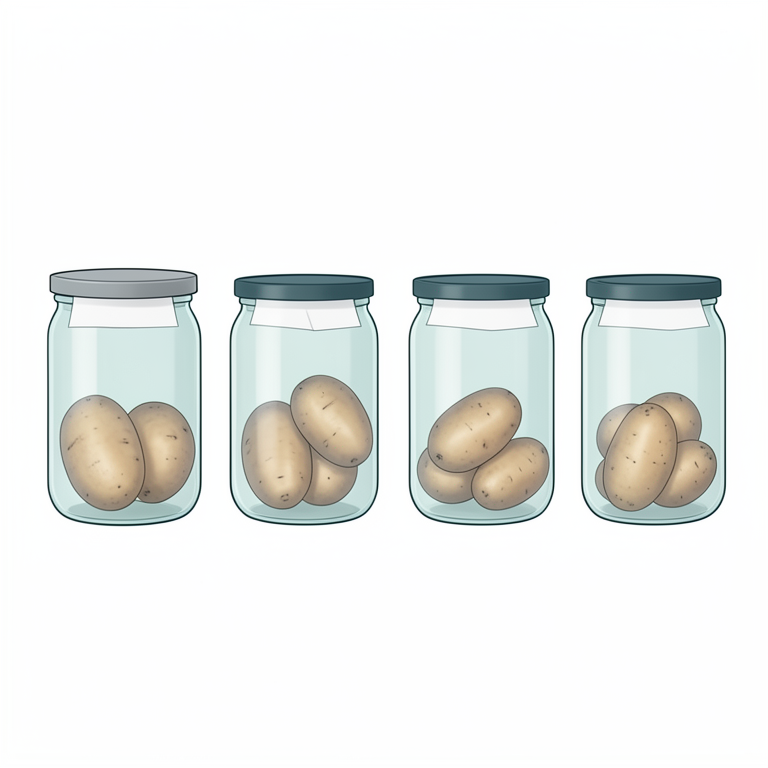
Experimental Setup
AI-generated conceptual illustration (potato tubers (Solanum tuberosum L.) in airtight glass jars). It explains the idea and does not show study data.
View source evidence ↗Figures & tables
From the original paper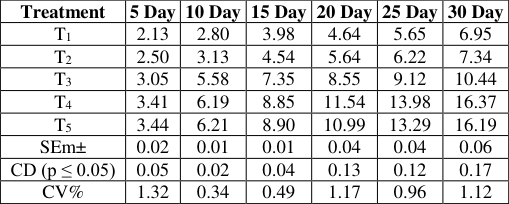 Table 1
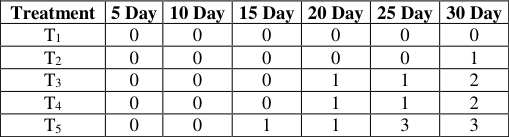 Table 2
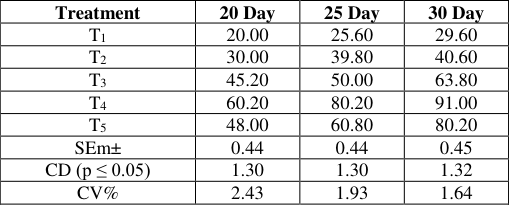 Table 3
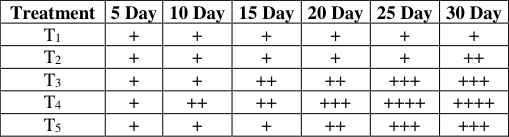 Table 4
Introduction
The potato (Solanum tuberosum) holds a prominent position among global food crops, ranking immediately behind staples like rice, wheat, and maize in terms of total production. It surpasses all other tuber crops-including cassava, sweet potatoes, and yams-for global importance. Known for its remarkable productivity, potatoes yield more calories per hectare and mature more rapidly than most cereals. They are also comparatively water-efficient, making them especially valuable in areas with limited irrigation (Reddy et al., 2018) [7] . Native to the Andean region of South America, potatoes were domesticated thousands of years ago. Following the Spanish conquest, they were introduced to Europe in the 16th century before eventually spreading worldwide-including to India via Portuguese sailors, with cultivation expanding further under British influence. Today, India is among the leading potato producers, with major output from states such as Uttar Pradesh, West Bengal, Bihar, Punjab, and Gujarat (Singh et al., 2019) [8] . The quality of agricultural products is defined by a range of attributes that influence both their overall condition and commercial acceptability. These include nutritional composition, physical properties, and mechanical characteristics, among others. For potatoes, large-scale storage is vital to ensure continuous availability for household use as well as for processing industries. Nevertheless, storage losses are inevitable and generally result from water depletion, disease infection, and sprouting. These losses are categorized into natural weight reduction, decay due to pathogens, and biomass allocated to sprouts (Visse-Mansiaux et al., 2022) [10] . Among these factors, sprouting represents one of the most serious postharvest issues because it reduces both the quality and marketable volume of tubers, leading to financial setbacks along the supply chain (Gumbo et al., 2021) [3] . The emergence of sprouts alters the physical structure of potatoes by decreasing turgidity, increasing shrinkage, and accelerating weight loss (Gumbo et al., 2021) [3] .
In addition, sprouting adversely affects texture, reduces nutritional and processing quality, and induces the accumulation of toxic alkaloids, collectively causing substantial economic losses (Alexandre et al., 2015) [1] . Different approaches are employed to prolong potato shelf life. Traditional methods rely on low-temperature storage combined with the use of chemical sprout inhibitors, such as maleic hydrazide, α-naphthalene acetic acid, isopropyl N-(3chlorophenyl) carbonate, and tetrachloronitrobenzene (Murigi et al., 2021) [4] . However, concerns have been raised about the safety of such chemicals. For example, regulatory agencies have progressively reduced the permissible residue limits for chlorpropham (CIPC), reflecting growing awareness of its potential health risks, particularly its metabolites (Paul et al., 2016) [5] . Cold storage at 2-4 °C can effectively slow sprout development, but it often leads to undesirable sweetening of tissues, limiting its practical use. The high cost of refrigeration and the possibility of chilling or freezing injury further restrict its application (Chourasia & Goswami, 2001) [2] . Alternative treatments, such as γirradiation, have been tested and shown to cause structural changes in starch granules and cell walls, which contribute to tuber softening (Wu et al., 2023) [11] . Although CIPC has been used as a sprout suppressant for more than four decades due to its ability to disrupt cell division, the extensive and indiscriminate use of synthetic chemicals in agriculture has created environmental concerns. Consequently, several countries have banned or restricted the use of certain sprout inhibitors, prompting the search for safer and more sustainable alternatives (Thoma et al., 2022) [9] . This investigation aimed to assess the influence of ethyl isothiocyanate on extending the storage life and suppressing sprouting in potato (Solanum tuberosum L.).
Materials and Methods
Materials and Methods
Plant Material
Uniform-sized and healthy potatoes were procured from the local market for the experiment. The work was carried out in the Microbiology Laboratory, ASPEE Shakilam Biotechnology Institute, during February-March 2022.
Treatments and Experimental Design
The experiment was laid out in a Completely Randomized Design (CRD) with five treatments and five replications. The treatments consisted of different concentrations of ethyl isothiocyanate: T1: 80 µl T2: 90 µl T3: 100 µl T4: 110 µl T5: Control (no chemical treatment) A total of 75 uniform potatoes were selected, with 15 potatoes assigned to each treatment. For application, airtight plastic jars were used, each containing 15 potatoes. A Whatman filter paper strip was affixed to the inner side of the jar lid, and the designated concentration of ethyl isothiocyanate was applied (except in control). The jars were sealed immediately for 3 hours to allow treatment exposure. Afterward, the lids were removed, and the treated potatoes were placed on blotting paper under ambient conditions for subsequent observations.
Observations
Observations were recorded at 5-day intervals up to 30 days for the following parameters: Sprouting: Expressed as the average number of sprouts per tuber in each treatment. Weight loss: Potatoes were weighed at the start and at subsequent intervals. Weight loss (%) was calculated relative to the initial weight. Shrinkage intensity: Evaluated visually and scored as (+) = no shrinkage, (++) = low, (+++) = high, (++++) = very high. Spoilage percentage: Determined based on changes in color, aroma, and overall acceptability of tubers.
Statistical Analysis
Data were analyzed using analysis of variance (ANOVA) under the CRD. Treatment means were compared using the critical difference (CD) test at 5% significance (p ≤ 0.05).
Results
The effect of ethyl isothiocyanate treatment on potato weight loss during storage is presented in Table 1.
| Treatment | 5 Day | 10 Day | 15 Day | 20 Day | 25 Day | 30 Day |
|---|---|---|---|---|---|---|
| T1 | 2.13 | 2.80 | 3.98 | 4.64 | 5.65 | 6.95 |
| T2 | 2.50 | 3.13 | 4.54 | 5.64 | 6.22 | 7.34 |
| T3 | 3.05 | 5.58 | 7.35 | 8.55 | 9.12 | 10.44 |
| T4 | 3.41 | 6.19 | 8.85 | 11.54 | 13.98 | 16.37 |
| T5 | 3.44 | 6.21 | 8.90 | 10.99 | 13.29 | 16.19 |
| SEm± | 0.02 | 0.01 | 0.01 | 0.04 | 0.04 | 0.06 |
| CD (p ≤ 0.05) | 0.05 | 0.02 | 0.04 | 0.13 | 0.12 | 0.17 |
| CV% | 1.32 | 0.34 | 0.49 | 1.17 | 0.96 | 1.12 |
Table text extracted from the original PDF; superscript letters are shown inline. The original table image is below.
View original table image
No sprouting was recorded in any treatment up to 10 days of storage. Thereafter, variation among treatments became apparent. T1 exhibited complete suppression of sprouting throughout the 30-day storage period, while T2 showed only 1% sprouting at the end of storage. In contrast, higher sprouting percentages were observed in T3, T4, and T5, with T5 recording the highest incidence (3%) by 30 days.
The data clearly indicate a strong inhibitory effect of ethyl isothiocyanate on potato sprouting, particularly at lower treatment levels (T1 and T2), whereas higher concentrations (T3-T5) were comparatively less effective.
The effect of ethyl isothiocyanate on spoilage percentage of potatoes during storage is presented in Table 3. The symbols "+" to "++++" indicate increasing levels of weight loss. T1 consistently showed the lowest qualitative weight loss ("+") throughout the 30-day storage period. T2 exhibited a slight increase by day 30 ("++"), suggesting moderate weight loss. T3 and T5 showed progressive increases, reaching
| Treatment | 20 Day | 25 Day | 30 Day |
|---|---|---|---|
| T1 | 20.00 | 25.60 | 29.60 |
| T2 | 30.00 | 39.80 | 40.60 |
| T3 | 45.20 | 50.00 | 63.80 |
| T4 | 60.20 | 80.20 | 91.00 |
| T5 | 48.00 | 60.80 | 80.20 |
| SEm± | 0.44 | 0.44 | 0.45 |
| CD (p ≤ 0.05) | 1.30 | 1.30 | 1.32 |
| CV% | 2.43 | 1.93 | 1.64 |
Table text extracted from the original PDF; superscript letters are shown inline. The original table image is below.
View original table image
"+++" by 25-30 days. T4 demonstrated the highest qualitative weight loss, progressing from "+" at day 5 to "++++" by day 25-30, indicating severe weight reduction.
This qualitative scoring aligns closely with the quantitative weight loss data (Table 1), validating the trend that lower concentrations of ethyl isothiocyanate (T1, T2) are more effective in minimizing storage weight loss.
Discussion
Postharvest losses of fresh produce represent a major challenge to global food security, driving the search for safe, sustainable, and effective preservation strategies. Synthetic chemical preservatives, while effective, raise concerns regarding environmental impact, food safety, and consumer acceptance. As a result, natural bioactive compounds such as essential oils have emerged as promising alternatives. Among these, isothiocyanates, volatile compounds derived from the enzymatic hydrolysis of glucosinolates in Brassicaceae plants, have gained considerable attention. ITCs are of interest due to their natural origin, biodegradability, and broad-spectrum antimicrobial properties (Zhu et al., 2023) [12] . Weight loss in potato tubers during storage is primarily attributed to physiological processes such as respiration, transpiration, and sprouting. The present results demonstrate that treatment with ethyl isothiocyanate, particularly at the lower concentrations (T1 and T2), was effective in minimizing weight loss compared to untreated or higherdose treatments (T4 and T5). These findings suggest that controlled use of ethyl isothiocyanate can help maintain tuber freshness and reduce postharvest losses. The reduced weight loss in T1 and T2 could be due to the compound's ability to suppress sprouting and retard metabolic activity, thereby lowering respiration and water loss. Similar observations have been reported by Gumbo et al. (2021) [3] , who noted that sprout inhibition is directly linked with reduced shrinkage and weight reduction in stored potatoes. On the other hand, higher doses (T4 and T5) were associated with greater weight loss. This may be due to possible phytotoxic effects at elevated concentrations, which could disrupt normal tuber physiology and accelerate deterioration. Rastogi et al. (2004) [6] also observed that exposure to certain treatments can alter tuber cell structure, resulting in increased softening and weight reduction. Sprouting is one of the major physiological processes responsible for quality loss and reduced marketability of stored potatoes. In this study, ethyl isothiocyanate was found to be highly effective in suppressing sprout emergence, particularly in treatments T1 and T2. The complete inhibition of sprouting in T1 up to 30 days suggests that the compound can successfully interfere with meristematic activity and delay bud outgrowth. These results align with the findings of Alexandre et al. (2015) [1] , who reported that sprout suppression helps maintain tuber texture, reduces shrinkage, and prevents the buildup of toxic glycoalkaloids such as solanine. Gumbo et al. (2021) [3] also emphasized the strong relationship between sprout growth and increased postharvest losses, including weight reduction and deterioration in quality. Interestingly, the higher doses (T3, T4, and T5) did not enhance sprout inhibition beyond what was observed in lower doses; instead, they allowed moderate sprouting by the end of storage. This could be due to possible concentration-dependent physiological stress that limited the compound's efficiency or induced adaptive metabolic changes in tubers. A similar trend has been noted in studies where excessive application of sprout inhibitors led to inconsistent results or phytotoxic effects (Rastogi et al., 2004) [6] . Spoilage of potato tubers during storage is influenced by microbial infections, sprouting, and associated physiological deterioration. In this study, treatments with ethyl isothiocyanate at lower concentrations (T1 and T2) significantly reduced spoilage compared to higher concentrations (T3, T4, and T5). The lowest spoilage percentage in T1 suggests that the compound effectively inhibited microbial activity and sprouting, both of which are key contributors to postharvest deterioration. The increase in spoilage with higher doses (T4 and T5) may be attributed to phytotoxic stress or compromised tuber physiology, which could make the potatoes more susceptible to microbial invasion. This agrees with findings by Rastogi et al. (2004) [6] , who reported that certain treatments at elevated concentrations can disrupt cell wall integrity and promote softening, thereby accelerating spoilage. The lower spoilage levels in T1 and T2 are also consistent with their reduced weight loss and sprouting percentages (Tables 1 and2), indicating that suppression of physiological and microbial activity collectively enhances storage quality. Similar results have been documented by Alexandre et al. (2015) [1] , who highlighted the importance of sprout suppression in reducing microbial spoilage and maintaining marketable quality. The qualitative scoring confirms the trends observed in quantitative measurements: lower concentrations of ethyl isothiocyanate effectively restricted weight loss, while higher concentrations allowed progressive deterioration. The minimal weight loss in T1 suggests that the treatment efficiently maintained tuber turgidity and prevented excessive moisture loss. In contrast, T4 and T5, which showed higher qualitative weight loss, may have experienced partial stress-induced deterioration due to elevated chemical concentration, consistent with prior findings that over-application of sprout inhibitors can accelerate physiological damage (Rastogi et al., 2004; Gumbo et al., 2021) [6,3] . The results indicate that ethyl isothiocyanate at lower concentrations (T1 and T2) is promising as a sprouting suppressant and can extend storage life by minimizing weight loss and spoilage. However, higher doses may be detrimental, highlighting the importance of optimizing treatment levels for practical application. The qualitative evaluation reinforces the conclusion that optimized ethyl isothiocyanate application (T1, T2) is suitable for maintaining postharvest potato quality, whereas excessive levels may reduce storage stability.
Conclusion
The present study demonstrated that ethyl isothiocyanate effectively influences the postharvest behaviour of potato (Solanum tuberosum L.). Its application was found to extend storage life by reducing physiological deterioration and suppressing premature sprouting, thereby maintaining tuber quality for a longer duration. These findings highlight the potential of ethyl isothiocyanate as a promising, eco-friendly alternative to conventional sprout suppressants. Further research on dosage optimization, residual effects, and largescale applicability is recommended to ensure safe and sustainable integration into potato storage systems.
Figures and tables from the paper
| Treatment | 5 Day | 10 Day | 15 Day | 20 Day | 25 Day | 30 Day |
|---|---|---|---|---|---|---|
| T1 | 0 | 0 | 0 | 0 | 0 | 0 |
| T2 | 0 | 0 | 0 | 0 | 0 | 1 |
| T3 | 0 | 0 | 0 | 1 | 1 | 2 |
| T4 | 0 | 0 | 0 | 1 | 1 | 2 |
| T5 | 0 | 0 | 1 | 1 | 3 | 3 |
Table text extracted from the original PDF; superscript letters are shown inline. The original table image is below.
View original table image
| Treatment | 5 Day | 10 Day | 15 Day | 20 Day | 25 Day | 30 Day |
|---|---|---|---|---|---|---|
| T1 | + | + | + | + | + | + |
| T2 | + | + | + | + | + | ++ |
| T3 | + | + | ++ | ++ | +++ | +++ |
| T4 | + | ++ | ++ | +++ | ++++ | ++++ |
| T5 | + | + | + | ++ | +++ | +++ |
Table text extracted from the original PDF; superscript letters are shown inline. The original table image is below.
View original table image
References
12 in the original paper- Alexandre E, Rodrigues I, Saraiva J. The influence of thermal and pressure treatments on inhibition of potato tubers sprouting. Czech Journal of Food Sciences. 2015;33(6):524-30.
- Chourasia MK, Goswami TK. Losses of potatoes in cold storage vis-à-vis types, mechanism and influential factors. Journal of Food Science and Technology. 2001;38:301-13.
- Gumbo N, Magwaza LS, Ngobese NZ. Evaluating ecologically acceptable sprout suppressants for enhancing dormancy and potato storability: A review. Plants. 2021;10(11):2307.
- Murigi W, Nyankanga R, Shibairo S. Effect of storage temperature and postharvest tuber treatment with chemical and biorational inhibitors on suppression of sprouts during potato storage. Journal of Horticultural Research. 2021;29:83-94.
- Paul V, Ezekiel R, Pandey R. Sprout suppression on potato: Need to look beyond CIPC for more effective and safer alternatives. Journal of Food Science and Technology. 2016;53(1):1-18.
- Rastogi NK, Raghavarao KS. Increased mass transfer during osmotic dehydration of γ-irradiated potatoes. Journal of Food Science. 2004;69(6):E259-63.
- Reddy B, Mandal R, Chakroborty M, Hijam L, Dutta P. A review on potato (Solanum tuberosum L.) and its genetic diversity. International Journal of Genetics. 2018;10:360-4.
- Singh RK, Buckseth T, Tiwari JK, Sharma AK, Singh V, Kumar D, et al. Seed potato (Solanum tuberosum) production systems in India: A chronological outlook. The Indian Journal of Agricultural Sciences. 2019;89(4):578-87.
- Thoma J, Zheljazkov VD. Sprout suppressants in potato storage: Conventional options and promising essential oils-A review. Sustainability. 2022;14:6382.
- Visse-Mansiaux M, Soyeurt H, Herrera JM, Torche JM, Vanderschuren H, Dupuis B. Prediction of potato sprouting during storage. Field Crops Research. 2022;278:108396.
- Wu J, Tang R, Fan K. Recent advances in postharvest technologies for reducing chilling injury symptoms of fruits and vegetables: A review. Food Chemistry X. 2023;21:101080.
- Zhu P, Wang P, Teng Q, Chen T, Tian G, Yao C, et al. Postharvest preservation of Flammulina velutipes with isoamyl isothiocyanate. Agronomy. 2023;13:1771.